

You're standing over the first tee in a light frost, trying to look unfazed while the cold works its way under your collar. Your ears sting, your neck feels exposed, and the first few swings come out shorter and tighter than they should. You dressed for the round, but you didn't really finish the outfit until you chose what went on your head.
That's the mistake many golfers make with winter golf hats for ladies. They treat a hat as a finishing touch, then wonder why a cold morning feels harder than expected. The right design keeps warmth where you need it, lets moisture escape when you start moving, manages your hair, and still looks appropriate from the opening tee to the clubhouse.
Women are also a major part of the modern golf market. The National Golf Foundation's participation data reports 28.1 million Americans played golf on a course in 2024, with women representing 28% of participants, the highest share recorded. The same source places the female golfer population at nearly 7.9 million in 2024 and more than 8.1 million women and girls on-course in 2025, a 45% rise since 2020. Winter headwear deserves the same thoughtful fit and performance standards as any other piece of golf apparel.
Why Your Winter Golf Hat Matters More Than You Think
At the first tee, discomfort changes your decisions before it changes your scorecard. You tug at your sleeves, lift your shoulders against the breeze, and rush the takeaway because your ears are painfully cold. That tension can make a smooth swing feel unfamiliar, especially during the opening holes when your body hasn't warmed up.
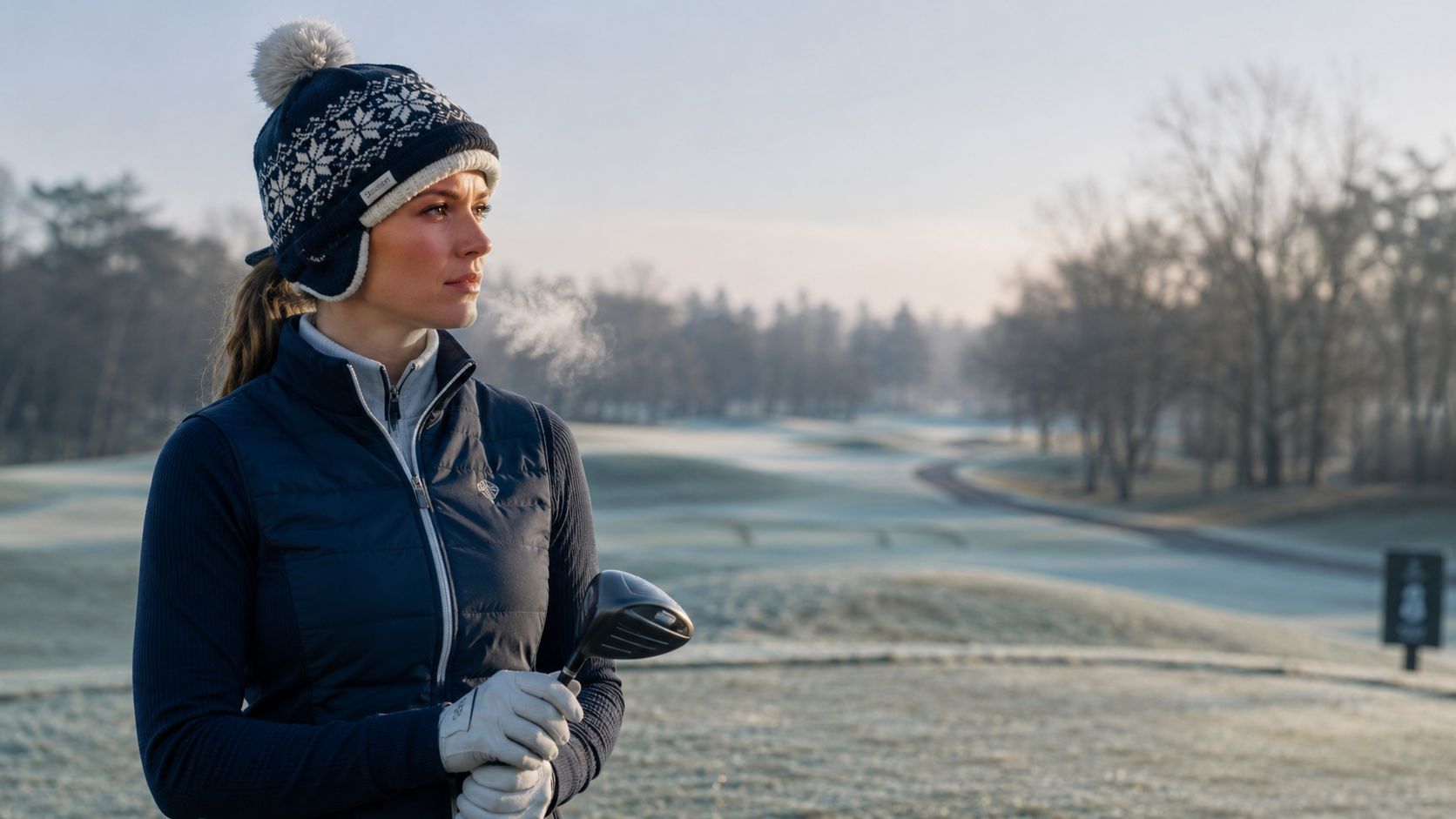
A proper winter hat won't fix a poor swing, but it can remove one needless distraction. A snug, comfortable layer over the ears and crown helps you stay focused on posture, alignment, and tempo instead of constantly thinking about the cold. That matters even more when you're walking, waiting on frosty greens, or playing an exposed course where wind reaches every gap in your clothing.
Warmth supports better concentration
Cold affects more than comfort. It can make your hands and face feel stiff, encourage a guarded setup, and leave you mentally preoccupied. A hat gives you a simple way to protect a vulnerable area without adding bulk to your shoulders or restricting your arms.
Human-physiology research supports the practical value of head covering in cold environments. A Japanese study involving sedentary women specifically examined the thermal effect of wearing a hat in cold conditions, reinforcing why headwear remains a sensible part of a cold-weather clothing system. You don't need a heavy expedition hat for golf, but you do need coverage that suits the conditions.
Pro shop rule: If your ears are cold before you reach the first green, your hat is either too thin, too loose, or wrong for the wind.
The ladies' golf market has moved forward
The growth in women's participation has also raised expectations for women's golf apparel. A winter hat should fit a woman's head and hairstyle, not look like a smaller version of men's gear. That means better attention to ponytail openings, soft interior bands, low-profile shapes, and colors that work with modern golf layers.
My strongest advice is simple: choose your hat before you choose the pom-pom, logo, or cable-knit detail. Comfort and stable fit come first. When your hat stays in place through a full swing and keeps your ears covered without pressure, style becomes much easier to get right.
The Science of Staying Warm on the Course
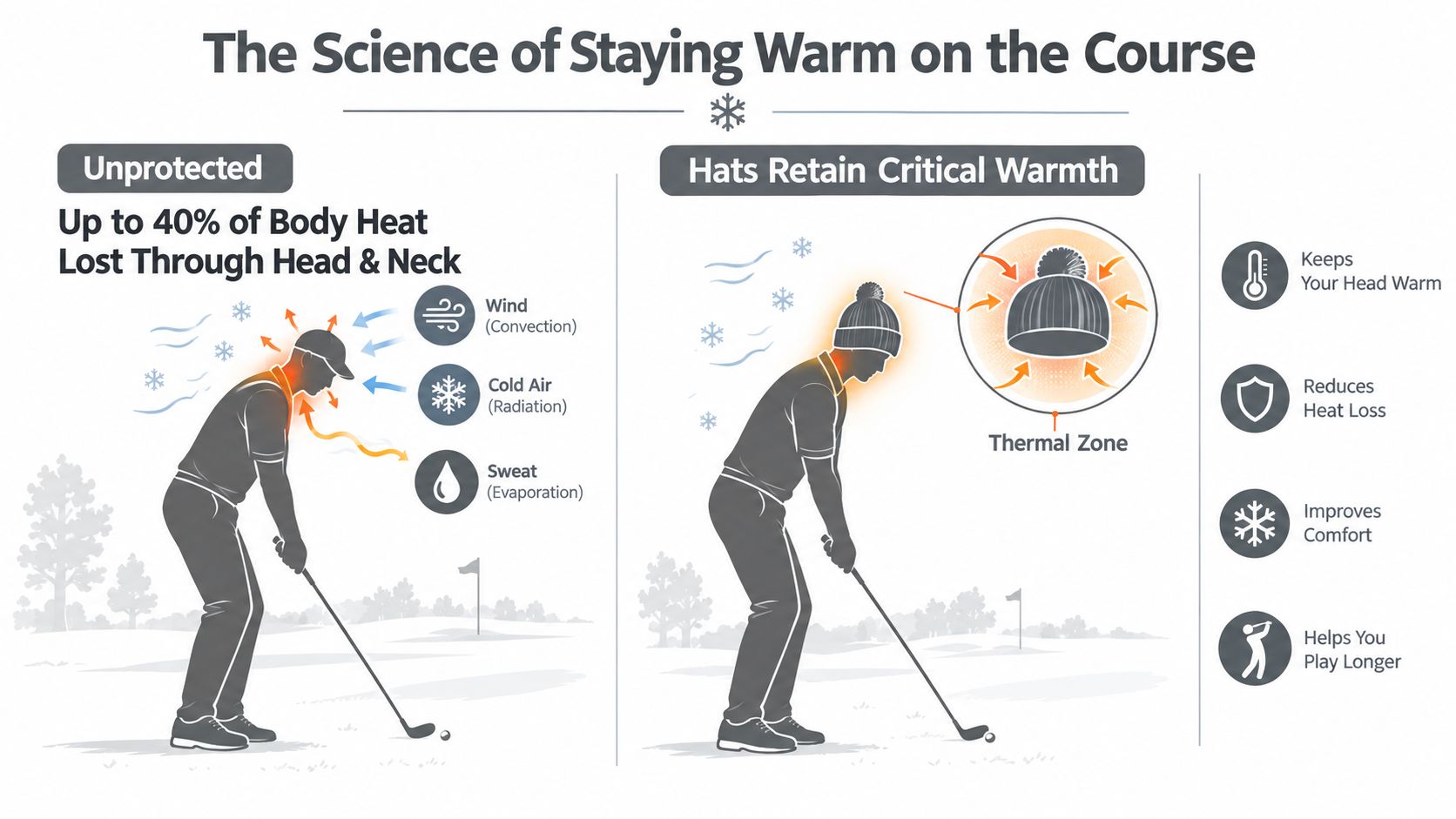
Warmth comes from managing several competing processes at once. A hat needs to trap heat, slow the effect of wind, and handle moisture from your skin. A thick hat that holds warm air but traps sweat can feel comfortable while you're standing still, then become clammy and cold once you start walking.
The PubMed headwear review identifies total heat resistance, material thickness, and air permeability as important construction variables for winter headgear. Air permeability matters because your body still needs to release heat and perspiration. Insulation works best when it retains warmth without allowing moisture to build up inside the hat.
Insulation and wind protection aren't the same
Insulation traps air. Fleece does this through its loft, while a knit fabric can hold warm air between its fibers. Wind protection blocks moving air from stripping away that warmth. A thick open-knit beanie may feel cozy on a calm morning but disappoint on a windy links course because gusts move straight through the fabric.
Wind resistance can come from a tightly woven outer layer, a coated synthetic fabric, or a dedicated wind-blocking membrane. These constructions usually help most when the course is exposed and the air is moving. They can also reduce breathability, so the best choice depends on how hard you walk and how much you tend to sweat.
Match materials to the morning
Merino wool is a strong choice for damp, changeable mornings because it can provide warmth while managing moisture better than many basic knits. It also feels less clammy when conditions shift.
Fleece is the reliable option for soft insulation. A fleece lining adds warmth to a slimmer outer shell, making it useful when you want ear coverage without the bulk of a large knitted hat.
Synthetic blends often suit golfers who need quick drying and easy care. Some technical shells include durable water-repellent treatments, but you should check the care label because washing can affect that finish.
Wind-blocking membranes earn their place on gusty coastal courses. They're particularly useful when the temperature feels manageable in the clubhouse but the tee box is fully exposed.
A breathable beanie can work well for a walking golfer on a dry, calm day. A wind-resistant cap or lined headband makes more sense for a cart round in steady gusts, where wind exposure rather than exertion is the main problem. If you're comparing ways to keep the whole cart setup comfortable in cold weather, this guide to comparing propane vs electric heaters offers useful context for another part of your winter strategy.
For a closer look at moisture management in beanies, review this moisture-wicking beanie guide. The same principle applies on the course: warmth that can't handle perspiration won't feel warm for long.
Comparing the Main Winter Golf Hat Styles
No single hat style wins every winter round. A golfer walking a sheltered parkland course needs a different balance from someone facing wind on an exposed links layout. Start with the conditions you play in, then consider hair, dress code, and how much bulk you can tolerate during the swing.
| Hat Style | Warmth Level | Wind Resistance | Breathability | Ponytail Friendly | Best Conditions |
|---|---|---|---|---|---|
| Classic beanie | Medium to high | Low to medium | Medium to high | Usually, if stretchy | Calm, cold mornings |
| Slouchy knit hat | Medium | Low | High | Often, with flexible fit | Dry, mild winter rounds |
| Fleece-lined visor | Low to medium | Medium | High | Usually | Breezy, brighter days |
| Trapper-style ear-flap hat | Very high | High | Low to medium | Sometimes awkward | Severe cold and exposed courses |
| Performance headband-visor combo | Medium | Medium to high | High | Often | Active play and variable weather |
Classic beanies
A close-fitting beanie is the dependable all-rounder. It covers the crown and ears, packs easily into a golf bag, and works with most casual winter golf outfits. Choose a fine or medium knit rather than an oversized style if you want a stable fit during the swing.
Merino wool works well when the morning is damp or temperatures change. A fleece-lined beanie is better when you want extra softness and insulation. Avoid a beanie that squeezes your temples. Head pressure becomes irritating long before the round ends.
Slouchy knits
Slouchy hats look relaxed and offer good airflow, but their loose shape can expose the ears or shift during movement. I'd reserve them for calm, dry conditions. They're attractive for the clubhouse and casual golf, but they're not my first pick for a windy tee time.
Fleece-lined visors
A visor gives you a brim for winter glare while leaving the top of your head more open. Add fleece around the ears and you get a useful solution for mild cold, especially when low sun affects your view. This style suits clubs with stricter expectations around structured golf headwear.
Trapper hats
Trapper-style hats deliver the most coverage. They protect the ears and often include insulating panels that block wind effectively. The trade-off is bulk. Ear flaps, ties, and thick linings can feel distracting during a full shoulder turn, so test the hat with a club before committing to it for a round.
Performance headband-visor combinations
This is the smartest compromise for many active golfers. You get a brim, ear coverage, and a more breathable top section. Ponytail-friendly versions are especially practical because they hold hair without forcing the hat upward.
For inspiration beyond standard golf styling, browse a curated luxury outdoor hat collection, then judge any design by its coverage, stability, and breathability rather than its appearance alone.
How to Choose the Right Hat for Your Game
The correct choice starts with weather, not color. Before shopping, think about the course you play most often, whether you walk or ride, how exposed the first tee is, and whether your cold rounds usually involve damp air, steady wind, or dry conditions.
Start with fit
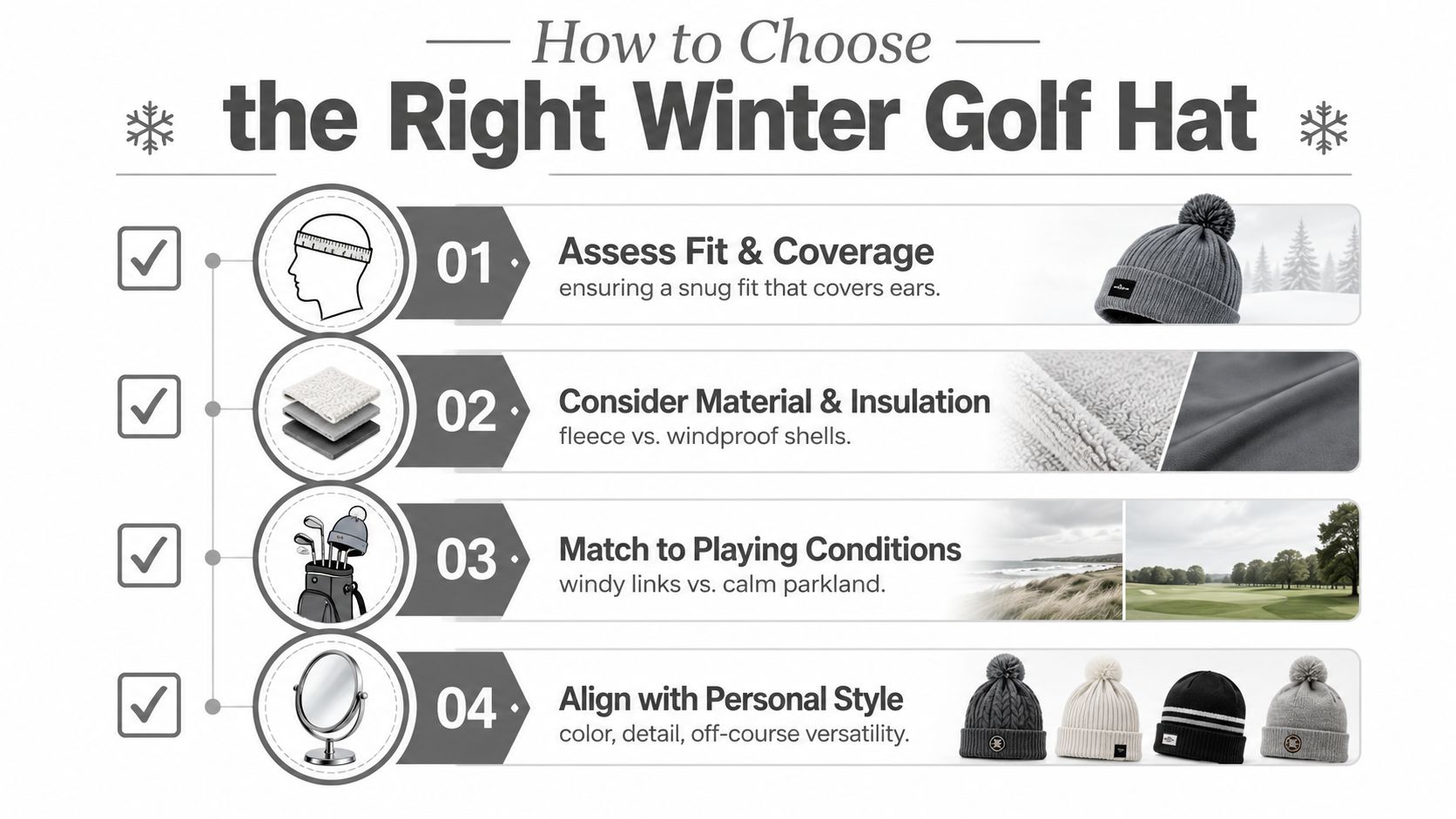
Measure around the widest part of your head, following the line where the hat will sit. Use the manufacturer's size guide, but don't stop there. A good golf hat should feel secure when you turn your head and swing, without leaving a pressure point at the forehead or temples.
The lower edge should cover the ears if warmth is a priority. It shouldn't slide upward when you look down at the ball. Stretch fabrics are convenient, but an adjustable closure can give you more precise control when your hair or base layers change.
Solve your hair before you solve your color
Long hair changes how a hat fits. A ponytail port, overlap-back opening, or flexible rear panel lets you position your hair without lifting the hat away from your ears. If you wear a low ponytail, look for an opening placed low enough to prevent the hat from riding upward.
An adjustable back closure is useful for braids and thicker hairstyles. A stretchy knit can be more comfortable for loose hair, but it may not hold its shape as well over time. Try your intended hairstyle with the hat, then make a few practice swings.
Judge wind honestly
If your course is sheltered, prioritize breathability and a lighter profile. If it's open to gusts, choose a tightly woven shell or wind-resistant panel, even if the hat feels less airy indoors. A brim also helps with low winter sun, which can sit directly in your line of sight during approach shots.
Private-club dress codes can rule out casual beanies. In that case, a fleece-lined visor, structured cap, or ear-warming headband may satisfy the club's standards while still providing useful coverage.
For fabric basics and a broader look at cotton hat construction, consult The Lavender Lobster's cotton hat guide. Cotton can feel pleasant, but for cold rounds you should still check how the finished design handles moisture and wind.
Use this priority order:
- Weather: Choose insulation for calm cold and wind resistance for exposed conditions.
- Fit: Confirm that the hat stays put through a swing.
- Hair: Select a ponytail opening or adjustable construction that matches your hairstyle.
- Club rules: Check whether beanies, logos, or casual shapes are permitted.
- Style: Pick the color and finish you'll happily wear after the round.
Where Performance Meets Off-Course Style
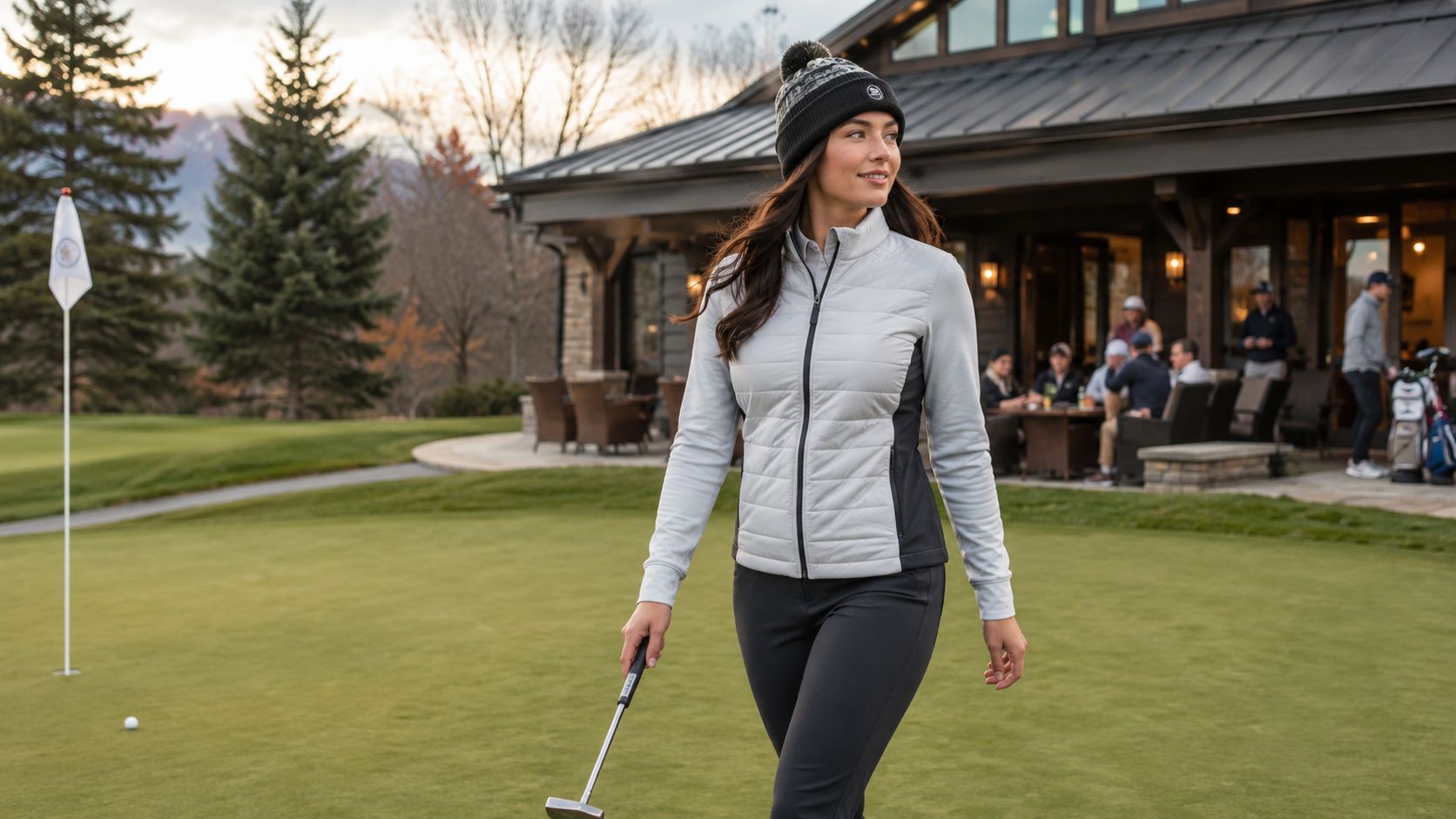
A winter golf hat should look deliberate, not like emergency equipment pulled from the bottom of a drawer. The strongest designs hide their technical features inside a polished silhouette. A moisture-managing liner, soft ear band, or wind-resistant panel can sit beneath a clean knit, a structured crown, or a restrained logo.
Build the outfit around one strong detail
Neutral shades such as charcoal, cream, navy, and taupe work with most winter golf wardrobes. They pair easily with quilted vests, quarter-zips, and weatherproof trousers, so you won't need to change hats before meeting friends for lunch.
A brighter accent has a practical purpose on grey days. Rust, berry, forest green, and cobalt can add visibility to an otherwise muted outfit without turning the hat into a costume. Keep the rest of the clothing simple and let the hat provide the focal point.
Texture also matters. Cable knit creates visual depth, faux-fur trim adds softness, and a leather logo patch gives a casual beanie a more finished appearance. Satin-lined interiors can reduce friction against hair, while matching hat-and-scarf sets make layered clothing look coordinated rather than bulky.
Choose details that survive the round
Decorative elements must stay flat and secure. A large pom-pom may look charming but can bounce or shift as you walk. A loose metal badge can catch on hair. For golf, I prefer a low-profile embellishment placed away from the forehead and ears.
2ndShotMVP offers golf hats, beanies, and lifestyle apparel with designs intended for wear on and off the course. If you're evaluating its headwear for winter use, check the specific product's construction, closure, and coverage rather than assuming every style performs the same way.
The useful standard is simple: the hat should move from tee box to clubhouse without demanding a costume change. If it looks polished enough for post-round conversation and performs well enough for a cold walk between shots, it earns a permanent place in your rotation. More ideas for coordinating headwear with a wider golf wardrobe appear in this guide to golf fashion for women.
Care Tips to Make Your Hat Last for Seasons
A good winter hat loses performance when its fibers become compressed, its shape stretches, or its interior band holds old sweat and oil. Care starts with reading the label, but a few habits apply across most golf headwear.
Wool and cashmere blends should generally be hand-washed in cool water with a gentle detergent. Don't twist them. Press out excess water with a towel, reshape the hat, and dry it flat. Synthetic fleece can often handle a delicate machine cycle, but place it in a laundry bag and keep the water temperature cool.
Structured caps need a different approach. Spot-clean the crown and sweatband with a soft cloth, mild detergent, and limited water. Avoid soaking a brim unless the care instructions specifically allow it, because moisture can distort internal materials.
Drying and storage
Tumble drying is a poor shortcut. Heat can shrink natural fibers, weaken elastic components, and change the shape of a fitted hat. Air-dry every winter golf hat flat when possible, away from direct heat.
Store hats clean and fully dry. Stuff soft styles lightly with acid-free tissue or use a hat form to prevent a collapsed crown. Don't bury a damp beanie in a golf bag after a foggy morning. That's how odors linger and fibers lose their freshness.
Fix small problems early
Pilling on knit fabric is normal with use. Remove it with a fabric shaver or a small knit comb, applying light pressure and keeping the tool away from seams. Never pull pills by hand, because you can draw out the surrounding fibers.
Treat sweat marks on interior bands promptly with a damp cloth and mild detergent. For technical shells, check whether the water-repellent finish needs renewal, and use only a product approved for that fabric.
A practical seasonal checklist looks like this:
- Inspect the fit: Check stretched cuffs, loose closures, and flattened lining.
- Clean the hat: Follow the material-specific washing method before storage.
- Check the inside band: Remove residue and address odors early.
- Examine the shell: Look for worn areas where wind or moisture can enter.
- Restore shape: Dry flat and store with light support inside the crown.
- Pack thoughtfully: Keep the hat away from sharp tees, tools, and damp gloves.
For a more detailed golf-specific cleaning routine, use this guide on how to clean golf hats before the season begins.
Your Winter Golf Hat Decision Framework
Choose your hat in this order: conditions, coverage, breathability, fit, hair management, club rules, then style. That order prevents the most common shopping mistake, buying a beautiful hat that fails as soon as the weather turns difficult.
For a calm, cold morning, choose a fitted merino or fleece-lined beanie. For a windy course, prioritize a tight outer weave or wind-blocking panel. For an active walking round, favor breathability and moisture control over maximum thickness. For variable conditions, a performance headband-visor combination gives you adaptable coverage without the bulk of a trapper hat.
Your hairstyle deserves equal attention. A ponytail port or overlap-back opening can make the difference between a hat you tolerate and one you wear automatically. If your club prefers structured headwear, select a lined cap or fleece ear warmer rather than ignoring the dress code and hoping nobody notices.
Don't buy based on appearance alone. Hold the hat, stretch the opening, inspect the liner, and ask whether it will stay stable through a full swing. The best winter golf hat is the one that protects your warmth without making you think about it.
2ndShotMVP offers golf hats, beanies, and lifestyle apparel designed for confident wear on and off the course. Visit 2ndShotMVP to find headwear that fits your winter golf rotation, then choose the style you'll reach for on the next frosty tee time.

