

You're on the first tee, hands wrapped around a coffee that's gone lukewarm, and your breath is already fogging up the air. The wind cuts through your jacket, your ears are complaining, and the beanie that felt fine in the parking lot now feels a little soggy by the third swing. That's the annoying little paradox of cold-weather golf and commuting, the more you move, the more likely your hat is to trap sweat right where you want dry warmth.
A moisture wicking beanie solves that problem by behaving less like a sponge and more like a well-trained towel. It helps move sweat away from your scalp, dries faster, and keeps the inside of the hat from turning into a clammy mess halfway through a round or a train ride. That matters if you're trying to stay warm without feeling like you've wrapped your head in a damp dishcloth.
Why Your Beanie Gets Damp on Cold Mornings
The trouble starts when your body warms up faster than the air around you. You might be standing in frost at the tee box, but once you start walking, swinging, loading clubs, or hustling from the car to the office, your scalp starts doing what bodies do, it makes sweat. A regular cotton beanie has nowhere good to send that moisture, so the fabric holds onto it and leaves you with that cold, sticky feeling nobody ordered before sunrise.
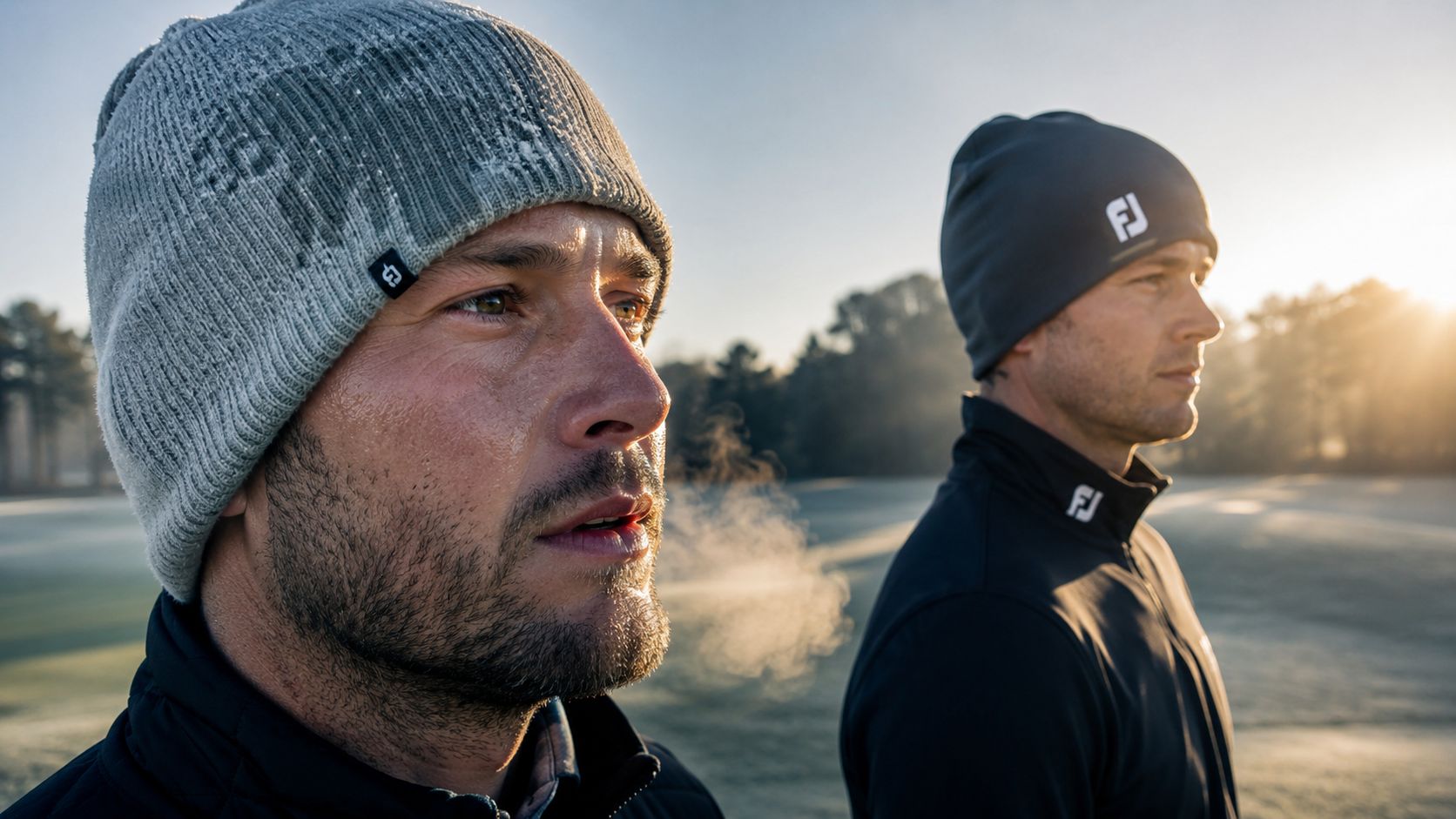
Why cotton turns into a problem fast
Cotton is comfortable when you're sitting still. The second you start working, it behaves like a reluctant towel, it absorbs and hangs onto moisture instead of moving it out of the way. That's why a cotton beanie can feel fine for the walk to the range, then feel strangely heavy and chilly after a few holes or a long commute.
Cold weather makes the annoyance worse because wet fibers lose insulating power. Instead of keeping your head cozy, the hat starts stealing comfort back in tiny little doses, usually right when the wind picks up.
For golfers, that's more than a comfort issue. A damp hat can distract you on the tee, make your head feel overheated under the crown, and then leave you chilled once the pace slows down. Commuters know the same routine, one minute you're warm on the platform, the next you're walking outside with a hat that's gotten just damp enough to be irritating.
Practical rule: if a winter hat feels comfortable only before you move, it's not really built for active cold-weather use.
A better design keeps moisture moving instead of collecting. That's the entire promise of performance headwear, and it's why a moisture wicking beanie earns its keep in places where the weather is cold but your body is not exactly standing still.
How Moisture Wicking Fabrics Actually Move Sweat
Textile science sounds fussy until you compare it to kitchen supplies. A sponge soaks up water and holds it. A paper towel pulls liquid across its surface and helps it spread out so it can dry. Wicking fabrics behave more like the paper towel side of that comparison, especially when they're built with the right fiber structure.
The basic idea is simple. Sweat hits the inner side of the fabric, then the material pulls it outward so it can evaporate faster. In the ACS comparison, polyester had a moisture regain of about 0.4%, far below cotton at 8.5%, wool at 16%, and a 50/50 cotton-polyester blend at 4.45%. That gap helps explain why active beanies usually lean on synthetics or blends rather than pure cotton for cold-weather movement, including winter running, commuting, and golf. The ACS explanation of moisture regain is a useful primer on why this matters for headwear, especially when you want the hat to stay lighter and drier during activity don't sweat it.
The push-pull structure that makes it work
A lot of good performance beanies use a two-layer structure. One layer is more hydrophobic, meaning it resists water and helps keep moisture from lingering against the scalp. The other layer is more hydrophilic, meaning it helps draw liquid outward. Put those together and you get a push-pull effect that moves sweat away from the skin and toward the outside, where air can do the drying work.
That's the part you can feel within the first few swings. The beanie doesn't feel soaked against the forehead as quickly, and it dries out faster once you stop moving. The fabric still gets wet if you work hard enough, but it's the difference between a hat that feels damp and one that feels like it has a plan.
A beanie that wicks well should feel less clingy, less swampy, and less eager to hang onto yesterday's sweat.
If you want a deeper explainer on the fabric logic behind that effect, this guide from 2ndShotMVP is a useful companion read, what is moisture wicking fabric.
The useful part for buyers is this, you're not just shopping for warmth. You're shopping for yarn structure, surface chemistry, and the ability to move moisture before it turns your hat into a cold little regret machine.
Picking the Right Material for Your Climate and Game
The best material depends on how hard you move and how long you stay outside. A golfer walking 18 holes on a blustery morning has a different problem than someone stepping out for a short commute, and both are different again from someone wearing a beanie all day in a drafty office. The point is not to crown one fiber as the universal winner, it's to match the fabric to the job.
| Beanie Material Comparison | Wicking Speed | Warmth | Odor Resistance | Best For |
|---|---|---|---|---|
| Polyester | Fast | Moderate | Lower than wool | Active cold-weather use, golf, running, commuting |
| Merino Wool | Moderate | High | Strong | All-day wear, mixed conditions, travel |
| Acrylic | Moderate to slower | Moderate | Lower than merino | Budget-friendly casual wear |
| Blends | Variable, often good | Moderate to high | Variable | Balanced comfort and performance |
Polyester usually makes the most sense when sweat management matters most. It dries quickly, it's common in performance knits, and it plays well with the kind of thin construction golfers like because it won't feel bulky under movement or under a cap. Merino wool brings a softer hand and a more relaxed comfort profile, which many people prefer for all-day wear, especially when the temperature keeps changing. Acrylic is often the friendliest on price, but it's more of a casual option than a pure performance choice.
What to choose for golf versus commuting
For golf, thin and quick-drying usually wins. You're alternating between motion and stillness, and the beanie needs to handle both without feeling like a sauna on your head. For commuting, comfort and easy care matter just as much as drying speed, because your hat is going to see a lot of start-stop temperature changes.
If you're shopping for a winter golf trip, it's smart to think beyond your local course. A destination setup, like the kind you'd plan around when you explore the best golf courses in the Algarve, usually means a lot of early starts, coastal wind, and layers that have to do more than one job.
Good rule of thumb: if you run warm, walk often, or hate a damp forehead, lean synthetic or blended. If you want softer feel and don't sweat heavily, merino blends can be the sweet spot.
Fit, Cuff, and Breathability That Actually Matter
A beanie can have great fiber content and still annoy you if the fit is wrong. Too loose, and it slides, gaps, and lets cold air sneak in around the ears. Too tight, and it stops feeling like clothing and starts feeling like a low-grade head squeeze, which is not the vibe you want before a round.
Why the best fit is snug without being bossy
A snug-but-not-tight fit matters for two reasons. First, the fabric needs consistent contact with the scalp if it's going to move moisture efficiently. Second, you still need enough stretch recovery that the hat doesn't distort your swing or leave a pressure mark after an hour outdoors. If you're trying one on, pull it down, turn your head, and make a few practice motions. If the beanie shifts hard, pinches, or blocks your peripheral comfort, it's probably not the right one.
Cuff depth matters too. A deeper cuff can help cover the ears on windy mornings, which is worth its weight in sanity when the temperature drops and your round turns into a survival tour. It also gives you a little control over how much coverage you want, which is useful if you warm up quickly while walking.
Breathability beats bulk for active wear
Heavy fleece sounds warm, but warmth without airflow can backfire during activity. Breathable knit structures tend to feel better for golfers because they let excess heat escape instead of trapping it under the crown. That keeps your head from getting sweaty early, which is half the battle in cold weather.
If the fabric feels dense and unmoving in your hands, it's probably going to feel that way on your head too.
Look for seams that don't dig in, cuff edges that sit flat, and enough stretch to stay put without leaving the hat in a permanent state of tension. A good performance beanie disappears into the round, which is exactly what you want from gear that's supposed to help, not announce itself.
Care and Maintenance That Protects Wicking Performance
A moisture wicking beanie isn't a magic object. Its performance depends on fiber shape, surface finish, and the tiny spaces in the knit that help sweat move. Those spaces can get clogged with residue, crushed by poor storage, or stressed by heat, which is why care matters more than many expect.
The safest routine is simple. Wash it cold with a mild detergent, skip fabric softener, dry it gently, and store it loosely so the knit doesn't stay compressed between uses. If you want a more detailed golf-hat cleaning routine, this guide from 2ndShotMVP covers the basics well, how to clean golf hats.
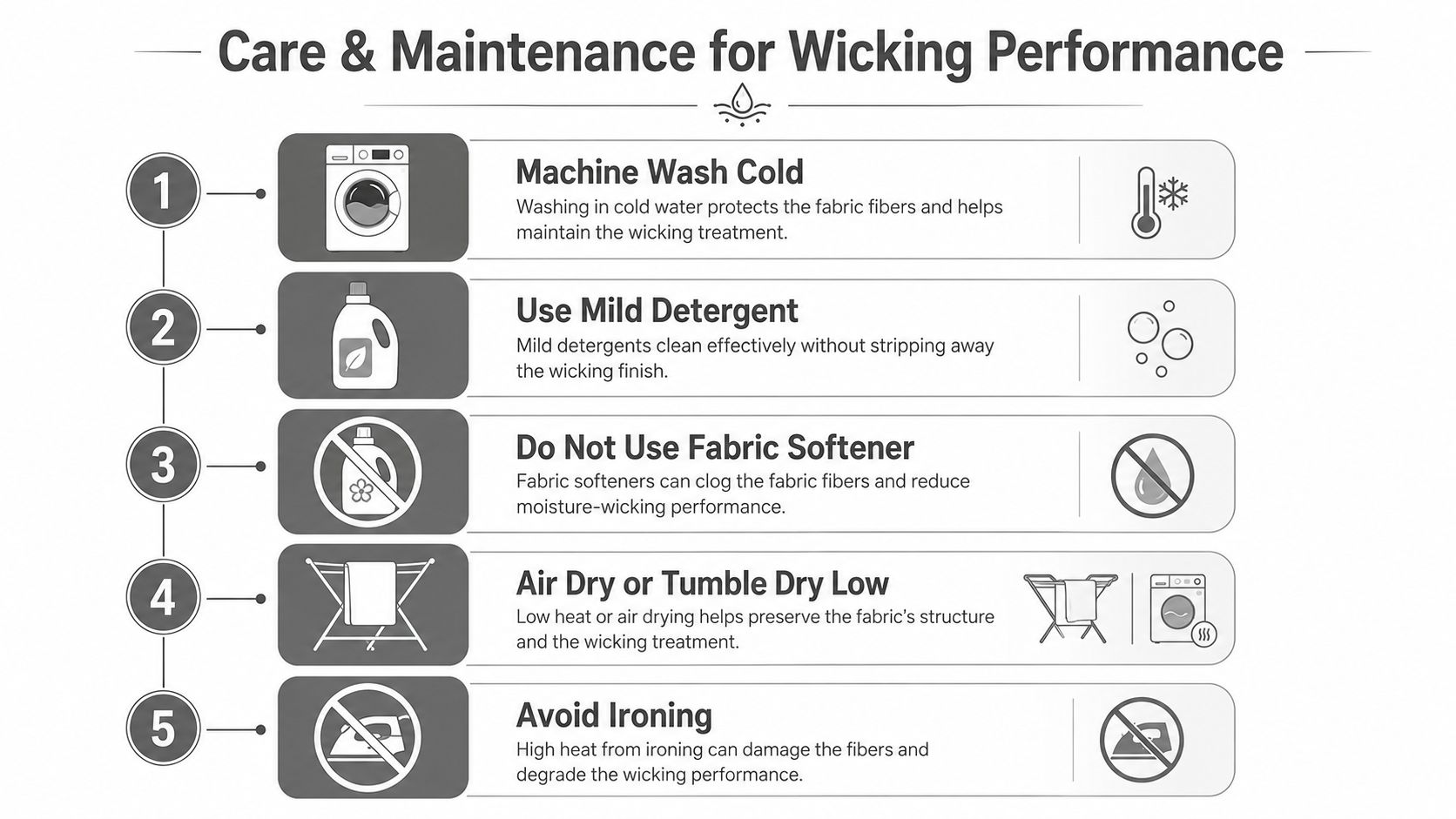
The five-minute routine that keeps performance alive
- Machine wash cold. Cold water is easier on technical fibers and helps avoid unnecessary wear.
- Use a mild detergent. You want clean fabric, not a coating of leftover perfume and residue.
- Skip fabric softener. Softener can leave a film that interferes with wicking performance.
- Air dry or tumble dry low. High heat is rough on performance knits and can shorten useful life.
- Avoid ironing. You're not trying to press a dress shirt, and hot irons can damage the fabric structure.
That routine is short on purpose. If your beanie is worn weekly for golf, commuting, or travel, the goal is to keep maintenance so easy that you'll do it. In practical terms, that means no heroic laundering rituals, just a quick reset that preserves the knit structure.
What age and wear usually do to performance
Moisture management depends on capillary structure and surface chemistry, so repeated laundering, heat, and compression can reduce how well a hat feels in use. That doesn't mean the beanie suddenly stops working one day like a broken toaster. It means the performance slowly gets less crisp, especially if the fabric has been treated harshly.
Wool and synthetic blends can age differently, but the useful habit is the same, wash gently, dry gently, and don't crush the thing in the bottom of a gym bag for three weeks. A few small habits keep the hat useful for far longer than the “toss it in the dryer and hope” method.
Styling a Moisture Wicking Beanie On and Off the Course
The nice surprise with a good performance beanie is that it doesn't have to look athletic in the boring sense. You can keep the tech and still wear something that feels intentional, which matters if your day starts on a cold tee box and ends at lunch, then later at the grocery store where nobody should need to know your forehead is optimized for capillary action.
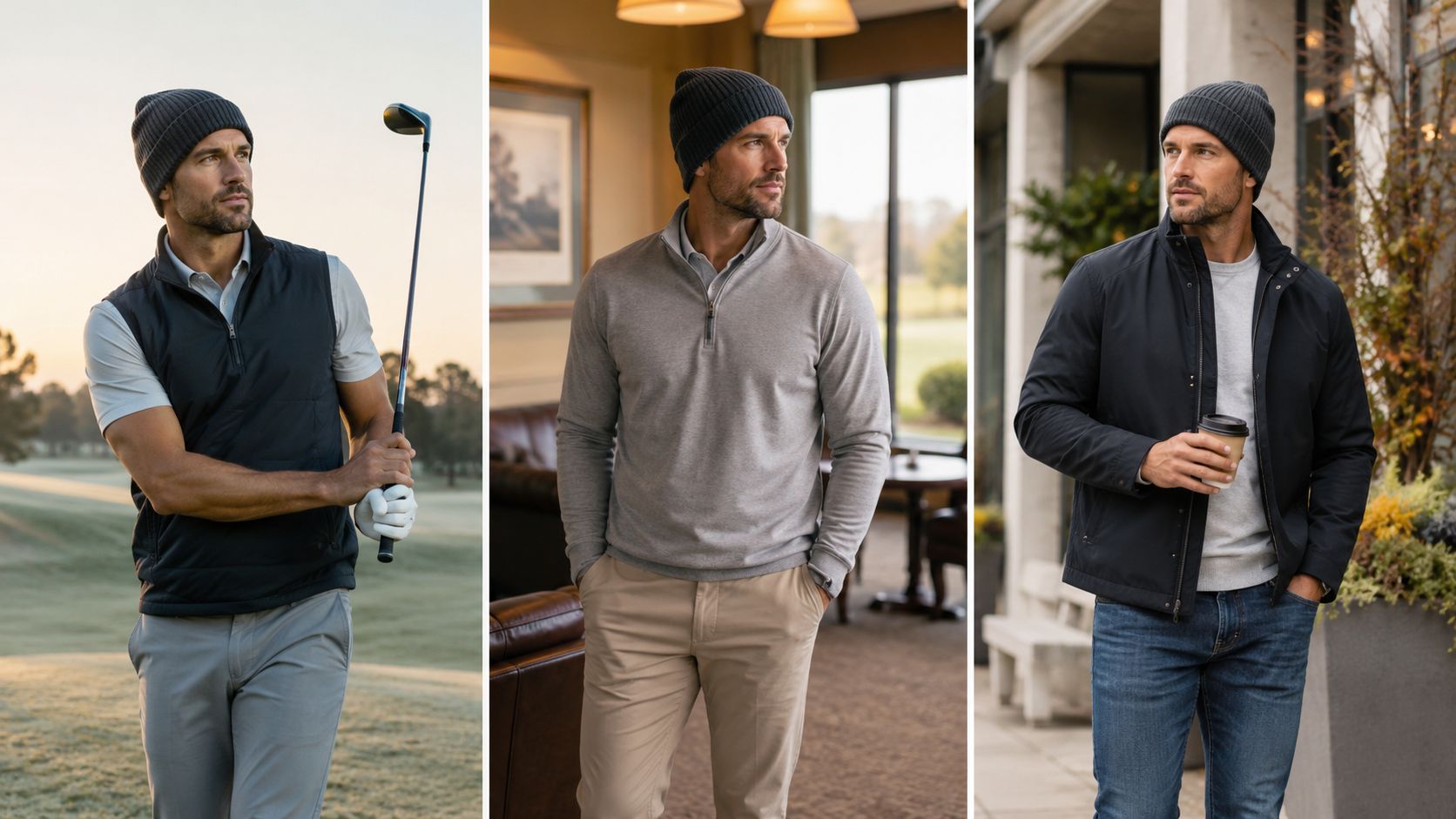
Three outfits that actually make sense
For the frosty-morning tee box, think quarter-zip, golf pants, gloves, and a close-fitting beanie in a neutral color. That look stays practical because the hat warms without crowding your swing.
For the clubhouse-to-lunch transition, swap the golf pants for dark denim or well-fitted casual trousers, then keep the same beanie with a clean crewneck or overshirt. The beanie still reads as functional, but it no longer looks like you're headed straight back to the range.
For weekend errands, a bomber jacket or insulated vest pairs easily with a performance beanie, especially if the color is understated and the logo placement isn't shouting from across the parking lot. Small graphic details can give a golf-inspired hat personality without turning it into costume wear.
If you like outfit ideas that lean more lifestyle than locker room, the styling notes in what to wear with a beanie are a handy companion.
Why design details matter more than you think
Color changes the whole read of the hat. Darker shades tend to feel more polished, while brighter colors can lean playful or sporty depending on the rest of the outfit. Logo size matters too, a subtle mark usually travels better from course to café than a giant front-panel graphic.
The best beanie is the one you stop thinking about after you put it on, because it does the job and still looks like you meant to wear it.
That's why performance headwear works best when the styling is quiet and the function is strong. If it can survive a windy fairway and still look normal over coffee, you've probably picked well.
Quick Answers Before You Buy
Yes, a moisture wicking beanie can work in freezing weather, and that's exactly where the fabric choice matters most. Cold air doesn't cancel sweat, it just makes trapped moisture feel more annoying, so a hat that moves liquid away from the scalp usually feels warmer in real life than a cotton beanie that holds onto dampness.
Merino and polyester solve different problems. Polyester usually wins on quick drying and active use, while merino tends to feel softer and more forgiving for all-day wear. If you're playing winter golf and walking a lot, polyester or a performance blend is usually the safer pick, especially if you sweat easily.
A good wicking beanie shouldn't create much hat head if it fits well and you don't overheat in it. The main culprit is usually a hat that's too tight, too warm, or worn too long without a chance to dry out. If you want a low-drama option, prioritize a lightweight knit, a snug fit, and easy care.
How long does one last? That depends on how often you wear it, how hard you wash it, and whether you treat it gently. Since wicking is a performance outcome rather than a permanent tattoo on the fabric, the goal is to preserve the knit structure and keep residue from building up.
For golf buyers who also care about style, the safest checklist is simple: look for quick-drying fibers, a fit that stays put, enough breathability to avoid steam-room vibes, and a design you'll want to wear after the round. If you're browsing for a cozy horse-inspired hat, this one from the Bridle Up Hope Shop is a nice reminder that beanies can be functional and have some personality too.
If you want a beanie that works as hard as you do on the course and still looks good after the round, take a look at 2ndShotMVP. Their golf-ready headwear fits the whole point of this topic, staying warm, staying dry, and looking like you planned the outfit instead of surviving the weather by accident.

