

You're standing in a thrift shop with one hand on a faded golf T-shirt and the other on your phone, trying to decide whether you've found a genuine old favorite or a new shirt wearing a convincing disguise. The graphic looks sun-washed, the cotton feels pleasantly tired, and the collar has just enough personality to suggest it's lived a life. But is it a collector's piece, a retro reprint, or a modern shirt with a nostalgic mood?
That little mystery is part of the charm. Vintage golf T shirts sit at the meeting point of golf history, casual clothing, streetwear, and personal storytelling. They appeal to collectors who enjoy original graphics, golfers who like a relaxed 19th-hole look, and anyone who'd rather wear a shirt with some wrinkles in its biography than another perfectly polished logo.
The trick is knowing what you're looking at. A shirt can feel old without being old, and a genuine vintage tee can look surprisingly clean. This guide will help you date a piece through its stitching, tag, fabric, print, fit, and wear patterns, then decide whether it belongs on the course, at the clubhouse, or safely in your weekend rotation. For more outfit inspiration, browse this practical guide to retro golf fashion.
Introduction to Vintage Golf T Shirts and Why They Matter Now
Vintage golf T shirts matter because they carry more than a graphic. A faded tournament emblem, a jaunty golfer illustration, or an old club logo can suggest a particular kind of golf culture, one that feels less polished and more human. The shirt may have started as event merchandise, casual sportswear, or a souvenir from a course that has since changed its clubhouse sign.
Golf clothing has always had a social side. Players wear it to signal a favorite course, a memorable tournament, a sense of humor, or an appreciation for good design. Modern shoppers have also grown more interested in clothing that looks lived-in rather than factory-fresh. That doesn't mean every washed tee is vintage. It means age, character, and visual history now influence how people judge style.
A real find often reveals itself slowly. First, you notice the color. Then the softened cotton. Then a detail such as a narrow collar, an old label, or a screen print that has settled into the fibers instead of sitting brightly on top. It's a bit like meeting a golfer who doesn't need to announce a handicap. The evidence is in the small things.
Shopkeeper's rule: Don't buy the story printed on the front until you've inspected the story sewn into the shirt.
The current appeal also comes from versatility. A vintage golf tee can work with denim, chinos, shorts, or a lightweight overshirt. It can look playful without becoming costume-like, especially when the rest of the outfit stays simple. A bold golf graphic needs room to speak, not a choir of competing patterns.
This guide treats the shirt as both clothing and object. You'll learn how to tell an older garment from a modern reproduction, why vintage sizing can make a “medium” behave like a very opinionated small, and how to wash an old screen print without turning it into confetti. Most of all, you'll be able to choose based on what you want, whether that's collector authenticity, course comfort, or an excellent shirt for the 19th hole.
What Makes a Golf T Shirt Truly Vintage
“Vintage” describes an older garment, not a new shirt dressed in faded colors. In golf clothing, the style story stretches from roughly the 1920s through the 1980s, although collectors often concentrate on mid-century and late-century pieces with identifiable labels, construction, and graphics. Er The Golf's overview of vintage golf clothing shows how wide that category can be.
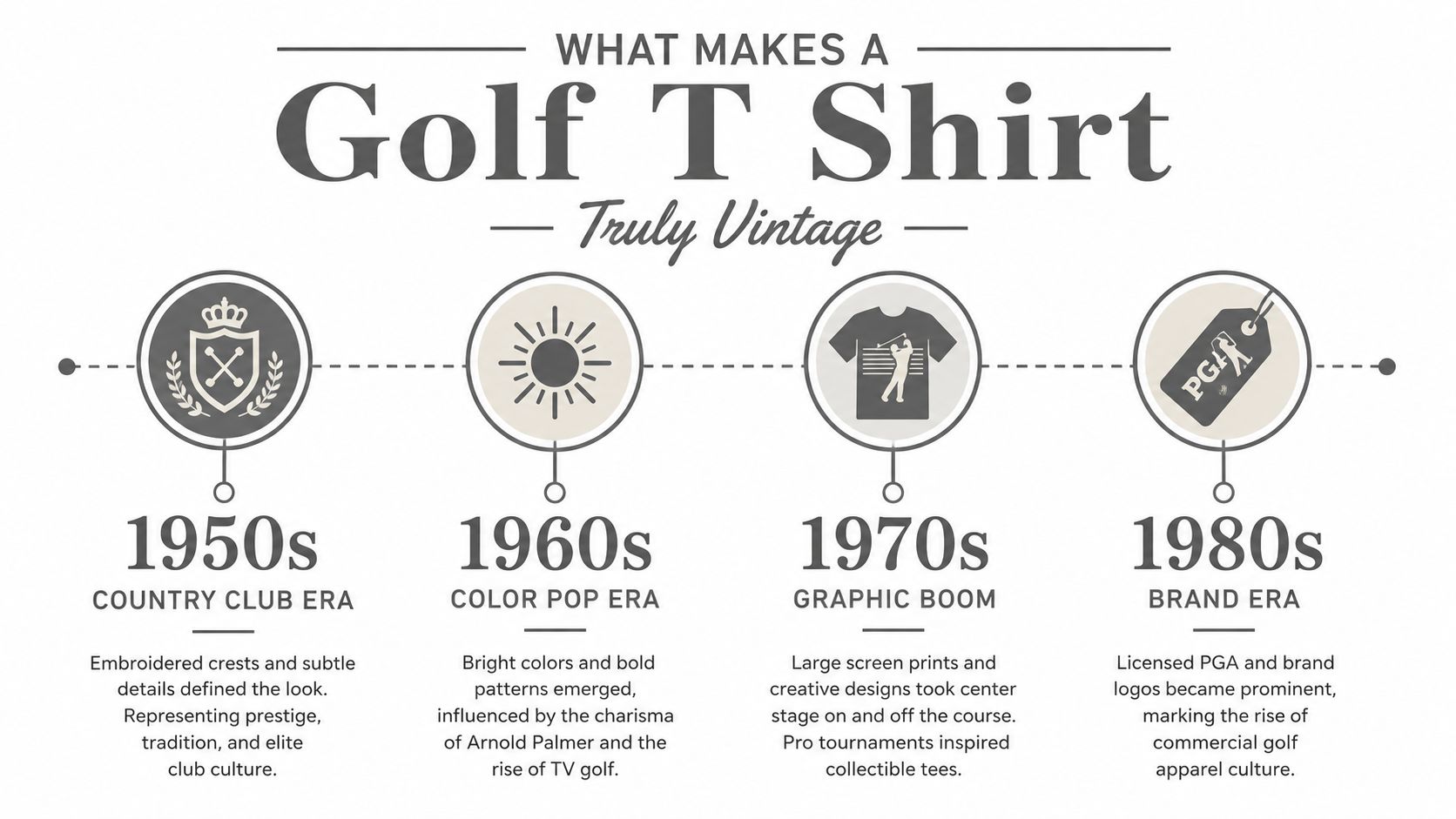
To date a tee, treat its details like clues at a golf hole. The graphic suggests the era, while the tag, stitching, and fabric provide the scorecard. A 1950s top may carry country-club restraint, knit construction, and modest branding. A 1960s or 1970s shirt may show brighter colors, larger graphics, or synthetic fibers. Later pieces more often feature licensed event designs and familiar brand marks.
Style alone remains a starting point. A modern designer can borrow a 1970s palette just as easily as a musician can recreate an older guitar sound. Era style forms a hypothesis; construction details test it.
Golf apparel changed noticeably through the middle of the twentieth century. During the 1940s and 1950s, formal shirts and ties increasingly gave way to short-sleeved knit shirts. Polo shirts became common on the course during the 1950s, and golf clothing grew more colorful. The next decade brought greater use of nylon and polyester. Chervo's history of golf fashion also identifies the 1955 launch of the Original Penguin golf shirt as a notable point in modern golf-top design.
The culture relaxed alongside the clothing. In 1953, President Dwight Eisenhower wore a Lacoste shirt while golfing, a detail described in the same history of golf fashion. Strict clubwear gradually made room for bright, branded leisurewear.
Construction can also reveal what the shirt was built to do. Mid-century garments sometimes used under-arm action gussets and pocket placement that stayed clear of the swing. GolfLink's history of golf apparel provides background on how playability shaped older golf clothing. That distinction matters today: a soft cotton tee may be charming for errands or the clubhouse, yet its weight, stretch, and moisture handling may not suit a full round.
For a regional view of how golf history can shape retro apparel, explore Golf Problems on Cleveland's beginnings. A shirt connected to a place, event, or period carries more substance than a generic golf graphic. In the shop, that history is often what turns a nice old tee into a keeper.
How to Spot Authentic Vintage Versus Retro Reprints
A modern reprint can be a perfectly good shirt. The problem begins when a reprint is priced or described as an original. To separate the two, inspect the garment in a consistent order. Start with the label, move to the stitching, then feel the fabric and study the print.
The collector's quick inspection
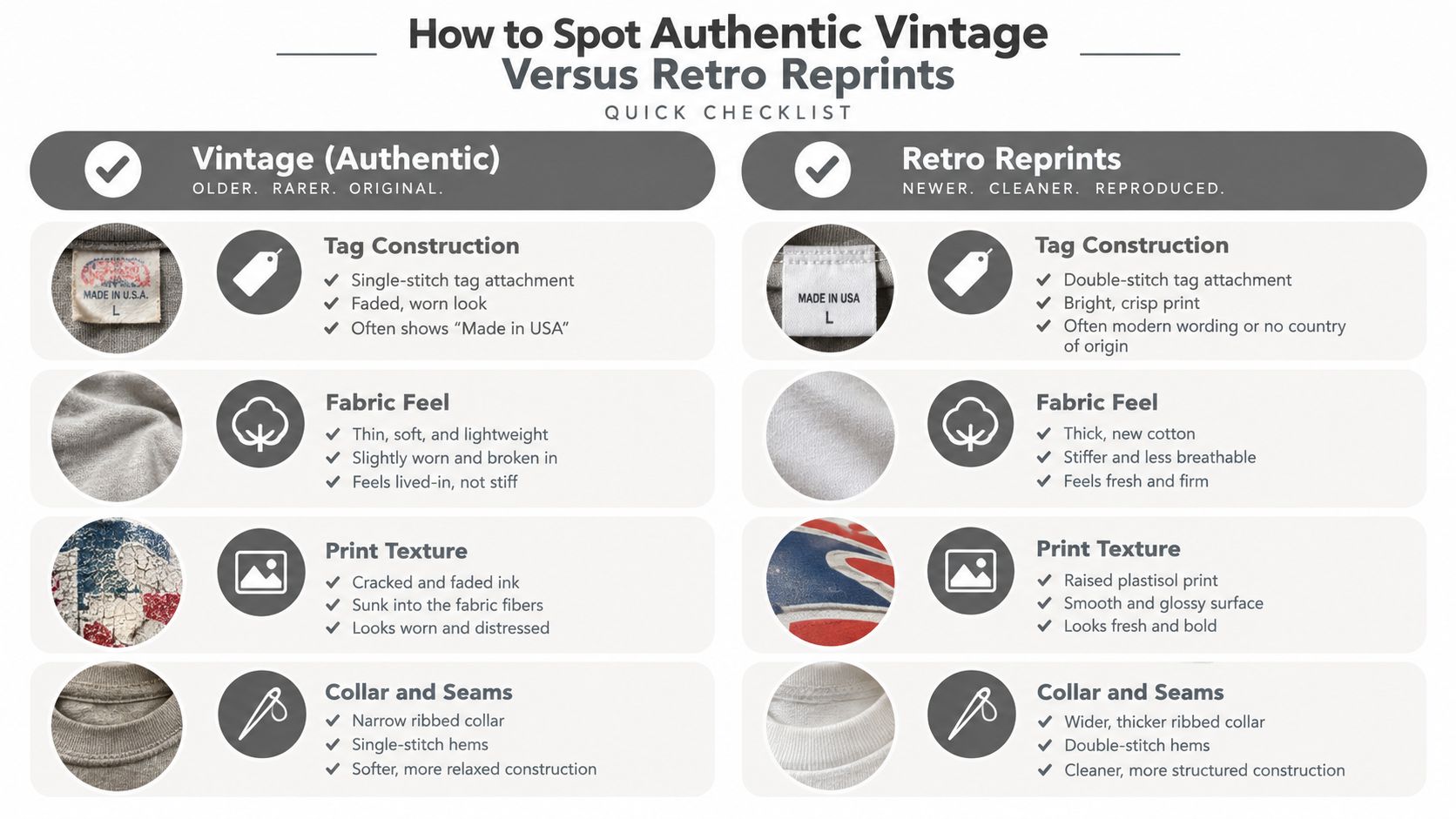
Tag construction comes first. Older shirts may have faded labels, different tag shapes, or construction associated with earlier manufacturing. A tag that looks artificially distressed can be a warning sign, especially when the rest of the garment looks brand new. Tag details don't work like a birth certificate, but they help establish whether the shirt belongs to the period it claims to represent.
Check the hem stitching. Single-stitch hems are an important marker that collectors examine on older tees. Newer garments often use double-stitch construction, though stitching alone can't authenticate every shirt. Look at the sleeves and bottom hem together, because one altered or repaired area can mislead you.
Feel the cotton. Older ring-spun or heavier cotton constructions often have a distinct hand feel. They may be soft from years of washing, yet denser than many lightweight modern tees. A new reprint can imitate softness through finishing, but it often lacks the same combination of worn surface, settled fibers, and age-consistent seams.
Study the print rather than admiring it from across the room. A properly cured screen print can remain structurally intact for decades, while its surrounding cotton shows wear. On an authentic older tee, ink may appear cracked or softened into the fabric. A modern plastisol print may sit more prominently on top, with crisp distressing that looks designed rather than accumulated.
Compare wear patterns. Natural wear usually follows use. The collar, shoulders, underarms, and high-friction areas may show different levels of fading. If every part of the graphic has been distressed with identical intensity, you may be looking at a deliberate vintage effect.
For a second set of visual checks while you're browsing racks, keep ScanFlip AI's guide to identifying vintage clothing handy. A phone can help you research a label, but it can't replace your fingers. Fabric and stitching still deserve a proper inspection.
Here's a short visual reference before you continue shopping:
Original or reissue
Choose the original when the garment's age, place, or construction matters to you and you're comfortable with fragile fabric. Choose a reissue when you want the graphic language without worrying about a delicate collar or a hard-to-replace original. Authenticity is valuable, but usefulness is part of value too.
A good reprint should be described clearly. The goal isn't to reject modern versions. It's to know which kind of purchase you're making.
Sizing Fabric and Fit Differences You Will Actually Feel
You find a tee with the perfect tournament graphic, try your usual size, and suddenly the sleeves feel short while the hem sits higher than expected. A vintage medium is not a promise that the shirt matches a modern medium. Older garments may have boxier bodies, shorter lengths, narrower collars, shrunken shoulders, or sleeves positioned differently on the arm. Washing can reshape those proportions, especially around the collar and side seams.
Fabric changes the experience just as much as the measurements. Older ring-spun or heavier cotton often feels sturdy and dry, with softness created by wear rather than a factory finish. A modern retro shirt may use a lighter knit or a blend made for softness, stretch, or moisture movement. Golf clothing also shifted toward nylon and polyester during the 1960s and 1970s, so an older golf garment is not automatically pure cotton or built like a heavyweight tee. As noted earlier, that material history helps explain why two shirts from different eras can feel entirely different.
Measure the shirt, not the label
Lay the shirt flat. Measure chest width from armpit to armpit, body length from the highest shoulder point to the hem, and sleeve length if the sleeve shape matters to you. Compare those measurements with a shirt you already like. It is a small habit with a large payoff: the graphic may be a home run, while the body shape fits like someone else's uniform.
| Feature | True Vintage 1970s-1990s | Modern Retro Reprint |
|---|---|---|
| Cotton feel | Often denser, softened, and shaped by wear | May feel uniformly new or intentionally washed |
| Body shape | Frequently boxier or shorter | Usually follows current sizing conventions |
| Collar | Can be narrow, softened, or slightly misshapen | Often firmer and more consistent |
| Seams | May show older single-stitch construction | Commonly uses modern double-stitch finishing |
| Drape | Depends on age, fiber, and prior washing | Often more predictable across sizes |
| Best use | Character-rich casual wear | Easier everyday rotation and repeat wear |
Fit for the intended job
For off-course wear, a slightly cropped or boxy cut can pair neatly with high-rise denim or pleated trousers. On the course, that same shape may ride up during a swing or restrict your shoulders under a layer. Some older golf tops included action gussets and strategically placed pockets, construction details that supported movement.
Test the shirt before buying. Raise both arms, rotate your shoulders, and mimic a golf swing. If the fabric pulls across your back or lifts above your waistband, save it for the clubhouse, the pub after the round, or a sunny day away from the fairway. A cotton tee can look wonderfully authentic and still play poorly when the fit treats every swing like a tug-of-war.
Caring for and Restoring Vintage Golf Tees Without Ruining Them
Old cotton rewards a light touch. Dense ring-spun or heavier cotton often handles abrasion better than lightweight modern fabric, but decades of wear can still leave the collar, shoulders, and underarms fragile. Treat the shirt more like a seasoned golf club than a towel: preserve its character while removing what threatens it.
A low-stress washing routine
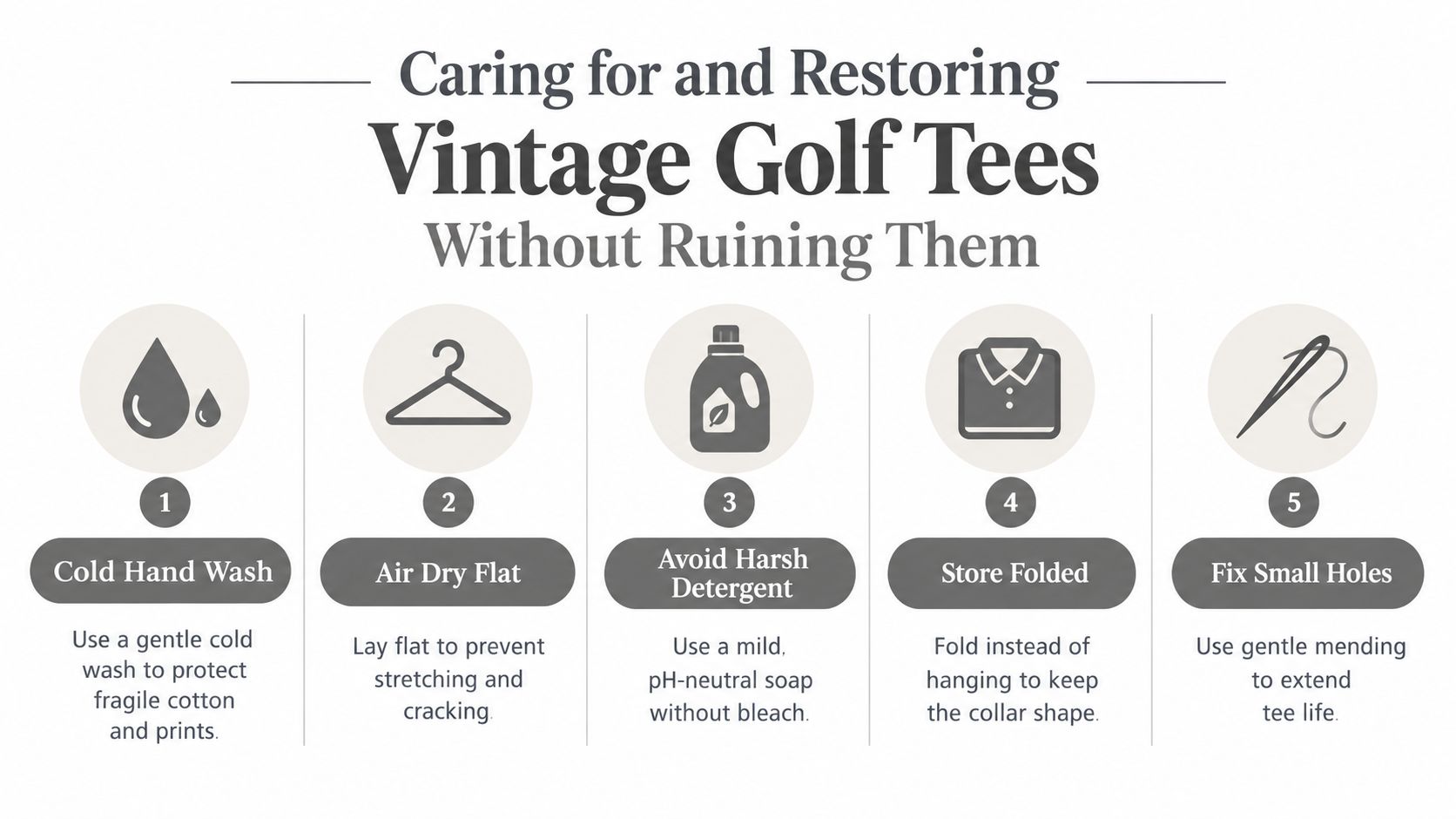
- Inspect before washing. Check for loose threads, pinholes, peeling ink, and weak seams. A small repair is easier before water and agitation enlarge the problem.
- Wash cold and inside out. Cold water limits stress on the fibers, while the inside-out turn protects screen prints from rubbing against the machine and other clothes.
- Use a mild detergent. Avoid bleach and strong stain removers unless you test them on a hidden area first. Fading is often part of the tee's history, not a problem to erase.
- Dry with minimal heat. Low heat or line drying helps reduce fiber relaxation and print cracking. Lay delicate cotton flat so its wet weight does not stretch the shoulders.
- Store folded. A hanger can pull an older collar and alter the shoulder line. Fold the tee loosely in a dry, dark place away from dampness and direct sunlight.
The Guardian's guide to caring for vintage T-shirts follows the same principle: clean vintage clothing without stripping away its past. For another look at how a well-worn graphic tee ages with character, see this guide to the Grateful Dead golf shirt.
For mild odors, air the shirt in shade with good ventilation before using stronger products. Small holes call for gentle mending that steadies the fabric without creating a stiff patch. Keep an iron away from printed areas. If the graphic flakes, washing less often and airing the tee between wears may protect it better than repeated cleaning.
A soft fade, curled collar, or carefully repaired seam is not automatically damage. Like a familiar club with a polished grip, those marks can add character, as long as the fabric remains wearable.
Styling Vintage Golf T Shirts On and Off the Course
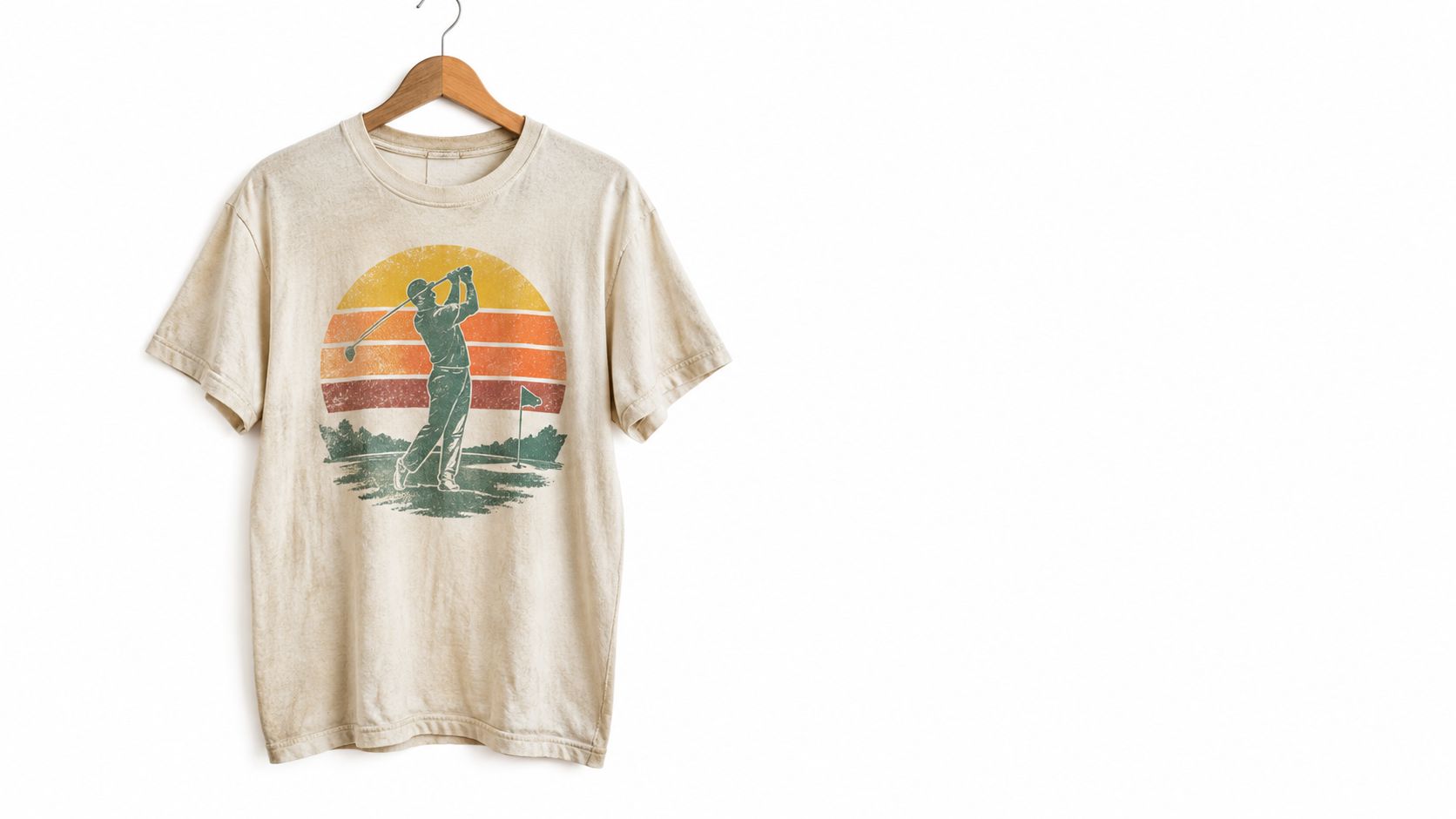
The easiest way to style a vintage golf tee is to let one element carry the nostalgia. If the shirt has a large sunset graphic, pair it with plain shorts or trousers. If it has a subtle crest, you can add texture through a cardigan, overshirt, or patterned cap without making the outfit look like a golf-history reenactment.
For a casual round, I'd start with a clean-fitting tee, shorts, and simple golf shoes. Add a lightweight overshirt for the walk to the course, then remove it before swinging. The outfit keeps the relaxed spirit of vintage golf clothing while avoiding the loose, heavy layers that can interfere with movement.
Course test: If the shirt looks wonderful standing still but pulls during a shoulder turn, save it for the 19th hole.
Three reliable outfit formulas
The clubhouse formula pairs a faded golf tee with chinos, a woven belt, and a lightweight sweater over the shoulders or worn open. This combination gives the graphic some structure and works well when a club's dress code expects a more polished appearance.
The fairway formula uses a shirt with enough room through the shoulders, golf shorts that fit well, low-profile shoes, and a cap in a quiet color. A true vintage cotton tee may feel charming, but it won't automatically provide the breathability, stretch, moisture management, or UV protection found in contemporary performance apparel. Recent golf-fashion coverage for the 2026 season describes heritage looks being updated with breathable stretch fabrics, moisture-wicking construction, and UV-protective materials, while reporting that about 62% of golf consumers prefer those performance features. AGM Golf's spring and summer 2026 trend report provides that context.
The off-course formula is more forgiving. Wear an oversized washed tee with straight-leg denim and a clean sneaker, or tuck a shorter vintage cut into pleated trousers. The contrast between an old graphic and a neat silhouette keeps the outfit intentional.
For a fuller look at the lower half of the outfit, see this guide to vintage golf shorts. The right shorts can make a soft cotton tee feel considered rather than accidental.
Dress codes deserve a quick check. Some clubs welcome a collared polo but don't permit a graphic T-shirt during play, while others are more relaxed. When in doubt, wear the vintage tee for travel, practice, the clubhouse, or the 19th hole, and choose modern performance clothing for a formal round in difficult weather.
Choosing Your Perfect Vintage Golf Tee and Wearing It With Confidence
Start with the question that matters most: Do you want history, function, or a little of both? A genuine vintage golf tee makes sense when you care about original construction, era-specific graphics, and the pleasure of owning something that has already traveled through someone else's life. A quality reprint makes more sense when you want dependable sizing, fresh fabric, and a low-anxiety shirt for regular wear.
Use four filters before you buy:
- Authenticity: Inspect the tag, hem stitching, fabric hand, print, and wear pattern together. No single clue settles the matter.
- Condition: Decide whether fading is attractive patina or a sign that the fibers have reached retirement.
- Fit: Measure the garment flat and compare it with a shirt you already wear comfortably.
- Purpose: Separate course clothing from lifestyle clothing. Cotton charm is wonderful, but it doesn't replace stretch or sun protection when the round demands technical performance.
The best wardrobe may include both versions. Hunt for an original when the graphic or local history gives you a reason to care. Choose a reissue when you want the same visual mood with easier washing and more predictable movement. You can wear the original to dinner, pair the reprint with golf shorts, and let each shirt do the job it was built to do.
A vintage golf tee doesn't need to look pristine to look confident. Wear it with clean trousers, a simple cap, or a favorite pair of shoes, and let the aged details remain visible. The point isn't to disguise the years. It's to make those years feel at home in your wardrobe.
Visit 2ndShotMVP to explore golf hats, beanies, and lifestyle apparel with playful designs for wearing on and off the course. Then choose the piece that fits your game, your wardrobe, and your preferred level of vintage mischief.

