

You're probably standing in front of a mirror right now with a Dead tee in one hand and a golf polo in the other, trying to answer the real question, not the fake one. The fake question is whether a Grateful Dead golf shirt is “serious enough.” One is whether it looks sharp, breathes on a hot day, and still feels right when the round ends and somebody says, “We're staying for one more drink.”
That's the right way to think about it. A good one isn't costume merch and it isn't museum glass, it's a functional golf shirt with attitude. The Dead have been on shirts since the 1966-1967 merch era, and a 1967 tee sold for $17,640 at Sotheby's in October 2021, which tells you this lane has real collectors and real demand behind it, not just nostalgia drift (San Francisco Chronicle reporting). If you want a shirt that can handle grass, sun, and a clubhouse bar, you need to shop like a golfer first and a fan second.
Why the Grateful Dead Golf Shirt Works On and Off the Course
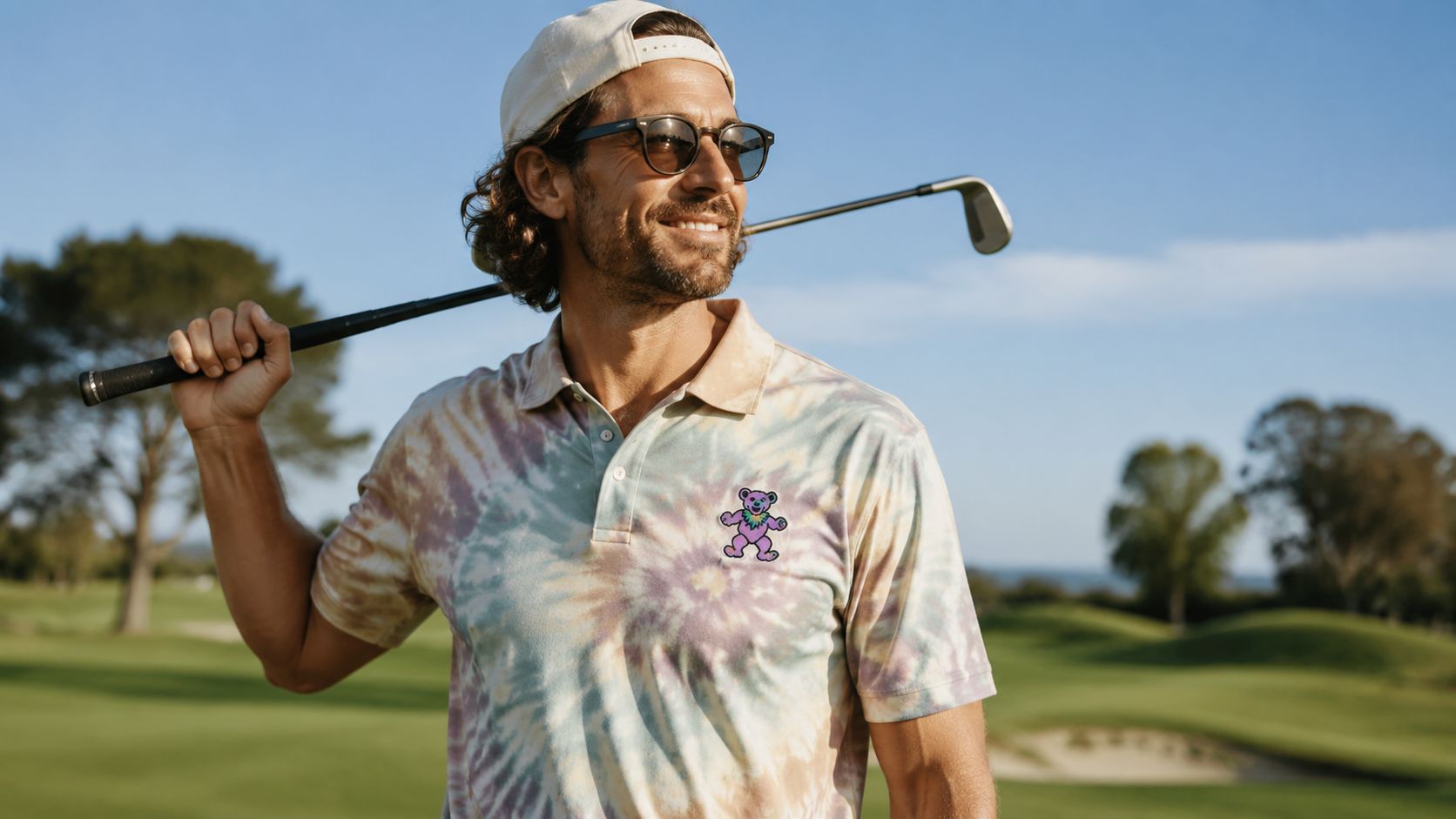
The guy who reaches for a Grateful Dead golf shirt usually isn't trying to impress the starter with brand purity. He wants something that says he knows music, knows golf, and doesn't need to wear a plain navy polo to prove it. That's the sweet spot, a shirt with enough history to feel earned and enough looseness to feel relaxed.
This niche has legs because it sits between two durable worlds. Dead apparel has been collectible for decades, with early shirts becoming high-value pieces and later reissues still pulling interest, while golf style has long made room for personality as long as the fit stays clean. Coverage of crossover pieces like a “Dead Golf Tie-Dye T-Shirt” described as a “1996/2000 Classic Re-Issue” shows that the golf-themed Dead shirt idea isn't some new internet invention, it's been floating around for a while in one form or another (Liquid Blue product context).
Who actually pulls this off
The best wearers are golfers who like a little edge but still understand restraint. They're not dressing like they're headed to a festival field, and they're not forcing deadstock irony into a muni round. They want a shirt that reads intentional under an open sky and still looks composed when the round turns into a patio hang.
Practical rule: if the shirt looks louder than your swing feels, it's too much.
That's why this category works. It gives you personality without requiring a full outfit performance, which is exactly what most weekend golf wardrobes need. If you're trying to build out that kind of wardrobe around golf lifestyle pieces, lifestyle golf brands are the right frame of reference.
Picking the Right Fabric, Fit, and Build Quality
Start with the cloth, not the graphic. A shirt can have the perfect Stealie on the chest and still be dead weight if it's cut like a cheap concert tee that clings at the stomach and twists after one wash. For golf, that's the wrong battle.
What to buy
The clean benchmark here is a premium golf-collab tee specification like Malbon's Grateful Dead long-sleeve graphic tee, which is listed as 100% cotton, made in the USA, and cut in a relaxed fit. On a size-M reference, the chest measures 45.75 in / 116 cm and the length is 28 in / 71 cm, while the size conversion also shows M corresponds to a 38 in US chest reference, which is a good reminder that the label and the garment's actual finished dimensions are not the same thing (Shopbop listing).
That difference matters. If you buy based only on the letter on the tag, you can end up with a shirt that feels too snug across the chest and short through the body once you raise the club. Golf-casual tees need room through the torso, a soft shoulder, and enough length to stay put untucked.
How to read sizing without getting burned
| Size Label | Brand Chest Reference (US) | Finished Chest (approx.) | Finished Length (approx.) |
|---|---|---|---|
| M | 38 in | 45.75 in / 116 cm | 28 in / 71 cm |
If you're comparing options, treat the finished chest as the primary measurement and the brand reference as a rough translation only. The best workflow is simple, measure the tee you already like, compare the chest width and length, then decide whether you want more drape or a closer cut. If you want a cleaner technical benchmark for build and fit in custom golf apparel, shop performance polos by FLYP gives you another useful reference point.
Sizing move: choose for ease, not ego. A golf shirt that skims the body wins over one that squeezes it.
Where fabric weight changes the outcome
The other thing buyers ignore is weight. For Dead apparel, the listings cluster around 5.0–5.3 oz/yd² (170–180 g/m²) for standard cotton tees, while a lighter collector-style tee comes in at 4.2 oz/yd² (142 g/m²) and can be slightly sheer in lighter colors. That means midweight jersey is the safer play if you want opacity, stability, and a shirt that feels like a garment instead of a souvenir. If you want to understand why sweat management matters too, moisture-wicking fabric is worth a quick read before you buy.
Graphics, Dyes, and Colorways That Actually Age Well
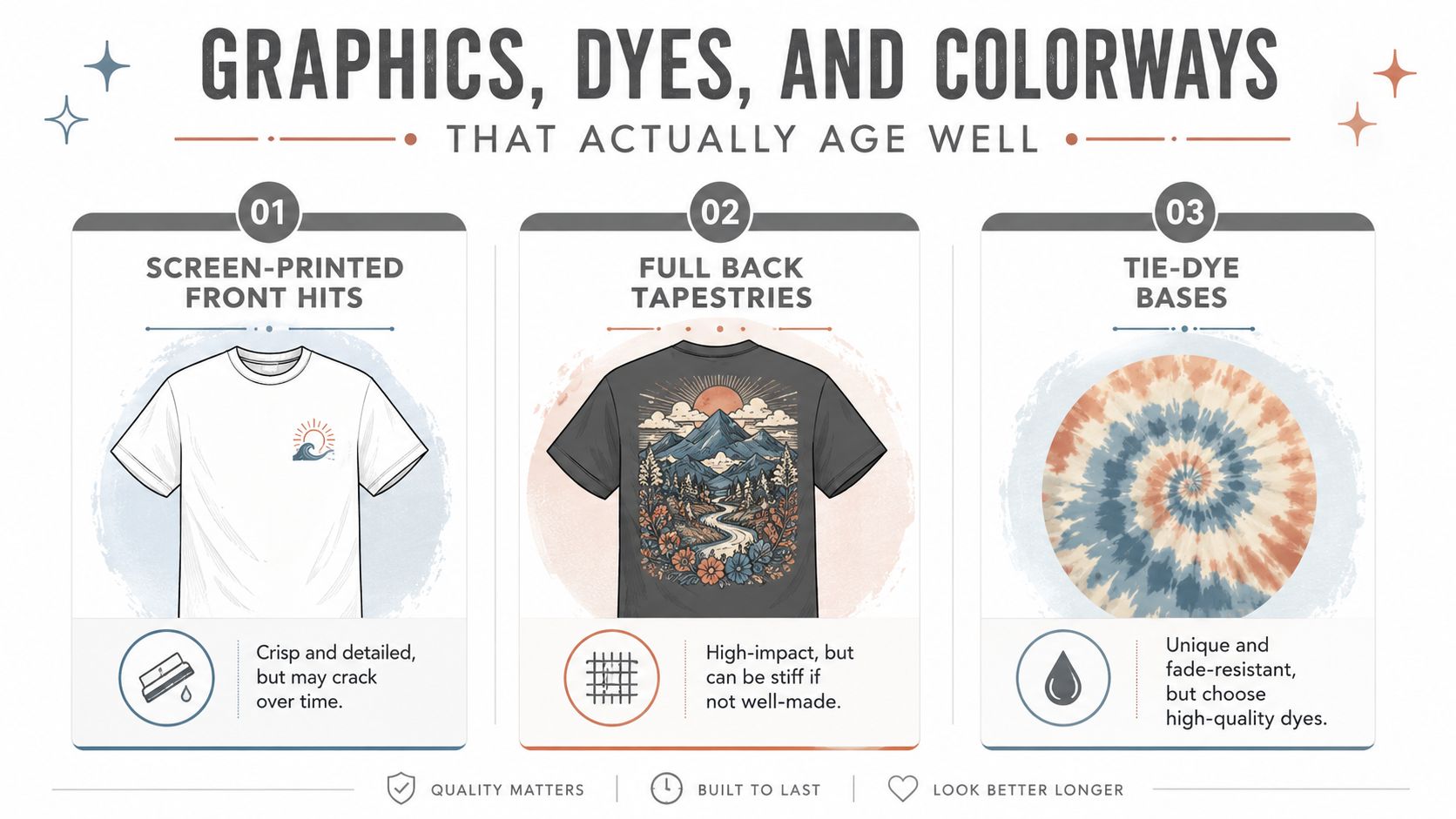
Some Dead graphics age like a great album cover. Some age like a free t-shirt from a parking lot. The difference is usually print method, fabric weight, and whether the colorway was chosen by someone who understands real wear or just wanted the mockup to pop online.
The print that works hardest
A screen-printed front hit is the easiest version to wear on course. It gives you the Dead signal without turning the whole shirt into a billboard, and it tends to stay more versatile under a jacket or overshirt. The tradeoff is simple, the cleaner the print, the more you want a solid or lightly textured base so the design doesn't feel pasted on.
A full back tapestry is louder and more fashion-forward. It can look fantastic in a clubhouse line or a night round, but only if the shirt itself has enough body to support the weight of the graphic. On a flimsy tee, it looks busy. On a decent midweight tee, it looks deliberate.
Tie-dye is either sharp or sloppy
A tie-dye base gives you the most natural Dead read, but the execution matters. Good dye work adds depth and movement. Cheap dye work looks washed out before the first wash. The lighter 4.2 oz/yd² style can feel great in heat, but the same lightness makes white or pale colors more likely to read sheer, which is a bad trade if you're wearing it on a course with bright sun and a dark undershirt showing through.
What ages best
If you want a shirt that can take repeated wear and still look intentional, go with:
- Midweight cotton jersey: better opacity, better print stability, fewer transparency complaints.
- Controlled graphics: one strong chest or back hit instead of visual noise everywhere.
- Dyes with depth: tie-dye that looks mixed, not muddy.
- Neutral bases: black, cream, charcoal, or a subdued wash that won't fight your shorts.
The collector angle matters too. Vintage-style Dead shirts have real resale pull, and celebrity wearers have pushed Deadhead graphics deeper into mainstream style demand, so treating the shirt like a throwaway is just bad economics. If you're using design software to mock up a custom colorway before buying, AI shirt design tools can help you test how loud a print really is before you commit.
Styling the Look From Tee Box to 19th Hole
The shirt does the talking. The rest of the outfit should back it up, not compete with it. That means clean bottoms, sensible footwear, and one headwear choice that shifts the whole mood without making you look like you dressed for a theme night.
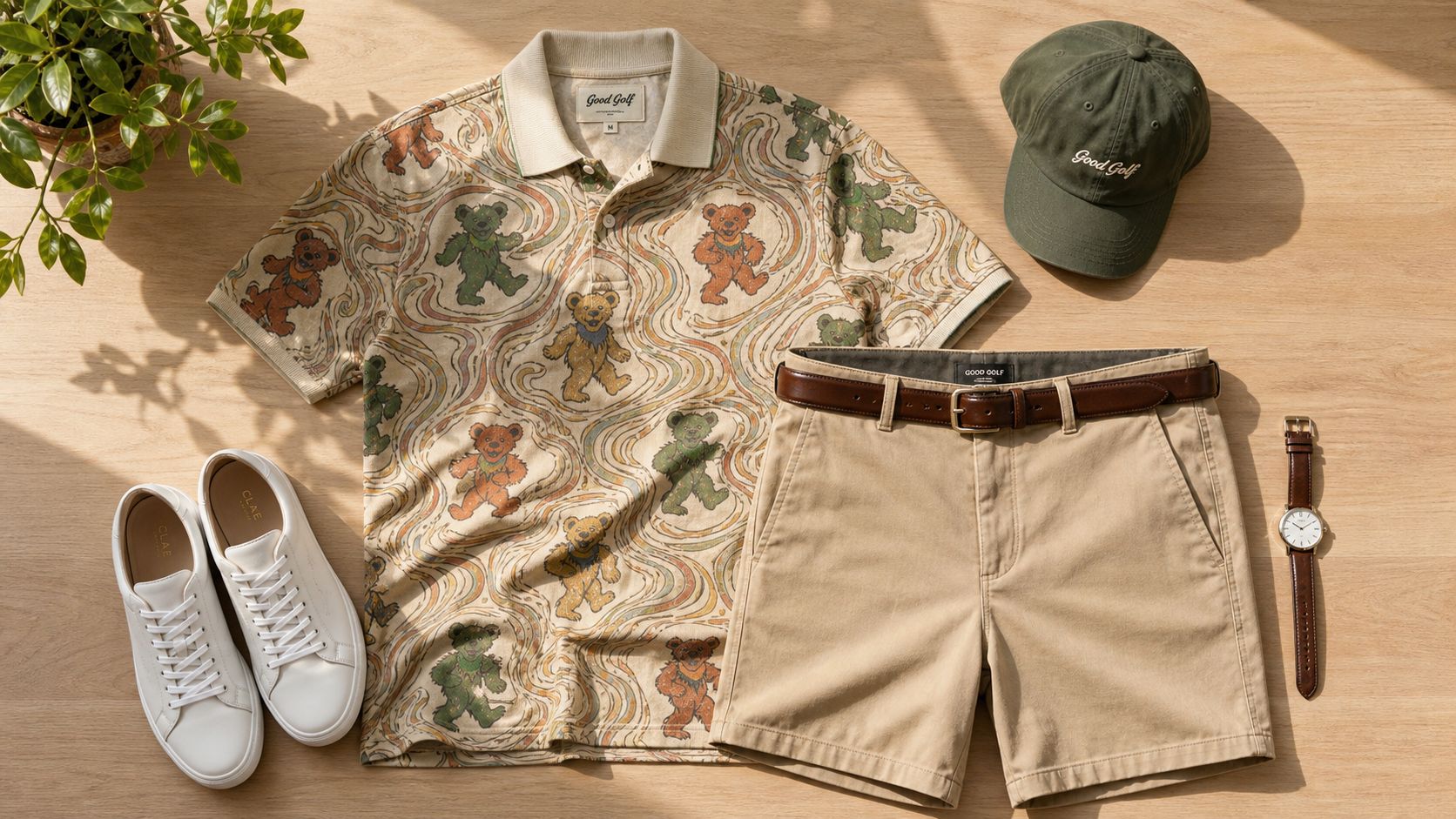
Easy outfit formulas that work
- Casual Saturday round: Dead tee, fitted khaki shorts, white sneakers, structured cap. Clean, easy, and not trying too hard.
- Member-guest with a relaxed vibe: darker Dead graphic, gray trousers or crisp shorts, leather golf belt, simple golf shoe. Keep the shirt as the statement and let the rest behave.
- Post-round brewery stop: untucked tee, denim or chinos, low-profile hat, lightweight overshirt if the weather turns. This outfit makes the shirt earn its keep twice.
Tucked versus untucked matters less than proportion. If the shirt has a clean hem and enough length, untucked usually looks more natural for a Dead graphic. If the bottom half of the outfit is loose or long, a partial tuck can sharpen the silhouette fast.
The headwear changes the read
A structured golf hat makes the shirt feel like part of a planned outfit. A relaxed beanie shifts it toward laid-back streetwear. Both can work, but don't mix a wild graphic with extra visual clutter on top. One loud thing is enough.
A calm bottom half makes the shirt look smarter. That's the whole trick.
For early tee times, throw on a thin layer over the shirt and keep the base outfit neutral. For evening drinks, lose the layer, keep the shoes clean, and let the graphic carry the mood. If the shirt already has tie-dye energy, skip patterned shorts and loud socks. Let the Dead art be the only showpiece.
Dress Codes, Club Culture, and Reading the Room
There are places where a Grateful Dead golf shirt looks great and places where it reads lazy. Learn the difference fast and you'll never get caught looking like the only guy who misunderstood the invite.
Private clubs are the most rigid setting. If the club expects traditional collars, tucked polos, or quiet color palettes, respect that and leave the Dead shirt in the car. Resort courses and public tracks are looser, and that's where a smart graphic tee or crossover golf shirt usually lands well, especially if the rest of the outfit is tidy. The same goes for casual leagues and friendly weekend groups, where style gets more leeway as long as you don't show up looking like you got dressed in the parking lot.
Fast read on whether it works
- Private traditional club: usually no, unless the culture is unusually relaxed.
- Resort or destination course: often yes, if the shirt is clean and the fit is sharp.
- Public course with a social crowd: yes, this is the natural habitat.
- 19th-hole bar: absolutely, provided the shirt isn't stained or stretched out.
- Charity tournament: maybe, depending on sponsor expectations and how formal the field is.
Small details matter. A clean belt, neutral bottoms, and a structured hat pull the outfit toward considered rather than novelty. If the shirt is tie-dye, keep everything else quieter. If the shirt is a darker graphic tee, you can get away with more texture in the rest of the outfit.
Majors and Augusta-style environments are different. That's not the place to test how far you can stretch band-merch energy. If the dress code leans classic, wear the classic thing and save the Dead shirt for the round that wants some personality.
Care, Cleaning, and Long-Term Maintenance
A shirt that fades, twists, or cracks after a season is a bad buy, no matter how good it looked in the shop. Cotton Dead shirts hold up best when you treat the graphic like it matters and the fabric like it's not disposable.
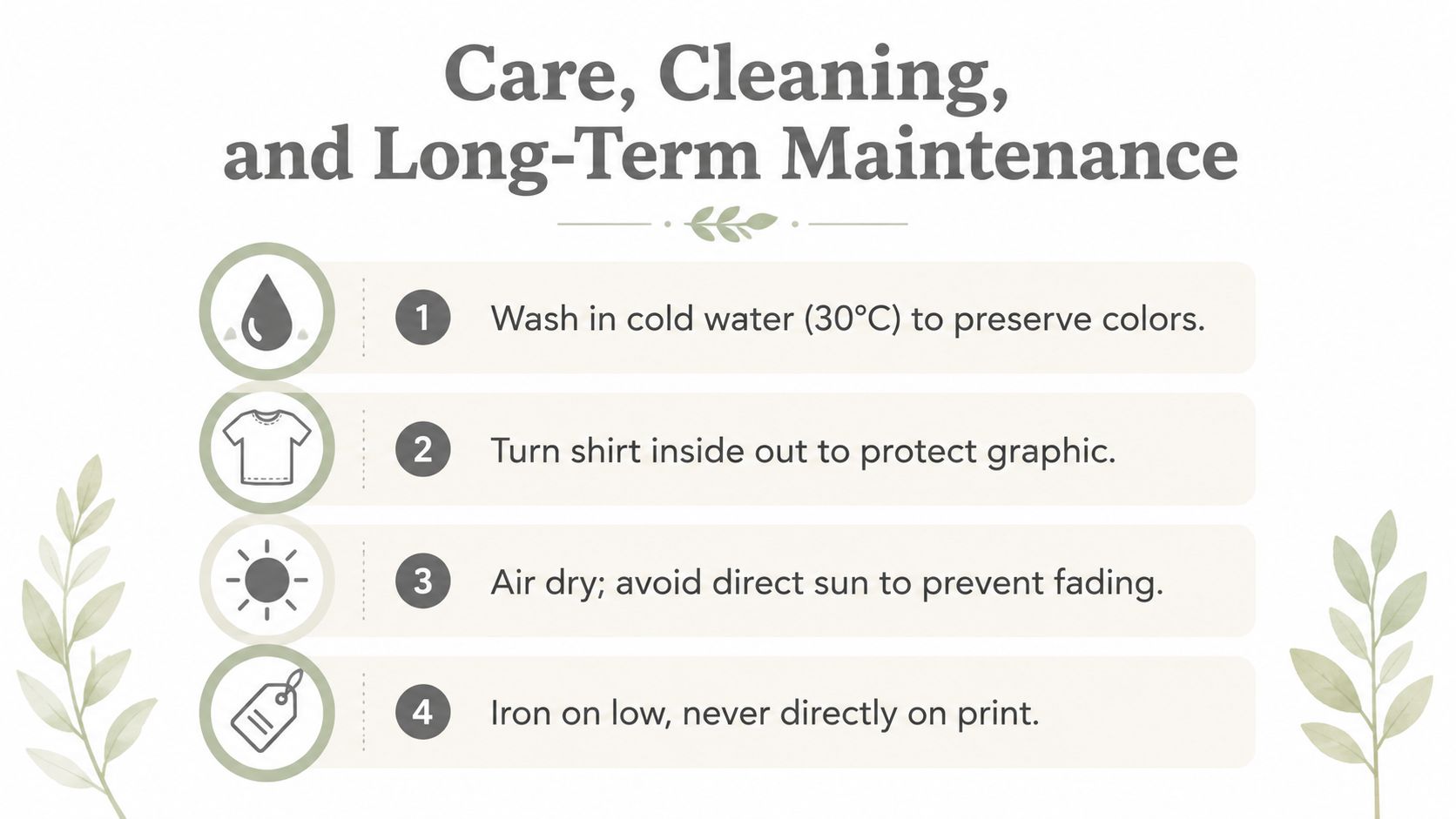
The routine that saves the shirt
Wash it inside out and use cold water if you want the print to stay crisp and the colors to stay honest. Air drying is the safest move because heat is where cotton tees start shrinking and graphics start getting tired. If you must use a dryer, keep the setting low and pull the shirt out while it's still slightly damp.
Sweat and sunscreen are the two sneaky enemies. Don't scrub the front graphic aggressively when you treat a stain, and don't rub hot water into the print just because you're impatient. A gentler wash cycle is the right move for the midweight tee, while a lighter collector piece deserves even more caution, ideally a mesh bag and a softer cycle.
The internal logic is simple. Better fabric weight tolerates more casual care. Lighter jersey needs more respect because it shows wear faster and makes print damage more visible sooner. For related golf apparel maintenance and accessory storage habits, golf apparel and accessories is a useful companion reference.
Storage that keeps the shape
Fold the shirt along the same lines every time only if the print is sturdy. If it's a thinner or older tee, rotate the fold so one crease doesn't become a permanent crack line across the graphic. Hanging is fine for short stretches, but a soft hanger is better than a thin wire one that stretches the shoulders.
A simple seasonal checklist works:
- Wash cold.
- Turn inside out.
- Skip high heat.
- Air dry when possible.
- Store flat if the graphic is delicate.
That's enough to keep the shirt wearable for more than one golf season without turning it into a faded relic.
Smart Buys and Common Questions Answered
Buy the shirt for how it wears, not just how it looks in the product shot. The safest bet is a midweight cotton piece with a graphic you'd still like after the novelty wears off, because that's the version you'll reach for on a Saturday morning.
If you're choosing between a limited drop and a restock, I'd chase the limited piece only when the graphic is strong and the fabric spec is solid. Otherwise, wait. Too many loud shirts are only exciting until the first wash, and then you're left with a crooked print and buyer's regret. If you're shopping resale, inspect the neckline, shoulder seams, and print surface before you care about the story.
Quick questions
Do these shirts run small?
Sometimes, yes, but the main issue is inconsistency between labeled size and finished garment size. Check the chest and length, not just the letter.
Can you wear one for summer golf?
Yes, if the fabric weight is right and the fit has enough room to move. A lighter tee breathes more easily, but a midweight cotton shirt usually looks and behaves better on the course.
What if I need a larger size?
Look for brands that publish finished measurements and relaxed fits, then compare the tee you already own. That's more reliable than guessing from the size tag.
What should I wear if the dress code is strict?
Wear a plain collared polo and save the Dead shirt for the 19th hole. That's the move when the room wants classic golf, not personality golf.
If you want golf gear with a little personality built in, check out what 2ndShotMVP puts together for hats, beanies, and lifestyle pieces you can wear from the course to the bar. It's a clean place to find golf gear that doesn't look like it gave up before the round started.

