

You're standing over a par-3 in clear afternoon light. Your familiar baseball cap puts a neat patch of shade over the ball, but your nose and cheeks are still exposed, and the glare makes you squint just as the club starts down. The cap didn't fail because it was badly made. It failed because its golf hat brim was designed to shade forward, not to manage light around your whole face.
A brim is equipment. Its width, curvature, material, construction, and UPF rating all affect what you see and how much of your face sits in shade. The right choice also depends on your head shape, posture, sunglasses, and the course itself. A cap that behaves perfectly on a breezy coastal layout can feel inadequate on a bright inland track.
Why the Brim on Your Golf Hat Actually Matters
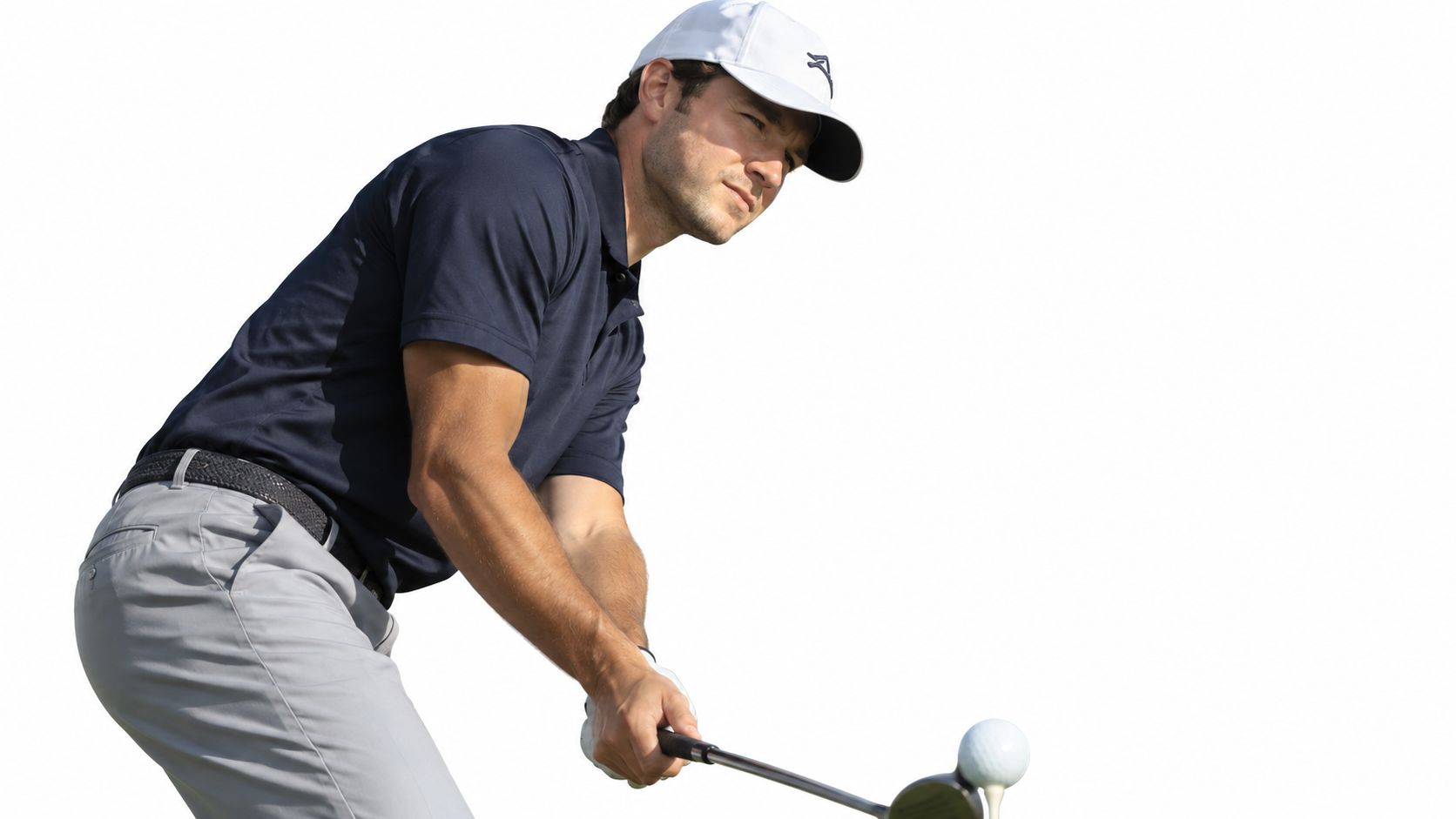
The brim performs several jobs during a round. It redirects direct sunlight away from the face, reduces glare in your forward sightline, helps keep sweat off sunglasses, and creates a more comfortable visual frame around the ball. It also contributes to skin coverage during a long round, especially when you spend hours moving between exposed tees, fairways, and greens.
That last point matters because a forward-facing bill leaves the sides of the face in a different position from the forehead. Turn your head to follow a drive, tilt toward the target on a downhill lie, or lower your chin at address, and the shaded area changes. The hat isn't static while you play, even if the brim looks static on the shelf.
Think like a club-fitter
Start with four specifications:
- Width: How far the brim extends from the crown.
- Shape: Whether it's flat, curved, rounded, or continuous around the head.
- Material: Whether it stays firm, absorbs moisture, or loses form.
- UPF rating: How much ultraviolet radiation the fabric blocks when the fabric itself covers the skin.
The shape determines where the shade travels. The width determines how much of the face can sit beneath it. The material decides whether that performance remains consistent after sweat, humidity, or a brief shower.
Fitting principle: A hat can look wide in your hand and still provide narrow coverage once you lower your head into address position.
Golf staff, tournament organizers, and course teams often need headwear that balances appearance with movement and weather. If you're comparing coordinated accessories for an event or staff wardrobe, custom golf caddie uniforms can provide useful context for matching hats with a broader golf look. For an individual player, the same principle applies: choose a brim that works with your posture and conditions, not just your shirt.
The Four Brim Shapes Every Golfer Should Know
Think of each brim as a panel on a small open cockpit. A forward bill is the windscreen. A rounded brim adds side panels. A full circumferential brim surrounds the cockpit and redirects light arriving from more angles. That analogy explains why two hats with similar-looking fronts can produce very different shade at address.
| Shape | Typical Width | Coverage Zone | Best For | Main Trade-off |
|---|---|---|---|---|
| Flat or curved baseball cap brim | 2.5 to 3 inches | Forehead, brow, and forward eye area | Familiar fit and unobstructed movement | Ears and cheeks remain exposed |
| Gently pre-curved tour brim | About 2.5 to 3 inches | Brow and upper nose area | Players who want a stable forward shield | Less side coverage than a full brim |
| Wide rounded bucket brim | About 3 to 3.5 inches | Forehead, eyes, nose, and some cheeks | Balanced coverage around the face | Can meet sunglasses at the sides |
| Full 360-degree floppy or safari brim | About 3 to 3.5 inches or wider | Face, ears, and side zones | Low-angle light and extended sun exposure | May move in wind or enter the peripheral view |
Forward-only shapes
A flat baseball bill throws shade ahead of the crown. That's helpful when the sun is high and you're looking down the fairway, but the ears and side of the face remain open. A more pronounced curve can bring the edges closer to the sunglasses frame, which may improve glare control while also making the brim more noticeable in your peripheral vision.
The gently pre-curved tour brim sits between a casual cap and a sun hat. Its front edge tends to stay clear of the ball while the curve brings the side corners slightly downward. This works well for players who want a conventional golf silhouette and a cleaner relationship with sunglasses.
Rounded and continuous shapes
A bucket brim circles the face, so it doesn't depend as heavily on the direction you're facing. Its shadow tends to spread more evenly across the brow and upper face. A floppy or safari-style brim goes further by covering the side zones and handling light that arrives from a low angle, such as late afternoon sun.
The trade-off is visual. Fuller brims can touch sunglasses arms, brush the shoulders during a compact setup, or become distracting if the edge sits too close to the eye line. The best shape is the one that creates shade without becoming part of your swing thought.
Brim Width and What It Really Covers
Width is the main driver of facial coverage. Standard cap dimensions may shade the forehead and brow, but independent guidance places meaningful facial coverage above the dimensions of a typical baseball bill. A review in the British Journal of Dermatology found that small-brim hats offered negligible protection beyond the forehead, while peaked caps mainly protected the nose and were ineffective at other facial sites. It concluded that a brim greater than 7.5 cm is needed for reasonable protection factors above 3 around the nose and cheeks, as reported in the British Journal of Dermatology review.
That makes 3 inches, or 7.5 cm, a practical dividing line. Below it, you're generally choosing a cap-style shield. At or above it, you're entering a materially different sun-hat category, especially if the brim runs around the sides rather than pointing only forward.
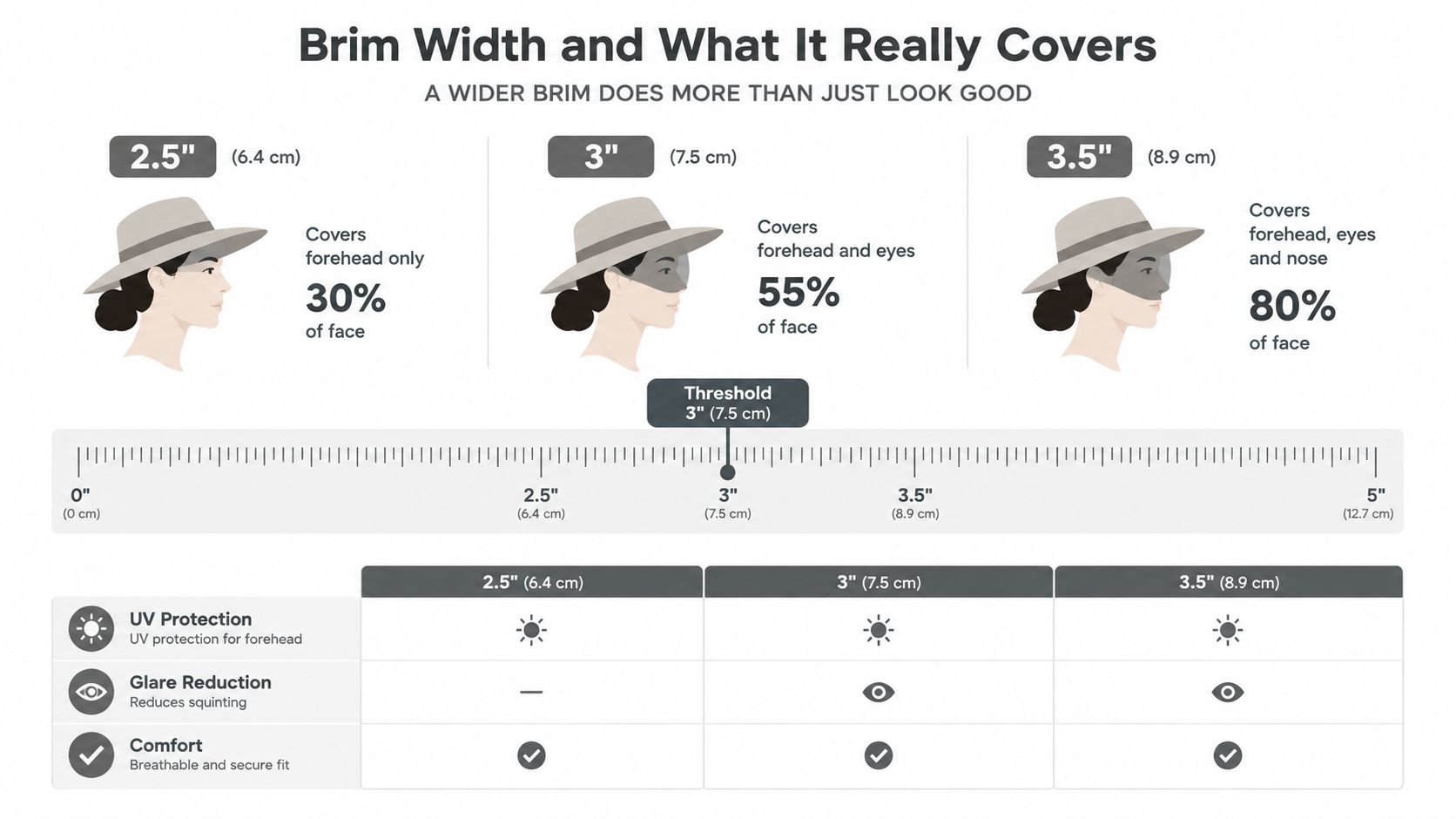
Some product descriptions use precise-looking coverage percentages for particular brim widths. Treat those cautiously. Coverage changes with the sun's angle, the brim's curve, your head position, and whether the side panels are as wide as the front. A 3.5-inch brim that droops can shade differently from a rigid 3.5-inch brim, even though the measurement is identical.
A simple width test
Measure from the crown edge to the outer brim edge at the front, then repeat at the side. A front measurement near 3 inches is useful, but side coverage matters if you turn toward the target or spend time in low-angle light. Side panels wider than 2 inches can offer more meaningful protection to the ears and side of the face than a narrow side seam.
At the store, lower your chin as if you're addressing a ball. Look toward an imaginary target, then rotate your head slightly. The brim should cast shade beyond the nose without cutting across your eye line. If you want a fuller option, wide-brim golf hats can help you compare designs intended to extend coverage beyond a traditional cap.
The visual test matters as much as the ruler. A brim that measures well but forces you to lift your chin to see the target isn't a good playing fit.
Materials, Construction, and UPF Ratings
Choosing brim material is similar to choosing a driver shaft. There isn't one universally correct profile. You're balancing weight, weather behavior, shape retention, comfort, and ultraviolet performance.
| Material | Typical Weight | Water Behavior | Shape Memory | Typical UPF |
|---|---|---|---|---|
| Cotton twill | Light to medium | Absorbs sweat and moisture | Can soften or droop when wet | Varies by weave and finish |
| Polyester | Light to medium | Dries quickly and resists moisture | Usually holds its curve well | Commonly available with UPF 50+ finishes |
| Paper braid or straw | Light | Can lose stiffness in humidity | Moderate, often dependent on weave | Varies by weave and lining |
| Nylon blend | Light | Dries quickly and packs easily | Good recovery for a soft material | Often offered around UPF 30+ |
Cotton feels familiar and breathes pleasantly, but moisture can change the brim's shape. If the front edge drops during a hot round, the effective shade changes too. Polyester is often easier to keep consistent because it dries quickly and can hold a shaped visor through repeated wear.
Paper braid and straw bring clubhouse character, but their performance depends heavily on weave density and structure. Humidity can soften them, which may be fine for a relaxed cart round and less useful when you want a stable eye line. Nylon blends offer a practical middle ground for players who want light weight and packability.
UPF is not a brim measurement
UPF describes the fabric's ultraviolet protection, not the area shaded by the hat's shape. A UPF 50 hat with a short forward bill can still leave the nose, cheeks, ears, and neck uncovered. Conversely, a larger brim made from a loosely woven material may create visible shade without delivering the same fabric-level ultraviolet barrier.
Look for a stated UPF rating such as UPF 30, UPF 40, or UPF 50+, then evaluate the brim separately. For broader wardrobe coordination, summer hat styling advice can help you think about materials and proportions without treating appearance as a substitute for construction.
Inspect the details, too. A bound edge is less likely to fray than a raw hem. A stitched sweatband can stabilize the crown and improve comfort. A wire core can let you tune the curve, although it should remain secure and unobtrusive. For more product comparisons, see this guide to golf hat sun protection, then judge every option by both its rating and its actual brim geometry.
Matching Brim Shape to Your Head and Swing
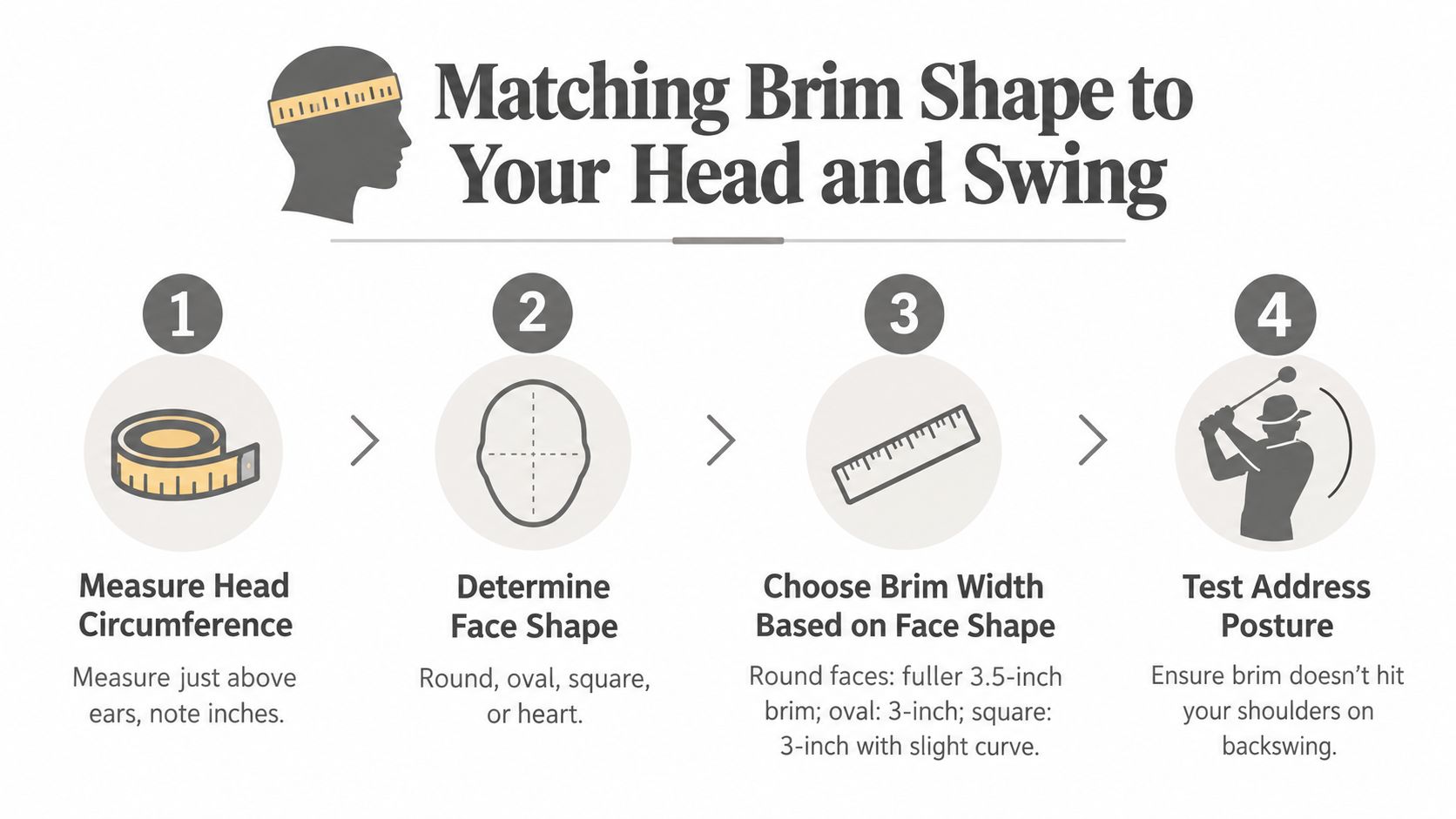
A good brim should fit your head before it fits your outfit. Start by measuring the circumference just above your ears and across the forehead, then compare that measurement with the manufacturer's sizing. A crown that's too large can leave the brim floating above your eyebrows, reducing forward shade and making the hat shift during a swing. A crown that's too tight can create pressure that you notice every time you bend over a putt.
Match the outline
Face shape isn't a strict rule, but it's a useful starting point:
- Round face: A fuller, slightly downturned brim adds vertical structure and can spread shade lower across the face.
- Longer or oval face: A flatter, wider brim balances the profile without pushing the front edge too close to the chin.
- Square face: A moderate brim with a gentle curve softens the visual line while keeping the eye area open.
- Heart-shaped face: A balanced crown and medium-width brim can avoid adding unnecessary weight at either the forehead or jawline.
The brim should also suit the way you stand. A tall player with an upright address position may carry a wider front edge comfortably. A player who bends from the hips can bring that same edge into the down-the-line view or let it brush the shoulders during the backswing.
Test the hat as equipment
Use a mirror and perform the movements you make on the course:
- Put the hat on at its normal setting, not at the loosest adjustment.
- Lower into address and look toward the target.
- Make a slow takeaway and backswing.
- Turn your head as you would while tracking a shot.
- Check whether the brim shifts, touches your sunglasses, or blocks the target.
Address test: If you must tilt your chin upward to see clearly, the brim is too deep, too low, or poorly matched to the crown.
A structured hat can preserve a crisp edge, while an unstructured design may conform more naturally to your head. Compare those construction styles in structured versus unstructured hats, but don't choose by label alone. The mirror, your posture, and the brim's relationship with your eye line decide the fit.
On-Course Performance Versus 19th Hole Style
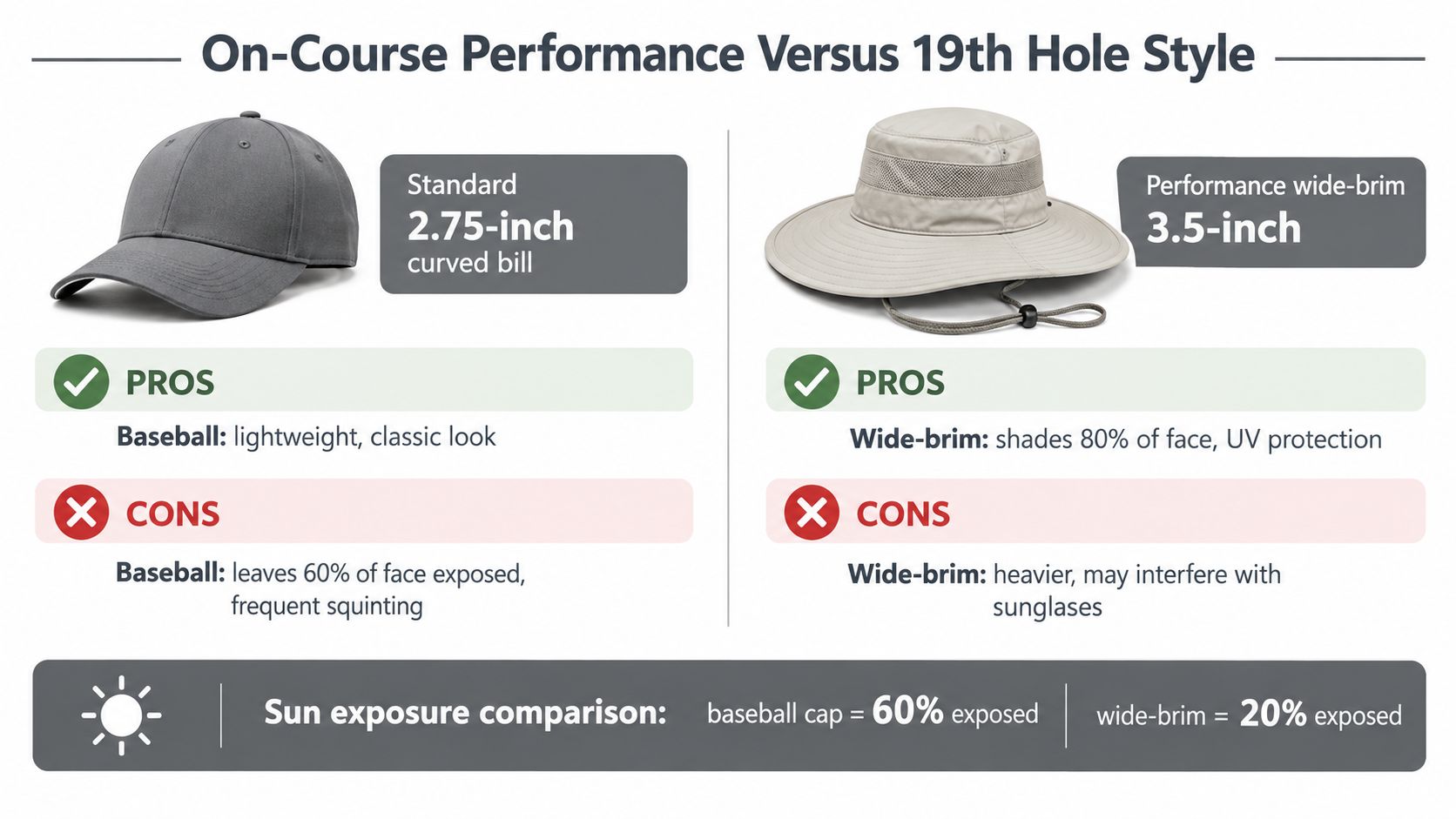
A baseball cap can be perfectly wearable on a golf course and still provide limited facial coverage. A standard curved bill points shade forward, so it works well for the forehead and brow when the sun is high and your head is angled down. It's less effective for the ears, cheeks, and side of the face when you turn toward the target or face low afternoon light.
Research focused on hat-style sun protection found that, on a cloudless summer day, the entire face protected by a wide-brim hat received the lowest mean ultraviolet radiation dose among the tested hat types, at 1.7 standard erythema dose, or SED. The same study found that no hat style provided 100% protection at every facial skin zone, with maximum protection around 76%, and that larger brims generally provided greater facial protection than smaller brims except near midday, when the sun was highest, as reported in the 2018 hat-style sun-protection study.
That result gives you a useful reality check. A wide brim helps, but it isn't an invisible force field. Shade still changes with posture, direction, reflected light, and exposed skin.
Pick for the round you're playing
A structured performance hat usually wins when you're walking, swinging hard, and dealing with sweat or wind. Its brim holds a predictable relationship with your eyes. A softer lifestyle hat may feel better at the bar, in the clubhouse, or during a relaxed afternoon where appearance and packability matter more than a fixed edge.
Golf-specific survey research also shows that adoption isn't purely technical. Among 347 golfers, 141 respondents, or 40.6%, were only slightly or not at all interested in wearing a wide-brim hat, while 131, or 37.8%, were moderately interested and 75, or 21.6%, were extremely interested. Golfers who perceived themselves at greater skin-cancer risk showed more interest in wide-brim hats, with ρ = 0.21 and p < 0.0001, according to the 2021 golf sun-protection research.
You're allowed to own two hats. Use a firm, rated brim for exposed walking rounds and a softer cotton or straw style for casual wear. A crossover hat should remain stable, sit comfortably with sunglasses, and provide useful side coverage without becoming a distraction at address.
A Pre-Round Brim Checklist Before You Buy
Treat the hat like a club you're about to add to the bag. Don't stop at color and logo placement. Handle the brim, put the crown on your head, and test the exact posture you use over the ball.
Five checks at the shelf
- Flex the center and ends: Press gently at the front and side edges. A playable brim should return toward its intended shape rather than staying collapsed.
- Feel the front seam: Run a finger along the inside seam. Raised or rough stitching can create a pressure point across the forehead.
- Inspect the edge: Bound edges usually feel cleaner and more durable than raw hems, particularly on wider designs.
- Evaluate the sweatband: Look for a secure, comfortable band that can manage moisture without feeling bulky.
- Read the label: Check for a stated UPF rating, such as UPF 30, UPF 40, or UPF 50+, then confirm the fabric composition and care instructions.
A wide brim that loses its shape after moisture may offer less consistent coverage later in the round. A wire-edged design can be useful because you can adjust the curve, but the wire should be enclosed securely and shouldn't poke through the binding.
Run the mirror test
Stand beneath overhead light, put the hat at its normal fit, and lower into address. The shadow should extend beyond the tip of your nose without crossing into the eye line. Turn toward an imagined target, make a slow backswing, and check whether the brim catches your shoulders or collides with your sunglasses.
Finish with two questions. Does the crown sit at the correct height for your brow and temples? And does the brim match the lies and light you usually face, including low-angle afternoon sun and downhill setups? If the answer to either is no, change the shape before changing the color.
2ndShotMVP offers premium golf hats, beanies, and lifestyle apparel for men and women, including designs suited to wear on and off the course. Visit 2ndShotMVP to compare its golf headwear and choose a brim that fits your playing posture, preferred style, and next round's conditions.

