

Most advice about retro golf fashion gets it backward. It starts with the loudest part, the plaid, the knit, the old-school logo, then wonders why the outfit looks like a theme party by the 14th hole. The better move is to start with fit, silhouette, and course rules, then add the vintage flavor on top. That's how you get heritage style without looking like you borrowed your granddad's locker.
Retro golf fashion in 2026 is not a costume. It's a styling system built from old golf eras, then updated so the look can survive heat, movement, and a clubhouse door that doesn't care about your nostalgia. If you want a broader vintage reference point beyond golf, the McLaren Vale Cellars vintage guide is a useful companion read, because the same rule applies there too, borrow the era, don't impersonate it.
What Retro Golf Fashion Means in 2026
Retro golf fashion means borrowing from specific decades without dressing like you raided a museum archive. The strongest looks pull from the 1950s through the 1990s, then use modern fabrics and cleaner construction so the outfit still works on a real course. That matters, because golf history shows the game moved from formal tailoring to the classic polo-and-trouser foundation over time, not from one vintage look to another (golf clothing history).
Stop confusing retro with period costume
Early golf dress was seriously formal. Men commonly wore wool suits, waistcoats, ties, and heavy tweed jackets, while women wore long skirts and hats in the early game, and even a 1918 Vanity Fair ad described golfers as “well-dressed,” which tells you how closely the sport was tied to upper-class formality at the time (golf clothing history). That old look is part of the story, but it is not the styling target for many today.
What people call retro now is a cleaner, more wearable set of references. The best version looks like you understand the archive and know how to edit it. A strong knit polo, a structured cap, a straight-leg trouser, maybe a restrained argyle, that's retro. A wool blazer in July is just a bad decision with excellent lineage.
Practical rule: If a piece needs an apology before you wear it on the first tee, it's too far into costume territory.
For men and women who want a sharper framework, a practical vintage wardrobe guide like the one at classic golf attire helps separate timeless shape from novelty. For a broader vintage reference point beyond golf, the McLaren Vale Cellars vintage guide is useful too, because the same rule applies there, borrow the era, don't impersonate it. Retro golf fashion should read as intentional, not ironic.
How Golf Style Evolved Into the Retro Look
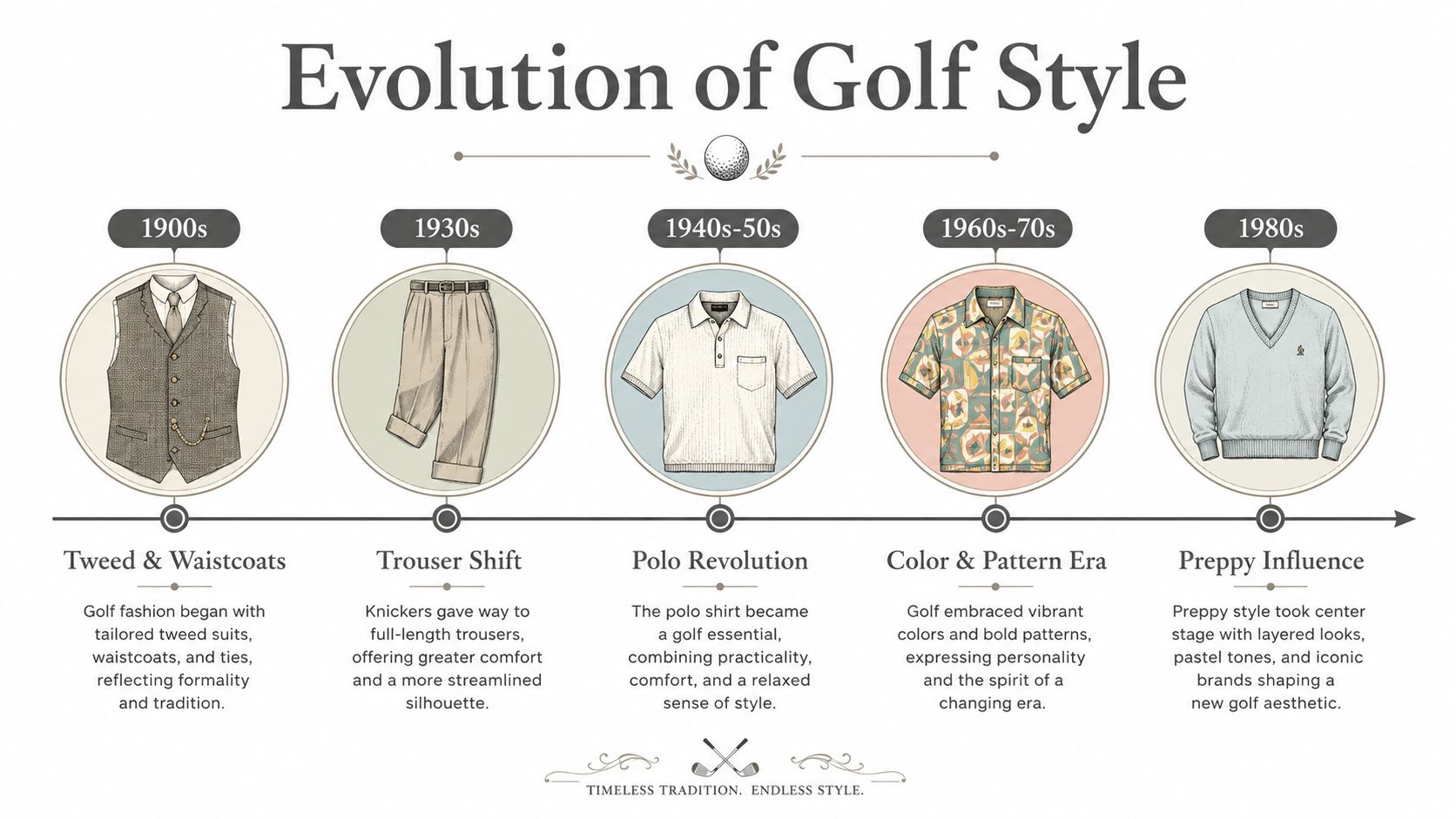
The retro golf look makes sense once you see the timeline. The early 1900s were all about heavy formality, with tweed, waistcoats, ties, and long skirts shaping the course. Then the 1930s loosened things up, when trousers started replacing plus-fours, which changed the visual line of the golfer from knickered and bulky to cleaner and more athletic (golf clothing history).
The middle decades gave retro style its best ingredients
The 1940s and 1950s brought short-sleeved knit shirts inspired by Lacoste-style tennis wear onto the course, and that's where the modern polo story really starts (golf clothing history). If you want one garment that instantly feels retro without becoming theatrical, that's the one. Tuck it properly, and the whole outfit tightens up.
The 1960s and 1970s turned the dial louder. Fashion histories describe those years as a mix of synthetics, flashy colors, and jacquard patterns, while the 1990s moved toward baggier fits and the 2000s shifted into performance fabrics like moisture-wicking and stretch blends (brief history of golf attire). Modern retro style borrows from both ends of that story. It takes the polo-and-trouser base from mid-century golf, then adds the pattern confidence of the 1970s or the relaxed silhouette of the 1990s, but never both at once if you want to stay sharp.
Women's retro golf style has its own key marker, the 1960s skort, which gave course dressing a practical option that still reads polished (brief history of golf attire). That piece still works because it solves a real problem while keeping the silhouette clean. That's the theme across the whole history of golf dress, function won when the game got serious.
The Essential Pieces of a Retro Golf Wardrobe
Start with the pieces that do the heavy lifting. If you build the wardrobe correctly, you do not need a giant closet full of vintage odds and ends. You need a few garments that carry the era, move well, and mix without looking repetitive.
Buy these first, in this order
1. A structured cap. This is your easiest signal piece. It gives the outfit a clubhouse edge without forcing the rest of the look into character mode.
2. A knit polo. Not a boxy tee, not an oversized mock-neck. A knit polo gives retro polish and still works under a sweater or vest.
3. A pleated skirt or skort, if that's your lane. The shape matters because it brings movement and heritage without sacrificing practicality, which is why the skort became such a durable course staple in women's golf history (brief history of golf attire).
4. Straight-leg trousers. If you want the easiest men's retro base, this is it. For a reference point on wider heritage leg shapes, Dandylion Style plus fours shows how old-school trouser volume can be adapted into a more intentional vintage look, even if you should keep that silhouette out of stricter club settings.
5. A patterned sweater or vest. Argyle still works because it frames the torso and reads preppy instead of theatrical when the rest of the outfit stays restrained.
What to avoid if you want the look to hold together
Don't pile tweed on top of tweed in warm weather. Don't pair a vintage shirt with baggy modern shorts and expect it to magically look balanced. And don't use one loud piece to fake a whole outfit. The better move is to let one garment carry the retro note while the rest stays clean.
Style rule: One strong vintage cue beats three weak ones every time.
For men, the easiest foundation is still a properly cut trouser. If you want to see how that shape supports the whole look, the internal guide on pleated golf pants is the right place to start. Get the trouser right and you can build up from there without fighting your own clothes.
Why Silhouette Matters More Than the Pattern
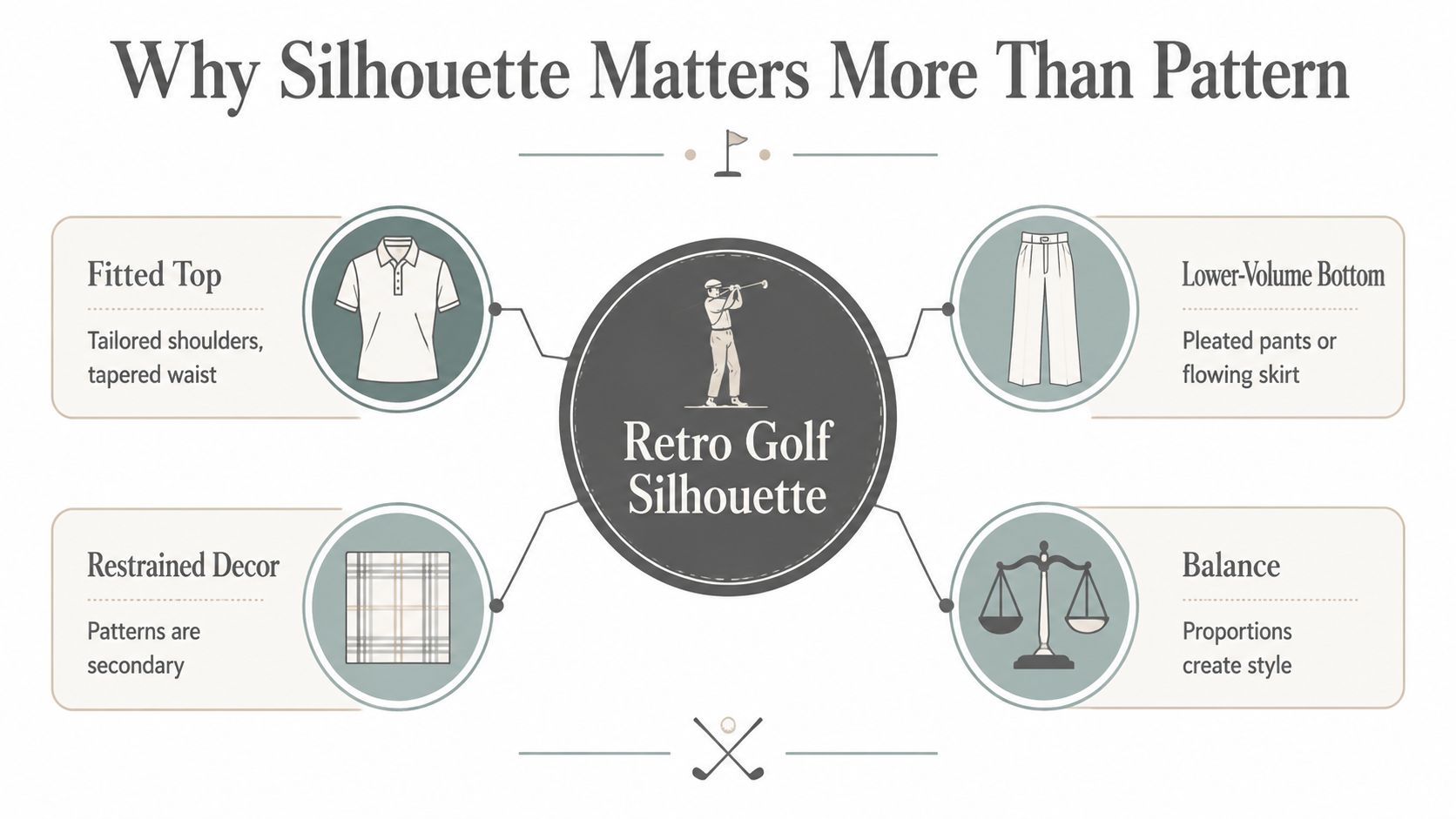
Retro golf fashion lives or dies by silhouette. Pattern grabs attention, but garment architecture is what makes the outfit believable. The classic retro formula uses a fitted top layer over a lower-volume bottom, which keeps the body line clean and still leaves room for the swing.
The shape has to do the visual work
A tucked polo reads retro because it defines the waist and sharpens the torso line. An untucked performance shirt usually reads like gym wear, even if the fabric costs more than it should. That is why so many retro outfits miss the mark, they have the right print and the wrong outline.
A disciplined palette keeps the shape front and center. Independent style guidance points to white, beige, black, olive, and grey as the easiest heritage colors because they keep the look coherent and make mixing vintage and modern pieces less awkward (vintage golf clothing). Color still has a role, but it should support the outline, not fight it.
Oversized streetwear cuts work against the whole idea. They add bulk at the shoulders and waist, and that kills the clean line retro golf depends on. If a shirt hangs like a box, the logo does not save it. The outfit still looks off.
The cleanest retro outfit usually has a fitted top, a calm bottom, and one controlled detail that keeps the eye moving.
Dressing for the Course Versus the 19th Hole
A good retro golfer doesn't dress for one setting and hope it passes in the next. The course and the clubhouse ask for different levels of polish, even if the same general style language works in both. On the course, the priority is movement and temperature control. After the round, the priority is ease and presence.
For the round itself
Start with a moisture-wicking or breathable polo, a well-fitted trouser or clean golf pant, and a structured cap that holds its shape. The shirt should stay tucked, the pant should move with your stance, and the cap should look intentional from the parking lot to the putting green. Golf apparel has long had to balance comfort and elegance because the sport demands both, especially through a full swing and a long walk (men's golf apparel guide).
Skip anything that adds drag or clutter. Cargo pockets look sloppy. Golf gloves belong on your hands, not as styling props. If your outfit feels like you're carrying gear instead of wearing clothes, start over.
For the 19th hole
Swap the performance polo for a knit sweater, crewneck, or clean overshirt. Trade the technical trouser for chinos or a cleaner cut pant. Keep the cap if it's structured enough to read as part of the look, because that's the easiest anchor piece to carry from green to grill room.
The transition should feel like three small edits, not a wardrobe reboot. Same palette, same general fit, just less technical and slightly more relaxed. That's the sweet spot for post-round drinks, where you still want to look like you know how to dress, but you don't need to look like you're ready to hit a provisional ball.
Dress Codes and Where Retro Style Actually Works
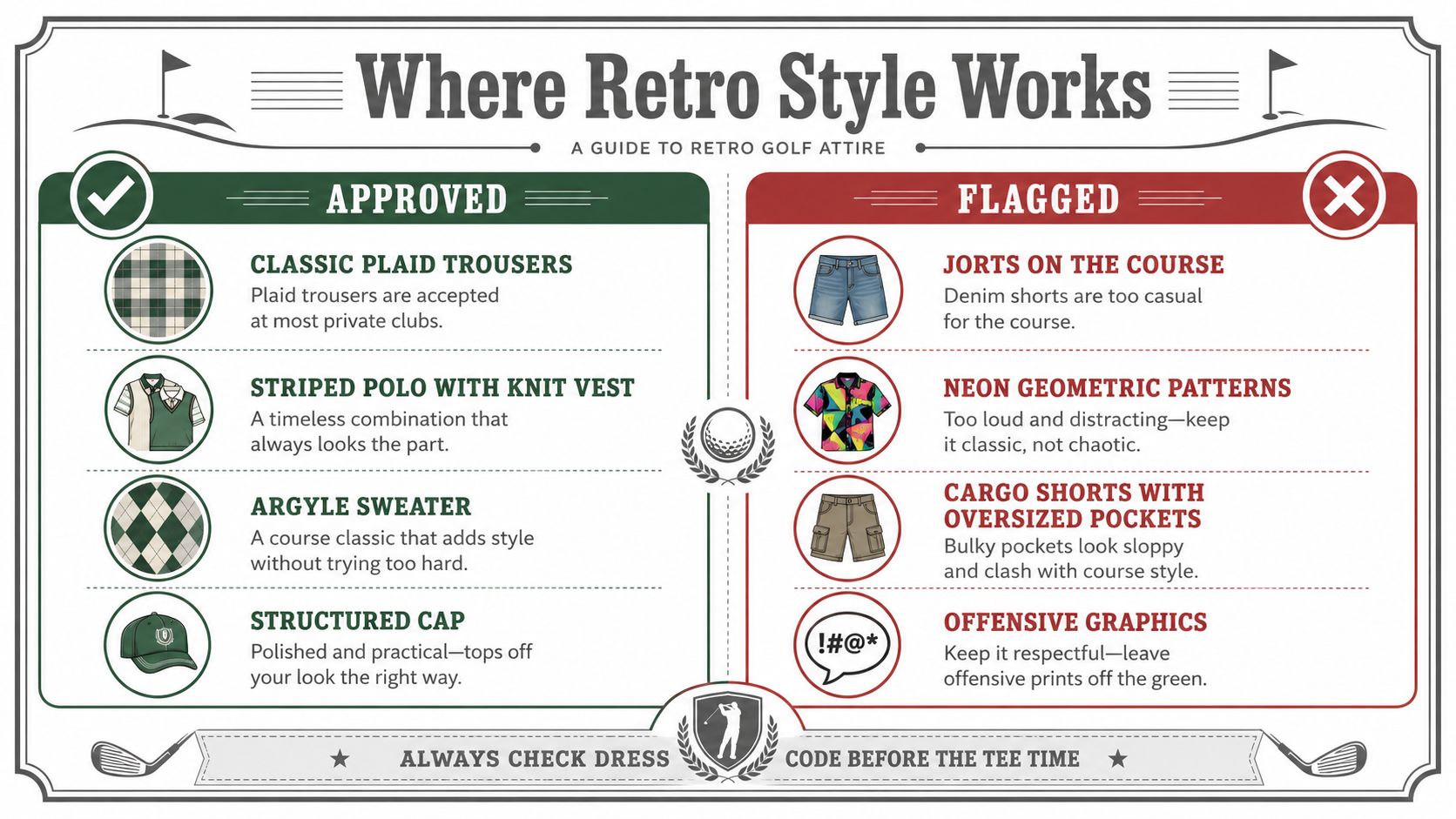
Most bad retro outfits fail before the first tee shot because the player ignored the room. Private clubs, resort courses, and tournaments do not all tolerate the same amount of personality, and golf dress codes still reward restraint in stricter settings (proper golf attire).
Match the setting, not your mood
At a private club, play it safe. Tucked polos, well-fitting trousers, structured caps, and clean knits usually land well because they look aligned with traditional standards. Loud patterns and exaggerated silhouettes are a risk there, especially if they start drifting toward novelty.
At a resort course, you get more room. Bolder plaids, richer textures, and slightly wider trousers can work, as long as the outfit still looks deliberate. The key is to look polished, not performative. If the setting feels casual, you can push the personality a little harder.
At tournament-level play, function wins. Keep the retro cues subtle. A strong hat, a clean polo, a well-fitting pant, that's enough. You want the outfit to disappear into performance once the round starts.
Simple rule: The stricter the dress code, the more you should lean on fit and color instead of statement pieces.
A quick filter helps. If the garment looks acceptable in a clubhouse, it probably works. If it only works in a costume party, leave it out. The line is not complicated, and you don't get style points for testing it.
Working 2ndShotMVP Into a Retro Look
A structured golf hat is one of the easiest retro anchors to use well, and a 2ndShotMVP cap fits that role when the rest of the outfit stays disciplined. The hat should be the statement, not the excuse for everything else to get loud. Pair it with a tucked knit polo and cut trousers, and it reads heritage. Pair it with an oversized hoodie, and it swings into streetwear fast.

Keep the rest of the outfit quiet
Use one 2ndShotMVP piece as the top note. That means a clean hat with a fun golf-coded design, then a restrained polo, a straight-leg pant, and minimal accessories. The moment you add too many competing textures or logos, the cap stops looking intentional and starts looking like an afterthought.
The same logic works after the round. The hat can stay on when you move to the 19th hole, as long as the shirt and trousers have already shifted from technical to casual-clean. That's the trick with retro style, it should travel without a costume change.
If you want the visual reference point while you dial in the look, this clip is worth a watch.
A good retro outfit is mostly restraint. Let the hat do the talking, then make sure the rest of the clothes know when to stay quiet.
Common Mistakes and How to Avoid Them
The biggest mistake is dressing like you're attending a themed event. Fix it by choosing one era cue and keeping the rest modern and clean. The second mistake is ignoring the dress code, which is easy to avoid if you remember that private clubs reward restraint and resort courses tolerate more personality.
The third mistake is using baggy modern cuts and calling them retro. They're not. Retro is shaped, not shapeless. The fourth is over-accessorizing, which makes the outfit feel busy instead of sharp.
Finally, don't confuse novelty prints with real retro design. A shirt with a loud golf joke is not heritage style, it's just a loud shirt. If you want the look to work, use the checklist, fit first, palette second, one strong vintage cue last.
If you want retro golf fashion that looks sharp on the first tee and still feels right at dinner, shop 2ndShotMVP for golf hats and lifestyle pieces that anchor the outfit without overpowering it. The right headwear gives you the vintage nod, then lets the rest of your look stay clean, course-ready, and easy to wear off the property too.

