

Most advice about vintage golf shorts gets the priority backwards. People obsess over whether the pattern looks right, then they buy a pair that fights them through the backswing, clings in humidity, and turns into costume the second they leave the clubhouse. Authentic only matters if the shorts still work like clothing you'd actually wear, not like museum fabric with belt loops.
Vintage golf shorts earned their place for a reason. Golf apparel moved from the formal plus fours and trousers of the 1930s into the lighter, shorter, more practical course wear of the 1940s and 1950s, and by the mid-1950s Bermuda shorts had become a recognizable sportswear option on and off the course, not a novelty act. That history matters, but history alone won't save a bad pair from a bad fit or dead fabric, which is why the buyer question is simple, can you play in them, or do they only photograph well? The evolution of golf gear explains why the category stuck around, but your job is to separate the wearable from the merely period-correct.
Why Authentic Vintage Isn't Always the Right Call
Authentic vintage has cachet, but cachet doesn't help when you're standing over a long iron and the shorts are pinching your hips. True vintage pieces from the 1940s through the 1970s can be brilliant for casual wear, collector value, and the 19th hole, especially if the fabric is still healthy and the silhouette is clean. They're also the pairs that look the most honest, because they carry the shape, drape, and details of the era without trying too hard.
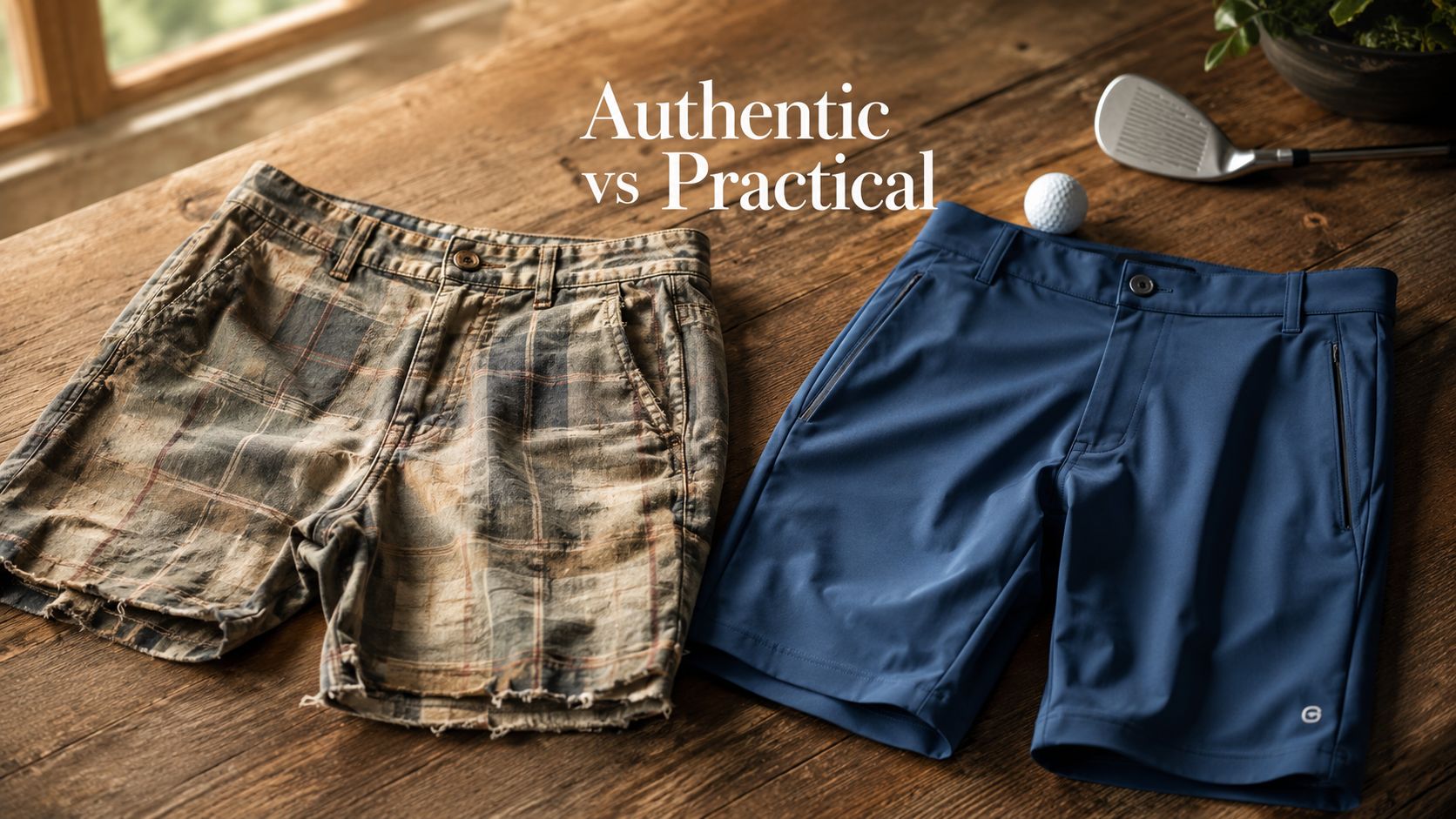
Authentic and wearable are not the same thing
The trouble starts when buyers treat period-correct as a performance feature. Golf is a rotational sport, and old shorts were not made with modern swing mobility, heat management, or repeated washing in mind. If the fabric is rigid, the rise sits wrong, or the leg is too narrow, you'll feel that immediately when you bend, rotate, and reset over the ball.
A modernized retro cut is usually the smarter play for actual rounds. It keeps the vintage cues, like a pleat, a tidy waistband, or a classic length, while using fabric and construction that don't punish movement. That's the honest recommendation if you want to wear the shorts more than once a month.
Practical rule: buy authentic vintage when you want character, buy updated retro when you want to golf.
The internal fit conversation also matters here, and a useful starting point is the guide to men's golf shorts, because the same basic logic applies whether the pair is old or new. If the shorts only work tucked in with a belt and perfect posture, they're not versatile enough for a modern wardrobe.
The Fit Benchmarks That Actually Matter
Fit is where most vintage golf shorts get exposed. A pair can look sharp on the hanger and still fail the first time you take a stance, because waist size tells you very little about how the garment sits through the seat, thigh, and rise. The best technical target is an inseam around 8 to 10 inches, with the hem sitting about 1 to 2 inches above the knee. Traditional golf shorts are usually longer than running shorts, and that longer line helps them look intentional instead of gym-based.
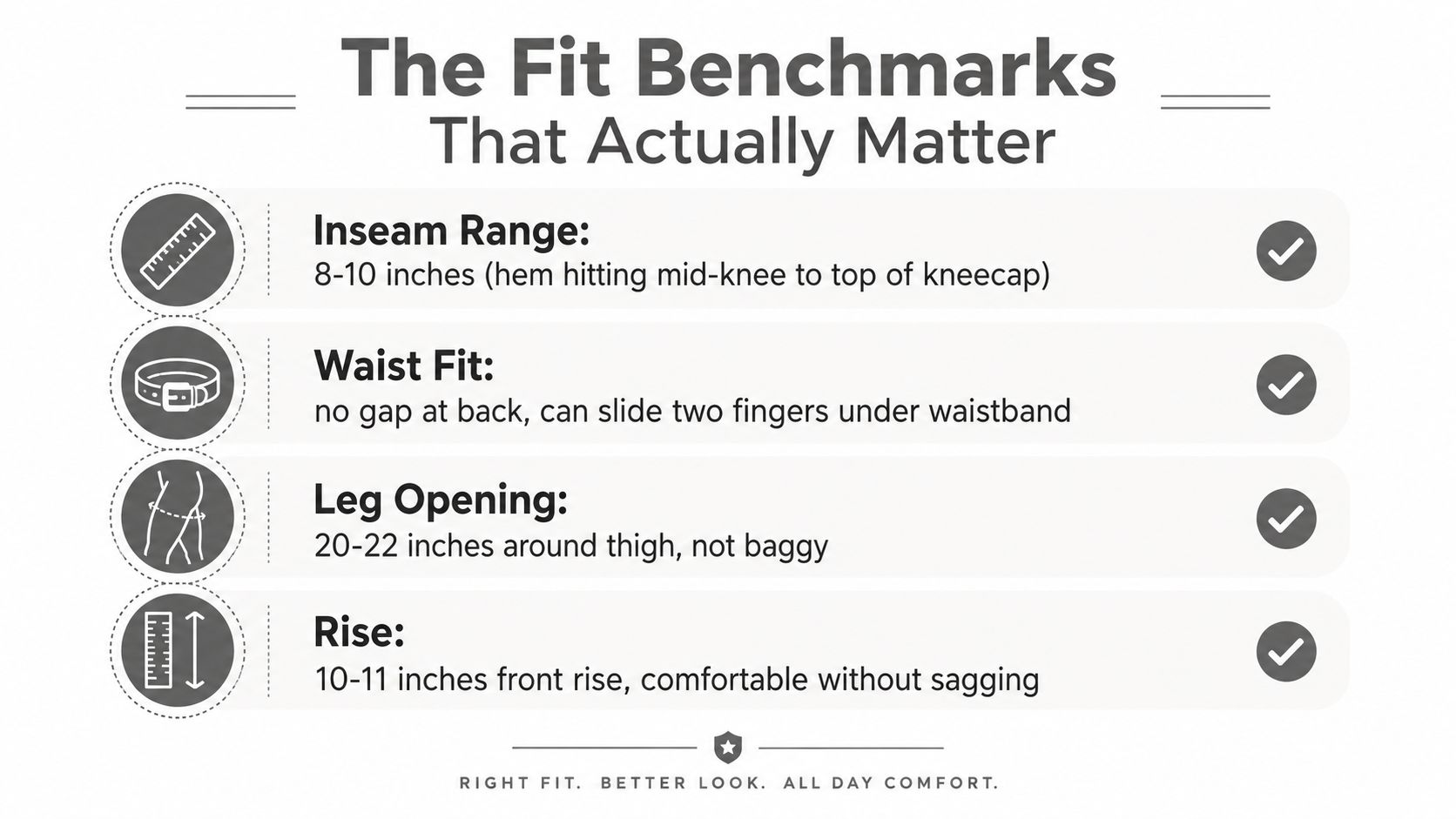
Check inseam first, then the rest
Start with inseam. If the short is too short, the thigh shows too much at address and the shape starts looking more fashion-forward than golf-ready. If it's too long, the leg line gets heavy and the whole outfit loses the crisp, above-the-knee balance that makes vintage golf shorts work.
Then check rise and seat. A waist number can be dead on while the actual garment sits too low in back or too tight through the seat, which is why the shorts may feel fine standing still and terrible when you squat to read a putt. A good rise puts the waistband where it belongs without sagging or riding up.
Fit note: leg opening matters more than most people think, because it controls hip rotation and bend without making the short flare out like a sail.
If you want the sewing logic behind that, the concept of what is ease in sewing is useful, because ease is the extra room that lets a garment move with you instead of against you. That's the practical difference between a short that looks custom-made and a short that feels trapped.
Here's the mistake I see constantly. Buyers choose the waist size they already know, ignore the rise, and end up with a pair that technically fits but feels wrong in motion. The smart method is dead simple, inseam first, then rise, then leg opening. If any one of those is off, keep looking.
Fabric Performance and What to Look For
Fabric decides whether vintage golf shorts are a pleasure or a penalty. Old-school cotton can look rich and authentic, but it usually doesn't behave like golf apparel once heat, sweat, and repeated flexion enter the picture. For actual wear, polyester-based blends with stretch are the right answer, because they bring structure without locking up the swing.
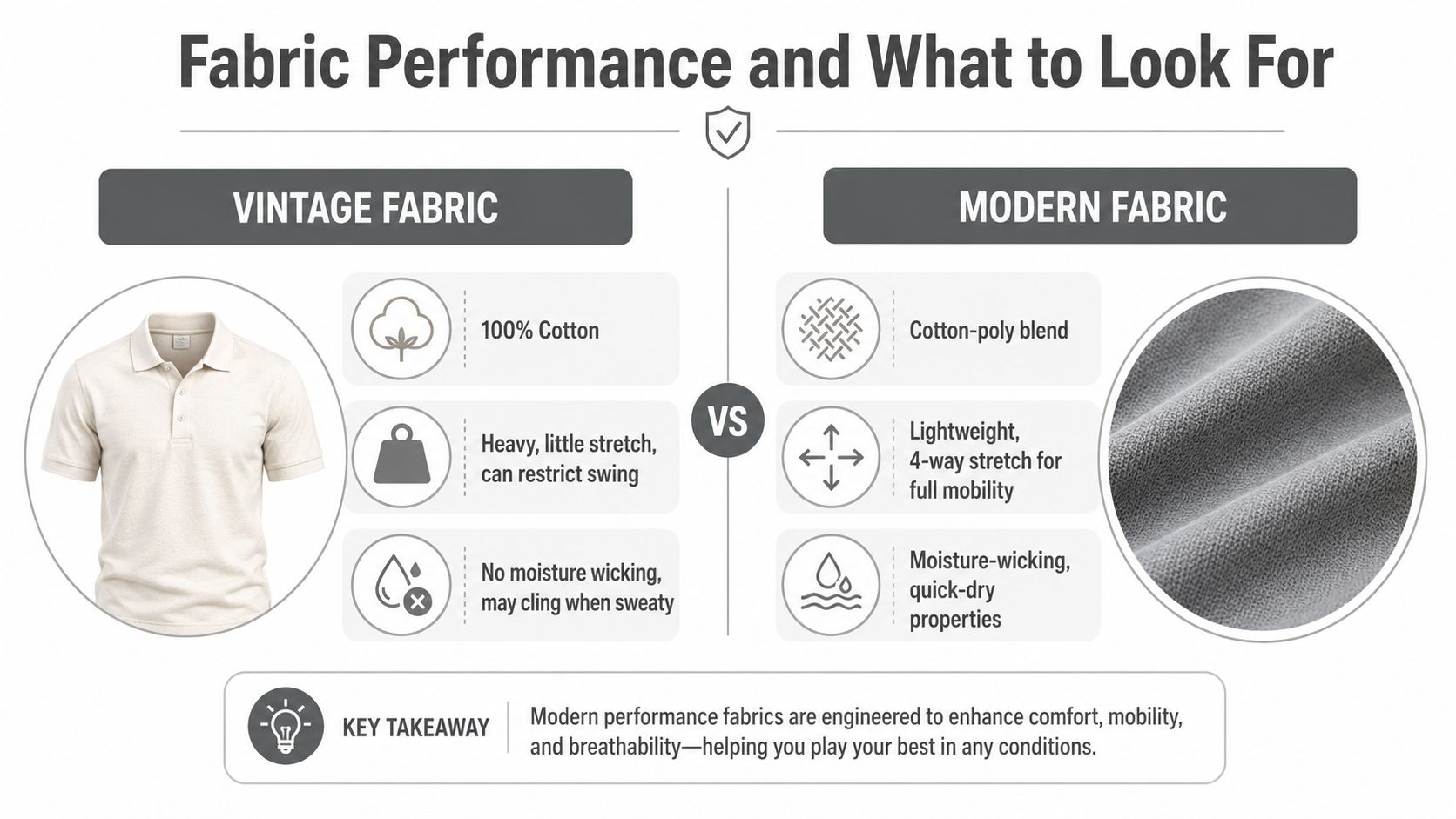
What good fabric looks like now
The best vintage-inspired options use blends like 88% recycled polyester and 12% spandex, 92% polyester and 8% spandex, or 50/50 polyester and recycled polyester constructions. Those fabrics give you the old-school visual language without the dead weight, and the stretch component is what restores range of motion in a fiber base that's naturally low in elasticity. Modern golf shorts with four-way stretch and moisture-wicking also stay more comfortable on humid days and don't feel as swampy when the round gets long. You can see that performance-first logic in pieces like adidas' Ultimate365 8.5-inch golf shorts, which pairs stretch with a water-repellent finish for light rain or morning dew.
The main mistake is assuming a classic look means classic behavior. A rigid vintage short can feel perfectly respectable while you're standing around, then fall apart as soon as you start doing repeated squat-and-rotate movements. If the fabric doesn't have recovery, it'll bag out, pull, or bind exactly where golfers need freedom.
What to verify before you buy
- Stretch recovery: The fabric should return to shape after you pull the leg opening or sit down in it.
- Moisture management: The short should move sweat away from the body instead of holding onto it.
- Structured waistband: The top edge should hold its shape so the short doesn't collapse after a few wears.
- Light weather resistance: A repellent finish helps when dew is heavy or the course is damp.
If you want a deeper breakdown of that performance language, the guide to what is moisture-wicking fabric is a useful companion. My advice is blunt, if a vintage pair is cotton-only and unlined, treat it like a collector item unless you've already tested it and know it moves well.
Styling Vintage Golf Shorts for Every Occasion
The right styling choice depends on where you're wearing them, because vintage golf shorts can look sharp, relaxed, or flat-out wrong depending on the rest of the outfit. On tournament day, I'd keep the shirt conservative, the shoes clean, and the shorts the quietest part of the look. On a casual round, you can lean harder into pattern, texture, and old-country-club energy without looking overdone.
A useful visual reference is the way a polished shoot builds a look around one statement piece and keeps everything else in check, which is why models photo shoot for MerchLoom is worth studying if you're thinking in terms of balance, contrast, and proportion. Golf style works the same way. One strong vintage cue is enough.
What works on the course
For a tournament-friendly outfit, pair solid navy, white, or cream vintage shorts with a tucked polo, a leather belt, and simple golf shoes. If the shorts have pleats or side adjusters, let those details do the talking and keep the shirt understated. That's the cleaner route, and it also respects the old dress code instinct that golf still carries.
For a casual round, a patterned pair can work well with a plain polo and a cap, especially if the pattern stays within earthy or muted tones. You can also wear them with sneakers if the course allows it, but keep the shoes tidy. Frayed soles and loud trainers make vintage shorts look accidental.
Style rule: let one thing be old, one thing be modern, and keep the rest neutral.
At the 19th hole, the same shorts can loosen up. Swap the golf shoes for loafers, clean sneakers, or slip-ons, and leave the belt if the waistband looks more structured than elastic. If you want a clean pairing guide, the internal article on polos with shorts is the right place to sanity-check proportions.
The key is restraint. Vintage golf shorts already carry enough personality, so don't pile on every nostalgic detail you own. If the shorts are plaid, keep the shirt solid. If the shorts are cream or tan, you can afford a bolder top. If the shorts are short and well-fitted, keep the shoe profile slim and polished.
Where to Source Authentic Vintage Golf Shorts
Good vintage golf shorts don't usually announce themselves. They hide in estate sales, thrift racks, old pro shops, and dusty online listings with bad lighting. The buyer who wins is usually the one who knows what to ignore. You're not hunting for “retro vibes,” you're hunting for construction, condition, and a silhouette that still makes sense today.
The fastest way to separate real vintage from a modern imitation is to study labels, fabric hand, and finishing details. If you want a strong primer on how sellers identify older garments, the field guide for resellers is useful because it teaches the kind of eye that spots era cues instead of just cool colors. That skill matters when a listing photo is trying to sell nostalgia instead of quality.
Where I'd look first
Estate sales and thrift stores are best for in-person inspection. You can check the waistband, feel the fabric, and spot repairs or altered hems immediately. Online vintage retailers are better when you want convenience and stronger curation, but only if they provide close-up shots of the interior label, seams, and closure details.
eBay and similar marketplaces reward specific searches. Terms like Bermuda shorts, pleated golf shorts, vintage mens golf shorts, and brand names from older eras tend to surface better results than broad searches for “retro golf.” Specialty vintage dealers usually charge more, but you're paying for screening, not luck.
Red flags that should end the deal
- Altered hems: A shortened hem can destroy the original silhouette and make the shorts look awkward.
- Fragile fabric: If the cloth is thin, dry, or visibly stressed, expect failure under regular wear.
- Staining near the front or seat: That usually means the garment's best days are already gone.
- Mismatch between photos and description: If the seller avoids interior tags or seam shots, move on.
Negotiation is easiest in person. Point out condition issues calmly and make the offer based on what the shorts need, not what the seller hopes they're worth. I'd rather pay fairly for a clean pair with honest wear than overpay for a rare label that still needs tailoring, repair, and a prayer.
Care and Maintenance for Long-Lasting Vintage Pieces
Vintage golf shorts stay wearable when you treat them like clothes, not trophies. That means cleaning them gently, storing them correctly, and repairing small problems before they become the reason the pair gets retired. If you wear them often, maintenance matters just as much as sourcing.
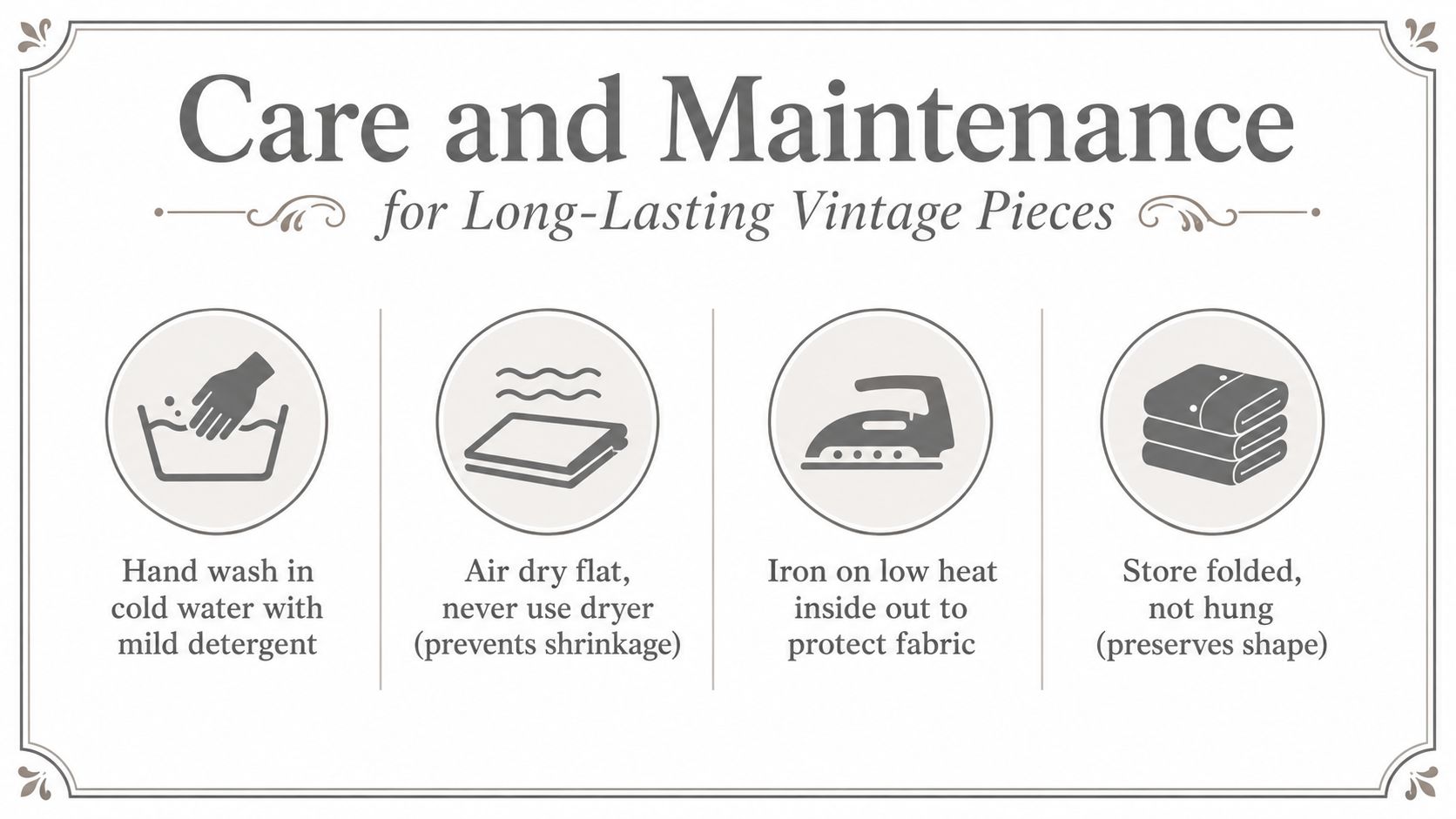
Keep the fabric alive
Hand wash in cold water with a mild detergent if the fabric is delicate or the garment is old. If the shorts are sturdier and the label suggests they can handle machine washing, still keep the cycle gentle and avoid harsh heat. Air drying is the safest route because it protects shape and reduces shrink risk. Never toss them in a hot dryer and hope for the best.
Iron them inside out on low heat if you need to restore a clean line. That helps protect the face of the fabric, especially if the short has a brushed texture, pattern, or a more fragile weave. For storage, fold them instead of hanging them if the waistband or fabric starts stretching out over time.
Store the pair the way you'd want to find it next season, flat, dry, and out of direct damage.
Small repairs are worth doing early. Loose buttons, worn pocket seams, and minor hem issues are easy to fix and far cheaper than replacing a pair you already love. If a stain won't budge or the fabric has started to break down in high-stress zones, professional cleaning and repair can still be worthwhile, but only if the shorts are otherwise strong enough to justify the spend.
Rotate your favorites. Wearing the same pair every week is the fastest way to shorten its life, especially if the fabric is older and less forgiving. Vintage golf shorts are meant to be worn hard enough to enjoy and cared for hard enough to survive.
If you want vintage golf shorts that look right and play right, start with fit, then fabric, then sourcing, in that order. That's the standard I use when I'm hunting for pairs worth keeping, and it's exactly the kind of practical, course-first style judgment 2ndShotMVP understands through its golf hats, beanies, and lifestyle apparel. Visit them if you want gear that carries golf personality without losing everyday wearability.

