

You've probably seen it in three different places already. One friend means the tee game, another means the red, white, and blue shirts and hats people wear for a holiday scramble, and somebody else is pointing at flags on the course like they're decoding a secret language. Golf does that, it borrows the same colors for different jobs, then expects everyone at the table to nod along.
That's why red white and blue golf can feel confusing at first. The good news is that the confusion clears up fast once you separate the format, the course markers, and the style. Like the clubhouse bar after a long round, one drink order can mean three different things depending on who said it, but once you know the context, you're not lost anymore.
What Red White and Blue Golf Actually Means
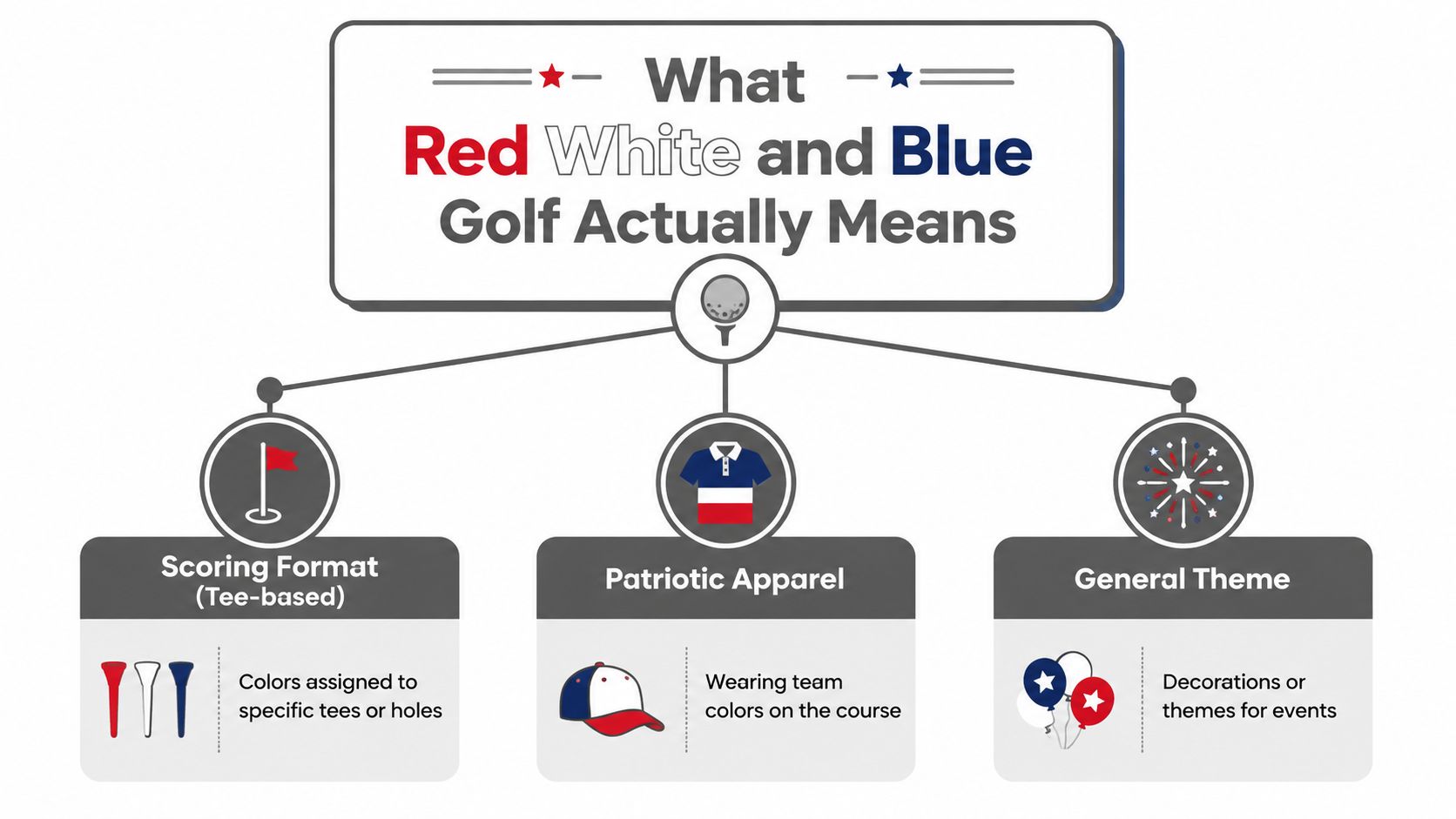
A foursome can stand on the first tee and say “we're playing red, white, and blue” while meaning completely different things. One group is talking about a tee-based scoring game, another is thinking about patriotic apparel, and a third might be staring at red, white, and blue flags on the course and trying to judge where the pin is hiding. The phrase is ambiguous in search, and that's part of why golfers keep landing on different explanations when they look it up. The Golf News Net notes that the phrase is used variously as a tee-based format, a course-signal system, or a patriotic apparel theme.
The format version
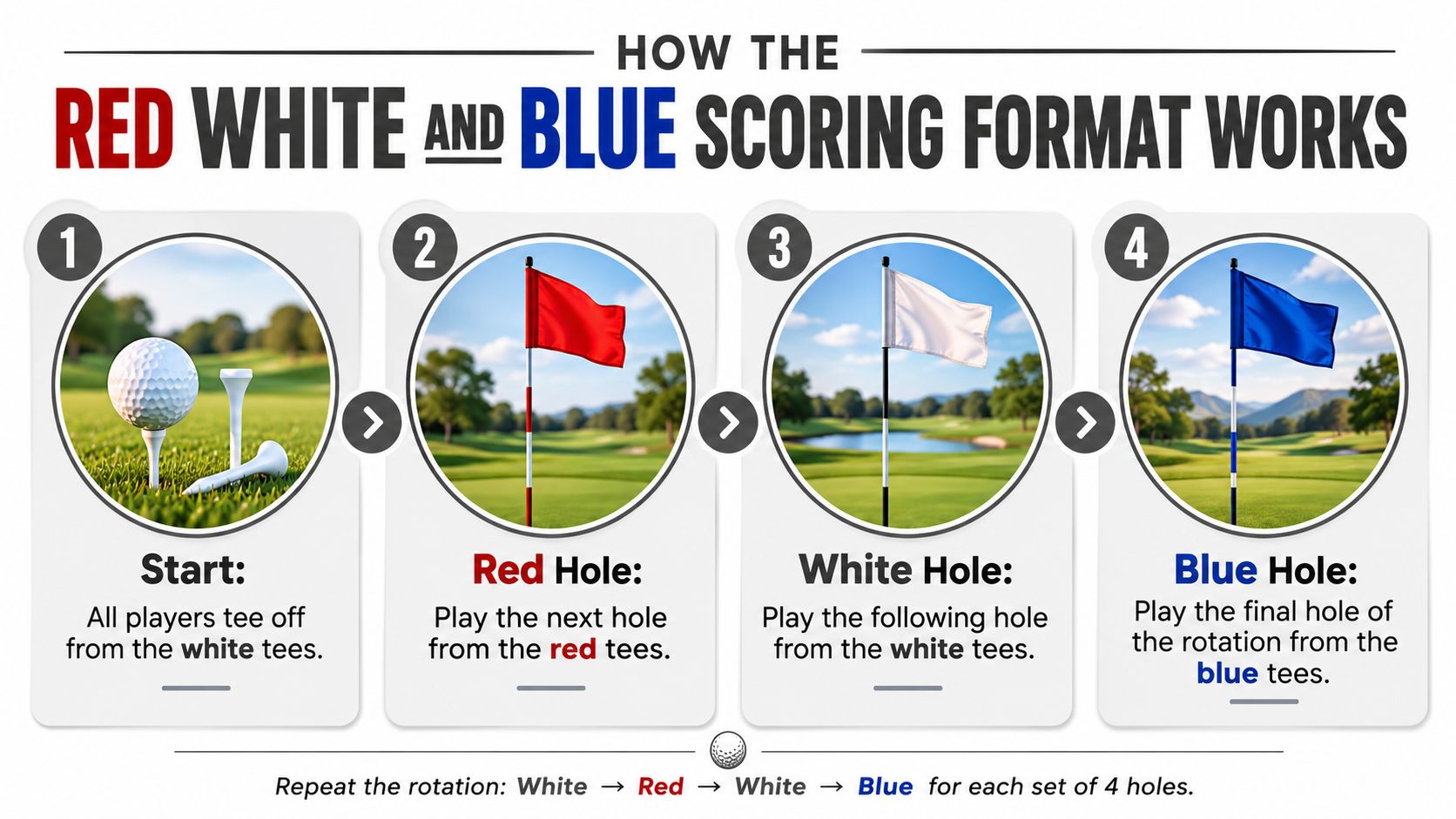
In the most common golf sense, Red, White and Blue is a scoring game built around tee color. The core idea is simple, all players start from the white tees, then the result of each hole decides where they play next. A bogey sends you up to red, a par keeps you on white, and a birdie pushes you back to blue. Beezer Golf lays out that exact structure.
That's why players like it. It's not just about hitting it far, it's about adjusting to whatever the last hole gave you. One clean par can keep you in the middle. One loose bogey can shorten the next hole and give you a chance to recover.
The apparel version
The same colors also show up in golf fashion, especially around patriotic weekends, member events, and casual rounds where people want to look sharp without going full costume. In that version, red, white, and blue work like a palette, not a rulebook. You're choosing a vibe.
Practical rule: If the scorecard is the conversation, you're in the format. If the outfit is the conversation, you're in the style lane.
The rest of this guide keeps both ideas in view, because a lot of golfers want the rules and the look to make sense together. That's where the fun starts.
How the Red White and Blue Scoring Format Works
Here's how the format plays out hole by hole. Once you already know the basic tee-color loop, question becomes how to keep score cleanly, avoid small mistakes, and choose the right tee without slowing the group down.
The basic loop
The easiest scoring slip is mixing up the tee assignment with the hole result. Keep the order simple. You play the hole, record the score, then move to the next tee based on that score. A bogey sends you to red, a par keeps you on white, and a birdie sends you to blue.
That sounds tidy on paper, but the card can get messy fast if nobody agrees on what happened on the previous hole. In a casual group, one person may remember a par while another writes down bogey, and suddenly the next tee box becomes a clubhouse debate. The fix is simple, mark the score before anyone drives away, and keep the next tee call obvious.
The other scoring version ties the tee choice to the hole type instead of the previous result. In that setup, golfers use the forward tees on par-3s, the middle tees on par-4s, and the back tees on par-5s. Golf Compendium describes that par-based version. It plays more like a preset rotation than a live scoreboard, which can be easier for groups that want the color theme without having to track every swing result.
A good way to keep that version straight is to treat the scorecard like a lane chart. Par-3, short tee. Par-4, middle tee. Par-5, back tee. That pattern gives the round a steady beat, and nobody has to stop and ask what the tee should be on the next box.
Common mistakes golfers make
The first mistake is treating the format like a memory test instead of a scoring game. If the group waits until the next tee to decide where everyone should hit from, the rhythm disappears and the round starts to feel clumsy. A quick check after each hole keeps the whole thing moving.
The second mistake is assuming everyone in the group must play the same tee. That can make sense in some friendly games, but it is not always the cleanest way to run this format. If one golfer makes birdie and another makes bogey, they should move to different tees based on their own scores, not the group's best or worst result.
A third trap is trying to add too many house rules. A couple of extra side bets is fine. A pile of exceptions is not. The format works best when the tee change is automatic and easy to explain, the same way a good scramble only works when everyone knows who hits first and why. For a plain-language refresher on score flow, this scoring explainer keeps the terms simple, and Live Tourney's scramble guide shows how clear group structure keeps a round from bogging down.
How to keep the round moving
This format is at its best when the next tee box is decided before anyone reaches the cart path. That means the marker, the scorekeeper, or the whole group should settle the result right away. If a hole is uncertain, talk it out on the green, not after everybody has already rolled up to the next tee.
It also helps to have one person call the tee color out loud. That small habit sounds almost too simple, but it prevents the same question from popping up three times. A clear call like “red for me, white for you” keeps the group relaxed and saves time.
The format works well for mixed-ability groups because it keeps the pressure local. One good hole changes the next tee, but it does not rewrite the entire round. One bad hole does the same thing in the other direction. That back-and-forth is what gives the game its bounce, and it is why players keep coming back to it after the first try.
If you want the round to feel smooth instead of fussy, keep the scoring obvious, keep the tee changes immediate, and keep the house rules light. The rest is just enjoying the turn of the day, one color at a time.
Why Tee Colors Change the Whole Round
Tee colors aren't decoration, they're the engine behind the format. Change the tee box and you change how long the hole plays, what kind of tee shot feels safe, what club is likely to come out next, and how the group settles into its pace. That is why the color choice matters just as much as the scoring.
A good way to understand it is to picture the first shot setting the tone for everything after it. If the tee moves back, the hole asks for more carry and usually leaves a longer approach. If it moves up, the hole opens a little and the round often feels friendlier for the players who need it. The tee colors are doing real work, even before anyone writes a score.
The numbers behind the colors
At Centennial Golf Course, the Blue set plays 6,589 yards with a 71.8 rating and 130 slope, while the Red set plays 6,099 yards with a 69.4 rating and 124 slope. That is a 490-yard difference, or about 7.4% shorter from blue to red. Centennial Golf Course publishes those tee-set stats here.
| Course | Blue Yards | Blue Rating | Red Yards | Red Rating | Yardage Gap |
|---|---|---|---|---|---|
| Centennial Golf Course | 6,589 | 71.8 | 6,099 | 69.4 | 490 |
That gap is easy to feel on the course. The shorter set does not just shave off distance, it changes which clubs stay in the bag and which ones start to show up more often. A hole that asks for a long iron from one tee can turn into a mid-iron or wedge from another, and that changes how players plan the whole hole.
The rating and slope shifts tell the same story in course-language form. Those numbers show that the job is different from one tee set to another, even when the fairway and green are the same pieces of ground. A player who sees tee colors only as visual markers misses the point, which is that the course can play like a different version of itself.
That is why red, white, and blue as a format works so well. It builds variety into the round one tee box at a time, so the challenge changes in a way everyone in the group can feel.
Building a Red White and Blue Outfit That Works
The apparel side is where a lot of golfers either get it right or end up looking like they were handed a bag of leftovers from the clubhouse party. The goal is to make the colors feel chosen, not scattered. Let one color lead, let the other two support it, and keep the outfit looking like something you would wear again next week.
Three easy outfit formulas
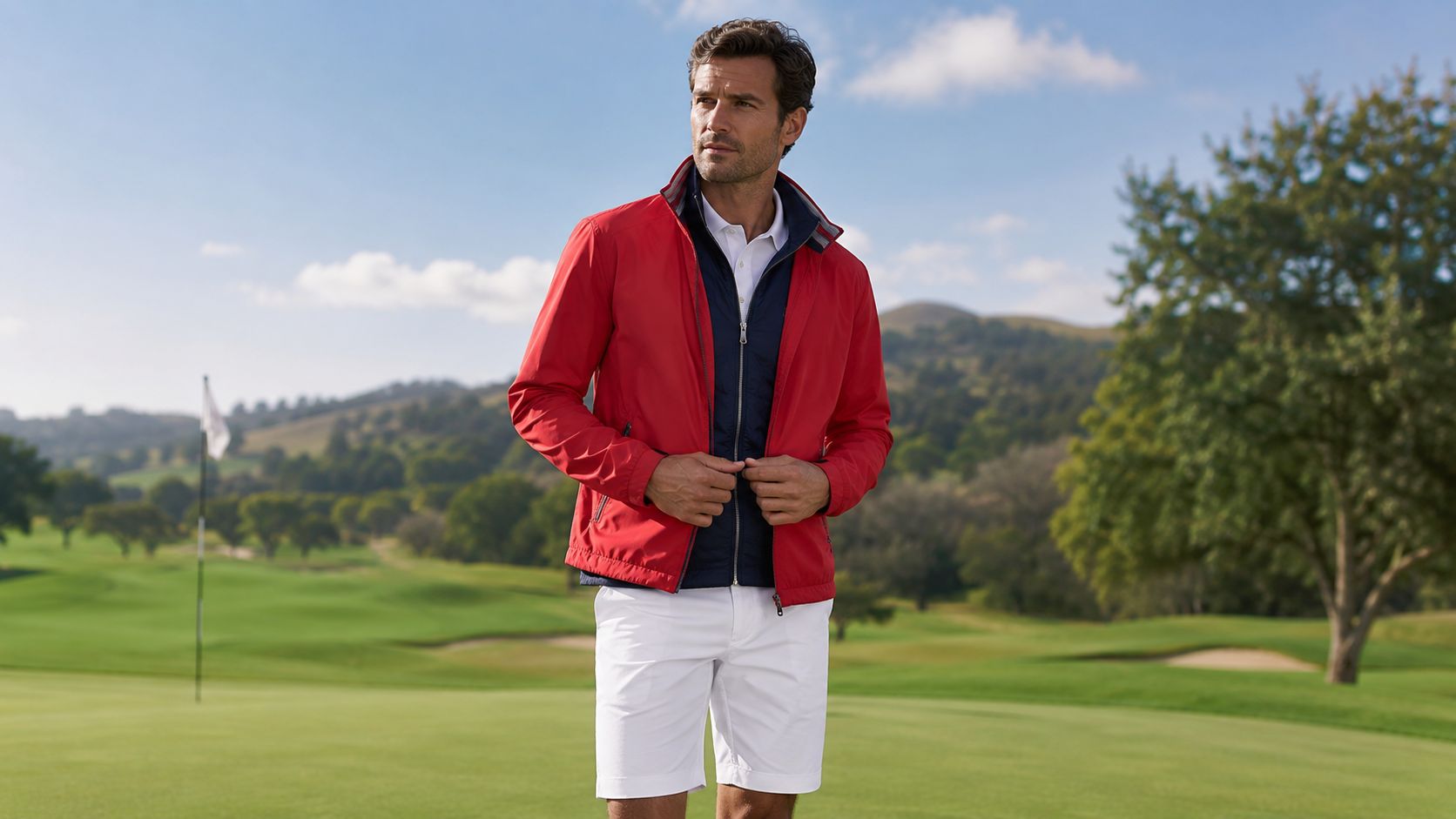
For a summer round, a clean mix is a white polo, navy shorts, and a red cap. The white keeps things bright, the navy grounds the look, and the red works like a sharp accent at the end of a sentence. If the round has a holiday feel, it reads festive without turning into a costume.
For a cooler morning, a blue quarter-zip over a white base layer does the job well, especially with neutral bottoms. The palette still says patriotic, but it avoids piling on all three colors at full strength. That kind of layering feels deliberate, like you meant to dress for golf instead of grabbing the first clean pieces you found.
For the 19th-hole look, a red or blue top with white or washed-neutral bottoms usually lands best. The outfit keeps the theme after the clubs go back in the trunk, which matters if you want the colors to work beyond the first tee. A cleaner piece from 2ndShotMVP's red, white, and blue apparel collection fits that role well if you want something that can move from the course to lunch without looking overdone.
A simple rule that keeps it classy
Use one dominant color and let the other two play backup. A red hat, white polo, and blue short can work. So can blue outerwear with a white base and a red accent. What usually throws the look off is giving every item the same volume, because then the outfit reads like a parade float instead of golf wear.
Style rule: If every piece is loud, none of it feels stylish.
A player who only treats tee colors as visual markers misses the point, and the same idea applies to clothing. The colors have a job, but they still need order. One strong piece gives the outfit shape, just like one steady club choice keeps a hole from getting messy.
Screenshot this checklist
- Choose one lead color: Decide whether red, white, or blue is doing the heavy lifting.
- Keep one neutral anchor: White, navy, or khaki calms the outfit down.
- Match the setting: Bright and clean for daytime, layered and deeper-toned for cooler tee times.
- Repeat the accent once: A cap, sock, or layer edge is enough.
- Make sure the fit stays golf-first: You should still be able to swing freely and sit comfortably at lunch.
Fit, Fabric, and Care for Golf Headwear and Apparel
A patriotic look can go sideways quickly if the hat sits wrong or the fabric feels off by the first few holes. The clothes have to work first, then they can look good. That matters with golf headwear in particular, because the crown shape, the band, and how the piece sits on your head all change the finish.
Fit first
A cap should rest on the head cleanly, not sit on top of it like it was dropped there at the last second. The front panel should hold its shape without pinching, and the brim should look set on purpose instead of bent into a shape it never wanted. A beanie should cover the ears comfortably in colder weather, but it should not droop so low that it looks like you borrowed it from the car seat.
Fit also affects how the whole red, white, and blue outfit reads. A sharp cap can anchor the look the same way a clean lead note anchors a song, while a sloppy fit makes even good colors look uncertain.
Fabric by season
For summer, moisture-wicking knits make the most sense because they handle sweat and heat better than heavier materials. For everyday wear, structured cotton twill gives you that classic golf-hat feel that can go from the course to a quick stop afterward. For cooler months, knit blends are the easy choice because they keep the look relaxed while still giving you warmth.
The fabric choice should match how the piece will be used, not just how it looks on the rack. A lighter cap works better under strong sun, while a warmer knit makes more sense if you are heading straight from the course to a chilly patio or an early tee time.
The color markers on the course make a useful mental model here too, because they show how golfers already use color to sort information fast. Golf lesson guidance commonly maps red to 100 yards, white to 150 yards, and blue to 200 yards to the center of the green, which gives players a quick way to read the hole. That same color logic shows up in simple on-course markers, and it also helps explain why a clean color balance in clothing feels easier on the eye than a crowded one.
Care that keeps the colors sharp
Wash hats in cold water when you can, and do not toss structured headwear in the dryer unless you want the shape to change on you. Reshape beanies while they are still damp so they dry the way you want them to wear. If you have bold red, white, or blue pieces, treat them gently so the colors stay clean instead of fading into a dull wash.
Most important care rule: Wash gently, dry carefully, and let the hat keep its shape.
If you want a more detailed cleanup routine, this hat-care guide is useful before you treat a favorite cap like laundry day is no big deal.
Buying and Gifting Red White and Blue Golf Gear
Buying this kind of gear should feel like choosing a piece you'll wear, not picking a novelty item for one weekend and then forgetting it exists. The best pieces have a quiet confidence to them. They sit right, hold their color, and get compliments without needing an explanation.
What to look for before you buy
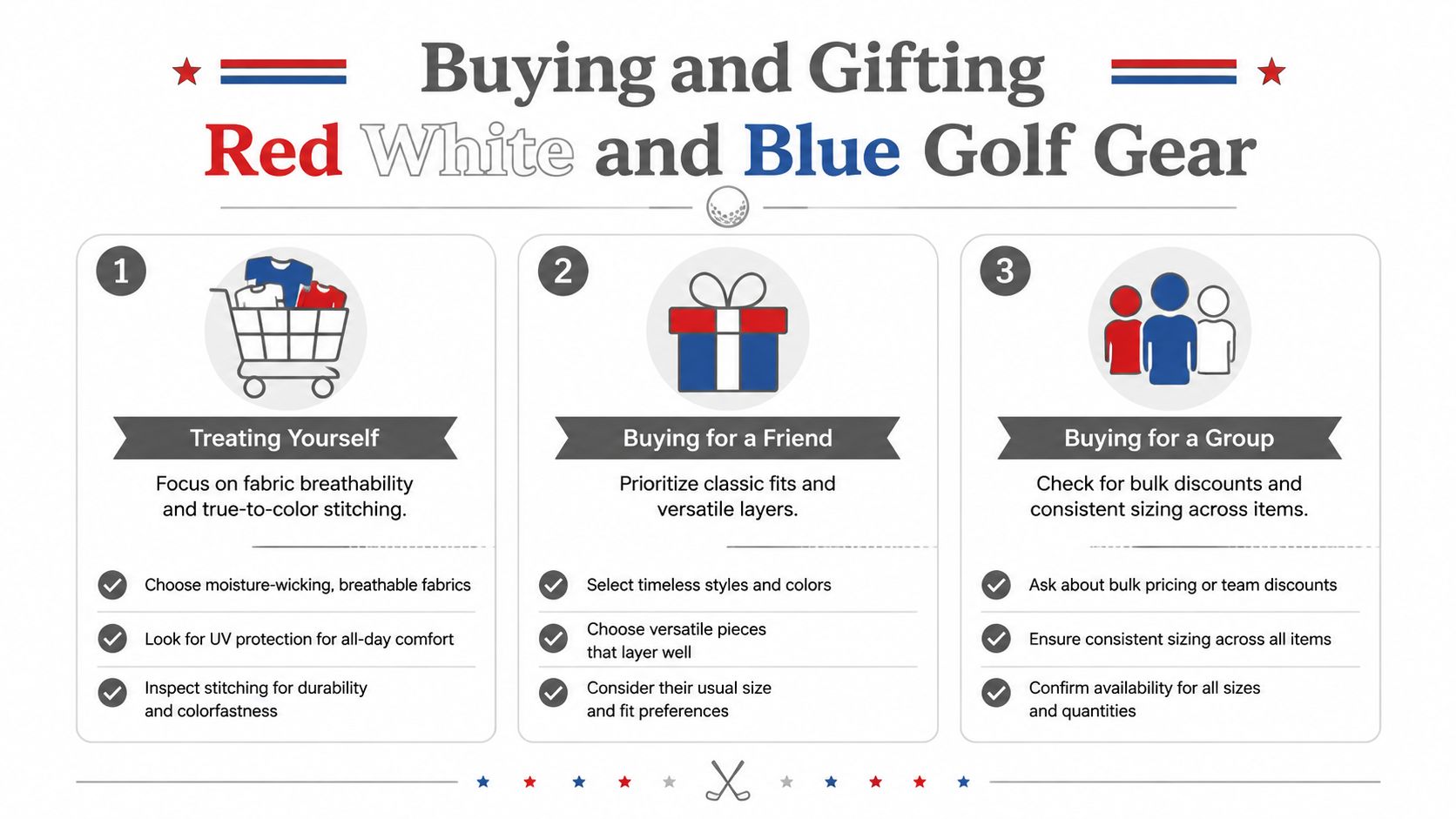
If you're buying for yourself, check the front panel structure first, then the stitching, then how the colors are balanced. Clean embroidery should lie flat instead of puckering, and the color combo should still look sharp from a few feet away. That's the difference between a piece that lives in your rotation and one that stays in the bag.
If you're gifting a playing partner, think about where they'll wear it. Some golfers want a bolder weekend look, others want something they can wear to the range, the bar, and the clubhouse without changing. A well-designed cap or beanie works because it feels personal without being too specific.
For a tournament prize table, consistency matters. If you're buying multiple items, the sizing and finish should feel coordinated across the set, and the colors should hold together as a family rather than a random mix. That's where design-led headwear tends to win, because it looks intentional on a table and in someone's hand.
A lot of golfers like brands such as 2ndShotMVP for that reason, the pieces are built to be worn, not just displayed. The conversation starts when someone notices the design, and it keeps going at the 19th hole.
A quick gifting-fit checklist
- Who they play with: Quiet foursome, loud holiday crew, or regular club crowd.
- Where they wear it: Course only, casual weekends, or all-day lifestyle use.
- Which color they already wear most: Match the gap, don't duplicate the pile.
Putting It All Together for Your Next Round
If you're hosting the round, run Red, White and Blue as a simple tee-based game, start everyone on white, and let bogeys, pars, and birdies move the group around from there. If you're dressing for it, keep one color dominant and use the other two as accents so the outfit feels polished instead of overdone. That's enough to make a Memorial Day or July 4th group outing feel thought-through without turning it into homework.
If you're also planning clubs and gear for the day, checking your bag gapping before the tee time keeps the round smoother when the tee boxes shift. Then let the outfit carry into the 19th hole, because a good red, white, and blue setup should look just as natural holding a drink as it does holding a wedge.
2ndShotMVP makes premium golf hats, beanies, and lifestyle apparel that fit the same sweet spot this guide is about, playful enough for a themed round, sharp enough for everyday wear. If you want gear that helps you look dialed from the first tee to the last drink, visit 2ndShotMVP and find a piece you'll keep in rotation.

