

Yes, you can golf in the rain, and precipitation alone doesn't automatically wreck scoring. The better question is whether the course can handle it, whether lightning is in the area, and whether your gear and swing can cope with wet turf.
If you're standing in the parking lot right now, staring at a gray sky and a bag full of optimism, the answer is probably less dramatic than your mood. Rain can be playable, miserable, or flat-out unsafe, and the difference usually comes down to drainage, saturation, and how long the course has already been taking water.
The Truth About Golfing in the Rain
Rain is not a simple yes-or-no problem in golf. The best available research says precipitation during play and rainfall in the days before a round did not have a consistent or statistically significant effect on competitors' performance in a U.S. Masters study covering 1980 to 2019, while warmer and calmer conditions were linked with fewer shots overall (PMC study on golf weather and scoring). That's the key nuance. Rain alone isn't the villain, course conditions are.
What actually changes first
A separate PGA Tour analysis found that weather variables such as precipitation, humidity, temperature, wind, and air density all had statistically significant effects on total strokes and driving distance, which lines up with what golfers feel on the course, even if the relationship isn't as simple as “rain equals bad score” (PMC study on golf weather and scoring). Wet ground changes how far the ball runs, how a wedge checks, and how much trust you can put into your landing spots.
Practical rule: if the fairways are damp but not saturated, play can still be perfectly manageable. Once the turf starts holding water, the round stops being about scoring and starts being about damage control.
The launch-monitor side of the story is just as unforgiving. Golf.com's 2024 wet-vs-dry Trackman test showed a 110-yard wedge shot carried 103 yards in wet conditions versus 110 yards dry, and spin fell from 10,430 rpm to 7,162 rpm (PMC study reference section includes the Golf.com testing context). That's not a tiny adjustment, it's a different shot.
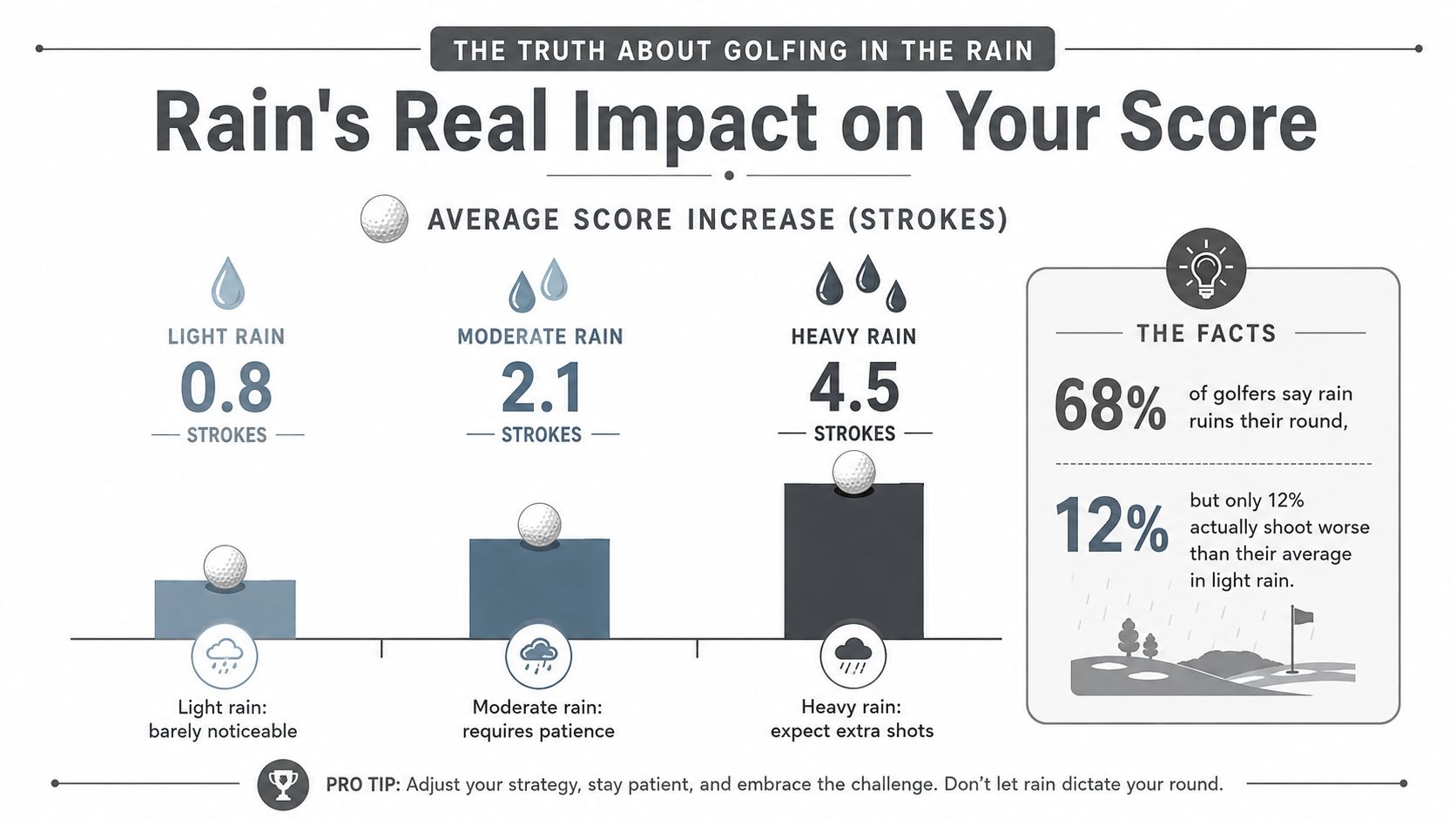
Light drizzle versus full-on soak
A light drizzle usually tests patience more than skill. Clubs get damp, grips need attention, and your routine becomes more important than your raw swing speed. Heavy rain is where the game changes shape. The ball lands, checks less predictably, and every slope on the course starts acting more dramatic than it does on a dry day.
The course tells the truth faster than the weather app does. If greens are firm enough to accept shots and release predictably, you can usually play golf in the rain without turning the day into a survival documentary. If the ground is saturated, the course plays longer than the yardage card suggests, because carry matters more than roll and spin control starts leaking away.
When Rain Golf Becomes Unsafe or Unplayable
A wet round turns from annoying to unsafe fast when the course stops draining and the sky starts acting up. Lightning is the first hard stop, no discussion, no “let's see what the next hole looks like.” The USGA notes that wet weather changes course conditions and says to stop immediately for thunder or lightning, then wait at least 30 minutes after the last thunder before resuming (USGA wet-weather guidance).
The stop signals that matter
Standing water on fairways is more than a nuisance. It creates unplayable lies, changes how the ball comes off the turf, and turns normal ground into a slippery mess. Greens are the other line you watch closely. Once they're holding water, putting speed becomes guesswork, and you can start doing more damage than golf.
If you hear thunder, stop. If you see pooling water where the ball should sit, stop. If the course staff is pulling flags or sending groups in, stop arguing with the sky.
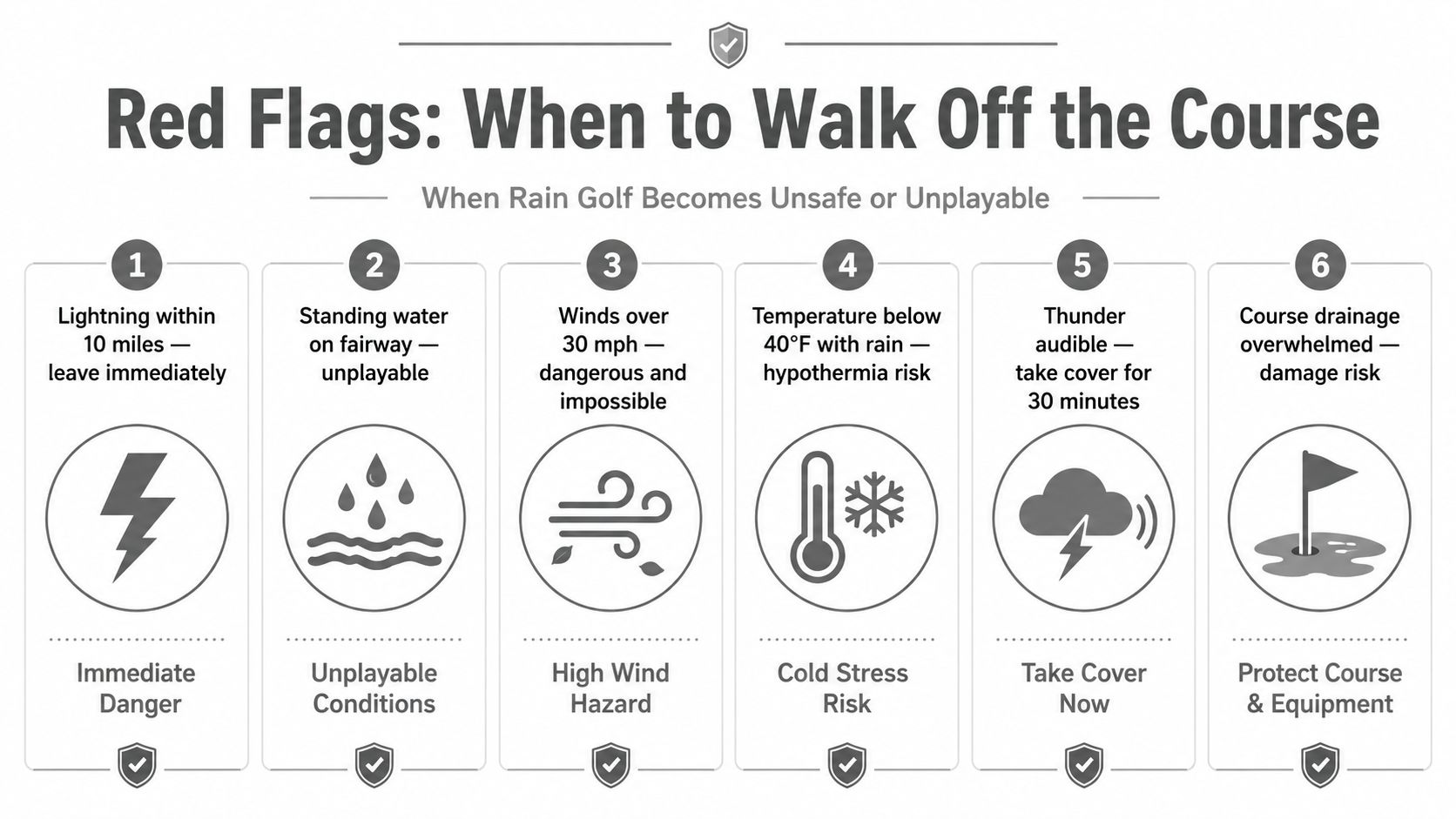
The trick is that a wet course is not the same as a playable course. Some tracks drain well enough to take a hard shower and keep going. Others turn soft after a short burst and keep every footprint like evidence. Course staff matter more than stubbornness here. They know which holes flood first, where carts need to stay, and when a round has stopped being fair or safe.
What changes first
The first things to watch are the tee boxes, cart paths, and low spots around greens. If those are already soft before you reach the turn, conditions are usually getting worse, not better. Ask the pro shop or starter how the drainage is playing today, and pay attention to the answer like your score depends on it, because it often does.
Lightning, flooding, and unplayable greens are not just inconveniences. They are the point where common sense becomes the right golf decision.
Adjusting Your Game for Wet Conditions
Wet turf changes the shot plan fast. The safest adjustment is usually the simplest one, carry, not roll. Wet fairways kill rollout, and wet greens can stop a well-struck ball like it hit a wall, so club selection has to account for that lost distance (PGA wet-weather tips).
Ball flight and contact become less predictable because spin drops
Water on the clubface and ball reduces groove interaction, which lowers spin on irons and wedges. That is why approach shots can release farther than expected, and chips may refuse to grab on landing. A normal iron shot can also turn into a flyer when the ball is sitting on wet grass, because moisture changes how the clubface grips the ball and how the ball launches (Galvin Green rain advice).
A rainy-round mindset needs discipline, not flair. Shorter swing, balanced finish, and a bigger landing area usually beat any attempt to force your usual yardage.
Club selection beats ego. If your 7-iron covers the number on dry turf, the wet version often needs the extra club, not the extra hero swing.
Putting asks for a different kind of patience too. Wet greens often play slower, and reading them well starts with watching how water, grain, and slope interact, which is where a practical guide to how to read greens in golf helps more than guessing at every break. Commit to pace first. The line gets simpler when you stop trying to solve every putt like a murder mystery.
What to change by shot type
- Drives: Tee it slightly lower, make a controlled swing, and protect the fairway. Extra distance is nice, but a ball in play saves more strokes than a wet-weather bomb.
- Irons: Expect less spin and less release after landing, so choose a club that can reach the front edge and still hold the green.
- Chips: Pick a landing spot that allows for early release, because wet grass does not always grab the ball the way dry turf does.
- Putts: Hit them firmer than your pride wants to. Wet greens tend to slow down, and timid speed is how a two-putt turns into a mess.
Footing matters as much as the club in your hands. A slightly wider stance and a smoother transition help keep balance when the ground is slick, especially on sidehill lies and soft tee boxes. That is not fancy instruction, just a way to avoid swinging like you are standing on a bar of soap.
For a practical roundup of rainy-round adjustments, rainy day golf tips is worth a look because it stays focused on on-course fixes instead of wishful thinking. Wet conditions do not require a different swing model, they require a calmer one, plus enough discipline to know when the course is helping you and when it is just eating golf balls.
Essential Rain Gear That Works
Bad gear turns rain from an inconvenience into a circus. Good gear does not make the weather pleasant, but it keeps your hands, eyes, and feet functional long enough to finish with dignity. The best setup protects the parts of a round that fail first, grip, visibility, and the ability to stay dry between shots.
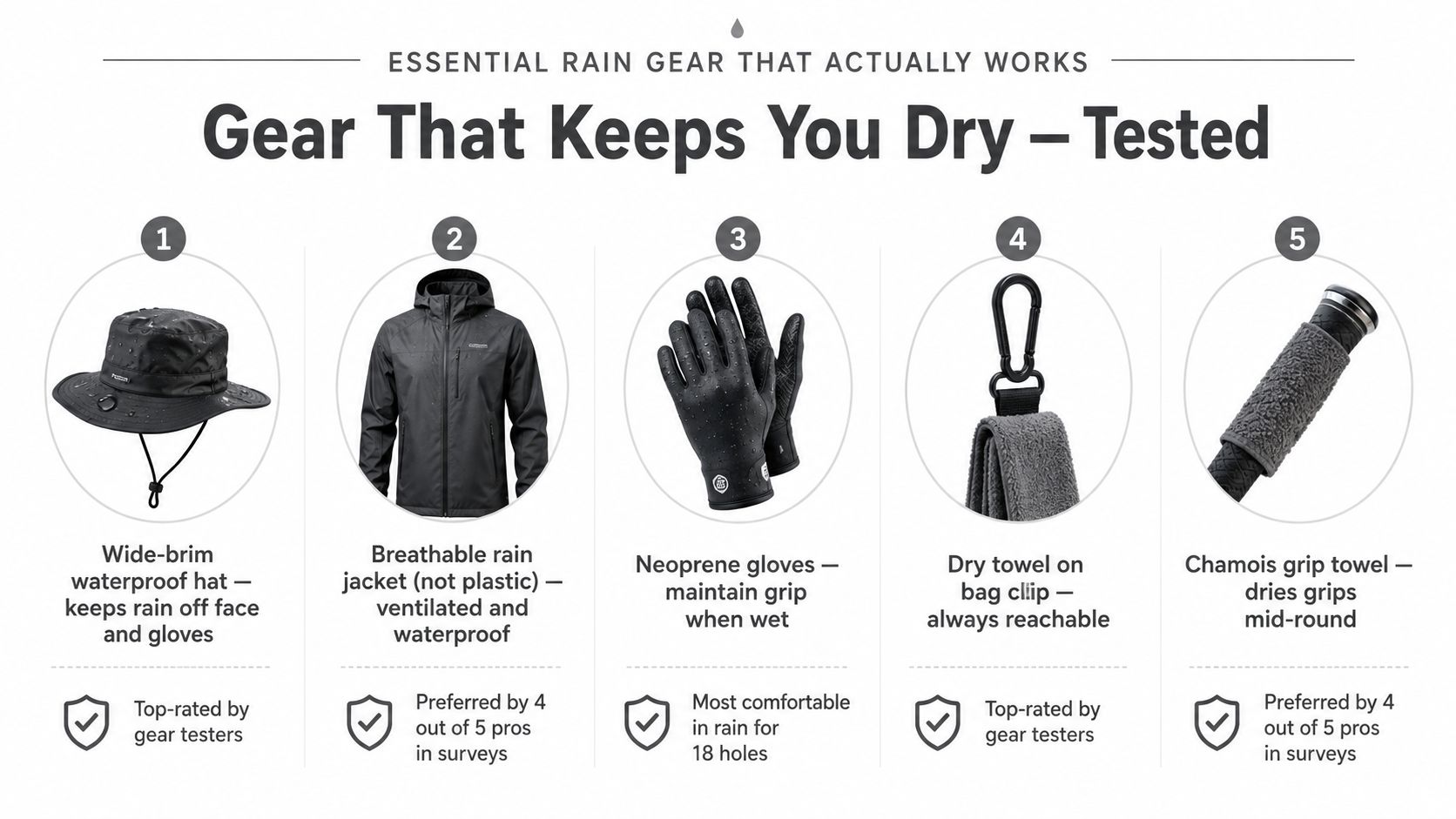
A waterproof hat matters more than a lot of golfers want to admit. Keeping water off your face and out of your eyes is a swing-quality issue, not a style choice. A breathable rain jacket belongs right alongside it, because a plastic shell traps sweat and leaves you soaked from the inside, which is a particularly annoying kind of “dry.”
Rain gloves are the highest-ROI gear for scoring in the rain. They help preserve grip when everything is damp, and that matters more than the marketing talk about “tour feel.” A dry towel on a bag clip stays reachable, and a chamois grip towel gives you a way to dry grips between shots without pretending a regular towel can handle the whole job.
The goal is not to stay perfectly dry, because that ship leaves the harbor fast. The goal is to stay functional long enough to swing without fighting your hands.
A good equipment resource on this topic is golf GPS watch review, especially if you are trying to keep your pace and club choices organized while the weather is doing its best to distract you. Wet rounds make simple decisions harder, so anything that cuts down mental clutter helps. That same practical mindset applies to golf rain hats, since the right brim and fit can keep rain off your eyes without adding another annoyance to an already miserable afternoon.
Here is what usually underperforms in wet weather:
- Plastic-y outerwear that blocks rain but traps heat, sweat, and every ounce of discomfort you generate.
- One lonely towel that turns useless after the first muddy wipe.
- Worn grips that get slick the moment humidity rises.
- Shoes with weak traction that let your lower body slide just as your hands are trying to stay precise.
Small details that matter on a wet tee sheet
Keep one towel dry and protected. Keep the other for mud, face wipes, and emergency cleanup. If you wear glasses, bring a way to keep them clear, because fog plus rain is a rough combination when you are trying to judge a 7-iron into the middle of the green.
The little stuff matters because rain magnifies every small failure. A jacket that vents well, a hat that keeps water off your eyes, and a towel you can reach save more strokes than any heroic swing thought. The gear does not need to be glamorous. It just needs to let you swing without feeling like you are wearing a damp tarp and a bad attitude.
Rain Golf Etiquette and Course Care
I've seen the same rainy-round mistake more times than I can count. A group comes in hot, grabs cart paths, leaves muddy footprints on every green apron, and acts surprised when the superintendent looks like he's just watched someone drop a burger in the cup. Wet golf asks for a little more discipline, not because anyone's being precious, but because soft turf shows every bad habit.
Play the round without tearing up the course
Repair ball marks aggressively on soft greens. They heal slower when the surface is saturated, and a lazy repair leaves a scar that the next group has to putt over. Replace divots carefully, and don't take extra practice swings in soggy fairways just because the mud looks forgiving.
Cart path rules matter more in wet weather too. If the staff says cart paths only, that's not a suggestion wrapped in a yellow ribbon. It keeps the turf from getting chewed up and prevents a couple of carts from turning one soft area into a trench.
Pace of play gets awkward, so handle it like an adult
Rain adds towel stops, glove changes, and more time spent checking grips. That's normal. What isn't normal is making the group behind you pay for your indecision. If the weather is making every hole harder, keep your routine tighter, not longer.
If your group is falling back because everyone's re-drying clubs and debating umbrellas, let faster players through. Rain already slowed the day down. Don't make it worse.
Communicate clearly with your group. If somebody wants to push on and somebody else is clearly done, say it early instead of trying to “see how it goes” for four more holes. The etiquette guide at golf course etiquette is useful because the basics matter even more when conditions get messy.
Rain rounds are where courtesy pays off. Respect the turf, respect the staff, and respect the group behind you, and you'll be remembered as the golfer who could handle a little weather, not the one who left the course looking like a construction site.
Making the Call When Rain Golf Is Worth It
The best rainy-round decisions aren't emotional. They're practical. If the rain is light, the course is draining, and there's no lightning threat, playing can be a smart move, especially if you like softer greens, cooler air, and fewer people around. That's the sweet spot where wet weather can help the round feel calmer.
A simple decision filter that keeps you out of trouble
Start with the forecast, but don't worship it. What matters more is how much water has already fallen and how the course has reacted. If the fairways are damp but not saturated, and the greens still accept shots without turning into puddles, you can usually play through.
Once the ball starts stopping instantly everywhere and your footing gets sketchy, the round stops being good golf. That's true whether you're playing a casual nine or trying to protect a score in competition. In softer, cooler weather, some players score well because they commit to the conditions instead of fighting them. In bad weather, the players who insist on dry-day golf tend to bleed shots, patience, and the occasional club grip.
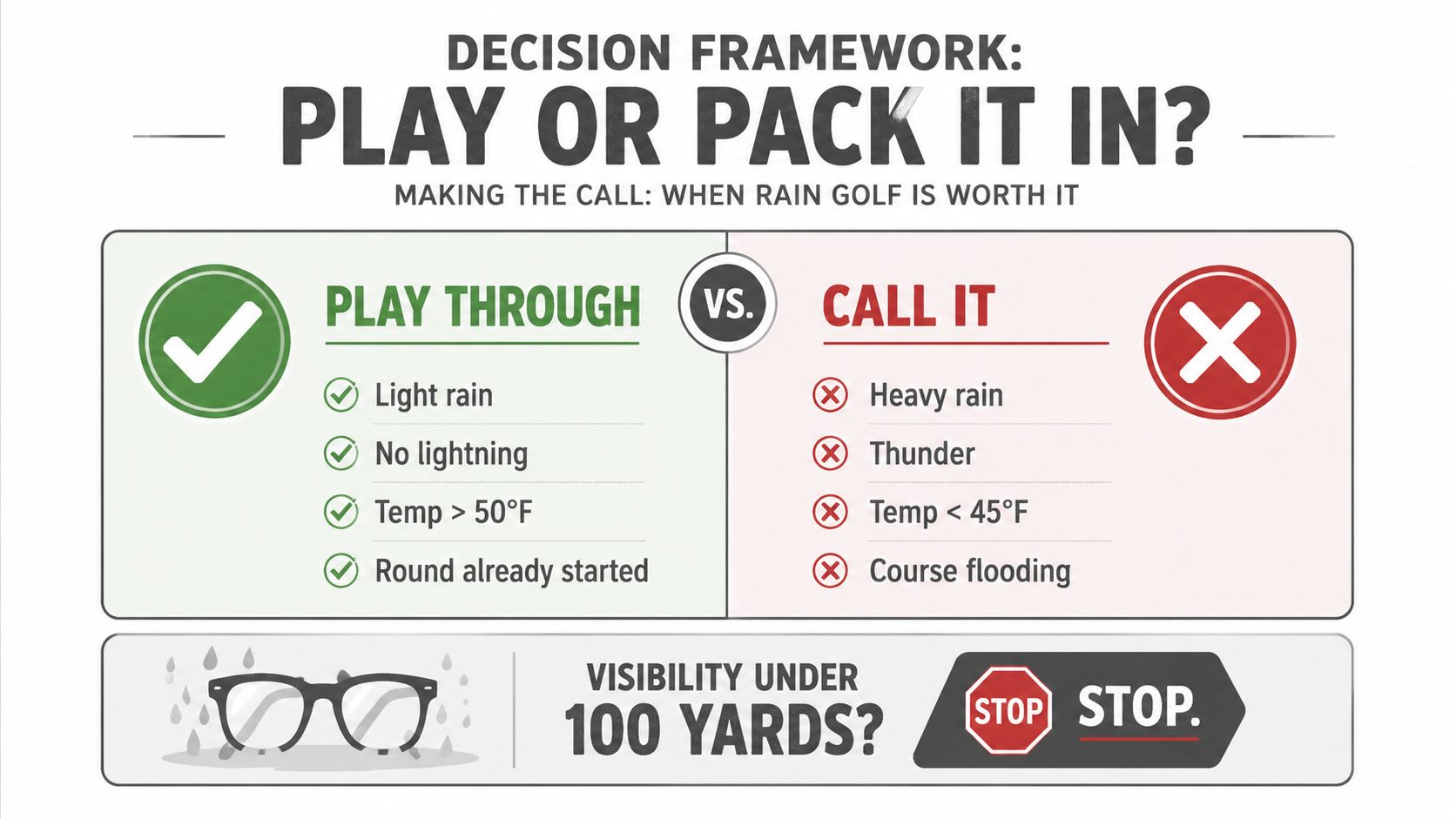
When to stay, when to leave
- Play through: light rain, no lightning, temperatures comfortable enough to keep your hands working, and a course that's still holding up.
- Call it: thunder, flooding, greens that are clearly unplayable, or conditions that make the round feel unsafe instead of merely inconvenient.
- Walk off early: if visibility gets bad enough that you can't track ball flight and the course is struggling to keep pace moving.
One useful personal rule is simple. If the round is still playable but annoying, you can probably finish it. If it's becoming unsafe, unfair, or destructive, stop pretending you're in a movie montage.
Rain golf is worth it when the course can still function and your gear can still function. If either one quits, your best score might be the one you don't post.
If you want more practical golf content, rain-ready style ideas, and headwear that belongs in a golfer's real-life rotation, visit 2ndShotMVP. It's a smart place to find gear that fits the game off the course as well as it does on the walk from the car to the first tee.

