

You're standing in the golf shop, half an hour before a round, staring at a wall of hats that all look like they were designed by committee. The visors feel too exposed, the dad hats feel too soft, and the fitted lids are a gamble unless you already know your exact size. The snapback keeps pulling your eye because it looks sharp and confident, but the question is simple, does it help on the course, or is it just streetwear with a tee tucked into the bill?
That's the part most buyers get wrong. A good snapback golf hat can be a legitimate piece of performance gear, but only if the crown, closure, fabric, and fit are built for golf, not just for a mirror selfie. The right one stays put through the swing, handles heat better than you'd expect, and still looks good when you leave the range and head to the clubhouse.
Why Every Golfer Ends Up Staring at a Wall of Hats
The hat wall creates the same problem every time. You want something that works with your game, but most of the options are merch first and equipment second. Snapbacks stand out because they look intentional, with a cleaner silhouette than a floppy cap and more personality than a basic tour-style lid.
Golf has also moved far enough away from rigid old-school dress codes that headwear isn't just about looking “proper” anymore. The sport's broader hat culture has changed over time, and the modern golf snapback sits at the intersection of that shift, borrowing its DNA from baseball and its attitude from lifestyle apparel. That's why it keeps showing up in pro shops and online collections, even when buyers are shopping for function, not fashion.
The real reason snapbacks catch your eye
They look organized. A structured front panel gives the hat shape, and that shape reads as cleaner from a distance than a soft cap that collapses when you set it down. On the course, that matters more than people admit, because golfers do care about whether their gear looks composed at address, in the cart, and at the bar after the round.
Practical rule: if a hat only looks good when it's brand new and perfectly fluffed, skip it. Golf gear should still look solid after heat, sweat, and being tossed in a locker.
Snapbacks also solve a practical problem. They're adjustable, so you're not gambling on a fixed size that feels fine in the store and irritating by the eighth hole. That's why they've become such a common choice for golfers who want one hat to do double duty, performance during the round, then casual wear afterward.
What Makes a Snapback Golf Hat Different
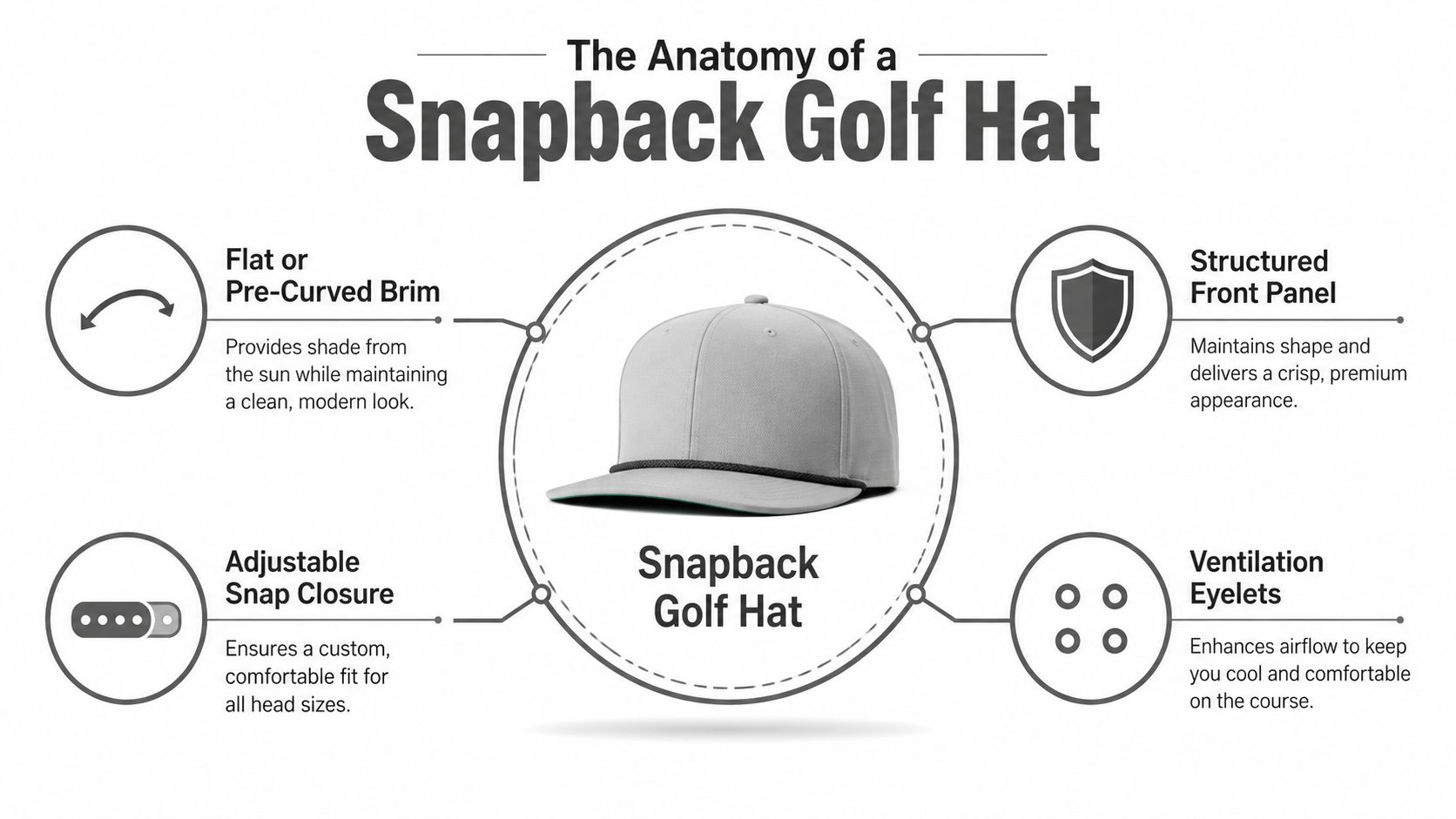
A snapback stands out because the build is obvious the moment you pick it up. The classic version uses six-panel construction, a structured front, a flat or lightly curved brim, and a plastic snap closure at the back. That shape follows the modern lineage of baseball cap design that was standardized in the mid-20th century, then pushed into wider fashion through streetwear and hip-hop culture (history of snapback hats).
That visible structure is the point. A snapback looks composed, holds its shape, and tells people the wearer chose it on purpose rather than grabbing the softest cap in the locker room.
Why the structure matters on a golf course
The stiff front panel does real work. It keeps the brim line cleaner through your swing and helps the hat keep its posture when you take it off, set it down, and put it back on between holes. Golfers notice that immediately, because a cap that starts sagging looks careless before the round is even over.
The closure matters just as much. The plastic adjuster gives you a simple fit change, which is why snapbacks work for golfers who move between cooler mornings, hotter afternoons, and post-round wear without wanting a different hat for each setting.
Performance versions go a step further than the casual streetwear look. Structured crowns, moisture-wicking interiors, and a low-slip fit change how the hat sits during play, especially if you care about something that stays put, keeps its shape, and still works once you leave the course. Brands like 2ndShotMVP fit into that sweet spot, because they speak to golfers who want one hat for play, practice, and the clubhouse without settling for a flimsy throw-on cap.
Materials and Construction Built for the Course
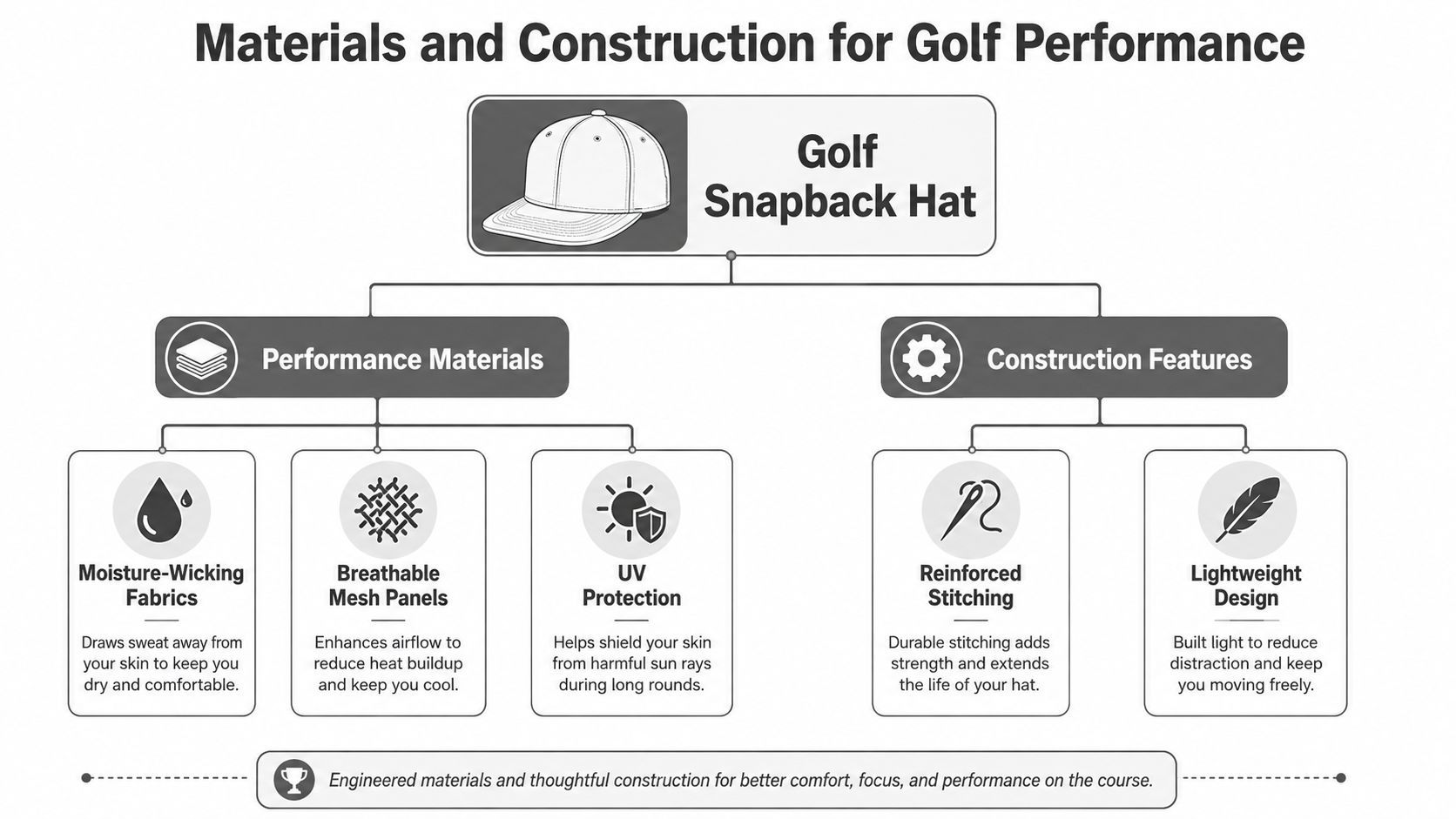
A fashion snapback and a golf-ready snapback can look almost identical online, which is exactly how buyers get tricked. The difference shows up in the spec sheet, not the thumbnail. A true golf model usually relies on polyester/elastane blends or recycled polyester, along with moisture-wicking liners, and published head-circumference ranges such as 54–62 cm or 21 1/4–23 7/8 in depending on the build and market (performance golf snapback specification pattern).
The material story is simple. Cotton feels nice for ten minutes, then it gets heavy and unhappy in heat. Performance synthetics dry faster, hold their shape better, and handle sweat without turning the forehead band into a nuisance.
What to look for in a performance build
A worthwhile golf snapback usually includes a few things that separate it from a promo cap:
- Moisture management: interior bands that pull sweat away instead of soaking it up.
- Ventilation: perforated panels or mesh where the head needs airflow.
- Shape retention: a crown that doesn't cave in after a few rounds.
- Closure quality: a snap that feels secure, not flimsy.
- Lightweight body: enough structure to look clean, not so much that it feels like a helmet.
That's also why a plain 5-panel fashion cap isn't automatically a golf cap, even if it's sold next to one. If you want a useful point of comparison for shape, fabric, and paneling, the apparel basics including this hat page from Los Angeles Apparel is worth studying as a reminder that construction choices create very different wear experiences.
For more detail on what separates a functional golf lid from a generic one, their performance golf hats overview gives a clean example of how technical headwear gets positioned for play.
Bottom line: if a product page talks only about graphics and never about sweat, airflow, or closure quality, it's a fashion hat with a golf label.
How Snapback Sizing and Fit Actually Work
Snapbacks are sold as one-size-fits-most, but that phrase hides a lot of bad outcomes. The practical fit range on commercial golf models is broad enough to cover many heads, but the ultimate test is whether the hat sits stable without squeezing your temples or floating high enough to catch wind. The closure gives you some flexibility, but it can't fix a crown that's wrong for your shape.
A good snapback should feel snug, not pinned. If it shifts every time you turn to watch a shot, it's too loose. If it leaves a mark across your forehead before the turn, it's too tight.
Quick self-check before you buy
Use this simple test before you hit checkout:
- Measure your head at the widest point. Use a soft tape where the hat will sit.
- Check the posted fit range. If you're near the edge of the range, expect less comfort and less forgiveness.
- Look at the crown depth. Deep crowns suit some heads, but they can swamp smaller faces.
- Think about hair. A shaved head, short crop, ponytail, or thicker hair changes how the structured front sits.
- Decide how much adjustability you want. A snap closure gives you steps, but not infinite nuance.
For a practical measuring walkthrough, the how to measure head guide from 2ndShotMVP is a useful reference point before you order anything online.
The structured crown is the part that many people underestimate. It gives the hat its shape, but it can also feel less forgiving than an unstructured dad hat if your head is unusually round, narrow, or you wear your hair in a way that changes the fit. That's why golf buyers should care about fit stability as much as style. A hat that stays seated through your swing is a better hat, even if it doesn't look “softer” on the shelf.
Styling a Snapback On and Off the Course
A snapback earns its spot when it works in more than one setting. That's the key advantage here. You can wear the same hat during a round, at the clubhouse, and on a casual weekend without looking like you forgot to change after golf.
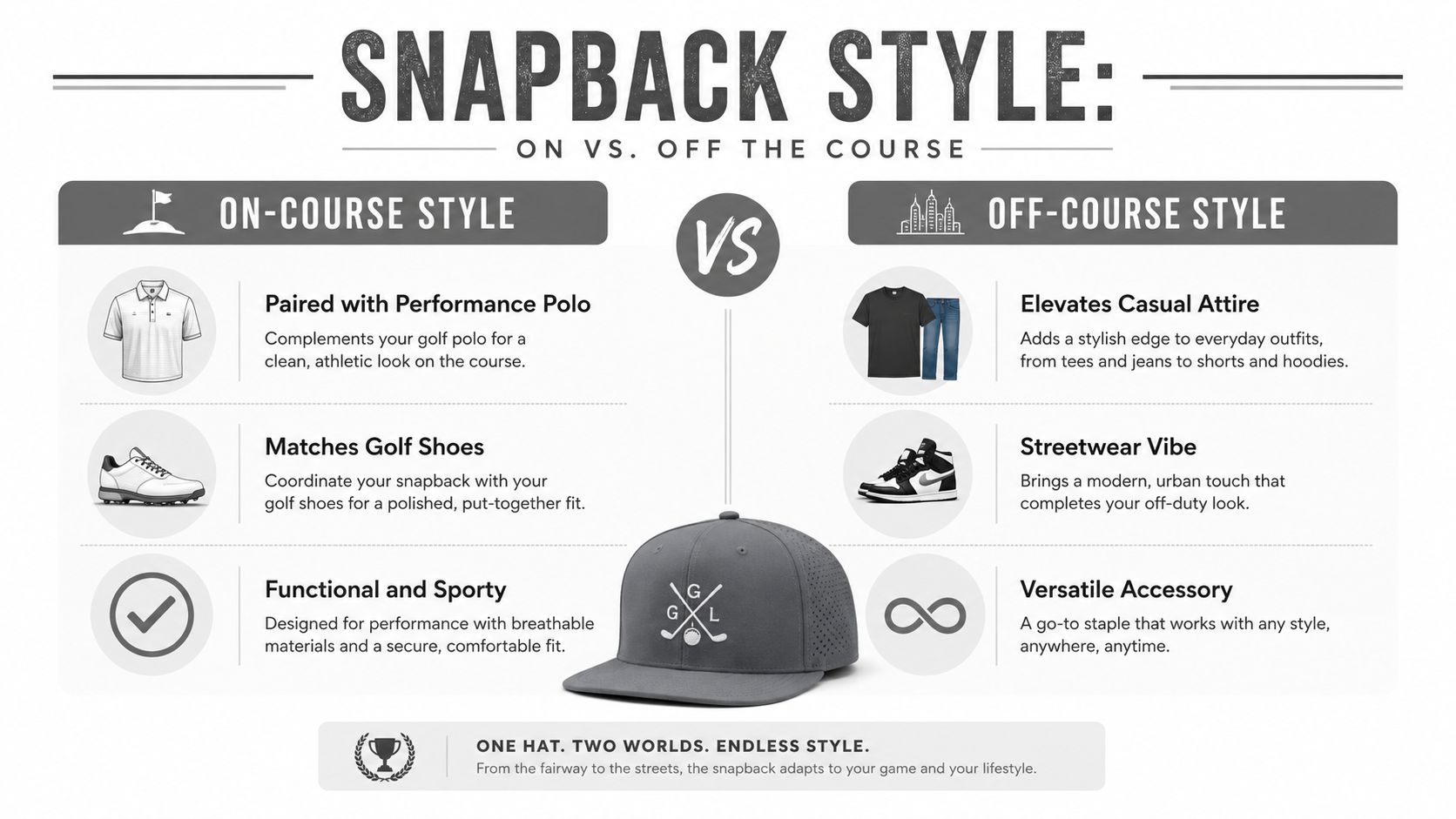
The cleanest on-course look is straightforward. Pair a performance polo, well-fitting shorts, and a snapback with a flat or lightly pre-curved brim. That combination reads athletic and deliberate, especially if the hat has a structured crown that matches the rest of the outfit's lines.
Three ways to wear it without trying too hard
- Competitive round: keep the palette tight, let the hat act like part of the uniform, and avoid oversized graphics.
- Clubhouse or executive setting: a collared shirt, quarter-zip, or even a blazer can work if the hat stays restrained and the brim isn't aggressively styled.
- Off-duty weekend: for this occasion, bolder graphics, streetwear cues, and a more relaxed fit make sense.
The lifestyle side of the category is real. Retailers are increasingly pushing golf snapbacks with bold graphics, unstructured builds, and hybrid styling that borrows from streetwear, which matches the broader move toward off-course golf apparel (golf hat fashion history coverage).
That doesn't mean every flashy snapback is wearable off the course. It means the best ones look like actual wardrobe pieces, not souvenir shop inventory. A clean logo, balanced colors, and a crown that holds its shape will always beat a hat that screams “event staff.”
For another angle on bill shape and how that changes the overall look, the flat bill snapback hats discussion is a helpful reference.
Care and Maintenance That Actually Works
A snapback's structure is its strength until you abuse it. Toss it in a trunk, crush it in a travel bag, or run it through a hot wash, and the crown loses the crisp shape that made you buy it in the first place. That damage shows fast, especially on hats with a firm front panel and a structured brim.
The routine that works is boring, which is good. Spot-clean the outside with a damp cloth and mild soap. If the hat needs more than that, hand-wash it in cold water with gentle detergent, reshape it immediately, and air dry it away from direct heat.
Keep the crown alive
Use a hat form if you own one. If you don't, stuff the crown with a clean towel while it dries so the front panel doesn't collapse inward. Store it on a shelf or hook, not crushed under shoes or buried in a golf bag.
The interior sweatband deserves attention too. Sweat stains set in if you ignore them, and they're harder to remove once they've baked in. Wipe them down after hot rounds, especially if you wear the same hat repeatedly during a stretch of warm weather.
Curving the brim is a choice, not a requirement. Some players like the cleaner, flatter look on the course, while others want a slight curve because it sits more naturally with sunglasses and cuts glare in a way they prefer. Either way, make the shape decision once and then stop fussing with it every week. Constant bending weakens the look.
Buying Tips and What to Look for in a Quality Snapback
The fastest way to shop well is to stop looking at logos first. Start with construction, because that's what determines whether the hat will still feel good after a few rounds. A decent snapback golf hat should give you a stable crown, a closure that doesn't feel cheap, and fabric that doesn't trap heat like a plastic dome.
The table below is the quickest filter I'd use before buying.
| Snapback Golf Hat Feature Checklist | What to Look For | Why It Matters |
|---|---|---|
| Fabric quality | Polyester blends, recycled polyester, or other performance materials | Helps the hat dry faster and keep its shape |
| Closure hardware | Snap closure that feels solid, not brittle | Affects adjustability and long-term durability |
| Brim style | Flat, pre-curved, or hybrid | Changes the look and how naturally the hat sits with sunglasses |
| Ventilation | Eyelets, mesh, or perforated panels | Keeps heat from building up during play |
| Sweatband | Soft, moisture-managing interior band | Reduces forehead irritation and sweat buildup |
| UV coverage | A design built for sun protection | Important for long rounds outdoors |
| Visual style | Clean graphics or lifestyle-first branding | Makes the hat easier to wear off the course |
For designers and buyers who think about decoration and fit together, the Cobra DTF cap design tips resource is a smart reference, because cap graphics only work when the underlying shape and material support them.
If you're shopping a brand like 2ndShotMVP, treat it as one option among several rather than a shortcut to style. The reason a brand like that fits this category is simple, it treats headwear as something you can wear on the course and still keep on later. That lifestyle-first approach makes sense here, especially if you want a hat that doesn't feel locked into one setting.
What I'd prioritize first
- First-time buyer: fit, closure quality, and sweat management.
- Upgrading from a basic cap: crown shape, brim style, and ventilation.
- Buying for daily wear too: graphics, versatility, and how the hat looks with casual clothes.
If those three priorities line up, you'll end up with a hat you reach for instead of one that lives in the gear drawer.
Finding Your Signature Look and Owning It
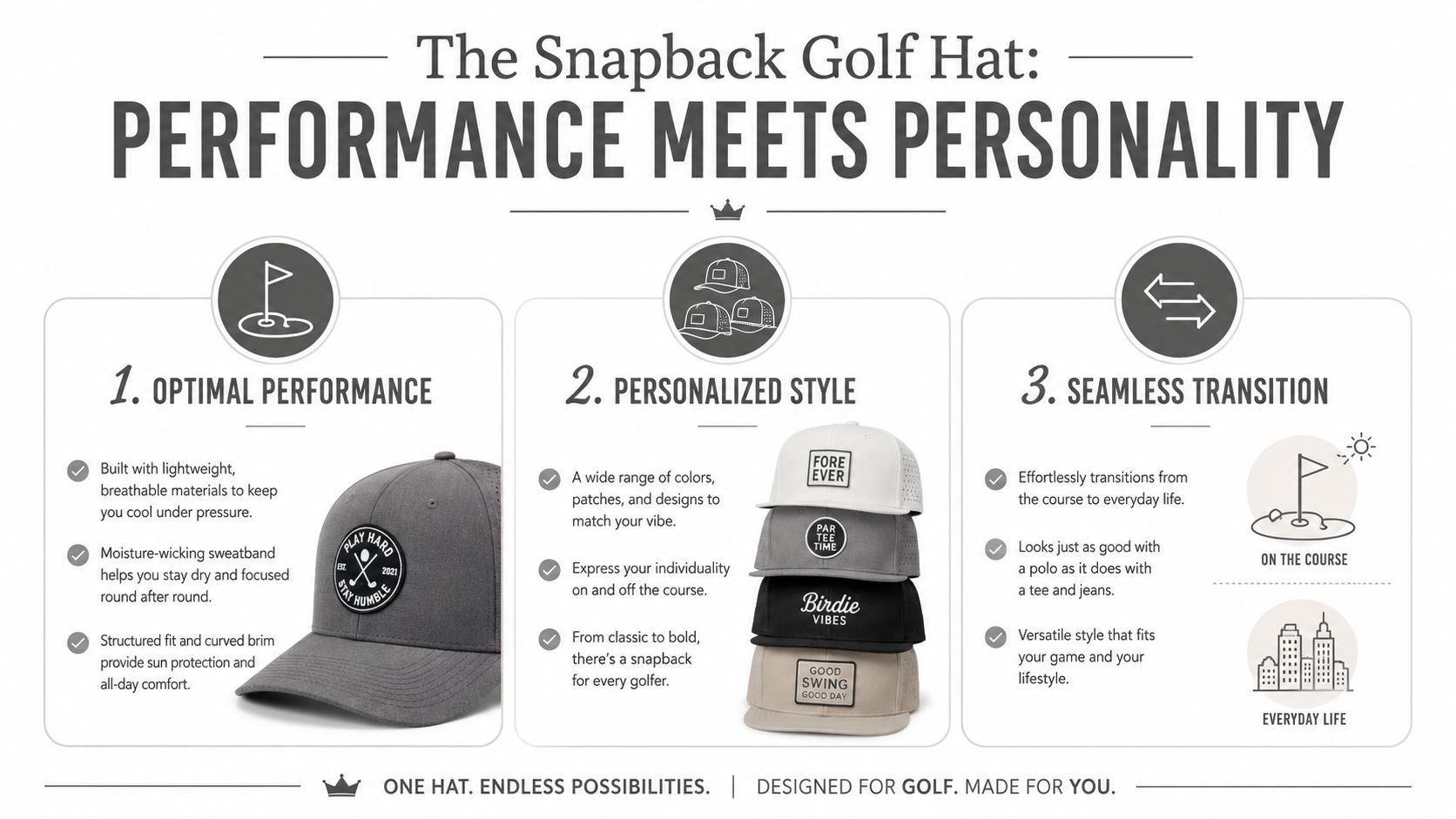
The best snapback golf hats do two jobs without making you choose between them. They keep sun and sweat under control during a round, then still look sharp when the scorecard is tucked away and the day keeps going. That mix of performance and personality is the whole point.
If you want one hat that works harder than the average golf cap, buy for shape, fabric, and fit first. Style matters, but it should ride on top of good construction, not replace it. Once you find the version that sits right on your head and fits your life, stop second-guessing it and wear it like you meant it.
If you want a hat that covers both the course and the rest of your day, take a look at 2ndShotMVP. Its golf hats and lifestyle headwear are built around the same crossover idea discussed here, so you can choose a piece that fits your game and your everyday wardrobe without overthinking it.

