

You're standing over a short putt, and your golf hat has chosen this exact moment to become a problem. The crown feels tight, the sweatband is damp, and every small movement sends the brim drifting toward one eye. You make the putt anyway, but only after spending more attention on your hat than on the break.
That's the trouble with poor headwear. A hat can't fix a slice, but it can stop distracting you while you're working on one. The right adjustable golf hat should stay secure, feel comfortable through a long round, work with your sunglasses and hairstyle, and look just as natural at the 19th hole.
Why Your Golf Game Needs a Better Hat
A golfer named Martin once arrived for a weekend round wearing a cap that looked sharp in the parking lot. By the turn, the back strap had loosened, the front panels had softened, and the sweatband had started rubbing his forehead. On the next tee, he adjusted the hat before every shot. By the final holes, he'd developed a routine that had nothing to do with golf: address the ball, check the grip, tug the cap.
That little distraction matters. A hat that's too tight can create pressure around the forehead and temples. One that's too loose may shift when you bend over to read a putt or ride in a cart. A heavy, poorly ventilated crown can also make a warm round feel longer than it needs to.
An adjustable design gives you control over the fit instead of forcing you to accept the manufacturer's idea of “close enough.” You can loosen it after your hair gets damp, make room for sunglasses, or tighten it when the wind picks up. That flexibility makes the cap useful on the course, at the driving range, and away from golf.
Practical rule: If you notice your hat during every shot, the hat is asking for too much attention.
The demand for better golf headwear reflects a wider market. The global golf hat market was estimated at USD 1.77 billion in 2026 and is projected to reach USD 3.92 billion by 2034, while North America was valued at USD 1.2 billion in 2024 and has over 15,000 golf courses supporting steady demand, according to Verified Market Reports' golf hat market overview. That growth gives golfers more choices, but more choices also make the buying decision less obvious.
The best cap isn't necessarily the one with the loudest logo or the stiffest front panel. It's the one that solves your particular nuisance, whether that's heat, movement, pressure, messy hair, or sunglasses that keep catching on the back strap.
Decoding the Different Hat Closures
The closure determines how easily a cap stays comfortable as conditions change. A golfer wearing sunglasses, managing longer hair, or dealing with heat may need a different adjustment system than someone who wants a fixed, structured feel.
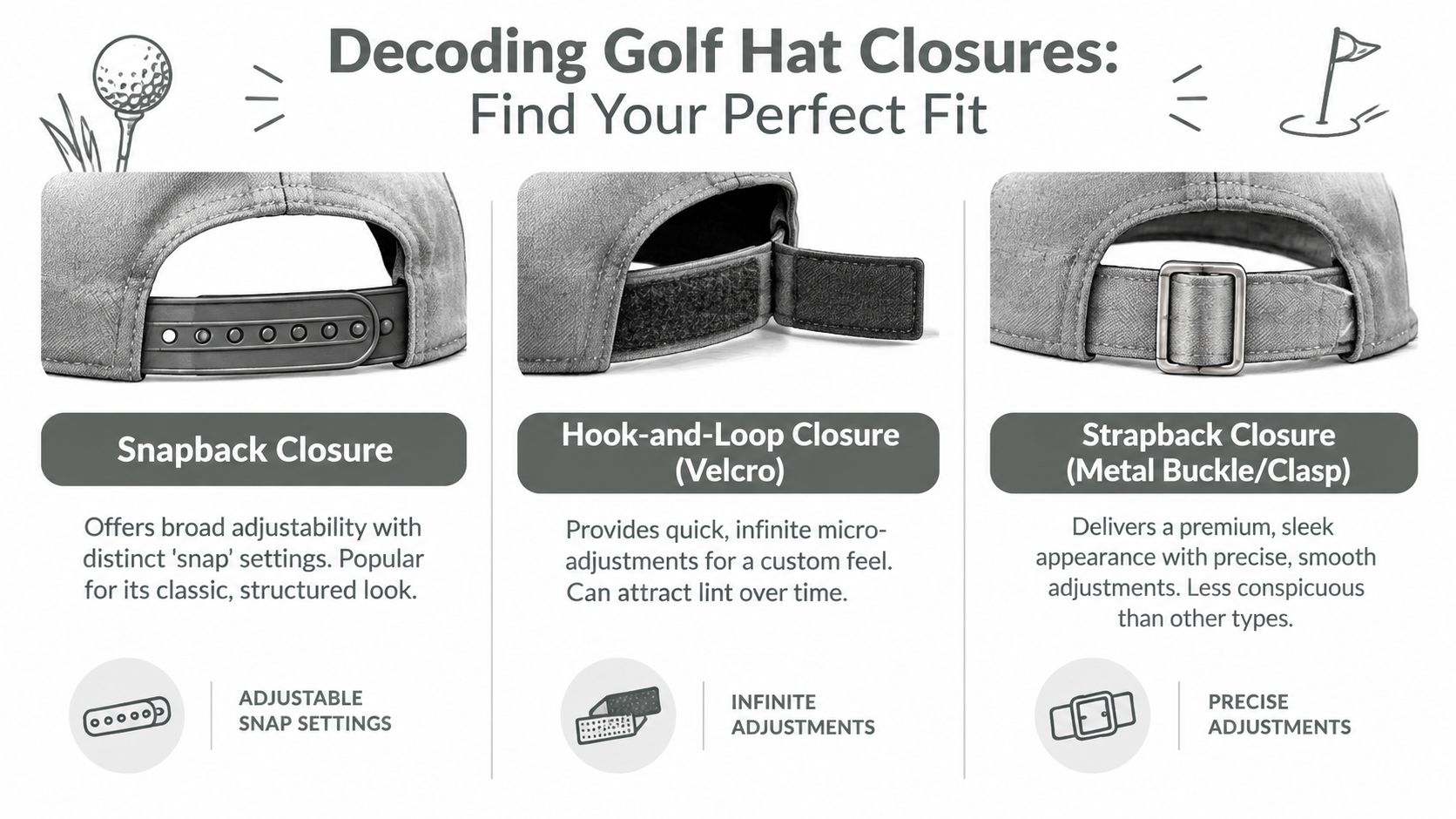
Snapback for quick, repeatable settings
A snapback uses plastic tabs that lock into set positions. Each click gives you a repeatable setting, much like a seatbelt. That makes it useful when you want to put on the cap and get to the first tee without repeated fine-tuning.
Snapbacks often suit golfers who prefer a structured appearance and a firmer feel. They also work well for shared hats, since another wearer can open the tabs and adjust them quickly. The limitation is precision. If your comfortable setting falls between two tabs, you must choose the looser or tighter option.
For a closer look at the construction and use cases, read this guide to snapback golf hats.
Strapbacks for a smoother, more precise fit
A strapback uses fabric with a buckle, clasp, or slider. You pull the strap until the tension feels right, so the adjustment works more like a dimmer switch than a light switch.
That fine control helps golfers who dislike pressure or wear sunglasses with thicker arms. The strap can rest flat against the back of the head, while a metal buckle gives the cap a cleaner appearance. Strapbacks may take slightly longer to set than snapbacks, but they make it easier to respond to changing comfort during a round, such as after your hair becomes damp or your head warms up.
Hook-and-loop for fast changes
Hook-and-loop closures join a soft strip to a fastening surface and separate with a quick pull. Performance caps often use them because you can make small adjustments with one hand. If your hair shifts, sweat builds up, or you add a sweatband, the closure lets you change the fit without taking off the cap.
The trade-off is maintenance and appearance. Lint can collect in the fastening area, and the closure may look less polished than a concealed strap or metal buckle. For golfers who value speed, though, its quick micro-adjustments are practical.
Closure choice solves different course problems. Snapbacks favor repeatable settings, strapbacks provide gradual pressure control, and hook-and-loop closures handle quick changes in heat or movement. Check the construction as well as the closure, since the two features work together to determine how the hat behaves through a round.
Sizing Beyond One-Size-Fits-Most
“One size fits most” describes the adjustment range. It doesn't promise that every head will experience the same fit.
Two golfers can have similar head circumference but very different results. One may have a rounded head shape and shallow crown preference. Another may need more room above the ears, wear a low ponytail, or keep sunglasses on from the first tee to the clubhouse. The cap's height, front-panel structure, and opening around the closure all affect comfort.
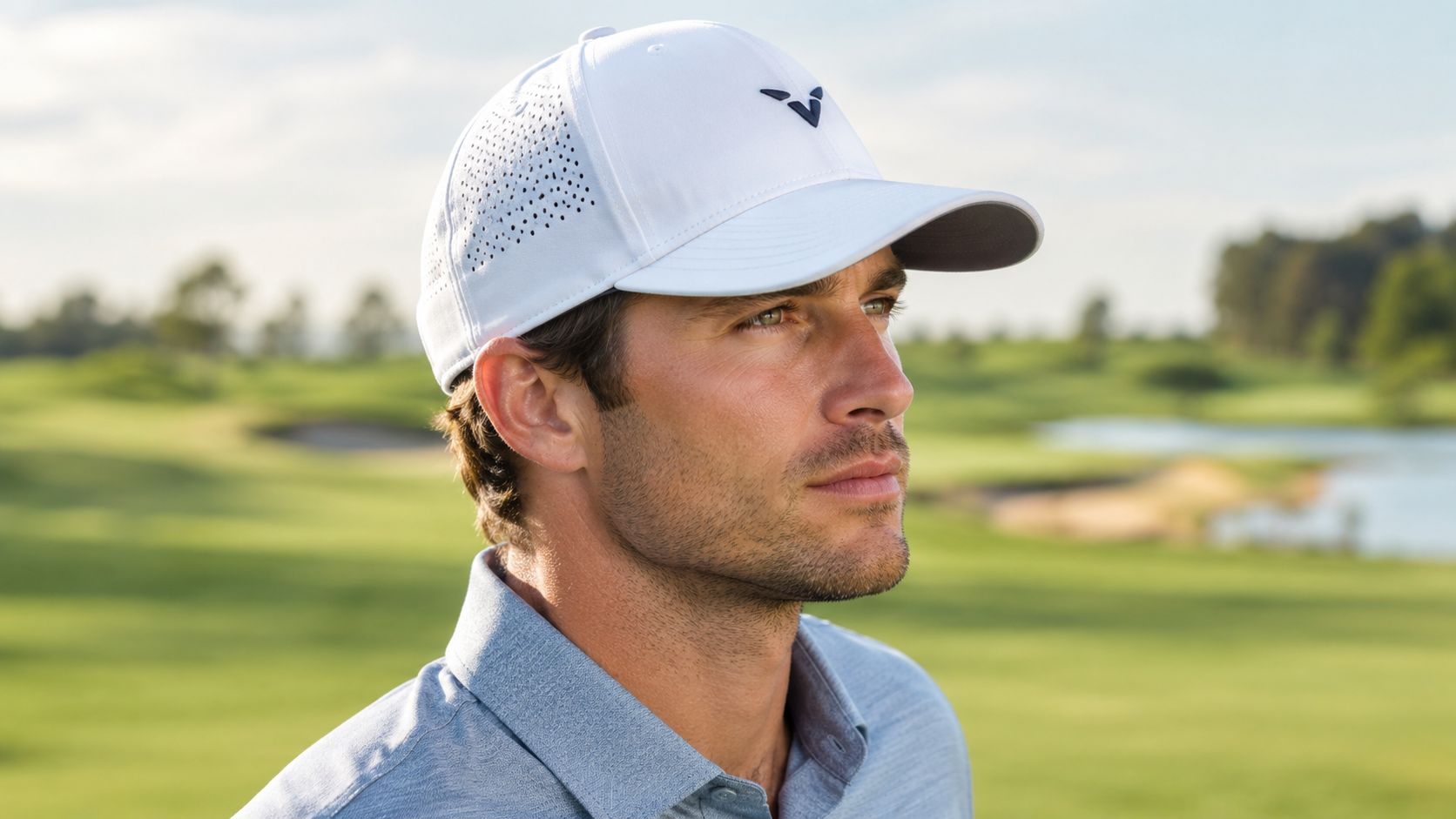
Start with a simple baseline. Wrap a flexible tape around the widest part of your head, keeping it level and comfortably snug. If you don't have a tape, use a piece of string and compare it with a ruler. Your measurement won't tell you everything, but it can quickly reveal whether a standard adjustable cap is likely to have enough room.
You can find more practical measuring guidance in this hat-size guide.
Match the closure to your daily setup
Your usual golf setup matters more than the label.
- Ponytail or longer hair: A strapback or hook-and-loop opening may give you more freedom to position the hair without creating a pressure point.
- Thick sunglasses arms: A smooth strapback can reduce interference at the back and sides of the head.
- Frequent fit changes: Hook-and-loop is convenient if you adjust between walking, riding, warming up, and playing.
- Consistent structured fit: A snapback works well if you prefer a familiar setting and a defined silhouette.
Recent 2026 buying guidance emphasizes that head shape, hairstyle, and sunglasses compatibility can matter more than the printed size, with closure choice often determined by those personal use cases, as discussed in this adjustable golf hat fit guide. The cap should sit securely without squeezing your forehead, and it shouldn't need a constant tug after every swing.
Hat Materials Matter More Than You Think
A cap's fabric affects how it performs once the round heats up. Product descriptions can sound technical, but a few terms reveal whether a hat will handle sweat, sun, and movement comfortably.
Polyester blends for active rounds
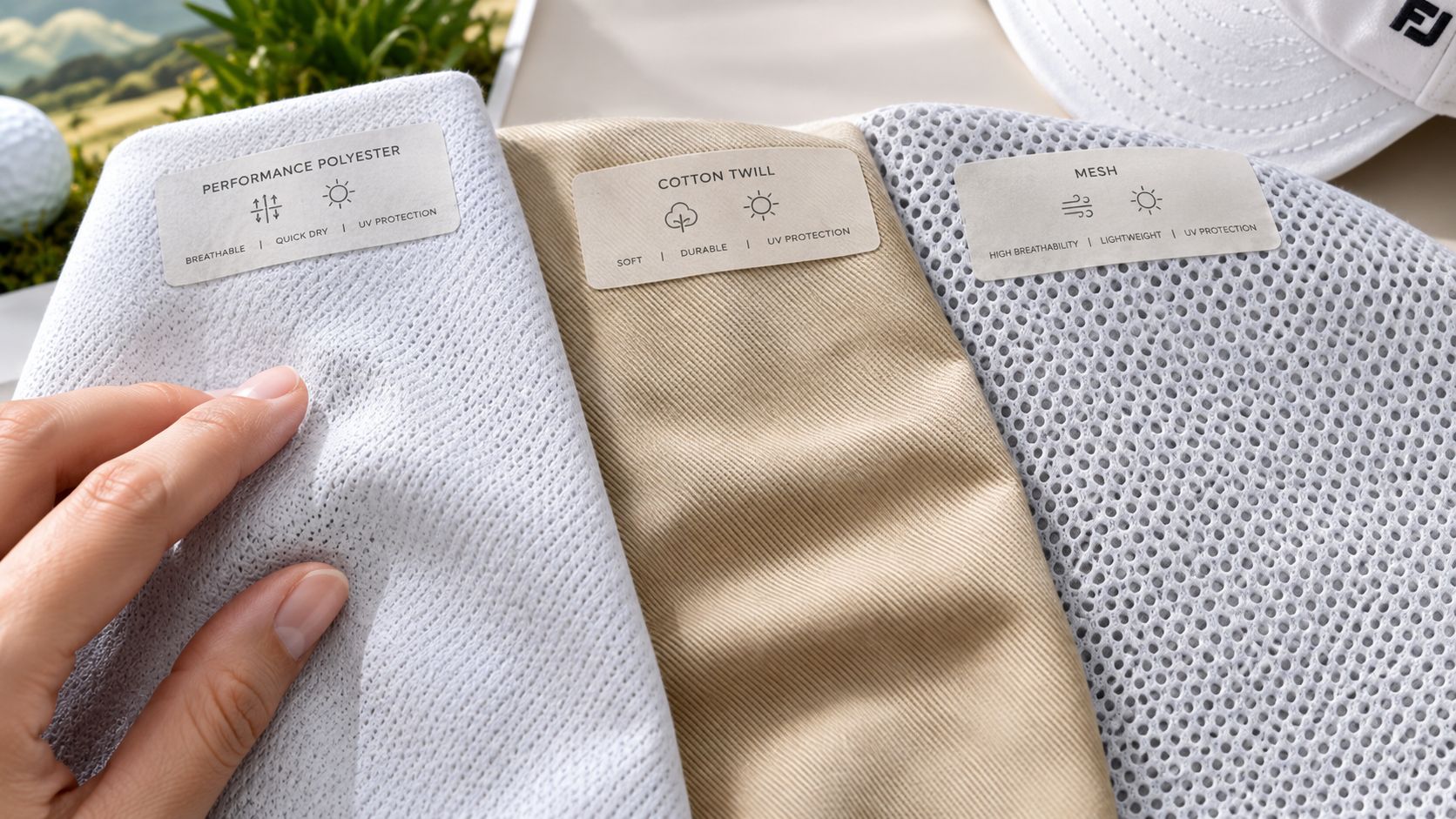
Lightweight polyester is common in performance golf hats because it keeps its shape and manages moisture differently from absorbent natural fibers. Spandex adds stretch, allowing the crown to move with you instead of feeling stiff during a swing. That flexibility can also help when sunglasses or a hairstyle make a rigid fit feel restrictive.
One example combines 97% polyester with 3% spandex, a hook-and-loop closure, lightweight construction, and a 2.75-inch brim, according to the Mizuno product listing. This setup suits warm rounds when you want a light cap that keeps its front shape while allowing some give around the head.
Synthetic fabric does not guarantee a cool head. Check for ventilation panels, a breathable sweatband, and enough crown room to avoid pressing fabric tightly against your scalp. Moisture control is only one part of comfort. Air must still enter and escape through the complete design.
Cotton for relaxed comfort
Cotton twill feels familiar and gives a cap a casual appearance. It works well on a mild day, during a short practice session, or when you want one hat to go from the course to lunch without looking overly technical.
The trade-off appears as sweat builds. Cotton may feel comfortable at the first tee, then become heavier and slower to dry after several holes. It remains a practical material when heat and humidity are manageable. In hotter conditions, its comfort depends more on your pace, shade, and tolerance for damp fabric.
Mesh and technical panels
Mesh can increase ventilation, especially across the side or rear panels. It helps golfers who dislike the sealed-in feeling of a dense crown, although extra airflow may come with less structure or a different appearance. For a hot walking round, that exchange can be worthwhile.
The men's golf hats market has been projected to grow from USD 520 million in 2025 to over USD 708 million by 2031, with amateur golfers representing over 70% of demand, according to the Flexfit product information from Yupoong. Brands may respond by refining performance fabrics, but your weather, sweat level, and preferred feel should guide the choice more than marketing language.
How to Choose Your Champion Golf Hat
Start with the problem you want the hat to solve. If the cap slips, prioritize closure security. If your forehead feels compressed, prioritize fine adjustment and crown depth. If your hair or sunglasses interfere, treat the rear opening as a design feature, not an afterthought.

| Closure Type | Best For | Adjustability | Durability |
|---|---|---|---|
| Snapback | Structured style and repeatable settings | Broad, fixed increments | Generally sturdy, though plastic tabs can wear |
| Hook-and-loop | Fast changes during active use | Very fine adjustment | Practical, but the fastening area can collect lint |
| Strapback | Sleek appearance and pressure-sensitive fit | Smooth, precise adjustment | Strong when the strap and buckle are well constructed |
Use the course as your test environment
A hat can feel perfect indoors and fail outdoors. Bend forward as if you're reading a putt. Turn your head as if you're tracking a tee shot. Put on the sunglasses you play in, then check whether the arms press against the crown or closure.
Brim geometry deserves equal attention. A dermatology study found that hat design changes UV exposure. In the study, a black baseball hat transmitted 0.64 mW/cm² of UVA/UVB, while a straw golf hat transmitted 4.97 mW/cm², yet the straw golf hat offered better overall coverage than a sun-protective bucket hat, as reported in the dermatology study on hat design and UV protection. The practical lesson is simple: fabric transmission and physical shading aren't the same thing.
A structured crown with a useful brim can shade the face and neck more effectively than a narrow, floppy design. That doesn't replace sunscreen or other sun-protection habits, but it does make the hat's shape part of the decision.
Here's a quick buying sequence:
- Identify the nuisance: slipping, pressure, sweat, hair, or sunglasses.
- Choose the closure: snapback for set positions, hook-and-loop for quick micro-adjustments, strapback for smooth control.
- Pick the fabric: performance synthetic for active heat, cotton for a relaxed feel, mesh when ventilation is the priority.
- Check the brim and crown: look for stable shading and a shape that doesn't collapse over your eyes.
- Perform the movement test: wear it with your sunglasses and simulate the motions of a round.
A hat from 2ndShotMVP is one option for golfers comparing adjustable headwear, with golf hats and lifestyle designs that include fit-focused constructions such as stretch bands and adjustable styles. The right choice still comes down to how the hat behaves on your head, not just how it looks on a product page.
Keeping Your Hat Course-Ready
Even a well-built golf hat can lose its shape if you treat it like a gym towel. Sweat, sunscreen, grass clippings, and cart dust all settle into the sweatband and brim, so regular light cleaning is easier than trying to rescue a neglected cap later.
Clean the problem areas first
Start with spot cleaning. Use a soft cloth, cool water, and a small amount of mild detergent on the sweatband or visibly marked panels. Dab rather than scrub aggressively, especially around embroidery, printed graphics, and colored fabric.
If the care label allows hand washing, support the crown with your hand while gently working through the fabric. Avoid twisting the brim. A bent brim can develop a permanent crease, and a structured crown may not recover its original profile.
Dry it in the shape you want
Rinse away soap with cool water, then press the hat gently in a towel to remove excess moisture. Let it air-dry naturally with the crown supported, away from direct heat and strong sunlight.
A dryer, radiator, or hot car dashboard can distort synthetic fabrics, shrink natural fibers, and change the curve of the visor. Don't leave the cap crushed under a golf bag, either. Store it upright or place it somewhere the brim won't be bent by clubs, shoes, or range gear.
For a more detailed cleaning routine, use this guide to cleaning golf hats.
Care habit: Clean sweat from the band before it becomes a permanent part of the hat's personality.
Check the closure while the hat is dry. Clear lint from hook-and-loop fasteners, make sure snapback tabs still connect cleanly, and inspect fabric straps for fraying. Small maintenance keeps the adjustment system reliable, which is the whole reason you chose an adjustable golf hat in the first place.
Visit 2ndShotMVP to browse golf hats, beanies, and lifestyle apparel with fun designs for the course and the 19th hole. Compare the available fits and choose a piece that keeps your head comfortable, your style personal, and your attention where it belongs, on the next shot.

