

You're standing beside the cart before a Saturday tee time, outfit sorted, clubs ready, and one faded trucker hat threatening to ruin the whole look. Swap it for a structured cap with a clean crown, a flattering brim, and real sun protection, and suddenly the outfit looks intentional rather than borrowed.
That's the appeal of stylish golf hats for women now. The right hat isn't an afterthought. It frames your face, handles sweat, protects exposed skin, accommodates your hair, and carries the outfit from the first tee to the clubhouse without looking like a costume.
Why Women's Golf Hats Are the New Style Statement
Golf headwear used to be a choice between a generic baseball cap and a visor that looked as though it came free with a tournament entry. That choice has changed. Women's golf apparel is increasingly treated as a complete style-and-performance category, with hats sitting alongside shirts, trousers, gloves, and other accessories. One independent market report estimates that more than 36 million women play golf globally, representing roughly 25% of the total golfer population, while another reports more than 6.4 million women on-course golfers in the United States in 2023. Those participation figures are documented in the ladies' golf apparel market analysis.
The visual shift is easy to spot on a busy tee sheet. A golfer in a pleated skort might choose a tonal visor, a clean five-panel cap, or a soft bucket in a color pulled directly from her polo. Brands are pairing technical fabrics with sharper color stories, restrained embroidery, and silhouettes that feel considered off the course too. A hat can now look right with a golf dress, a quarter-zip, or jeans at the 19th hole.
The fit finally looks intentional
Women-specific designs matter because a smaller head circumference, a lower-profile crown, or a ponytail opening can change the entire balance of a hat. A cap that sits too high makes the face look shorter. One that collapses around the temples looks cheap, even when the fabric is excellent. A properly shaped crown gives the outfit structure before you've hit a single shot.
Hair is part of the equation. A rear opening for a low ponytail, a higher port for a bun, or an adjustable closure that doesn't snag strands can determine whether a hat stays on for the entire round. Women's headwear has evolved far beyond merely scaling down a men's design.
Playing-partner advice: Treat your hat as the strongest styling move in the outfit, not the final item you grab from the car.
The category's growth reflects that broader shift. The market source linked above reports that female golfers rose from about 26 million in 2015 to 38 million in 2025, a gain of about 12 million, with a roughly 3.9% CAGR over the decade. Those figures are market estimates, but the practical takeaway is clear: more women are choosing golf clothing for identity as well as utility. Your hat should do both jobs. It's sun armor, hair management, and the piece that makes a simple golf outfit look expensive.
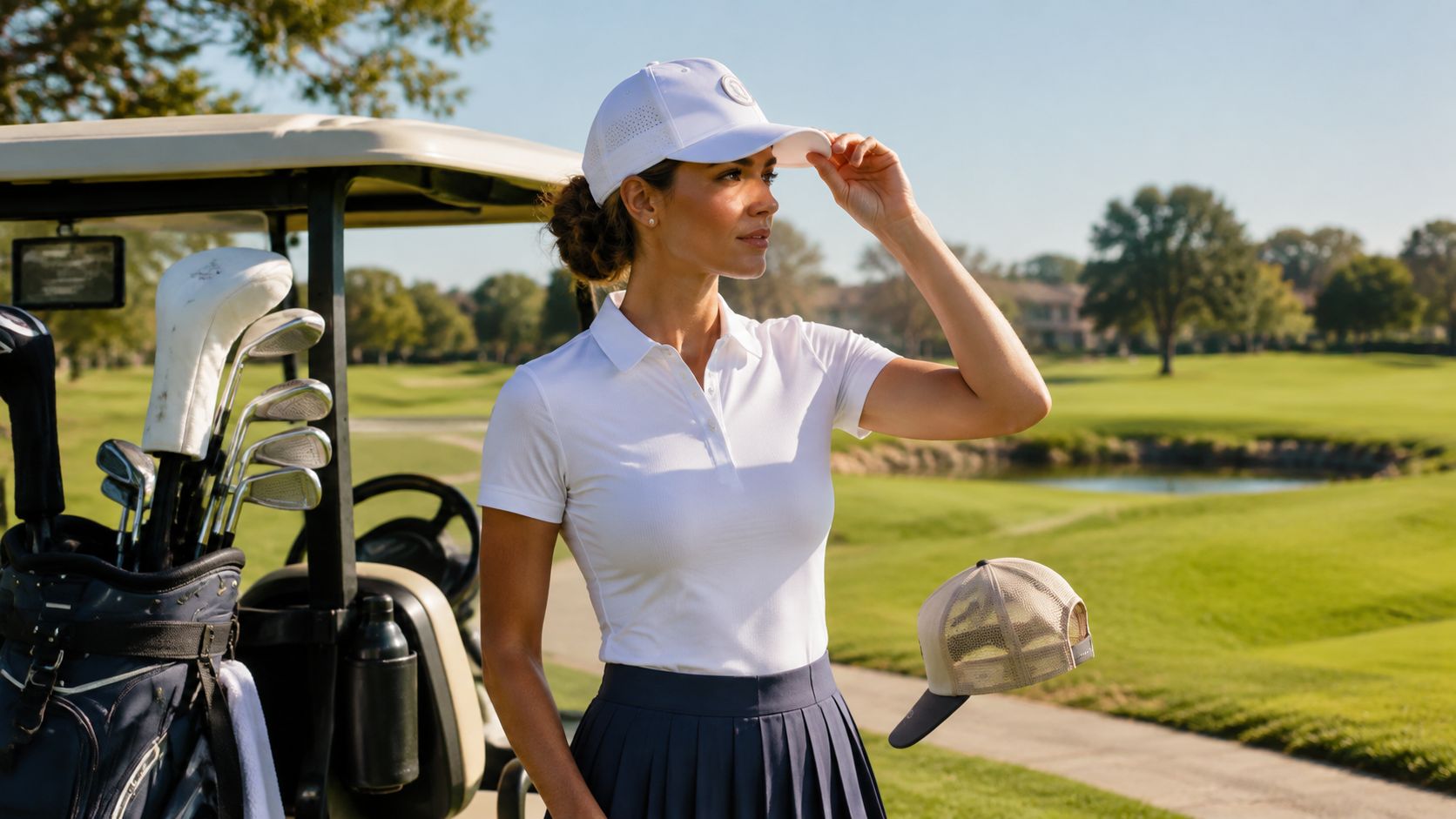
Core Silhouettes Every Golfer Should Know
Start with the shape, not the logo. Most women's golf hats fall into four useful silhouettes, and each one solves a different problem involving airflow, coverage, hair, and dress code.
The four shapes in plain English
A structured cap has a defined crown and a curved or flat brim. It's the safest choice for a traditional club, especially in a quiet color with minimal branding. The firm front flatters rounder faces by adding visual height and length, while a medium crown avoids the pinched look that comes from an undersized hat.
A visor leaves the top of the head open. That makes it the clear winner for airflow and high ponytails, but it exposes the scalp and offers less overall coverage. Choose one with a substantial front brim and a firm sweatband, not a flimsy strip that shifts every time you look down at a putt.
A bucket hat has a soft crown and a brim that angles downward around the head. It's relaxed, useful for fuller hair, and easy to wear beyond the course. The downward shape can balance a longer face, while the softer construction works well for casual public courses.
A wide-brim hat makes the strongest sun statement. Look for a brim of 3 inches or more when you want serious face coverage, and remember that broader brims offer more protection for the ears and neck than baseball caps. The most structured versions look polished with a sleeveless dress, while softer versions suit a resort-style round. Use this overview of golf hat types if you want a broader vocabulary before shopping.
| Silhouette | Brim Width | Best Face Shape | Dress Code Fit | Sun Coverage |
|---|---|---|---|---|
| Structured cap | Medium, curved or flat | Round or oval | Strongest for traditional clubs | Front-focused |
| Visor | Medium to broad | Oval or heart-shaped | Usually accepted on relaxed courses | Face and eyes, limited crown coverage |
| Bucket hat | Moderate, downward | Long or angular | Best for casual clubs and public courses | Around the head and face |
| Wide-brim | Broad, often 3 inches or more | Tall, oval, or angular | Depends on club policy | Strongest face, ear, and neck coverage |
Before buying a dramatic silhouette, check your club's headwear rules. Structured caps and understated visors are the easiest to wear under stricter policies. Buckets and wide-brims often fit comfortably at public courses, resort settings, and relaxed clubs, but a very floppy brim can look out of place at a formal event.
The fastest match is simple. Pick the cap for daily versatility, the visor for maximum ventilation, the bucket for casual coverage and hair volume, and the wide-brim for long exposure in bright conditions. Then refine the choice around your face shape and hairstyle.
Materials and Sun Protection That Actually Work
A stylish hat without dependable protection is just decoration. Make UPF 50+ your starting filter, not a bonus feature. The sun-protective golf hat guidance linked here explains that UPF 50+ blocks about 98% of UV radiation, making it the upper practical benchmark for prolonged outdoor exposure. Read this guide to sun-protective golf hats when you're comparing fabric claims.
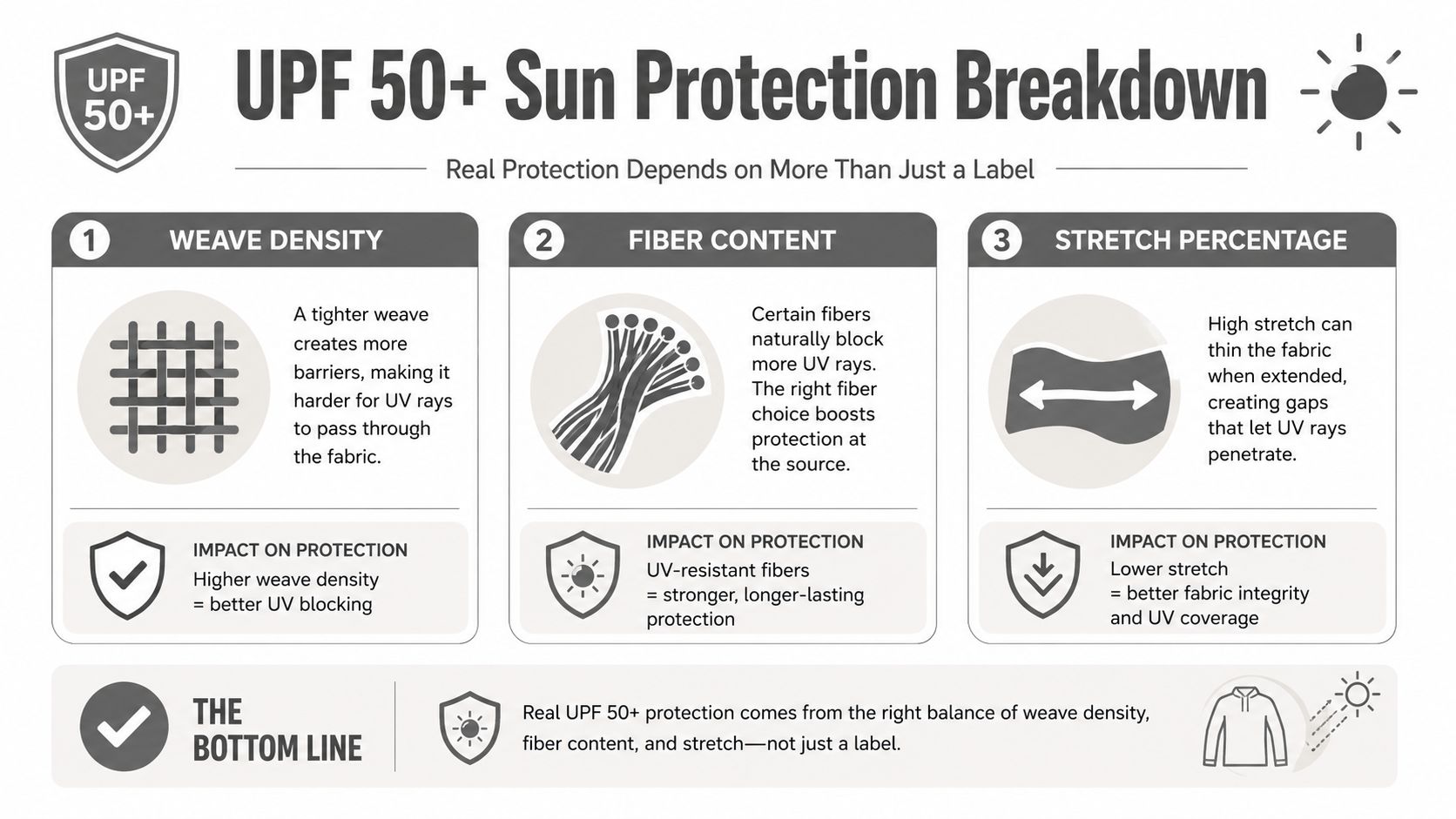
That rating still needs context. A hat's real performance depends on weave density, fiber content, and stretch. A tightly woven fabric leaves fewer pathways for UV transmission. Excessive stretch can open the structure as the material pulls across the head. Dark or UV-treated fabrics generally offer stronger coverage than loose, pale knits, regardless of how premium the logo looks.
Fabric choices that earn their place
Polyester twill suits structured caps because it holds the front panel and brim shape while supporting a tightly woven finish. Performance nylon works well for lightweight wide-brims and packable designs, especially when the hat needs to breathe and recover after being folded. Cotton blends feel natural in casual buckets, but inspect the care instructions because absorbent fabrics can hold sweat and lose shape. Technical knits belong on breathable visors and flexible caps, provided the manufacturer clearly states the protection rating.
Sweat management matters more than shoppers think. A moisture-wicking sweatband moves perspiration away from the hairline, while quick-dry lining helps the hat retain its shape and avoids the damp, collapsed brim that appears halfway through a hot round. A market specification analysis presents UPF 50+ alongside moisture-wicking and quick-drying fabric as the useful combination for extended wear. Independent testing literature on fabric protection also supports looking beyond lab labels, because actual protection can change when fabric becomes wet, stretched, or repeatedly handled.
The practical test: If the product page lists UPF 50+ but says nothing about construction, sweat management, or care, keep looking.
Brim width completes the equation. A broad brim shades more of the nose and cheeks, while additional coverage around the sides reaches the ears and the back of the neck. Don't confuse a stiff, oversized brim with good design. It should stay stable in a breeze, clear your swing, and sit comfortably without pressing into your temples. For more buying guidance, compare the criteria in this golf hat sun-protection guide.
Fit, Sizing, and Hair-Friendly Wear Through 18 Holes
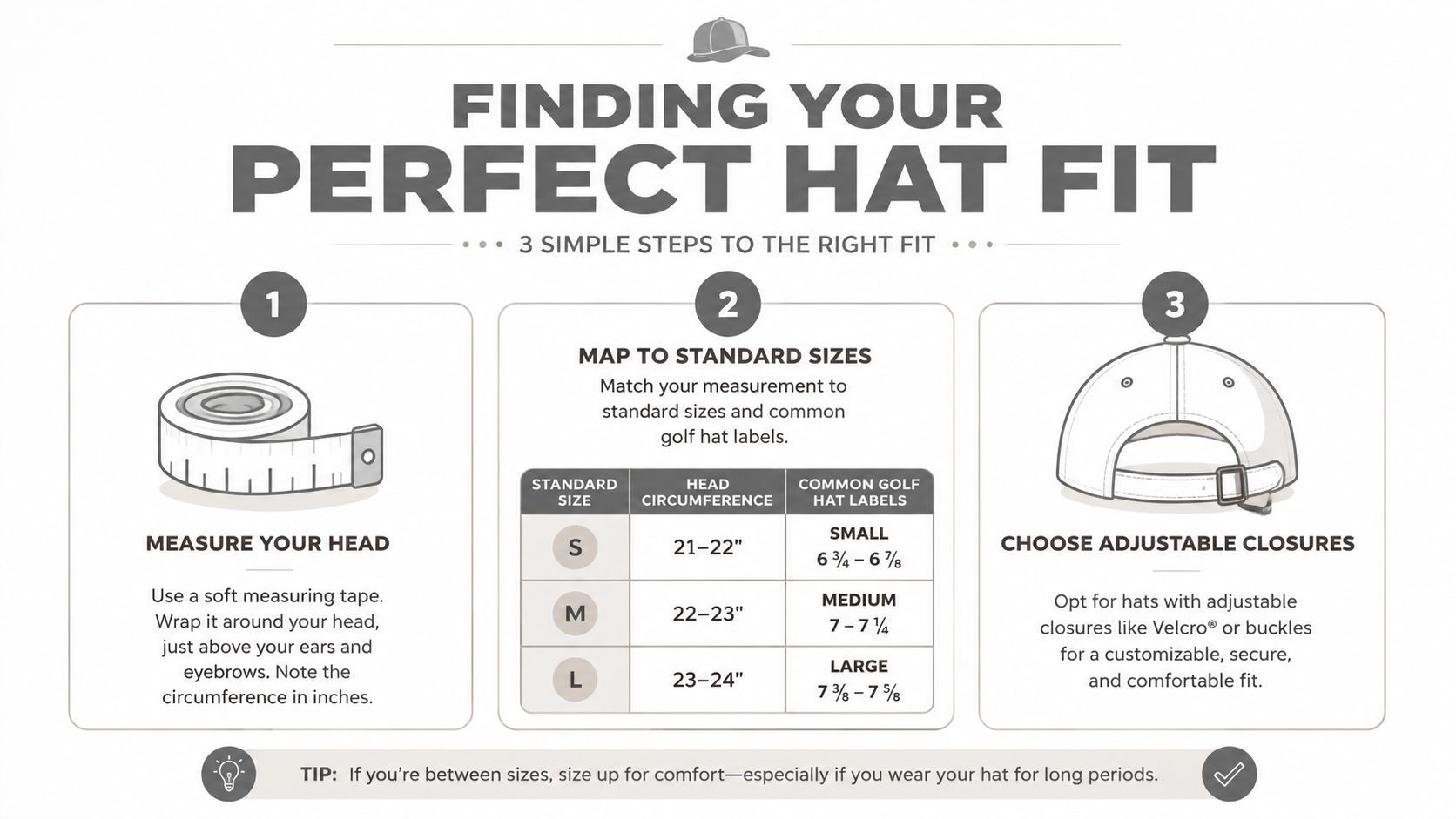
A beautiful hat that migrates across your forehead after three holes is a bad purchase. Start by measuring your head with a soft tape placed around the widest part, usually just above the eyebrows and ears. Keep the tape level and relaxed, then compare the result with the brand's own chart rather than assuming every medium fits the same.
Common golf-hat labels often map roughly as follows:
- Small: 21 to 22 inches
- Medium: 22 to 23 inches
- Large: 23 to 24 inches
Those size ranges are shopping references, not universal rules. Thick hair, a bun, or a protective style can require more room even when your bare-head measurement suggests a smaller size.
Choose the closure around your hairstyle
Adjustability is useful only when it doesn't create a pressure point. A hook-and-loop strap offers quick changes, though exposed fasteners can catch hair. A buckle or hidden strap looks cleaner and gives precise control. Snapbacks suit fuller hair and casual styling, while stretch bands create a smooth finish but can feel tight by the back nine if the sizing is off.
For a ponytail, look for a low rear opening that sits below the crown. A high port accommodates a top ponytail or bun. If you wear thicker hair, choose a deeper crown rather than forcing everything into a shallow cap. The hat should sit on the head, not perch on top of the hairstyle.
Test it like you'll play it
Do this before removing the tags:
- Shake your head side to side and look down as though you're reading a putt.
- Make a full practice swing, including the finish.
- Bend into a golf stance and check whether the brim slides toward your eyes.
- Walk a short distance, then adjust the closure once. If it needs constant correction, reject it.
A soft sweatband should grip without scratching the hairline. A structured brim holds its profile in a suitcase less easily than a crushable one, but it usually looks sharper at the clubhouse. Choose based on how you travel, not on the fantasy of perfect storage.
Outfit Pairing and Care From Course to Clubhouse
The easiest way to style a golf hat is to repeat one visual idea. Match the hat to a color already in the outfit, echo its texture in your shoes or belt, or let a restrained neutral calm down a louder print. A hat looks deliberate when it connects to something else, even if the connection is subtle.
| Hat Style | Course Outfit | Clubhouse Outfit |
|---|---|---|
| Wide-brim straw | Sleeveless polo and pleated skort | Linen shirt, tailored shorts, simple sandals |
| Structured black cap | Quarter-zip and tailored ankle pants | Black trousers, white tee, low-profile sneakers |
| Tonal visor | Sleeveless golf dress and lightweight layer | Dress, cardigan, and clean leather flats |
| Soft bucket | Monochrome polo and relaxed skort | Oversized button-down and straight-leg trousers |
A wide-brim straw hat gives a summer outfit instant resort polish, especially with a sleeveless polo and pleated skort. Keep the rest of the accessories quiet. The brim already creates a strong line around the face, so oversized earrings or a busy necklace can make the look feel crowded.
A structured black cap is the most reliable cool-weather option. Pair it with a quarter-zip and tapered ankle pants for the course, then keep it on with a clean knit and trousers afterward. A tonal visor looks best with a sleeveless dress because the open crown preserves airflow and keeps the silhouette light.
Care determines whether the hat keeps looking expensive
Sweat is the enemy of shape and color. Spot-clean the sweatband after each round with a mild solution and a soft cloth, then let the hat air-dry away from direct sunlight. If the brim bends, reshape it while slightly damp and leave it undisturbed until it dries.
Packable hats need support. Stuff the crown with tissue before placing the hat in luggage, and never crush the brim under shoes or golf accessories. This golf-hat cleaning guide offers a useful care reference for repeat wear.
Avoid the shortcuts that ruin good headwear:
- Don't use the car trunk as storage: Heat can warp crowns and adhesives.
- Don't machine-wash without permission: Agitation can collapse structured brims.
- Don't bleach sweat marks: Harsh chemicals can discolor fabric and stitching.
- Don't dry it in full sun: Direct exposure can fade the color you chose so carefully.
The goal is simple. Your hat should look fresh enough for lunch after the round, not like it spent four hours being punished beside your golf bag.
The Style vs Sun Safety Trade-Off Most Buyers Miss
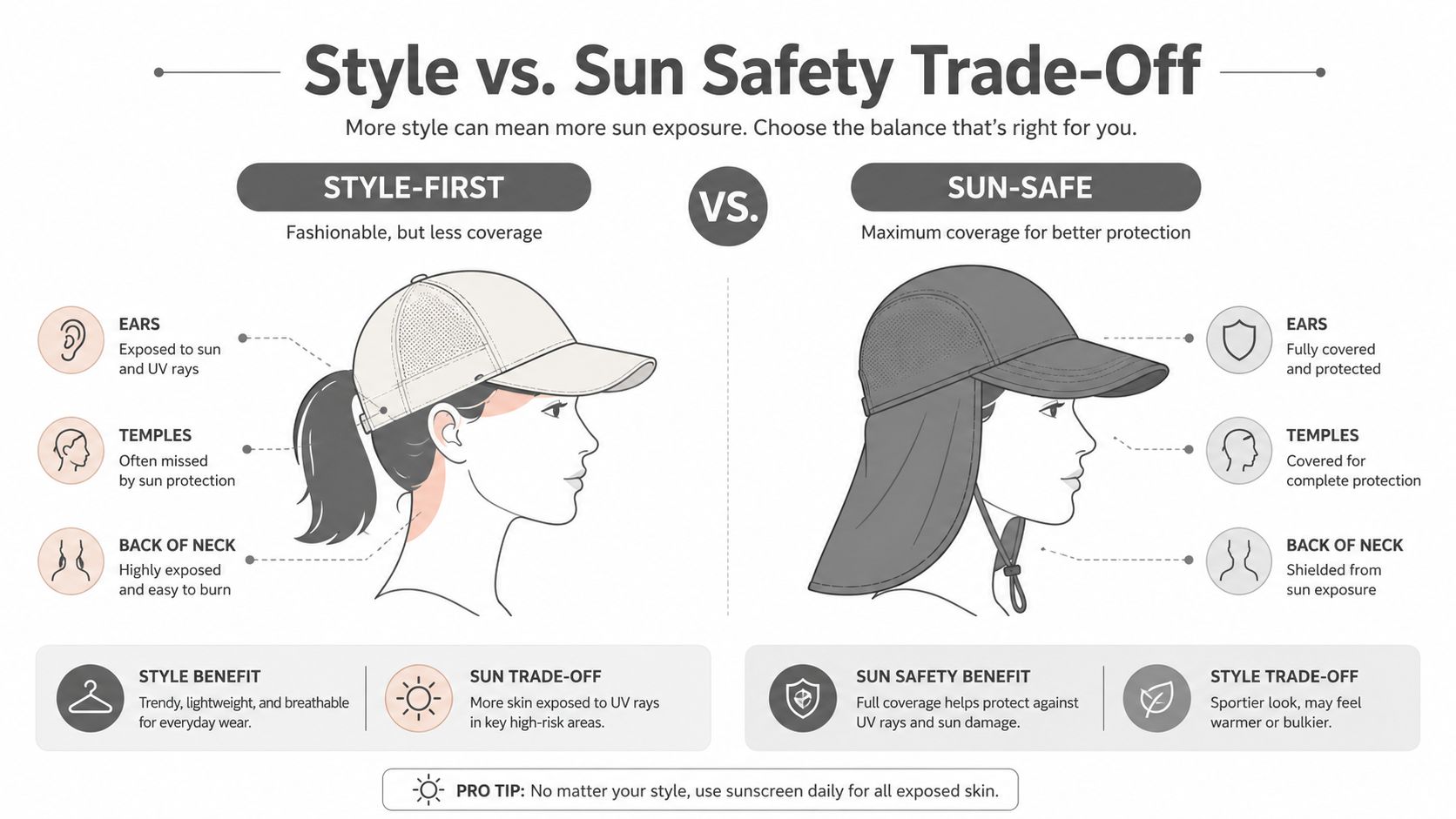
The sharpest hat in the shop can still leave the most important skin exposed. Ears, temples, and the back of the neck receive direct sun during a long round, yet many shoppers judge a hat almost entirely by crown shape, logo, and color. That's backwards. Style matters, but coverage should decide which stylish options make the final cut.
Independent apparel research reviewed 671 golf-apparel items and found that adequate protection for vulnerable body sites was low overall, while UPF labeling appeared in only 7.1% to 16.7% of items. Among golf-marketed hats, only 19% used a wide-brim design. The apparel trend analysis documenting this protection gap makes the point buyers often miss: a golf label doesn't automatically mean meaningful sun coverage.
Decorative coverage is not the same as protective coverage
A shallow visor can look fantastic with a golf dress, but it leaves the top of the head exposed and may not shield the sides of the face. A perforated stretch cap feels airy, yet its open construction can provide less consistent coverage than a tightly woven panel. A deep structured cap improves frontal protection, but ears and the neck remain vulnerable.
A bucket or wide-brim style typically covers more of the face and sides of the head. Add a certified UPF 50+ fabric system, and you're choosing a hat based on both material and geometry rather than appearance alone. A neck flap can look more technical, so reserve it for intense sun, travel rounds, or conditions where protection outranks clubhouse polish.
Shop by exposed skin first: Decide whether your priority is face-only coverage, all-around head coverage, or face-and-neck protection. Then choose the silhouette that delivers it without compromising your outfit.
Face shape and hair still matter. You shouldn't force yourself into a floppy wide-brim if it catches the wind or clashes with your club's dress code. Instead, use a structured bucket, a deeper cap, or a visor with a broad front and pair it with separate sun protection for areas the hat cannot cover. The stylish answer isn't always the largest hat. It's the one that protects the areas you'll leave exposed.
Your Smart Buying Checklist and Where to Shop
Use four filters, in this order: silhouette, fabric, fit, and finish. Most disappointing purchases fail because the shopper starts with color or branding and only later discovers that the crown pinches, the brim slides, or the fabric traps sweat.
Start with the job the hat must do
Choose a structured cap for everyday versatility, a visor when airflow and a high ponytail matter most, a bucket for relaxed all-around coverage, or a wide-brim for extended exposure. If you play in bright, open conditions, don't let a fashionable shallow brim make the decision for you.
Next, verify the fabric. Look for UPF 50+, tightly woven construction, and moisture-wicking or quick-drying components. A product description should tell you more than “performance material.” Check whether the brim holds its shape, whether the sweatband can be cleaned, and whether the hat is designed to recover after being packed.
Fit deserves its own inspection:
- Measure first: Use your head circumference and account for hair volume.
- Check the closure: Adjust it until secure, not tight.
- Test movement: Shake your head, bend into your stance, and swing.
- Inspect the hair opening: Match a low port, high port, or open back to your usual style.
The finish is where a good hat becomes an outfit piece. Neutral colors and shape-retaining crowns work with more of your wardrobe than a seasonal print. Keep logo scale proportional to the rest of the look. If the hat carries a bold pattern, let the polo or skort stay quieter.
Compare details, not just labels
A worthwhile price should buy useful construction: a sweat-wicking lining, reinforced seams, a secure back closure, a packable brim, or a fabric system that supports certified protection. Before ordering, read the measurements and care instructions, then confirm the retailer offers straightforward returns.
For a broader outdoor wardrobe, the ArtNaturals outdoors collection is a useful reference point when you're comparing sun-conscious accessories and apparel beyond golf. For golf-specific headwear, 2ndShotMVP offers hats and lifestyle headwear with designs intended for wear on and off the course, including fit options such as stretch bands, multiple sizes, and open-back styles.
Choose the hat you'll wear for a full round. A beautiful cap that stays in the car is worthless. The winner is the one that protects your skin, handles your hair, survives sweat, and still looks right when you walk into the clubhouse.
2ndShotMVP offers golf hats, beanies, and lifestyle apparel with distinctive designs inspired by the game, made for confidence on and off the course. Visit 2ndShotMVP to find a hat that matches your usual silhouette, hair setup, and playing conditions, then make it the finishing piece you reach for before every tee time.

