
You find a golf cap with the right color, the right logo, and the right brim. Then you put it on. The crown perches above your head, the band presses into your forehead, and by the turn you're wearing a red ring instead of a comfortable hat. The label says large, but the fit says otherwise.
If you're searching for what size hat for big head, start with circumference, then look beyond the number. A comfortable golf hat also needs the right crown depth, head shape, construction, and actual retail availability. A cap that technically closes can still ride high, pinch at the temples, or shift every time the wind picks up.
Why Most Hats Fail Big Heads
The usual fitting mistake happens at the rack. A customer finds an adjustable cap, opens the closure, and assumes the problem is solved. The strap reaches around the head, but the crown still sits high and the sweatband concentrates pressure across the forehead. By the ninth hole, the hat feels less like clothing and more like a clamp.
That failure comes from treating a larger head as a wider version of an average head. Circumference matters, but it isn't the entire fit. Crown depth, forehead height, temple width, and the shape of the hat block all affect how the cap sits. A manufacturer can lengthen a closure without adding useful room inside the crown.
Practical rule: If a hat closes but rides upward, stop adjusting the strap. The crown is probably too shallow.
Structured golf caps make the mismatch especially obvious. Their front panels hold a fixed shape, so they can press against the forehead or temples instead of adapting to the wearer. Low-profile designs can look sleek on the shelf, yet leave too little vertical space for a fuller skull. The result is an awkward perch, reduced coverage, and pressure that builds during a long round.
Before comparing styles, it helps to understand the difference between structured and unstructured hats. A structured front offers a clean appearance and stable brim, while an unstructured crown can adapt more naturally to varied head shapes. Neither construction automatically wins. The right choice depends on how much room the crown provides and where the hat places pressure.
Mainstream “one size fits most” caps often fail because their range is limited and their proportions are fixed. Many one-size styles top out around 58–59 cm, according to Lock Hatters' sizing guidance. A wearer above that range needs more than a fully opened strap. They need a hat designed with enough interior circumference and vertical room to sit down properly.
How to Measure Your Head Accurately
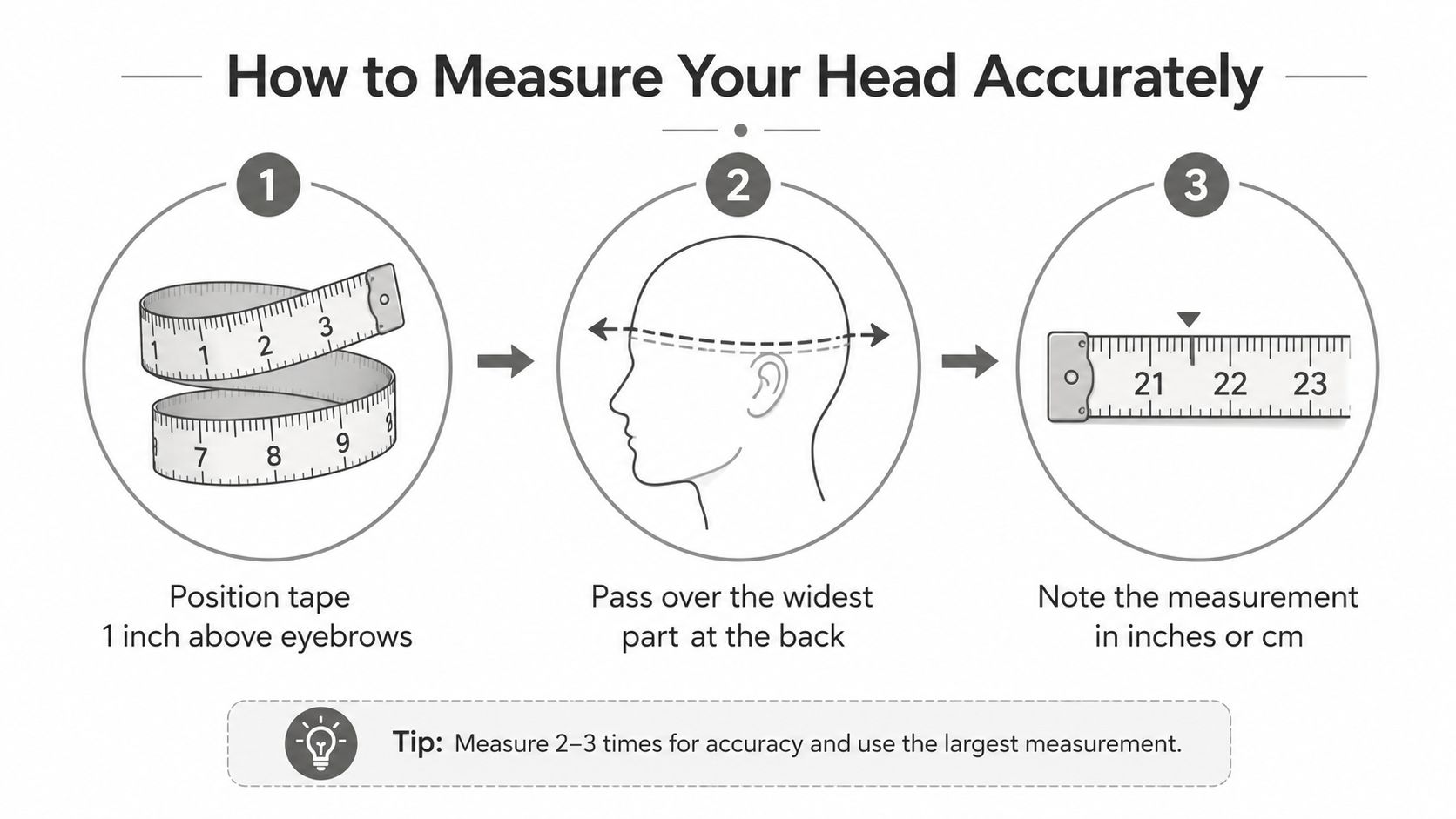
A reliable answer to what size hat for big head begins with one measurement, head circumference. Use a flexible measuring tape, or use a piece of non-stretchy string and compare it with a ruler afterward. The tape should follow the place where the hat will sit, not the narrowest part of your forehead.
Follow the correct path
- Position the tape: Place it about 1 inch above your eyebrows, then bring it above your ears. This placement matches the hat's intended sit point and avoids taking a measurement from a narrower area.
- Keep it level: Continue around the widest part at the back of your skull. The tape shouldn't tilt upward behind your head or drop down over your ears.
- Set the tension: Hold it snug against your skin without compressing it. A loose tape produces an oversized reading, while a tight tape creates a hat size that feels restrictive.
Take the measurement more than once. If the readings differ, check the tape position before choosing a size. Record the result in centimeters and inches, because brands don't use one consistent system.
Avoid the common measuring errors
Measuring too high on the forehead usually produces a smaller number than your actual hat fit. Letting the tape slide down over the ears can produce a larger number. Both mistakes lead to the same frustrating outcome, buying a hat that doesn't behave as expected.
Use a conversion chart after you've recorded the measurement. The hat sizing guide from Dirt Cheap Product, Inc. can help you match the measured circumference to a listed hat size. The independent head-measuring instructions from 2ndShotMVP also reinforce the practical point: measure where the hat will sit.
If your measurement lands on a boundary, choose the larger listed size. Hat shells, structured panels, and sweatbands can reduce the usable interior space, so a mathematically correct smaller size may feel tight in real wear.
Reading Hat Size Charts for Larger Sizes
Ignore the letter label until you find the actual measurement. Small, medium, large, and extra-large aren't standardized enough to guide a big-head purchase by themselves. One brand's large can overlap another brand's extra-large, while a fitted cap may use a US size that gives you a more precise target.
A useful benchmark places average adult head circumference around 56–57 cm, while another reference gives an average man's hat size of about 59 cm, as documented by MFG Merch's hat size chart. Once you reach 60 cm, you're above the common average and entering the large or XL range used by many charts. At 62 cm and above, shopping becomes more specialized because fewer mainstream options list enough room.
The conversions below provide a practical starting point. They're not a substitute for the manufacturer's own chart, especially when a brand lists hat circumference rather than head circumference.
Big Head Hat Size Conversion Chart
| Head Circumference (cm) | Head Circumference (inches) | US Fitted Size | Typical Size Label | Availability Level |
|---|---|---|---|---|
| 58 | About 22.8 | 7 1/4 | Large | Common |
| 60 | About 23.6 | 7 1/2 | XL | Less common |
| 62 | About 24.4 | 7 3/4 | XXL | Specialist |
| 63–64 | About 24.8–25.2 | 7 7/8 or similar | XXL | Specialist |
| 65 | About 25.6 | Around 8 | XXL or extended | Limited |
These fitted-size conversions and metric ranges are supported by Bon Clic Bon Genre's hat sizing reference. The practical takeaway is straightforward. If you measure 60 cm or more, start by looking for 7 1/2 and above. If you measure 62 cm or more, don't waste time assuming every mainstream large or XL will work.
Adjustable closures add another complication. A snapback or strap can provide useful flexibility, but the closure doesn't create extra crown depth. A cap that reaches its final notch may technically fit while still applying uncomfortable pressure. Look for a published circumference range, interior measurements, and a clear return policy.
Sizing systems also vary outside headwear. For example, a detailed SoccerWares hoodie sizing chart illustrates why shoppers should read the measurements behind a label rather than trust the label itself. Use that same discipline with hats.
For retailers and product options, the guide to where to buy hats for big heads is useful because availability is part of fit. A size that exists only on paper doesn't help if the brand doesn't stock it.
Crown Depth and Shape Matter More Than You Think
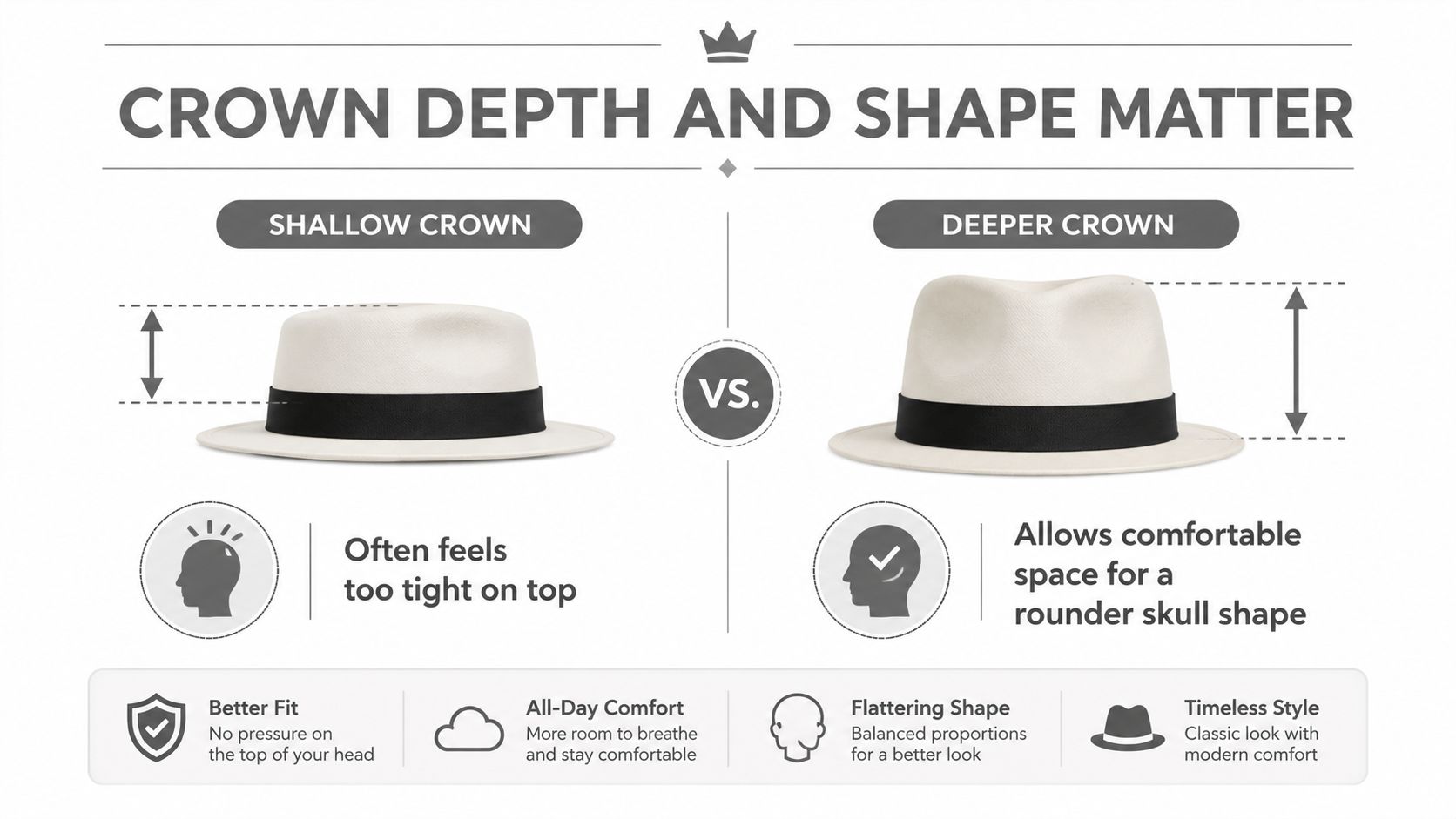
Circumference tells you how far around your head a hat must go. It doesn't tell you how far down the crown will sit. Crown depth is the vertical room inside the hat, measured from the sweatband toward the top of the crown, and it often determines whether a larger head feels supported or squeezed.
A shallow cap can measure correctly around the band and still fail immediately. The brim sits too high, the sweatband presses across the forehead, and the hat leaves pressure above the ears. A deeper crown spreads contact through more of the hat instead of forcing one narrow band to do all the work.
Diagnose the shape, not just the size
Two people can wear the same fitted size and have completely different experiences. One may have a rounder head shape, with more width from temple to temple. Another may have more front-to-back length and need a long-oval block. The measurement around the head can match, while the pressure points don't.
A neutral big-head fit guide from Lamood makes this distinction clearly: fitted size maps circumference, but it doesn't guarantee comfort or wearability. That's why a cap can be “your size” and still sit awkwardly.
Structured front panels preserve the hat's silhouette, which is useful for a polished golf look. However, a rigid panel needs enough crown room and the right block shape. If it's too shallow or too narrow at the temples, the structure works against you.
Unstructured crowns adapt more readily, but they can collapse if the fabric lacks support. For larger heads, the strongest combination is often a crown with genuine vertical depth, a shape that matches your head, and enough structure to keep the brim stable.
Best Hat Styles for Big Heads on and off the Course
The best style depends on the setting and the fit you need. A tournament-ready cap may need a crisp front and stable brim, while a casual hat can prioritize flexibility and a softer feel. The larger your head, the less useful “one size fits most” becomes as a buying shortcut.
| Hat Style | Structure | Crown Profile | Best For | Big-Head Rating |
|---|---|---|---|---|
| Structured six-panel | Firm front panels | Mid or deep | Golf, polished casual wear | Strong if deep enough |
| Unstructured five-panel | Soft, flexible | Mid to deep | Lifestyle wear, relaxed rounds | Strong |
| Rope-style snapback | Structured or semi-structured | Mid or deep | Golf and casual wear | Good when closure has room |
| Low-profile cap | Usually structured | Shallow | Minimal styling | Caution |
| Stretch-fit cap | Varies | Mid or deep | Long wear without hardware | Good if the band isn't restrictive |
| One-size-fits-most cap | Varies | Often shallow | Smaller or average heads | Poor above the listed range |
Structured caps for a cleaner golf silhouette
A structured six-panel cap gives you a defined front, reliable brim alignment, and a sharper appearance with a collared shirt. Choose a mid-profile or deeper crown rather than a low-profile shell. The front should hold its shape without forcing the sweatband into your forehead.
Unstructured and rope-style options
An unstructured five-panel cap can accommodate more variation in head shape because the crown doesn't impose the same rigid geometry. It may look less formal, but that flexibility often matters during a full day of travel, practice, and social wear.
Rope-style snapbacks can work well for larger heads when the crown has real depth and the closure still has adjustment room after fitting. The rope or snapback itself isn't the solution. The interior proportions are.
For custom or team orders, browsing promotional caps by Power Print can help you compare construction and closure options. Still, ask for the actual head-circumference range before committing to a bulk order.
Avoid shallow low-profile caps unless you've tried the exact model. They're the style most likely to perch high, expose too much forehead, and create pressure despite an apparently adequate circumference.
Smart Buying Tips for a Comfortable Fit Every Time
Treat hat shopping like club fitting. Your measurement is the starting point, not the final verdict. Match the circumference to the chart, then inspect the crown profile, closure, sweatband, and return terms before you place the order.
Use this pre-purchase checklist
- Measure twice: Keep your recorded circumference in both centimeters and inches, and use the larger reliable reading if your results vary slightly.
- Read the full chart: Reject vague “L/XL” labels when the brand won't publish the actual range.
- Check crown language: Look for mid-profile, deep crown, extended fit, or large-head construction. These descriptions aren't guarantees, but they reveal whether the maker considered vertical room.
- Leave adjustment room: A snapback or strap should still have usable range after the hat fits. A closure at its final setting gives you little margin for movement or comfort.
- Compare with a hat you own: Measure the interior sweatband of a comfortable cap and compare that measurement with the new product's published information.
- Study return terms: Online sizing is imperfect. A clear return policy protects you from a crown that technically matches the chart but feels wrong.
If you're between sizes, buy larger and fine-tune the fit with a reducer strip if necessary. That's easier than trying to stretch a tight sweatband or force a shallow crown to sit lower.
For golf, prioritize a stable brim, breathable material, and a crown that doesn't shift when you bend over or swing. For casual wear, a softer unstructured option may suit you better, provided the hat has enough interior depth.
The following video offers another visual reference for checking hat fit and measurement technique.
2ndShotMVP publishes head-circumference information for its golf hats, including listed ranges such as 22 to 23⅞ inches on applicable products. Check each product's size information rather than assuming every style uses the same fit.
2ndShotMVP offers premium golf hats, beanies, and lifestyle apparel with posted sizing information that helps you compare a larger head against the actual product range. Visit 2ndShotMVP to find headwear you can evaluate by measurement, crown style, and where you plan to wear it.

