
You've found a hat you like, checked the color, and opened the size menu. Then the choices stop at “one size fits most,” or the largest option looks barely larger than the cap that already gives you a headache. You order anyway, and the crown sits high, the temples feel pinched, or the band leaves a mark before you've finished your coffee.
The problem usually isn't your head. It's the way most hats are stocked and described. The reliable answer to where to buy hats for big heads starts with accurate measurements, then moves into crown depth, construction, retailer selection, and return policies. A hat that fits comfortably should feel settled, not stretched into submission.
Why Finding Hats for Big Heads Feels Impossible
You find a promising cap, loosen the strap completely, and still feel the front panels pulling. A fitted style may slide over your head, yet press hard against your forehead. A beanie can cover everything while gripping tightly enough to make you want it off before leaving the house.
Retail inventory drives much of this frustration. Hat manufacturers commonly offer sizes from 55 to 62 cm, while some extend from 52 to 64 cm, according to Bon Clic Bon Genre's hat sizing reference. Standard “one-size-fits-most” designs usually sit near the middle of that range. Shoppers above 23.5 inches often need extended sizing, not another adjustable cap.
Why the label is misleading
“Large” has no consistent meaning between retailers. One brand may provide enough circumference but a shallow crown. Another may have a deeper crown but a rigid sweatband that concentrates pressure. Stretch panels, closure placement, and brim shape also change how the hat feels, even when the listed measurement looks suitable.
Average adult measurements help explain why shelves are built this way. Adult male circumference averages around 57 to 58 cm, while adult women average about 54.6 to 56 cm, according to MFG Merch's hat size chart. Everyday hats are commonly designed around that central range, leaving larger-head shoppers with fewer usable choices.
A hat can match your circumference and still fail because the crown is too shallow or the brim pulls the silhouette out of balance. Check the full fit description before judging a listing.
The practical rule: Ignore the word “large.” Check the actual circumference, crown depth, stretch construction, brim shape, and closure.
That approach makes shopping faster. Remove products without measurable fit details before you spend time ordering or risk return shipping. Specialty online retailers are useful for broader size ranges, custom makers for adjustable construction, and selected mainstream stores for accessible returns. Each method works only when the seller provides enough information to judge fit.
How to Measure Your Head for the Perfect Hat Fit
A hat that feels tight at the forehead usually reflects a bad measurement, not a missing “big head” label. Start with your head circumference. Use a flexible tape and measure around the widest part of your head, approximately 2.5 cm above your eyebrows, following Nike's hats and headwear size guide.
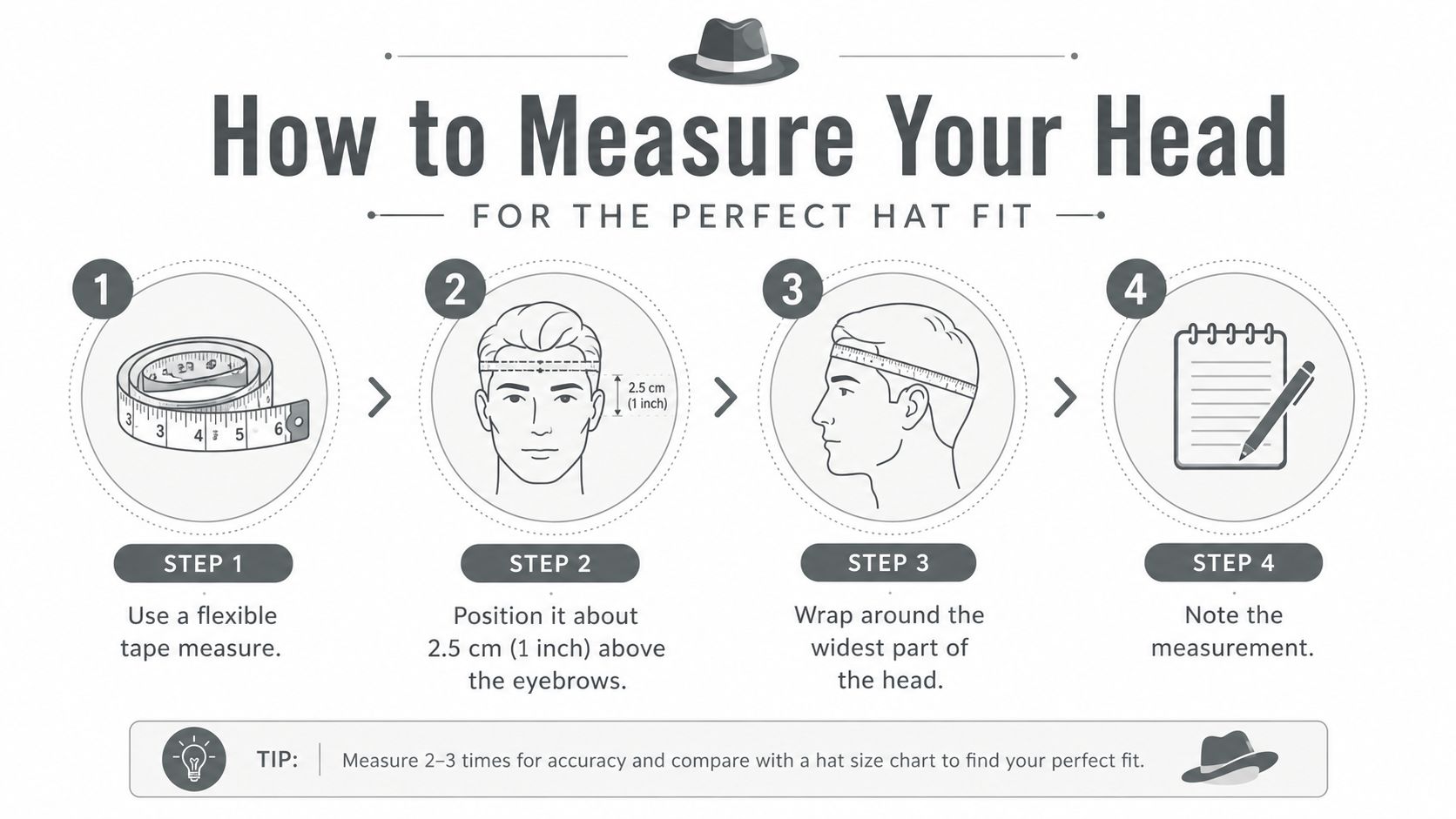
Follow these steps carefully
- Use a flexible tape. A sewing tape follows your head better than a rigid ruler. Without one, wrap string around your head, mark where it overlaps, then measure the string against a ruler.
- Place the tape above the eyebrows. Keep it roughly 2.5 cm above the eyebrows, not across the brow line. A lower route can produce a measurement smaller than the area the hat must cover.
- Wrap around the widest route. Pass the tape above your ears and around the fullest part of the back of your head. Keep it level from front to back.
- Keep the tension snug, not tight. The tape should touch your head without pressing into the skin. Pulling it tight creates a number that looks accurate but leads to a restrictive fit.
Record the result in centimeters and inches. Retailers use both systems, and converting later creates avoidable errors. Use the head measurement guide from 2ndShotMVP for a visual check before writing down your measurement.
Measure twice if the result seems unusual. A small error can change the size you choose.
If your measurement falls between listed sizes, inspect the hat's stretch panels or adjustable closure. For a rigid fitted hat, sizing up is safer than forcing a smaller crown, but confirm the brand's own chart before ordering. A difference of only 1 to 2 cm can cross a fitted size, as explained in Hatshopping's size guide.
The video below demonstrates the measuring technique.
Understanding Hat Size Charts and What They Really Mean
A size chart helps only when it lists the hat's circumference. S, M, L, XL, and XXL are convenient labels, but brands apply them differently. If a retailer shows “XL” without centimeters or inches, you are guessing.
Read the numbers, not the marketing
One-size-fits-most hats usually depend on an elastic sweatband, snapback, strap, or another adjustment system. That setup works when the crown has enough depth and the closure still has room. It cannot correct a shallow front panel or a tight internal band.
Fitted hats look cleaner, but they demand a closer measurement match. Extended charts reach beyond standard adult sizing. A reference from Bon Clic Bon Genre places 62 cm near US fitted size 7 7/8 and 64 cm near size 8. Those measurements belong at the upper end of adult sizing, not in a separate category that retailers can ignore.
| Circumference (cm) | Circumference (inches) | US Fitted Size | Typical Label |
|---|---|---|---|
| 60.6 cm | 23 7/8 inches | Extended fitted range | XL or extended large |
| 61.6 cm | 24 1/4 inches | Extended fitted range | XL or XXL |
| 62.5 cm | 24 5/8 inches | About 7 7/8 | XXL or extended fitted |
| 63.5 cm | 25 inches | About 8 | XXL or extended fitted |
The conversions follow the stepped progression shown in MFG Merch's sizing chart. Use the exact chart for the model you want. Two hats can share a circumference while differing noticeably in crown depth, panel shape, or stretch.
How to judge a retailer quickly
A reliable product page should answer these questions:
- Circumference measurements: Are centimeters or inches listed, rather than only letter sizes?
- Fit mechanism: Is the hat fitted, elastic, snapback, strapback, or stretch-fit?
- Construction notes: Does the description mention crown depth, structured panels, stretch fabric, or sweatband details?
- Size availability: A chart covering approximately 53 to 65 cm gives larger-head shoppers more room to find a workable option, consistent with Nike's measurement guidance.
- Product-specific information: Measurements for the exact model matter more than a general store chart.
Brim shape also affects the result. A broad, flatter brim can make a hat feel more balanced, while a narrow or sharply curved brim may emphasize a tall crown or crowded side panels. Check those details before treating the listed circumference as a complete fit guarantee.
A hat listed at 62 cm may fit one person comfortably and feel shallow on another. Circumference tells you whether the hat can go on. Crown depth, stretch panels, and brim shape determine whether you will keep wearing it.
Where to Shop for Big Head Hats by Retailer Type
The best retailer depends on whether you need a hat today, want the widest range, or care most about exact shaping. Don't treat every channel as interchangeable. Each one solves a different part of the fit problem.
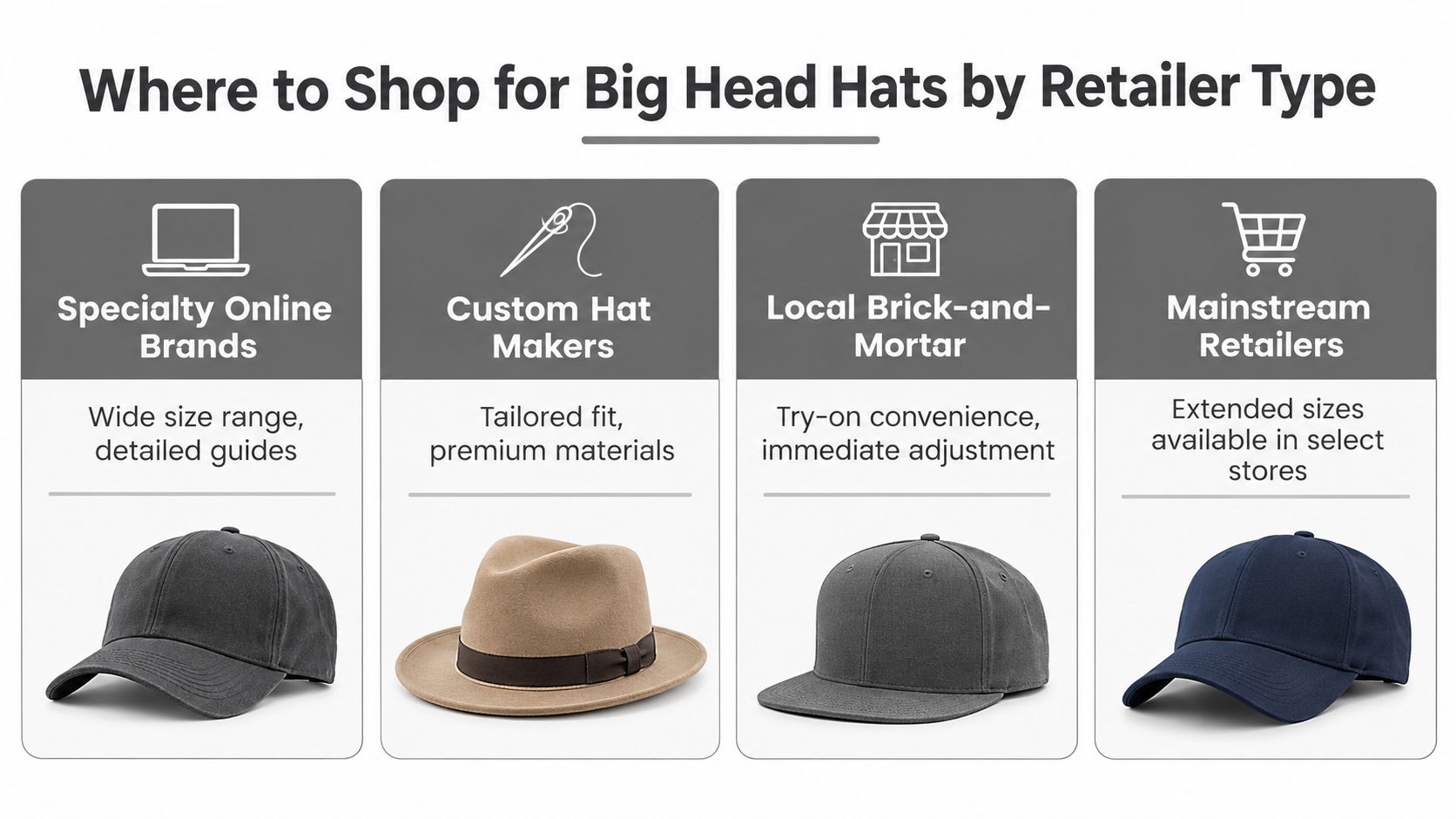
Specialty online brands
This is usually the strongest starting point for shoppers above the standard range. Specialty retailers tend to organize products by circumference, offer extended inventory, and explain whether a model is deep, structured, stretchy, or adjustable.
The downside is obvious. You can't test the crown shape before ordering, and return rules vary. Read the product page as if you were inspecting a garment in person. If it gives only a vague “fits most” label, move on.
Custom hat makers
Custom makers offer the most control. You can provide your circumference, discuss crown depth, select a brim profile, and ask for changes that mass-produced hats don't allow. This is the right path for formal hats, unusual proportions, or anyone who has repeatedly found that standard extended sizes still feel wrong.
Expect a more involved buying process. Confirm measurement instructions, material choices, alteration options, and what happens if the finished piece needs adjustment. A custom order should begin with a conversation about fit, not just color.
Local brick-and-mortar stores
Local hat shops and western-wear stores remain valuable because you can test the relationship between circumference and shape immediately. Try the hat on for several minutes, walk around, and pay attention to temple pressure, forehead pressure, crown contact, and whether the brim balances your face.
The selection may be narrower than online, but an experienced fitter can identify problems that a chart can't show. Local stores may also adjust some hats, especially traditional felt or straw styles.
Mainstream retailers with extended sizing
Mainstream retailers can work, especially for snapbacks, stretch-fit caps, beanies, and seasonal styles. Use filters for XL, XXL, extended sizing, and numerical circumference. Don't assume the largest letter option is generous enough.
For golf-inspired designs, you can also review golf hats for sale from 2ndShotMVP, then check each product's fit information rather than relying on the category label. If you're displaying several hats at home, practical hat stand styling tips can help you store them without crushing the crown or distorting the brim.
Hat Construction Details That Actually Affect Fit
Circumference is only the entrance requirement. A hat can match your measurement and still feel terrible if the crown is shallow, the sweatband is rigid, or the brim creates the wrong visual balance. Buying a hat for a larger head is similar to buying shoes. Length matters, but width, structure, and internal pressure determine whether you can wear them comfortably.
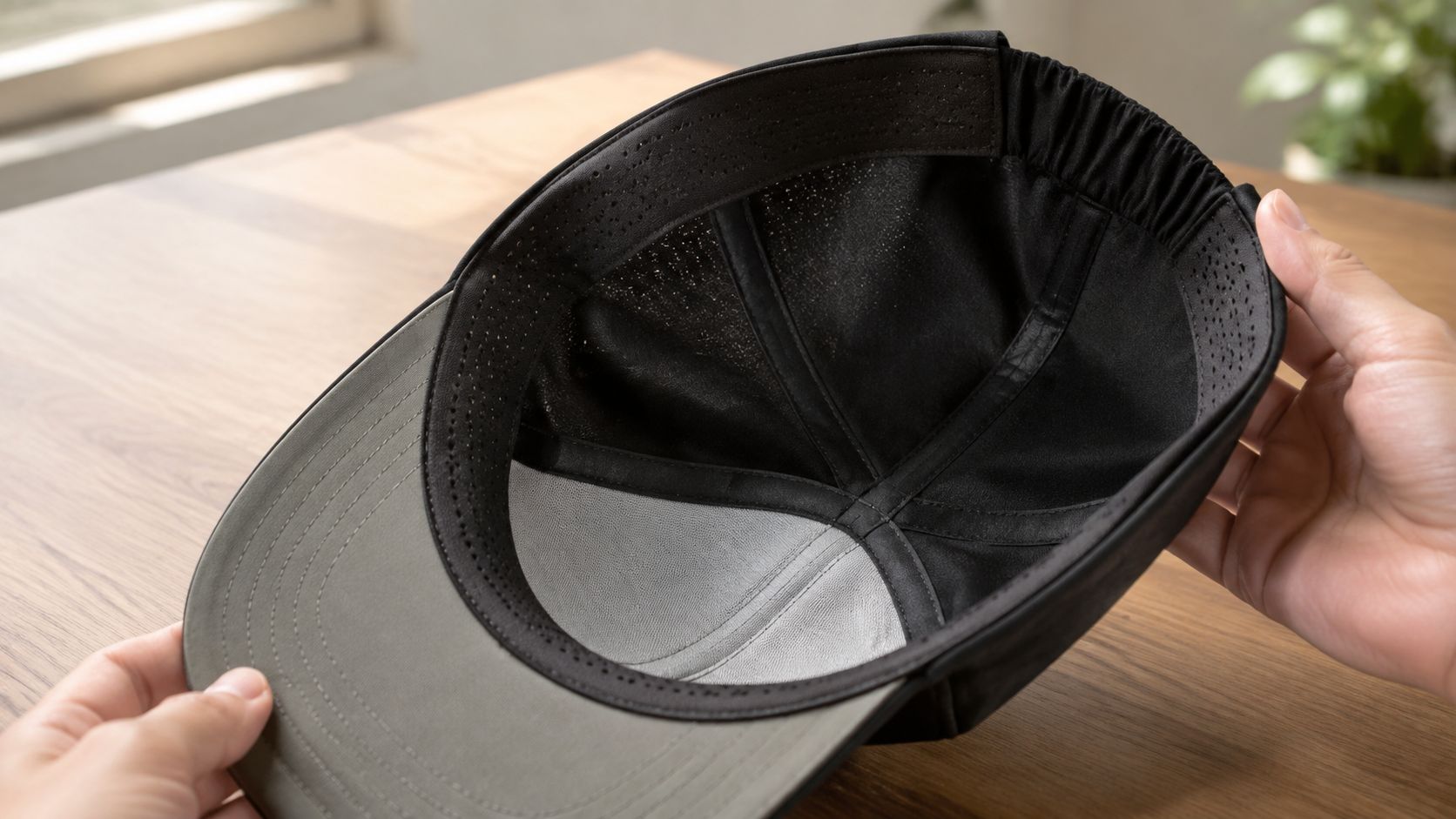
Crown depth comes first
A deep crown gives the hat enough vertical room to sit naturally. A shallow crown often rides high, presses against the upper sides of the head, and makes the cap look undersized even when the band isn't painfully tight.
Structured six-panel caps usually hold their shape better than soft, collapsed designs, but structure alone isn't enough. Look for a front panel that doesn't buckle when the hat reaches your head and a crown that extends downward instead of perching above it. The structured versus unstructured hat guide from 2ndShotMVP can help you understand that distinction.
Stretch panels and sweatbands change the experience
Stretch fabric can distribute pressure more evenly, especially when your measurement sits near the upper end of a size range. Adjustable closures give you flexibility, but check how much room remains after adjustment. A strap that's already at its final setting offers no practical benefit.
The sweatband deserves close attention. A thick, stiff band can create a narrow pressure line around the forehead. A softer, more forgiving band may feel better even when both hats list the same circumference.
Brim shape affects proportion
A very narrow brim or short bill can make the hat look visually underscaled. A moderate or wider brim often creates better balance, particularly on bucket hats, sun hats, and traditional crown styles. The choice should still match your wardrobe and use case, but proportion is not a minor styling detail.
Fit test: If the hat fits your circumference but looks perched, pinches at one point, or leaves no room for natural crown clearance, the construction is wrong for you.
Check product photos for side views, interior shots, and closure placement. Listings that show only a front-facing model image hide the details that matter most.
Choosing Hat Styles That Flatter Larger Heads
A larger head doesn't require a narrow style palette. It requires proportion. The most successful choices usually have enough crown depth, brim presence, or fabric give to look intentional rather than stretched.
Styles that earn a place in your rotation
A structured six-panel baseball cap is a dependable everyday option when the crown is deep enough and the front panels hold their shape. A stretch-fit or roomy adjustable model can work well for casual clothing, golf apparel, and weekend wear.
Bucket hats deserve more attention. A wider brim gives the style visual balance and adds useful coverage, while a deeper crown prevents the hat from sitting on top of the head. For warm-weather outfits, browse options such as these wide brim sun hats from Custom Mark, but still verify the listed measurements before buying.
Beanies are forgiving when the knit has enough give and the body is deep enough. Avoid thin, tight designs that stop above the ears. A beanie should cover the head comfortably without creating a compressed, high-riding silhouette.
Styles to approach carefully
Very shallow caps, tiny brims, and rigid bands are common sources of disappointment. They can exaggerate the mismatch between the hat and your proportions, even when the circumference technically works.
Use this quick style checklist:
- For baseball caps: Choose a deeper crown and inspect the closure range.
- For bucket hats: Look for a brim with enough width to balance the crown.
- For beanies: Prioritize a comfortable knit and adequate body depth.
- For dress hats: Consider crown height and brim proportion together.
- For trend-led pieces: Make sure oversized styling doesn't hide an undersized opening.
If you like golf and lifestyle headwear, 2ndShotMVP offers hats and beanies with product-level head circumference and size-fit details. Treat those measurements as the deciding factor, then choose the design that matches your clothes and setting.
Ordering Online and Handling Returns with Confidence
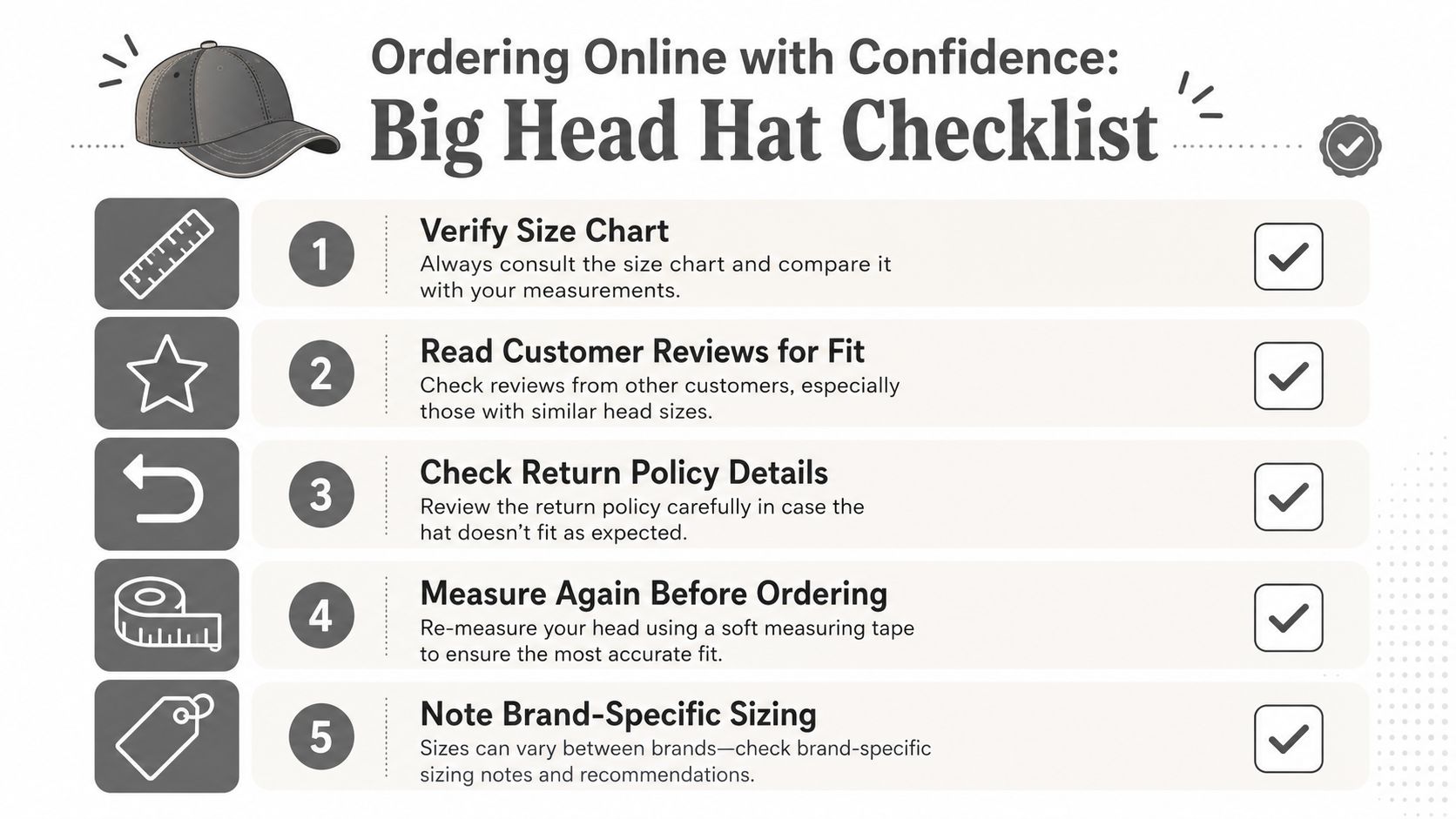
Online shopping works well for big-head buyers when you treat the product page like a fitting room. Don't add a hat to your cart until you've found the exact measurement chart for that model, identified the closure or stretch system, and checked whether the retailer accepts fit-related returns.
Use a repeatable buying routine
Start by measuring again if your last measurement is old or uncertain. Compare the number with the product chart, not a generic brand description. If you're between sizes, look for stretch, an adjustable closure, or a retailer that explains how the hat is intended to fit.
Reviews can reveal practical details that product photography misses. Search for comments about temple pressure, shallow crowns, tight sweatbands, loose closures, and whether the hat stayed comfortable during extended wear. Reviews aren't a substitute for measurements, but they can expose construction problems.
Before ordering, save the size chart and return terms. If the hat arrives and doesn't work, photograph the tags, packaging, and condition before sending it back, then keep the tracking information. Follow the retailer's instructions precisely, especially for custom items, clearance products, or hats that can't be returned after wear.
A good online purchase is reversible. If the retailer won't explain sizing or returns clearly, choose another listing.
Order from retailers that publish actual circumference specifications and offer enough fit information to make a reasoned choice. For a custom hat, contact the maker before paying and confirm how they handle measurement corrections or alterations.
The right destination isn't just the store with the biggest selection. It's the retailer that tells you exactly what you're buying, how it's built, and what happens if the fit misses.
2ndShotMVP offers golf hats, beanies, and lifestyle apparel with product-level head-circumference and size-fit details for men and women. Visit 2ndShotMVP to check the measurements before choosing a design you can wear comfortably on and off the course.

