
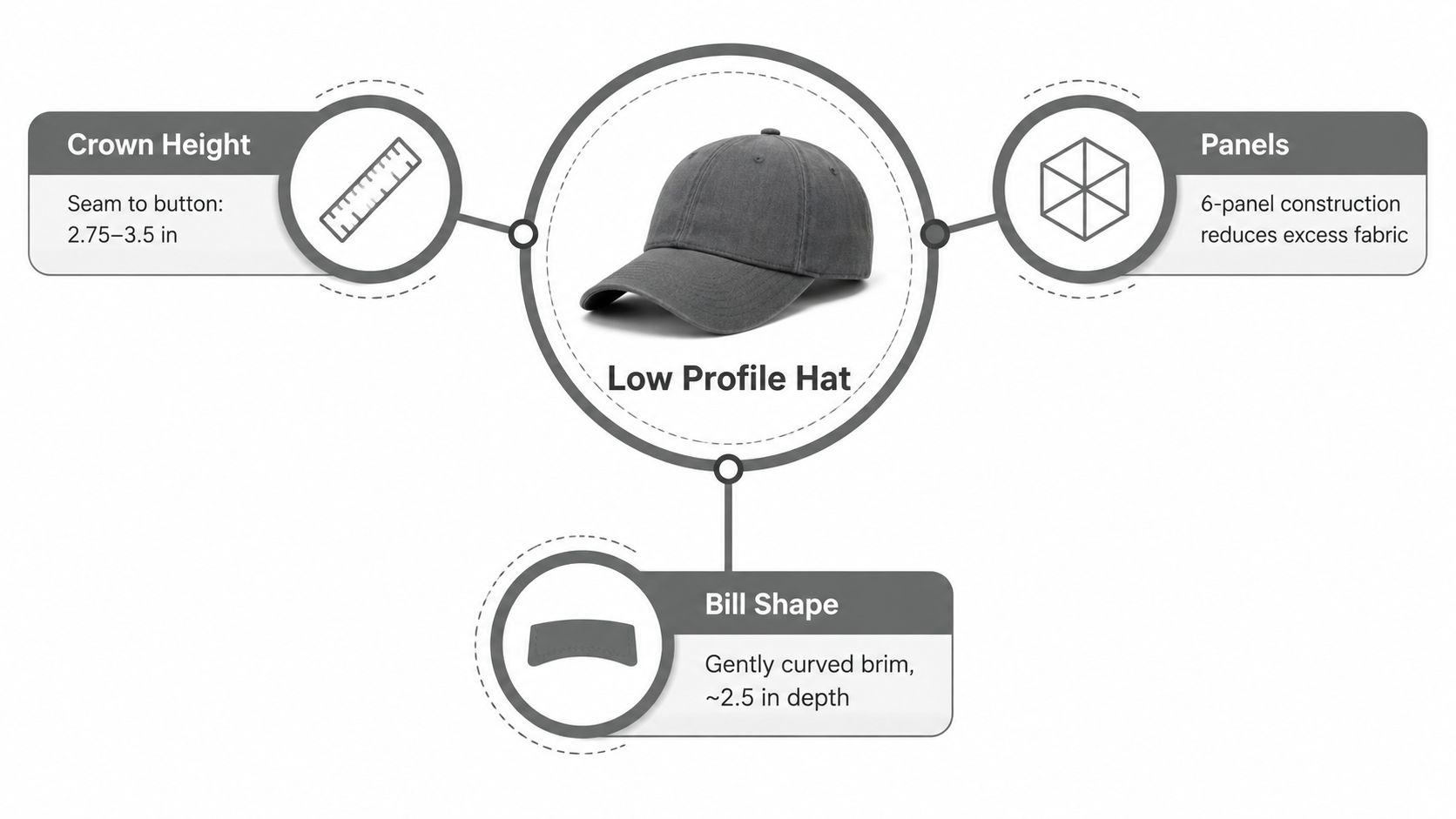
A low profile hat has a shallow crown of roughly 2.75 to 3.25 inches that sits closer to the head than a standard baseball cap. If your current cap keeps riding high, sliding around, or making your face look buried under too much crown, you're probably dealing with the wrong profile.
Most golfers don't need another random hat. They need a cap that stays put on the range, looks clean with a polo, and doesn't fight their head shape by the back nine. That's why low profile should be treated like a fit system, not a style label.
The Low Profile Hat on the Tee Box
A golfer reaches for a cap because the sun's up, the hair isn't cooperating, and the round starts on time whether the fit is right or not. A low profile hat solves the most common complaint fast, it sits closer to the head because the crown is shallow, not tall. That lower crown changes the whole feel, from the way the brim sits near the brow to how stable the cap feels when you turn, swing, or look down a fairway.
If you want the cleanest working definition, use the measurement that matters: a low profile crown is about 2.75 to 3.25 inches from the brim seam to the top button, while standard caps trend taller. That's the number to watch on a spec sheet, not the marketing label on the front panel. The Studio's hat guide frames low profile as a modern fit variation built on more than a century of cap evolution, with early MLB milestones dating back to 1849 and New Era becoming MLB's official cap supplier in 1993 (The Studio).

Practical rule: if the hat looks tall in the mirror before you even leave the locker room, it's probably the wrong profile for golf.
The benefit here is silhouette. Low profile gives you a snugger look without making the cap feel toy-sized, which is why it works on course and off. If you're sorting through styles, the broader types of golf hats guide is a useful companion, but the first question stays the same, do you want the hat to sit on your head, or perch above it?
Crown Height, Panels, and Bill Shape Explained
A low profile cap is built on crown geometry, not branding. The shortest route to spotting one is the spec sheet, where the crown height usually lands around 2.75 to 3.25 inches, measured from the brim seam to the top button. Once the crown gets taller than that, you're drifting into a different fit class, even if the front logo looks identical.
The shape starts with the front panel
Construction matters because structure controls how far the hat stands off your head. Many low-profile models use six-panel construction with a structured or semi-structured front, which keeps the crown low while still giving the cap enough shape to hold its line. That's why a low-profile hat can look sharp and well-formed instead of floppy, especially when the front panel doesn't collapse the second you touch it.
A pre-curved bill does its own quiet work. It softens the front line, helps the hat look settled right away, and keeps the cap from reading like a stiff billboard on your forehead. In plain terms, the brim shape changes the visual balance more than most buyers expect.
The material choice matters just as much. Lighter cotton twill around 7 to 8 oz is a smarter play when you want breathability, while heavier 8.5 to 10 oz cotton or canvas holds shape better but adds body and stiffness. Some low-profile models also use mesh backs or polyester blends, which reduce heat retention and make the cap easier to wear on a warm range day (Richardson spec sheet).
Modern structured versus unstructured hat guidance helps if you're deciding whether you want shape retention or a softer crown. My advice is simple, buy the profile first, then choose structure based on how much shape you want after nine holes.
A low crown with a clean bill does more for your look than a loud logo ever will.
Low Profile vs Mid Profile vs High Profile
The simplest way to choose is to stop treating every cap like the same animal. Low profile sits closer to the head and gives you a lower silhouette. Mid profile is the middle ground, and high profile sits taller with more room in the crown.
Hat Profile Comparison at a Glance
| Profile | Crown Height | Feel | Best For |
|---|---|---|---|
| Low Profile | About 2.75 to 3.25 inches | Closer, snugger, cleaner | Golfers who want a sleek line, lower brow coverage, and a cap that stays quiet on the head |
| Mid Profile | Taller than low, shorter than high | Balanced, easygoing, versatile | Everyday wear, group orders, and buyers who want a safe starting point |
| High Profile | Tallest crown, more upright | Roomier, more pronounced | Longer hair, throwback style, and people who want more front space |
The feel matters more than the label. Low profile doesn't just look smaller, it usually feels less stiff and less upright, which is why it pairs well with smaller fronts and a more understated outfit. Mid profile is the boring in a good way option, and that's not an insult. It's the cap you pick when you don't want to think about it.
High profile is the loudest silhouette. It sits higher, gives more front space, and works when you want that visible crown and a more aggressive look. If you're on the fence, start in the middle, then move lower only if you want the cap to disappear into your outfit instead of leading it.
The best golfers don't choose by trend. They choose by proportion. A low crown looks best when the rest of the outfit is doing its job and the hat doesn't need to carry the whole look.
How to Match Crown Depth to Your Head and Face
The myth that low profile is only for small heads is lazy advice. A larger head can wear a low profile cap just fine if the front panel is softer, the closure adjusts cleanly, and the crown depth matches the way the hat sits on the forehead. The better question is not “What size head do I have?” It's “How much crown do I need before the hat starts bossing my face around?”
Measure the right things
Use a tape measure and check three things. Wrap circumference above the ears, note forehead-to-crown depth, and get a rough temple-to-temple reading across the widest point. You're not trying to build a lab report, just enough information to know whether a shallow crown will sit naturally or feel cramped.
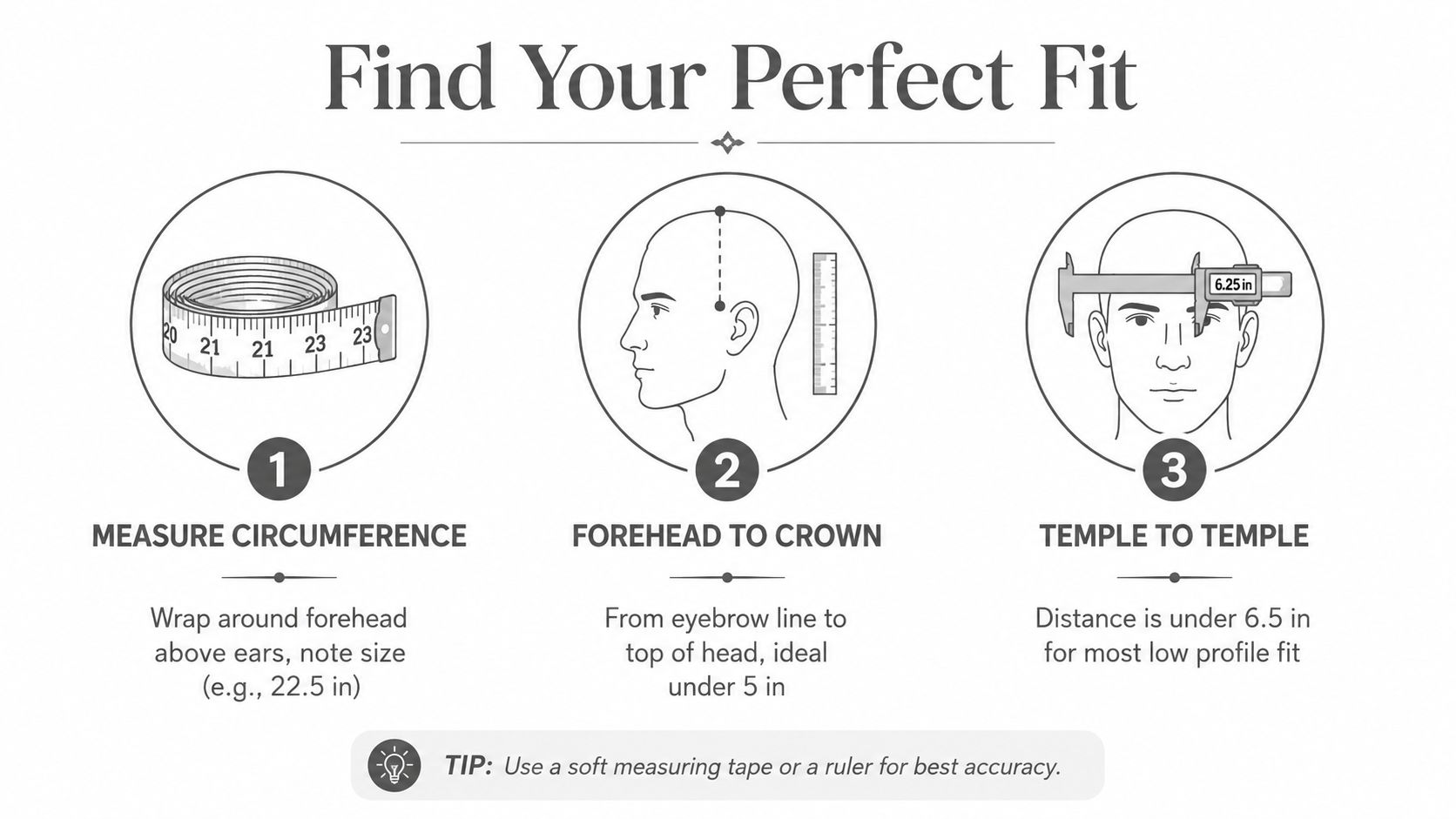
Useful fit rule: a shorter crown feels more stable, but it leaves less internal room, so head shape matters as much as head size.
Face shape and hair volume change the answer fast. A rounder face often benefits from the lower, cleaner line of a low profile crown because it avoids the exaggerated “mushroom” look, while a longer face can carry the same shallow shape without looking top-heavy. If you wear a lot of hair, especially tied back, a softer low-profile front and an adjustable closure usually beat a rigid crown every time.
The practical distinction is forehead coverage. A structured low-profile front holds its line and gives a more polished look, while an unstructured version molds more easily and tends to feel friendlier on different head shapes. If you've ever put on a cap that looked great in the mirror but felt wrong after ten minutes, this is usually the reason.
Three Golfer Profiles That Change the Right Pick
A cap that fits one golfer perfectly can look wrong on the next one. That's why the right low profile choice depends on the player, not just the shelf tag.
The weekend grinder with a rounder head and a close fade needs a structured low profile crown around the 2.75 to 3.25 inch range. The reason is simple, the structured front keeps the brim steady and stops the cap from collapsing when he looks down over a driver. That player usually does best with a firm enough front to keep the silhouette crisp, because soft fronts can drift into sloppy territory.
The executive member with thicker hair and a softer jaw wants something different. A semi-structured low profile with a stretch snap or similar adjustable closure gives enough shape without squeezing the crown flat. That cap should move with him from tee box to grill room without making the hairline look cramped. The right choice feels easy on the head, not just neat in the mirror.
The women's golfer with a ponytail and sun-sensitive skin needs function first. A low profile cap with a slightly longer brim and a mesh back helps with heat and keeps the silhouette from getting bulky. The lower crown still keeps the look clean, but the breathable back matters when the round stretches out and the sun doesn't cut anyone a break.
Each of those players is shopping for the same category and solving a different problem. That's the point. Low profile is flexible, but only when you treat crown shape, closure, and fabric like actual fit variables instead of decoration.
On-Course and 19th-Hole Styling That Actually Works
Low profile is the easiest golf cap to wear well because it doesn't fight your shirt collar or your face shape. A gently curved brim looks best with aviators or slim sport frames, while a more pronounced curve usually works better with wraparound sunglasses because the lines stay clean and athletic. If you want a deeper dive on frames that disappear instead of dominate, modern eyewear options are worth a look.
On the course
Stick with colors that behave. Navy, black, white, gray, and muted earth tones blend cleanly with most golf uniforms, while heavy contrast stitching or oversized logos can make the cap feel louder than the rest of the outfit. A low-profile hat should support the look, not steal the round.
At the 19th hole
A quarter-zip and a low profile cap work because the cap sits close to the head and doesn't compete with layers. A linen shirt and the same cap can also work, but only if the logo stays subtle and the brim isn't over-curved into something cartoonish. Loud branding is the fastest way to make a polished hat look like promo merch.
Keep the crown low, keep the branding quiet, and let the outfit carry the rest.
Skip the caps that crush the hairline or sit so shallow they look like they were borrowed from a child's locker. That's where low profile stops looking fitted and starts looking accidental.
Buying and Caring for a Low Profile Hat
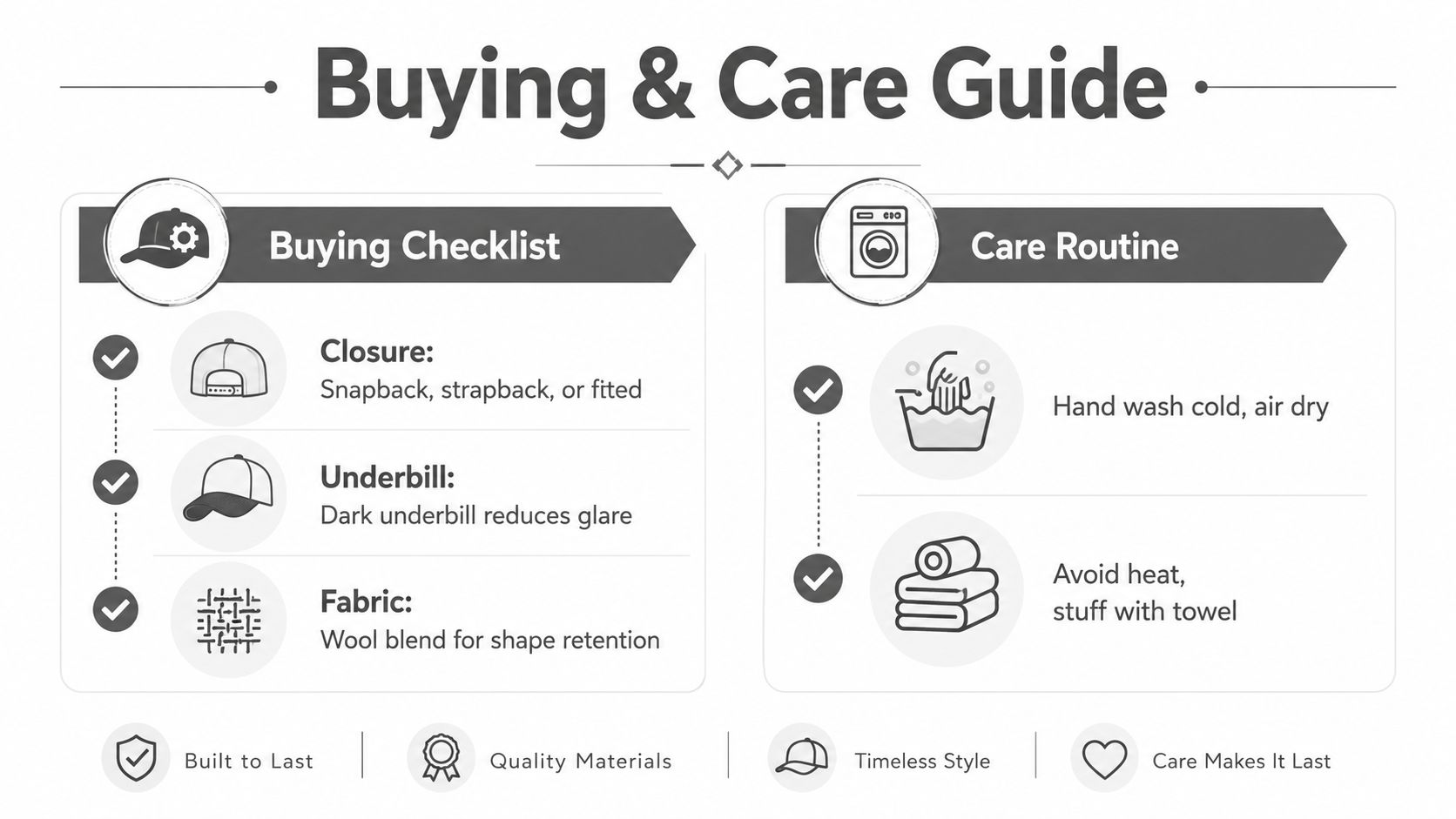
Buy the hat like you're going to wear it hard, because you probably are. The first thing I check is the closure. Snapback, strapback, fitted, and stretch all solve different problems, and none of them matters if the crown is the wrong depth.
Buying checklist
- Closure: choose snapback if sizing needs to flex, strapback if you want a cleaner back, fitted if you know your size, and stretch if you want a close feel without a hard edge.
- Front structure: pick structured if you want the hat to keep its shape, unstructured if you want a softer, easier drape.
- Sweatband: look for a band that feels firm but not abrasive, because that's what keeps the cap wearable through a hot round.
- Brim: a more rigid bill helps with sun, while a slightly softer one breaks in faster and feels less severe.
- Spec sheet: confirm the crown height before you buy. If it's near or below 3.25 inches, you're in genuine low-profile territory.
The cleaning side is straightforward. Spot-clean the sweatband, reshape the crown after a humid round, and don't toss the hat on a rearview mirror where heat and pressure can wreck the profile. The cleanest cap in the bag is the one that keeps its structure long enough to earn a second season.
A short care routine goes a long way, especially if you use the hat every week. If the crown won't rebound, the sweat stains won't lift, or the front panel stays warped after drying, retire it before it starts looking tired in photos. For a step-by-step wash routine, the guide on how to clean golf hats covers the basics without overcomplicating it.
Finding the Low Profile Hat That Fits Your Game
Choose a low profile hat for the silhouette and the swing, not just the look. If the crown is under about 3.25 inches, the front panel matches your head shape, and the closure disappears once it's on, you're probably holding the right cap.
That rule works whether you're walking into a pro shop or getting dressed for a dinner after the round. If your day includes travel, a luxury golf transport service can take care of the ride, but your hat still has to earn its place when you step out. A good low profile cap should stay quiet, sit clean, and move with you from first tee to last drink.
Try it on, look down, make a practice swing, and pay attention to the brim line. If the cap feels like part of your head instead of a distraction, you found the right one.
2ndShotMVP carries premium golf hats, beanies, and lifestyle apparel for men and women, with designs built for the course and the 19th hole. If you want a headwear lineup that fits better, looks sharper, and feels good to wear, visit 2ndShotMVP and pick the hat that matches your game.

