

You're standing on the range or in the airport lounge, it's already warm, and the same question shows up again. Do you grab the cap you always wear, or do you reach for something lighter, slouchier, and a little less expected? Summer beanies for men only work when they're chosen with intent, because a winter silhouette in July can look smart or look like a mistake depending on the fabric, the knit, and the setting.
That's the story here. A summer beanie isn't a cold-weather hat with a new label. It's a different tool, used for transitional weather, air-conditioned spaces, early tee times, cool evenings, and the kind of off-course dressing where a man wants scalp coverage without the bulk of a winter cuff. The category exists because men still want warmth in a light layer, style without effort, and something that doesn't fight a polo, a quarter-zip, or a travel jacket.
Why a Summer Beanie Is a Real Category
At 6:30 a.m., the course still has a little bite in the air. The cart path is damp, the wind is light, and a regular winter beanie feels like overkill once the sun gets moving, but a bare head can still feel exposed if you've got an early tee time or a long walk from the parking lot. That's where a summer beanie earns its place, not as a joke, but as a deliberate choice.
The use case is real, not theoretical
Men wear these hats for two honest reasons. One is transitional weather, the other is style and scalp coverage when warmth isn't the point. A light beanie also makes sense on flights, in cold hotel lobbies, in over-air-conditioned offices, and on oceanfront courses where the wind does more than the sun.
The commercial case is there too. IndexBox forecasts the global men beanie hat market at 3.1% CAGR from 2026 to 2035, with the index rising to about 135 by 2035 on a 2025 = 100 base. That forecast also points to premiumization and functional warmth, which matters because a lightweight summer version sits right inside that shift toward more intentional product use. The category isn't fading, it's becoming more specific. IndexBox forecast on the men beanie hat market
Practical rule: if the beanie is serving fashion, travel, or a cool breeze, it's a summer piece. If it's fighting real heat, it's probably the wrong tool.
Why the silhouette matters
The shape carries meaning. A beanie signals a different attitude than a cap, and that's why men keep reaching for it even outside winter. It can read casual, collegiate, creative, or polished, depending on the knit and how it sits.
That's also why the summer version has to stay light on its feet. It should look intentional with a polo, not apologetic with shorts. It should feel like part of a golf-club wardrobe, not something borrowed from January.
What Makes a Beanie Work in Warm Weather
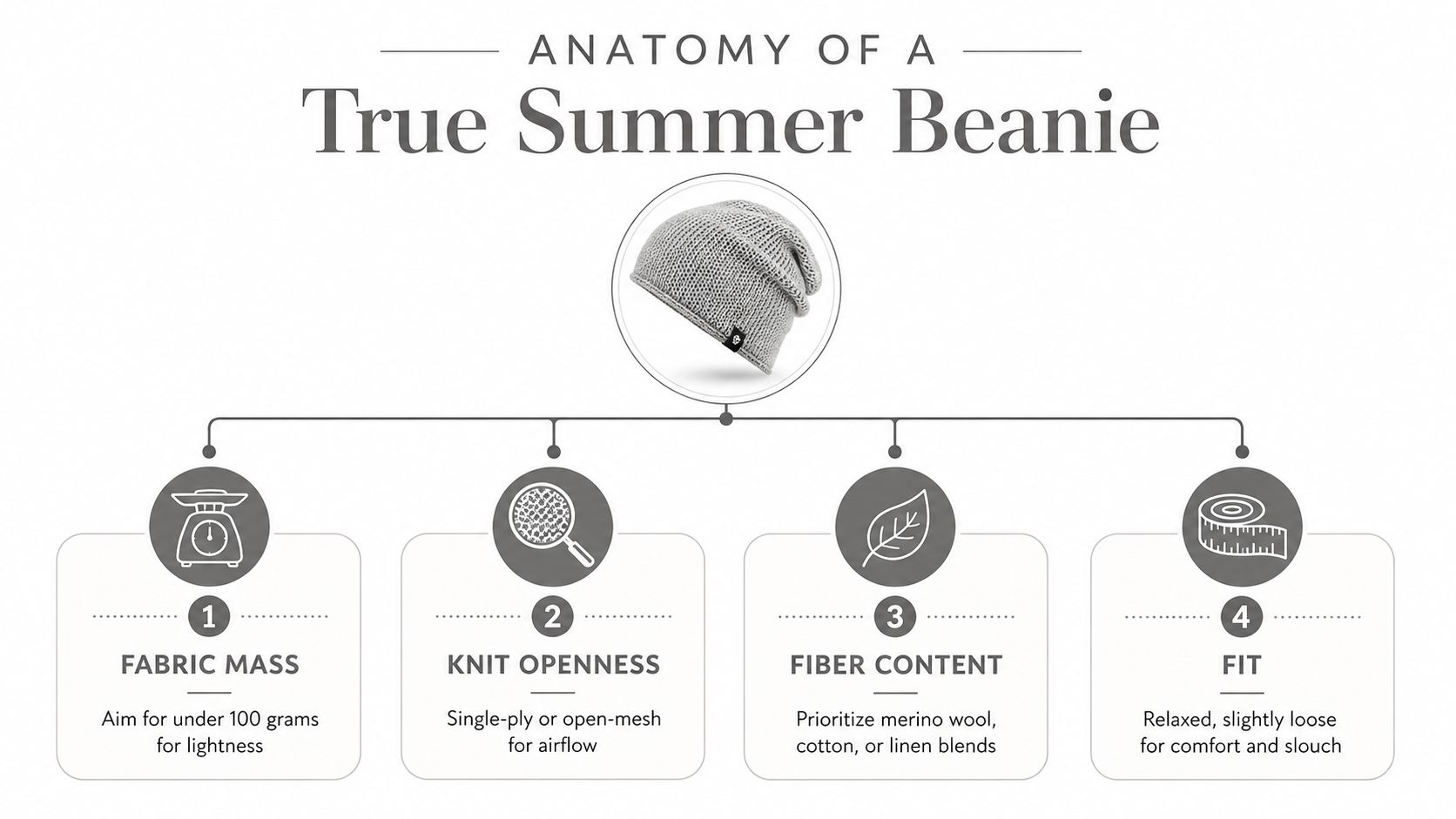
A summer beanie works only when it stops acting like winter gear. Pick one up and the difference is obvious fast, a good piece feels closer to a training top than a cold-season knit. A bad one still feels like it belongs in a ski bag, even if it's sitting on a sunny counter.
Start with weight and construction
Weight tells you a lot before you even try it on. Light summer models are commonly built in the 60 to 90 g range, while dense winter knits sit around 150 to 250 g. That gap matters because lower mass holds less heat, and a looser structure gives the scalp somewhere to breathe instead of trapping warmth in a small insulated pocket. If the beanie feels substantial in the hand, it will usually wear substantial on the head.
Construction matters just as much as the number on the spec card. A thin, airy knit can work for a warm morning on the course, a travel day, or an evening when the temperature drops a little. Dense ribbing or heavy double-layer fabric tends to feel fine for a few minutes, then starts to work against you once the sun is up. On that point, keep cool on the trail with moisture is a useful reminder that fabric behavior, not just fabric content, determines comfort in heat.
Then look at fiber choice
Fiber changes how the hat behaves against skin, especially once sweat enters the picture. Cotton, merino wool, and cotton-rich blends are the sensible summer options because they are lighter and more breathable than heavy acrylic. Merino also handles moisture well without feeling clammy, which matters when a hat is worn for travel, an evening walk, or a humid day that starts cool and ends sticky.
Avoid assuming every soft fiber performs the same way. A hat can feel pleasant in the shop and still hang onto heat or dampness outdoors. Acrylic can be fine in cooler months, but in July heat it often feels like the wrong compromise unless the knit is very open and very light. For buyers who want a golf-specific comparison of airy headwear, this look at mesh golf hats from 2ndShotMVP shows how ventilation changes the whole feel of a hat.
Fit is part of performance
Fit decides whether the beanie feels relaxed or irritating. A summer beanie should usually sit a little easier on the head than a winter cuffed cap, with enough room for air to move and enough structure to avoid a sloppy collapse. Relaxed cuts often land around 54 to 60 cm head circumference, which helps keep the crown from pinching or overheating.
The best pieces also keep the fit simple on purpose. Single-ply, open-knit, sub-100 g, and breathable fiber is the pattern that keeps showing up for a reason. Those traits work together, and when one is missing, the hat usually starts to feel more like a style prop than something you want on a warm day.
A beanie that looks light but wears dense is the wrong beanie. The hand test usually tells the truth before the mirror does.
Knit vs Mesh and Open-Weave Constructions
Some men want the familiar slouch of a classic knit. Others need maximum airflow and don't mind a more technical look. The market usually gives you three broad choices, and each one has a clear trade-off.
| Construction | Airflow | Style Range | Best For |
|---|---|---|---|
| Classic knit | Moderate to low | Broad, familiar, easy to dress up or down | Cooler mornings, conservative styling |
| Open-knit or loose gauge | High | Wide, balanced, the safest default | Golf mornings, travel, transitional wear |
| Mesh or crochet-style weave | Highest | Narrower, more fashion-forward, more athletic | Hotter climates, very light off-course looks |
Classic knit is the silhouette most men already know. It looks like a beanie, which is exactly why it still sells, but in direct sun it can hold more heat than a buyer expects. Open-knit gives you the best compromise, because it keeps the beanie identity intact while letting air move. Mesh and crochet-style constructions breathe the best, but they also read more like a deliberate style statement and less like a versatile staple.
Pick the weave by setting
Early-morning golf usually favors open-knit. It keeps the look close to classic without trapping as much heat once the sun is up. Travel days can handle looser, more breathable construction because you're moving between temperatures and usually don't want a heavy knit in your bag.
For a more golf-specific comparison, the internal breakdown at golf hats mesh is a useful companion if you're trying to understand where mesh belongs and where it starts to look too sporty.
The big mistake is buying by appearance alone. A chunky knit may look great in a product photo and still feel miserable in July. An open weave may look too simple on a shelf and turn out to be the only one you wear.
Getting the Fit Right for Style and Comfort
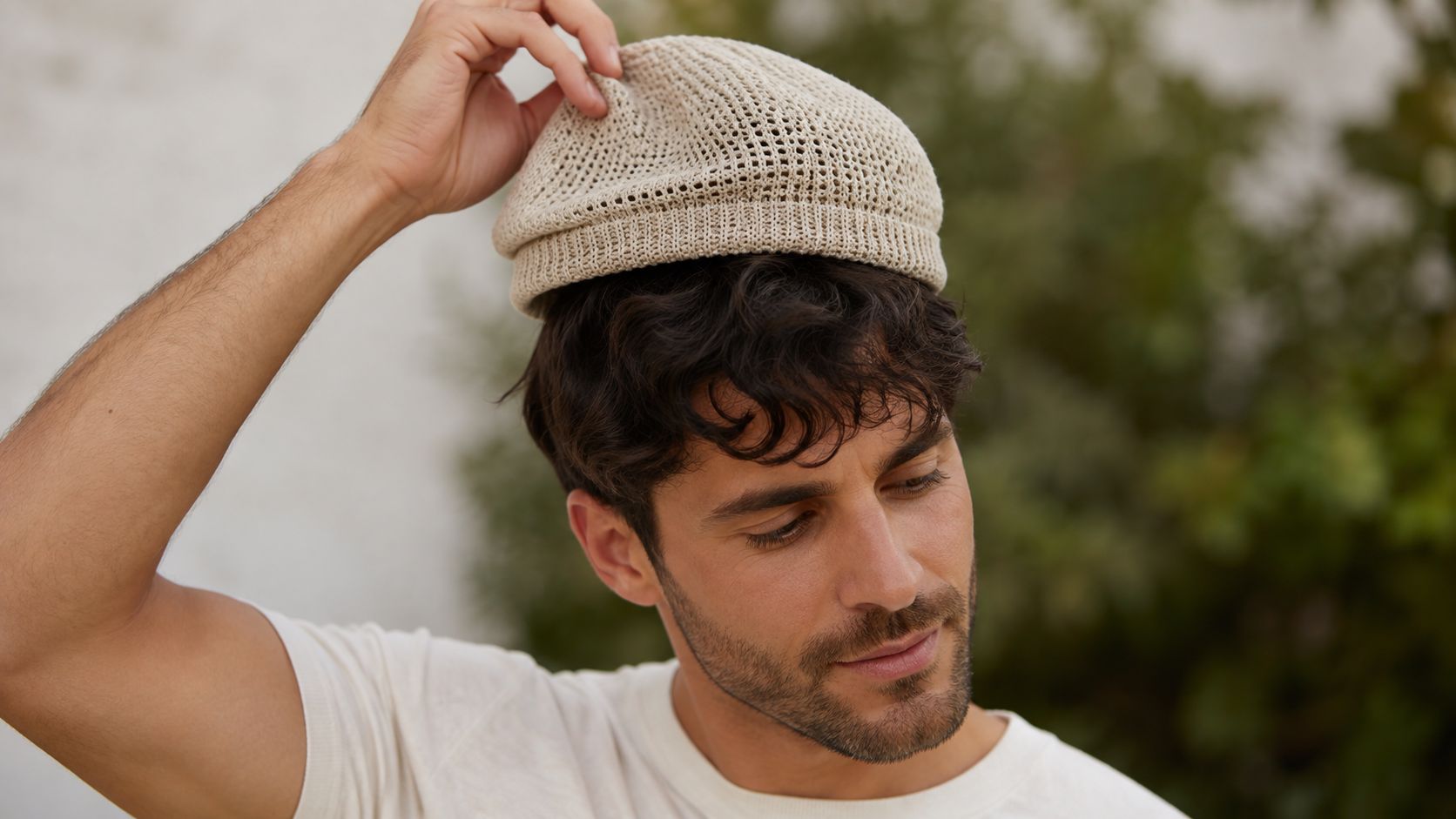
Fit decides whether the hat looks relaxed or just sloppy. Summer beanies should sit with less pressure than the winter version most men already own, and the crown should feel like it has a little air around it instead of clamping down.
A good buying check is physical, not theoretical. You want about two-finger room at the temples, no pressure across the forehead, and a band that sits above the ears without pinching. If the hat leaves marks after a short try-on, it's too tight for warm weather wear.
The internal size guide at how to measure head helps if you're starting from scratch, but in practice I care more about shape than label. A slouchier back reads more casual and usually gives the summer silhouette its ease. A fisherman-style cuff sits shorter and cleaner, which can work when the rest of the outfit is minimalist.
Read the silhouette before you buy
A relaxed beanie with a deeper crown pairs differently with sunglasses and an open collar than a short, close-fitting cuff. That difference matters on the course and off it. If the hat sits too high, it can look pinned on. If it sits too deep, it can swallow the face.
The best fit lets the hat disappear into the outfit while still being noticed. That's the trick with summer headwear. It should look deliberate without looking forced.
The Case for Wearing a Beanie in Summer
A summer beanie is not trying to beat a cap at its own game. A cap handles sun glare and direct heat better. A beanie wins when the goal is different, which is why so many men keep one in rotation even when the weather turns warm.
Where it actually makes sense
On a seaside course, a cool breeze can make a light beanie more comfortable than a bare head, especially before the day gets hot. In an office that runs cold, a thin knit feels polished in a way a gym cap doesn't. On a long flight, it helps a man look pulled together without carrying a bulky winter hat.
It also works for men who want scalp coverage without the full visual statement of a cap. Some guys just prefer the silhouette. That's a valid style reason, and it's one the market keeps serving because there's real demand for it, even if most product pages talk only about winter.
If heat, friction, or skin irritation are already part of the picture, how ALODERMA calms heat rash is a relevant skincare read before you decide what belongs on your head in summer.
When to leave it at home
The line is pretty clear. Midday golf in harsh sun, heavy humidity, and high exertion are all situations where a beanie starts to lose the argument. A lightweight version can still work around the edges of the day, but it shouldn't pretend to be a performance sun hat.
Evening is where the style case gets stronger. Around the 19th hole, on a dock, or walking from dinner to a hotel bar, a summer beanie says you made a choice. That's different from grabbing the nearest thing on the hook.
On-Course and Off-Course Looks That Actually Work
A good summer beanie doesn't need to be loud to look intentional. The best versions are usually the quiet ones, because they slide into an outfit without demanding that the rest of the look perform around them.
Early-morning tee time
For a cool dawn round, a heathered merino beanie in charcoal or stone works well with a white polo, fitted shorts, and clean sneakers. The heathering softens the knit, and the neutral color keeps it from looking too streetwear-heavy. If the cuff is short, it reads more like golf gear than winter outerwear.
19th-hole evening
For dinner after the round, a low-key open-knit in navy or olive pairs cleanly with a quarter-zip and dark chinos. That combination works because the hat doesn't fight the collar line. A bold graphic knit usually breaks the outfit apart, while a subdued texture keeps it grounded.
Travel or weekend casual
For flights and weekends, a relaxed beanie in oatmeal or faded black works with a lightweight bomber, jeans, and slip-ons. The point is ease, not attention. This is also where a more fashion-forward mesh or crochet weave can make sense, because the setting is casual enough to support it without looking overworked.
Color and tone matter more than most men admit
Neutral tones are easier to wear because they don't argue with polos, quarter-zips, or outer layers. If you want a louder logo or a brighter color, keep everything else simple. The hat should either blend in or clearly lead the outfit. There isn't much room for middle ground.
Care and Packing Without Ruining the Shape
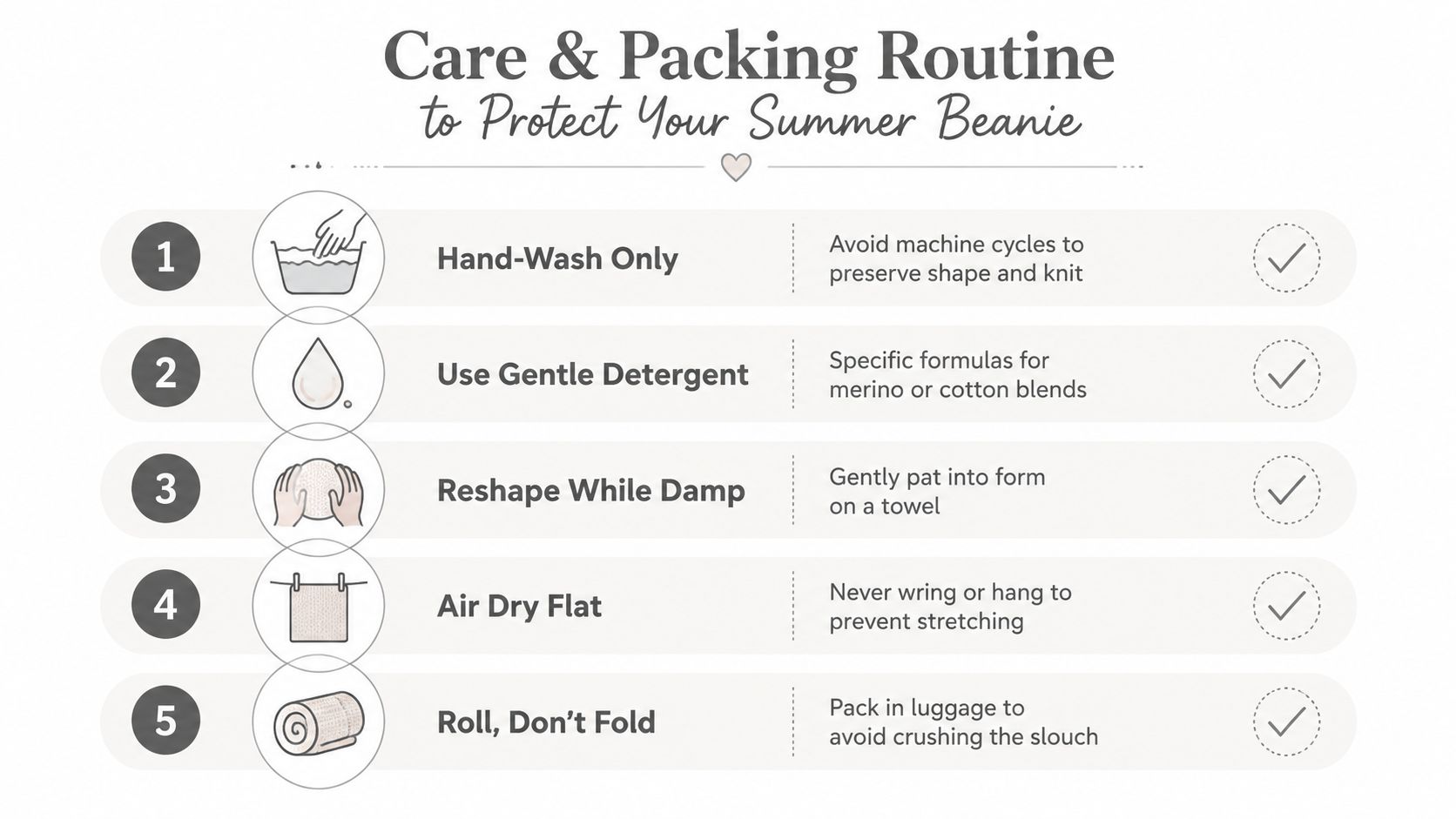
A summer beanie only stays useful if it keeps its shape. Once the knit stretches, pills, or collapses, the whole point of the relaxed silhouette starts to disappear.
Keep the routine short
Hand-wash the beanie when it needs it, especially if it's merino or a cotton blend. Use a gentle detergent made for delicate fiber, then reshape it while damp and lay it flat to air-dry. Don't wring it out, and don't hang it, because both can distort the crown and pull the knit out of form.
For a cleaner hat-care reference, how to clean golf hats is worth keeping around if your headwear lives a busy life between the course and the rest of the week.
Practical rule: if you can't explain the wash routine in one minute, you probably won't do it often enough to protect the hat.
Pack it like it matters
In a carry-on, roll the beanie and stuff it into a shoe or pack it with socks so it keeps its slouch. Folding it flat in the middle of a bag can crush the crown and create awkward creases that show up the moment you put it on. A light beanie should travel light, not come out looking defeated.
That care routine is what makes the math work. A better beanie that holds shape is worth more than a cheaper one that bags out after a handful of wears.
Your Summer Beanie Buying Checklist
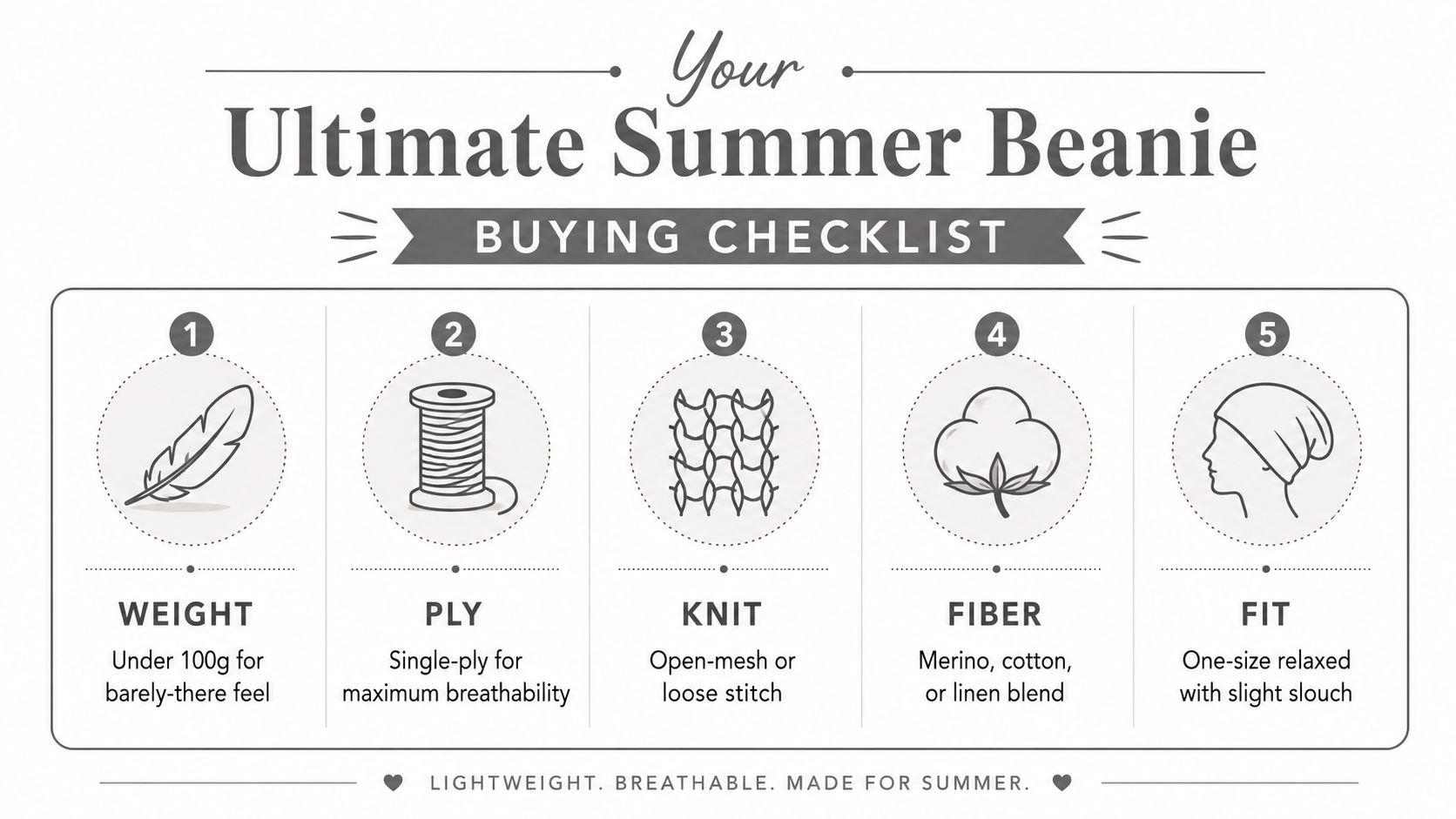
A summer beanie has to earn its place. It should feel light in the hand, sit cool on the head, and look intentional with the rest of your wardrobe, because a cold-weather silhouette only works in warm weather when the fabric and styling are doing real work.
Use this checklist before you buy
- Weight: stay under 100 g if you want a light feel.
- Ply: choose single-ply construction for better breathability.
- Knit: look for open-knit or loose stitch rather than dense ribbing.
- Fiber: prioritize merino, cotton, or linen blend constructions.
- Fit: aim for a relaxed one-size shape with slight slouch and no temple pressure.
Run that list against the product photos, the fabric description, and the way you dress. It helps separate a true warm-weather beanie from one that only looks right in a winter catalog, and it works whether the hat is for the course, the office, the airport, or a weekend trip.
A practical shopper also checks how the beanie travels. If it needs to live in a carry-on or beach bag, compare it with the logic in a beach packing list, because a hat that crushes easily is a poor choice for summer use.
For men who want headwear that can move between golf, travel, and everyday wear, 2ndShotMVP offers golf hats, beanies, and lifestyle apparel built around that off-course-to-on-course transition. If you want to browse that kind of headwear with the same practical lens, visit 2ndShotMVP and look for pieces that match the way you dress.
Pick the hat that fits your climate, your schedule, and your wardrobe, not the one that only looks right in January. If you want more headwear that plays well at the 19th hole and still works after you leave the clubhouse, start with 2ndShotMVP and choose the piece you'll wear.

