

The absolute best sun protection you can get from a golf hat comes down to three key things: a UPF 50+ rating, a wide, 360-degree brim, and high-tech, moisture-wicking materials. This triple-threat combo provides a fortress against harmful UV rays and keeps you cool and comfortable from the first tee to the 18th green.
Your Hat Is Your Most Important Club
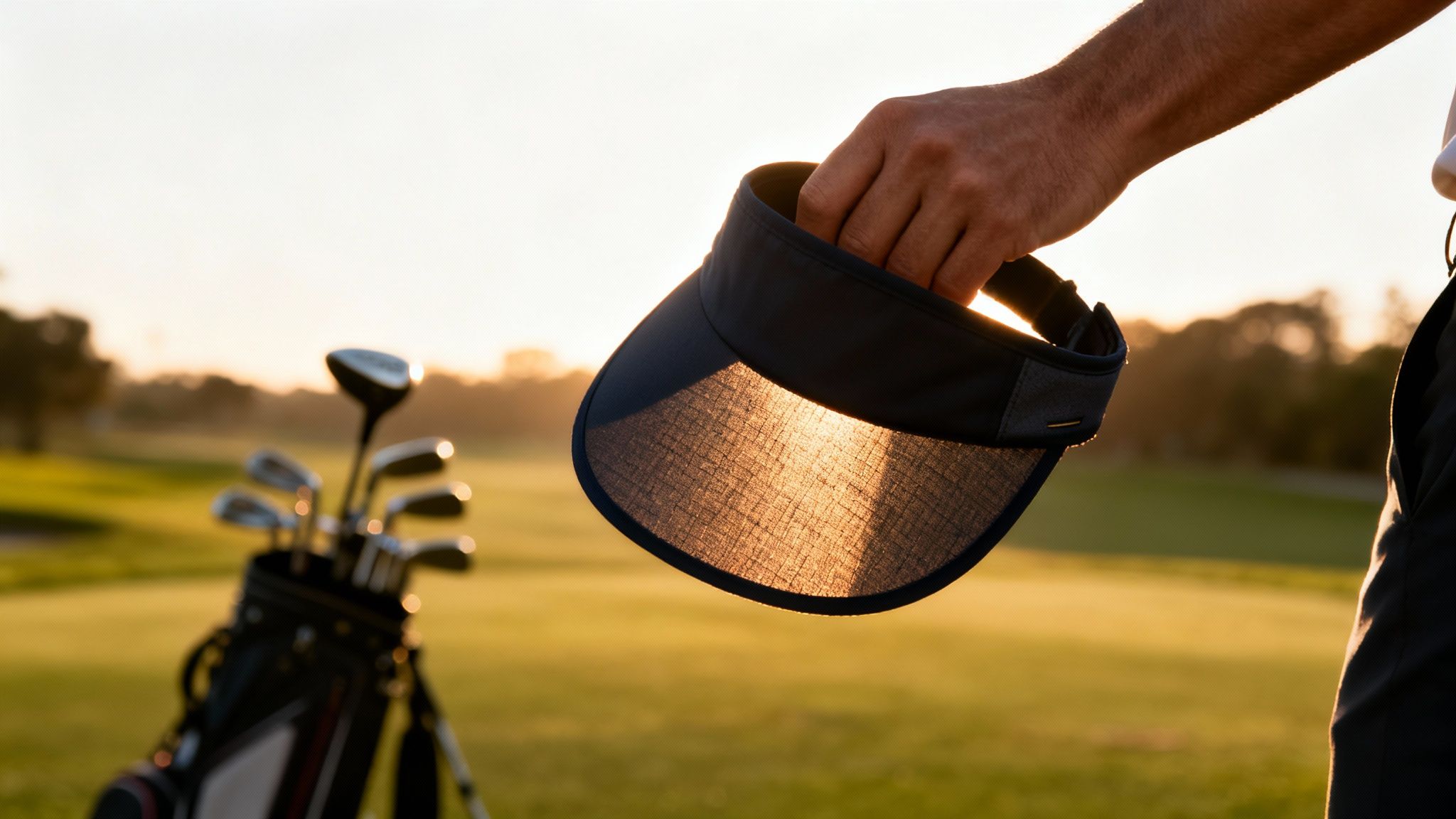
Let's get one thing straight: your golf hat isn't just an accessory. It's not just a place to stick a cool logo. It’s a critical piece of performance equipment, maybe even more important than that new driver you've been eyeing. This isn’t just about avoiding a nasty sunburn; it’s about understanding how the right headwear gives you a real strategic advantage on the course.
This mindset is finally catching on. The global golf hat market has exploded to around USD 1.5 billion and is on track to nearly double by 2033. This boom is fueled by a fresh passion for the game and, frankly, a much-needed wake-up call about the dangers of sun damage. You can dig into these market trends over at DataHorizzon Research.
We're going to peel back the layers and look past the logos to uncover the science of what makes a golf hat a sun-blocking powerhouse. We'll break down:
- UPF Ratings: Think of this as SPF for your clothes—it's the real measure of a fabric's sun-blocking muscle.
- Brim Designs: We’ll explore how the shape and size of a brim can mean the difference between total coverage and a fried neck.
- Advanced Materials: It's all about the tech that wicks sweat, breathes easy, and keeps your head in the game.
By the time we're done, you won't see sun protection as a hassle. You'll see it as a competitive edge. A top-tier performance golf hat is one of the smartest investments you can make for your comfort, focus, and long-term health in the game you love.
How Your Standard Cap Is Costing You Strokes
Still rocking that trusty old baseball cap on the course? I get it. It feels familiar, maybe even a little lucky. But let’s be honest—relying on it for sun protection is like trying to chip out of a bunker with a putter. You might pull it off once, but most of the time, you're just using the wrong tool for the job.
Think about it for a second. That cap leaves the most vulnerable parts of your head completely exposed. For hours on end, the sun is just beating down on the back of your neck, your ears, and the sides of your face. A narrow front brim can't do a thing to help, turning a four-hour round into a long-term liability for your skin.
A dedicated sun protection hat is more than just a shield; it's performance equipment. It’s engineered to manage glare, control heat, and keep you comfortable, letting you stay locked in from the first drive to the final putt.
Upgrading your headwear isn't just about dodging a nasty sunburn. It's a smart, strategic move to sharpen your focus and boost your endurance out there.
The Unseen Hazards of Partial Coverage
Ever notice how you're constantly squinting into the sun? That's not just annoying; it creates tension and fatigue that quietly creeps into your swing. And that heat building up on your neck? It's an energy vampire, draining you shot by shot, especially on the back nine when every ounce of focus matters.
A proper golf hat solves these problems head-on. The difference is huge. Research shows a wide-brim hat can slash the UV dose to your neck by 25% compared to a baseball cap. For your ears—one of the most common spots for skin cancer among golfers—that number jumps to nearly 50%. Yet, as some crucial sun protection findings for golfers point out, you'll rarely see a UPF label on most golf apparel.
This means your standard cap isn't just a style choice; it’s a performance handicap. The best golf hats for sun protection are designed to eliminate these distractions, offering:
- 360-Degree Shade: A full brim cuts down on that blinding peripheral glare, so you can actually track your ball without fighting the sun.
- Complete Coverage: It protects the spots everyone forgets about, like the tips of your ears and the back of your neck, giving you true peace of mind.
When you switch to a hat that's actually built for the course, you’re not just protecting your health—you're giving yourself a real, measurable edge.
Cracking the Code on UPF Ratings
When you’re hunting for a golf hat that truly protects you from the sun, you'll see one acronym pop up everywhere: UPF. What is it? Think of the Ultraviolet Protection Factor (UPF) as sunscreen that’s literally built into the fabric of your hat. It’s the single best way to know how much UV radiation a material blocks before it gets anywhere near your skin.
It’s easy to mix up with the SPF on your sunscreen bottle, but UPF is a whole different beast. While SPF only measures protection from UVB (the rays that cause sunburn), UPF covers both UVA (aging) and UVB (burning) rays. This gives you a much more complete picture of the shield you’re wearing.
For golfers, the magic number to look for is UPF 50+. This is the highest rating possible and it’s no joke. It means the fabric blocks a whopping 98% of the sun's nasty rays, letting less than 2% through. You're essentially wearing a personal patch of shade that moves with you.
A hat with a UPF 50+ rating is the certified gold standard. It’s a guarantee that your gear is working overtime to keep you safe from the first tee to the 18th green.
Beyond the Number
So, what’s the secret sauce that gives a hat its sun-blocking superpowers? It’s not just one thing, but a combination of factors that create that protective barrier. Knowing what they are will help you spot a winner.
- Weave Density: Imagine trying to shine a flashlight through a brick wall versus a chain-link fence. Tightly woven fabrics like polyester leave almost no tiny holes for sunlight to sneak through, making them far more protective than a loosely woven cotton.
- Color Matters: Darker colors are generally better at absorbing UV rays, which can give them a slight edge. But don’t get too hung up on this—a certified UPF rating is always the most important factor, regardless of color.
- Fabric Type: Synthetic fibers like polyester and nylon are champs at scattering and absorbing UV radiation. They naturally outperform materials like untreated cotton, which lets more rays pass through.
Just as we crack the code on UPF for hats, understanding UV protection in eyewear, such as glasses with UV400 ratings, is equally important for comprehensive sun safety on the course.
Finding the Right Brim for Your Game
Let's be honest, not all brims are created equal. The right one can be a total game-changer for your comfort, your skin, and maybe even your scorecard. Think of the brim as your hat’s personal bodyguard against the sun—its size and shape directly dictate how well it does its job and whether it gets in the way of your swing.
The classic baseball cap is practically the unofficial uniform of the golf course. It’s great for shielding your forehead and keeping the glare out of your eyes on that critical putt. But here’s the rub: it leaves your ears and the back of your neck completely defenseless. After a four-hour round under a hot sun, those are the exact spots that end up glowing red.
Beyond the Traditional Cap
If you’re serious about sun protection, you’ve got to think bigger. I’m talking about full-brim hats, like bucket hats or those awesome-looking wide-brimmed styles that offer a full 360-degree shield. On a blistering summer day, that all-around coverage is non-negotiable for protecting not just your face, but all those easy-to-forget spots.
Now, while a massive brim might seem like the best idea, you have to consider your swing. The sweet spot is a brim wide enough to cast a shadow over your face and neck, but not so floppy or huge that it bumps your shoulders on your backswing or messes with your peripheral vision.
This diagram breaks down how a fabric's weave and construction create its sun-blocking power.
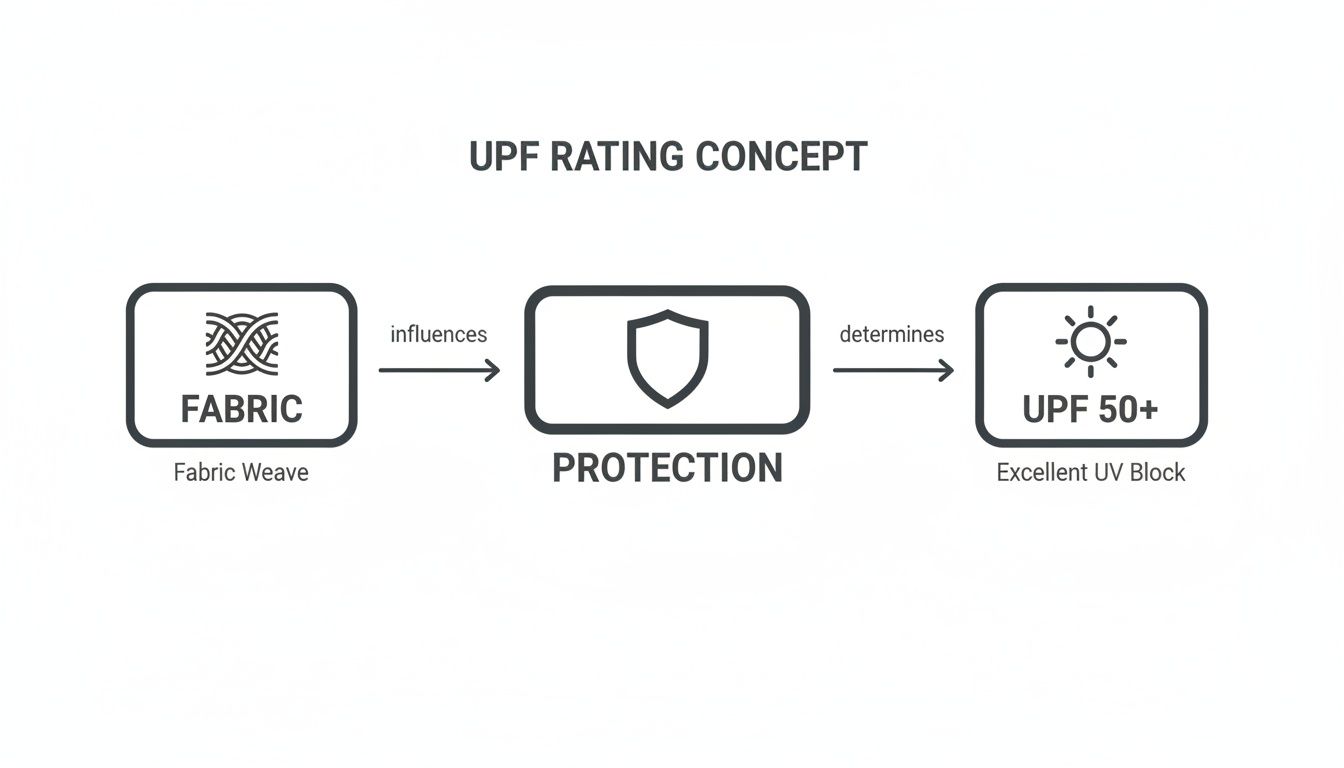
As you can see, a super-tight weave is the secret sauce for stopping UV rays, which is how fabrics earn that coveted UPF 50+ rating.
Golf Hat Brim Style Comparison for Sun Protection
Choosing the right hat style often comes down to weighing maximum coverage against on-course practicality. This table breaks down how the most common styles stack up when it comes to keeping you protected from every angle.
| Hat Style | Face Coverage | Ear Coverage | Neck Coverage | Best For |
|---|---|---|---|---|
| Baseball Cap | Excellent (Front) | None | None | Casual rounds, windy days, and classic style. |
| Visor | Good (Forehead/Eyes) | None | None | Maximum ventilation and players who run hot. |
| Bucket Hat | Excellent (360°) | Excellent | Good | All-around protection in calm to moderate wind. |
| Wide-Brim Hat | Maximum (360°) | Excellent | Excellent | Ultimate sun safety on intensely sunny days. |
Ultimately, the goal is to find a hat that gives you comprehensive coverage without interfering with your play. It's that perfect marriage of function and form.
Matching the Brim to the Conditions
The best hat for you can change from one round to the next. Playing a windy coastal links course? That snug baseball cap might be the smarter, more stable choice. But if you're slogging through a humid, sweltering afternoon, a full-brim hat is going to be your absolute best friend.
For a closer look at all the options out there, our guide on the different types of golf hats breaks down the pros and cons of each style in detail.
When you’re making your choice, just run through this quick mental checklist:
- Sun Intensity: Is it a peak sun, high-noon kind of day? If so, a wide brim is a must.
- Wind Conditions: If it's blowing a gale, a tighter-fitting cap or a bucket hat with a chin strap will stay put.
- Personal Comfort: At the end of the day, the best hat is the one you’ll actually keep on your head for all 18 holes.
Materials and Tech That Boost Performance
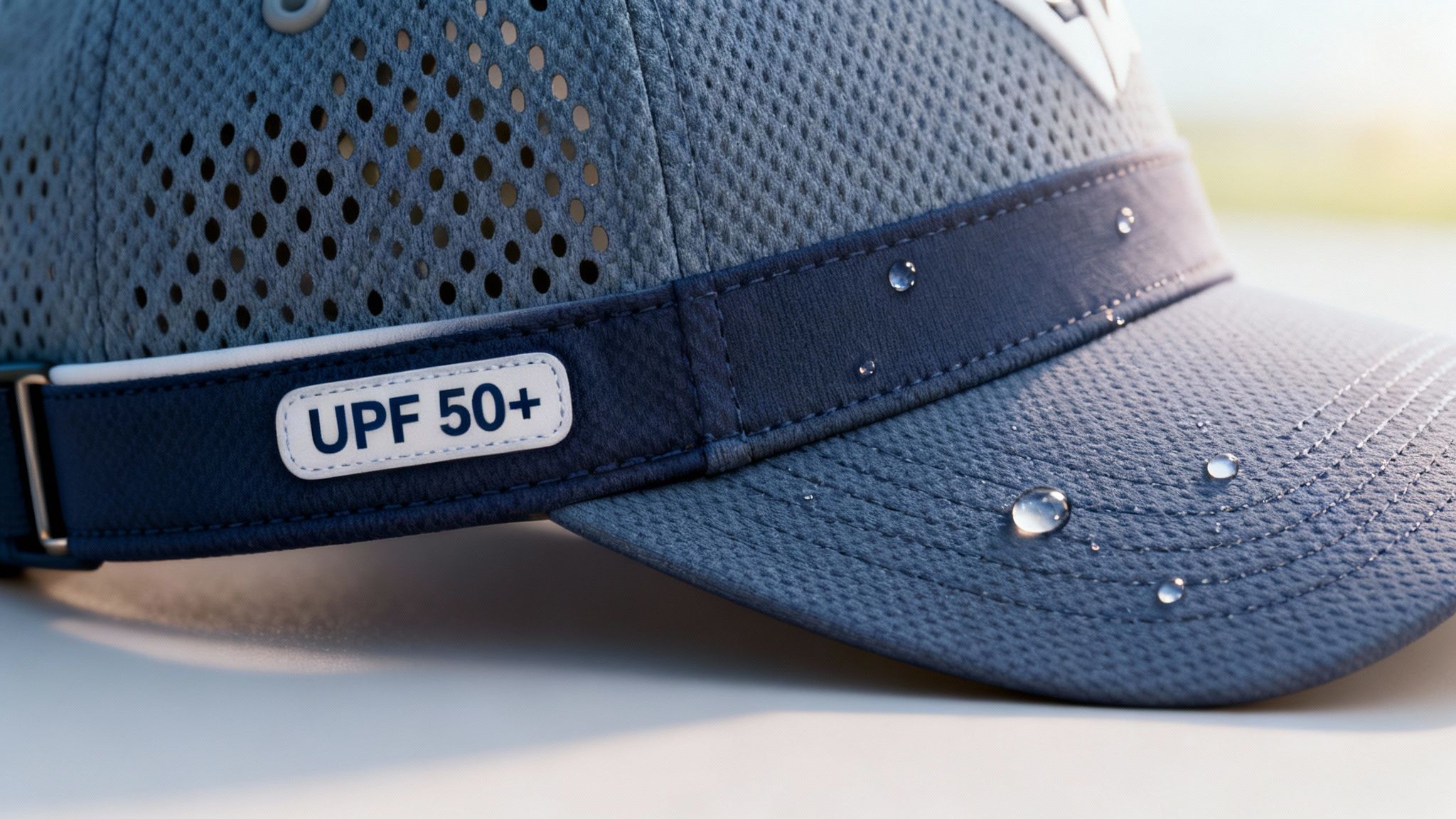
While a hat's brim and UPF rating are your first line of defense against the sun, the real magic is in the details. The tech woven into today’s headwear is what turns a simple sun blocker into a serious piece of performance gear. It’s the difference between a hat that just sits there and one that actually helps you play better.
The best golf hats for sun protection always start with the right fabrics. Materials like polyester and nylon are the undisputed champions here. Unlike that old cotton hat that gets soaked and heavy with sweat, these modern synthetics are built to wick moisture away from your skin and dry out fast. That keeps you cool and comfortable, even when you're grinding it out on the back nine.
Features That Keep Your Head in the Game
Beyond the base material, it's the small, clever features that really make a hat shine. These details are all about getting rid of the little distractions that can mess with your swing and throw your whole game off.
Here are the game-changing elements to look for:
- Built-In Sweatbands: A top-notch, moisture-wicking sweatband is non-negotiable. It's your secret weapon for stopping sweat from dripping into your eyes right at the top of your backswing.
- Laser-Cut Perforations: See those tiny, perfect holes? They're not just for style. They’re ventilation ports, letting heat escape and cool air flow in to keep you from overheating on a sweltering afternoon.
- Adjustable Closures: "One size fits all" is a recipe for disaster on the course. A solid snapback or strap closure gives you that perfect, locked-in fit so your hat stays put, even when you unleash a massive drive or the wind kicks up.
Think of it this way: these features work together to create a comfortable, distraction-free bubble for your head, letting you focus on the shot, not your gear.
When a hat nails the shape and packs in this kind of functional tech, it becomes an essential tool. It manages heat, wrangles sweat, and stays glued to your head, giving you one less thing to worry about. To see how these features come together in some seriously sharp designs, check out this collection of premium golf hats that perform on the course and look great off it.
Your Top Golf Hat Questions Answered
Even when you know the basics, picking the perfect golf hat can still feel like lining up a tricky putt. Let's clear up some of the most common questions that pop up when you're trying to find the right headwear for a long day on the course.
Does My Golf Hat's Color Really Matter for Sun Protection?
Yes and no. It’s a bit of a classic golf myth. While it’s technically true that the dyes in darker fabrics can absorb a tiny bit more UV radiation, the difference is almost negligible.
The real game-changers are the fabric's weave and, most importantly, its UPF rating. A certified UPF 50+ hat in brilliant white is going to blow a non-rated black hat out of the water every single time. So, focus on finding that UPF 50+ tag first. After that, just pick whatever color makes you feel like a pro.
How Do I Clean My Hat Without Ruining Its UPF Rating?
Great question. You've invested in a quality piece of gear, so you want it to last. The first rule? Always check the care label inside the hat—that's your bible.
For most high-performance golf hats, the best bet is a gentle hand-wash in cool water with a mild detergent. Stay far, far away from bleach or any harsh chemicals, as they can break down the very fibers that are protecting you.
To get rid of sweat stains, just give them a gentle scrub, rinse the hat completely, and let it air dry. Pro tip: never toss it in a machine dryer. The high heat is the fastest way to ruin the hat's shape and cook the life right out of its sun-blocking technology.
Is a Visor a Good Option for Sun Protection?
Ah, the visor. It's great for keeping your head cool and does an excellent job of shielding your face and keeping the glare out of your eyes. No doubt, that can help you read the greens better.
But here’s the problem with a visor: it’s what’s missing that counts. It leaves your scalp, the tops of your ears, and the back of your neck completely exposed. These are prime targets for serious sun damage.
If you have a thick head of hair and are diligent about slathering sunscreen on your ears and neck, a visor can be a decent option. But for true, set-it-and-forget-it protection on the course, you simply can't beat a hat with a full crown and a wide brim. Remember, a great hat is only one part of the equation; for complete coverage, you'll need the right lotion, too. Get expert tips on how to choose the right sunscreen for your skin type.
At 2ndShotMVP, we design hats that blend tour-level performance with standout style, so you never have to compromise. Explore our collection of premium golf hats and find the perfect headwear to protect your game and your health.

