

You've got an early tee time, the air is cool, and your usual lightweight golf cap suddenly feels a little too thin for the morning. A corduroy snapback hat looks like the obvious upgrade: warmer, more textured, and polished enough for the clubhouse without feeling overly formal. But the same ribs that give corduroy its character can also hold moisture, add warmth, and affect how cleanly a logo sits.
That's why choosing one involves more than picking a favorite color. You'll want to understand wale count, crown structure, closure design, and how the fabric behaves in humid or rainy weather. Once you know what each detail does, you can find a cap that works for your golf-lifestyle wardrobe instead of buying one that only looks good on a cool, dry afternoon.
What Makes a Corduroy Snapback Different
A misty morning round gives the corduroy snapback its ideal stage. The brim shields your eyes from low light, the textured crown adds visual depth to a simple quarter-zip, and the fabric feels more substantial than a standard cotton cap. It has the relaxed attitude of sportswear, but its raised ribs bring a little old-school country-club polish.
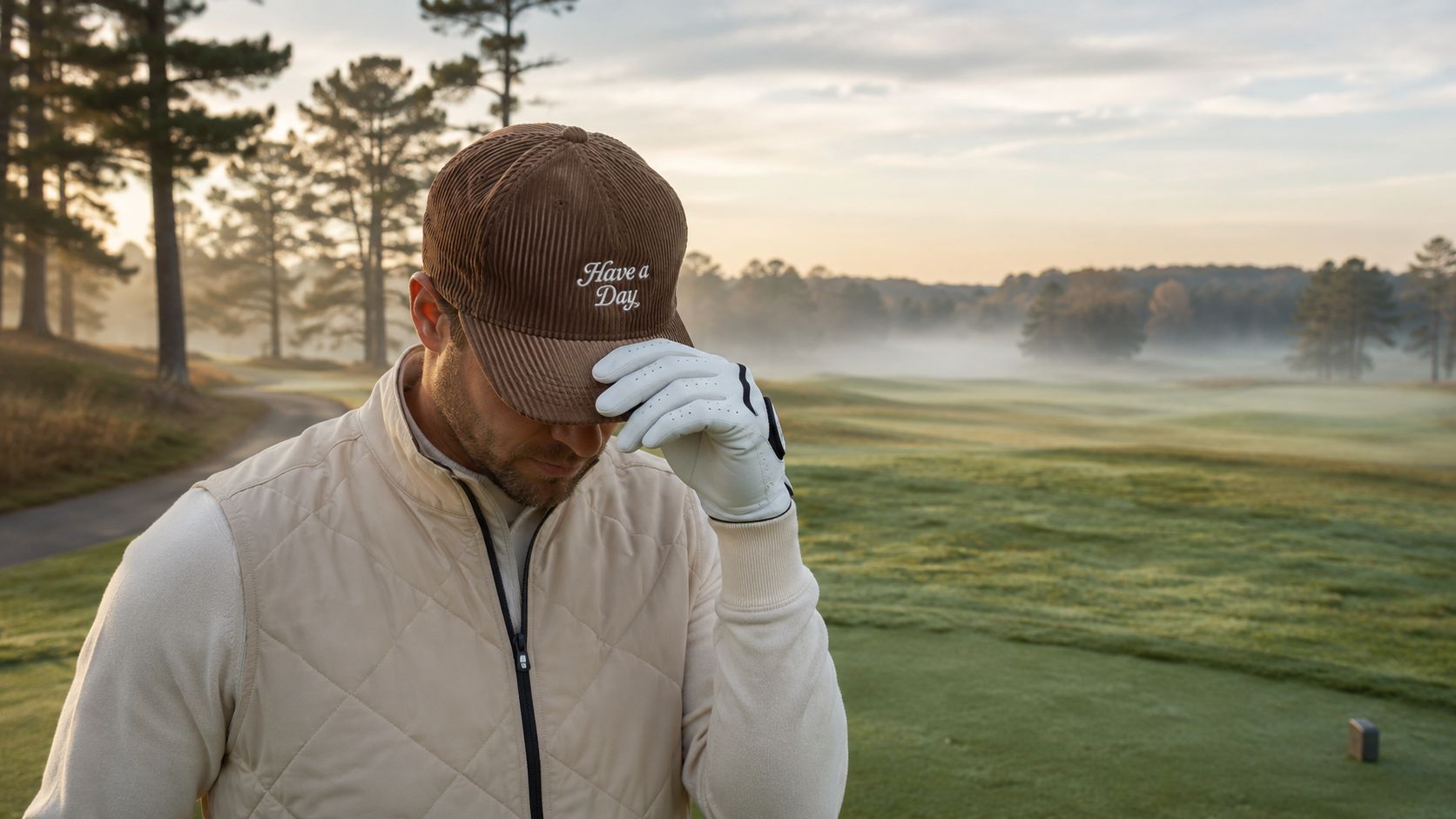
Corduroy gets its signature look from raised vertical ribs called wales. Plain cotton twill has a relatively flat surface, while corduroy gives you channels that catch light and create a soft, tactile finish. Historians trace corduroy's lineage to the Egyptian fabric fustian, with modern corduroy emerging in 18th-century England and becoming widely mass-produced by the late 1800s in Europe and the United States, as documented by TenTree's history of corduroy.
That background helps explain why the fabric still feels connected to durability, warmth, and structure. Corduroy moved from utilitarian workwear into mainstream fashion, then surged again as a counterculture staple in the 1960s and 1970s, giving today's hat a heritage story rather than a disposable trend.
The snapback half of the equation
A snapback usually has a structured crown, a flat or slightly curved brim, and an adjustable plastic closure at the back. The closure lets you fine-tune the fit without guessing at a fixed size, which makes the silhouette practical for shared merchandise, lifestyle collections, and everyday wear.
The cap shape grew out of baseball headwear, whose history reaches back to the 19th century. Historical accounts connect early rounded caps with brims to baseball development, while broader histories place the snapback's major evolution in the 1950s and its major style breakout in the 1980s, according to this history of snapback hats.
If you're drawn to the golf version of this look, you can find your corduroy rope hat for another take on the heritage-sports aesthetic. You can also compare the silhouette with other snapback golf hat styles before deciding whether you prefer a classic front panel or a more relaxed profile.
Understanding Wale Count and Texture
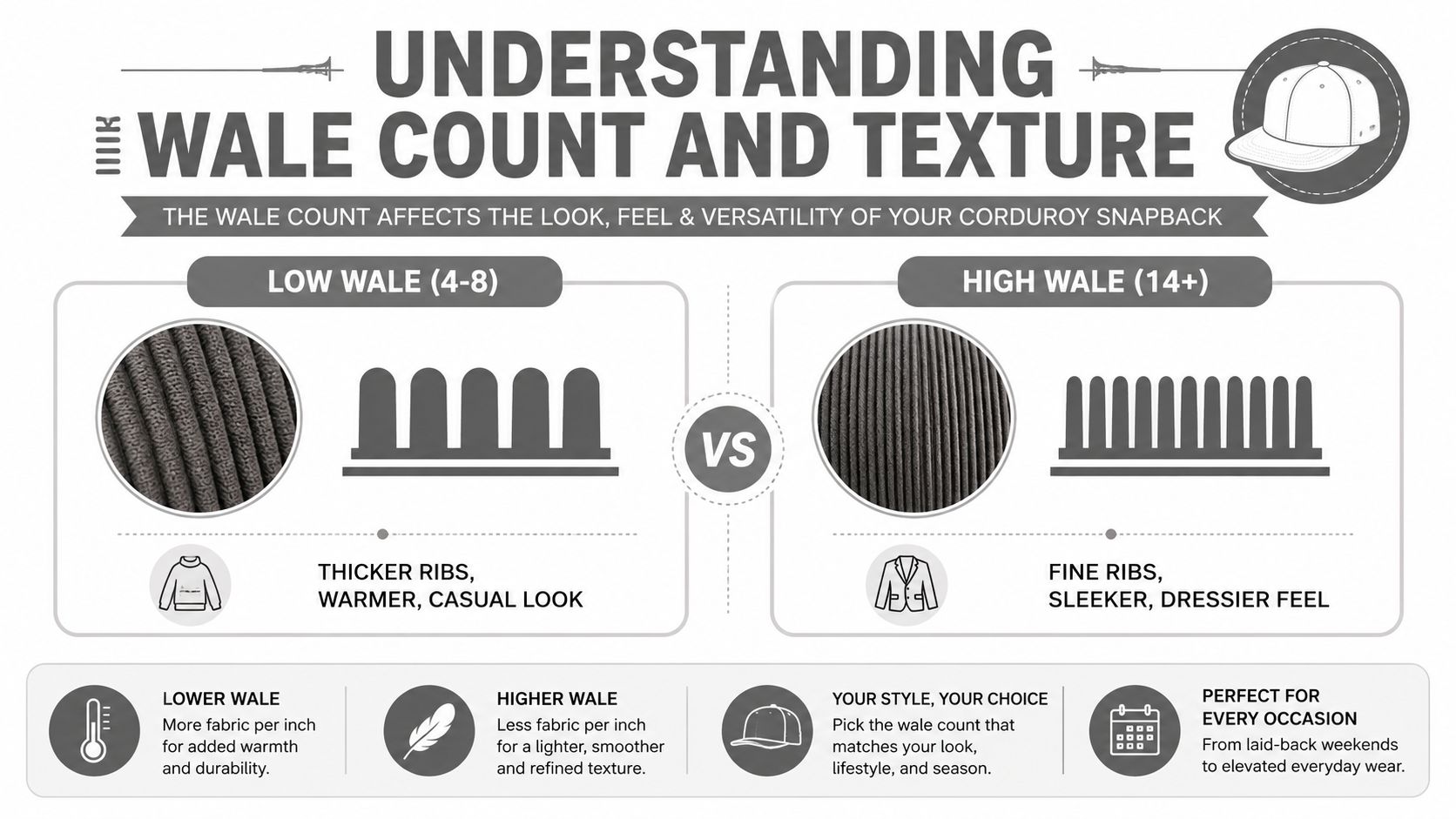
Wale count sounds technical, but the idea is easy. It tells you how many raised ribs appear across one inch of fabric. Fewer wales create wider ridges, while more wales create finer, closer ribs.
Run your thumb across a wide-wale cap and you'll feel something like a ribbed jacket or heavyweight trouser. A fine-wale cap feels closer to brushed velvet. The difference affects the hat's appearance, weight, logo surface, and seasonal usefulness.
Read the ranges from bold to refined
Textile guidance commonly groups corduroy into these practical ranges:
- Wide wale, around 4 to 8 wales per inch: The ribs look pronounced and the fabric tends to feel heavier. This works well when you want the hat to announce its texture.
- Standard wale, around 8 to 14 wales per inch: This gives a balanced surface that suits everyday styling and many decorated cap designs.
- Pinwale, 16 or more wales per inch: The ribs look finer and the material generally feels lighter and less bulky.
Those ranges come from textile guidance on corduroy wale selection. The same guidance links corduroy's ribbed pile structure with durability and abrasion resistance because surface wear gets distributed across the raised ribs rather than sitting on one flat plane.
For a golf-lifestyle hat, standard or fine wale often makes the most versatile choice. Fine ribs give an embroidered logo a cleaner foundation, while standard wale preserves the unmistakable corduroy character without making the crown feel visually oversized. Wide wale can be excellent for a heritage or rustic design, but small lettering may appear less crisp against the deeper channels.
Match texture to the message
Think of wale count as typography. Wide wale is like bold display type. It feels expressive, substantial, and casual. Fine wale is closer to a clean sans-serif. It looks quieter, more refined, and easier to pair with structured layers.
Hand feel matters, too. Two caps with similar wale counts can feel different depending on brushing and finishing. A crisp surface feels more structured, while a softer finish creates a broken-in impression. Texture alone doesn't tell you whether a hat is comfortable, so product photos and fabric descriptions should be read together.
Construction Details That Affect Fit and Shape
The fabric gets attention first, but construction determines whether a corduroy snapback holds its personality after repeated wear. Most snapbacks use a structured six-panel crown, with a stiffened front that stays upright instead of collapsing toward the forehead. That stability is especially useful when the cap carries embroidery or a patch.
A structured front often uses buckram or a similar stiff insert. The insert supports the panel from behind, helping the crown retain its profile and giving stitching a more stable surface. This is why a decorated structured cap usually looks sharper than an unstructured one, particularly when the logo has raised thread or a dense patch.
Compare the core components
| Element | Typical Spec | Why It Matters |
|---|---|---|
| Crown | Structured, six-panel build | Holds the front profile and supports decoration |
| Front support | Buckram or similar stiff insert | Helps reduce panel collapse under logo tension |
| Closure | Adjustable plastic snap | Lets the wearer fine-tune fit across a broad adult range |
| Brim | Flat or slightly curved | Establishes the cap's visual attitude and shade coverage |
| Brim support | Internal insert | Helps the visor retain its shape during wear |
| Fit range | Roughly 6 7/8 to 7 5/8 head circumference | Covers many adult head sizes, as described in this snapback construction guide |
The adjustment window matters because a cap can look perfect from the front and still feel wrong if the closure leaves too much pressure at the back. Set the snap so the crown sits securely without pulling the front panel into a peaked shape. If the hat only feels comfortable at the loosest or tightest setting, try another crown profile rather than forcing the fit.
Structure versus softness
A rigid front suits golf branding, team marks, and crisp embroidery. A softer crown feels more casual and can settle into the wearer's head shape, but it may lose the upright silhouette that defines a traditional snapback.
You can explore the difference between structured and unstructured hat designs when choosing between a course-ready cap and a relaxed weekend option. Neither build is automatically better. The right choice depends on whether you want a clean, refined front or a softer, lived-in feel.
Choosing the Right Corduroy Snapback for Your Needs
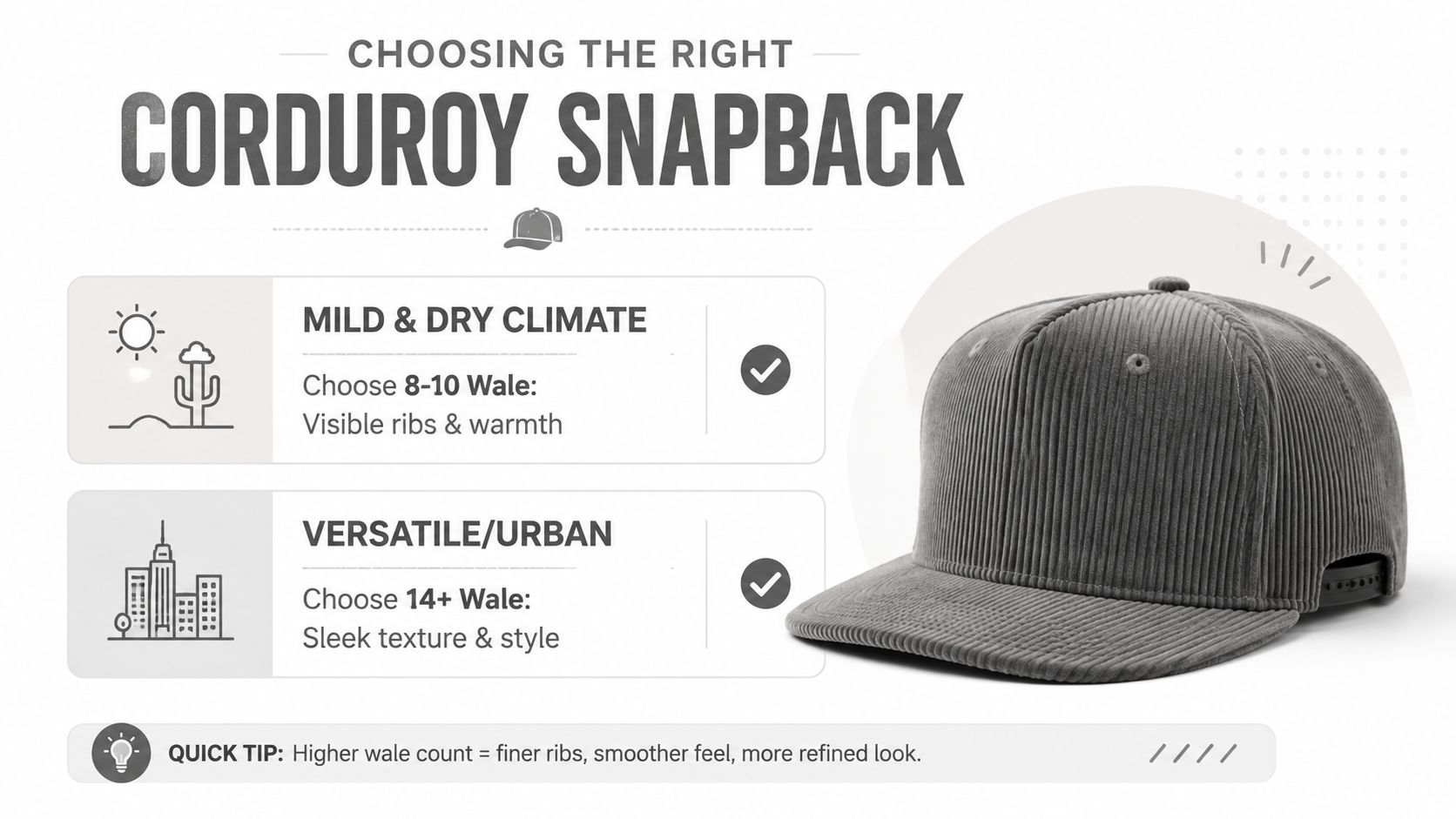
Start with the weather you'll face, not the season shown in a product photo. Corduroy can feel excellent on a cool, dry round, but a thick, tightly finished crown may become uncomfortable in warm humidity. Your best choice balances wale count, structure, ventilation, and intended setting.
For a cap that moves between the course and casual errands, standard wale corduroy offers a useful middle ground. It gives you visible texture without the visual weight of the broadest ribs. Fine wale is a smart direction if you'll wear the hat under jackets or with cleaner smart-casual outfits.
Use this buyer filter
- Cool and dry mornings: Choose a more substantial wale and a structured front if warmth and shape are priorities.
- Mild, changeable conditions: Choose standard wale corduroy with breathable construction and a moderate crown.
- Warm or humid wear: Favor finer corduroy, open ventilation, and a sweatband that manages moisture instead of holding it.
- Course-to-clubhouse styling: Look for a clean front panel, stable brim, and a texture that complements quarter-zips, polos, and neutral trousers.
- Mostly casual use: A softer crown and a less rigid brim can create the broken-in character that works with denim, hoodies, and chore jackets.
Check the fit before the color
The snap closure should leave room for adjustment in both directions. The front panel should sit smoothly against your forehead, and the brim shouldn't tilt upward just because the crown is too shallow. If you can try the hat on, move your head, bend slightly, and check whether the back closure digs into your scalp.
A useful final question is simple: will you wear this hat for the fabric, the fit, or the logo? If the answer is all three, avoid extreme construction choices. A balanced wale, structured front, and comfortable sweatband will usually serve more situations than a dramatically heavy or ultra-soft design.
Styling a Corduroy Snapback on and off the Course
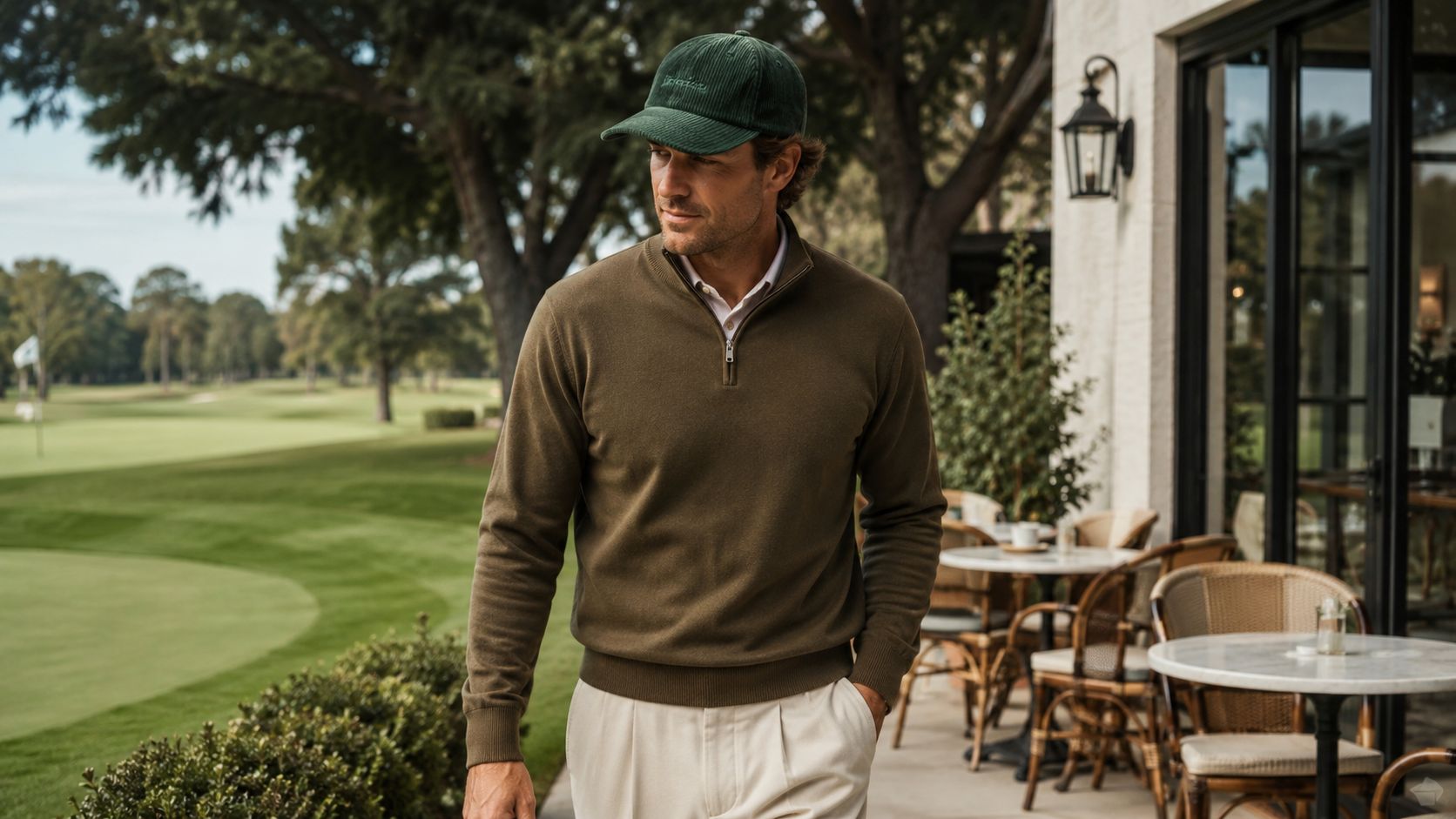
A corduroy snapback works best when the rest of the outfit gives its texture room to speak. On the course, start with one strong color rather than building a complicated palette. Forest green, navy, brown, and muted rust all pair naturally with neutral trousers and understated golf layers.
A practical course combination looks like this:
- Choose the hat first. Let its color establish the outfit's anchor.
- Add a complementary quarter-zip. Earth tones keep the look cohesive without competing with the ribs.
- Use neutral trousers. Stone, charcoal, navy, or subdued khaki give the texture a calm background.
- Finish with simple footwear. Clean golf shoes or leather sneakers keep the outfit from becoming costume-like.
Keep the clubhouse transition easy
The hat can stay on after the round if the rest of the outfit already has a relaxed, polished balance. Swap a technical outer layer for a chore coat, overshirt, or clean quarter-zip, and let the corduroy bridge the athletic and casual parts of the look.
For weekend wear, pair a brown or olive cap with a heavyweight hoodie, raw denim, and leather sneakers. For a sharper dinner outfit, try the same hat with an oxford shirt and chore coat. The contrast works because the cap softens the shirt while the shirt prevents the outfit from feeling too casual.
Avoid texture overload
Corduroy is already a statement surface. Heavily distressed denim, loud checks, and competing ribbed garments can make the outfit look busy. If the hat has a strong shade, keep the outfit close to two main colors. With a muted neutral hat, you can introduce a third color through the quarter-zip, trousers, or footwear.
The brim also changes the mood. A flatter brim feels more streetwear-oriented, while a slight curve makes the cap easier to blend into golf and everyday outfits. Wear the snap closure adjusted neatly rather than leaving excessive slack at the back, since a tidy fit keeps the structured crown looking intentional.
Climate Performance and Honest Tradeoffs
Corduroy's biggest strength, its raised pile, can become its main weakness in unsettled weather. The ribs create more surface texture than flat cotton twill, so the fabric can hold sweat and humidity against the skin. In warm, damp conditions, a corduroy snapback may feel heavier and less airy than a technical cap.
Cotton also doesn't behave like a quick-drying performance fabric. If a sudden shower soaks the crown, the hat can stay damp for a while, and moisture may affect the crown's shape if you toss it into a bag before it dries. Care guidance commonly recommends air-drying corduroy flat because moisture can contribute to shape loss, as noted in this corduroy care guide.
Treat warmth as a seasonal feature
On a cool morning, the fabric's warmth feels comfortable. Later, when the sun rises and activity increases, that same insulation can feel excessive. A heavier lining or closed eyelet design may add coziness, but it can reduce airflow during active wear. Product-level experimentation with wale thickness, crown structure, brim shape, and lining makes the specification worth checking rather than assuming every corduroy cap performs the same way, as illustrated by this corduroy snapback product example.
Practical rule: Use corduroy for cool, dry rounds and casual transitions. Keep a lightweight technical cap available when humidity, heat, or rain is likely.
Storage matters as much as fabric choice. Don't crush the hat under clubs or clothing, since flattened ribs and a distorted front panel can be difficult to restore. Keep it on a form, shelf, or hook where the crown can retain its shape, and consider a light water-repellent treatment for dew or brief drizzle after checking that the product is safe for the fabric.
Corduroy isn't a poor golf material. It's a specialist material. It delivers texture, warmth, and visual character, but it asks you to choose the conditions thoughtfully.
Care and Maintenance That Actually Works
Start with dry cleaning at home. Use a soft-bristle brush and move in the direction of the wales, lifting dust without crushing the raised surface. Brushing against the ribs can roughen the nap and make one area look lighter than the rest.
For a small mark, mix a mild detergent with water and test the solution on a hidden area first. Dab the stain with a clean cloth rather than scrubbing it, then blot away moisture with a microfiber towel. Rubbing can spread pigment and flatten the pile, especially on darker dyed corduroy.
Dry the crown with patience
Moisture is when reshaping becomes important. Place the damp hat over a ball, rounded form, or clean cap insert so the crown keeps its intended profile while it dries. Lay it flat in a well-ventilated area away from direct sunlight, which helps limit fading and prevents uneven drying.
Don't use a hot dryer or radiator. Rapid heat can distort the brim insert, shrink the fabric unevenly, or leave the front panel looking permanently tired. A little patience protects both the corduroy and the structure beneath it.
Store it like a shaped garment
Keep the cap on a hook, shelf, or inside a breathable dust bag. Avoid sealing a damp hat in a plastic container, and don't bury it in a gym bag where embroidery and the snap closure can bend under pressure.
A seasonal check should include:
- Brush the crown: Remove dust before storing.
- Refresh the sweatband: Spot-clean buildup rather than soaking the entire hat.
- Inspect the snap: Replace the hat if the closure no longer holds securely.
- Check the front panel: Retire it when the structure stays collapsed or the embroidery has warped.
For a more detailed cleaning routine, follow this guide on how to clean golf hats. A well-chosen corduroy snapback should look better with regular wear, but only if you protect its shape, keep moisture under control, and match it to the right climate.
2ndShotMVP offers premium golf hats, beanies, and lifestyle apparel with fun designs inspired by the game, made for wear on and off the course. Visit 2ndShotMVP to find a corduroy-friendly golf look that fits your wardrobe, your next tee time, and your 19th-hole plans.

