

You're standing on a sunny par 3, squinting into the light, and your cap already feels like a small greenhouse. Your forehead is damp. Your hair is mashed flat. You start wondering whether that old-school visor look, the one you used to associate with grainy tournament photos and club patio legends, might be the smarter play.
That's why retro golf visors matter again in 2026. They aren't just a wink to the past. They solve a real on-course problem. You get shade over the eyes, more airflow over the scalp, and a shape that still looks sharp when the round turns into a drink, lunch, or a slow recap on the clubhouse deck. The surprise isn't that they're back. The surprise is how practical they feel once you wear one for a hot round.
Why Retro Golf Visors Are Back on the Tee Sheet
A lot of golfers come back to visors the same way. Not because they planned a style statement, but because a summer round got uncomfortable enough to make them rethink the usual cap.
You feel it most on humid days. A structured hat can start the round feeling tidy and finish it feeling heavy, warm, and slightly annoying. A retro visor changes that equation. It leaves the crown open, keeps the brim doing the useful work, and dials the whole look away from “sponsor tent giveaway” and toward “I know exactly what I'm wearing.”
Why the comeback feels different now
The current return of retro golf visors doesn't feel like costume nostalgia. It feels like golfers finally asking a better question: what headwear helps me play and stay comfortable?
That shift matters because the visor sits in a sweet spot:
- It shades what needs shading most. Your face and eyes get the benefit of the brim.
- It vents where caps often trap heat. The open top is the whole point.
- It carries into the 19th hole better than many technical hats. A good retro visor has personality without trying too hard.
Practical rule: If your main complaints are forehead sweat, flattened hair, and heat buildup, a visor is worth trying before you buy another closed cap.
There's also a style reason. Modern golf fashion has gotten more relaxed about mixing performance with heritage. That opens the door for pieces that look old but wear well now. A retro visor fits that mood. It can look crisp with a tucked polo or casual with shorts and sunglasses after the round.
Some golfers will still prefer a cap, and that's fair. But more players are realizing a visor isn't just a novelty. It's a tool with a point of view.
What Actually Makes a Visor Retro
Not every visor with a curved brim deserves the “retro” label. Plenty of modern athletic visors use lightweight synthetic builds, oversized logos, and sharp technical lines. A true retro version looks softer, simpler, and more rooted in golf's style eras.
Start with the brim and crown
The first clue is the brim shape. Retro golf visors usually lean one of three ways:
- Flat and boxy. This nods to the early Arnold Palmer era.
- Pre-curved. Common in later tour styles and easier for everyday wear.
- Shorter-looking front profile. Not tiny, just less exaggerated than many modern sun visors.
Then look at the open crown. Retro visors tend to sit lower and cleaner around the head. Some have a slightly raised front, but they usually avoid the highly sculpted, sporty architecture you see in running or tennis gear.
Small details separate vintage from “vintage-inspired”
A lot of people get tripped up. Color alone doesn't make a visor retro. Design language does.
Look for details like these:
- Contrast piping along the seam. That thin line instantly says 1970s and 1980s golf.
- Script or shield-style embroidery instead of giant modern branding.
- Terry cloth or cotton twill rather than mesh-heavy performance construction.
- Cloth-covered or understated adjusters instead of bulky plastic closures.
- Tonal stitching and grosgrain-style sweatband touches that feel finished rather than flashy.
If you like seeing how vintage details are showing up across clothing more broadly, this guide to explore vintage fashion 2025 trends gives useful context beyond golf.
Three easy era cues
A quick way to identify the vibe:
-
1960s look
Think flatter brim, cleaner face, less decoration. -
1970s tour look
Piped edges, clubby colors, a little more presence. -
1980s script-logo look
Bolder embroidery, slightly punchier styling, still unmistakably golf.
The easiest test is simple. If it looks like a performance visor in a retro colorway, it probably isn't truly retro.
That distinction matters because the charm of retro golf visors comes from proportion and finish, not just age-coded colors.
The History Behind the Look
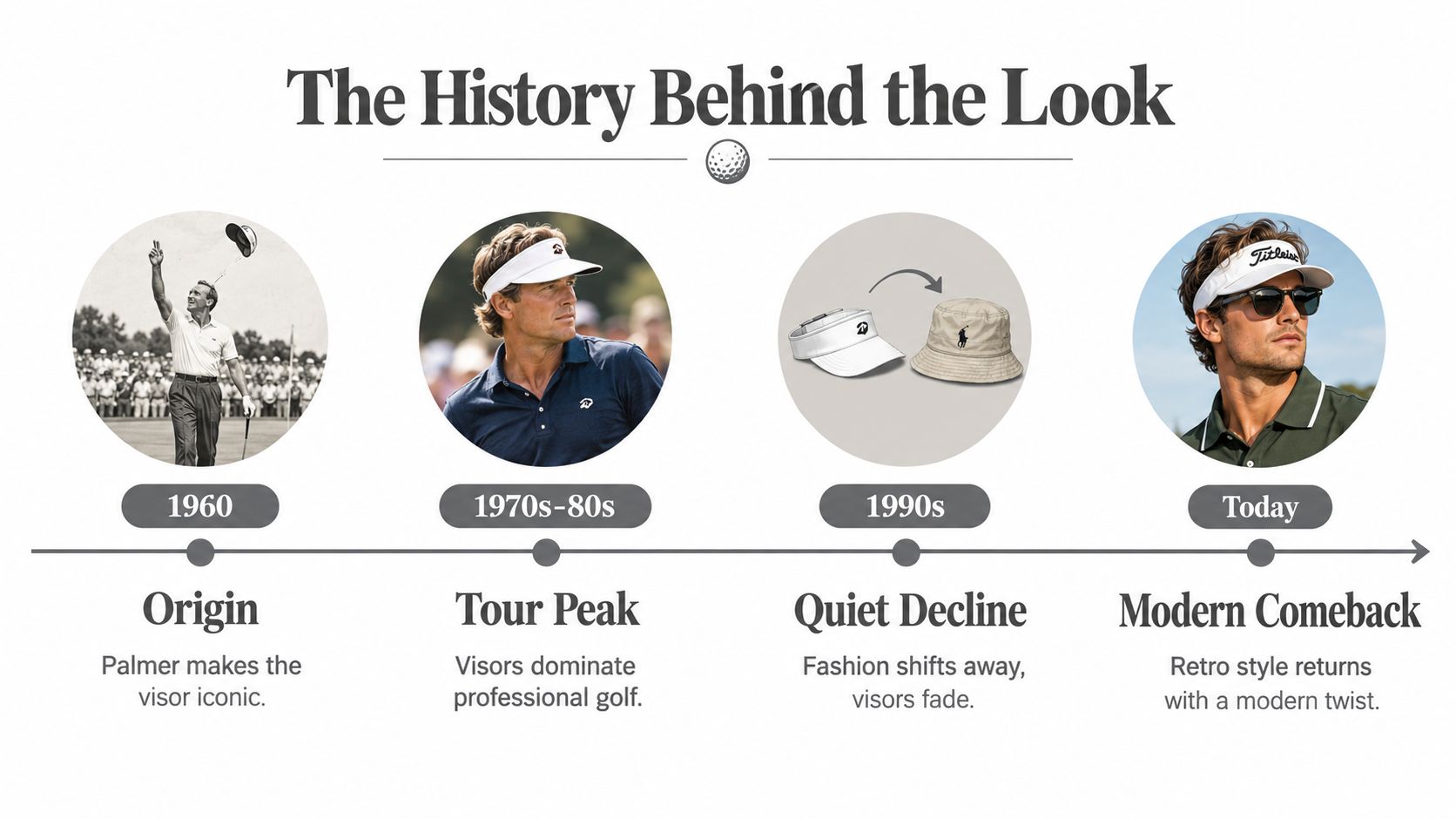
Retro golf visors didn't become iconic by accident. They earned that place through one part competition, one part television, and one very famous moment.
A foundational milestone came at the 1960 U.S. Open at Cherry Hills Country Club, where Arnold Palmer's visor toss after winning became a lasting image in golf style culture, helping push the visor into the game's visual identity, as noted by Imperial's history of the golf visor.
From signature look to golf uniform
After that breakthrough, visors became tied to golf through the 1970s and 1980s. They weren't niche. They were a recognizable part of the sport's style language. If you picture classic country-club golf, there's a good chance a contrast-piped visor shows up in your mind before anything else.
That long run gave retro golf visors their staying power. They weren't an odd side branch of golf fashion. For a while, they were close to standard issue.
Why they faded
Then golf style changed. Structured baseball-cap shapes got louder, logos got bigger, and the broader sportswear world started favoring full-crown headwear. The visor didn't disappear, but it lost status.
A useful snapshot comes from a Golf Digest analysis of headwear trends among elite players. It found visors reached their high point among top players in the early 1990s, then dropped sharply by the mid-2000s. The same analysis noted Phil Mickelson and Vijay Singh as prominent visor wearers during that transition, Luke Donald as the last visor-wearing World No. 1, and by 2023 there were no visor loyalists inside the top 20 of the OWGR at the start of the year.
That's the interesting part of the comeback. Retro golf visors returned after falling out of elite-player uniform status. They came back because golfers still liked what they do, and because the style started to feel distinctive again.
Why Visors Work So Well in the Heat
The best argument for a retro visor isn't fashion. It's thermodynamics.
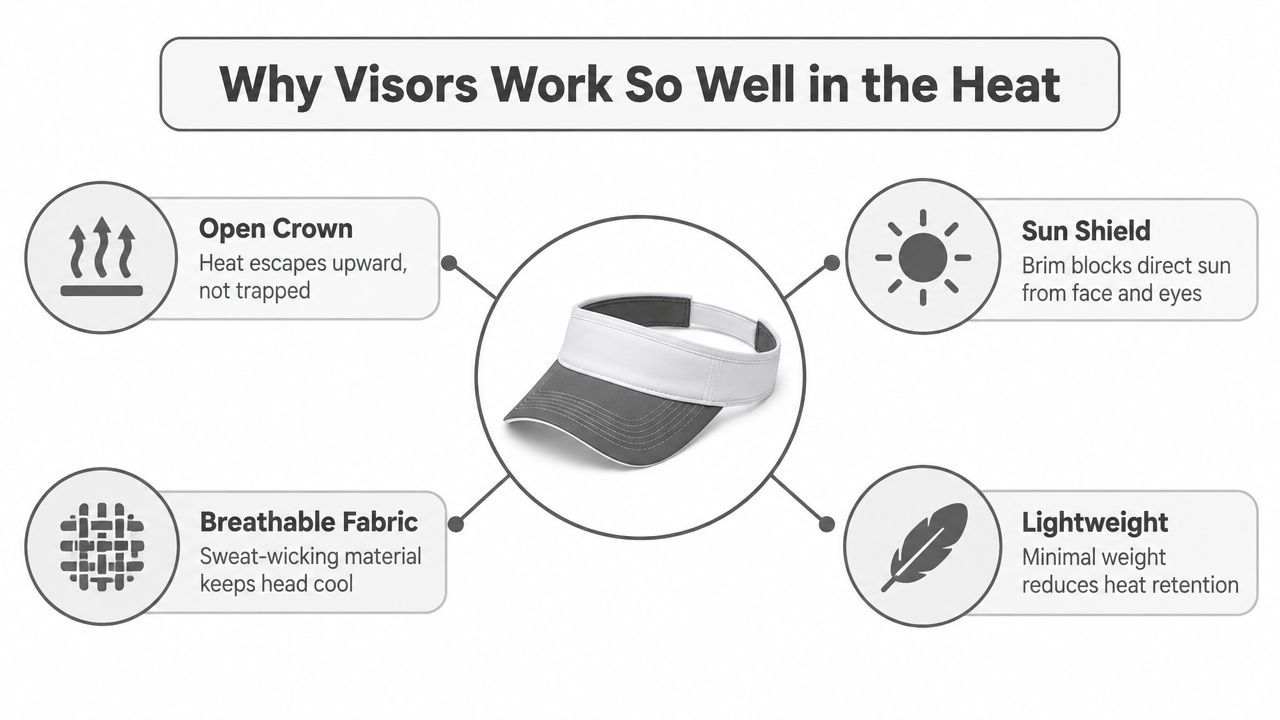
A visor leaves the top of your head open. That sounds obvious, but on a hot round it changes how the whole thing feels. Guidance on visors for hot climates notes that the open-crown design preserves convective airflow across the scalp while the brim blocks direct solar radiation from the face and eyes, which is why visors can feel cooler than full caps in sunny conditions, especially when they use moisture-wicking materials such as polyester or nylon in the sweatband and crown areas, as explained in this guide to headwear for hot climates.
Four reasons they feel better on steamy days
Here's the practical version.
- Heat escapes upward. A closed cap covers the scalp. A visor doesn't. Less trapped heat usually means less of that stuffy feeling by the back nine.
- The brim still does the important work. You get shade over the face and eyes without wrapping your whole head.
- Sweat is easier to manage. A good sweatband helps move moisture away from the brow so it doesn't drip into your line on a putt.
- The build is lighter. Many retro-style visors skip the bulk and stiffness that make some tour-style caps feel hot.
What to check on the label
Sun protection depends on fabric construction, not just silhouette. According to guidance on golf visor fabrics, UPF 50+ blocks at least 98% of UV rays, and tighter weaves, denser structures, and darker colors improve protection by reducing UV penetration, which makes a UPF-rated visor a more meaningful choice than a decorative cotton piece alone for long days outside, as covered in this article on golf visor sun protection.
That means a smart summer visor check looks like this:
- UPF-rated fabric
- Structured brim
- Sweatband that wicks or absorbs well
- Material that doesn't feel swampy after nine holes
If you're comparing options for high-temperature rounds, this roundup of best hats for hot weather helps frame the tradeoffs between visors and other lightweight headwear.
A visor won't cover your scalp. It will often feel cooler anyway. That's the trade a lot of summer golfers actually want.
Retro Visor vs Modern Cap
This isn't a battle where one side wins every category. It's more like choosing between a 7-iron and a hybrid. The right pick depends on the day, the weather, and what bugs you most during a round.
Head-to-head on the things golfers actually notice
| Category | Retro Visor | Modern Cap |
|---|---|---|
| Sun protection | Shades the face and eyes well, but leaves the crown exposed | Covers face and crown, usually better for all-around coverage |
| Sweat management | Can feel drier because heat escapes and the band sits directly on the brow | Contains sweat well, but some caps feel hotter as the round drags on |
| Heat tolerance | Usually better in hot, sunny, humid conditions | Often better in mixed weather or when full coverage matters |
| Hair impact | Less flattening and less trapped heat on top | More likely to mash hair and hold warmth |
| 19th-hole style | Relaxed, heritage-leaning, conversational | Familiar, sporty, easy, but sometimes generic |
Where each one makes more sense
A modern cap earns its keep in wind, light rain, and situations where you want scalp coverage. It's the safer all-conditions choice.
A retro visor shines when heat is the problem you're solving. It also works for golfers who hate taking off a cap after the round and seeing a flattened hairline that looks like they've been wearing a helmet.
There's also the style question. A good visor reads more intentional because fewer golfers wear one well. That can be a plus if you like classic golf fashion without going full throwback. The same way eyewear works best when protection and personality meet, this piece on blending safety with fashion eyewear captures a similar balance.
If you play muggy inland golf and head straight to a patio afterward, the visor can be the more useful piece. If you play breezy coastal golf, the cap still has an edge.
How to Wear a Retro Golf Visor On and Off the Course
Fit comes first. A retro visor should sit snug just above the ears without pinching, and the brim should cast shade over your brow instead of floating too high. If it feels loose at address, you'll fiddle with it all day. If it's too tight, the forehead line gets uncomfortable fast.

On-course fit that actually works
A few small adjustments make a big difference:
- Keep the brim level with your brow line. Tilting it up may look playful in a mirror, but it weakens the shade where you want it most.
- Use the adjuster for stability, not pressure. You want secure contact, not a headache by the turn.
- Match the visor to the shirt's mood. Clean solids look tidy. Piping and script embroidery add more personality.
For a quieter retro look, pair a cotton twill visor with a solid polo and fitted shorts. For a louder 1980s feel, use one with contrast piping and a striped or pastel shirt. Both work, but they send different signals.
Off-course styling without looking like you forgot to change
A retro visor doesn't need a full costume around it. Treat it like a casual heritage accessory.
Try combinations like:
- Chino shorts and a button-down for lunch after the round
- A knit polo and sunglasses for range sessions or patio afternoons
- Simple neutral colors if you want the visor shape to stand out without shouting
A quick visual helps if you want to see how brim position and overall outfit balance come together:
One useful rule: if the visor is bold, keep the rest of the outfit clean. If the visor is understated, you can let the shirt or shorts do more of the talking.
Caring for Your Retro Visor So It Lasts
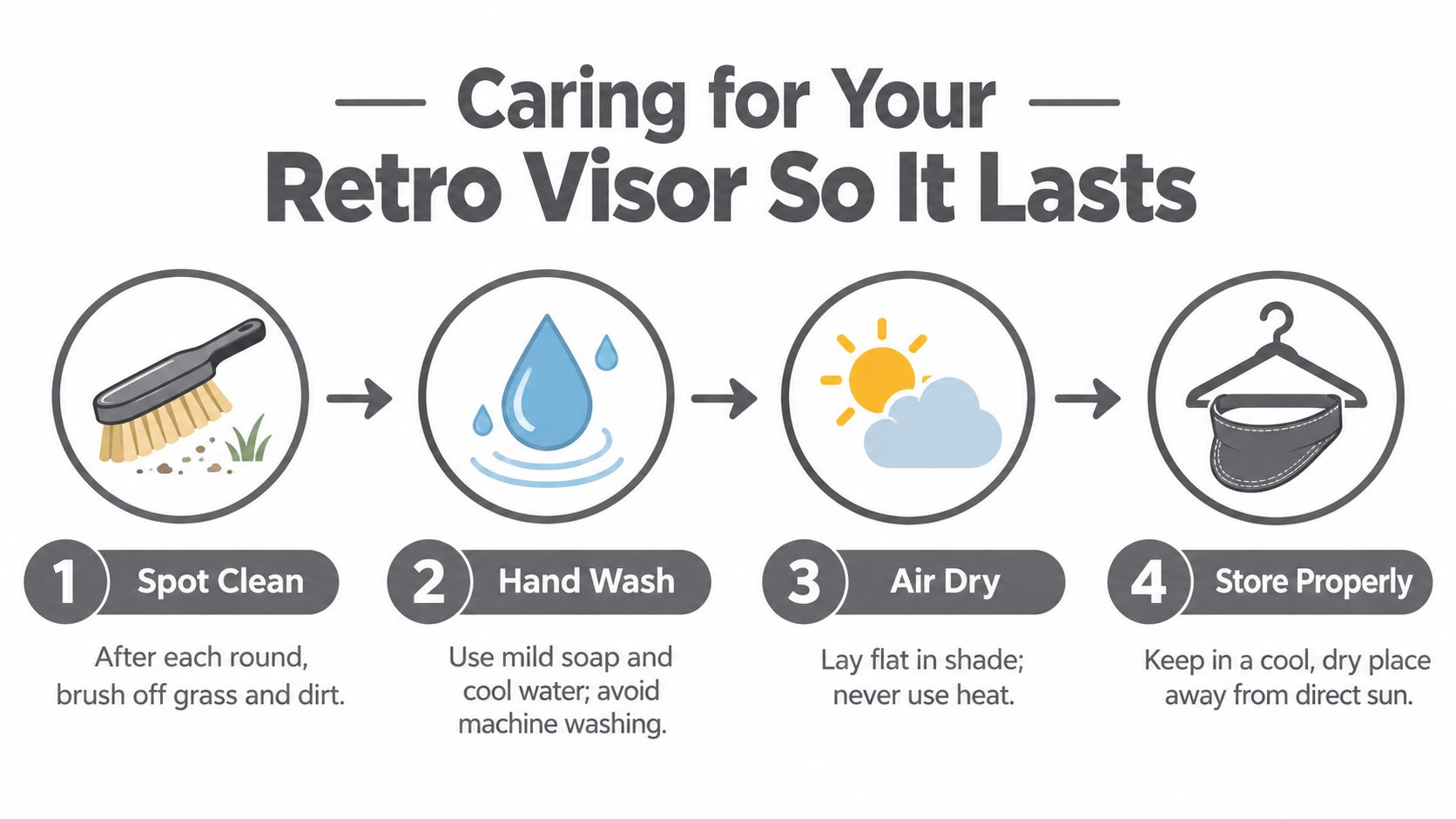
Retro visors age well if you don't treat them like a range towel. Most damage comes from sweat buildup, careless storage, or over-cleaning the brim until it loses shape.
The easy post-round routine
Start simple after each round.
- Brush off debris. Grass, dust, and cart grime collect along the brim edge.
- Spot clean the headband. Use mild soap and a small amount of water, not a full soak.
- Let it air out overnight. Don't trap a damp visor in the car or golf bag.
Those three habits do most of the work. They keep sweat from setting in and help the band stay fresher between rounds.
What to do when it needs more help
Salt marks and shape issues need a gentler hand than most golfers expect.
Don't crank a retro visor through a machine wash and hope for the best. The brim and band can lose their structure fast.
For stubborn sweat lines, a little baking soda on the dry band can help lift residue before brushing it away. If the brim starts curling oddly, use light steam and patient finger pressure, then hold the shape until it cools.
Storage matters too. Lay the visor flat or set it crown-up on a shelf so nothing crushes the brim. If you want a fuller cleaning walkthrough, this guide on how to clean golf hats is useful for preserving shape and fabric.
The goal isn't to baby it. The goal is to keep it from turning into a sweat-stained pancake by midsummer.
Choosing the Right Retro Golf Visor for You
The fastest way to choose well is to stop thinking about “cool” first and think about use case. A visor that looks right but slips, pinches, or offers weak shade won't stay in your rotation.
A five-point checklist that works in the shop
1. Fit
Put it on and pay attention to the band immediately. It should sit securely without pressing too hard above the ears. If you already know you hate readjusting headwear during a round, skip anything that feels even slightly unstable.
2. Brim shape
Look for a brim that shades your eyes comfortably without feeling oversized when you turn your head. Pre-curved brims tend to be the easiest everyday option because they look classic and require less fuss.
3. Fabric
Choose material based on climate and use. Cotton twill gives you that heritage feel. Performance blends make more sense if your rounds are consistently hot and sweaty. If the label includes UPF 50+, that's worth prioritizing for long outdoor wear.
Then check the parts golfers usually ignore
4. Sweatband quality
This is one of the biggest separators between a visor you wear often and one that lives in a closet. Terry cloth feels familiar and classic. Moisture-wicking knit usually feels cleaner in heavy heat. Neither is automatically better. It depends on whether you want softness or faster drying.
5. Style details
Piping, a crest, tonal embroidery, or a script logo can make a visor feel vintage without veering into novelty. If every design detail is loud, the visor gets harder to wear with the rest of your closet.
A neutral source on golf headwear trends points to a clear gap in buyer guidance: golfers often get sold the nostalgia story without enough help on comfort, sun tradeoffs, and actual use cases. That same market snapshot notes search interest for caps is still much higher than visors, while one retail tracker reported a 316.3% six-month jump in visor interest with a June seasonal peak in a recent 2026 trend snapshot, suggesting renewed demand that buyers still need help interpreting, as discussed in this overview of golf caps and visor trends.
That's why it helps to compare your final two choices against a polo you already wear often. If one visor clearly works with your existing kit, that's usually the right answer. If you want a product-focused starting point, 2ndShotMVP's own overview of the golf visor hat gives you one more way to think through fit and style before you buy.
One body option that fits this category directly is the visor selection from 2ndShotMVP, including models such as Golf Visors MVP - USA and Alabama - MVP Visor, which place the visor in the same on-course/off-course lane discussed here.
If you want headwear that earns a spot in your warm-weather rotation, 2ndShotMVP offers golf visors, hats, and lifestyle pieces built for golfers who care about both comfort and personality. It's a useful place to browse if you want something you can wear for the front nine, the back nine, and the 19th hole without changing your whole look.

