

You're halfway through a July round when the heat starts collecting under your cap. Sweat runs into your eyes, the sun flashes off a par-3 green, and your hair feels flattened every time you remove your headwear. A golf visor hat looks like the obvious fix: shade over the eyes, open air above the head, and room for a ponytail or bun.
That instinct is partly right. A visor can be cooler and more comfortable than a cap, but it also leaves the crown and scalp exposed. The useful question isn't whether visors look good. It's which golfers benefit from one, what protection it provides, and when a cap or wider-brim hat makes more sense.
What a Golf Visor Hat Is and Why Golfers Wear One
A golf visor hat is a brim with a sweatband and adjustable or fitted band, but no fabric crown covering the top of the head. That open crown creates the central difference between a visor and a traditional golf cap. The brim shades the eyes and upper face, while air can move freely over the hair and scalp.
That design solves several small problems that become noticeable during a long round. The brim reduces direct glare during tee shots, approach shots, and putts. The sweatband catches perspiration before it reaches your eyes. The open top also works well for golfers with thick hair, a ponytail, or an updo that feels cramped beneath a structured cap.
Why the open crown feels cooler
A cap traps some heat around the crown. A visor doesn't create that enclosed space, so it can feel less stuffy in humid weather or during a warm walking round. The difference won't make the sun disappear, but it can make the headwear itself less irritating when your main complaint is sweat and heat.
A visor also avoids the flattened-hair effect. You can tie a ponytail through the rear opening, keep a bun above the band, or leave longer hair loose without forcing it beneath a crown. That's a comfort and styling advantage, not a complete sun-protection solution.
Practical rule: Choose a visor when your priority is shade over the eyes and airflow over the crown, not full head coverage.
Visor versus cap
A traditional cap covers the crown and scalp, which gives it an important advantage in direct overhead sun. A visor gives up that coverage in exchange for ventilation, a lighter feel, and more flexibility for hairstyles.
The brim still matters in both designs. A poorly fitted visor can shift during the downswing, while a cap can press against the forehead or trap sweat. Whichever style you choose, the headwear should stay stable without creating pressure points.
The Tour History of the Golf Visor Hat
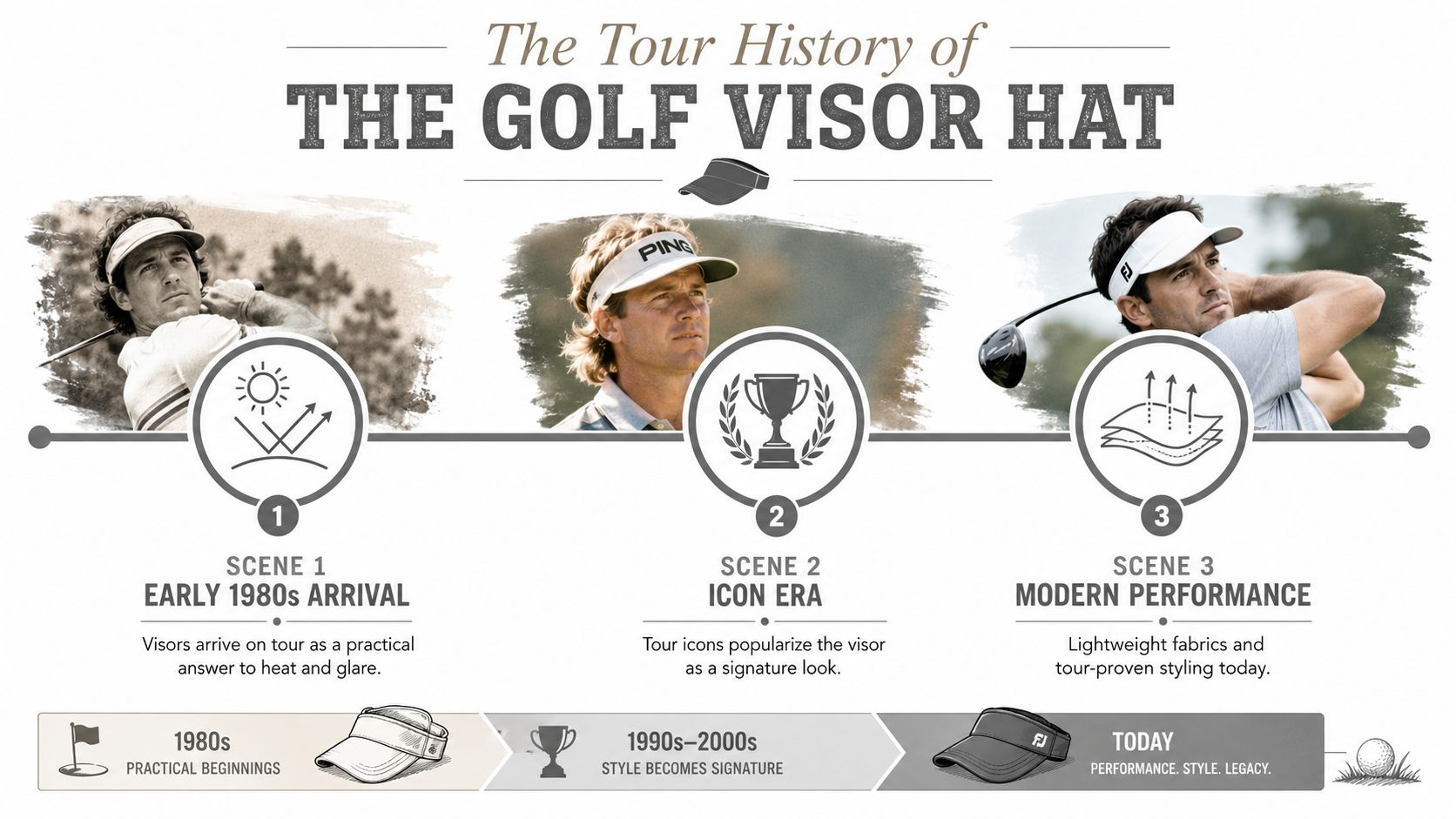
The golf visor's tour identity grew through memorable players and televised moments. Arnold Palmer famously wore and tossed a visor after winning the 1960 U.S. Open, a scene many accounts identify as the style's breakthrough in golf culture. The gesture connected the visor with competitive confidence, personality, and the relaxed charisma Palmer brought to the course.
Later Masters milestones strengthened that association. Raymond Floyd wore a visor at the 1976 Masters, while Larry Mize and Sandy Lyle wore visors during their Masters wins in 1987 and 1988. Fred Couples then won the 1992 Masters in a visor, giving the style another highly visible major-championship moment. These examples are documented in Imperial's history of the golf visor.
From signature look to tour uniform
Seve Ballesteros kept the style distinctive with a customized visor during his 1986 Masters round. Phil Mickelson and Vijay Singh also helped keep the visor visible on the PGA Tour during periods when it remained a recognizable alternative to the full cap.
The look reached its strongest tour presence in the early 1990s. A data-driven Golf Digest analysis of PGA Tour headwear says visors then outnumbered other forms of headwear among elite players. As logoed sponsorship arrangements expanded in the early 2000s, hats began overtaking visors, and the style gradually became less dominant.
That decline continued into the modern era. Bubba Watson was the last visor purist to begin a year inside the OWGR top 20 in 2017, Louis Oosthuizen was counted as a visor swing vote in 2022, and no visor loyalists were inside the top 20 to start 2023. The story isn't that visors stopped working. It shows how sponsorship, fashion, and performance culture can change what viewers see on leaderboards.
Types and Materials Used in Modern Golf Visors
Shopping for a visor becomes easier when you separate shape, fabric, and closure. A traditional curved-brim visor has a familiar golf profile and works for players who want a softer, classic look. A wider flat-brim performance visor creates a more contemporary silhouette and can offer broader forward shade, though its visual edge may feel more noticeable in peripheral vision.
Athletic sweatband styles focus on moisture management. They often use lightweight synthetic fabric, perforated panels, or mesh to keep air moving around the band. Fashion-led lifestyle visors may use more structured woven fabric, decorative trim, or a cleaner, less technical finish. They can work for casual wear, but you'll still want to check the sweatband before using one for a hot round.
| Visor Type | Common Fabrics | Brim Width | Best For |
|---|---|---|---|
| Traditional curved brim | Polyester, cotton blends | Standard curved profile | Classic course styling and everyday play |
| Wide flat brim performance | Woven polyester, technical knits | Wider forward coverage | Bright conditions and modern athletic looks |
| Athletic sweatband style | Polyester mesh, moisture-wicking knits | Light to moderate coverage | Humidity, walking rounds, and high perspiration |
| Lifestyle visor | Cotton blends, woven twill, structured polyester | Varies by design | Casual wear and lower-intensity use |
Fabric choices that change the feel
Polyester mesh prioritizes airflow and low weight. It's a sensible choice for humid conditions, especially when the visor's open crown already encourages ventilation. Polyester-cotton blends feel softer and can look less technical, but they may hold moisture longer than performance fabric.
Performance knits with stretch can create a comfortable band that conforms to the head. Woven polyester twill gives the brim and front band more structure, which suits golfers who prefer a crisp silhouette. Fabric labels won't tell the whole story, so check the inside band and the brim's flexibility as well.
Closures also matter. Hook-and-loop tabs adjust easily over hair, snap systems offer quick incremental changes, stretch bands create a clean rear profile, and fitted sizing can feel secure when the measurement is right. For a broader overview of headwear silhouettes, compare these types of golf hats before choosing between a visor and a cap.
How Fit, Brim, and Fabrics Drive Performance
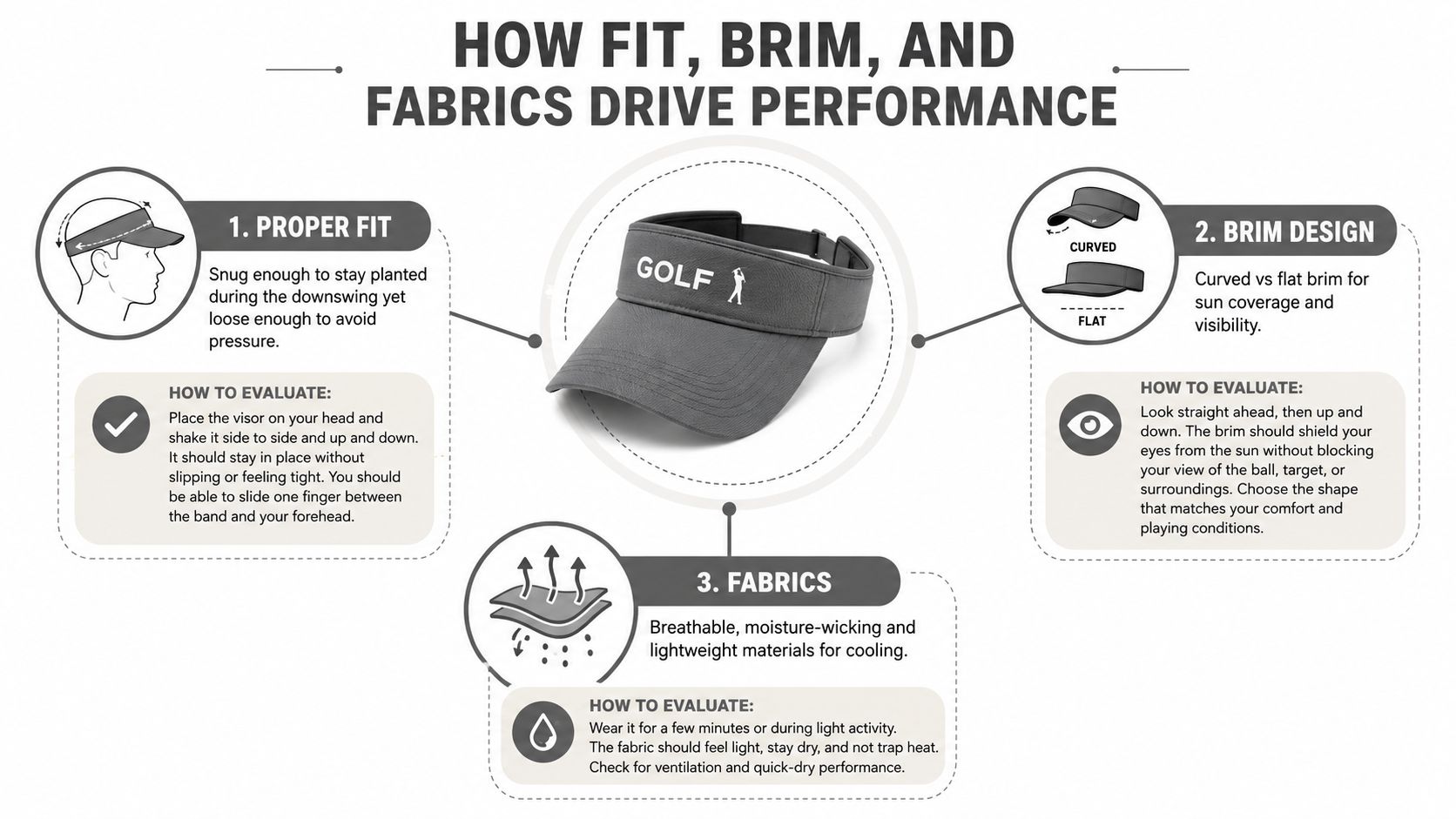
A visor should feel secure before you swing. Put it on, turn your head quickly, and make a slow practice motion. If the band slides toward your eyebrows or the brim lifts in the back, the fit will probably become distracting during a full round.
The ideal tension is snug without pressure at the temples. An adjustable closure should hold its setting after repeated movement, but it shouldn't dig into your head or pull your hair. A soft sweatband can improve comfort by absorbing moisture and reducing friction against the forehead.
Brim geometry and visibility
A pre-curved brim naturally follows the face and can feel less intrusive when you're looking down at a ball. A flatter brim creates a sharper visual line and may offer a broader forward shield, but some golfers notice its corners more when scanning the course.
Brim width is a practical specification, not just a style detail. Guidance for golf visors commonly recommends approximately 2.5 to 3 or more inches for shading the face, ears, and part of the neck, as described in MUJI's breathable visor guidance. A narrow brim can still cut glare, but it won't reach as far around the sides of the face.
What UPF actually tells you
UPF measures the protection provided by the fabric, not the protection provided by the entire hat. A certified UPF 50+ fabric blocks at least 98% of UVA and UVB rays, while UPF 30 blocks about 96.7%, according to this golf visor sun-protection guide. The exposed scalp doesn't receive the fabric's rating, so a highly rated brim can't make an open-crown visor equivalent to a covered cap.
Look for breathable, moisture-wicking polyester or nylon when you sweat heavily. Then test the visor with your actual posture. Bend toward a ball, look toward the horizon, and check whether the brim shades your eyes without blocking too much of your view.
Styling a Golf Visor Hat On and Off the Course
A visor works best when you treat it as a deliberate part of the outfit, not as a cap with the crown removed. On the course, a navy or charcoal visor with a tucked polo and well-fitted shorts creates a clean, tournament-ready combination. The low-contrast color keeps the headwear polished while letting the shirt or shoes provide the visual interest.
For a softer summer look, match a pastel visor to one color in a patterned skort or golf shirt. This approach makes the outfit feel coordinated without requiring every piece to match exactly. White, stone, and light gray can brighten a warm-weather outfit, while darker crowns create a more defined, clean frame around the face.
One strong styling rule
Let the visor be the loudest piece, or pull its color from a print already in the outfit. Don't do both. A bold logo, bright pattern, and contrasting shirt can make the headwear compete with the rest of the look instead of completing it.
Hair changes the equation, too. A ponytail, braid, or bun can sit naturally through or above the rear opening, which gives a visor a clear advantage for golfers who dislike flattened hair. You can also position the band slightly higher or lower, provided the brim still shades the eyes and the visor stays stable during the swing.
Beyond the course
Off the course, a crisp visor pairs naturally with linen trousers and a button-down for a casual dinner. For travel or errands, try one with leggings and a breezy tank, especially if you want your hair tied back without wearing a full cap.
That crossover makes the visor useful in warm climates year-round and a seasonal accessory elsewhere. Choose performance fabric for active days, and reserve softer cotton blends or structured twill for settings where ventilation and sweat control matter less.
Sun Protection Trade-offs Most Buyers Miss
A sunny tee time can expose a weakness that style discussions often skip. A visor shades the forehead and eyes, but its open crown leaves the scalp, hair part, and top of the head in direct ultraviolet radiation.
A controlled UV study found that no hat style reached 100% protection at any facial skin zone, and diffuse UVR reduced protection regardless of hat style. It also found that an unprotected face could receive 2.5 times higher UVR doses in summer midday than winter midday; the findings appear in the PubMed study record. A visor provides useful shade, yet it works best as one part of your sun protection rather than the whole plan.
| Headwear Type | Forehead/Eyes | Ears/Upper Neck | Crown/Scalp | Best For |
|---|---|---|---|---|
| Golf visor | Good forward shade | Limited, depending on brim | Exposed | Cooler feel, hairstyles, and glare reduction |
| Traditional cap | Good forward shade | Limited to moderate | Covered | General play when crown coverage matters |
| Bucket or wider-brim hat | Broad shade | Better side coverage | Covered | Strong sun, long rounds, and coverage-first choices |
What to add when you choose a visor
Apply sunscreen to exposed scalp and part lines. Reapply after heavy sweating or extended outdoor exposure according to the product label. Sunglasses with full UV protection also matter because the brim cannot block every overhead or reflected ray reaching the eyes. For a full breakdown of fabric ratings and coverage, see our guide to the best golf hat sun protection.
Brim width changes the shaded area. A standard golf bill mainly covers the forehead and eyes, while a wider brim can reach farther toward the cheeks, ears, and upper neck. The result still depends on the brim's shape and how the visor sits.
A visor is a comfort-first compromise. If your scalp burns easily, your round falls in intense midday sun, or you'll be outside for hours, choose a cap or wider-brim alternative instead.
Visors have also moved beyond a small style niche. SaleHoo's golf visor trend coverage reports a +316% change in search interest over the previous six months, with a June seasonal peak, while noting that interest in wide-brim hats is not universal. The buying decision is therefore practical: choose a visor for airflow, hairstyles, and forward shade, then choose a cap or wider-brim hat when crown and side coverage matter more.
Care, Maintenance, and Buying Considerations
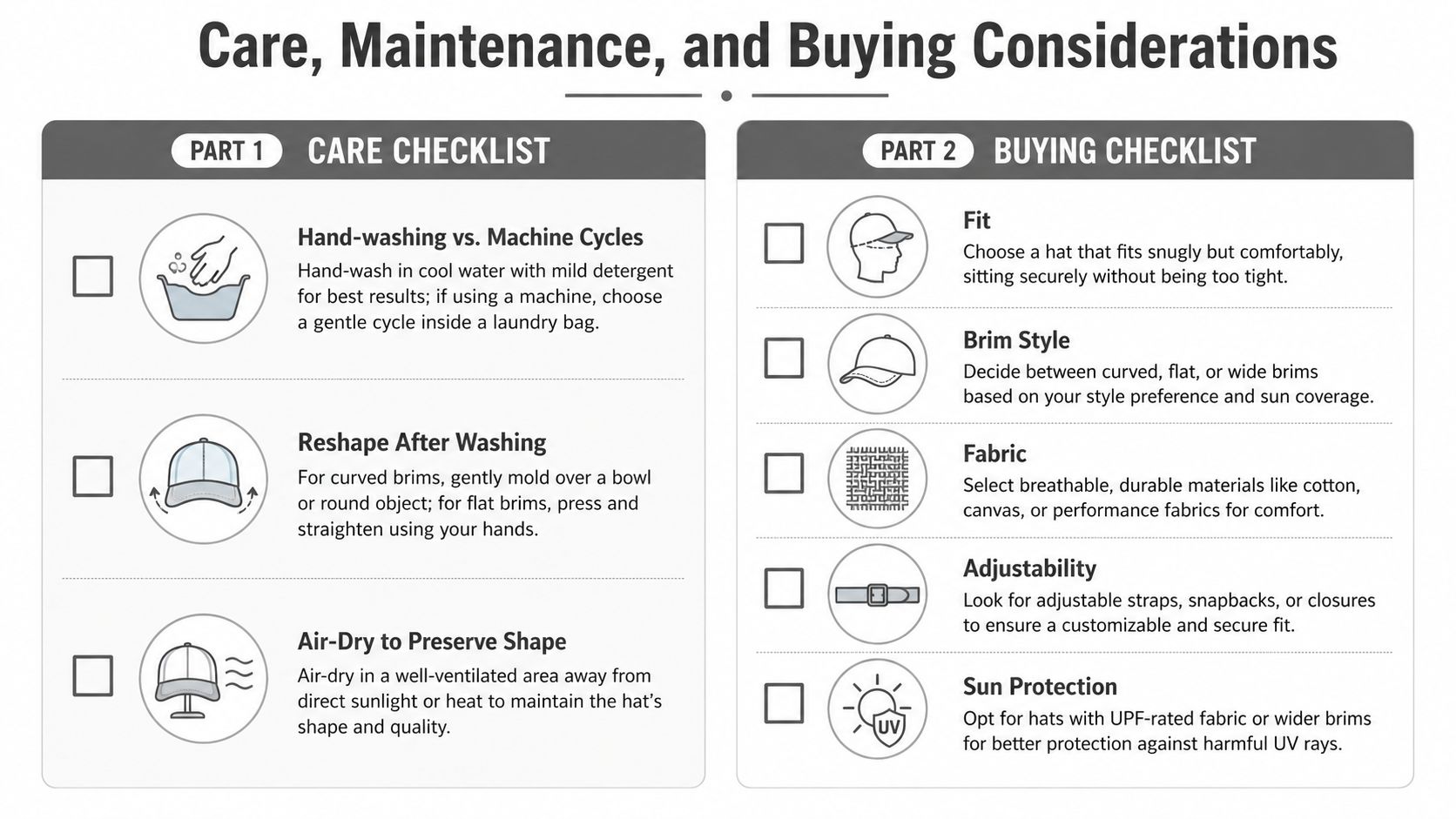
Sweat is the main enemy of a visor's sweatband and shape. Follow the care label first, but hand-washing is generally the gentler choice for a visor with a shaped brim, embroidered decoration, or delicate closure. If machine washing is permitted, use a gentle cycle and avoid washing it in a crowded load where the brim can bend or snag.
After washing, reshape the brim while it's damp. Maintain a curved profile with your hands, or support a flatter brim on a clean surface without forcing a crease. Let the visor air-dry away from direct heat. A hot car trunk, radiator, or dryer can distort the brim and weaken adhesives or coatings.
Mistakes that shorten a visor's life
- Heat exposure: Don't leave a damp visor in a hot vehicle, where trapped heat and moisture can encourage odors and deform the band.
- Aggressive scrubbing: Work gently around sweat stains instead of grinding at the brim until its finish begins to peel.
- Poor storage: Store the visor flat or on a suitable hook, with the brim supported rather than crushed beneath other gear.
- Neglected sweatbands: Rinse perspiration out after demanding rounds so residue doesn't build up inside the band.
For a more detailed cleaning routine, use this guide to clean golf hats and adapt the gentlest suitable method to your visor's materials.
A buying checklist that works
Before purchasing, check the fit at the temples, test whether the closure adjusts cleanly around your hairstyle, and confirm that the brim stays level when you bend toward the ball. Match the brim to your usual conditions, and choose UPF-rated fabric when sun-heavy rounds are common.
A moisture-wicking lining makes more sense than plain cotton if you sweat heavily. If you play in variable weather, an adjustable closure gives you more flexibility than fitted sizing. 2ndShotMVP offers golf visors alongside other golf hats and lifestyle apparel, including team-inspired MVP visor designs, so it's one option to consider when comparing fit, style, and course use.
Treat the visor as gear you'll wear across many rounds, not as a disposable sunny-day accessory. The right combination of stable fit, useful brim coverage, breathable fabric, and sensible sun protection will matter long after the first try-on.
Choose your playing conditions first, then shop 2ndShotMVP for a golf visor hat that fits your preferred style and on-course routine. Compare the brim, closure, and fabric against your real needs, and pair the visor with sunscreen and UV-protective sunglasses when the crown is exposed.

