

A palmetto tree hat is a sun hat styled around the Sabal palmetto motif or made from actual palm fibers, offering a coastal, golf‑friendly look you can wear off the course as easily as on it. It's the logo tee of the coast — casual, recognizable, and quietly confident without trying too hard.
What Makes a Palmetto Tree Hat Unique
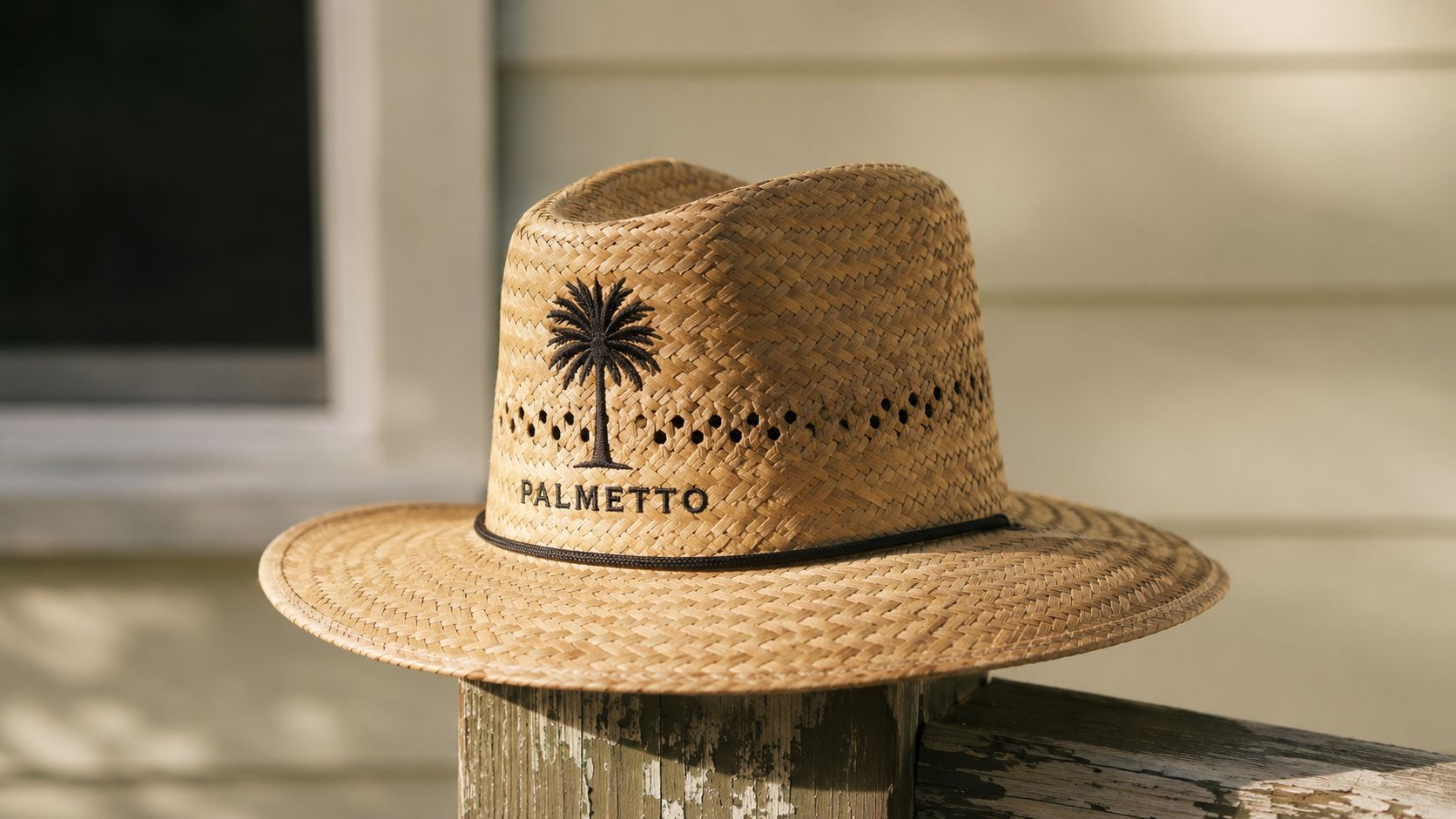
Think of the palmetto tree hat as a short story told in silhouette. The whole design language revolves around a fan-shaped frond, a clean crown, and either an embroidered or printed palmetto icon that reads Southern without veering into costume territory. It's like a well-worn polo shirt for your head — it signals place and preference without shouting.
Palmetto hats generally fall into two camps:
- Natural palm straw hats with visible fiber texture that breathes beautifully and gets better-looking with age.
- Fabric or twill caps carrying a palmetto graphic — printed or embroidered — for a cleaner, more pop-culture vibe.
Picture a straw hat whose brim shades you like a caddie's umbrella, topped with a tiny palm emblem that feels like a personal signature on your outfit. Golfers gravitate toward that sweet spot between function and identity because the hat actually works — blocking sun, staying featherlight — while quietly saying something about where you play and who you are.
Design Details That Matter
- Fan Frond Motif — The semicircular frond silhouette is shorthand for the Sabal palmetto and typically lands on the front panel or crown.
- Crown Shape — Low profiles lean sporty and athletic; taller crowns feel vintage, relaxed, and porch-friendly.
- Embroidery vs. Print — Embroidery brings texture and serious longevity; prints deliver richer color detail and friendlier price points.
The palmetto tree hat works as a quiet flex on the course and a friendly signal at the 19th hole.
A little history gives the style some real roots. Pheriba A. Graham of Ocala, Florida commercially sold palmetto frond hats starting in the late 1800s, making these one of the earliest retail palmetto headwear examples in the American South — read more about this early retail history.
Stylistically, the hat occupies a perfect middle ground between a sun hat and a logo cap. You get genuine sun protection up top with the social shorthand of a branded cap wrapped into one. That's exactly why golfers, porch sitters, and weekend travelers all keep one in regular rotation.
Roots in Southern Craft and Heritage
There's a reason the palmetto tree hat feels like more than just another piece of headwear. The second you settle it on your head, you're tapping into something with actual roots — not just in the soil of the Carolina Lowcountry, but in a tradition of craft and regional pride that stretches back well over a century.
That fan-shaped frond stamped or woven onto the front? It's doing a lot of quiet work. It signals coastal toughness, a sense of place, and a stubborn kind of resilience that doesn't need to announce itself.
And this wasn't always just a homemade folk item. Pheriba A. Graham was selling these hats out of her Ocala storefront in the late 1880s, which means the palmetto hat had already stepped out of the backyard and into legitimate retail. That's not a footnote — it's proof that people were willing to pay for this look long before golf fashion caught on. Your great-grandparents could've walked into a shop and bought one.
That lineage is exactly why the hat carries a certain weight for golfers and lifestyle buyers today. It doesn't feel like a costume piece. It feels earned.
Two Moments That Made the Palmetto Matter
The Sabal palmetto was officially named South Carolina's state tree on March 17, 1939, but its symbolic reputation was already cemented decades earlier. The story every local grows up hearing? The 1776 Battle of Fort Sullivan, where palmetto-log fortifications absorbed British cannon fire like a sponge soaking up water. The walls held. The colony held. And a tree became a legend.
That's the backstory stitched into every palmetto hat you'll ever pick up. Every palm-leaf graphic is quietly nodding to survival, to place, to a kind of pride that doesn't need a megaphone.
The palmetto tree hat is more than shade — it's a wearable regional story that quietly signals where you belong.
For golfers, this is what makes the hat click on the course. It reads like a subtle team crest for an entire region rather than a billboard for a brand. That understated energy is why it fits clubhouse culture so naturally — it says "coastal rounds and porch hours" without shouting.
- Pheriba A. Graham's commercial sales anchor the hat in retail history and prove this style has legs — it's been circulating in stores for well over a hundred years.
- State symbolism and battlefield lore give emotional heft to what might otherwise be just a logo or a frond graphic.
- The result is a hat that feels like an heirloom even if you bought it last Tuesday.
How This History Helps You Shop
When you choose a palmetto tree hat, you're buying into a narrative — so it pays to look for details that honor that story. Seek out visible fiber texture, traditional fan-frond motifs, and clean stitching that nods to actual craft rather than mass-produced afterthought. These are the things that make the hat read as intentional on the course and effortlessly relaxed at the 19th hole.
Here's a practical styling move: pair a field-worn palm-straw palmetto hat with a modern performance polo. You get heritage up top and technical function below — a balanced outfit that respects both sides of the equation.
For readers who appreciate tangible Southern iconography, the palmetto tree holds deep significance in Southern culture, particularly in South Carolina; consider the Palmetto weathered decal at Custom Sticker Shop as a small companion piece that echoes the same regional pride — perfect for a golf cart, water bottle, or laptop.
At the end of the day, the palmetto tree hat is a design built on craft and story. Choosing one is a lot like picking your favorite local bar: you're getting something functional, but you're also getting a story you'll happily retell between holes.
A Global Tradition of Palm Fiber Headwear
Step back and you'll spot the palmetto tree hat nestled into a much bigger story — a worldwide family of palm-leaf headwear built for one job: beating the sun while letting your head breathe. It's like discovering your favorite local diner has cousins on every continent. Different leaves, same brilliant solution. That's exactly why this style feels less like a trend and more like something that was always meant to exist.
The American palmetto hat grew from Sabal palmetto fronds and carries a visual accent that screams Southern the way striped seersucker whispers coastal. Meanwhile, Australia's cabbage-tree hat used Livistona australis as its own answer to punishing sun, just as palmetto weaving tackled coastal heat across the Southeast. Different continents, same smart instinct — turn what grows nearby into gear that actually works.
And get this: a 1716 patent describing a "new way of working and staining" palmetto leaf for hats and bonnets proves this is heritage gear, not some modern invention. That's not a typo — 1716.
That history lesson actually matters when you're picking out what to wear. A palmetto tree hat isn't a flash-in-the-pan accessory. It's centuries of practical design refined by real people in real heat. That lineage translates into three things modern golfers and lifestyle shoppers genuinely care about: proven sun protection, lightweight breathability, and a texture that synthetics still can't quite copy.
What Palm Headwear Gets Right Every Time
- Serious sun defense from layered palm fibers that naturally block UV and let heat escape
- Featherlight comfort that won't weigh you down during long rounds or summer getaways
- A finish that gets better with age, developing character the way good leather does
These aren't marketing bullet points. They're things you actually feel the first sweltering afternoon you wear one. The palmetto hat's fan-frond design pulls double duty — wide enough for real shade, subtle enough to read as effortless coastal style rather than costume.
Where Heritage Fits Modern Life
- Golf shops stock palmetto styles because they bridge utility and clubhouse-ready looks without trying too hard
- Lifestyle lookbooks reach for them for the same reason — they say something about place and personality without shouting
Here's a real-world test: swap your synthetic trucker for a natural palm straw palmetto hat on a sunny round. You'll notice the cooling difference immediately, plus less glare off the fairway. The natural fibers also compress and spring back differently than polyester, so it holds its shape while still being packable enough to toss in a bag.
Buying a palmetto tree hat means buying into a tested category of sunwear — practical heritage that still outperforms plenty of mass-market options.
That combination of durability and feel explains why the palmetto tree hat keeps popping up everywhere from pro shops to streetwear edits. It delivers functional protection, breathable comfort, and an authentic texture that works just as well with a polo on the fairway as it does with a linen shirt at the 19th hole.
Picking out a palmetto tree hat is a lot like sizing up a golf glove. Fit and feel dictate whether it becomes your go-to piece or the forgotten relic buried at the bottom of your bag. The first big decision is choosing between genuine palm straw and a fabric cap rocking a palmetto graphic. Both scream coastal, but they play a completely different game on the course.
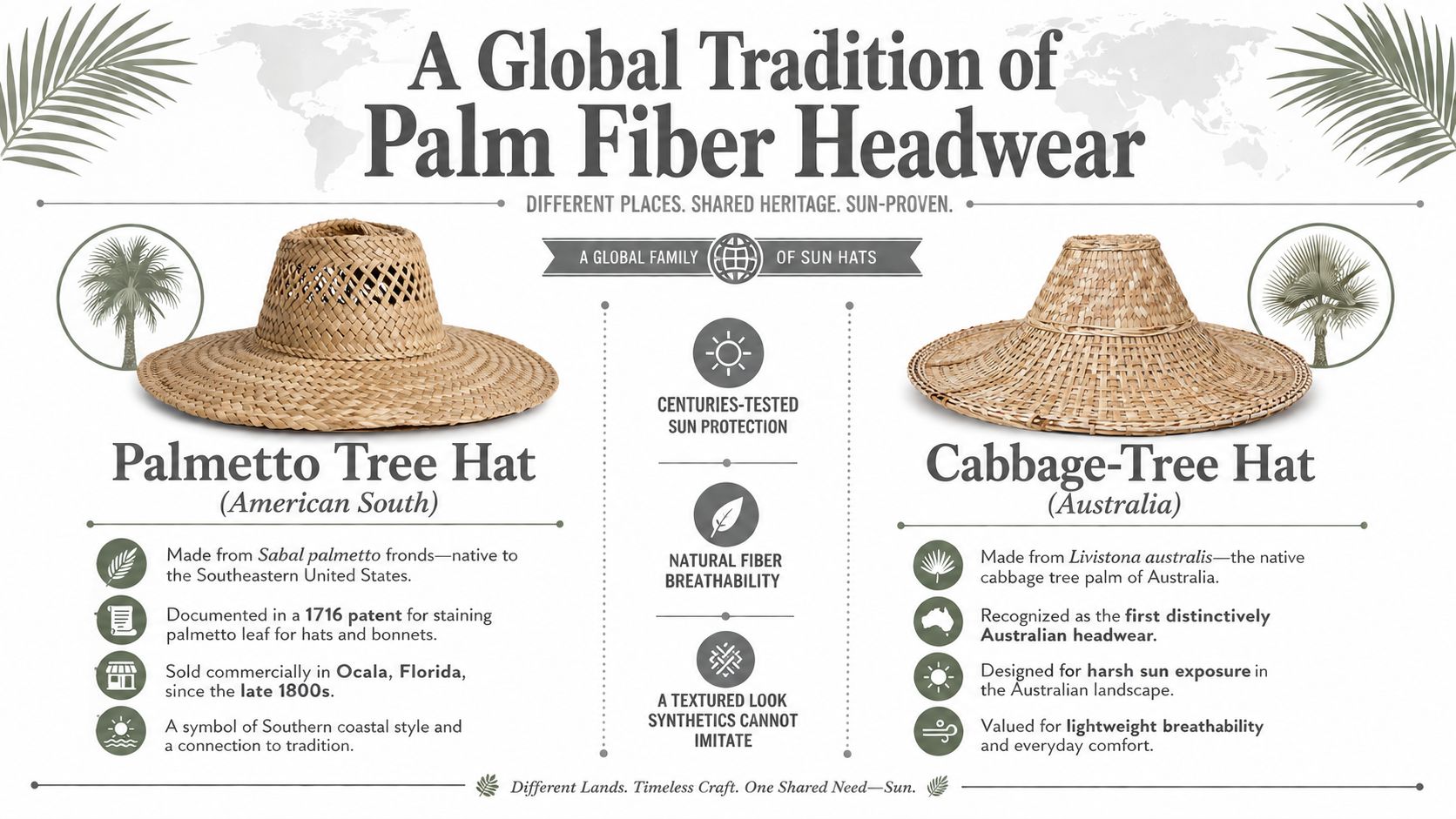
This visual breaks down the history and construction of palmetto-style headwear alongside similar palm-fiber hats from around the world. It highlights why natural palm behaves so differently than your standard twill or polyester caps.
Genuine palm straw gives you superior breathability and a rugged texture that actually looks better as it ages. On the flip side, cotton twill or tech blends hold their color, wash easily, and stay lighter when the humidity hits. Go with palm straw for breezy coastal rounds and classic clubhouse vibes. Choose performance fabric if you need weather resistance and the ability to toss it straight into the washing machine.
Comparing Common Palmetto Hat Materials and Builds
Choosing the right fabric can make or break your experience. Here is a side-by-side look at the most common materials and builds so you can pick the right Palmetto tree hat for your course conditions and lifestyle needs.
| Material or Build | Feel and Weight | Best For | Care Level |
|---|---|---|---|
| Natural Palm Straw | Sculpted, moderate weight | Dry heat, classic clubhouse style | Moderate; sand and sun deepen character |
| Cotton Twill | Soft, lightweight | Casual wear, lower cost | Easy; machine washable |
| Polyester/Technical Blends | Light, breathable when humid | Humid rounds, frequent washing | Very easy; quick-dry and wrinkle-free |
Pick the one that matches your typical round, and you will forget you are even wearing it.
Fit first, style second. A hat that slides around or pinches your head is destined to stay in the golf bag.
Pay attention to the crown structure. A structured crown keeps the silhouette sharp for formal clubhouse events. If you travel often, a crushable, packable crown folds flat and slides right into your golf bag without losing its shape. Don't ignore the sweatbands and liners either. Leather or terry cloth bands soak up moisture and make those scorching back nines much more bearable.
- Fitted: Offers a clean, streamlined look, but demands an exact measurement.
- Strapback: Fully adjustable and super golf-friendly.
- Snapback: Quick to adjust, though it can feel a bit boxy on certain head shapes.
Nailing the size is everything. If you are on the fence about your measurement, check out a sizing resource to find your hat size.
Construction Details That Matter
Inspect the stitching around the brim and front panel. Crisp embroidery near the Palmetto motif screams quality craftsmanship. Hunt for reinforced brims that won't warp in the elements, and check for UPF ratings or UV labeling if you spend hours under the blazing sun. A modest crown paired with a 3–4 inch brim usually strikes the perfect balance between keeping the shade on your face and maintaining clear sightlines down the fairway.
- Try it on with your sunglasses to ensure the brim doesn't push them down.
- Feel for pinch points around your ears and forehead.
- Double-check the care instructions—palm straw requires a totally different routine than fabric caps.
Want to explore more headwear options for the links? Our guide to Types Of Golf Hats covers all the popular styles golfers love. Match the material to your local climate and your playing style, and you will end up with a Palmetto tree hat that feels like an essential part of your kit rather than an awkward afterthought.
Styling Ideas From Tee Box to 19th Hole
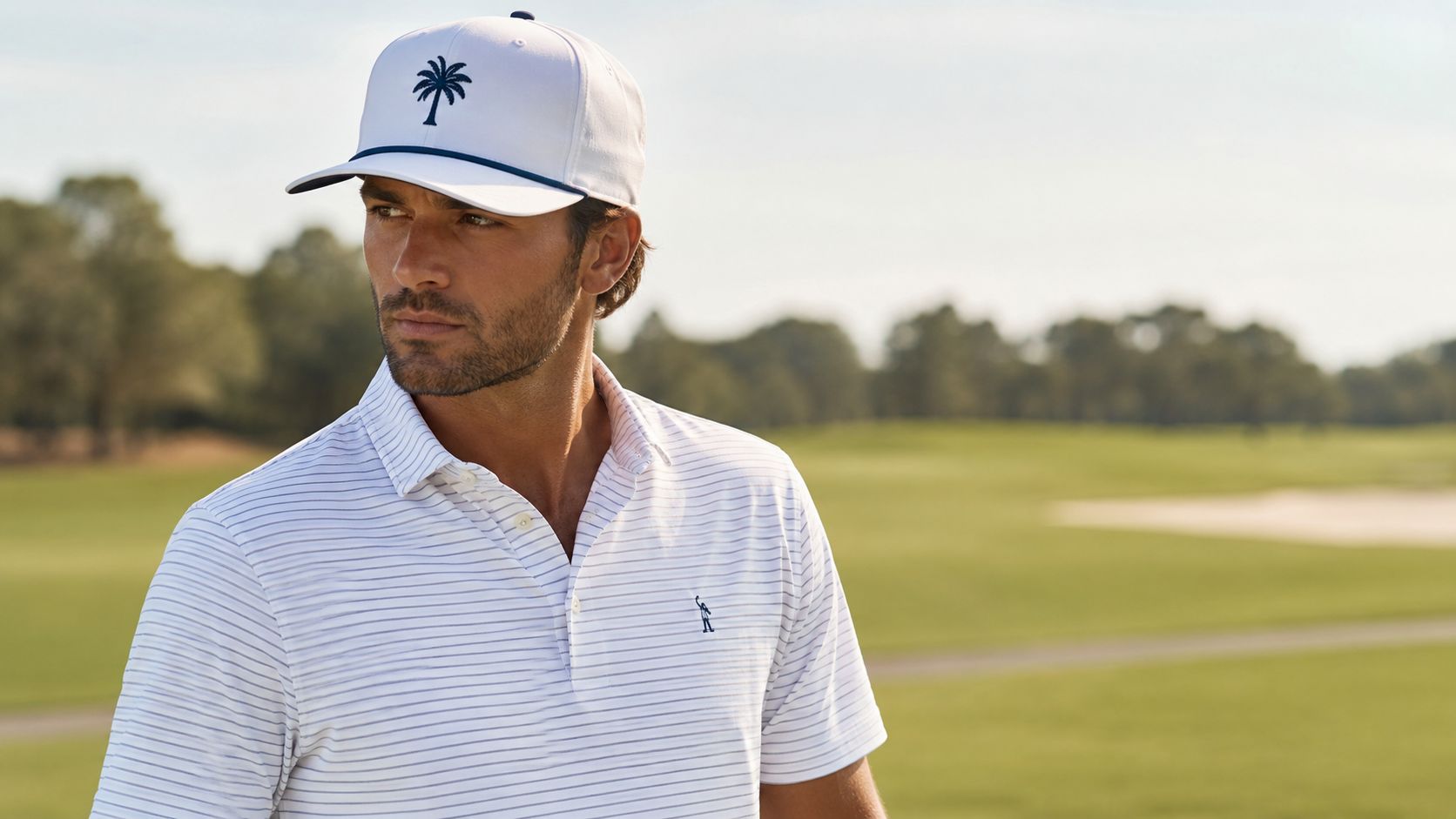
Start simple on the tee box — a performance polo, tailored shorts, and a palmetto tree hat that picks up the outfit's undertone. The combo reads sharp and sporty without trying too hard. That fan-frond graphic works as a subtle signature rather than screaming a logo, which means your look stays clubhouse-appropriate from the first swing.
Try a navy polo with a cream palmetto emblem and match your belt or shoes to the hat's trim. That tiny bit of color coordination makes the whole outfit feel deliberate.
Casual Clubhouse Looks
Swap the polo for a faded oxford and some linen trousers when you're heading to the grill or grabbing a post-round drink. The palmetto tree hat becomes a quiet style bridge here — think of it as coastal punctuation that keeps things from feeling too buttoned-up.
Less is more. Avoid stacking more visible logos on top of each other. Let the palm be the conversational piece.
- Match the hat's undertone to your footwear or a leather belt for a unified palette
- Keep patterns minimal; a striped oxford with a simple hat reads intentional rather than busy
- Choose a low-profile crown if you want a cleaner, more modern silhouette
A palmetto tree hat acts as a quiet flex — coastal cues without the beach-bar vibe.
Travel and Off-Duty Days
On travel days, throw the hat on with a relaxed tee, joggers, and slip-on sneakers. You'll look comfortable without looking like you gave up. The palmetto motif gives carry-on outfits a directional finishing touch, so you don't feel like you dressed for the airport only.
That's the beauty of this hat — it moves from terminal to 19th hole effortlessly because it signals place more than trend.
Style Rules Worth Following
- Match undertones first — leather, canvas, or thread color create the kind of harmony that makes an outfit click
- Avoid over-logoing — too many brand marks dilute the palmetto's impact and make everything feel noisy
- Let accessories echo the hat — a watch strap or belt in the same tone ties everything together without looking matchy-matchy
Why the 19th Hole Loves It
Here's where the hat really earns its keep. People ask where you got it, what the palmetto means, or which course you played. It's a conversation starter that doesn't feel forced.
A single well-chosen palmetto tree hat can carry a whole weekend wardrobe. Swap it between rounds, dinner, and travel without it feeling repetitive. For more outfit ideas and golf-friendly looks, check out our style guide on how to dress for golf.
Care and Durability Tips That Actually Work
Here's the thing about a palmetto tree hat — treat it like proper gear instead of an afterthought, and it'll stick around for seasons of solid rounds. Neglect it, and you'll be shopping for a replacement before you know it.
Sweat is the silent killer. Deal with it fast by spot cleaning using mild soap and cool water. Blot gently rather than scrubbing — aggressive rubbing will fuzz up fibers or wreck embroidery. Keep the brim and crown looking sharp, and you'll dodge those stubborn salt stains that make natural straw look prematurely aged.
Storage matters more than most people think. Keep your hat on a hat form or a clean shelf, far away from direct sunlight. That combo prevents fading and warping, the two things that'll ruin a good hat faster than anything else.
And please, never leave a hat baking in a closed car on a 95-degree day. Heat warps brims and melts glue joins faster than you'd believe. If you wouldn't leave a chocolate bar in there, don't leave your hat.
"Never put a good hat in the dishwasher" — this is the cardinal care rule to remember.
Different materials demand different approaches. Natural palm straw and performance fabric each have their own personality, so don't treat them the same way.
For palm straw hats:
- Spot clean with a soft brush and a damp cloth — keep it gentle
- Reshape the brim with a damp towel and let it air dry on a form
- Keep it dry; prolonged humidity invites mold and causes softening
For performance fabric hats:
- Check the label for machine-wash instructions; most tech blends handle gentle cycles just fine
- Toss it in a garment bag or hat cage to hold its shape during washing
- Quick-dry materials bounce back fast and resist sweat stains, which makes them perfect if you're a heavy sweater
Got a flattened brim? Here's how to bring it back to life:
- Lightly mist the underside with water
- Place a rolled towel under the crown to support the shape
- Let it dry naturally out of direct sun
Small investments protect your hat long-term. A hat box or cedar shelf keeps dust and insects away. A microfiber cloth handles daily dusting and keeps embroidery looking crisp. And a travel clip or packable insert saves your hat's structure when you're flying to that bucket-list course.
Quick checklist to save before your next round:
- Remove sweat stains promptly with spot cleaning
- Reshape brims with damp towel and air dry
- Store on a form away from heat and sun
- Use a garment bag for machine washing tech hats
- Never use dishwasher or boiling water
Read also: Learn more about proper hat cleaning and step-by-step methods in our article on How to Clean Golf Hats.
Stick with these simple routines and your palmetto tree hat will keep shading rounds and sparking conversations long after you buy it.
Buying Guide for Golf and Lifestyle Shoppers
Think like a caddie when you shop — fit comes first, function second, and the finish should look like you meant to wear it.
Here's what separates a keeper from a closet orphan.
- Check the embroidery and stitching. Tight, even threads that won't fray after a few rounds.
- Test the crown balance. It should sit flat on your head, not tilt like a satellite dish searching for a signal.
- Run your hand over the material. You want genuine palm straw texture or a solid performance twill — and pick based on where you'll actually wear it.
What Your Money Actually Gets You
Price tags tell a story if you know how to read them.
- Under $30 — decent graphics but thinner construction. Fine for casual weekends, not your Saturday morning foursome.
- $30–$75 — where things get real. Reliable build quality, clean embroidery, and a sweatband that won't quit halfway through the back nine.
- Over $75 — premium palm straw or reinforced brims built for course-to-clubhouse transitions without looking out of place.
A solid palmetto tree hat should survive a skins game on the course and still look sharp enough for dinner after.
Getting the Fit Right
Sizing trips up more people than they'd admit. Measure your head circumference before you browse. Try fitted versus strapback styles to see what works for your shape.
Shopping online? Stick with sellers who offer easy returns and publish detailed size charts. Guessing is a gamble you don't need to take.
Before You Hit Checkout
- Grab a packable crown if your hat lives in a travel bag or glove compartment.
- Heavy sweater? Look for a replaceable sweatband — it extends the life of the hat significantly.
- Spending long hours in the sun? Prioritize hats with UPF labeling for actual protection, not just shade.
For where to actually buy one, check boutique pro shops, Southern lifestyle brands, and established online golf retailers. Each carries different quality signals and return policies worth comparing.
If you're rounding out your golf setup with some functional tech, our ultimate golfer's guide covers golf watches worth knowing about.
At the end of the day, match the hat to your game, your weather, and your personality. The right one feels like part of your kit — not something you threw on last minute. Find one you'll wear confidently from the first tee straight through to the 19th hole.
Frequently Asked Questions About Palmetto Tree Hats
Why would anyone outside the American South wear one?
Honestly? Because it works. The palmetto tree hat isn't some regional costume piece — it's a genuinely smart choice for anyone spending time in the sun. The palm straw breathes like nothing else, and that iconic palmetto design reads as a coastal accent rather than a billboard for a specific zip code.
You'll spot these hats everywhere from Scottsdale to Hilton Head to St. Andrews. The point is simple: the hat earns its spot through breathability and UPF protection, not through geography. Pair it with whatever's in your closet and it'll look like it belongs there.
How do I clean a palm straw palmetto hat without ruining the shape?
Here's the thing about palm straw — it's tough until you treat it wrong. Skip the dishwasher, skip the hose, skip anything your gut tells you is a shortcut.
Instead, stick to this:
- Spot clean with a drop of mild soap and a soft cloth — blot, don't scrub
- For a bent brim, lightly dampen the underside and gently reshape by hand
- Support the crown with a rolled towel while it dries
- Let it air dry on a hat form or something that mimics your head shape
Heat is the enemy here. No dryers, no dashboards, no direct sunlight for hours. That's how brims warp and glue gives up.
Do these hats actually protect you during a full round?
Absolutely. Natural palm fibers block UV rays while still letting air circulate — which is exactly what you want when you're walking 18 holes in July. Many twill versions come with documented UPF ratings, so you're not just guessing.
For serious sun coverage, look for a 3 to 4 inch brim and check the specs before you buy. If the brand lists a UPF rating — say, UPF 30 or 50 — that's your confirmation it's doing real work up there.
How do I style one without looking like a tourist?
The trick is treating the palmetto like a subtle detail, not the main event. Match the hat's color undertone to your belt or shoes, keep other logos to a minimum, and go for a low-profile crown if you want a cleaner, more modern silhouette.
- On the course: pair it with a performance polo and let the hat do the talking
- At the 19th hole: a linen shirt and neutral trousers keep things effortless
The goal is for someone to notice the hat and think "that looks sharp" — not "where's his camera?"
A great palmetto tree hat earns its spot in your bag. It should perform when you need it and disappear into your look when you don't.
Find premium golf headwear at 2ndShotMVP

