

You're on the green, your playing partners are waiting, and the ball marker you were certain was in your pocket has vanished. You check the other pocket, pat the golf bag, and finally borrow a coin. Nobody's angry, but the moment is clumsy and avoidable.
A golf hat with ball marker addresses that small but familiar interruption by keeping the marker where your hand already goes during a round. The feature isn't new because marking a golf ball is difficult. It's useful because golf rewards preparation, rhythm, and fewer distractions. The right design can make marking a ball quicker while adding a deliberate style detail to your outfit. The wrong design becomes a loose accessory that snags, rattles, or looks like an afterthought.
Why Golfers Are Switching to Hat-Mounted Ball Markers
Your putting routine should not stall because a marker is buried in a pocket. A hat-mounted design keeps it at the brim or strap, so you can take it off, place it behind the ball, and clear the putting line without searching through tees or borrowing equipment.
That convenience earns its place when it supports a repeatable routine. An instructor can keep the marker accessible while moving between students. An executive can look prepared during a business round without digging through a bag. A frequent player can use the same motion on every green, whether the round is competitive or relaxed.
The tradeoff is style and security. A bulky marker can catch on a glove or look tacked onto a clean cap. A loose attachment can rattle as you walk. Choose a low-profile design that matches the hat and stays put under normal movement.

The accessory solves a small problem well
Golfers have long used whatever was available to mark a ball. Early players reportedly relied on small stones or simple metal or wooden pieces. Coins later became familiar, before purpose-built markers appeared in the late 1900s. This account of ball-marker development shows why attaching one to a hat feels practical rather than gimmicky.
The modern version places an established tool in a consistent, visible location. The marker becomes part of the hat's design, much like a tee holder or embroidered logo. That integration works best for players who value order and dislike interrupting a round to find small equipment.
Practical rule: If you regularly lose coins, forget markers, or interrupt your putting routine to search for equipment, integrated storage is worth considering.
Why the category keeps expanding
The golf hat market was estimated at about USD 1.5 billion in 2024 and is forecast to reach around USD 2.9 billion by 2033, with a forecast 6.5% compound annual growth rate from 2025 to 2033, according to DataHorizzon Research's golf hat market analysis. The figures describe a market forecast, not a guarantee, but they help explain why manufacturers are adding practical features to headwear.
The broader shift is clear. Golfers expect apparel and accessories to handle more than appearance. A hat should manage sun and sweat, fit securely, look presentable, and remove a minor annoyance from the round. A marker integrated into the hat meets that standard when the attachment remains discreet and dependable.
My recommendation is simple. Buy one if you play often and want a clean, repeatable routine. Skip it if your clip-on marker already works and you do not mind reaching for it. The feature earns its place through repeated convenience, not novelty.
How Golf Hats With Ball Markers Work
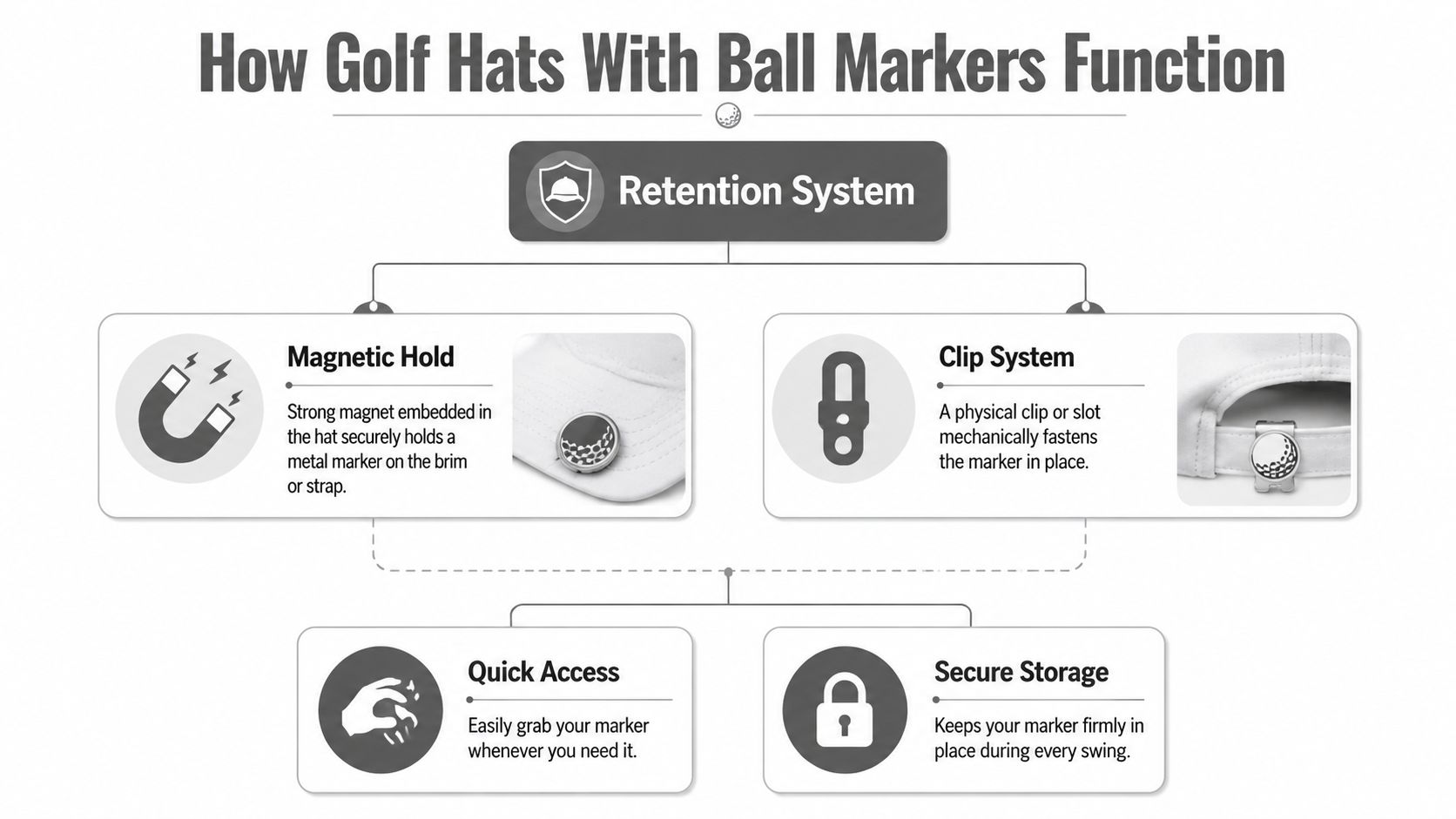
Your marker should stay put while you walk, bend, and reach for a club, then come away cleanly at the green. Hat-mounted systems achieve that with either magnetic holding or a physical clip. The choice affects comfort, appearance, and how much hardware you notice during a round.
A magnetic system places one component in or on the hat, while the marker uses compatible metal or a magnetic element. The attraction holds it against the brim, strap, or undervisor. Removing the marker requires a deliberate pull, giving you accessible storage without a permanent fastening mechanism.
Retention depends on balance
A magnetic design must hold firmly through walking, bending, and wind vibration, while still allowing one-handed removal. The European patent documentation for attachable magnetic ball markers explains this balance between holding force and release.
Commercial examples commonly use cap clips around 25 millimeters in diameter, markers around 24.5 to 25 millimeters, and magnets around 10 to 12 millimeters, based on the same patent reference. These dimensions suit compact, coin-sized markers. Oversized novelty pieces may look good but can sit awkwardly or pull against the attachment.
Compatibility determines whether the system works reliably. Before buying replacement markers, check whether the hat requires ferrous material, a specific magnetic connection, or a matching clip. A marker that looks compatible may still fall away if its material does not interact properly with the holder.
Flush and external systems
A flush magnet sits inside the bill or undervisor. The marker rests close to the fabric, with little exposed hardware. Titleist's Players Ball Marker hat product information shows this integrated approach, with the magnet placed inside the bill. It suits players who want a clean silhouette and minimal snag risk.
An external clip attaches to the brim or strap. It is easier to see and may move between hats, but the added hardware can catch on a bag or feel noticeable against the headwear. Choose it when interchangeability matters more than a discreet finish.
The video below offers a visual look at magnetic marker use and removal.
Test the release before committing to a hat. The marker should come away with a clear pull, stay secure from the cart to the green, and fit the hat's overall style rather than look like an afterthought.
Comparing Marker Types and Mounting Methods
A flush magnet suits the golfer who wants a tidy hat and minimal hardware. A clip-on system suits players who rotate hats, replace markers, or want more freedom to change designs. The right choice depends on how the hat feels after eighteen holes, how it looks with your wardrobe, and how often you change accessories.
| Feature | Flush Magnet System | Clip-On System |
|---|---|---|
| Retention | Concealed magnetic hold keeps the marker close to the hat | Clip or exposed magnet fastens the marker mechanically or magnetically |
| Comfort | Low-profile construction reduces contact with the brim | Hardware may be more noticeable, depending on clip shape |
| Snag risk | Minimal exposed hardware | Greater potential for catching on bags or clothing |
| Marker flexibility | Often requires compatible marker material | Usually easier to swap markers between compatible clips |
| Appearance | Clean, understated, integrated | More visible and can become a styling feature |
| Best fit | Frequent players who want a permanent, polished setup | Golfers who want portability or changing designs |
Flush magnet systems
The flush system wins on comfort and appearance. Its concealed magnet keeps the marker nearly level with the bill, removes a separate clip from the outside, and limits the exposed parts that can catch on a golf bag. The hat looks designed that way, not modified after purchase.
Check the marker material before buying replacements. Magnetic holders require a marker that interacts properly with the system, and a visually similar piece may still fall away during play. Some integrated designs also limit your choice of marker, so they work best for golfers who prefer one dependable setup over frequent customization.
Clip-on systems
A clip gives you portability. You can replace a lost marker, change its logo, or move the mechanism to another hat without committing to one integrated design. That makes it practical for golfers who rotate headwear or want an accessory tied to a club, tournament, or personal interest.
The tradeoff appears on the course and at the 19th hole. External hardware may stand proud of the brim, rub against the fabric, or catch when you place the cap in a bag. It can also look out of place on a minimalist hat. Choose a clip when replaceability matters more than a clean silhouette. Choose flush mounting when the hat must work with both golf clothes and casual wear.
For another accessory that combines apparel with ball-marker storage, see this guide to a golf glove with ball marker.
My buying verdict: daily player, flush magnet; rotating wardrobe, clip-on; style-first buyer, low-profile magnetic design. Test the retention before committing. The marker should stay secure from the cart to the green, release without a struggle, and avoid pulling the bill out of shape. Artwork attracts attention, but the mounting interface determines whether the feature earns a permanent place in your golf routine.
Rules of Golf and On-Course Etiquette
A hat-mounted marker follows the same rule as any other ball marker. On the putting green, mark the ball's position, lift it, then replace it in that position when it is your turn. Mounting the marker on a hat only changes where you store it.
Use a small, round marker that identifies the ball's spot clearly. The magnet is storage hardware, not a playing aid, so it does not change the marking procedure.
Use it without creating friction
Take the marker off before you reach the ball. Place it directly behind the ball, lift the ball cleanly, and leave the marker visible to your group. When it is time to putt, replace the ball, remove the marker, and continue.
The primary etiquette benefit is pace. A hat-mounted marker reduces the chance of delaying play while you search a pocket, but only if you can remove it in one deliberate motion. Practice that motion before relying on the system in a competition or a crowded round.
Keep your hat, hands, and marker away from another player's line. Do not leave a reflective or oversized piece beside the hole where it could distract someone addressing a putt.
Good etiquette is quiet equipment. The marker should shorten your routine without becoming part of another player's concentration problem.
Know when the design is too much
A novelty marker can suit a relaxed round, while an oversized piece can be awkward to remove, position, or store. Patent documentation describing magnetic hat systems uses coin-sized geometry, which offers a sensible practical reference even when brands sell more decorative versions.
Your group and event format set the standard. In formal competition, follow the organizer's instructions and choose equipment that clearly serves the marking purpose. In a friendly round, the same restraint keeps the green orderly and avoids unnecessary explanations.
Check the marker before the round. If it shifts, catches on the brim, or requires repeated adjustment, it is poor course equipment regardless of its appearance. A well-fitted system lets you mark, replace, and clear the putting line without interrupting play.
The accessory earns approval when it supports pace. It fails when adjusting the magnet or explaining the hat takes longer than carrying a simple coin.
Buying Considerations for Every Golfer
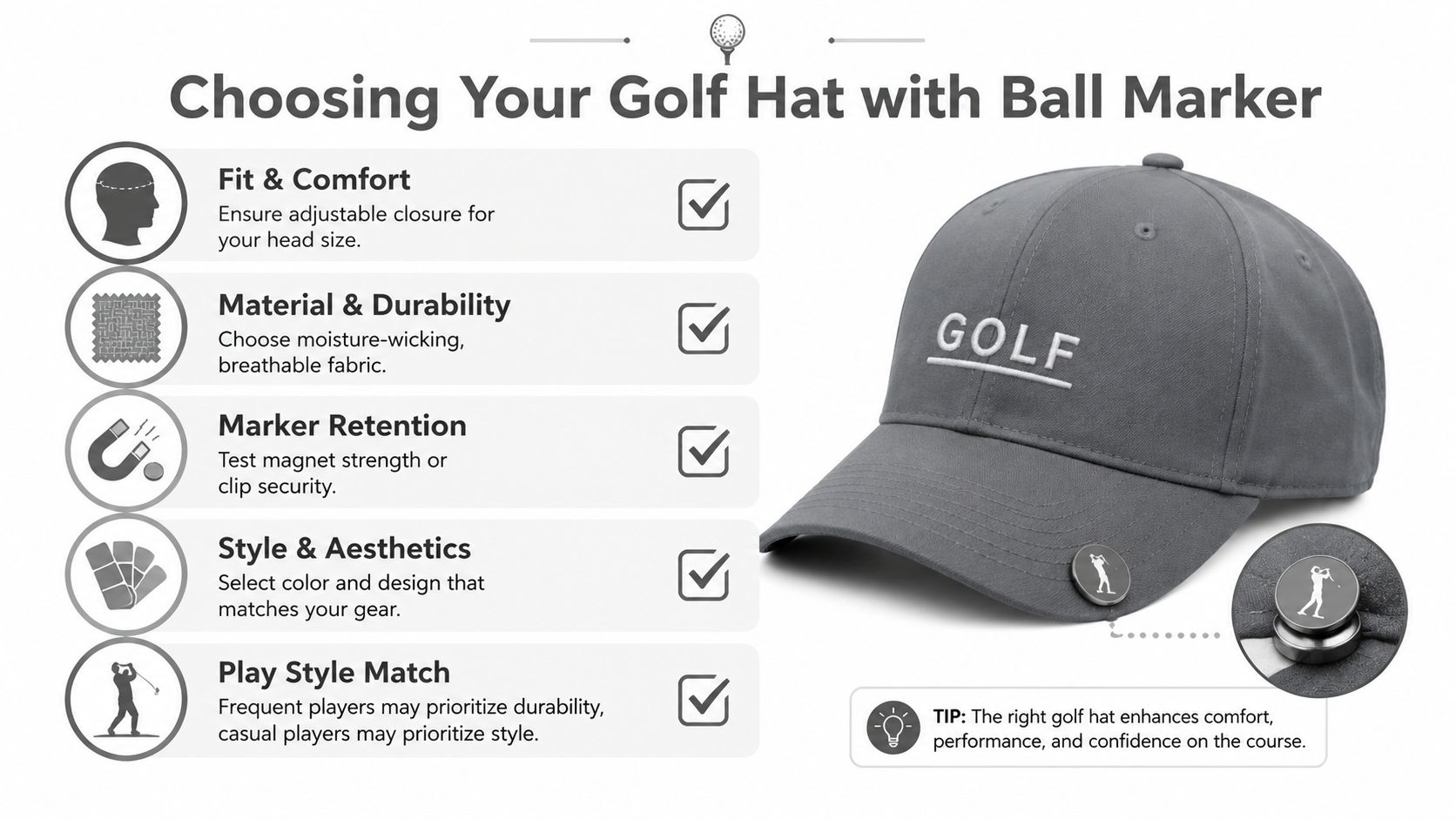
A hat-mounted marker earns its place only if the hat works without it. A cap that pinches, slips, traps heat, or loses its shape will distract you for the entire round, while the marker matters for only a few seconds at a time. Start with comfort and stability, then judge the hardware.
Fit and fabric come first
Choose a closure that holds the hat securely without forcing you to overtighten it. Structured caps suit golfers who want a defined crown and steady bill. Softer hats feel more relaxed, but their mounting point must stay firm enough to support the marker without pulling the fabric out of shape.
For hot or humid play, choose breathable, moisture-managing fabric. Sweat and repeated handling are harder on hat construction and metal finishes than a cool, dry round. Stainless steel and coated finishes make practical choices for frequent golfers because they resist rust and surface wear.
Test retention through real movement
Test the marker while walking, bending, and reaching around the cart. It should stay put, then release in one deliberate motion. If you must pinch the brim, use both hands, or tug at the hardware, the feature adds friction to your routine.
Check these signals:
- Secure storage: The marker stays in place during natural movement.
- Clean release: Your thumb and forefinger can remove it without searching.
- Compatible material: Replacement markers fit the system's magnet or clip.
- Low profile: The attachment does not distort the bill or catch on your bag.
- Serviceable finish: Metal surfaces handle sweat, humidity, and routine contact.
The brim should still flex naturally after the hardware is attached. A marker that makes one side feel stiff, pulls the front of the cap downward, or shifts the hat's balance will become irritating by the back nine. Hold the cap by the crown, move the bill through its normal range, and check whether the attachment changes its shape or tension. Weight matters, but balance and brim behavior reveal comfort more reliably than a specification alone.
Match the design to your habits
Frequent golfers should spend more on durability and retention than decorative detail. Casual golfers can prioritize color, logo treatment, and versatility when the marker is an occasional convenience rather than a regular part of their routine.
Climate changes the choice. In humid regions, use coated or corrosion-resistant metal. For travel, choose a marker that sits flush and will not catch inside a suitcase or golf bag. Softer hats need extra scrutiny because a heavy or poorly placed attachment can stretch the fabric.
Tournament organizers have a separate use case. A hat-mounted marker can work as part of a coordinated player gift, provided the design supports the event instead of overpowering it. GolfRep's actionable tournament marketing templates can help organizers plan branded touchpoints before choosing apparel and accessories.
My recommendation is simple: accept the design tradeoff only when the feature improves your actual routine. Buy it if the hat fits well, the marker releases cleanly, and the hardware suits your climate. If it looks impressive but feels awkward, choose a simpler clip-on marker.
Care, Maintenance, and Marker Replacement
After a humid round, wipe the magnet housing dry and inspect the stitching around the clip mount before storing the hat. Leaving sweat and moisture trapped in a closed golf bag can shorten the life of both the fabric and the attachment.
Clean the hat carefully
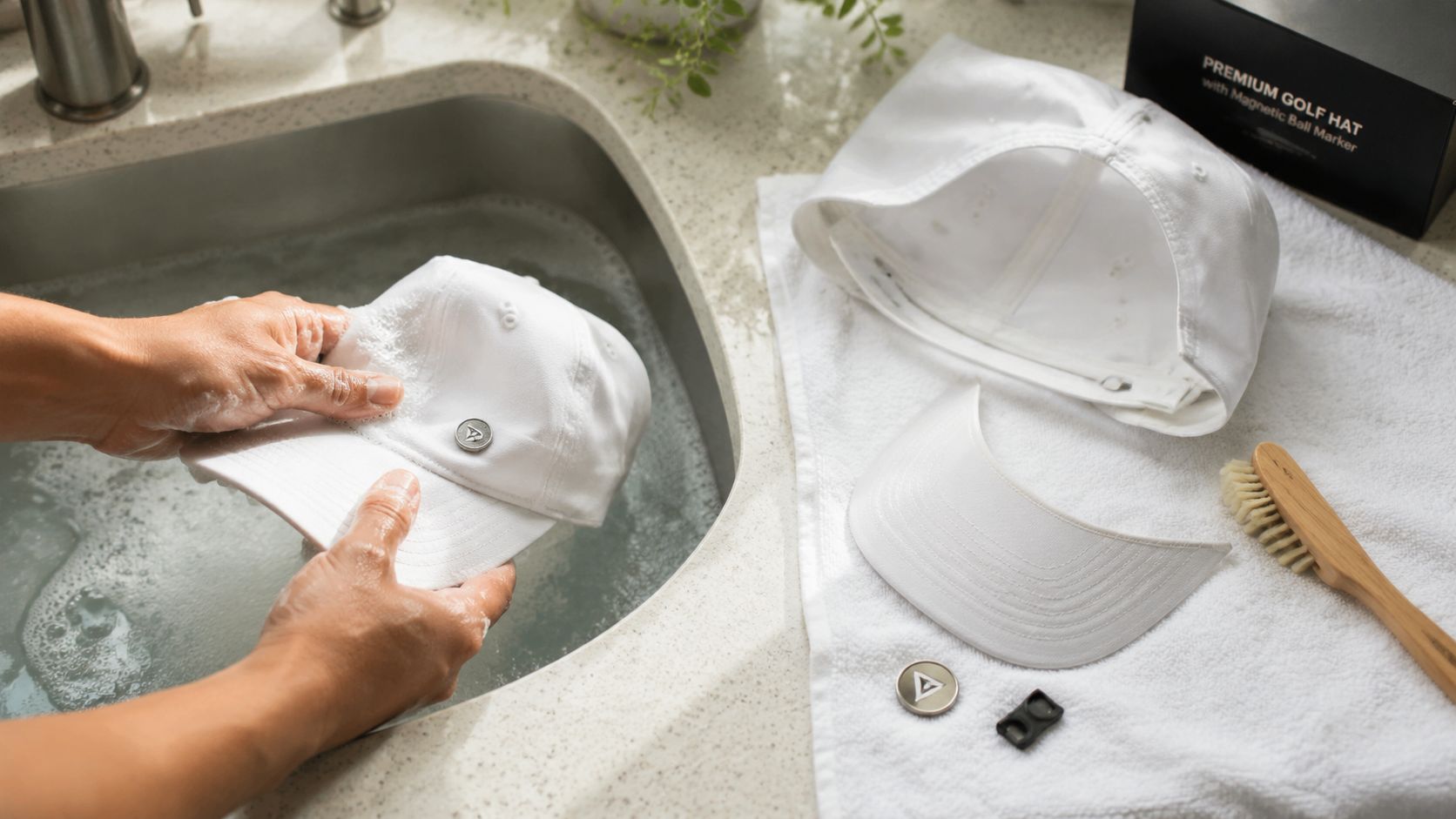
Hand-washing is the safest choice for a structured cap. Use cool water, mild detergent, and a soft cloth on sweat marks. Keep the bill straight, avoid soaking the attachment longer than necessary, and do not scrub across an exposed clip.
For broader instructions, follow this golf hat cleaning guide. Reshape the crown and bill while the hat is damp, then let it air-dry away from strong heat. Do not put a damp hat straight into a locker, trunk, or closed compartment.
Inspect the attachment
Wipe exposed metal dry after a sweaty round or wet walk. Look for surface discoloration, loose stitching, bent clips, or a marker that no longer sits flat. The magnet itself needs little attention, but the fabric and hardware holding it can wear out.
Test retention before play. Hold the hat by the crown, turn the bill downward, and make a gentle walking motion. The marker should stay seated. This checks normal movement without putting unnecessary strain on the stitching.
Replace the right marker
Compatibility matters more than artwork. If the original marker is lost, choose a ferrous replacement that matches the system's intended size and magnetic behavior. A metal marker may look suitable yet fail to attract or hold securely.
Keep one compatible spare in your golf bag. That backup prevents a missing marker from making the integrated feature useless for the rest of the round. Check the replacement before teeing off rather than discovering the problem on the green.
Dry storage beats emergency repairs. Let the hat air out after play before placing it in a closed compartment.
Styling Your Golf Hat for the Course and 19th Hole
Your hat should look like headwear first and equipment second. Choose the hat's main color to complement your outfit, then let the marker add a controlled accent. A subtle metal disc suits a clean polo, tapered trousers, and traditional golf colors. Brighter or branded markers work with relaxed clothing when they echo a detail in your shoes, belt, shirt, or bag.
Keep the course look tidy. A large marker or mismatched finish can make the hat feel more like gear than part of the outfit. Check the marker's profile before play, especially if you wear structured hats or prefer a clean bill.
At the clubhouse, remove the marker when you want a sharper profile with casual apparel or a sport coat. That small change helps the hat transition to the 19th hole without looking overly technical.
2ndShotMVP offers golf hats and lifestyle headwear, including golf-focused designs for course and casual settings. Choose fit and wardrobe compatibility first, then decide whether the integrated marker earns its place.
Browse 2ndShotMVP for golf hats, beanies, and lifestyle apparel inspired by the game.

