
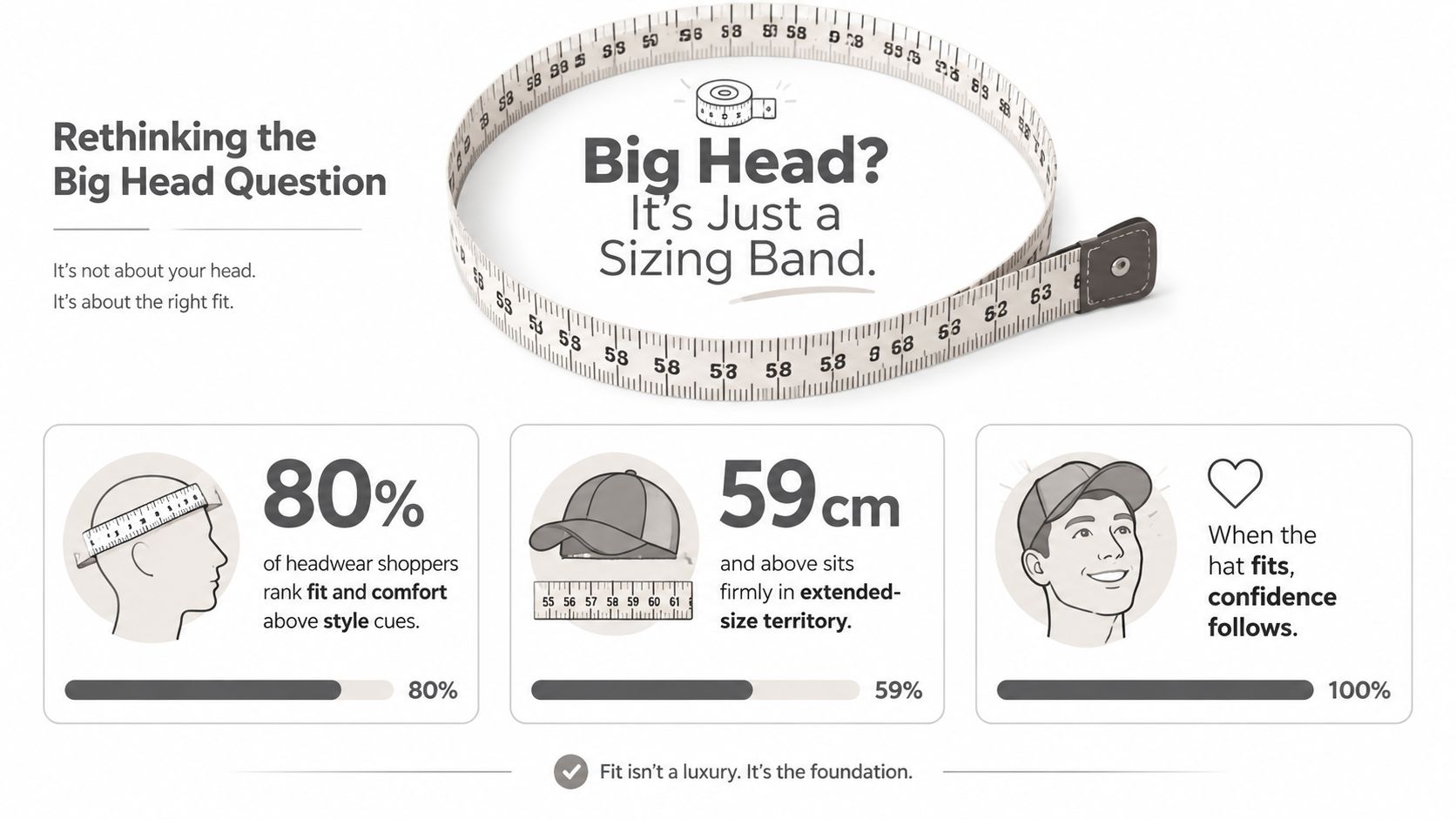
At 59 cm or above, a head is already in the large adult hat category, and hats can look excellent when the crown, brim, and circumference match. The answer to “do hats look good on big heads?” is yes, provided the hat fits the wear line instead of squeezing it.
That's the counterintuitive part. Larger-head shoppers aren't unusual outliers searching for an impossible product. They're shopping at the upper end of a standard sizing system, while 80% of U.S. headwear respondents identify fit and comfort as influential purchase factors according to Grand View Research's headwear consumer insights.
The problem usually isn't the head. It's the shallow crown, narrow brim, or sweatband sitting in the wrong place. I've fitted enough larger heads to know that a hat can make someone look compressed, top-heavy, or perfectly balanced without changing anything about the wearer. The difference comes down to measurable proportion.
Rethinking the Big Head Question
A “big head” is better understood as a sizing band, not a style disadvantage. Neutral sizing references place a large adult head around 59 to 61 cm and an extra-large head at 62 cm or more, while average adult measurements sit lower, as documented in this head-size reference. At 59 cm, you're already shopping in the large category. That's a fit specification, not a visual verdict.
The old advice, “just wear a one-size cap,” fails because one size can't account for crown depth, panel structure, or the position of the sweatband. A cap may technically close while forcing the crown downward and creating pressure across the forehead. That hat won't look good because it doesn't sit naturally, not because the wearer's head is too large.
The three visual variables that matter
Crown depth determines whether the hat gives the head enough vertical room. A shallow crown compresses the forehead and can make the upper face look wider. A deeper, structured crown creates cleaner vertical lift.
Brim width controls balance. A narrow visor can make a broader head appear more dominant, while a proportionate brim gives the face a frame. The brim doesn't need to be dramatic. It needs to relate to the wearer's face and shoulders.
Sweatband position decides whether the hat looks intentional. The band should sit comfortably at the wear line, above the ears and across the mid-forehead, without leaving pressure marks.
Practical rule: Don't ask whether your head looks too big for a hat. Ask whether the hat has enough depth and structure to sit correctly.
The market is moving in the right direction, with deeper-crown fitted caps, XXL options, and performance headwear becoming easier to find. The useful question is no longer whether larger heads belong in hats. It's which measurement and silhouette give you the cleanest result.
Measure Your Head the Right Way
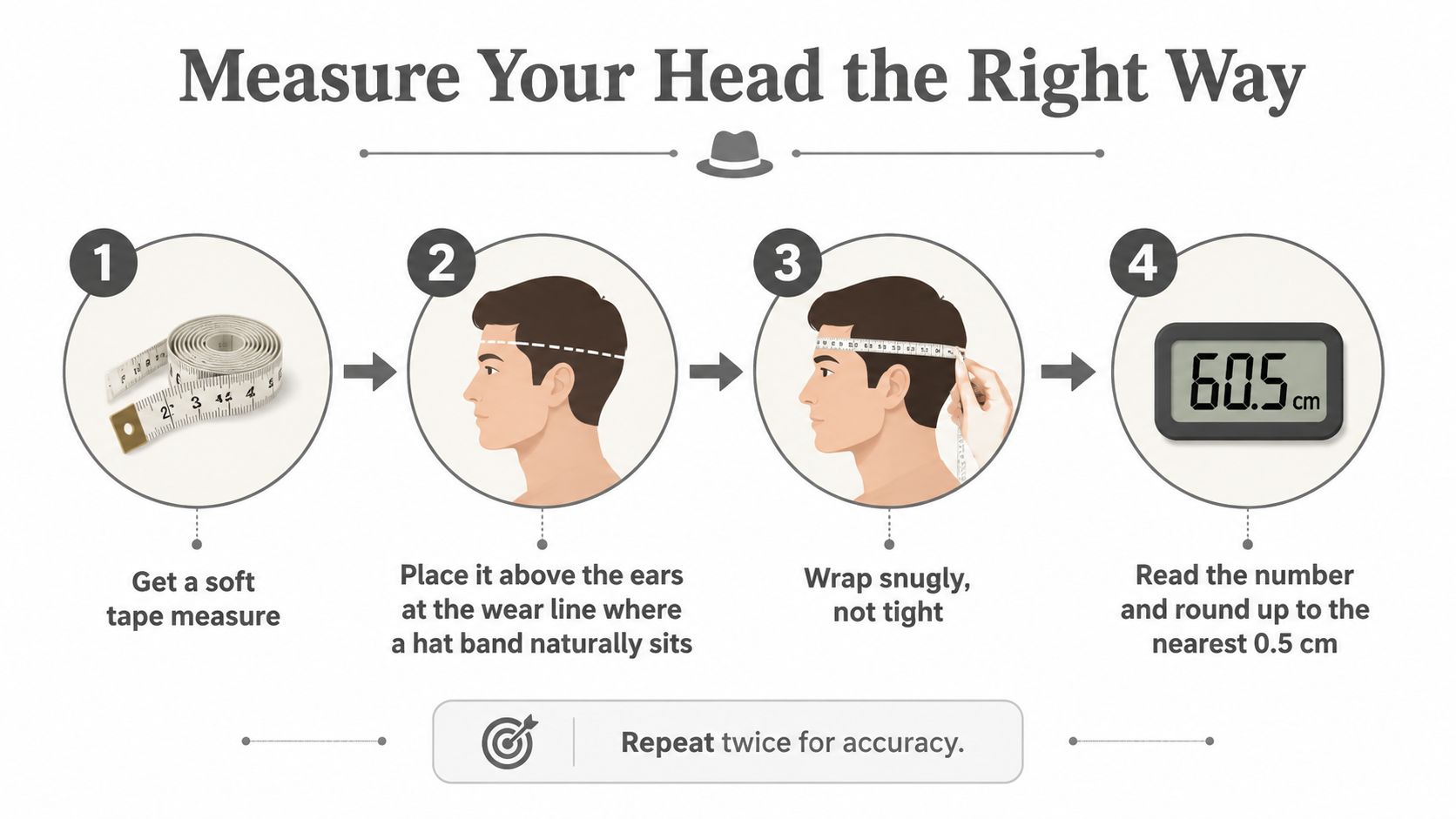
Your measurement determines every later decision, so don't rely on a guess based on an old cap. Use a soft tape measure and measure at the exact line where you want the hat to sit, above the ears and across the middle of the forehead. A neutral technical hat-fitting guide uses this wear-line method because a measurement taken too high or too low can send you toward the wrong size chart.
Use this four-step method
- Start with a soft tape. A fabric sewing tape follows the shape of the head. Don't use a rigid metal tape, which can leave gaps and overstate or understate the circumference.
- Find the wear line. Position the tape above the ears and across the mid-forehead, roughly one finger-width above the eyebrows. Keep your hair in its normal wearing condition, but don't measure over a raised style such as a pompadour.
- Pull snugly, not tightly. The tape should touch the head without compressing hair or skin. If it leaves a groove, you've pulled too hard. If it hangs away from the skull, the reading is too loose.
- Take three readings. Rotate the tape slightly each time, write down the results, and average them. Consistency matters more than the brand of tape.
A head around 56 to 57 cm commonly converts to a US fitted size around 7 to 7 1/8, while larger measurements around 59 to 61 cm commonly fall around 7 3/8 to 7 5/8, depending on the manufacturer's chart. The forensic and hat-size reference material reinforces the central point: hat size is based on measurable circumference, not appearance.
If your number falls between listed sizes, go up and use a reducer rather than forcing the smaller option. A tight hat creates pressure marks and pushes the crown out of shape. Before buying, use the head-measurement guide to check your technique, then compare your averaged number with the specific brand's chart.
Silhouettes That Flatter Larger Heads
The strongest silhouettes for larger heads create vertical lift without looking oversized. Structured snapbacks, mid- to high-crown fedoras, and camp hats with generous front panels usually perform well because they give the forehead room instead of flattening it.
A low-profile cap does the opposite. It presses down on the upper head, shortens the visible crown, and can make the face look broader. That doesn't mean every low-profile style is forbidden. It means you should understand the trade-off before buying one, especially if the hat's crown is shallow and its brim is narrow.
| Silhouette | Crown Height | Brim Width | Effect on Larger Head |
|---|---|---|---|
| Structured snapback | At least 12 cm | 7 to 8 cm | Adds lift and keeps the head visually balanced |
| High-crown fedora | 10 to 12 cm | 7 to 9 cm | Lengthens the face and frames broader features |
| Camp hat | Generous front panel | Moderate, structured brim | Gives the forehead room without excess height |
| Flat-brim trucker | Often shallow | 7 to 8 cm | Can compress the crown and exaggerate width |
| Low-profile dad cap | Shallow | Narrow to moderate | Makes the upper face read wider |
| Slouchy beanie | Flexible, variable | No brim | Can ride up or collapse unless it has enough stretch |
The guide to low-profile hats is useful vocabulary, but the buying decision should come from the actual measurements. Look for product descriptions that state crown depth, panel construction, or a fitted circumference. If a listing only says “one size,” treat that as incomplete information.
Choose the brim as a frame
A brim around 7 to 8 cm often gives a larger head enough visual framing without turning the hat into the main event. Wider faces can also handle a broader brim, while a narrow visor may draw attention toward the circumference.
The best result comes from proportion. A substantial head with a tiny brim can look crowded. A shallow crown with an oversized brim can look theatrical. Aim for a hat that gives the face a clear outline and the crown enough room to stand upright.
Matching Brim Width and Crown Depth
A good hat fitting is a pairing exercise. You're matching crown depth, brim width, and closure type, not hunting for a magic style that flatters every larger head.
For caps, start with a structured six-panel crown that reaches at least 12 cm deep. Pair it with a flat or gently curved brim around 7 to 8 cm. A snapback works well because the closure handles circumference adjustment while the structured crown preserves shape. If the hat is slightly generous, add a reducer. Don't tighten a shallow cap until it buckles.
Fedoras need a different balance. A crown around 10 to 12 cm gives the head vertical space, while a brim around 7 to 9 cm creates a deliberate frame. Match the brim to shoulder width as well as head size. A broader wearer can carry a wider brim naturally, while a narrower frame usually looks cleaner with the lower end of that range.
| Hat Type | Crown Depth | Brim Width | Sizing Move |
|---|---|---|---|
| Structured snapback | At least 12 cm | 7 to 8 cm | Adjust the snap, then use a reducer if needed |
| Performance golf cap | Around 12 cm | Around 7 to 8 cm | Choose an extended size before tightening the closure |
| Fedora or felt hat | 10 to 12 cm | 7 to 9 cm | Size for the circumference, then refine with an internal band |
| Beanie | At least 22 cm of vertical stretch | No brim | Choose cuffed or slouchy construction that won't ride up |
| Bucket hat | Around 8 cm | 6 to 7 cm | Size up when the head sits above 61 cm |
Use the wear-line test
Before styling the hat, place it one finger above the ears and two fingers above the eyebrows. The sweatband should contact the head evenly. The crown shouldn't collapse at the front, and the brim shouldn't tilt upward because the hat is fighting the forehead.
Beanies deserve special attention. A short knit cap may look fine in a product photo but ride upward on a larger head. Choose a cuffed or slouchy model with enough vertical stretch to cover the crown without constant adjustment.
A larger head doesn't need a bigger logo. It needs a hat with enough architecture.
Bucket hats should sit comfortably without gripping the temples. If your head is above 61 cm, sizing up can prevent the crown from riding high, but don't compensate with an excessively broad brim. The goal is coverage with control.
Styling a Big Head Hat From the Course to the Clubhouse
A 60.5 cm head gives us a useful real-world fit test. Start at the tee box with a perforated performance cap, a crown around 12 cm, and a brim around 7.5 cm. Worn level, that combination sits flat without squeezing the forehead, and the brim has enough presence to relate to the wearer's shoulders.

The same wearer previously tried a flat-brim trucker. Its crown sat too shallow, the front panel pressed down, and the brim looked detached from the rest of the outfit. The cap technically fit, but the silhouette made the forehead look compressed. That's a fit failure, not a head-shape failure.
For travel, switch to a structured wool five-panel in neutral camel. The higher crown adds a little length to the face, while the quiet color keeps the hat from competing with a jacket or knitwear. Keep the front panel smooth and the brim level. A dramatic backward tilt gives the forehead more exposure and usually makes the proportions less controlled.
The clubhouse change
At the clubhouse, a soft fedora with an 11 cm crown and an 8 cm brim shifts the same wearer into a more polished register. Wear it square to the brow, not tipped aggressively to one side. The hat should frame the face rather than announce that you're trying to disguise it.
For colder rounds or casual travel, a knit option such as the Snuggyz Australia pom pom beanie can work when its stretch and vertical coverage suit the wearer. The pom pom adds height, but the lower edge still needs to stay comfortably in place instead of creeping upward.
A short visual guide can help you compare the difference between a compressed cap and a structured one:
The lesson is simple. Brim-to-shoulder ratio, crown lift, and tilt discipline matter more than brand or color. Once those are correct, the same head moves easily from golf course to lounge.
Why XXL and Performance Hats Are the Smart Buy
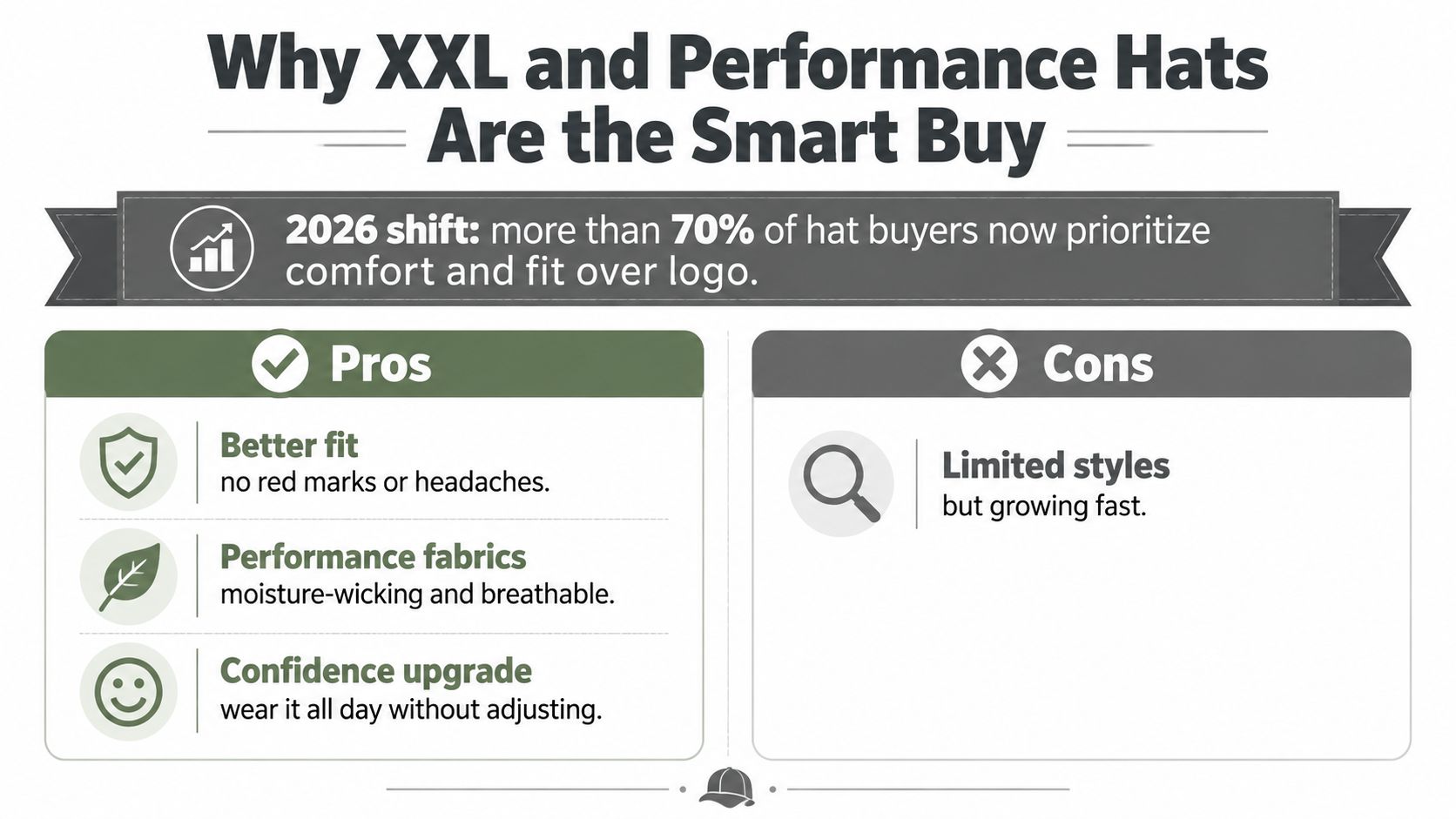
Extended sizing is a confidence upgrade because it removes the need to force a standard hat into a job it wasn't built to do. Current consumer research identifies fit and comfort as major headwear purchase drivers, with 80% of U.S. respondents naming them as influential factors in Grand View Research's category insights. The smart move is to shop where those requirements are designed into the product.
Performance hats are especially practical for golf. Look for a moisture-managing sweatband, perforated rear panels, and a closure that adjusts without collapsing the crown. A technical fabric can keep the hat comfortable through a long round, but material alone won't save a cap that's too shallow or too tight.
Shop the construction, not the label
Several product categories now serve larger circumferences more deliberately:
- Extended-size golf caps: 2ndShotMVP offers golf headwear with fit-specific sizing information, including designs made for larger circumferences.
- Technical larger-fit ranges: Melin Hydro styles are worth checking for breathable, performance-led construction and a crown that doesn't rely on a tight squeeze.
- Classic XXL felt: Stetson's XXL crushable felt options suit shoppers who want a traditional silhouette with more room.
- High-crown outdoor designs: Larger-fit outdoor hats increasingly combine deeper crowns with ventilation and adjustable systems.
For a golf-specific buying framework, use this performance golf hat guide to evaluate sweat management, structure, and fit together rather than treating them as separate features.
The only drawback is that extended-size collections may offer fewer colors or fashion-forward shapes than standard ranges. That limitation is shrinking as larger circumferences and deeper crowns enter everyday design language. Shop an XXL hat the way you'd shop shoes: confirm the measurement, inspect the construction, and reject anything that pinches.
Your Confidence-First Hat Shopping Checklist
Start with the number, then judge the silhouette. Measure your wear-line circumference and record the result before browsing. If your head sits in the 59 to 62 cm range, begin with extended sizing and look for a crown depth above 11 cm with a brim between 7 and 9 cm for versatile daily styles.
Save this before you buy
- Confirm the circumference: Measure three times, average the readings, and compare the result with the manufacturer's chart.
- Inspect the crown: Choose more than 11 cm of depth when a standard cap makes your forehead look compressed.
- Check the brim: Look for 7 to 9 cm when you need a balanced everyday frame.
- Test the sweatband: You should be able to slide two fingers beneath it without creating a pressure point.
- Study the brim angle: Stand in front of a mirror and check that the brim follows the cheekbone line instead of pointing sharply upward or crowding the face.
- Wear it for ten minutes: Walk, look down, and turn your head. Pressure, slipping, or crown collapse will reveal itself quickly.
A hat that fits properly should stay in place without pinching. If you need to keep adjusting it, the problem is usually the size or the crown, not your styling ability.
Screenshot cue: Measure first, choose depth second, balance the brim third, and never apologize for buying the size that fits.
2ndShotMVP offers premium golf hats, beanies, and lifestyle apparel with fit-specific options for larger circumferences, including designs built for wear on and off the course. Visit 2ndShotMVP to find a structured golf cap or cold-weather hat that matches your measurement and preferred silhouette.

