

The most popular golf-hat advice is also the laziest: grab a baseball cap and move on. It works, but “works” isn't the same as protects well, especially when your ears, cheeks, and neck spend hours facing open sky. Wide brim golf hats deserve a place in the serious player's rotation, not as a fashion experiment, but as specialized equipment for sun-heavy rounds.
The case isn't “more brim equals more protection.” Brim width, downward slope, crown depth, fabric, ventilation, wind resistance, and swing clearance all decide whether the hat helps you or ends up abandoned in the cart. The data makes the protection gap worth taking seriously, while the on-course tradeoffs determine whether you'll keep wearing it.
Why the Wide Brim Deserves a Real Look
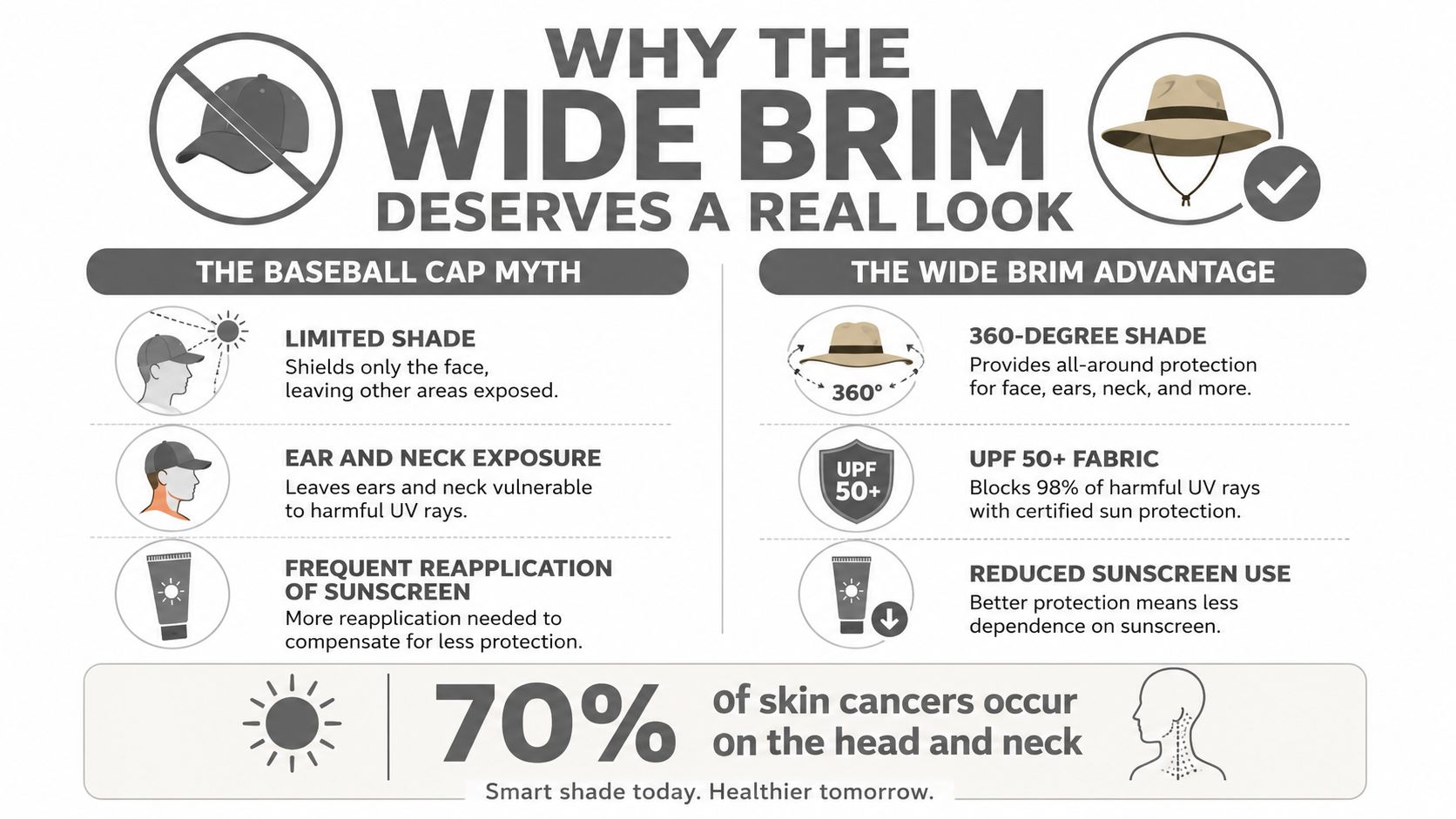
A baseball cap is familiar, stable, and easy to swing in. That makes it a sensible default, but not automatically the optimal golf hat. A cap concentrates shade over the forehead and leaves the ears, sides of the face, and neck exposed, exactly where a player can accumulate repeated sun exposure over years of outdoor play.
Golf headwear has been moving toward function for a long time. Historical golf-apparel evidence traces the shift from late-19th-century flat caps toward wider brims as golfers prioritized sun coverage, with bucket hats becoming part of golf wardrobe culture by the 1960s. Modern golf-hat history still identifies wider-brim sunhats as common on courses, and a U.S. design patent for a “wide brim hat” was filed in 2014 and published in 2016, evidence that the shape remains commercially relevant. The evolution of different types and styles of golf hats
The protection gap is measurable
The most useful evidence comes from research that examined hats marketed to golfers and the UV exposure they reduce. Only 19% of those hats were wide-brim designs, meaning the category remains a minority choice despite its coverage advantage. The same research reported that a wide-brimmed hat reduced standard erythema dose to the neck by 25% compared with a baseball-style hat, and reduced exposure to the ears by almost 50%. Quantitative golf-apparel and UV exposure data
That doesn't make a wide brim a magic shield. A hat can't cover every facial angle, and sunscreen still matters. It does make the wider silhouette a rational choice for long rounds, resort trips, practice sessions, and courses where the sun feels like part of the difficulty.
The practical takeaway is simple. Keep the cap for windy days, tight lies, and familiar stroke-play comfort. Add a properly designed wide brim for rounds where coverage matters more than tradition. The right purchase comes down to geometry, construction, and fit, not whether the hat looks conventional in the pro shop.
If you want a broader look at golf headwear choices, this guide to the best golf hats for sun protection is a useful companion.
How Brim Geometry Actually Shields Your Face
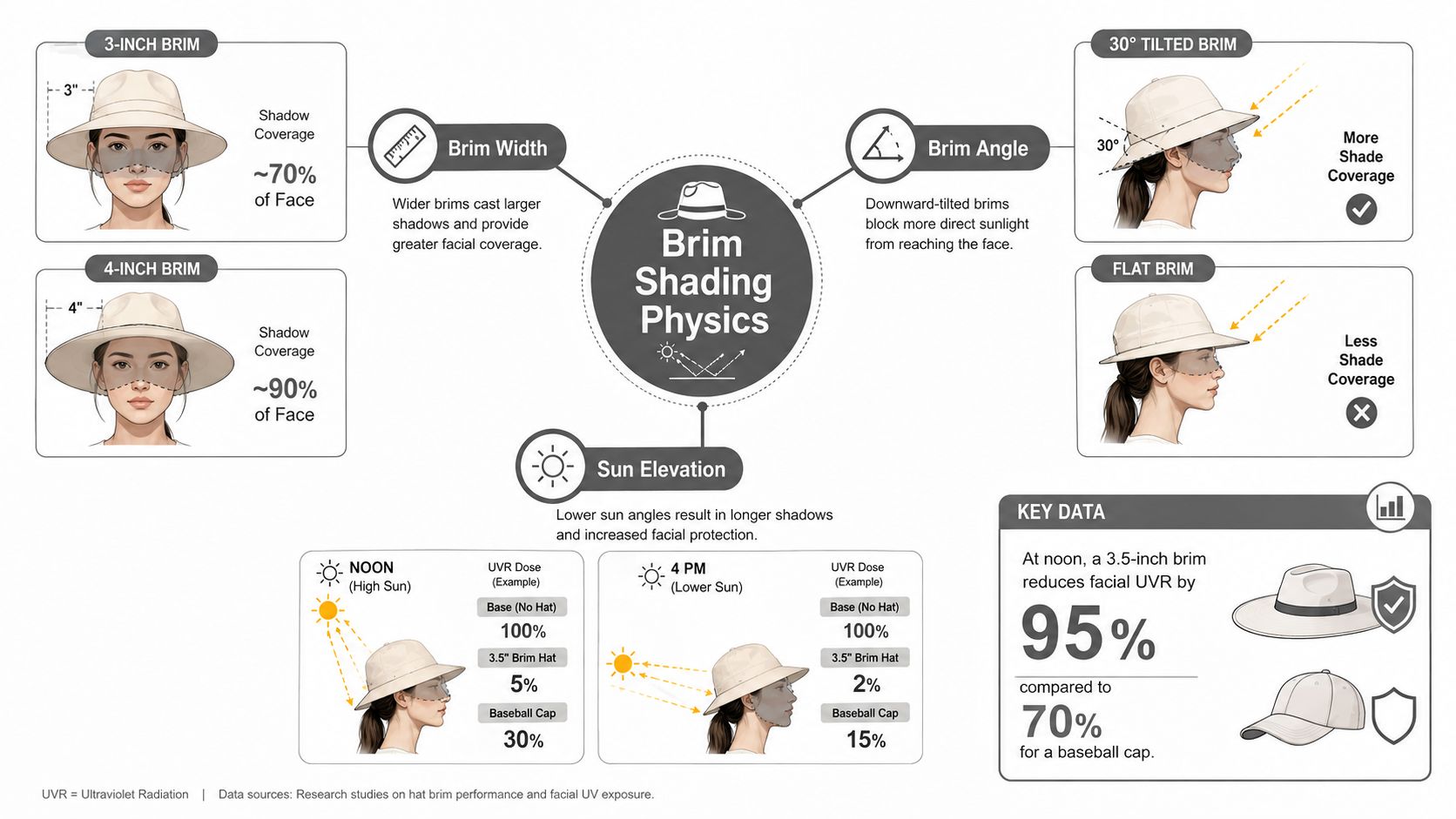
A brim creates shade by interrupting the path between the sun and your skin. The lower the sun sits, the longer the shadow must travel across your face, so a brim that feels adequate at midday can leave the cheeks and ears exposed during a low-angle morning or late-afternoon round.
This is why the visual shape matters more than a product listing's broad promise of “sun protection.” A flat or gently downward-sloping brim extends the shadow outward. A brim that curls sharply upward may look stylish, but it gives the sun a clearer route toward the sides of your face.
What the UVR data says
Controlled UVR analysis found the lowest mean dose to the entire face beneath a wide-brimmed hat was 1.7 SED. The same research found that no hat achieved 100% facial protection, and maximum protection at facial zones reached around 76%, which is why a hat should supplement, not replace, sunscreen and sunglasses. Peer-reviewed facial UVR analysis
That result is more useful than a vague claim that wide brims “block the sun.” The brim changes which facial zones receive direct and scattered ultraviolet radiation, but it can't seal every gap. Crown depth, side coverage, brim angle, and your head position all affect the final result.
Independent dermatology research adds a practical threshold. Small brims offer negligible protection beyond the forehead and vertex, while a wide brim greater than 7.5 cm is needed to produce reasonable protection factors above 3 around the nose and cheeks. Practical sun-protection guidance also recommends at least a 3-inch brim to shade the face, scalp, neck, shoulders, and upper back. Dermatology research on brim width
Width isn't the whole story
Think of brim size as the starting point, not the complete specification. A narrower brim can shade the forehead during a high-sun tee time, but a wider, downward-sloping brim gives you more margin when the sun moves sideways or your head tilts over a breaking putt.
Curvature matters on the course because your posture is constantly changing. A brim with useful side coverage protects better when you're on a sidehill stance, looking under a tree, or turning your head toward a playing partner. A rigid flat disk may measure wide on paper yet leave gaps at the temples. I prefer a brim that holds its shape but flexes slightly, because it keeps the shaded zone consistent without feeling like a piece of hard plastic attached to your head.
Wide Brim vs Baseball Cap vs Visor
No single golf hat wins every round. The useful comparison is about coverage versus freedom, then matching that balance to weather, course conditions, and your own skin sensitivity.
| Feature | Wide Brim Hat | Baseball Cap | Visor |
|---|---|---|---|
| Facial coverage | Broad coverage across the face, with wider styles reaching farther toward the ears and neck | Primarily frontal coverage | Frontal coverage from the bill |
| Ear and neck coverage | Strongest option when the brim slopes downward | Ears and neck remain exposed | Ears, scalp, and neck remain exposed |
| UPF-rated protection | Available in UPF-rated technical fabrics | Available in UPF-rated fabrics, but coverage still depends on the cap shape | Fabric shields the forehead, while uncovered areas need separate protection |
| Airflow and heat management | Ventilation depends on crown panels and fabric | Usually familiar and breathable | Excellent airflow over the crown |
| Swing clearance | Needs a fit check, especially with a tall crown or stiff brim | Usually easiest during the swing | Excellent clearance |
| Wind stability | Requires a secure fit and often a chin cord | Usually strongest in gusts | Can shift or lift depending on the bill |
| Packability | Technical versions can pack well, while rigid styles resist crushing | Easy to store in a bag | Very easy to pack |
| Style range | Bucket, boonie, safari, and fedora-inspired options | Traditional athletic look | Sporty and minimal |
Wide brim hats
A wide brim is the coverage specialist. It protects more of the face and can extend shade toward the ears and neck, but the extra material creates more surface area for wind and makes fit more important. The hat must sit securely without pressing against your sunglasses or interfering with your shoulder turn.
Baseball caps
Caps remain the dependable all-rounder. They handle wind well, pack without drama, and rarely interfere with a driver swing. Their weakness isn't performance. It's uncovered skin. If you're wearing one, treat sunscreen, sunglasses, and neck coverage as part of the system rather than assuming the bill handles the whole job.
Visors
Visors are excellent in heat when airflow matters most. They keep the crown uncovered, which many golfers find more comfortable, but they offer no built-in scalp coverage and don't protect the ears or neck. Choose one for ventilation and freedom, not full sun coverage.
My playing-partner verdict: Own a cap for wind, a visor for maximum airflow, and a wide brim for exposure-heavy rounds. That's a rotation, not indecision.
Choosing the Right Brim Width, Material, and Construction
Start with the protection gap, not the logo. A brim greater than 7.5 cm gives the nose and cheeks a more reasonable shield, while practical guidance recommends at least 3 inches for broader shading across the face, neck, shoulders, and upper back. That threshold was covered earlier, so the buying decision here is how much coverage you can wear without compromising your swing.
For most golfers, a brim around the three-inch class is the right starting point. Go broader for extremely sun-heavy walking rounds, but only when the crown stays stable and the brim clears your sightline and shoulder turn. Wider coverage is useful only if you keep the hat on.
| Brim Width | Crown Depth | Fabric | Best For |
|---|---|---|---|
| Around 3 inches | Moderate, close-fitting crown | UPF-rated polyester with a moisture-wicking band | Everyday golf and mixed sun exposure |
| Above 3 inches | Moderate to deeper crown | Structured technical fabric with ventilation | Long walking rounds and intense sun |
| Broad safari-style brim | Deeper crown with secure adjustment | Lightweight, packable UPF-rated material | Maximum coverage, travel, and resort golf |
Material makes or breaks hot-weather comfort
A floppy cotton or canvas bucket hat can feel comfortable in the shop and miserable after hours of sweat. Choose UPF-rated fabric, a moisture-wicking inner band, and ventilation panels that release heat without leaving large gaps in the crown.
UPF measures fabric protection, not the coverage of the finished hat. A strong textile cannot cover ears or neck that the brim leaves exposed. Judge the material and brim shape as one system, then check whether the crown stays secure through a full swing.
Visors trade coverage for airflow. Compare that compromise with this guide to visor golf hats, then choose based on your usual exposure and tolerance for an uncovered scalp and ears.
Construction details worth paying for
A dark under-brim cuts reflected glare around water and pale bunker sand. The brim should be rigid enough to hold its form, yet flexible enough to recover after contact with a bag or cart compartment. Stitched seams beat glue-only joins around the sweatband and brim edge, where folding puts repeated stress on the construction.
A packable crown belongs in a golf bag only when it rebounds cleanly. If the hat must remain perfectly upright to look usable, choose a more resilient construction. Coverage, swing clearance, wind behavior, and packability all matter, because the hat provides protection only when you wear it.
What It Really Feels Like to Play a Round in One
I tested the idea the way it matters, during a long Saturday round in a 3.5-inch brim bucket hat. On the first tee, the difference was immediate. The eastern sun didn't force the usual squint, and the brim shaded more than the narrow strip directly above the eyes.

The useful parts show up between shots
The driver swing cleared the brim without trouble because the crown sat low and the brim flexed rather than standing rigidly beside my shoulders. On the fairway, the shade was the benefit. I wasn't constantly adjusting my face away from the sun while choosing a club or walking between shots.
The back nine exposed the compromise. A headwind caught the brim, and the chin cord stopped the hat from becoming a fairway target. The cord wasn't decorative, but it needed a reliable lock that stayed comfortable instead of rubbing under the jaw.
The inner sweatband also mattered more than the exterior fabric. Once the band became saturated, the hat felt heavier and less stable, so moisture management is a performance feature, not a comfort bonus. A good band keeps the crown seated and reduces the urge to remove the hat when the round gets tiring.
Where it gets in the way
Around the greens, the shade near the eyes helped me read slopes without squinting. The nuisance arrived late in the round, when a low sun forced a slight brim tilt and changed the visual feel of the putt. That wasn't a dealbreaker, but it reminded me that a wide brim is part of your visual field.
The worst moment came from deep rough. A punch shot near a tree required a low stance, and the crown bumped a branch during the setup. The hat wasn't broken, but it made the point clearly. Wide brim golf hats aren't halos. They still occupy space, and awkward lies expose that space.
Between shots, the hat survived being pushed into a cart cubby and recovered without a permanent crease. That's the standard I want. If a hat demands precious storage space or collapses into an unwearable shape, its theoretical protection won't matter because it'll stay at home.
Dialing In Fit, Packability, and On-Course Confidence
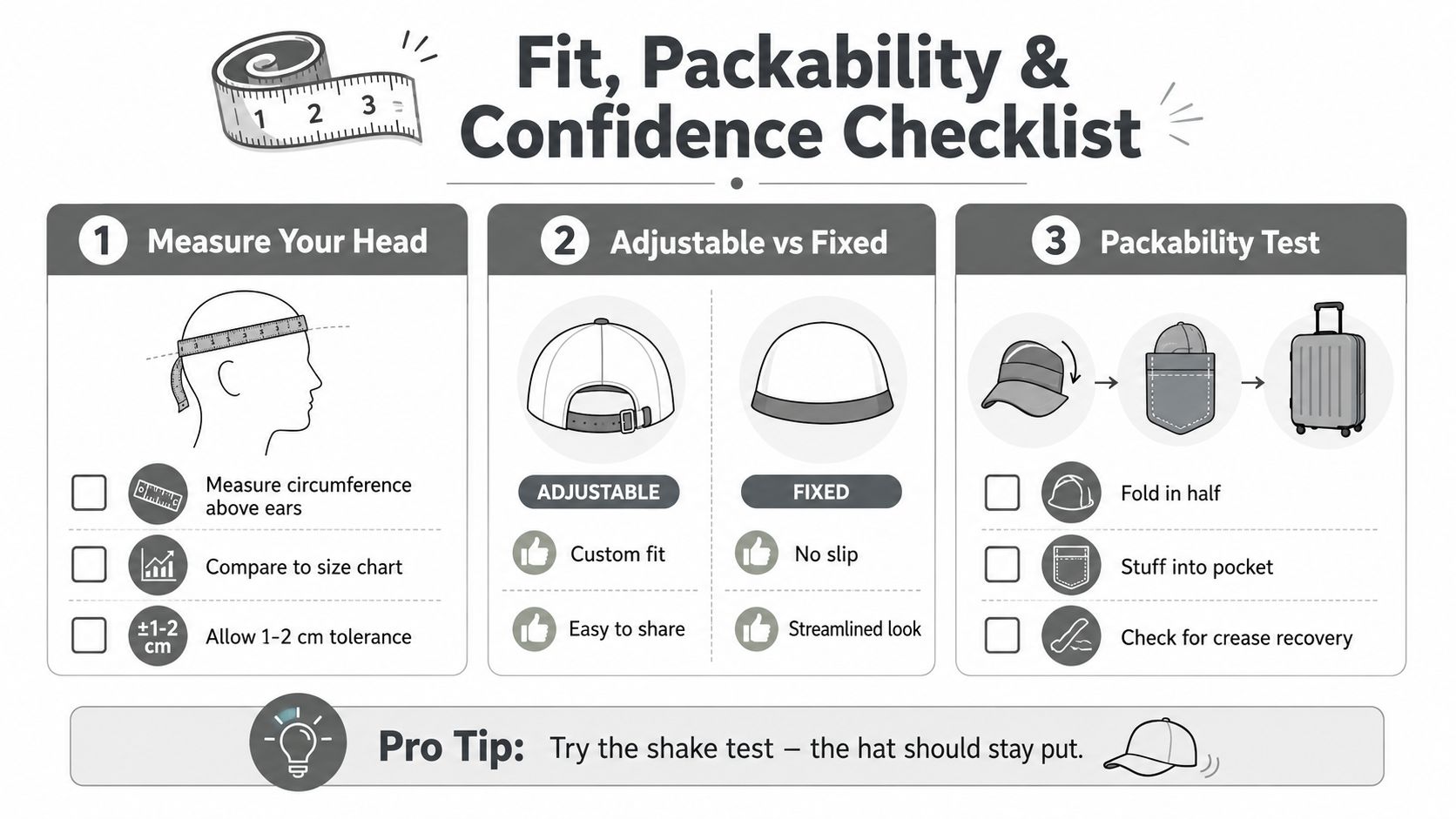
Fit should be tested with movement, not judged while standing in front of a mirror. Measure around your head above the ears and compare that measurement with the manufacturer's chart. A fixed size can look cleaner, while an adjustable closure gives you more control when your hair, sweatband, or sunglasses change the fit.
For a detailed measuring method, use this guide on how to measure your head. Don't cinch the hat until it feels tight. You want enough grip to survive a head turn and a gust, without creating pressure that becomes distracting during the back nine.
Run the fit tests in the shop
Put on the sunglasses you play in. Check that the crown doesn't press against the arms, then rotate your head toward both shoulders. The brim shouldn't tap the frames, slide down over your eyes, or lift dramatically when you look toward the ground.
Use a simple clearance check around the ears. You should have enough room for the brim edge to sit comfortably without pinching, but not so much looseness that the hat rocks during a swing. Then perform the shake test. Turn your head briskly from side to side. If the hat moves before the brim does, adjust the closure or choose another crown shape.
Treat packability as a recovery test
Fold the hat as the manufacturer intends, place it in the pocket or bag compartment where it'll travel, and check whether the brim returns to shape. A flexible wire or internal stiffener can help, but only if the material recovers instead of retaining a sharp fold.
My five-point checkout list is short:
- Head fit: It stays comfortable without over-tightening.
- Sunglasses clearance: The crown and brim don't fight your frames.
- Swing movement: The brim clears your shoulder turn and follow-through.
- Wind security: The adjustment or chin cord stays locked.
- Recovery: The hat returns to a usable shape after storage.
Practical rule: If you wouldn't trust the hat on the practice range, don't expect confidence with a scorecard in your pocket.
Making the Case for Adding One to Your Bag
Cap loyalists have good reasons for staying loyal. Baseball caps are familiar, stable in wind, easy to pack, and almost invisible during the swing. Those advantages are real, but they're situational. They don't make a cap the right answer for every round.
A wide brim earns its slot when the exposure is long, the sun is aggressive, or you need more coverage than sunscreen alone can comfortably provide. The research discussed earlier found that only 19% of hats marketed to golfers were wide-brim styles, while wide-brim designs reduced neck exposure by 25% versus a baseball-style hat and ear exposure by almost 50%. Peer-reviewed research on golf hats and missed coverage
Three rounds where the wide brim wins
- High-exposure walking rounds: Texas summer, Arizona winter, and Australian links all reward a hat that shades more than the forehead. A wide brim becomes especially persuasive when you expect to stay outside for most of the day.
- Skin-protection priority: If you need to limit exposure around the face, ears, or neck, choose coverage deliberately. A wide brim can't provide complete facial protection, so keep sunscreen and sunglasses in the routine.
- Casual golf and practice: Range sessions, resort golf, and relaxed rounds don't demand the same traditional look as a formal competition. Comfort and shade can matter more than the familiar cap silhouette.
The sensible answer isn't to throw away your caps. Keep one for gusty weather and rounds where maximum swing clearance matters. Keep a visor for oppressive heat when scalp coverage isn't your priority. Add a structured, packable wide brim for the days when measurable facial and neck coverage matters most.
My recommendation comes down to three points: the brim reduces facial UV exposure more effectively than a conventional cap, the right golf-specific construction handles most clearance and storage objections, and repeated use gives you a practical protection tool rather than another piece of unused apparel. Try one on with your sunglasses, make a full swing, and keep it in the bag if it passes the test.
2ndShotMVP offers golf hats, beanies, and lifestyle apparel for men and women, with designs made for wearing on and off the course. Visit 2ndShotMVP to browse headwear that can join your wide-brim option in a practical golf rotation.
