

You're standing at the truck tailgate or the garage bench, packing rods, sunscreen, a towel, and one hat you've worn into the ground. It looks fine until the wind gets involved, the sun bounces off the water, and that “good enough” hat starts feeling like a mistake you'll wear all day. That's why fun fishing hats matter, they're not just decoration, they're the one piece of gear that has to protect you, stay on your head, and still look intentional when the fishing turns into lunch, golf, or a beer at the marina.
Why the Right Fishing Hat Actually Matters
The wrong hat is annoying in a way that ruins the whole day. It rides up when you cast, soaks through fast, and gives you that hot, damp forehead feeling that makes you want to quit before the bite even turns on. The right hat disappears into the trip. You stop thinking about it because it handles the sun, keeps sweat off your face, and doesn't look goofy when you're standing at the dock after the boat's tied off.
The hat you wear says more than you think
A fun fishing hat is doing two jobs at once. On the water, it has to function like gear. Off the water, it has to feel like part of your style, not some costume you only wear when you're chasing trout or sitting on a flats boat.
That's why the old bucket-hat shape keeps coming back. The style traces back to the early 1900s, when Irish farmers and fishermen wore it for practical weather protection, and it reappeared in mainstream fashion in the 1960s and 1980s according to the historical summary on Bucket hat history. The point isn't nostalgia. It's that good shapes survive because they work, then people keep reinterpreting them.
Practical rule: if the hat only looks fun but can't stay comfortable for a full day outside, it's a bad buy.
A good hat solves real fishing problems
Fishing gives you sun from above, glare from below, and wind from the side. A cheap cap might cover your forehead, but it leaves the rest of your face exposed when the light gets harsh. A smarter hat handles the heat, the sweat, and the movement without making you fuss with it every ten minutes.
That's why I'd rather see a hat with a real brim, a decent fit, and some personality than a bland cap that only works on paper. If it can move from the boat to a barbecue without making you look like you just escaped a tackle shop, even better.
The Main Styles of Fun Fishing Hats Explained
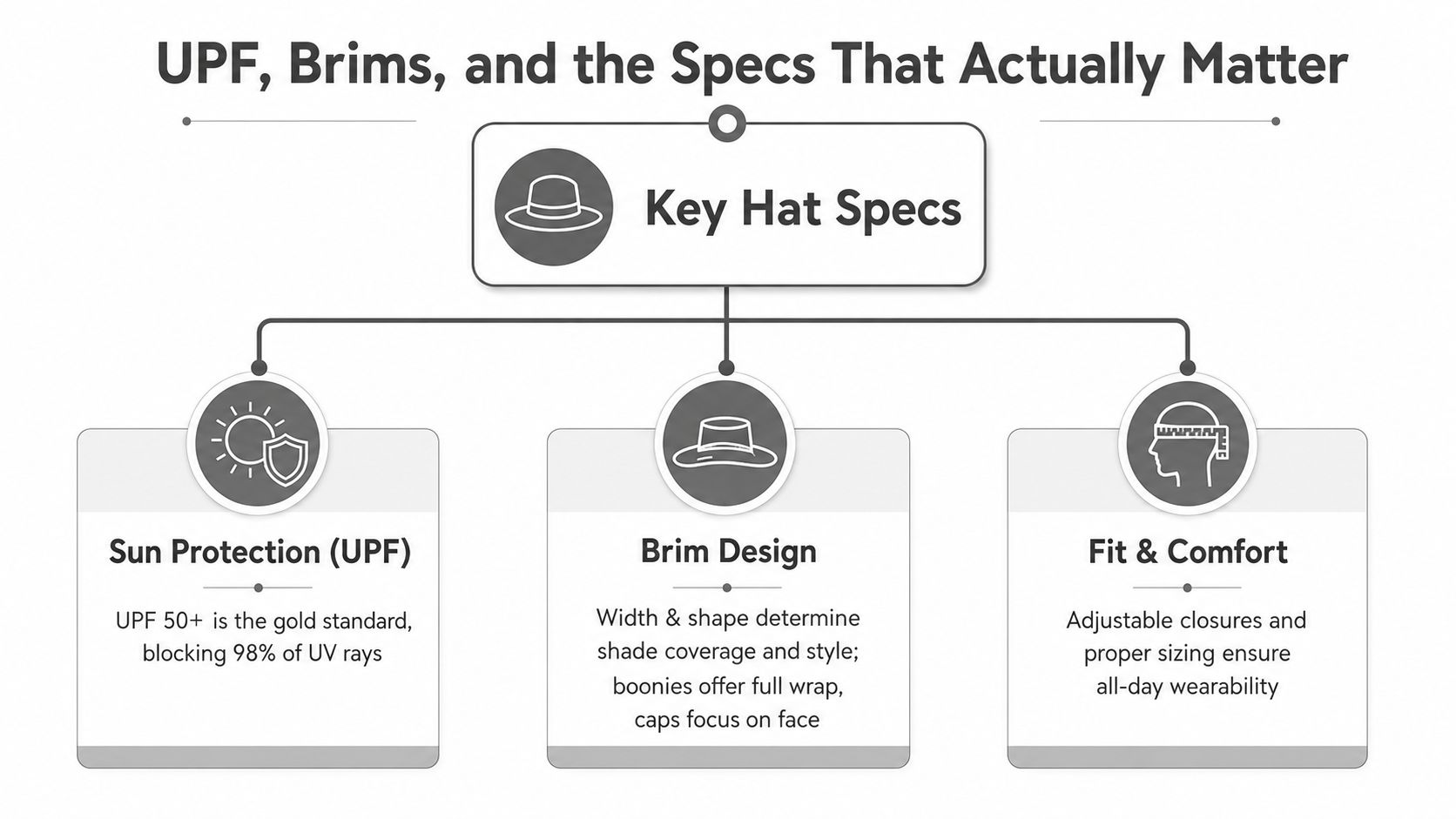
The main styles are simple once you stop overthinking them. Bucket hats, boonie hats, caps, and visors each send a different message, and the fun part comes from details like patch placement, contrast stitching, novelty prints, and mixed materials. The shape gets you in the right lane, then the design choices tell people whether you're serious, relaxed, or somewhere in between.
Bucket hats and why they keep coming back
Bucket hats are the most versatile crossover option. The soft, narrow downward-sloping brim and unstructured crown make them packable, easy to wear, and naturally relaxed, which is exactly why they keep drifting back into fashion after their utility roots. If you want a hat that feels casual but still has actual fishing credibility, this is the safest fun choice.
The fun version is where the personality shows up. Look for stitched patches, washed fabrics, contrast panels, or a clean logo that doesn't scream for attention. If you want one hat that can handle the boat, the cart path, and a weekend cookout, this is usually the one.
Boonies and wide-brim hats for serious sun days
Boonie hats and wide-brim styles are what I reach for when protection comes first. They're not flashy by default, but they become fun when the fabric, stitching, or color blocking gives them some energy. These are the hats for long offshore days, bright flats water, and anywhere the sun feels like it's coming at you from every direction.
If the brim is too floppy or too oversized, it starts looking costume-like. If it's well balanced, it looks sharp and intentional. That's the difference between looking ready and looking like you borrowed gear from a camping bin.
Caps and visors for easygoing days
Structured and unstructured caps are the easiest to wear, but they're the least protective. They work best when you want a lighter, simpler look, or when you're spending part of the day in cooler weather. Visors are even more casual, and they lean into golf-style comfort, which makes them useful for the 19th hole crowd.
If you're deciding between styles, use the setting as the filter. Offshore and tropical water point toward wider coverage. Dock days, freshwater evenings, and social settings give you more freedom to play with patches, colors, and mixed materials.
See the crossover logic in a golf bucket hat
UPF, Brims, and the Specs That Actually Matter
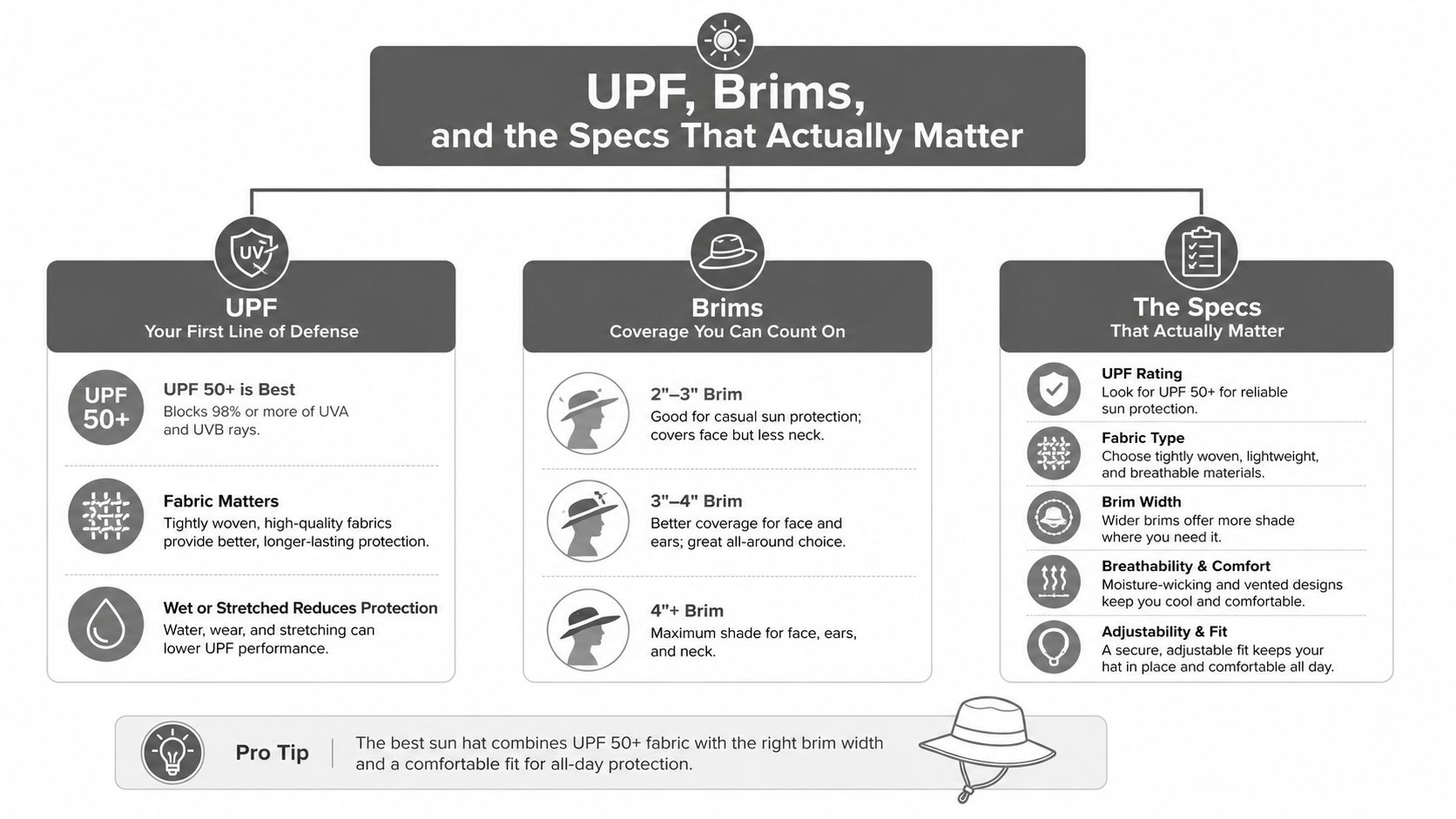
The number that matters most is UPF 50+, because that's the meaningful sun-protection benchmark for fabric, and it blocks about 98% of harmful UV rays according to the technical guidance at fishing hat specs. Everything else builds on that. A beautiful hat with weak fabric is just a stylish way to get burned.
Fabric rating is the first filter
Stop trusting vague sun-proof language. If a product page doesn't clearly say UPF 50+, assume the protection claim is mostly marketing. That rating matters more than embroidery, trim, or whatever lifestyle language the brand uses.
Brim shape comes next. A wide brim gives you more shade, especially when you're dealing with reflected light off water, which adds exposure from multiple angles. Coverage around the ears and neck matters more on the water than it does in a parking lot or on a patio, because glare doesn't just come from above.
The extras that actually earn their keep
The best fishing hats pair lightweight synthetics like polyester or nylon with mesh ventilation, moisture-wicking sweatbands, and a chin strap or tie-down system, as noted by American Hat Makers. That combo matters because fishing throws heat, sweat, wind, and spray at you at the same time.
If you want a simple buy rule, use this one. Hot water and long exposure call for maximum coverage and UPF 50+ fabric. Faster-moving air or rougher weather makes retention and breathability more important.
For a useful comparison point outside the fishing world, the advice in finding the perfect surf hat lines up with the same logic, because surf and fishing both punish hats that can't handle water, wind, and glare. That's not a fashion problem, it's a spec problem.
Match sun-protection choices with golf hats for sun protection
Matching the Hat to Your Conditions
One hat won't win every day. Humid inshore fishing, windy offshore water, tropical flats, and cool freshwater mornings all punish different weaknesses, so the smart move is to match the hat to the condition instead of chasing one mythical all-purpose option. If you fish in more than one environment, owning two hats beats forcing one hat to do everything badly.
Fishing Hat Style by Condition
| Condition | Best Hat Style | Key Feature to Prioritize |
|---|---|---|
| Humid inshore | Mesh-backed cap or lighter bucket hat | Ventilation and sweat management |
| Windy offshore | Boonie or bucket hat with secure retention | Chin strap or tie-down |
| Tropical flats | Wide-brim hat with full coverage | UPF 50+ and ear and neck shade |
| Cool-weather freshwater | Structured cap or lighter bucket hat | Comfort, fit, and less heat retention |
Humid days punish heavy fabric. If your head overheats fast, choose the most breathable option that still gives you enough shade. Windy days punish loose hats, so retention matters more than looking pretty. Tropical flats are where maximum coverage earns its place, because glare and exposure can stack up quickly.
If you fish mostly in one region, buy for that region first. If you travel, buy one protection-first hat and one easier social hat.
The tradeoff is simple. More coverage usually means less airflow. More ventilation usually means less shade. The right answer depends on whether your bigger problem is heat or exposure.
My rule of thumb is blunt. If the water is bright and the day is long, choose coverage. If the air is thick and the fishing is slower, choose breathability.
Wearing It From the Boat to the 19th Hole
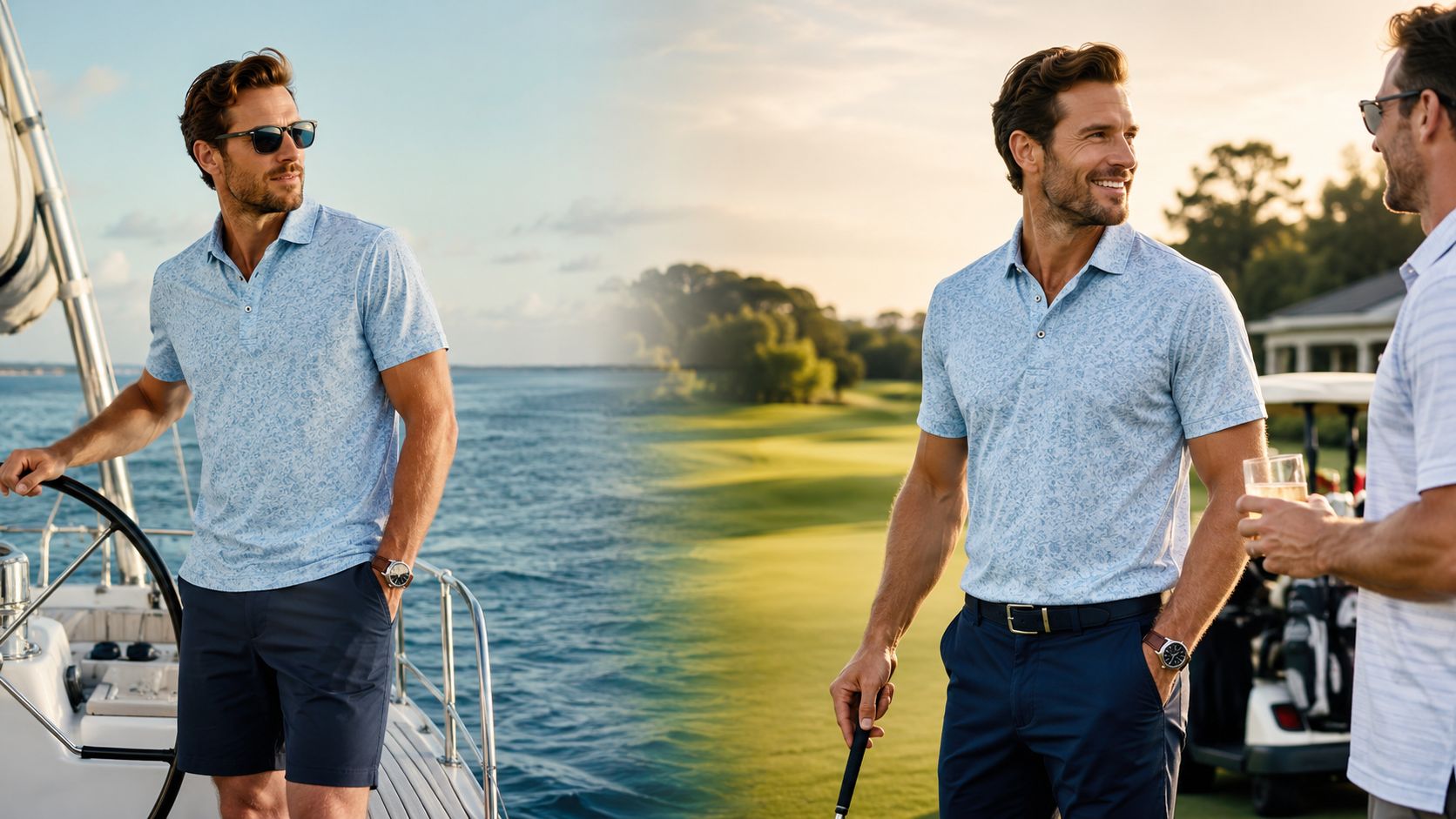
The best fun fishing hat doesn't die at the ramp. It still looks right when you walk into a clubhouse, grab lunch by the marina, or head to a backyard cookout after a morning on the water. That crossover use matters because the hat you enjoy wearing is the one you'll keep reaching for.
Three looks that work without trying too hard
A polo and chinos with a clean bucket hat is the easiest golf-adjacent move. It reads polished enough for the 19th hole and still relaxed enough for the dock. Add a hat with a subtle patch or tonal embroidery, not a loud novelty print, if you want the outfit to feel sharp.
A relaxed marina-to-lunch outfit works best with an unstructured cap or a softer brimmed hat. Think tee, overshirt, shorts, and boat shoes or clean sneakers. The hat should look like part of the outfit, not something you threw on because the sun showed up.
For cooler mornings, pair a structured cap or low-profile bucket hat with a quarter-zip, performance polo, or lightweight pullover. That setup works for early tee times and late afternoon fishing because it doesn't fight the rest of your clothes. The hat just needs to hold its shape and avoid looking too technical.
The crossover angle matters for social reasons too. When you fish in mixed company, you don't always want to look like you're wearing a hard-core guide hat. A smarter fun design gives you fishing credibility without making the whole outfit feel one-note.
If you ever travel where wildlife safety is part of the trip, the practical advice in bear country safety for anglers is worth reading before you go. Good gear choices matter more when your day includes more than just casting.
Sizing, Fit, and Care Without the Headache
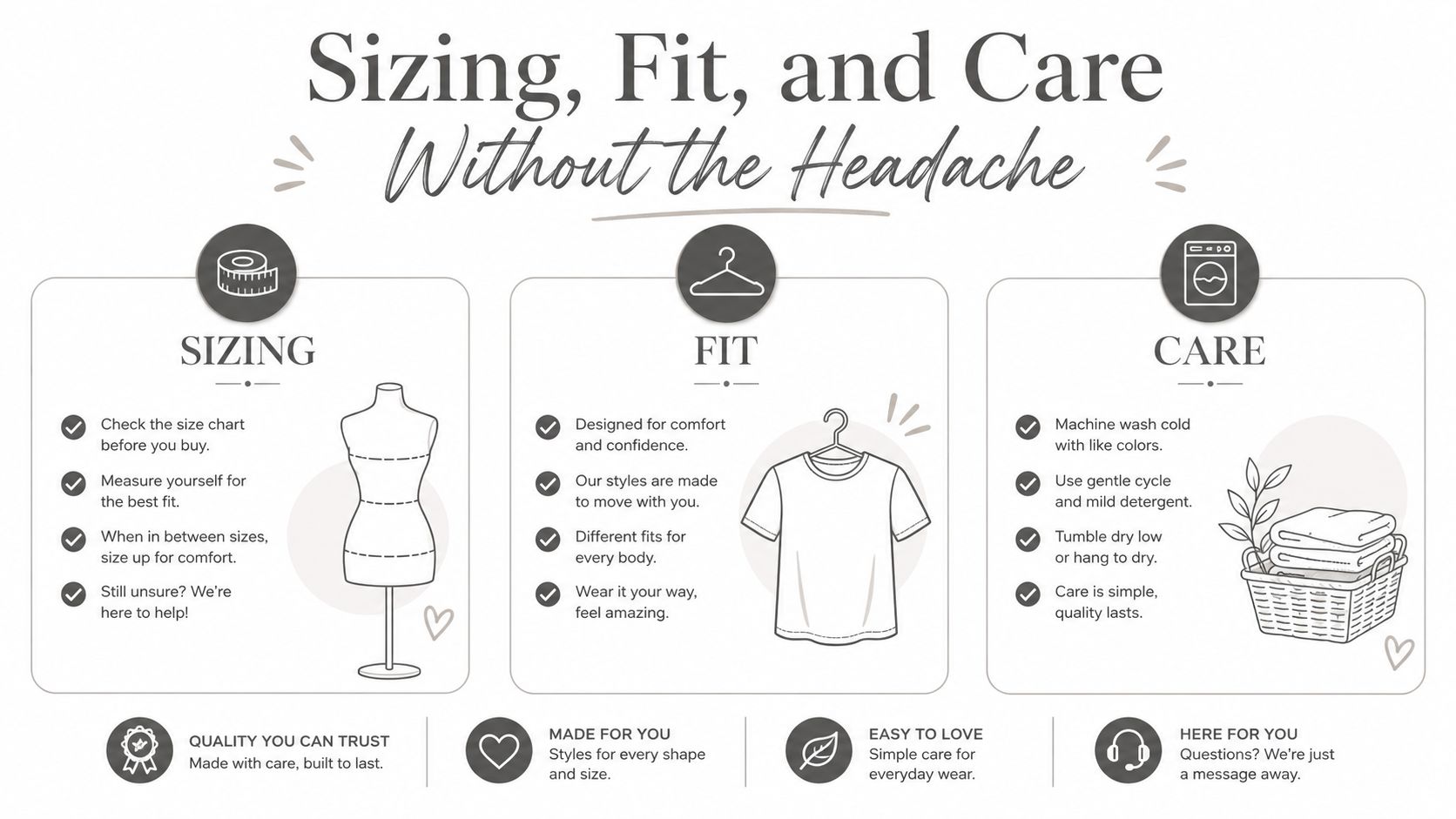
Most hat returns come from fit mistakes, not style mistakes. Measure your head, then buy the size that matches how the hat is built, not the size you wish you wore. A hat should sit low enough to feel secure, but not so low that it crowds your ears or presses down on your forehead.
Fit mistakes that cause real frustration
A brim that flips in the wind usually means the hat isn't balanced well for your head or the crown shape is wrong for your use. Skipping the chin strap on open water is another rookie move, because a hat that looks perfect on land can disappear fast when spray and wind start working together.
Structured caps need a little more attention than soft hats. If you stuff them in a bag, the front panel can collapse and never sit right again. Soft buckets are more forgiving, but they still look better if you don't crush them into a tackle box like they're disposable.
The care routine is simple. Hand-wash nylon or polyester hats gently, then air-dry them so the shape stays intact. Don't blast them with heat, and don't fold them in a way that creates permanent creases unless the hat is designed to pack flat.
If you want a better fit from the start, use how to find hat size before you buy. That one step saves you from guessing, and guessing is usually what gets people stuck with a hat they don't wear.
Care rule: if you want a hat to stay fun in its third season, treat it like gear, not like disposable merch.
Gifting Ideas and Your Next Move
If you're buying for yourself, pick the hat that fits your real conditions first. If you're buying for someone else, match the personality to the hat. The technical saltwater angler wants coverage and retention. The weekend cruiser wants color, patch work, and something that doesn't look too serious.
For gifting, I'd keep it simple. A safe pick is a clean bucket hat in a versatile color with good structure and real sun protection. A statement pick is a fun print or patch-forward design for the guy who wants a little more personality at the marina and still wants to wear it to lunch.
The same logic applies if you're shopping for a boater who already has enough generic gear. The gift ideas in what boaters actually want make a good reminder that people remember useful gifts that also feel personal. A good fishing hat does both.
2ndShotMVP fits this crossover lane for readers who want headwear that works on the course and at the dock without looking forced. If you only buy one hat, buy the one you'll wear in public. If it can handle sun, look sharp, and still feel like you, that's the right one.
If you want a hat that works as hard as you do, start with the crossover pieces that hold up on the water and still look clean off it. Visit 2ndShotMVP and pick the kind of fun fishing hat you'll wear at the marina, the 19th hole, and the weekend barbecue without thinking twice.

