

Let's be honest, playing 18 holes means you're basically signing up for a 4-hour meeting with the sun. That trusty old baseball cap you love? It’s not going to cut it. The best golf hats for sun protection are a whole different breed, built from the ground up with UPF-rated fabrics, wide brims, and sweat-fighting tech to guard you against UV rays without messing with your swing.
Your Essential Shield on the Fairway
Stop thinking of a proper golf hat as an accessory. It’s a crucial piece of gear, just like your 7-iron or your putter. It’s your personal caddie for sun safety. Spending four to five hours on a wide-open course is a serious dose of UV radiation, and it can affect more than just your skin—it can drain your energy and focus. A good hat does way more than just shade your eyes; it actively protects the vulnerable skin on your face, ears, and neck.
This isn't just about dodging a nasty sunburn. We’re talking about long-term health, and the right hat is your first line of defense. Golfers are getting smarter about this, and the market shows it. The global golf hat industry recently hit a value of around $1.2–$1.5 billion, largely because we're all realizing how critical sun protection really is. You can explore more about the golf hat market trends to see how this focus on safety is shaping the gear we wear.
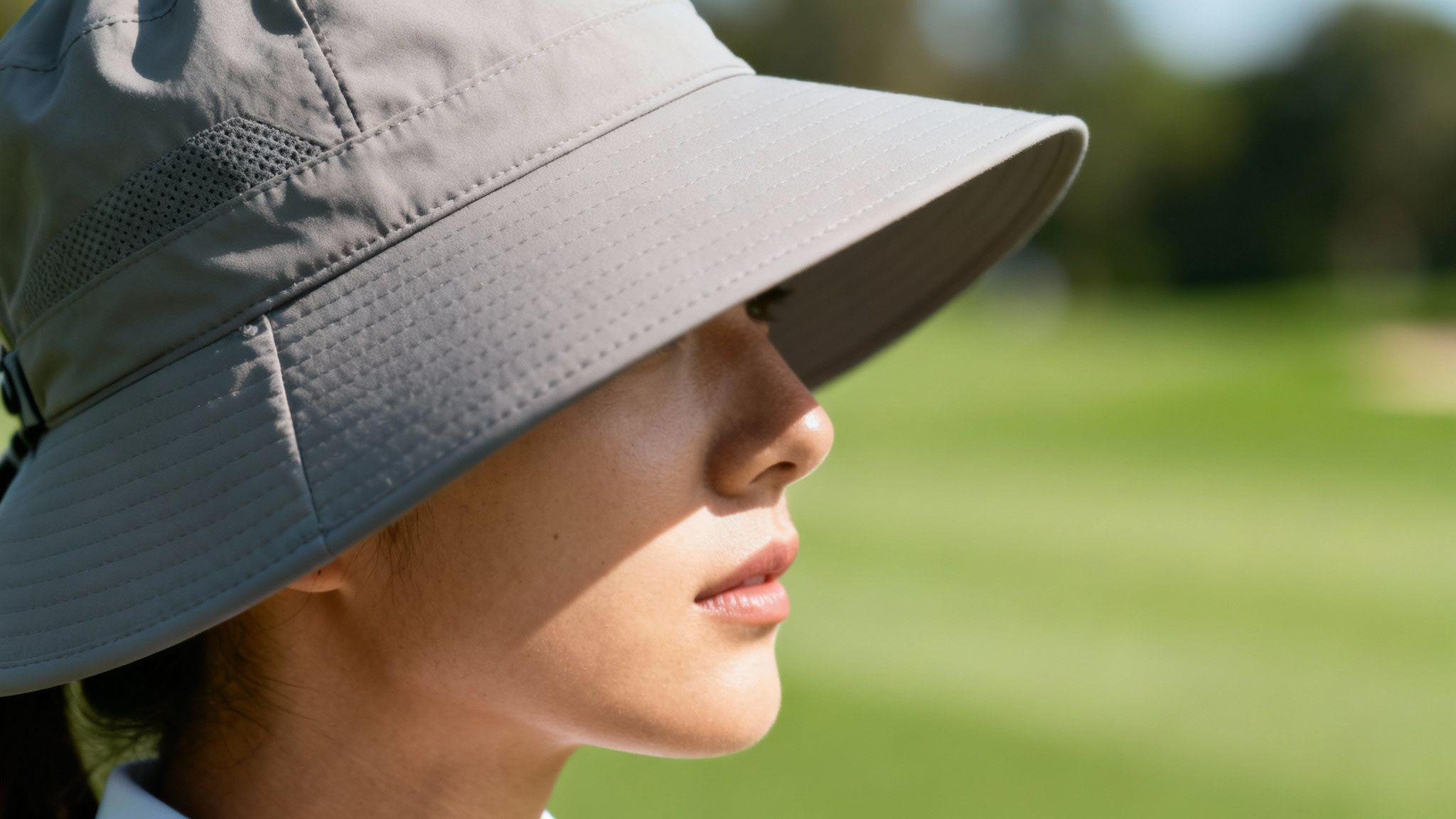
What Makes a Golf Hat a Sun-Blocking Machine?
So, what’s the secret sauce that turns a regular cap into a fortress for your face? It boils down to a few key features that work in harmony to keep you cool, comfortable, and protected from the first tee to the final putt.
When you're shopping, keep an eye out for these game-changing elements.
Key Features of Sun Protection Golf Hats
| Feature | Why It Matters | What to Look For |
|---|---|---|
| UPF Rating | This is the SPF for fabric. It tells you how much UV radiation is blocked. | A UPF of 50+ is the gold standard, blocking over 98% of UVA and UVB rays. |
| Brim Width & Style | A standard cap leaves your neck and ears completely exposed. | A wide, 360-degree brim (boonie or bucket style) provides comprehensive coverage. |
| Performance Fabrics | The right material wicks sweat away and helps block the sun. | Tightly woven polyester or nylon, often with a special UV-resistant treatment. |
| Ventilation | Without airflow, your head will feel like it's in a sauna. | Look for mesh panels, laser-cut holes, or breathable fabric to let heat escape. |
In short, these features aren’t just nice-to-haves; they're the core components that make a hat truly effective on the course.
Let's Talk UPF Ratings and Those "Performance" Fabrics
Ever grab a golf hat and see a little tag that says UPF 50+? You might wonder if it’s just marketing fluff. Let me tell you, it's not. Think of it as sunscreen that's literally built into the hat's fibers.
That UPF (Ultraviolet Protection Factor) number tells you exactly how much of the sun's nasty UV radiation can actually get through the material to your skin. A hat rocking a UPF 50+ rating is the gold standard—it blocks a whopping 98% of both UVA and UVB rays. It’s a lab-tested, certified barrier between you and a nasty sunburn.
The best part? Unlike that greasy sunscreen you have to slather on every hour, this protection doesn't sweat off or fade after a few holes. It’s on the job from your first drive to your last putt.
So, How Do These Fabrics Actually Block the Sun?
It’s not magic, it’s just smart science. The top-tier golf hats for sun protection are made from materials specifically designed to put up a fight against the sun.
Here’s a look under the hood:
- Tightly Woven Synthetics: Materials like polyester and nylon are the MVPs here. Their fibers are woven together so tightly that there are barely any microscopic gaps for sunlight to sneak through. It’s like a tiny, flexible fortress on your head.
- Color Makes a Difference: This one might surprise you, but darker colors are often your best bet for UV protection. They're better at absorbing the UV rays, stopping them dead in their tracks before they can reach your skin.
- The Magic of Moisture-Wicking: A sweat-drenched hat isn't just uncomfortable; it's less protective. When a fabric gets soaked, its fibers can stretch out, creating bigger gaps for the sun to penetrate. Good performance fabrics pull that sweat away from your head and push it to the surface to evaporate, keeping you cool and maintaining the hat's protective integrity.
Here's the bottom line: A hat's UPF rating isn't just one thing. It's a combination of the weave, the color, and the type of fabric. If you see that certified UPF 50+ tag, you can trust you're getting serious, scientifically-backed protection.
When you choose a hat with these kinds of advanced materials, you're not just getting a little bit of shade. You're getting a piece of gear that’s actively working to keep you safe and comfortable, which is one less thing to worry about when you're lining up that crucial putt.
Choosing Your Hat Style for Maximum Coverage
When it comes to picking a golf hat for sun protection, let's be honest: one style does not fit all. The hat you choose is your first line of defense against the sun's relentless attack, and each style has its own game plan. It’s a lot like selecting a club—what’s perfect for a calm, sunny day might be a total disaster on a windy links course.
The classic performance cap is a go-to for a reason. It gives you fantastic, focused protection for your face and scalp. It's sleek, stays put when the wind kicks up, and won't mess with your backswing. But it has one glaring weakness: your ears and the back of your neck are left totally exposed for hours. That's a huge blind spot in your sun defense.
Then you have the bucket hat, the undisputed king of 360-degree coverage. Its brim goes all the way around, acting like a personal shade canopy that shields your face, ears, and neck from every angle. While the protection is top-notch, a wider brim can sometimes act like a sail on a blustery day, so you're trading a bit of stability for that all-encompassing shade.
Comparing Golf Hat Styles for Sun Protection
So, how do you pick the right one? It really boils down to your personal comfort, the weather you typically play in, and just how much coverage you're after. To make it easier, let's break down the most popular options and see how they stack up against the sun.
| Hat Style | Sun Protection Coverage | Best For | Potential Downsides |
|---|---|---|---|
| Performance Cap | Good (Face, Scalp) | All-around play, windy conditions | No protection for ears or neck |
| Bucket Hat | Excellent (360-degree coverage) | Maximum sun protection on hot, calm days | Can be less stable in high winds |
| Wide-Brim Hat | Excellent (Face, Ears, Neck) | Ultimate UV defense, classic look | The wider brim can interfere with a swing |
| Visor | Fair (Face only) | Maximum ventilation, keeping cool | Leaves scalp completely exposed |
Ultimately, whether you go for a traditional cap or a full-brimmed beast, the key is finding a style you'll actually wear for all 18 holes.
Finding Your Perfect Match
A lightweight visor, for instance, is brilliant for ventilation and keeping the sun out of your eyes, but it leaves the top of your head wide open. That's a gamble, especially for those of us with thinning hair.
This little guide can help you zero in on what fabric features matter most for your game, depending on what you prioritize for sun protection.
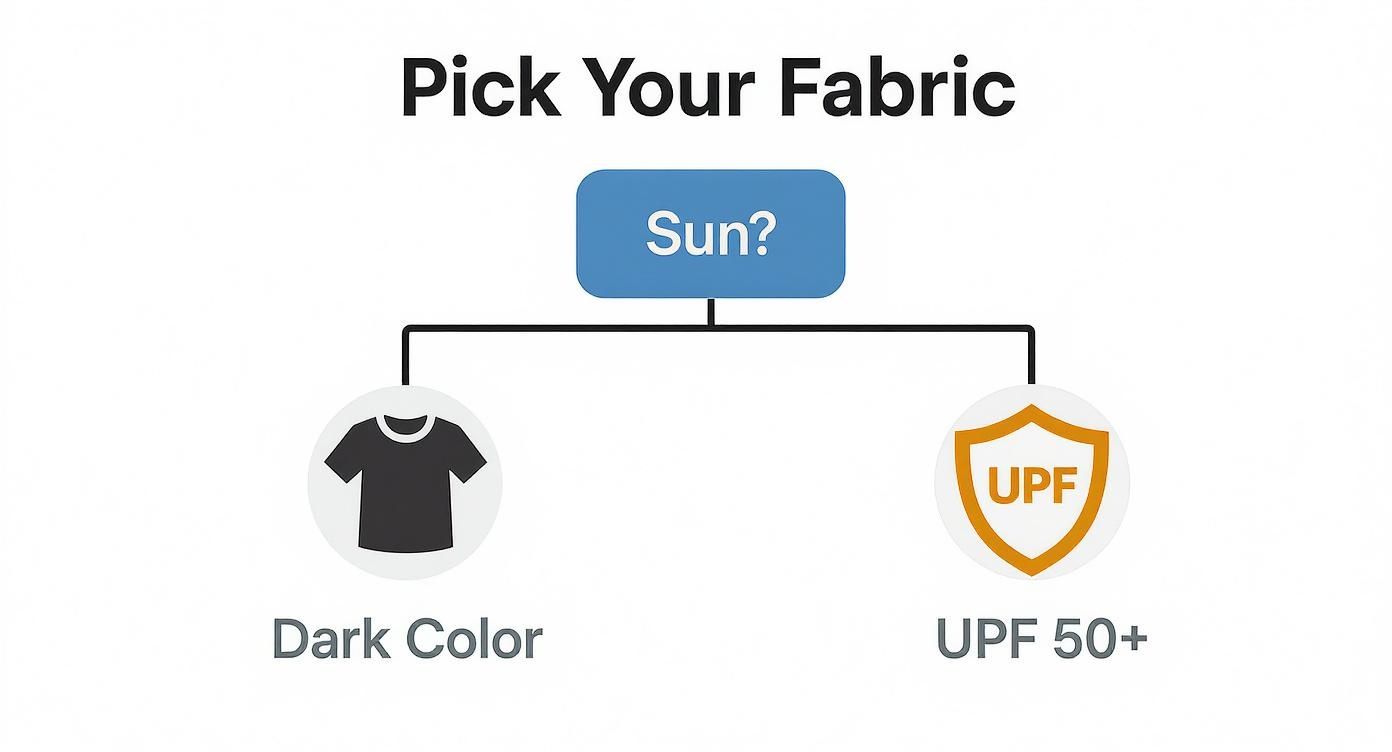
As you can see, while both dark colors and UPF 50+ fabrics are great options, nothing beats the peace of mind that comes with a certified UPF rating. It's your guarantee of protection.
The market backs this up, too. Golfers pick baseball caps for style, visors to stay cool, and bucket hats when they mean business about coverage. The good news is that most top styles now come with high UPF ratings and performance fabrics, so you don't have to compromise. To get a closer look at the most popular choices out there, check out our guide on different golf hat styles.
Functional Features That Elevate Your Game
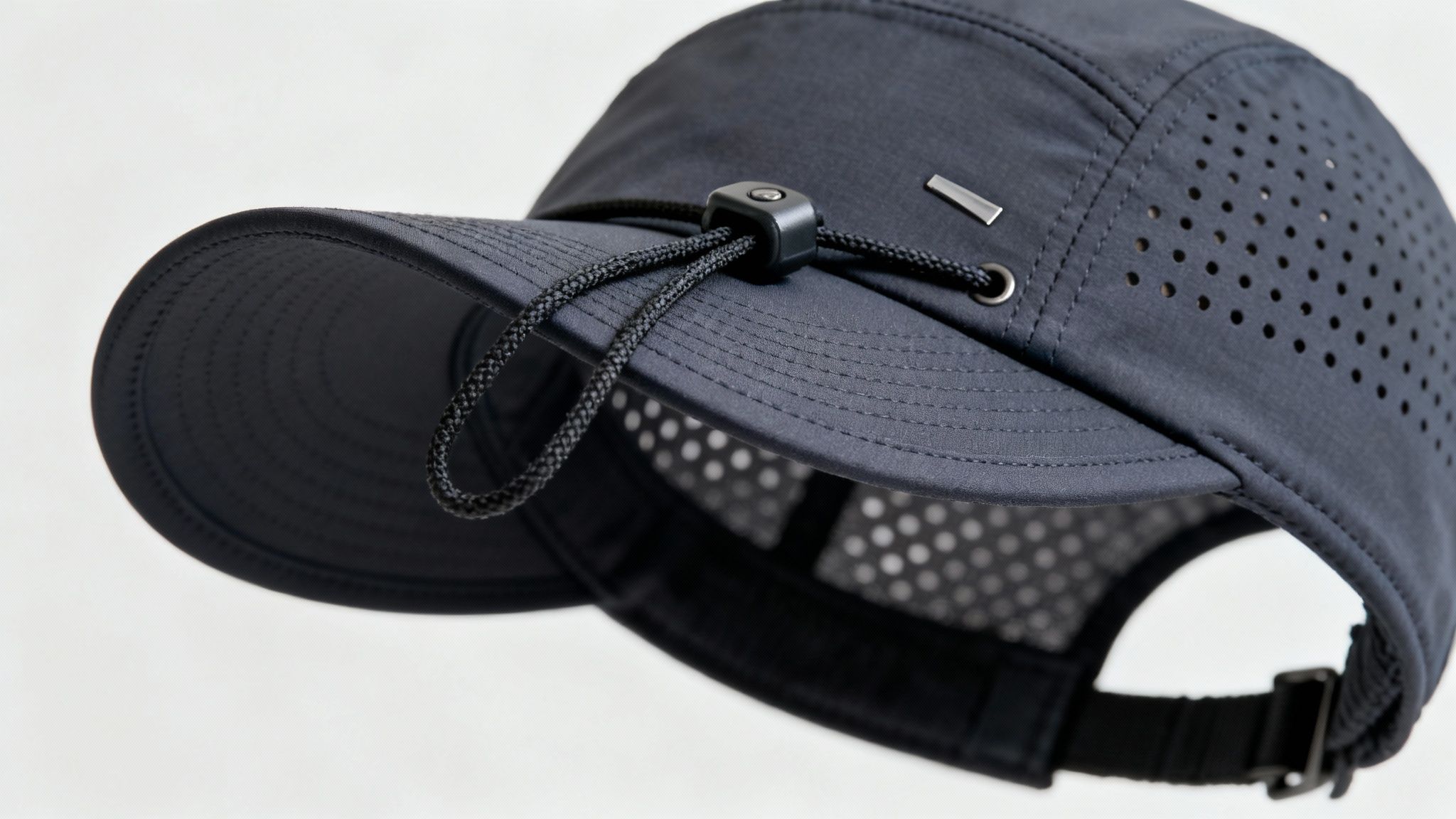
Let's be honest, the best fabric and the widest brim mean nothing if your hat feels like a vice grip or decides to take flight in the first gust of wind. Sun protection is the main event, but it's the little functional details that turn a good hat into a great one.
These are the unsung heroes that boost your comfort and let you forget you're even wearing a hat, so you can focus on that crucial shot.
It all boils down to a secure, custom fit. A hat that’s flopping around is a constant distraction, but one that's too tight will have you nursing a headache by the third hole. This is why adjustable closures are a must-have. Look for buckles, toggles, or even hidden internal drawstrings that let you fine-tune the fit. Your hat should stay put, whether you're unleashing a powerful drive or battling a stiff crosswind.
Performance Details That Make a Difference
Beyond getting the fit just right, the best golf hats for sun protection are loaded with clever tech designed specifically for the course. These aren't just flashy gimmicks; they are real-world solutions to those annoying problems that can throw off your game.
-
Dark Underbrims: Ever notice how a light-colored underbrim can bounce glare from the turf right into your eyes? A dark, non-reflective underbrim solves that by absorbing the light, which helps sharpen your vision and reduce eye strain when you're lining up a tricky putt.
-
High-Performance Sweatbands: On a scorching day, a quality moisture-wicking sweatband is your best friend. It actively pulls sweat away from your forehead, keeping it from dripping into your eyes and blurring your vision mid-swing.
Think about it: research on athletic performance has shown that even tiny visual hiccups, like glare or sweat in your eyes, can mess with hand-eye coordination. Your hat's features are a direct line of defense for keeping your vision clear and your focus razor-sharp.
If you want to see these features in action, checking out some of the best golf hat brands is a great next step. The top-tier designs often include smart additions like laser-cut perforations or strategically placed mesh panels. They act like a personal ventilation system, letting heat escape to keep you cool under pressure.
How to Keep Your Sun Hat in Fighting Shape
https://www.youtube.com/embed/rNo6sSoRer8
You've just dropped some serious cash on a high-tech golf hat to protect your skin, not just to look sharp. But after a few hot rounds, that hat becomes a magnet for sweat, sunscreen, dirt, and whatever else the course throws at you. This grimy cocktail doesn't just look bad; it can actually start eating away at the advanced fabrics and compromise its sun-blocking power.
Think of it this way: you wouldn't toss your expensive driver in a closet caked in mud and grass, would you? Of course not. Your gear deserves the same respect. Letting your hat fester can degrade its UPF coating, which defeats the whole purpose of buying it in the first place.
The good news? Keeping it in prime condition is way easier than you think. And it's a trend that's catching on—the entire market for sun-protective clothing is booming as more people demand effective UV defense from their apparel. If you're curious, you can learn more about sun protection apparel trends to see just how massive this movement has become.
Cleaning and Maintenance Made Simple
First things first: the washing machine is public enemy number one. The intense spinning, tumbling, and harsh detergents will absolutely demolish your hat’s structure and strip away its delicate UPF treatment. Hand-washing is the only way to fly.
Here’s a simple routine to get it done right:
-
Get Your Gear Ready: Fill a clean sink or a small bucket with cool water. Add a tiny splash of a mild, bleach-free detergent—less is more.
-
Go to Work (Gently): Dunk the hat and give it a gentle scrub with a soft-bristled brush. An old toothbrush is perfect for this, especially for tackling the sweatband where all the grime builds up.
-
Rinse, Rinse, Rinse: Hold the hat under cool running water until you're positive every last soap sud is gone.
-
Air-Dry Like a Pro: Whatever you do, never put your hat in the dryer. The heat is a death sentence for its fabric and shape. Instead, pat it down with a clean towel to soak up excess water. Then, find a bowl or ball up another towel and place the hat over it. This little trick helps it keep its perfect shape as it air-dries.
Following these simple steps does more than just clean a hat—it preserves the very technology that protects you. A well-cared-for hat will keep you covered and comfortable for many seasons on the course.
Need to tackle some really stubborn stains? We've got you covered. For a deeper dive, check out our guide on how to clean golf hats for more pro tips.
Got Questions About Golf Sun Hats? We've Got Answers.
Alright, let's talk turkey. Even after wading through all the specs and features, you probably have a few questions rattling around in your head. That's a good thing. Picking the right gear is about getting the details right, especially when it comes to protecting your skin out on the course.
Think of me as your trusty caddie, ready to help you sort through the final details before you pull the trigger on the perfect hat. Let's clear up some of the most common head-scratchers so you can tee off with total confidence.
Is a Higher UPF Rating Always the Holy Grail?
Great question, and the answer isn't quite as simple as "bigger is better." A UPF 50+ rating is the gold standard for sun-protective fabrics, blocking a whopping 98% of nasty UV rays. Honestly, that's all the protection you'll ever need for a long, sun-drenched round.
You might see some marketing hype about numbers higher than that, but the extra benefit is practically zero. It's way more important to focus on the hat's design. A UPF 100 hat with a tiny brim that leaves your neck and ears exposed is doing you a lot less good than a UPF 50+ bucket hat with 360-degree coverage. Coverage is king.
Can't I Just Wear My Trusty Old Baseball Cap?
You can, but you really shouldn't. A standard baseball cap is a terrible choice for serious sun protection. Most are made from plain old cotton, which offers very little UV resistance on its own. And here’s the kicker: when that cotton cap gets soaked with sweat, the fibers stretch and let even more UV radiation pour right through.
A true golf sun hat is built differently. It uses smart, technical fabrics that are lightweight, breathable, and carry a real UPF rating. Plus, they have features your average cap just doesn't, like a dark underbrim to slash glare and a high-tech sweatband to keep you cool and focused on your putt.
How Much Does the Color of My Hat Matter?
Color definitely plays a part. As a rule of thumb, darker colors are better at absorbing UV rays, stopping them before they hit your skin. A navy or black hat will naturally offer a bit more protection than a white one if they're made from the exact same, untreated material.
But—and this is a big but—the certified UPF rating is what you should always trust. That rating is the final word, taking everything into account: the fabric's weave, its density, the color, and any UV-blocking treatments it has. So while color is a factor, the UPF tag is your real guarantee.
What's the Best Hat for Those Brutally Hot Days?
When the heat is on and the humidity is thick enough to swim through, your hat needs to do two things: breathe and manage sweat. Look for hats specifically designed for maximum airflow.
- Big mesh panels are fantastic for letting heat escape.
- Laser-cut perforations offer targeted ventilation right where you need it.
- Feather-light fabrics are key, as they won't trap heat against your head.
A visor gives you incredible airflow, but it leaves the top of your head completely exposed—not ideal. For the best of both worlds on a scorcher, you can't beat a wide-brimmed bucket hat made from a top-notch performance fabric. It gives you that crucial coverage while its moisture-wicking sweatband and breathable material work overtime to keep you cool.
Ready to find a hat that marries tour-level style with serious sun protection? At 2ndShotMVP, we build premium headwear for golfers who refuse to compromise. Check out our collection and find the hat that's got your back (and your face, and your neck).

