

The tee box looks simple enough until the sun starts bouncing off the fairway, your forehead turns slick, and you're squinting hard enough to misread a straight putt. That's usually the moment a bucket hat white stops being a style choice and starts acting like sensible golf gear. It shades the face, takes the edge off the glare, and keeps your attention on the shot instead of on the heat.
The category itself isn't some tiny fad hiding in the corner of retail. The worldwide bucket hats market was valued at USD 400 million in 2025 and is projected to reach USD 660 million by 2034, which points to a lasting apparel segment rather than a one-summer spike (Fortune Business Insights). On the course, that matters because golfers don't want novelty, they want gear that keeps working round after round.
The Unlikely Hero of Your Golf Bag
The 12th hole has a way of exposing bad gear. The brim on the cap feels too narrow, the sweat is creeping into your eyes, and the bright white bunker in the distance seems to glow like a warning sign. A good bucket hat white changes that equation because it gives you coverage without turning your head into a sauna.

The appeal isn't just cosmetic. White is neutral, easy to pair with golf kits, and visually calm, which is exactly what you want when conditions are loud and bright. Search-interest trend work also points to continued attention for white bucket hats, with a fluctuating but generally upward trend in 2025 and notable peaks during the year, which fits the way golfers and style buyers discover accessories seasonally (Accio trend analysis).
Why golfers keep coming back to it
A bucket hat doesn't need to look aggressive to perform well. It gives you a bit more shade than a standard cap, and that extra coverage can make a long afternoon feel less punishing. On days when the range is cooking, the first thing you notice is that your head isn't working as hard.
Practical rule: if you keep adjusting your hat between swings, it's already costing you focus.
The best part is that a white bucket hat fits the way golfers move. It's casual enough for practice, polished enough for tournament-adjacent outings, and quiet enough to disappear into the outfit while still doing real work.
The Anatomy of a Great Golf Bucket Hat
A lot of bad hats fail in the same boring ways. They trap heat, they flatten out after a few rounds, or they start feeling soggy halfway through the back nine. Good construction solves those problems before you even notice them.
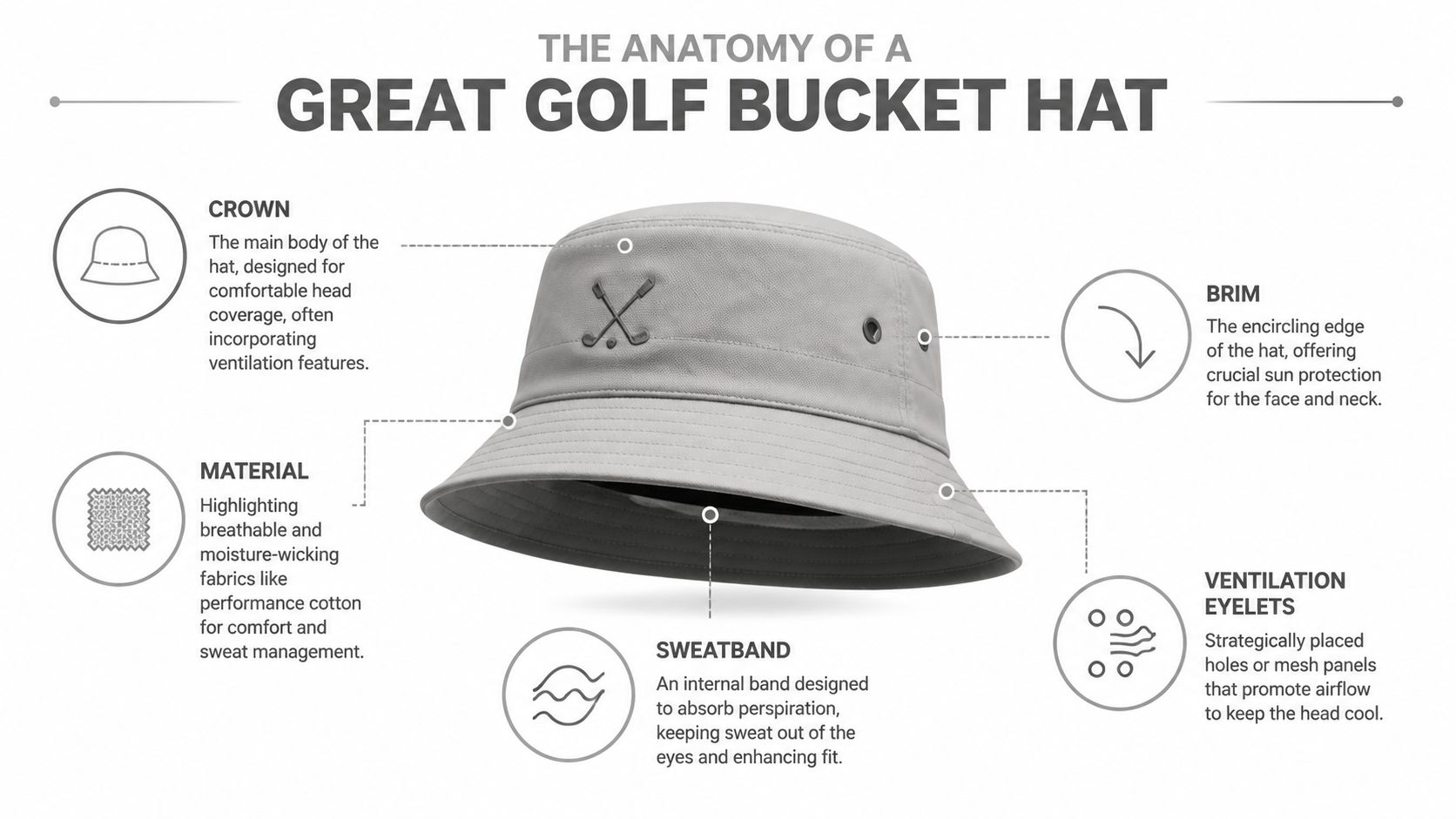
Fabric first, because comfort starts there
For a white bucket hat, fabric choice does most of the heavy lifting. Cotton twill is commonly favored for comfort and airflow, while polyester and nylon are better when you want weather resistance and durability in mixed conditions (Jointopcap). That trade-off matters on the golf course because sweaty heat, unexpected mist, and repeated packing all punish weak materials.
Cotton twill usually feels softer and more relaxed against the skin. Synthetic fabrics tend to keep their shape better and handle rougher use, which is handy if the hat lives in a cart bag, gets shoved into a locker, or sees unpredictable weather.
Small details that separate good from frustrating
Look for a sweatband that effectively catches moisture instead of merely existing. The same goes for ventilation eyelets, which help airflow but can introduce a protection trade-off in stronger sun. Reinforced stitching around the brim also matters because a floppy brim is charming exactly zero times when you're trying to line up a shot.
A hat that feels good for ten minutes but annoying for four hours isn't a golf hat. It's just a retail mistake.
Construction details don't sound glamorous, but they decide whether the hat stays useful. If the crown fits comfortably, the brim keeps its shape, and the interior doesn't rub, you're holding something worth wearing every round.
Decoding Sun Protection on the Course
A white hat isn't automatically a sun hat, and that's where people get careless. Color helps with style and visibility, but effective sun defense comes from fabric construction, weave density, brim shape, and whether the product carries a UPF rating. A commercial cotton-twill white bucket hat listed with UPF 40 is a good reminder that light color doesn't cancel meaningful UV blocking (Chapellerie Traclet).
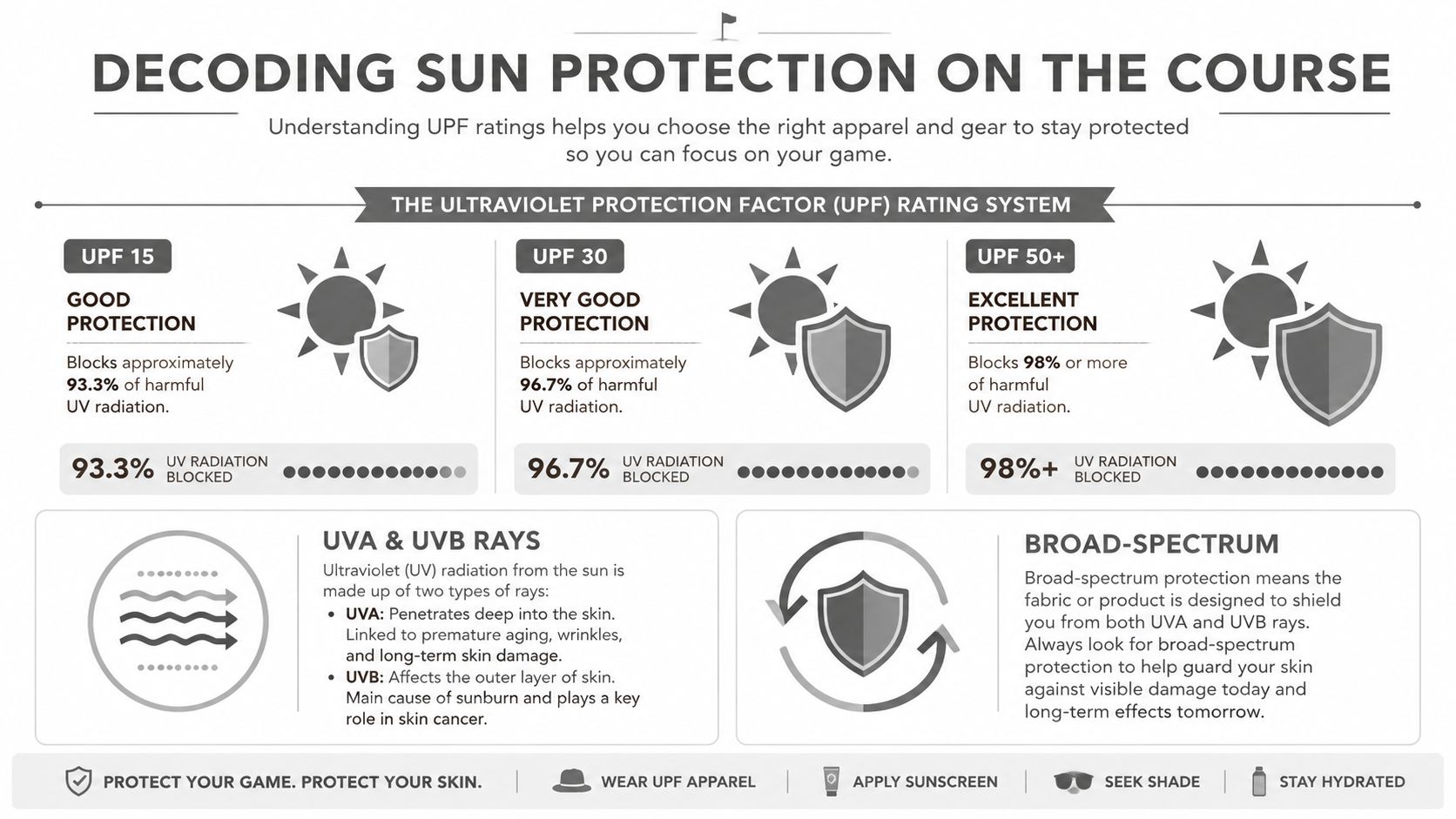
A UPF rating tells you how much UV radiation a fabric is designed to block. For a golfer, that's more useful than assuming any pale hat will do the job. If you're lining up on an exposed fairway or walking a windy course with no shade, the number matters more than the color name.
For a broader sun-safety perspective, the dermatologist-focused guidance at Healtsy's sun protection tips is a solid companion read, because golfers need the same practical habits, namely coverage, timing, and consistent protection, not just good-looking gear. If you're already comparing hat coverage with the rest of your setup, the advice on golf hats for sun protection fits neatly into that decision-making process.
Ventilation helps, but it isn't free
Eyelets and open crown details can make a hat cooler, and that's great until you realize the scalp may be more exposed. That trade-off matters on golf days with long sun exposure, especially when the round stretches past the comfortable part of the afternoon. The right answer isn't “no ventilation.” It's choosing ventilation that doesn't undermine the protection you need.
Useful habit: pick the hat for the worst hour of sun, not the first ten minutes in the parking lot.
If the course is bright, hot, and open, go for a denser weave, a more substantial brim, and a real UPF claim instead of trusting the color alone.
Finding a Fit That Lasts All 18 Holes
A hat that shifts mid-swing is a nuisance, and a hat that squeezes all afternoon is worse. Fit is one of those boring details that becomes impossible to ignore once it's wrong, especially when wind picks up or you're bending over for putts.
Measure before you buy
Use a soft measuring tape and wrap it around your head where the hat will sit, usually just above the eyebrows and around the widest part of the head. Keep it snug, not tight. If you don't have a tape, a piece of string and a ruler works fine, which is why the sizing advice at how to measure head is worth following before you click buy.
Once you know the measurement, compare it with the size chart from the brand instead of gambling on vague “one size fits most” language. Structured sizing usually wins when you want less movement and a steadier feel during a full round.
What a proper fit actually fixes
A well-fitted bucket hat stays put through a full swing, so you're not distracted at address. It also keeps the brim from collapsing into your line of sight, which is a real issue if the hat is too loose or poorly shaped.
- Too loose: the hat rides up in the wind and becomes a constant adjustment job.
- Too tight: the pressure builds, especially on hotter days, and the hat stops feeling like gear.
- Just right: the brim sits evenly, the crown feels secure, and you forget about it after the first tee.
That last part is the goal. If the hat disappears from your consciousness while still doing its job, it's earning its spot in the bag.
Styling Your Hat from Fairway to Clubhouse
A white bucket hat works best when it looks deliberate, not like an afterthought. On the course, it can tighten up a golf outfit by keeping the look clean and balanced. Off the course, it can soften a polished outfit just enough to keep it relaxed instead of stiff.
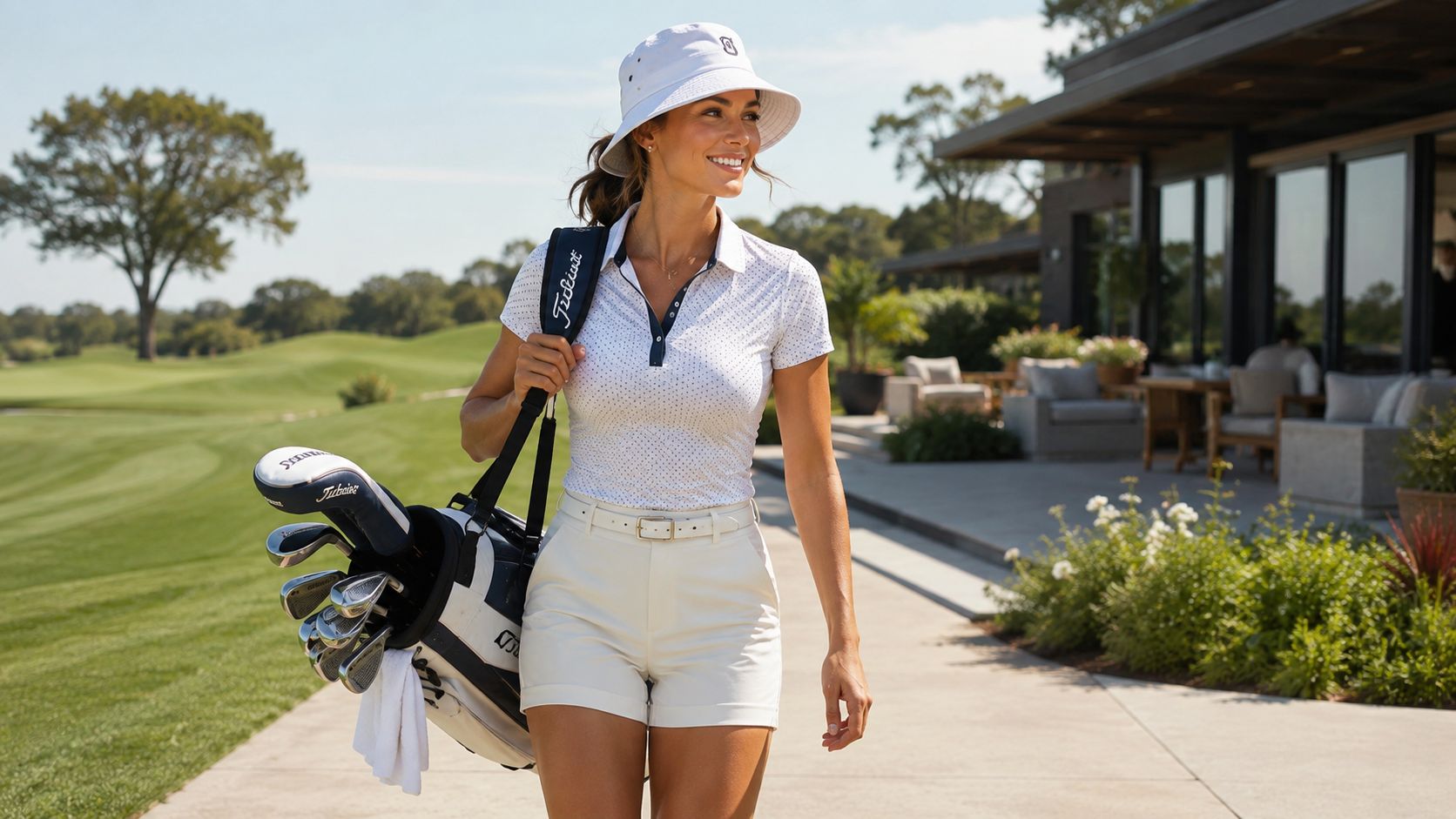
Two ways to wear it well
For an On-Course Pro look, pair the hat with a fitted polo, smart shorts, and clean golf shoes. The white bucket hat keeps the outfit bright and useful without fighting the rest of the kit. It works especially well with navy, charcoal, or earth tones, because the hat breaks up those darker palettes in a clean, practical way.
For a 19th Hole Casual setup, swap the polo for a linen shirt and the golf shorts for chinos. The hat still reads as sport-adjacent, but it doesn't shout that you just came off the range. That flexibility is part of why the style keeps showing up in both golf wear and everyday wardrobes.
A quick look at how to dress for golf also helps when you want the hat to match the rest of the outfit without breaking dress code expectations.
Why the white version stays versatile
White tends to look crisp even when the rest of the outfit is louder. It also works well with summer wardrobes, where breathable fabrics and lighter colors make sense both visually and practically. On a hot day, that matters more than trying to make the hat the star of the show.
A white bucket hat also gives you options when the round is over. It can move from the course to lunch without looking out of place, which is useful if you want one piece that handles both function and casual style.
How to Choose a High-Quality White Bucket Hat
The easiest way to shop well is to stop chasing branding noise and check the parts that matter. Start with the fabric, then inspect the stitching, then ask whether the hat has a real sweat-management feature and a confirmed UPF rating. If the product page can't show those things, the hat is probably built more for a thumbnail than for a round of golf.
A practical white bucket hat should also clean up well. Quality cotton and canvas styles are commonly maintained without shrinking or warping, which matters when sweat and sunscreen are part of normal use (Wikipedia on bucket hats). That's not a glamorous feature, but it's the difference between a hat that looks sharp in week one and one that still looks like you respect your gear in week twenty.
A simple buyer's checklist
- Material quality: choose a fabric that matches your climate and how hard you play.
- Consistent stitching: look for even seams and a brim that holds shape.
- Interior comfort: the sweatband should manage moisture without rubbing.
- Sun protection proof: prefer a stated UPF rating over color-based assumptions.
- Maintenance reality: pick something you can clean without babying it.
If you want a white bucket hat that feels like golf gear instead of costume gear, that checklist is the filter. You want something that shades well, breathes well, and still looks sharp after it's been tossed into the mix with tees, gloves, and a scorecard.
A CTA for 2ndShotMVP.

