

Let’s cut to the chase: the best hats for golf are all about performance. Think breezy visors for those sweltering summer rounds, classic caps for that perfect balance of sun protection and style, and full-brimmed bucket hats when you need 360-degree coverage.
What really separates the good from the great? Look for three non-negotiables: moisture-wicking fabrics to keep sweat out of your eyes, a UPF 50+ rating to protect your skin, and a fit so comfortable you’ll forget it’s even there.
Why Your Golf Hat Is More Than Just an Accessory
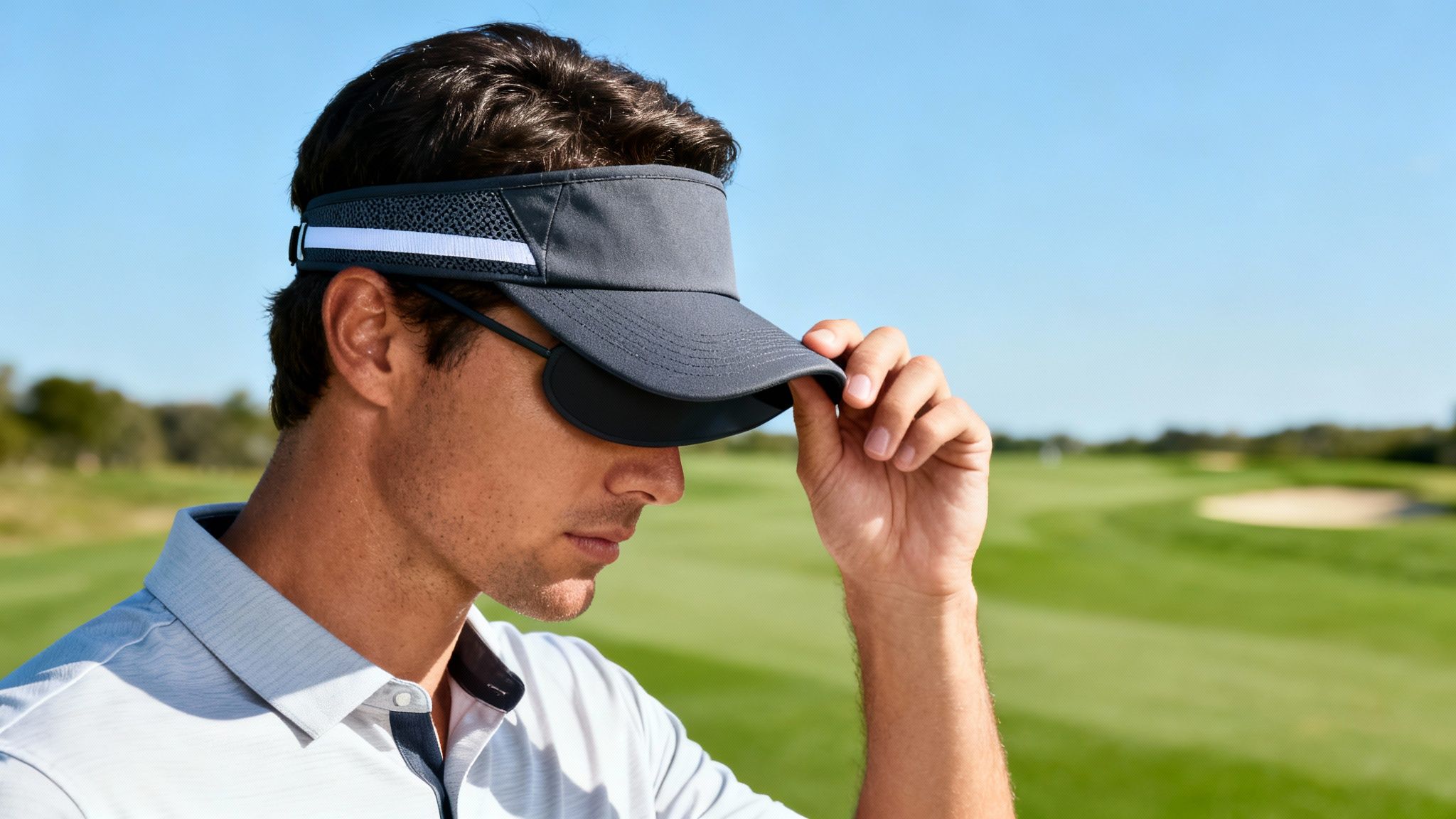
Seriously, your golf hat is the unsung hero of your entire setup. It's so much more than a logo-stamped accessory; it’s a crucial piece of gear that has a real impact on your comfort, focus, and long-term health out on the course. Just grabbing any old baseball cap from the back of your closet is a classic rookie move—one that will leave you sunburnt, squinting into the glare, and sweating through crucial shots.
A proper golf hat is an absolute workhorse. When the sun is beating down on the 12th fairway, it’s your first line of defense. When you’re standing over a nerve-wracking putt to win the match, its sweatband is the only thing keeping your vision clear. It's a genuine performance-enhancer, plain and simple.
Setting The Stage For The Perfect Pick
Think of this guide as your personal caddie for choosing headwear. We’re going to slice through the marketing jargon and get straight to what actually matters on the course.
By the end, you'll know exactly how to:
- Decode Fabric Tech: Understand why a modern performance polyester is your best friend on a humid day, leaving cotton in the dust.
- Master the Fit: Find a hat that feels so natural you’ll forget you’re even wearing it—no more mid-swing adjustments.
- Prioritize UV Defense: Finally learn what that UPF rating really means for protecting your skin over four-plus hours.
- Define Your Style: Pick a hat that not only performs but also matches your on-course vibe.
Your hat is the only piece of equipment you wear on every single shot. Investing in the right one isn't an indulgence; it's a fundamental part of preparing for a successful round.
And I'm not the only one saying it—the market backs it up. The global golf hat industry was valued at roughly USD 1.5 billion and is expected to nearly double to around USD 2.9 billion by 2033. That surge shows just how seriously players are taking their headwear. North America is leading the pack with a 40% market share, fueled by a demand for premium, high-tech gear. You can dig into more data on the growing golf hat market if you're curious about the trends.
To give you a head start, let's break down the main players on the course.
Quick Guide to Popular Golf Hat Styles
Here's a quick rundown of the most common styles you'll see out there and who they’re really for.
| Hat Style | Key Feature | Best For |
|---|---|---|
| Classic Cap | All-around balance of style and function | The versatile golfer who wants a traditional look with solid sun protection. |
| Visor | Maximum airflow and minimal heat trap | Players in hot climates who prioritize staying cool above all else. |
| Bucket Hat | 360-degree sun coverage for face and neck | Golfers who spend long hours in direct sun and need maximum UV protection. |
| Rope Cap | Retro style with a flat or slightly curved brim | The fashion-forward player looking to make a statement on the course. |
This table is just a starting point, but it helps frame the conversation. Now, let’s get into the nitty-gritty of what makes a hat truly great.
Choosing Materials That Outperform the Elements
Forget the logo for a second. The real magic in a great golf hat is the fabric it’s made from. This is what separates a simple piece of headwear from a genuine piece of performance gear. Let's cut through the marketing noise and talk about what actually keeps you cool, dry, and focused when you're staring down a must-make putt.
Think about it. Wearing a standard cotton cap on a sweltering July afternoon is a rookie mistake. It might feel nice and breathable for the first couple of holes, but as soon as you start to sweat, that cotton acts like a sponge. It gets heavy, feels clammy, and ends up making you even hotter. It just can't hang.
The New Guard: Performance Fabrics
This is where today’s tech fabrics have completely rewritten the rules. Most top-tier golf hats you see now are made from performance polyester or a similar synthetic blend. These materials are engineered for one job: to manage moisture. Instead of soaking up your sweat, they pull it off your skin and spread it across the surface of the hat, where it can evaporate in a flash.
That whole moisture-wicking process is what keeps your head from feeling like a swamp by the back nine. If you really want to get into the nitty-gritty of how it all works, understanding the tech behind https://2ndshotmvp.com/blogs/news/performance-golf-hats will give you a serious leg up.
But it's not just about the polyester. Keep an eye out for these other killer features that make a huge difference:
- Laser-Perforated Ventilation: See those tiny, perfectly cut holes on the side and back panels? They aren't just for looks. They’re vents that dump heat right off your head. A total game-changer on a hot, windless day.
- Antimicrobial Sweatbands: We've all had that one favorite hat that eventually smelled... funky. An antimicrobial treatment in the sweatband fights off the bacteria that causes those odors, keeping your hat from smelling like a locker room.
- Feather-Light Construction: The best performance hats are so ridiculously light you’ll forget you’re even wearing one. No distractions, no added weight—just pure focus on your swing.
Playing the Matchmaker: Material vs. Conditions
The key is picking the right tool for the job. The hat that’s your go-to for a breezy spring round could be your worst enemy in the dog days of summer. Smart golfers have a small rotation of hats ready for whatever the forecast throws at them.
Your undisputed MVP for brutal summer heat is a lightweight tech hat. For cooler, more casual rounds, a classic structured twill or a comfy, breathable organic dad hat can be the perfect move.
Let’s break it down into a couple of real-world situations:
- The Humid Summer Grind: When it feels like you're playing golf in a sauna, you need a 100% performance polyester hat with as much ventilation as you can find. A dark under-brim to cut down on glare is a pro move, and a high-quality wicking sweatband is non-negotiable.
- The Crisp, Windy Fall Day: For these rounds, a slightly thicker material like a cotton/poly-twill blend gives you a bit more warmth and structure. You don’t need the extreme venting of a summer hat, but you still want something that can handle a bit of sweat without getting soggy.
When you learn to read the features on a hat like you read a green, you’re no longer just picking a style. You’re choosing a piece of equipment designed to help you play better.
Finding the Perfect Fit for All-Day Comfort
Let's be honest. A bad hat can absolutely ruin a round of golf. It's that constant fiddling between shots, the slow-burn headache from a band that's just a little too tight, or—worst of all—the dreaded "hat-nado" that takes off mid-backswing.
A great-fitting hat, on the other hand, is one you completely forget you're wearing. It just sits there, doing its job, letting you focus on sticking that approach shot.
So, how do you find "The One"? It starts with ditching the "one size fits all" myth. That phrase is one of the biggest fibs in the apparel world. True on-course comfort comes from knowing the difference between closures and profiles.
Let’s break down the main players when it comes to how a hat fastens. Each one has a totally different vibe and feel.
- Snapbacks: Ah, the classic. That plastic strap with the little dots gives you a familiar, structured feel. They're reliable and offer easy, predictable adjustments.
- Strapbacks: These are a step up in the customization department. Using a fabric or leather strap with a buckle or clasp, you can dial in a much more precise fit. They also tend to have a cleaner, more premium look.
- Fitted Caps: This is what you see the pros wearing, and for good reason. They offer a seamless, tailored appearance with no goofy straps hanging out. The catch? You must know your exact head size.
This all ties into how a hat performs, which is about more than just fit. It’s a whole system where the material, breathability, and your comfort are all linked.
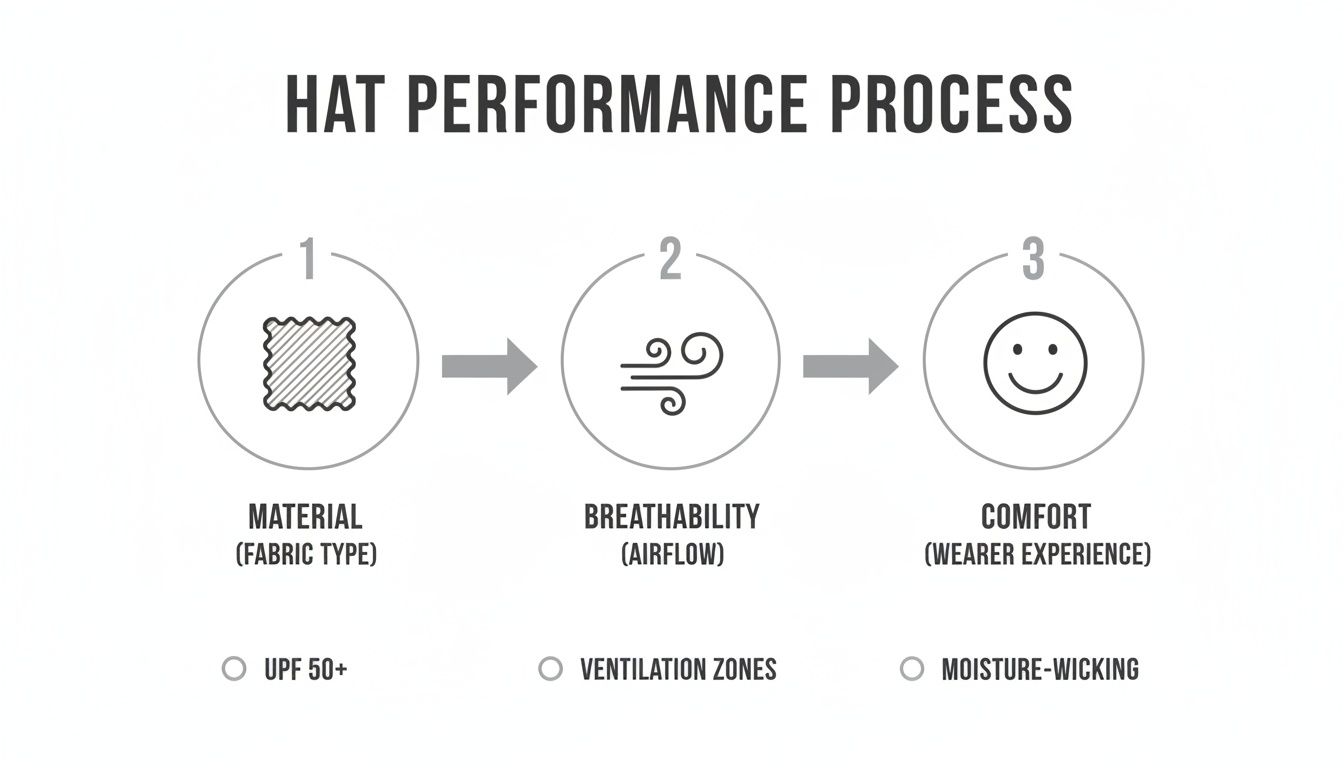
As you can see, it's a chain reaction. A hat's performance really starts with the fabric and ends with you feeling good on the 18th green.
Nailing Your Precise Size
If you're going for a fitted cap, do not—I repeat, do not—guess your size. It’s a one-way ticket to Disappointmentville. A hat that’s even a fraction of an inch too small will feel like a vise grip by the back nine, and one that’s too big will feel like it's floating on your head every time you swing.
To get it right, grab a soft measuring tape and wrap it around your head. You want it to sit about a half-inch above your eyebrows and ears—basically, right where the hat's band will rest. Keep the tape level and snug, but not uncomfortably tight. Jot down the measurement and check it against the brand’s sizing chart, as they can all be a little different.
A rookie mistake I see all the time is measuring too high up on the forehead. Think about where the hat actually sits. Lowering the tape just a bit makes all the difference between a good guess and a perfect fit.
Finding the Right Profile
Okay, so you've got the circumference locked in. But we're not done yet. The hat's profile, or the height of its crown, is a massive part of how it looks and feels on your head.
Here’s the simple rundown of your options:
- Low Profile: These fit snug and close to the head for a sleek, athletic look. They're a great choice if you have a smaller head or just hate that feeling of extra space above your hair.
- Mid Profile: This is the Goldilocks of hat profiles—the most common and versatile option out there. It has that classic cap silhouette that just plain works for most people.
- High Profile: This is your bolder, more structured look. It has a taller, often flatter front panel that brings a bit of a streetwear edge to the course.
Think of it like this: a high-profile hat on a smaller head can look like you're playing dress-up. On the flip side, a low-profile cap on a larger head might feel a bit dinky. The only way to know for sure is to try a few on. Experimenting with different profiles is that final piece of the puzzle to finding a hat that feels like it was custom-made for you.
Make Sun Protection Your Top Priority
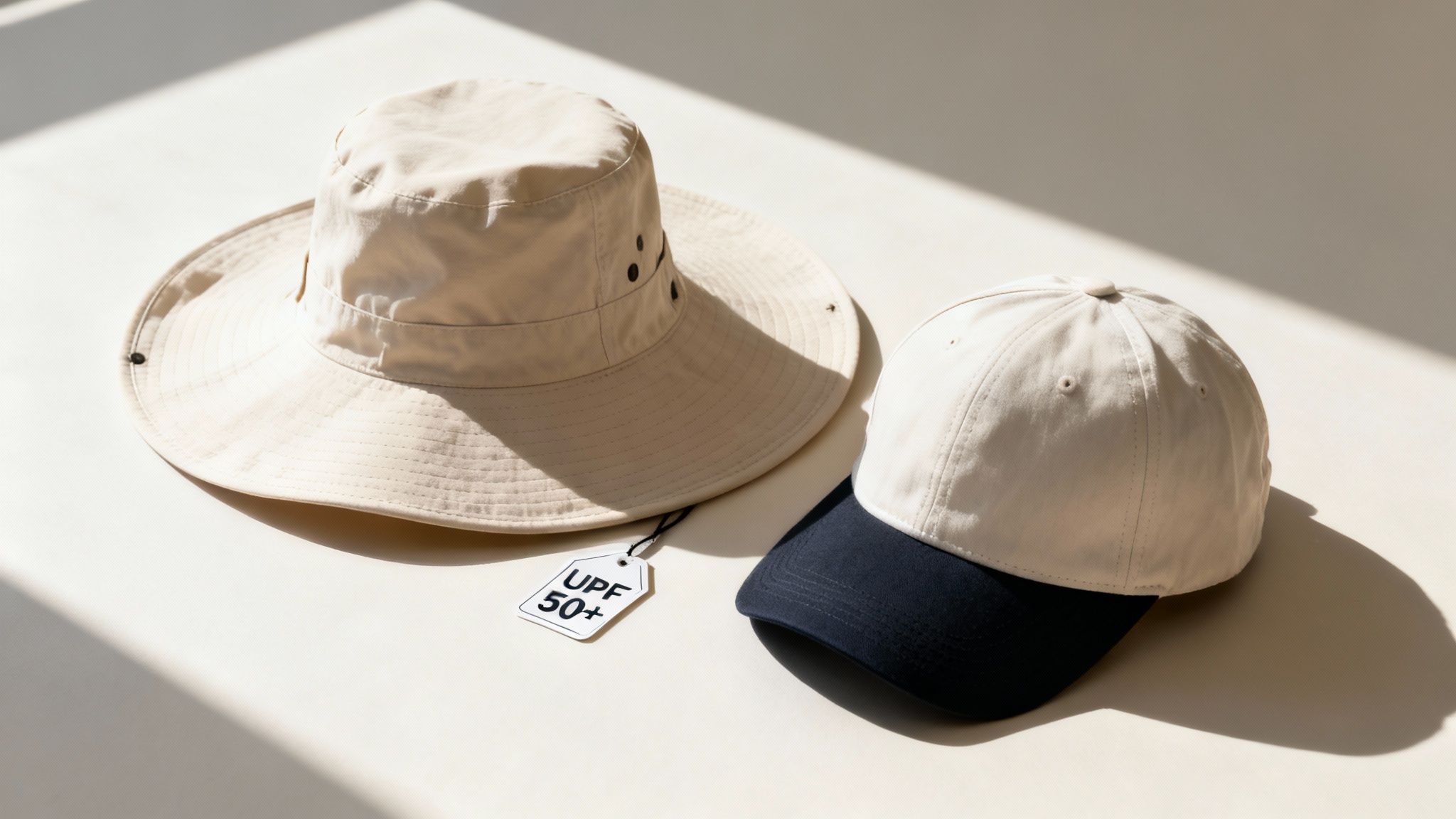
Alright, let's talk about the real reason we'm wearing a hat out there. Sure, style is great, and a good fit is a must, but a hat's number one job on the golf course is to save your skin.
When you're out for four or five hours on a course with zero shade, you're basically soaking in UV rays. That turns your hat from a simple accessory into a critical piece of gear. But just throwing any hat on isn't going to cut it. True protection comes down to the fabric's tech and how much of you it actually covers.
What's the Deal with UPF Ratings?
You've probably seen a UPF 50+ tag hanging off a quality golf hat. So, what's that all about? UPF stands for Ultraviolet Protection Factor, and it's a rating that tells you exactly how much of the sun's nasty UVA and UVB radiation a fabric blocks.
A UPF 50+ rating is the gold standard in sun-protective clothing. It means the material blocks a minimum of 98% of UV rays. It's like having a layer of sunscreen woven right into the fabric—one you never have to reapply.
This isn't just clever marketing; it's a scientifically tested standard. Your average cotton t-shirt or basic cap might only have a UPF of about 5, and that number plummets once it gets damp with sweat. By choosing a hat with a certified UPF 50+ rating, you know you're getting serious, lab-tested protection that lasts all 18 holes.
If you really want to get into the nitty-gritty, our guide to golf hats for sun protection covers everything you need to know.
Don't Forget: Coverage Is King
Now that we've covered the science of the fabric, let's talk about the physical shield. The style of hat you pick makes a huge difference in how much skin you're actually protecting. It's a simple matter of surface area.
Let’s break down how the popular styles perform in the real world:
-
Baseball Caps & Visors: Look, we all love a classic cap. They're great for keeping the sun out of your eyes and shielding your face. But let's be honest—they do absolutely nothing for your ears or the back of your neck. Those are two of the most common places golfers get fried, so you'll need to slather on the sunscreen.
-
Bucket Hats & Wide-Brim Styles: These are the heavyweights of sun protection. A good bucket hat gives you 360-degree coverage, protecting your face, ears, and the entire back of your neck. For anyone serious about sun safety or with fair skin, this is the undisputed champ.
Here’s a final pro tip many people miss: check the color of the under-brim. A dark, non-reflective color like charcoal or navy helps absorb the glare bouncing up off the fairway and sand traps. It's a small detail that makes a massive difference in reducing eye strain and helping you track the ball against a bright sky.
Finding a Hat That Fits Your On-Course Vibe
Think of your golf hat as the exclamation point on your outfit. It’s that final piece of the puzzle where pure, functional gear slams right into your personal style. Picking a hat isn’t just about keeping the sun out of your eyes; it’s about finding something that just feels like you.
This is where you get to show a little personality. Are you a traditionalist at heart, someone who loves a clean, classic look? Or are you the guy who shows up in a bold, conversation-starting design that gets a reaction from your foursome? The right hat doesn't just complete your look—it can actually boost your confidence.
Decoding Different Style Vibes
Every hat style sends a different message. It’s like a non-verbal introduction on the first tee. Getting a handle on these subtle cues can help you pick a hat that perfectly matches who you are on the course.
Let's break down some of the most popular looks out there:
- The Tour Visor: This screams "serious golfer." It's an athletic, no-nonsense look that says you're here to play and you care more about staying cool than getting maximum sun coverage.
- The Retro Rope Cap: With that signature little rope running across the brim, this style gives off a seriously cool, throwback vibe. It's a great nod to golf’s past while still feeling totally fresh and modern.
- The Classic Structured Cap: This is the timeless workhorse of golf headwear. It’s clean, dependable, and always in style—the go-to for players who want a polished look that never feels out of place.
- The Flat Brim Snapback: This one brings a bit of street style to the fairway. It’s the hat for the golfer who isn’t afraid to bend the traditional rules of fashion. It’s confident, it’s bold, and it makes a statement.
When you're trying to find headwear that complements your golf gear and maybe even helps your performance, exploring different cap styles is a great place to start. You can also get a deeper look at the various golf hat styles and what they say about you to really dial in your perfect match.
Pairing Colors Like a Pro
Coordinating your hat with your outfit doesn't mean you have to be perfectly matched from head to toe. Honestly, that can look a little stiff. The real art is in thinking about complementary colors, not identical ones.
A great rule of thumb is to use your hat to either tie the whole outfit together or to provide a sharp pop of contrast. For instance, if you're rocking a navy polo and khaki shorts, a crisp white hat looks clean and classic. On the flip side, a hat with a subtle pattern or a flash of red can create a killer focal point.
The best-dressed golfers often use their hat as an anchor piece. A neutral-colored hat in white, grey, or navy will work with practically any outfit in your closet, making it an incredibly smart and versatile investment.
This growing focus on style is a huge part of the modern game. Headwear is now a crucial piece of the broader golf apparel market, which was valued at a whopping USD 2.02 billion and is projected to smash USD 3.12 billion by 2032. This boom is being driven by a rising fashion-consciousness among golfers who want quality headwear they can wear both on and off the course. At the end of the day, the best hats for golf are simply the ones that make you feel ready to go out there and play your best.
Got Questions About Golf Hats? We've Got Answers.
Alright, let's talk about those nagging questions that always come up when you're on the hunt for the perfect golf hat. You've got a handle on the basics, but what about the nitty-gritty details? Consider this your personal FAQ session with a seasoned pro.
No fluff, just the straight scoop on what really matters.
What's The Best Hat Material For A Scorcher Of A Day?
When the sun is beating down and you're sweating bullets on the back nine, performance polyester is your MVP. Hands down. This isn't your grandpa's old cotton cap; these modern synthetic fabrics are engineered to breathe and wick moisture like it's their job—because it is.
They pull sweat away from your head to the surface of the hat, where it can evaporate in a flash. You'll often find them with laser-cut perforations, which are basically tiny air-conditioning vents for your dome. Trust me, while a cotton hat feels soft at first, it quickly turns into a heavy, soggy mess. Stick with performance fabrics to stay cool when the heat is on.
How Can I Clean My Golf Hat Without It Looking... Sad?
This is the million-dollar question. First, let's establish the golden rule: the washing machine and dryer are the mortal enemies of your hat. Seriously, they will mangle the brim, destroy the structure, and leave you with a misshapen tragedy. Just don't do it.
Hand-washing is the only way to fly. Here’s the simple, foolproof method:
- Fill up a sink with cool water and add a tiny bit of mild detergent.
- Grab a soft-bristled brush (an old toothbrush works great) and gently scrub the hat, focusing on that grimy sweatband.
- Rinse it thoroughly under cool water until the suds are history.
- Pat it with a towel to get the excess water out. Now for the secret sauce: find a coffee can, a canister, or even just a rolled-up towel and let the hat air dry on top of it. This forces it to keep its perfect shape.
Pro Tip: For those stubborn sweat stains that haunt every light-colored hat, mix up a little paste of baking soda and water. Slap it on the stain, let it chill for an hour, then give it a gentle scrub and rinse. It’s like magic.
The Big Debate: Fitted Or Adjustable?
Ah, the classic dilemma. This one truly boils down to whether you prioritize a clean, pro-style look over guaranteed, on-the-fly comfort.
A fitted hat gives you that sleek, uninterrupted silhouette you see the tour players rocking. No straps, no buckles, just pure style. The only catch? You have to know your exact head size. There's zero wiggle room, so you better be sure.
Adjustable hats—think snapbacks or strapbacks—are all about versatility. They let you dial in the perfect fit, which is a lifesaver on windy days, if you're between sizes, or if your hairstyle changes. If you crave that polished look and know your size, go fitted. If you'd rather have a hat that adapts to you, an adjustable is the smarter, more comfortable play.
At 2ndShotMVP, we get it. We obsess over the details so you don't have to, creating hats that blend tour-level performance with a style you can make your own. Ready to top off your game? Check out our latest collection. Shop Now at 2ndShotMVP

