

You're standing on the first tee on a hot Saturday, and the tank you grabbed in a hurry is already working against you. The neckline feels fine until you make a real shoulder turn, the hem creeps up, the armholes start to rub, and by the time you're walking off the third green you're thinking more about your shirt than your score. That's the problem with women's golf tank tops, they look simple until you have to live in one for 18 holes.
The smart way to buy them isn't by chasing cute photos. It's by making a sequence of decisions that matter on the course, fabric first, then fit geometry, then dress-code safety, then styling. That matters because women's golf apparel is a serious category, valued at USD 1.5 billion in 2025 and projected to reach USD 1.54 billion in 2026 and USD 1.90 billion by 2035 in one market research set, with tops holding 38.5% of revenue in 2025, or about USD 1.85 billion in that segment alone, and North America holding 38.2% of global ladies golf apparel revenue in 2025 Dataintelo's ladies golf apparel market report. That upper-body share is exactly why tanks deserve their own buying logic, not a shrug and a checkout click.
If you're also trying to keep the rest of your round tidy, the same gear logic applies off the fairway. A clean setup for the walk to and from the course matters just as much as the swing itself, and a practical place to start is find HYDAWAY greens from HYDAWAY, especially if you want the rest of your kit to feel as considered as your top.
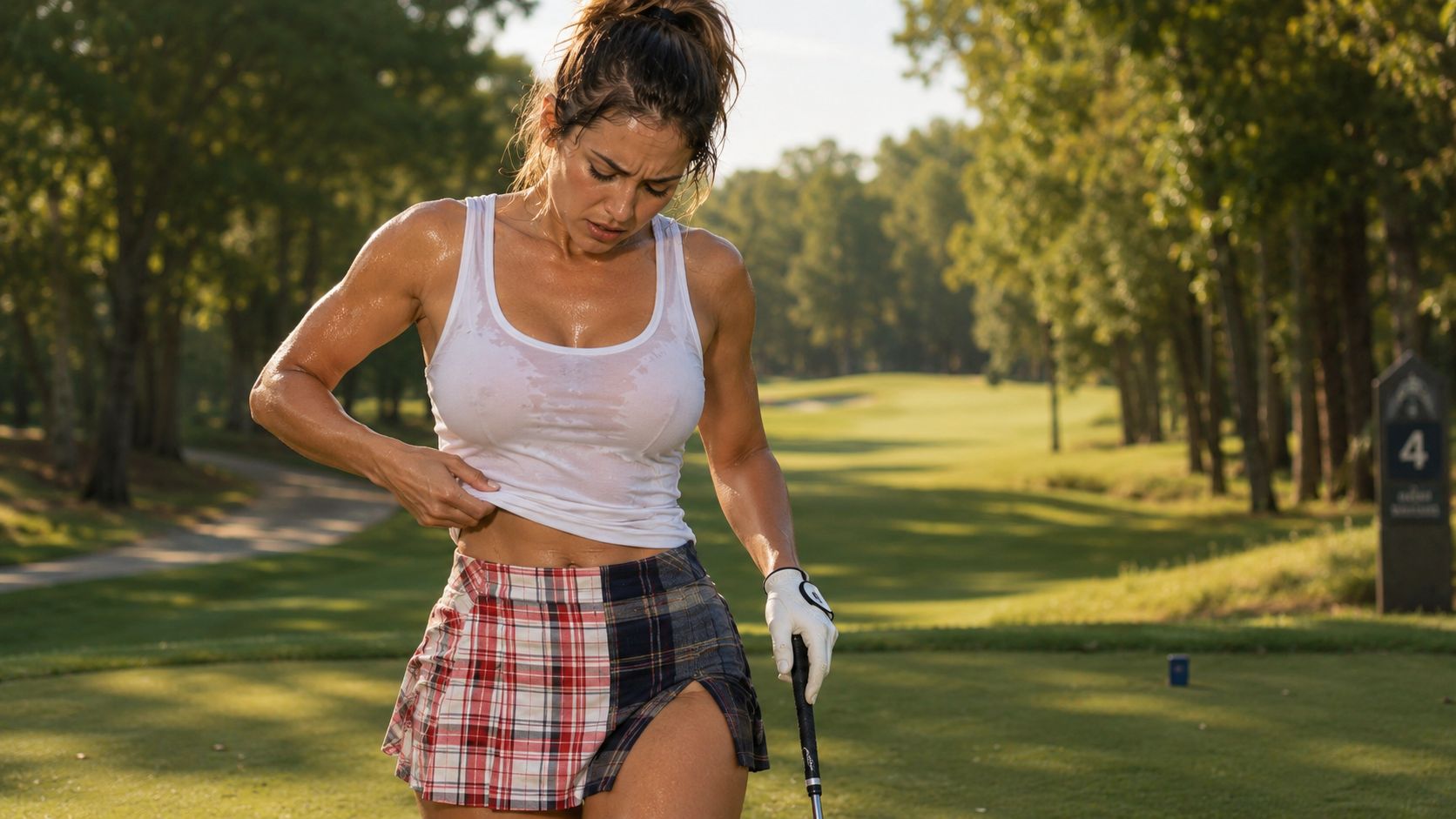
Why the Right Tank Changes Your Round
A bad tank rarely blows up a round in one obvious moment. It chips away at focus. The hem creeps up on the backswing, the fabric starts clinging after the first sweat patch, and the armhole nags every time you turn through the ball. By the time you reach the back nine, you are adjusting the shirt instead of committing to the shot.
That is why this choice is a decision problem, not a cute-top problem. Women's golf apparel has real demand behind it, with one report citing over 36 million active female golfers worldwide in 2024, roughly 41% of total golf apparel sales globally coming from women's-specific golf apparel that year, and more than 11 million golf-specific clothing items bought by women in 2024 Market Growth Reports. The same report also notes that 55% of women's golf apparel fabrics were moisture-wicking, while 52% of women golfers prefer moisture-wicking technology and 47% prioritize UV-protective garments.
The four decisions that actually matter
A tank earns its spot in your rotation only if it clears four checks. The fabric has to move sweat off your skin and recover with your swing. The cut has to fit your torso, bust, and shoulders without riding up. The neckline and armholes have to stay within the dress code where you play. The look has to work after the round, because nobody wants a shirt that dies the second the scorecard is signed.
Practical rule: if a tank fails any one of those four checks, leave it on the rack. Golf punishes small mistakes, and clothing is no different.
The construction details tell you a lot about how a tank will behave over 18 holes. Brands like J.LINDEBERG describe women's golf tops built around 4-way stretch and moisture-wicking, and FootJoy's training tank uses 100% polyester, moisture-wicking, breathable, 4-way stretch construction with double-stitched seams for durability J.LINDEBERG golf tops guide. That is the difference between a shirt that disappears during the swing and one that keeps announcing itself on every rotation.
If you also want the rest of your kit to feel as considered as the top, a clean setup for the walk to and from the course matters too. Start with find HYDAWAY greens, then make the tank choice match the same level of intent.
Fabric and Construction Specs That Matter
The fastest way to shop for women's golf tank tops is to read the product page like a gear checklist. If the fabric description stays vague and the seam details are missing, you are probably looking at a generic athletic tank dressed up for golf. The shirt has to handle heat, sweat, and shoulder rotation at the same time, so the construction has to hold up across all three.
Start with stretch and recovery
4-way stretch matters because the golf swing is repetitive overhead motion with real torso separation. If the fabric only stretches one way, the armhole and side seam get strained at the top of the backswing, and the tank starts to pull instead of moving with you. The J.LINDEBERG golf tops guide is useful here because it points to stretch and performance fabrics instead of vague lifestyle language.
Moisture-wicking comes next. It pulls sweat away from the skin so it can dry at the surface instead of clinging to your body, and that is why polyester-based knits dominate this category. If you want a plain-English breakdown of how that works, the what is moisture-wicking fabric guide explains the basic fabric logic without the fluff.
Don't ignore the build details
Quick-dry knit sounds ordinary until you have sat in a damp shirt between holes. It matters on humid days, on the range, and any time you want the top to feel fresh again quickly. Then check the seams, because reinforced stitching helps the tank survive repeated stretch and wash cycles. A detail like double-stitched seams tells you the brand expects the garment to take real use, not just look good in a product photo.
Fit and finish matter together. A tank can have the right stretch and still feel annoying if the fabric clings, twists, or sags after a few holes. The right build keeps the shirt quiet during the swing and steady through the walk from the first tee to the last putt.
Buy this way: check the fabric, check the stretch, check the seams, check the dry time. If the page will not answer those four things, keep moving.
Fit, Length, and Sizing Details Most Buyers Skip
Most women shop tanks by size label and then act surprised when the fit fails in motion. That's the wrong habit. A golf tank has to sit correctly through rotation, and that means body length, bust room, armhole shape, and neckline height matter more than the letter on the tag.
Measure the body, not the marketing
Retail charts for sleeveless golf tanks often show lengths that run from about 24.5 to 29 inches across sizes, with bust ranges scaling from roughly 29 to 49 inches depending on size. That spread tells you the brand is tuning the garment for different bodies, not just grading a single block up and down. If you've got a longer torso, fuller bust, or broader shoulders, those numbers are the ones to compare first, not your usual casual size.
A tank that's too short rides up at the top of the swing. A high-friction armhole can dig in and make the backswing feel trapped. That's why the cut matters as much as the stretch, especially if you're repeating the motion for 18 holes and not just hitting a few range balls.
Use a real fit check before you buy
For a simple measurement routine, perfect fit results from ClothME is the kind of resource that helps you compare your own numbers against a chart instead of guessing. Measure your bust at the fullest point, your torso length from shoulder to hem point, and your shoulder width if the product page gives that information. Then compare those numbers to the chart, not to the model photo.
Here's the quick reference I'd use:
| Size Tier | Body Length (in) | Bust Range (in) | Best For |
|---|---|---|---|
| Smaller fit range | About 24.5 to 26 | About 29 to midrange | Narrow shoulders, shorter torso, closer fit |
| Midrange fit range | About 26 to 27.5 | Midrange to upper-midrange | Most average builds, balanced coverage |
| Longer fit range | About 27.5 to 29 | Upper-midrange to about 49 | Fuller bust, longer torso, broader shoulder plane |
Racerback and standard sleeveless cuts also behave differently. Racerbacks free the shoulders and give you more airflow, while standard sleeveless cuts usually keep a cleaner, more conservative look. Pick the one that matches your body and your course, not the one that looked coolest on a hanger.
Dress Code Triage for Public, Private, and Resort Courses
This is the part most shopping pages skip, and it's the part that saves you from showing up underdressed. A tank can be perfectly fine at one course and a no-go at another. The rule isn't “tank tops are good” or “tank tops are bad.” The rule is to read the venue.
Public, private, and resort don't play by the same rules
At a public muni, a women's golf tank top is usually easiest to wear if the cut is modest, the fabric isn't sheer, and the straps or shoulders don't look like gym-only gear. At a private club, the threshold is usually stricter, and the safest play is a higher neckline, opaque fabric, and a more defined silhouette. Resort courses land somewhere in the middle, but they still vary by property, so don't assume a vacation tee time means relaxed standards.
The visible problem is that most style content talks about “cute” or “sporty” without telling you what survives a dress-code check. That gap is why you need a triage mindset before you pack the bag.
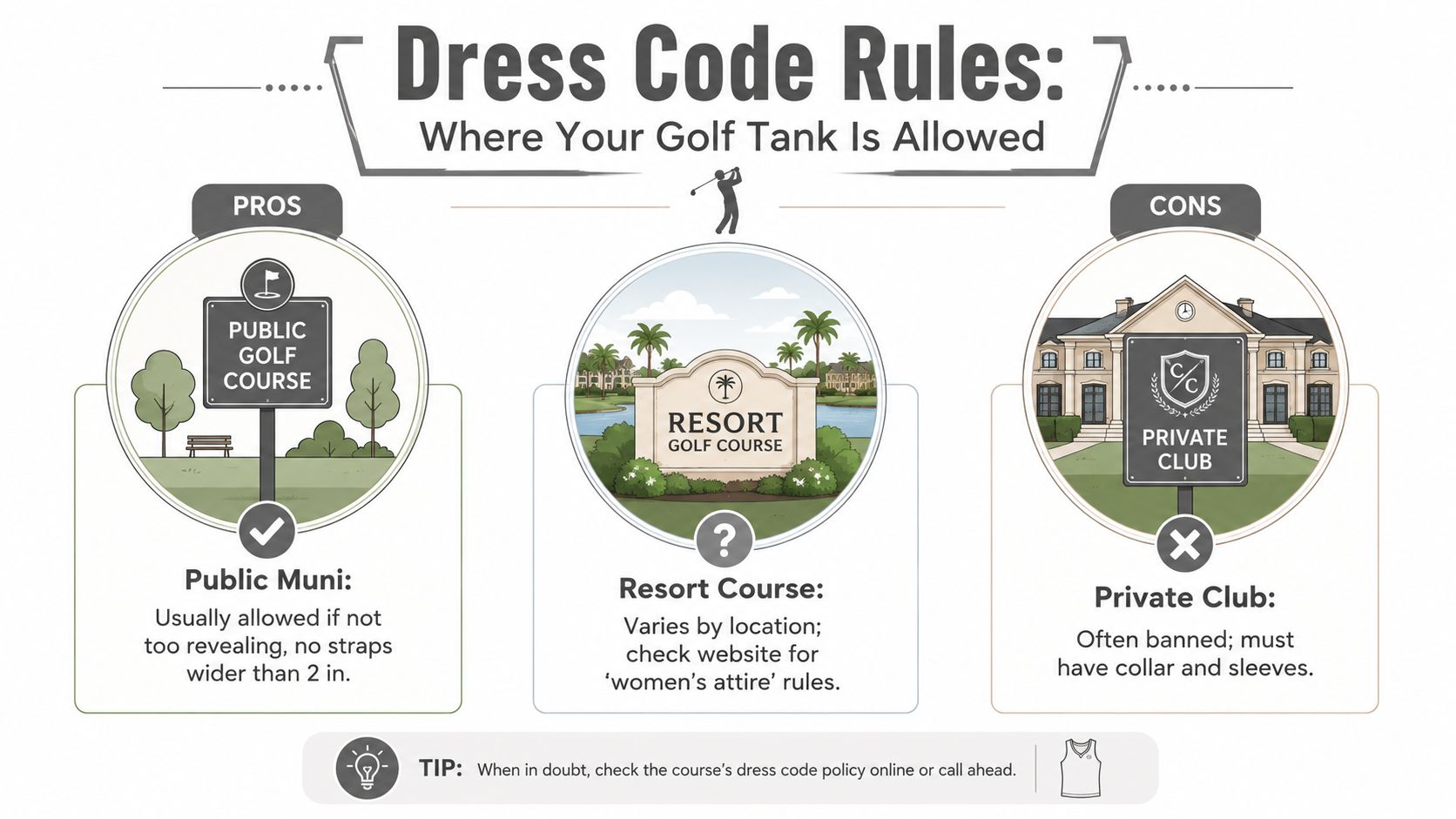
The three checks I'd run every time
First, check the neckline height. Higher is safer. Second, check the strap width and armhole shape. Deep-cut armholes and very open sides are the fastest way to make a tank look too casual for stricter clubs. Third, check opacity in sunlight, because a tank that looks fine in your bedroom mirror can turn transparent outdoors.
If you need a clean primer on traditional course attire, the guide at what is proper golf attire is useful context. But the smarter move is still to call the pro shop when you're unsure, especially before a private-club round.
Pack one backup layer. A light cardigan, quarter-zip, or sleeveless shell takes up almost no room and can rescue a borderline tank in two minutes.
Sun Protection and Layering for All-Day Rounds
A tank earns its place in your golf bag when the weather turns serious. On a long sunny day, I want cooling first, then coverage I can add or remove without messing up my swing. The best setup builds sun protection around the tank, not on top of a bad choice.
Coverage should move with the forecast
A proper golf tank should do more than look clean at the first tee. It needs to work with the rest of your gear, because exposure adds up fast across an entire round, and why tanning is skin damage makes the basic point plainly. A tank with UPF 50+ gives you a stronger starting point for exposed arms and shoulders, which matters when the sun is beating down on hole 4 and still there on hole 14.
The layering pieces that earn bag space are the ones that breathe. A lightweight arm sleeve protects without trapping heat. A quarter-zip works when the morning starts cool and the back nine warms up. A sun hoodie can help on range sessions or cart-path days if the fit leaves your shoulder turn alone.
Build a simple sun stack
Wear the tank alone when you start early and the forecast stays mild. Add sleeves or a light layer when the sun climbs or when you know you'll be walking a long stretch with little shade. Keep the hat in the bag and put it on before your face starts cooking.
A few practical rules hold up round after round:
- Choose breathable layers: If the outer layer traps heat, it works against the tank underneath.
- Match the layer to the tee time: Early rounds need less coverage at the start, while midday rounds need more protection from the first shot.
- Keep the swing clear: Any sleeve or layer should move without tugging across the shoulder joint.
If your top works with the layer stack, you have a course-ready setup. If it does not, you will feel the problem before the turn.
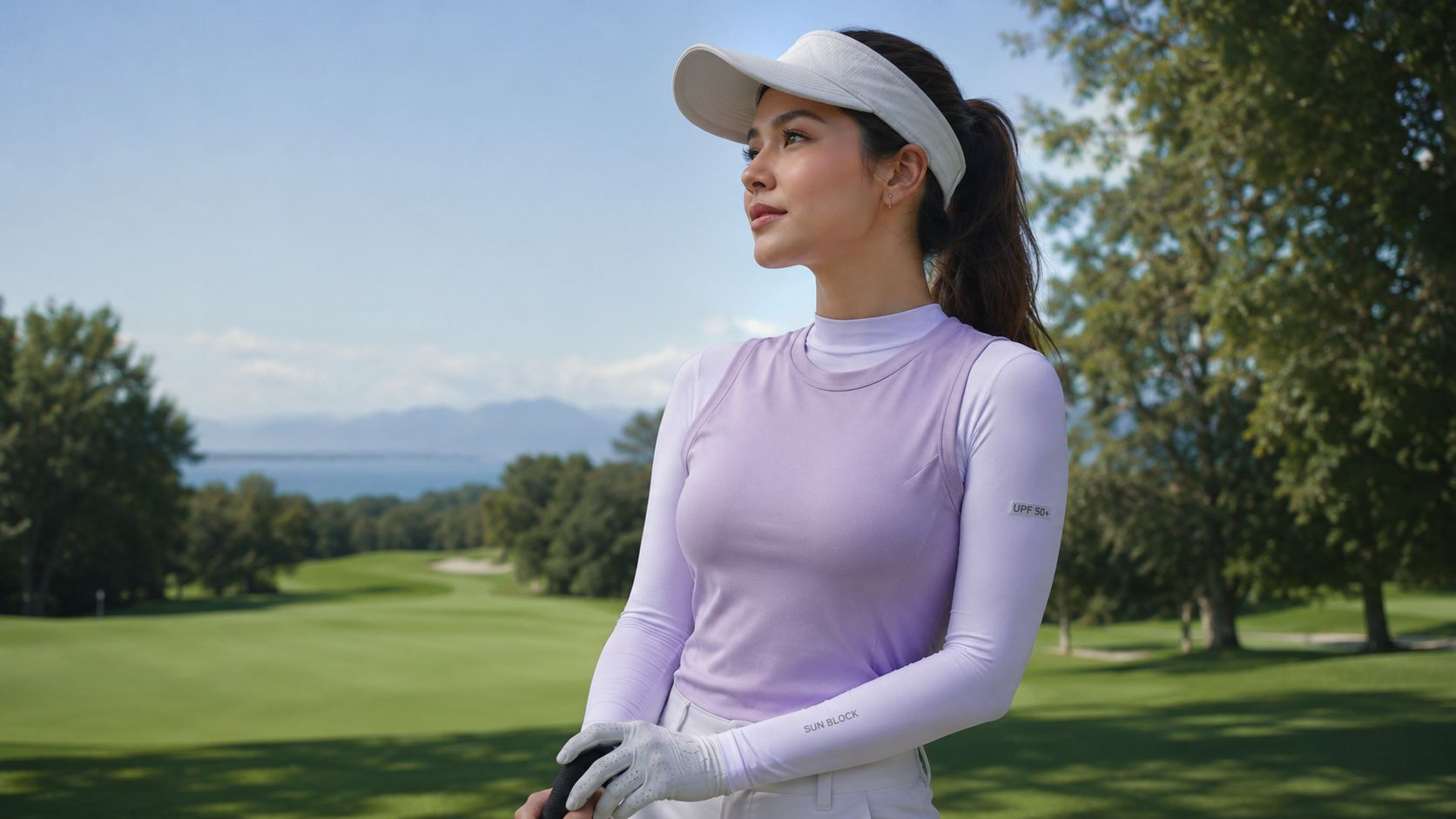
On-Course to 19th Hole Outfit Formulas
A good tank should earn a second life after the round. If you're changing shoes but not changing your whole outfit, the tank becomes the anchor that decides whether you look intentional or like you forgot to go home. That's where smart styling pays off.
Formula one keeps it club-clean
Start with a tonal tank, something in white, navy, or soft green, then pair it with a pleated skort and a structured belt. A low-profile visor keeps the line tidy, and the whole look reads polished without trying too hard. This is the safest formula when you want to look like you belong at a nicer club without dressing like a corporate brochure.
Formula two leans athletic
Use a racerback tank, stretch short, and performance shoes when you care more about movement than polish. If you want the outfit to feel a little more personal, a 2ndShotMVP hat is a straightforward add because the brand sells golf hats and lifestyle apparel for men and women, so the headwear slot fits the rest of the kit without forcing a costume change. The key here is proportion, keep the tank fitted, keep the bottom clean, and let one accessory carry the personality.
The design logic is simple. Athletic fabrics on top, performance footwear below, and one item that says you know what you're doing.
Formula three transitions straight to dinner
Keep the tank on, swap the golf bottom for wide-leg trousers, and add a cropped cardigan. That combination takes you from the last putt to the bar without a full outfit reset. If the tank is opaque, the neckline is clean, and the color stays neutral, the whole look reads deliberate instead of improvised.
A good rule for the post-round transition is this.
If you can remove the golf-specific pieces and still look like you dressed on purpose, the tank passed the test.
For more outfit-building ideas, how to assemble cute golf outfits is a solid reference point, but the main win is keeping the tank versatile enough that you don't need a separate wardrobe for the clubhouse.
Care Routine That Keeps the Tank Performing
A performance tank can only stay performance-ready if you stop treating it like a cotton tee. Heat, residue, and lazy drying all kill the features you paid for, and once the fabric loses its recovery or wicking, the shirt starts behaving like cheap casual wear. The fix is simple, but you have to do it every time.
Wash it like a technical garment
Use cold water. Put the tank in a mesh bag if you're washing it with zippers, hooks, or rougher fabrics. Skip fabric softener, because it coats technical fibers and cuts into the wicking you wanted in the first place. Hot water is a bad idea too, especially if the fabric contains stretch fibers, since heat can weaken recovery over time.
Then dry it with care. Hang-drying or laying flat keeps the shape cleaner than tossing it into high heat, and that matters for shoulder fit and hem length. If the tank has a more fitted cut, heat can distort the body line just enough to make it feel off on the next round.
Treat stains before they settle
Grass, sunscreen, and sweat marks need different handling, but the principle is the same, act fast. Rinse the area before the stain sets, then wash normally rather than scrubbing the fabric into a fuzzy mess. For travel, a quick refresh with airing-out overnight usually beats over-spraying scent on top of old sweat.
A few habits make the biggest difference:
- Rotate between two tanks: One wears, one rests, which gives elastic fibers time to recover.
- Keep a travel bag: Toss in a clean tank for a same-day change if you're going from the course to dinner.
- Store it flat or hung properly: Crumpling can stretch straps and warp the neckline.
The whole buying decision comes full circle here. Fabric controls sweat and stretch, fit controls movement, dress code controls whether you can wear it where you play, sun protection controls how long you can stay out, styling controls whether it works after the round, and care controls whether any of that lasts past one summer. Get the sequence right and you stop buying tanks that only work for selfies.
If you want a cleaner golf wardrobe without wasting time on gear that only looks good online, start with the pieces that solve a course problem. Visit 2ndShotMVP for golf hats and lifestyle apparel that can slot into the same on-course to off-course routine, then build the rest of your outfit around a tank that fits your swing, your club, and your day after the round.

