

You know the feeling. It’s one of those perfect, crisp winter mornings on the course, but your ears feel like they're about to shatter into a million tiny ice crystals. Right then, it hits you: your trusty summer cap is completely, hopelessly out of its league.
A proper winter golf hat isn’t just a fashion statement; it’s a non-negotiable piece of performance gear.
Why Your Summer Cap Just Doesn't Cut It
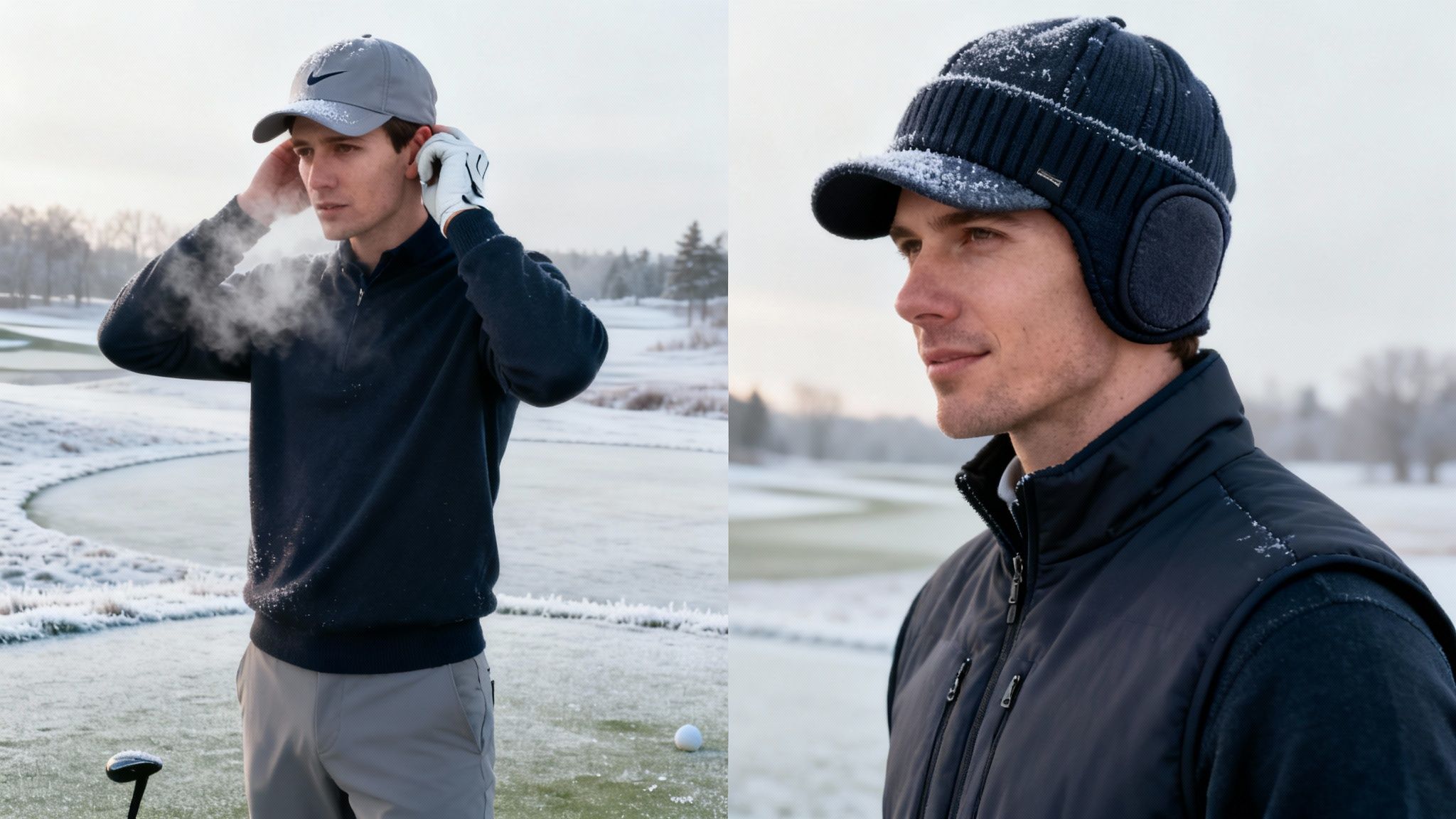
Think about it: your summer baseball cap is essentially a portable sun shield. It’s made from light, airy materials designed to keep you cool and keep the sun out of your eyes. It’s a champ in July, but on a frosty November fairway? It offers about as much warmth as a wet paper towel.
When the temperature plummets, your body starts pumping out a surprising amount of heat right through the top of your head. A cold noggin isn't just uncomfortable—it can genuinely torpedo your game.
Your focus starts to drift, your muscles tighten up, and that buttery-smooth swing you grooved all season suddenly feels like you're trying to bend a frozen garden hose. We dive deeper into this in our guide on playing golf in the cold.
The Performance Gap: It's All in the Design
The real difference between summer and winter headwear comes down to engineering. A dedicated winter golf hat is built from the ground up with features a standard cap couldn't dream of having.
- Serious Insulation: We're talking materials like plush fleece or wool with a thermal lining, all designed to trap your body heat right where you need it most.
- Ear Protection: This is a big one. Most winter styles have built-in ear flaps or simply a deeper fit that keeps your ears from turning into frozen cherries in the wind.
- Wind-Proofing: A tightly woven fabric creates a barrier that stops that biting wind chill dead in its tracks.
The whole point is to keep your body temperature stable. That’s what lets you stay loose, focused, and ready to pounce on your shot instead of just thinking about the nearest fireplace. Making the switch from your summer cap is probably the single easiest upgrade you can make for your cold-weather game.
And it seems more and more golfers agree. This simple gear swap is part of a trend that has pushed the global golf hat market to a valuation of around USD 1.2 billion in 2024. As players refuse to let a little frost end their season, the demand for hats that actually deliver on warmth and wind protection keeps climbing.
What's Really Going On Inside a Warm Golf Hat?
Ever wonder what makes a winter golf hat actually warm? It’s not some kind of dark magic, it’s just clever science packed into every stitch. Think of your hat's material as its personal insulation system—just like the stuff in your house walls—designed to trap precious heat and give the cold the boot.
The real secret sauce is in the fabrics. Some are natural wonders perfected over centuries, while others are high-tech marvels engineered to fight the elements. Once you know what to look for, you can glance at a product tag and know exactly how that hat will perform on a frosty fairway.
The Heavy Hitters of Warmth
When you’re hunting for the best materials for a winter golf hat, a few key players consistently top the leaderboard. Each one brings something special to your cold-weather game.
- Merino Wool: Forget your grandpa’s itchy old sweater. Merino wool is ridiculously soft, a master of temperature regulation, and a true champion at wicking moisture. It pulls sweat away from your skin, keeping you dry and comfortable even if you're working hard on a tough par-5.
- Fleece: We all know that soft, cozy feeling. Fleece is a lightweight powerhouse that traps tiny pockets of air, giving you fantastic insulation without the bulk. Your swing will feel as free as a summer afternoon.
- Thermal Synthetics: These are the space-age fabrics of the hat world. Polyester blends and other engineered materials are often built to be wind-resistant and quick-drying, making them an incredible first line of defense against a biting wind.
This obsession with top-tier materials is a defining feature of all premium golf hats, where a hat isn't just an accessory—it's a piece of gear.
Let's Decode the Tech Talk
Look past the main fabric and you’ll often find a list of special features on the tag. These aren't just marketing buzzwords; they are specific solutions designed to crush on-course problems and keep you focused for all 18 holes.
Think of a hat's technology as its game plan for beating the cold. A windproof membrane is your bodyguard against gusts, while a water-resistant coating is your shield against surprise drizzle or snow.
So, what do these features actually do for you? Let's break it down.
- Windproof Membranes: This is usually a super-thin layer bonded to the inside of the hat's fabric. Its one job is to stop wind dead in its tracks. This is absolutely critical for preventing wind chill from sucking the heat right out of you on an exposed tee box.
- Water-Resistant Coatings (DWR): A Durable Water Repellent (DWR) finish makes water bead up and roll right off the surface. No, it won’t make your hat a submarine in a downpour, but it’s perfect for shrugging off light snow, melting frost, and that annoying morning mist.
- Moisture-Wicking Liners: This is all about the inner layer. It’s designed to pull sweat away from your forehead and move it to the outer surface of the hat to evaporate. This is a game-changer for staying warm, because we all know a damp head quickly becomes a cold head.
When you understand this tech, you can pick a winter golf hat that's perfectly armed for whatever your local course throws at you.
Choosing Your Style: Beanie, Bobble, or Brimmed?
Alright, you’ve decided to keep your head in the game (and keep it warm). Now for the fun part: picking a style that feels right. Winter golf hats aren't a one-size-fits-all deal; they generally fall into three main camps. Each one brings its own personality and practicality to the course.
Think of it like choosing between a driver, a fairway wood, and a hybrid. They’re all great clubs, but you pull them out of the bag for very different jobs. The right hat isn’t just about aesthetics—it’s about matching your headwear to the day’s conditions and your own personal comfort.
Let's break down the big three contenders.
The Classic Beanie: The All-Rounder
The beanie is the undisputed champion of no-fuss warmth. It’s the workhorse of winter headwear. Its snug, low-profile design is absolutely perfect for golf because it stays glued to your head during your swing without any drama. No flapping material, no distracting bulk—just you and the ball.
A proper golf beanie isn’t your average acrylic hat. Look for performance fabrics like merino wool or thermal synthetics that masterfully trap heat while pulling sweat away from your skin. This makes it the go-to choice for the golfer who wants maximum warmth with zero nonsense. On those bone-chilling days, this is your most reliable friend.
The Bobble Hat: A Touch of Tradition
Next up, the bobble hat—or pom-pom beanie, if you prefer. This style injects a bit of classic, playful charm into your winter golf ensemble. It delivers all the same toasty warmth and comfort as a standard beanie, but that little bobble on top adds a traditional, off-the-course vibe that a lot of golfers really appreciate.
From a functional standpoint, it’s just as good. The trick is to find one specifically designed for golf, which will ensure you still get that snug fit and performance-ready material. This is the perfect hat for the player who wants to stay warm while showcasing a bit more personality on the links.
The Brimmed Winter Hat: Sun and Glare Defense
Finally, we arrive at the brimmed winter hat—a seriously smart hybrid that solves a classic cold-weather conundrum. Sun protection in December? You bet. The low winter sun is a menace, creating a blinding glare, especially when it bounces off frost-covered fairways or a dusting of snow.
A brimmed winter model, often looking like a baseball cap with cozy ear flaps or built from thick, warm fabric, is the perfect answer. This style gives you the best of both worlds: the essential insulation to keep your head and ears from freezing, plus a handy brim to shield your eyes. It’s the ultimate strategic choice for those bright, crisp, cold days, making sure you can actually track your ball flight without squinting into oblivion.
This little decision tree can help you pinpoint what you really need from your hat on any given day. Is it all about pure warmth, or do you need to fend off wind and rain?
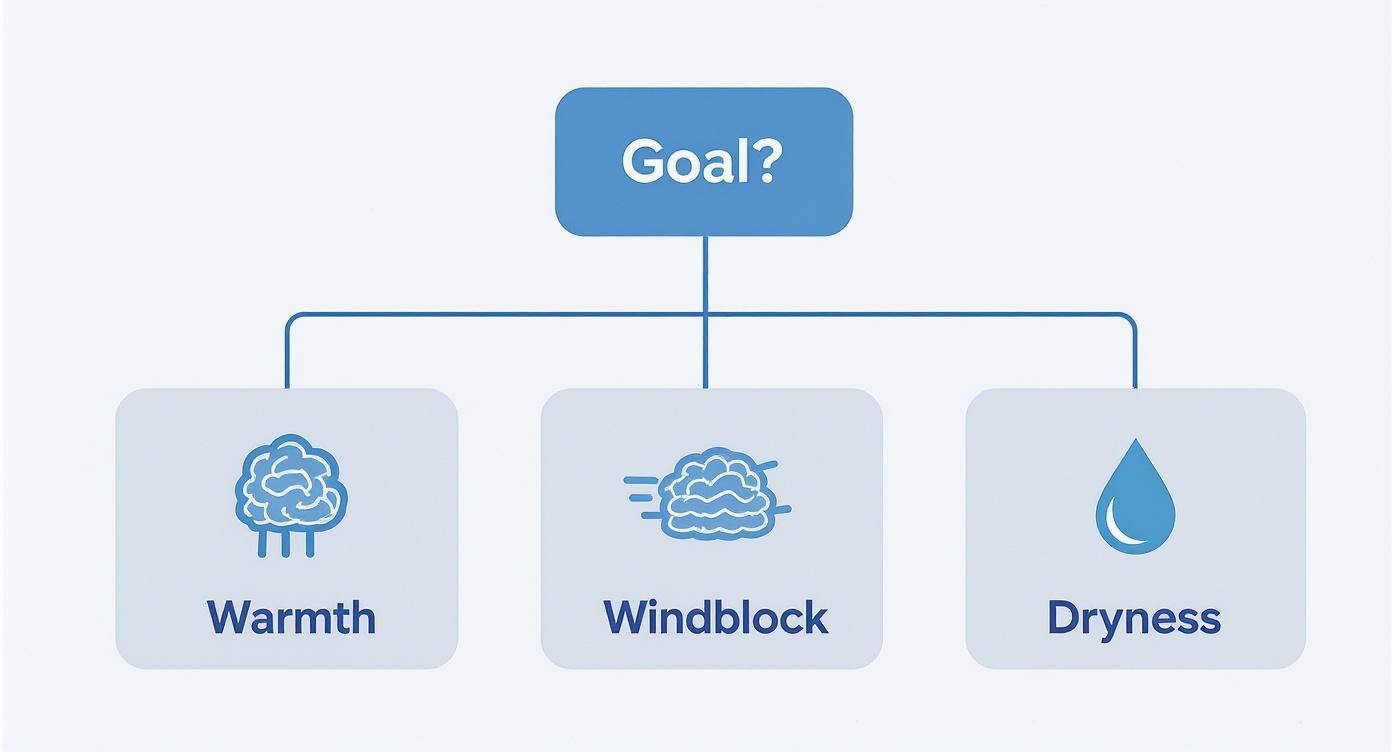
As you can see, the key is to match the hat's built-in features to the forecast. Get that right, and you'll always have the perfect tool for the job.
To make it even easier, here’s a quick rundown of how these styles stack up against each other on the course.
Winter Golf Hat Style Showdown
| Hat Style | Best For | Key Feature | Potential Drawback |
|---|---|---|---|
| Classic Beanie | The coldest days and serious golfers focused on performance. | Maximum warmth with a sleek, no-distraction fit. | Offers no protection from sun or glare. |
| Bobble Hat | Golfers who want warmth with a dash of classic style. | Provides the same thermal benefits as a beanie with more personality. | The bobble can be a bit bulky or distracting for some players. |
| Brimmed Winter Hat | Bright, sunny, and cold days where glare is a factor. | A hybrid design that combines warmth with sun protection. | Can be less insulating than a dedicated beanie in extreme cold. |
Ultimately, the best hat is the one that keeps you comfortable and focused, letting you forget about the weather and just play your game.
Finding the Perfect Fit So You Can Focus on Your Swing
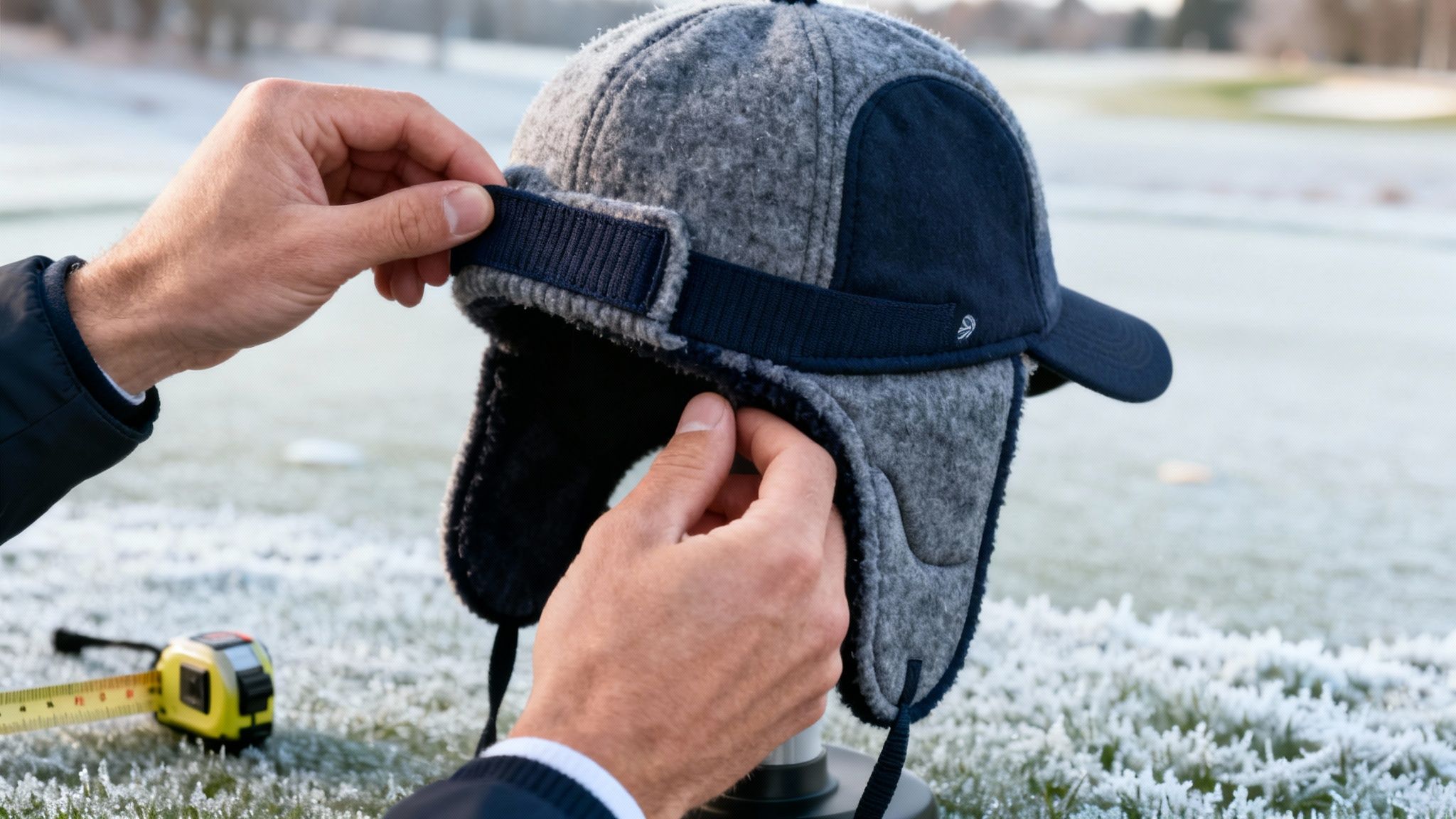
Let's be honest, a poorly fitting hat is more than just a little annoying—it's a full-blown distraction that can wreck your game. Think of it like a golf glove. The right one becomes part of your hand, letting you focus entirely on your grip and swing. Your winter hat should do the exact same thing for your head.
A hat that’s too tight will have you nursing a tension headache by the third hole. On the other hand, a hat that’s too loose is just waiting to slide over your eyes at the absolute worst moment—like the top of your backswing. Getting the fit dialed in isn't just a detail; it's critical for staying comfortable and mentally in the zone.
How to Nail the Perfect Fit
Hat sizing can be all over the map from one brand to another, and that "one-size-fits-all" tag is often wishful thinking. The only surefire way to get it right is to measure your head yourself. Grab a soft tape measure.
- Find Your Spot: Wrap the tape around the widest part of your head, which is usually about a half-inch above your eyebrows and ears.
- Keep it Level: Make sure the tape is parallel to the ground all the way around—no dipping down in the back.
- Read the Number: Jot down the measurement in inches or centimeters and match it up with the brand's specific sizing chart.
It’s a simple two-minute job that eliminates all the guesswork.
A hat that fits correctly should feel snug enough to stay put in a gust of wind, but not so tight that it leaves a mark on your forehead. It’s the sweet spot between secure and forgotten.
This obsession with a perfect, functional fit is a huge reason the men's golf hats market is thriving. In North America especially, our deep-rooted golf culture has pushed brands to innovate with things like adjustable closures and thermal linings that actually help your game. In fact, industry analysts projected this market segment would hit nearly USD 0.97 billion by 2025, all thanks to golfers who get that the right gear is an investment in their performance. You can dig into the golf hat market trends here if you want to see the numbers for yourself.
Game-Changing Fit Features to Look For
Beyond a simple size number, today’s best winter golf hats are packed with clever features designed for comfort and playability on the course.
- Stretch-Fit Fabrics: Keep an eye out for materials with a little bit of spandex or elastane woven in. They give you a forgiving, comfortable fit that molds to your head without feeling like a vise grip.
- Adjustable Closures: Whether it’s a subtle drawstring on a beanie or a sleek buckle on a brimmed hat, these let you fine-tune the fit for absolute security. No more second-guessing in the wind.
- Contoured Ear Flaps: The best ear flaps are shaped to cover your ears completely, blocking out the wind but not the world. You can still hear your buddies heckle you and, more importantly, the pure sound of a flushed iron shot.
How to Style Your Winter Golf Gear
Staying warm on the course doesn't mean you have to look like you're about to shovel the driveway. The goal is to look like a golfer who’s ready for anything, not like you just stumbled off a ski lift.
The good news? Top golf brands get it. They design entire winter collections to work together, so building a sharp, cohesive wardrobe is easier than ever. It's all about looking put-together, even when the temperature drops.
The key is coordination, not necessarily perfect matching. Think of your winter golf hat as the exclamation point on your outfit—the finishing touch that pulls everything together. A wild, patterned beanie might be fun on its own, but if you’re already wearing a patterned vest, the whole look can get a little loud. The simplest rule is to create balance.
Simple Rules for a Polished Look
A few easy guidelines will keep your winter golf gear looking clean and intentional. It’s all about creating a silhouette that works for your swing and looks sharp from the first tee to the 18th green.
- Do: Pair a solid-colored hat with a patterned quarter-zip or jacket. This creates a clean, grounded look that lets one piece be the hero. A simple navy or grey beanie is your best friend here—it goes with almost anything.
- Don't: Go overboard by mixing multiple bold patterns. A plaid vest, a striped mid-layer, and a funky patterned hat is a recipe for a visual headache. Let one item be the star of the show.
Think of it this way: your hat and your outerwear should be teammates, not competitors. If one is making a bold statement with a pattern, the other should play a strong supporting role in a solid color.
Color Coordination Made Easy
You don’t need to be a style guru to nail color on the course. A great starting point is to pick a neutral base for your main pieces—think a black vest or grey pants—and then use your winter golf hat to inject a little personality with a pop of color.
For example, a charcoal grey quarter-zip and black pants look instantly more interesting with a rich burgundy or deep forest green beanie. This simple trick adds a dash of personal style without clashing with that classic golf aesthetic.
This focus on both function and style is a huge driver in the winter golf hat market, especially in places like the U.S. and Europe where changing seasons create real demand. The U.S. golf apparel market, in particular, keeps expanding as players seek out gear that not only performs but also looks fantastic. Discover more insights about the golf apparel market here.
Keeping Your Hat in Top Condition for Years
A great winter golf hat isn't just another piece of clothing; it's a critical piece of gear. Think of it as an investment in your comfort and, frankly, your ability to focus on the game instead of the cold. Like any good equipment, a little TLC goes a long way.
Proper cleaning and storage mean your favorite hat will be ready to go, season after season. It'll keep its shape, its warmth, and its look. You wouldn't just toss your muddy clubs in the back of the garage, right? Your hat deserves that same level of respect.
Decoding the Care Label
Alright, first things first: before you even think about washing it, find that little tag inside your hat. This is your bible. Ignoring it is the quickest way to turn your favorite headwear into a shrunken, misshapen mess. That label tells you everything, especially the material and how to wash it.
- Wool & Wool Blends: Fantastic for warmth, but they have a nasty habit of shrinking in heat. Hand washing in cold water is your best friend here. Seriously.
- Fleece & Synthetics: These are usually a bit tougher. Many can handle a machine wash on a gentle cycle with cold water, but don't just assume—always check the label first.
The Right Way to Wash and Dry
For most winter golf hats, and especially for anything with wool, just wash it by hand. It's the safest route. Grab a mild detergent—something for delicates or wool—and gently swish it around in cool water. Whatever you do, don't wring it or twist it out. That’s a one-way ticket to a stretched-out disaster.
The most critical step is drying. Never, ever, under any circumstances, put a wool or fleece hat in the dryer. The heat will shrink it into a size fit for a toddler. I'm not kidding.
Here’s the pro move: gently roll the hat in a clean towel to blot out the extra water. Then, find something round—a small bowl, a coffee can, even another balled-up towel—and stuff it inside the hat. This helps it keep that perfect shape while it air dries, away from direct heat or sun.
For a deeper dive, our complete guide on how to clean golf hats walks you through every single step.
When the season finally wraps up, don't just cram your hat into a drawer. Store it somewhere cool and dry where it won't get squashed. Using a hat form or even just stuffing it with some acid-free paper will make sure it’s ready and waiting for you when that first frost calls you back to the course next year.
Your Top Winter Golf Hat Questions Answered
Alright, so you've got the winter golf bug and you're gearing up. But a few questions are probably rattling around in your head. That's a good thing! When you're facing down a frosty fairway, the details matter.
Let's tackle some of the most common questions we hear from golfers about staying warm up top. Think of this as your personal cheat sheet for making the right call before you brave that chilly first tee.
Are These Hats Actually Waterproof?
This is the big one, isn't it? The short answer is: most are water-resistant, not fully waterproof. Your typical winter golf hat will have a DWR (Durable Water Repellent) coating. This finish is a champ at making light rain and melting snow bead up and roll away like water off a duck's back.
For most cold, damp rounds, that's exactly what you need to stay dry and comfortable. Now, if you're the kind of hardcore golfer who plays through a genuine downpour, you’ll want to hunt down a hat specifically labeled as 100% waterproof, which is a more specialized piece of gear.
Can't I Just Wear My Regular Beanie?
You could, but you probably shouldn't. The stylish beanie you wear for a coffee run is likely made of cotton. Cotton feels great, but for any kind of athletic activity, it’s a total disaster. It’s like a sponge for sweat, and once it's wet, it stays wet, making you feel even colder.
Golf beanies are built different. They’re made from performance, moisture-wicking fabrics that actively pull sweat away from your skin. They're also designed for a snug, secure fit that won't slip down over your eyes in the middle of your backswing.
Why on Earth Would I Need a Brim in the Winter?
It sounds counterintuitive, but a brim is a game-changer in the winter. The sun hangs low and mean in the colder months. That low-angle light creates a nasty, blinding glare, especially when it bounces off a frosty fairway or a light blanket of snow.
A brimmed winter hat—or a beanie with a little visor—acts like your own personal sun shield. It cuts the glare, helps you track your ball against a bright sky, and keeps you from squinting your way through a putt. It's one of those small details that makes a surprisingly huge difference.
Will a Tight Hat Give Me a Headache?
Oh, absolutely. There's nothing worse than a hat that feels like it’s squeezing your skull. That constant pressure on your forehead and scalp is a one-way ticket to a nagging tension headache, and good luck focusing on your swing when that kicks in.
This is why getting the fit right is non-negotiable. Look for hats with built-in stretch or, even better, ones that come in actual sizes. Forget the "one-size-fits-all" promises. Your hat should feel secure enough to handle a gust of wind, but never so tight that you can feel your pulse in your temples.
Ready to find a winter golf hat that nails the perfect mix of warmth, style, and on-course smarts? At 2ndShotMVP, we live for this stuff. We design premium headwear that lets you focus on your game, not the thermostat. Come check out our collection and find your new cold-weather MVP. Shop our premium golf hats and beanies now at 2ndshotmvp.com.

