

Most advice on sustainable polo shirts starts in the wrong place. It talks about the leaf logo, the recycled-bottle headline, or the brand's cheerful little eco badge, then calls it a day. That's how buyers end up paying extra for a shirt that sounds responsible and behaves like trash after a few washes.
A better way to shop is simpler and harsher. Judge the polo by fiber choice, manufacturing proof, durability, and end-of-life reality. If a shirt can't clear those four tests, the marketing copy is just decorative pollen.
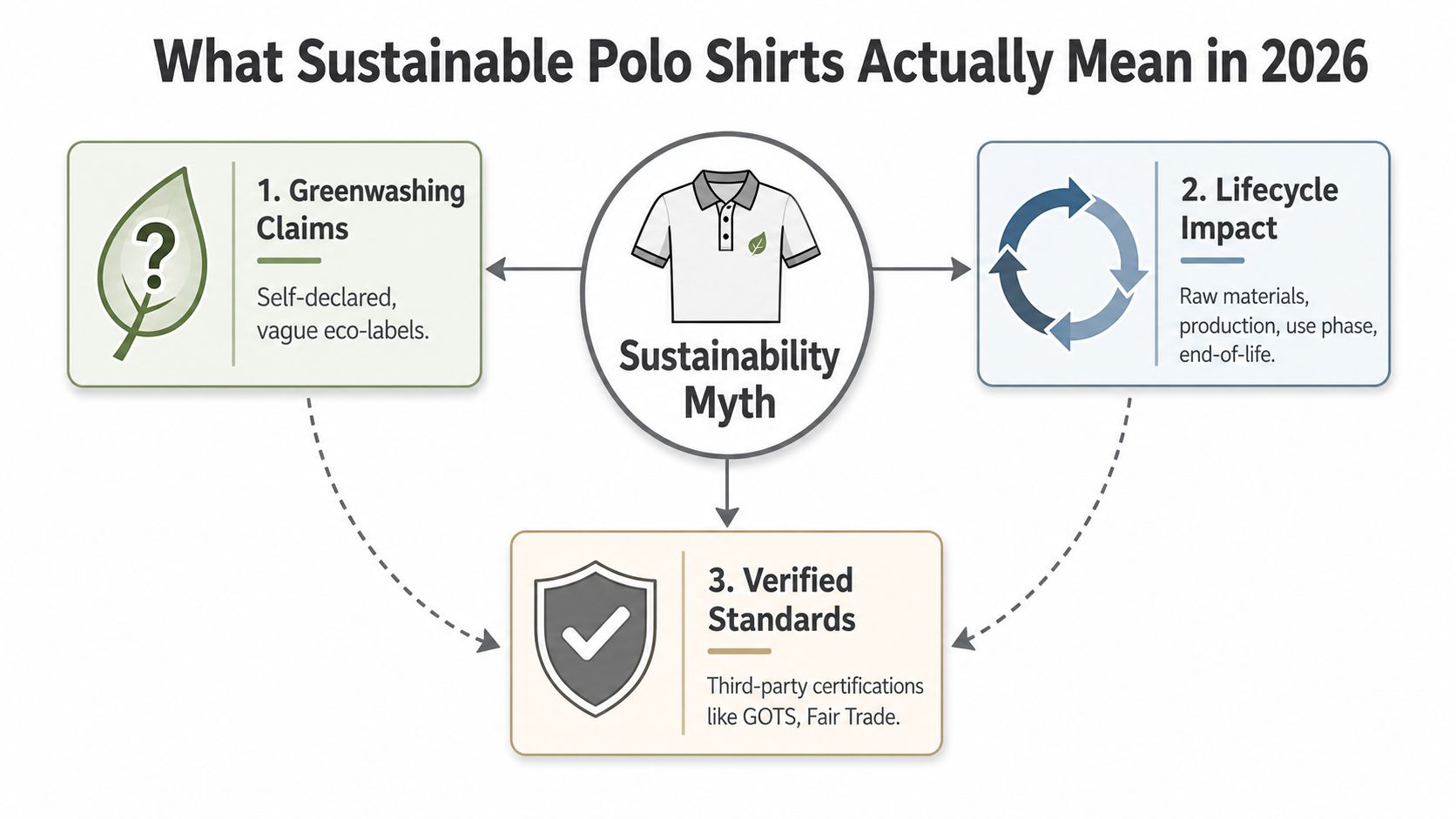
A lot of shoppers still treat sustainability like a yes-or-no sticker. It isn't. It's a chain of decisions, from raw material to who sewed the collar to how long the thing survives in your drawer before it turns into cleaning cloths.
If you want a clean, plain-language look at organic cotton before you start comparing tags, the More Sewing organic cotton guide is a useful reference. It won't do the buying for you, which is unfortunate for lazy marketers and excellent for everyone else.
What Sustainable Polo Shirts Mean in 2026
A sustainable polo shirt is the one that earns the claim across the full lifecycle, from fiber to factory to the years it spends being worn, washed, and not dumped after one season. That sounds obvious, which is exactly why so many brands still get away with half-baked claims.
The modern standard starts with four questions. What's the fiber, how was it made, who made it, and how long will it last. Miss any one of those and you are not buying sustainability, you are buying selective storytelling with a collar.
The four lenses that matter
Fiber choice tells you what the shirt is made from, but not whether the shirt is better. Manufacturing footprint covers how the fabric was processed and dyed. Labor practices tell you whether the people making it were treated like humans or like an inconvenient line item. End-of-life is the part everyone skips, which is why landfill is still fashion's favorite final season.
Practical rule: if a product page talks endlessly about material and says nothing solid about certification, testing, or labor, assume the brand is asking you to admire the costume.
The category matters because the polo itself is still a major menswear staple. Market reports still put the polo-shirt business in serious territory, which is why weak claims scale fast in a crowded field market report. That is not niche territory. It is exactly the kind of category where lazy marketing gets repeated until it sounds normal.
The historical turning point was Ralph Lauren's 2019 Earth Polo, which the company described as being made completely from recycled plastic bottles Ralph Lauren release. It mattered because a premium mainstream label showed recycled inputs could move from novelty to real product. But don't confuse “recycled bottle” with “solved.” Fashion textiles still recycle at less than 1% into new clothing, so a recycled polo remains notable, not routine.
One more reality check. Cotton still dominates the polo material mix in that same market report, so the smart buyer is not looking for some miraculous escape from the polo silhouette. They are looking for a better version of it, backed by proof instead of green confetti.
If you want a clean, plain-language look at organic cotton before you start comparing tags, the More Sewing organic cotton guide is a useful reference. It will not do the buying for you, which is unfortunate for lazy marketers and excellent for everyone else.
A quick check on moisture control helps too. If a brand pushes a performance polo, read the fabric claims carefully and compare them with a plain explanation of moisture-wicking fabric before you assume the shirt is doing anything special beyond moving sweat around.
The Materials That Power a Lower-Impact Polo
The cleanest-looking shirt isn't always the cleanest choice. A lower-impact polo usually comes from choosing the right material for the way you wear it, not from chasing the trendiest fiber name on the hangtag.
What each fiber family really brings to the table
Organic cotton is the sensible baseline. Think of it as the cleaner crop version of the classic polo, familiar in hand feel and easy to live with, but only as strong as the farming and processing behind it. If you want to keep the search grounded, it helps to find certified organic cotton rather than trusting a vague “natural” label.
Regenerative cotton goes one step further in concept, focusing on farming that aims to improve soil health rather than just reduce damage. The catch is simple, the label can sound impressive long before the documentation does. Demand the farm and supply-chain specifics, not just the vibe.
Recycled polyester is the upcycled road material of the polo world. It's useful when you want shape retention, quicker drying, and a performance feel, especially in sport-oriented cuts. Just don't pretend a bottle became a halo, because recycled content still needs verification, and recycled input is not the same thing as a low-impact life cycle.
Hemp is the rugged old-school option with a modern sustainability pitch. It tends to suit buyers who want a tougher hand feel and don't mind a shirt that leans more workhorse than luxury.
Lyocell and modal come from sustainably managed wood sources and usually sit in the softer, smoother end of the spectrum. They're the dressier cousins in the fiber family, good when you want drape and comfort without the full cotton default.
Pick the fiber that matches the job
A technical golf polo and a Friday-office polo don't need the same fabric. If you wear the shirt hard, wash it often, and care about quick drying, recycled polyester or a blended performance knit makes sense. If you want softness and a classic hand, organic cotton or a lyocell blend is usually the cleaner buy.
| Sustainable Polo Fibers at a Glance | Key Benefit | Main Trade-off |
|---|---|---|
| Organic cotton | Familiar feel, easy everyday wear | Needs credible certification and traceable processing |
| Regenerative cotton | Farming approach can improve soil health | Harder to verify, often more marketing than proof |
| Recycled polyester | Shape retention, performance feel | Must be backed by real recycled-content verification |
| Hemp | Durable, sturdy, lower-drama fiber | Texture can feel rougher than conventional cotton |
| Lyocell or modal | Soft hand and good drape | Source transparency matters, blends need close reading |
If you want a broader fabric vocabulary before you buy, the internal guide on moisture-wicking fabric is worth a quick look. The point isn't to worship one fiber. It's to stop buying based on a label that sounds virtuous and reading the shirt like an adult.
Certifications That Actually Mean Something
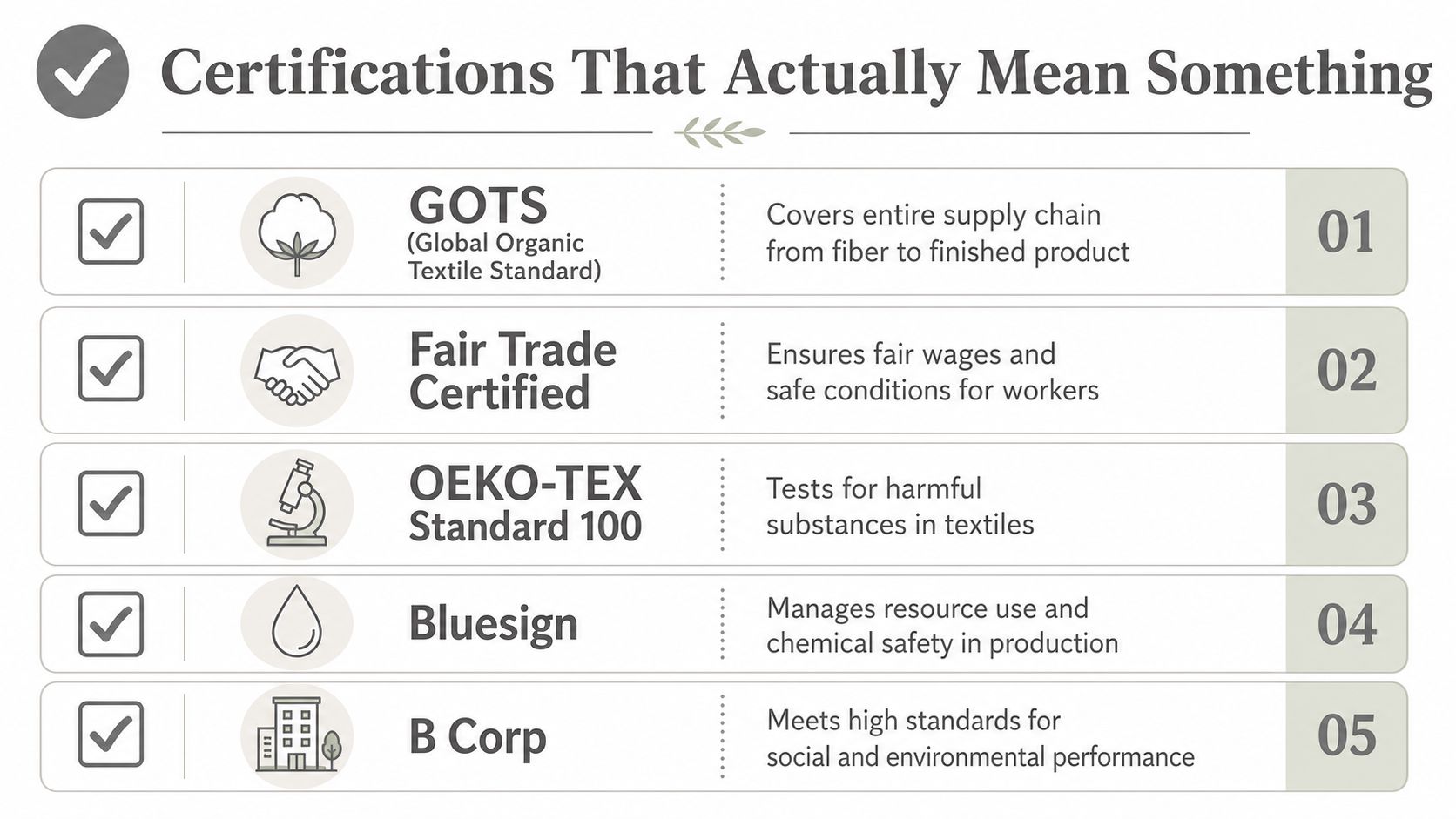
Most eco labels are cheap talk in a nicer font. Certifications matter because they're supposed to force a brand to prove something outside its own marketing department, which is where a lot of nonsense goes to get polished.
Read the label like a buyer, not a tourist
GOTS is the strongest organic-fiber signal in the bunch because it covers the supply chain from fiber through finished product. It's the one to look for when a polo claims organic cotton and the brand wants you to stop asking questions.
GRS and RCS are the recycled-content checks you want when a shirt leans on recycled polyester or recycled blends. They don't make the garment automatically good, but they do make the recycled-content claim harder to fake.
OEKO-TEX STANDARD 100 is about chemical safety in the finished textile, which matters because “sustainable” is a joke if the fabric leaves you with a chemistry lesson on your skin. It doesn't certify labor practices or farming, so don't overread it.
BSCI, WRAP, and SEDEX sit on the labor and social-audit side. They don't tell you the shirt is green, they tell you someone at least looked at the conditions under which it was made. That's a different job, and it's an important one.
Bottom line: the strongest polo usually combines a material certification and a labor or audit signal. One badge is nice. Two or three in the right places is serious.
What to treat as non-negotiable
For a real buying decision, GOTS or a credible recycled-content standard should be essential if the shirt is making a material claim. If the brand also offers OEKO-TEX STANDARD 100, that's a smart add-on for chemical safety. If labor transparency is nowhere to be found, the brand is asking you to separate fabric from the people who made it, which is a childish way to shop.
The useful habit is simple. Open the product page, look for the exact certification name, and see whether the claim applies to the shirt itself or just the factory, the brand, or some unrelated program. A vague “certified” badge without the specific standard is usually just a confidence trick in a rounded rectangle.
Why a Durable Polo Is the Most Sustainable Polo
A polo that lasts wins, every time. The environmental cost is not just in the fiber, it is in how soon the shirt starts looking tired, twisting at the side seams, or shedding enough pills to pass for modern confetti.
The fabric weight sweet spot
For a technically solid polo, 165 to 220 gsm in a pique or interlock knit is the useful range fabric guidance. That range gives you the balance that matters, breathability without a flimsy feel, enough structure to resist show-through, and a cleaner drape. Lighter shirts can feel airy, but they usually age fast. Heavier shirts can feel more substantial, but if the knit is wrong, they turn hot and stiff.
Here's the blunt part. If a shirt cannot hold its shape, the sustainability story ends early. A garment that survives repeated laundering has a lower effective environmental cost per wear than one that was “eco” and dead by midsummer.
The tests that prove durability
Suppliers should be able to show colorfastness tested to ISO 105-C06/X12 or AATCC 61/8, shrinkage under AATCC 135/150 kept below 5%, plus pilling and seam strength tested to ISO 12945 and ASTM D1683. Those are not decoration. They separate a shirt that behaves from one that sulks after a few wash cycles.
Ask for the lab sheet, not the mood board.
A buyer who cannot get those results is buying on faith, and faith is a bad sourcing strategy. Stronger durability evidence means fewer replacements, and that is where the main sustainability benefit lives.
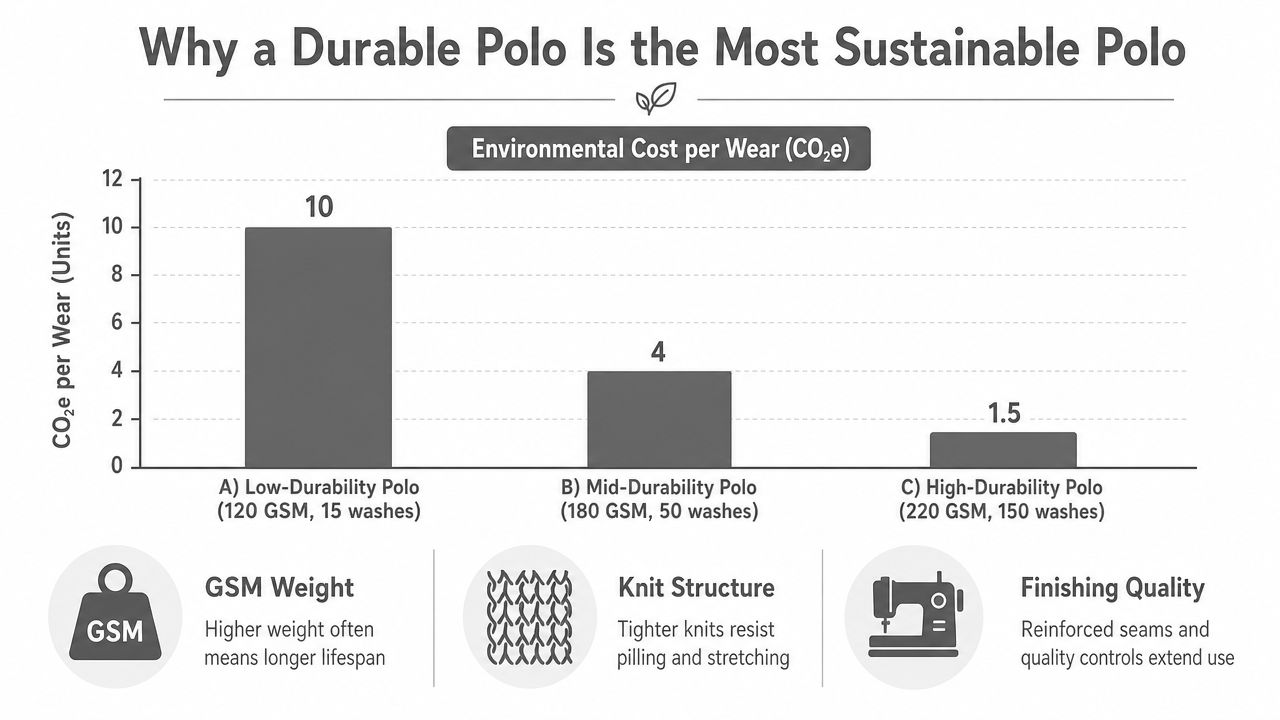
If you are choosing between two shirts and one has better weight, tighter knit structure, and real test data, take the sturdier one. A polished marketing story does not keep a collar flat.
Caring for Your Polo So It Lasts for Seasons
Many individuals ruin good polos with careless washing routines, then fault the material. That resembles blaming the golf ball when you mishit the wedge. The maintenance process may seem dull, which is precisely why it proves effective.
The habits that actually extend life
Wash the polo inside out to reduce abrasion on the face of the fabric. Use a cold-water cycle so you're not beating up fibers with unnecessary heat. Skip the dryer when you can, because heat is brutal on elasticity, shape, and the life of the collar.
Avoid fabric softener on technical fibers. It can leave residue that messes with performance and feel. If the shirt is damp after washing, reshape it flat or on a hanger before it dries, so you're not fighting wrinkles and distortion later.
Air-drying in the shade is a smart move for color and elasticity. Sun is fine for your mood and terrible for some garments. Leave the polo out there too long and you're basically asking it to age like an exposed deck chair.
Practical rule: if a polo isn't visibly dirty or sweaty, don't wash it out of habit. Extra washing wears out clothes faster than honest use does.
The goal is simple, wear the shirt enough to justify owning it, then treat it like you plan to keep it. A well-cared-for polo that stays in rotation beats a pristine one you barely touch.
A quick care checklist
- Wash cold: keeps stress off the fiber and helps the shirt hold shape.
- Turn it inside out: reduces surface wear and helps preserve the finish.
- Air-dry when possible: less heat, less shrink, less drama.
- Skip softener on performance fabrics: residue can hurt feel and function.
- Reshape while damp: collars and hems settle better when guided, not bullied.
The most sustainable shirt isn't the one you baby. It's the one you wear often and care for intelligently.
Styling a Sustainable Polo On and Off the Course
A good polo earns its keep by doing more than one job. It works on the tee sheet, then at lunch, then again on the weekend without looking like you borrowed it from a tournament tent.
The cleanest way to style it is to keep the outfit intentional. Pair a well-cut polo with a quality golf hat, or a simple lifestyle beanie when the weather turns, and you've got a look that feels finished without piling on more stuff. That's the point, fewer pieces, better pieces, less closet clutter pretending to be versatility.
A neutral or muted polo color travels farther than a novelty shade that only works under one kind of light. Navy, white, olive, and heathered tones are the dependable options because they stay in play across seasons and don't force you into buying a whole costume around them.
The rest of the wardrobe should stay quiet. Clean trousers, good shorts, one dependable belt, and a cap or beanie you like. That's a more honest uniform than the overaccessorized “effortless” look that usually takes more effort than a round at 36 degrees.
For a sharper take on the lifestyle side of menswear, the guide to stylish golf apparel is a practical reference. Use the polo as the anchor, then let the rest of the outfit support it instead of competing with it.
The Smart Buyer's Checklist and Where the Market Is Heading
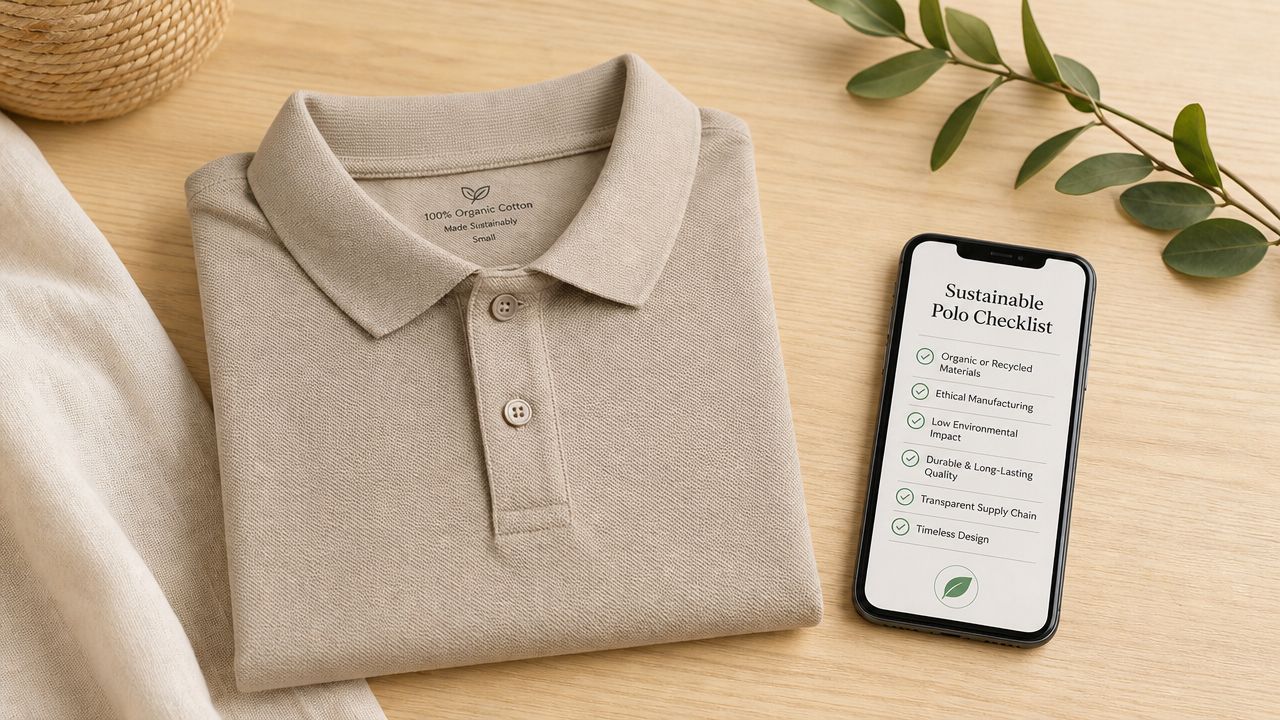
The buyers who get this right do not start with a leaf logo and a hopeful nod. They ask for proof, then they read it. That simple habit separates a real sustainable polo from a recycled-bottle sales pitch with decent lighting.
Start with the fiber, then move straight to the paperwork.
- What exact fiber is it made from?
- Which certification backs that fiber claim?
- Is the recycled-content claim independently verified?
- Does the brand show chemical-safety testing?
- Is there any labor or audit transparency?
- What do the durability tests say?
- Will I wear this enough to justify owning it?
If those answers stay vague, keep your wallet closed. A good polo should be easy to verify and hard to fake. That is the whole point.
The next layer is certification and lab data, because marketing copy is cheap and paper trails are harder to fake. Look for labels that match the fabric claim, ask for recycled-content verification, and check whether the brand shows any testing for colorfastness, shrinkage, or chemical safety. A shirt that claims the moral high ground but cannot show the boring documents is usually just dressed for the part.
The market is drifting toward more recycled-content blends, better traceability, digital product passports, and louder pressure for labor transparency. Good. Buyers have finally grown tired of being sold vague virtue in polo form, and brands are being forced to answer harder questions.
The broader category still leaves plenty of room for sloppy claims, which is exactly why discipline matters. The global polo-shirt market remains large, cotton still dominates a lot of product, and there is no shortage of brands hoping shoppers will confuse volume with credibility. That is why the best filter is still the same. Ask for proof first, then decide whether the shirt earns space in your closet.
Use a simple rule. Buy the polo with the clearest documentation, the strongest durability, and the easiest place in your actual wardrobe. For a practical reference on fit and everyday wear, the guide to men's golf shirts is a useful next stop. Then wear the shirt often, care for it properly, and stop rewarding brands that think a green palette is the same thing as accountability.
Sustainable Polo Questions Golfers Actually Ask
Yes, they can perform well on the course, if the knit is right and the shirt is cut for movement. Higher-quality sustainable polos don't have to feel fragile or precious, which is a relief because nobody wants a shirt that behaves like it's attending a seminar.
They cost more because better fiber, better testing, and better verification usually cost more to produce. If a shirt is cheaper and claims to be fully certified, recycled, and durable, somebody probably skipped a step or three.
To shrink-proof one, wash cold, avoid high heat, and check for shrinkage test data before you buy. Recycled-polyester polos are worth the premium when you care about shape retention and quick drying, but only if the recycled-content claim is properly verified.
A CTA for 2ndShotMVP.

