

You're standing on the first tee before sunrise, one hand on your coffee, the other tugging at a collar that already feels wrong. A regular polo looks safe until it bunches at the neck on the first full turn, and a full turtleneck feels like you borrowed it from a ski lodge. That's exactly where the golf mock neck earns its place, it gives you the cleaner look you want without turning your neckline into a distraction.
What Exactly Is a Golf Mock Neck
A lot of golfers treat the collar as an afterthought until it gets in the way. Then they start noticing how one shirt sits loose, another folds over, and a third feels too bulky the second they set the club behind the ball. The golf mock neck solves that problem with a simple shape that looks sharp and behaves better in motion.
The collar that sits in the middle
A mock neck is a short, stand-up collar that rises partway up the neck without folding over like a turtleneck. It's not high enough to become a true roll collar, but it gives more coverage and presence than a crew neck or standard polo neckline. Golf-fashion commentary has also tied the style's visibility to Tiger Woods, whose on-course look helped make the mock neck feel like a real golf category instead of a costume piece as described in golf-fashion coverage.
That middle ground is why it works. A crew neck can look too casual for some clubs, and a turtleneck can feel overdressed or restrictive on the course. The mock neck sits in the sweet spot, polished enough for the clubhouse, restrained enough for tournament settings, and simple enough to pair with almost anything.
Practical rule: if the collar reads as neat without folding over, you're in mock neck territory. If it starts behaving like a winter knit, you've gone too far.
The reason golfers keep coming back to it is obvious once you wear one. It gives you some neck coverage, it looks intentional, and it doesn't fight the rest of your outfit. That balance is the whole point.
Why the Mock Neck Makes Sense for Your Swing
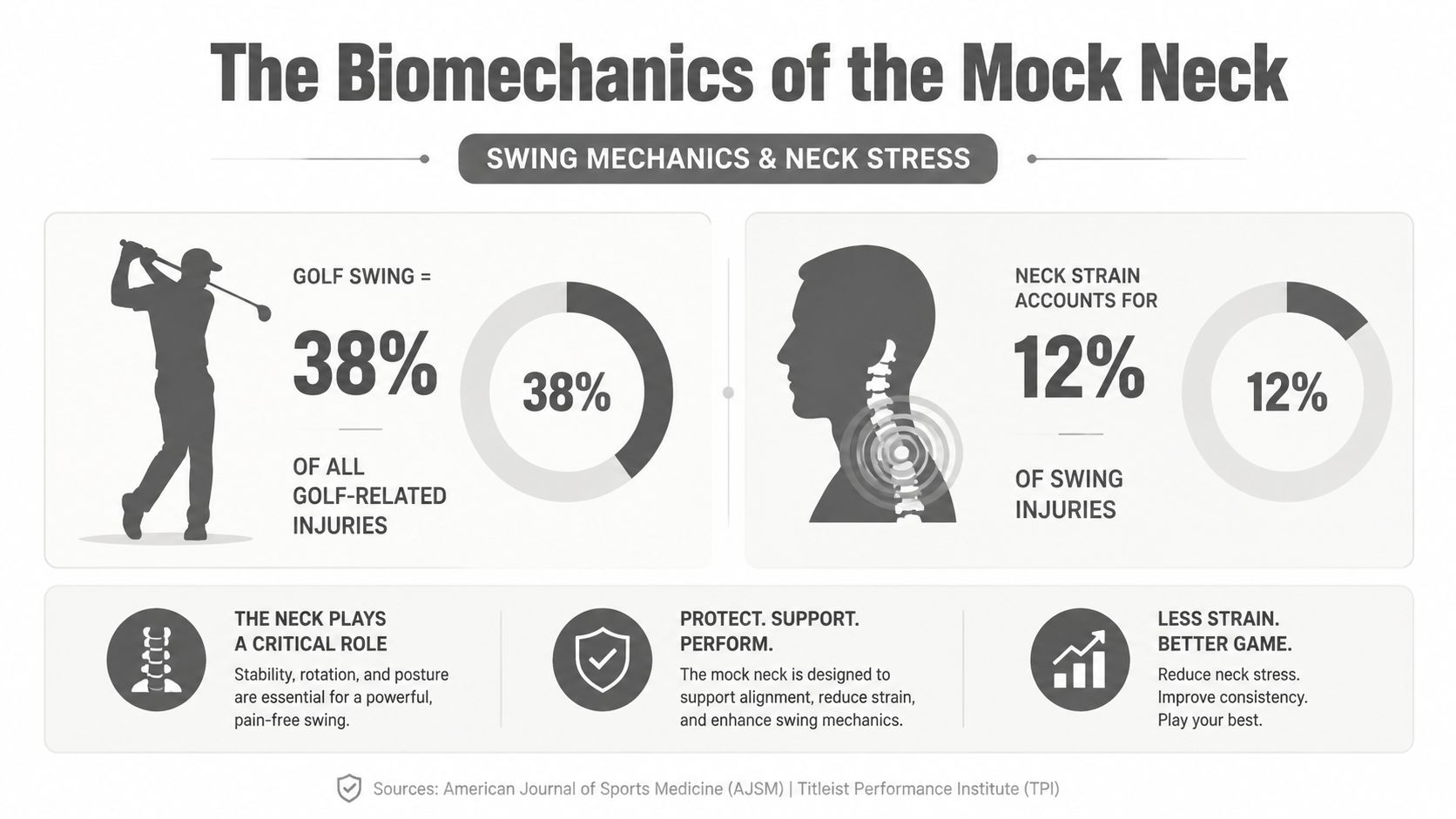
Golf looks smooth from a distance, but the body work underneath is violent in a controlled way. You rotate hard, you extend, you stabilize, and your upper body takes the stress of repeating that sequence over and over. That's why collar design matters more than most golfers admit.
Rotation wants less bulk
A folded polo collar adds fabric where you don't need it, right around the neck and upper chest. On a smooth rehearsal swing, that can seem harmless. On a full driver swing, especially if you like to turn aggressively, bulk at the neckline becomes one more thing your body has to ignore.
Golf injury data makes the case for cleaner apparel. In a PubMed-indexed study of golf-related spinal and paraspinal injuries, researchers estimated 69,153 emergency-department visits in the United States from 2003 to 2023, and strain was the leading diagnosis at 57.5% (PubMed study). That doesn't mean a shirt causes injury, but it does mean golfers live in a sport where the back, trunk, and neck are already working hard.
The mock neck's advantage is clear. It keeps the neckline clean, so you're less likely to feel fabric bunching when you rotate your torso or lift your arms through the backswing. That's exactly the sort of detail that matters when a garment is supposed to disappear during the swing.
A good golf shirt should disappear on the swing, not announce itself at impact.
Neck comfort is part of playability
The same injury study also shows how much the body is asked to absorb during golf, which is why people with neck stiffness notice collar choice quickly. If you already fight limited rotation, the wrong collar can feel like a small irritation that becomes a constant one by the back nine. A mock neck doesn't fix movement, but it removes one unnecessary obstacle.
That's the argument for it. Not fashion first, function second. Both at once.
Fabrics and Technical Features That Actually Matter
A mock neck only works if the fabric does its job. A clean collar with dead fabric is still a bad golf shirt, and a flashy product description won't save it. The best ones behave like performance gear first and style pieces second.
Start with stretch and recovery
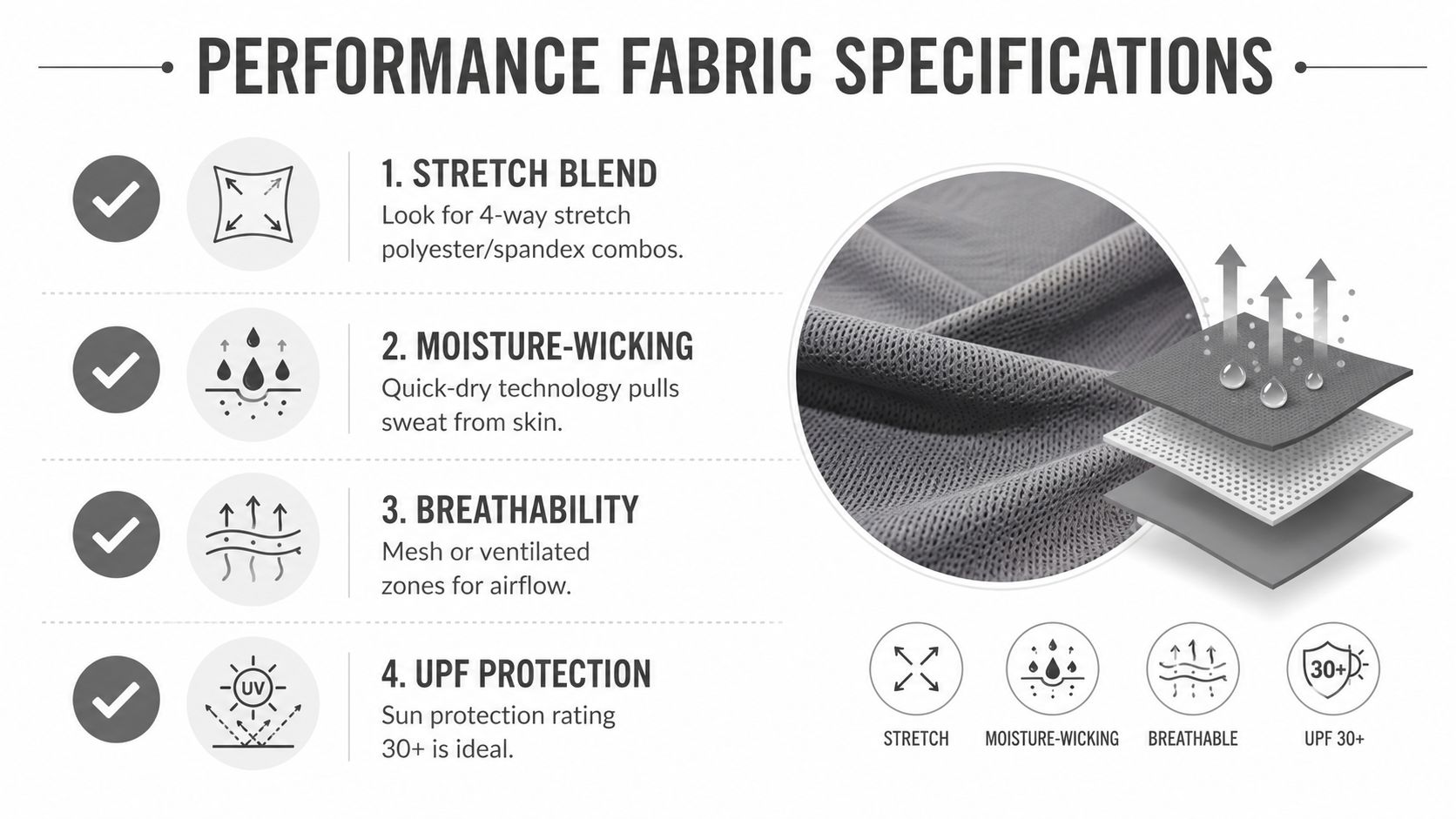
A strong example is a mock-neck golf top built from a 93% polyester and 7% spandex jacquard blend with micro-mesh venting, tied to 4-way stretch, breathability, moisture management, and UPF 40+ protection (product spec). That's the kind of construction you want because the shirt has to move when your shoulders open, your lead arm rises, and your torso finishes through the ball.
The spandex is not there for decoration. It gives the fabric recovery, so the shirt snaps back instead of staying stretched out after repeated swings. The polyester carries the performance load, the knit structure helps manage airflow, and the venting stops the collar area from feeling sealed off.
If you want to understand fabric better before buying, a plain-language guide like what different fabrics look like helps you spot the difference between a true performance knit and something that just looks technical in a product photo.
Read the spec sheet like a golfer
Ignore vague buzzwords that don't tell you how the shirt behaves. Focus on the details that matter on the course.
- Stretch blend: Look for polyester plus elastane or spandex, because that's what lets the shirt move with your swing.
- Venting: Micro-mesh or ventilated panels matter most in hot rounds and under a jacket.
- Moisture management: Sweat handling is performance, not a luxury.
- UPF rating: Sun protection belongs in golf apparel, especially for long rounds.
For a deeper practical explanation of sweat handling, the internal guide on moisture-wicking fabric is worth a read. The point is simple, the label should tell you how the shirt behaves, not just how it looks.
Choosing the Right Collar Height and Weight for Your Climate
The dumb mistake is buying one mock neck and hoping it works everywhere. It won't. Collar height and fabric weight should match the conditions you play in, not the fantasy version of your golf life.
Match the collar to the weather
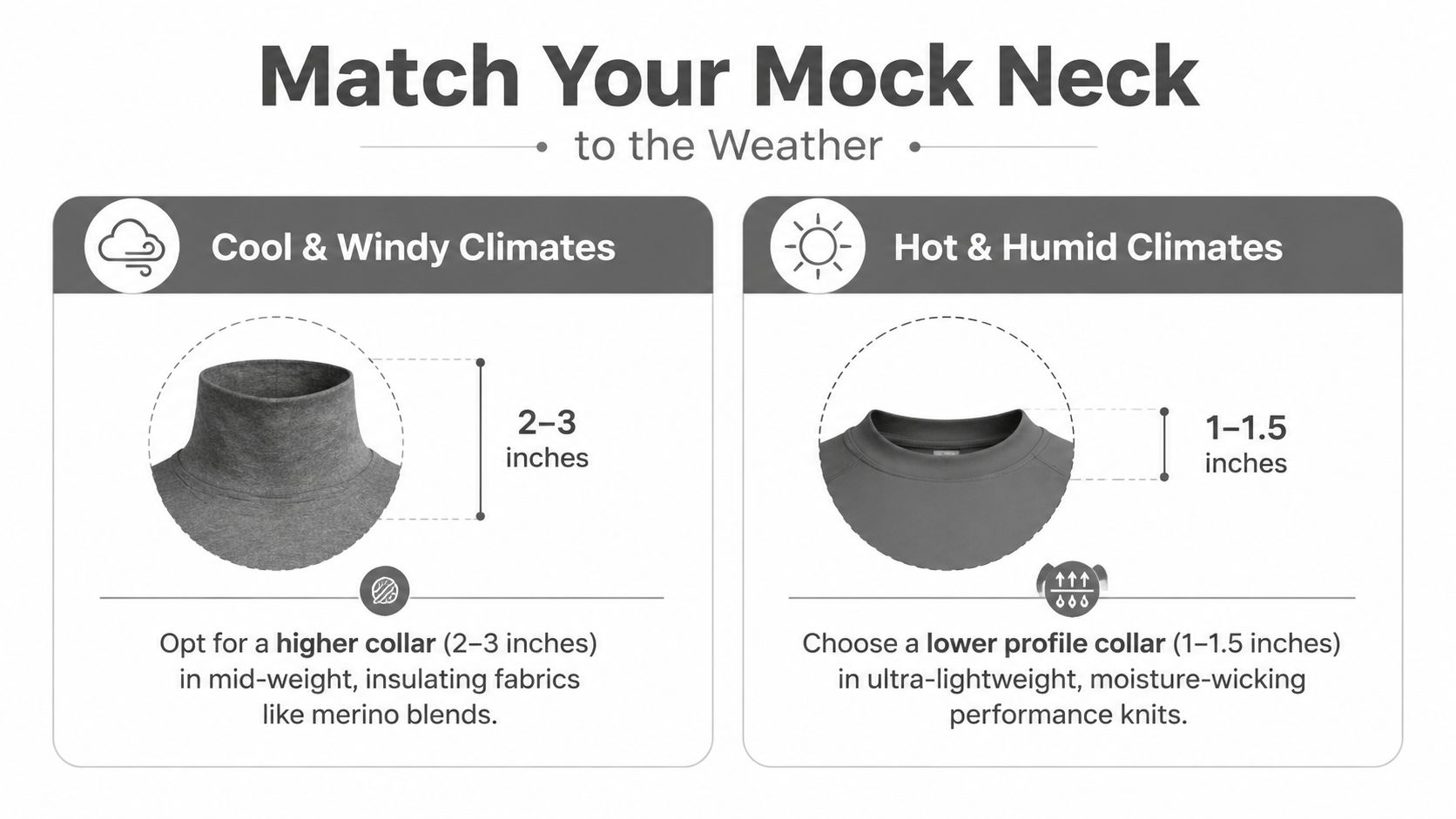
A Japanese golf apparel reference describes the mock neck as a short standing collar, typically about 2–4 cm high, and notes that it gives moderate neck coverage for cooler conditions while staying lighter than a high neck (golf apparel reference). That range matters because the difference between a neat collar and a fussy one is usually just a little extra height.
For warm-weather rounds, I'd go lower and lighter. A lighter mock neck feels less noticeable, layers better, and keeps you from overheating when the round gets sticky. For early tee times, shoulder-season golf, or windy conditions, a slightly taller and denser knit gives you a better balance of coverage and polish.
Neck mobility should shape the choice
If your neck is stiff, don't buy the tallest collar just because it looks refined on the hanger. Pick the version that leaves room for motion at address and during your turn. That matters more if you're older, if you sit at a desk all week, or if you already know that looking over your trail shoulder feels tight.
The most practical test is simple. Put the shirt on, make a full turn, and check whether the collar feels like a neutral layer or a boundary. If it starts distracting you before the first swing, it's the wrong one.
Buy for the round you actually play. A mock neck that's perfect on a cool range session can feel like overkill in humid heat, and a paper-thin version can be useless when the temperature drops.
For winter layering, the internal guide on cold-weather golf is a smart companion. A mock neck should work with your climate, not fight it.
Styling Your Mock Neck On and Off the Course
A mock neck can look sharp or try-hard. The difference is in the rest of the outfit. Keep the shirt clean, let the collar do its job, and don't overload the look with too many competing pieces.
On-course pairings that actually work
A golf mock neck pairs best with fitted golf pants or clean shorts, especially when the shirt itself has a strong shape. Under a quarter-zip, it looks more deliberate than a standard polo collar because the neckline stays tidy. Under a vest, it gives you a more athletic, modern profile without making you look like you're trying too hard.
Color matters too. Neutrals like white, black, navy, and heathered shades are easy wins because they let the collar shape lead. If you want a bolder color, keep the rest of the outfit quiet. That's the cleanest way to avoid looking loud for the wrong reasons.
Off-course it becomes a style piece
The mock neck works after the round because it already carries a polished shape. Pair it with dark denim, a casual blazer, or a structured overshirt and it reads as executive-casual instead of straight golf apparel. That's the sweet spot for guys who go from tee time to dinner without changing.
Dress-code anxiety is usually overblown here. Golf clubs that want a neater presentation often treat collars or mock necks as appropriate, and the style has become common enough that it no longer reads as a novelty. If you want a straightforward guide to the bigger picture, the internal piece on how to dress for golf is the right reference.
The best version of this look is restrained. One strong top, one clean bottom, and nothing that competes with the neckline. That's how mock necks look expensive instead of experimental.
Care Instructions and Smart Buying Tips
Technical fabric only stays technical if you treat it that way. Wash it carelessly, and the shirt loses shape, softens in the wrong places, and stops recovering the way it should. That's not fashion decay, that's poor maintenance.
Keep the performance in the fabric
Use cool or lukewarm water, a gentle detergent, and skip fabric softener. Softener coats the fibers and can interfere with moisture management, which is exactly the thing you paid for in a performance mock neck. Turn the shirt inside out before washing so the outer surface and collar take less abrasion.
Dry it with restraint. High heat is the fastest way to punish spandex recovery and distort the collar over time. Air drying is the safest move, and low heat is the backup if you're in a rush.
If you already know how to care for technical gear like your neoprene gear, you already understand the basic principle, treat performance fabrics gently and they last longer. Golf shirts are less specialized than wetsuits, but the maintenance logic is similar.
Buy for construction, not hype
Check the stitching at the shoulders, collar seam, and hem. Clean seams matter because the mock neck sits closer to the face and neck than a polo, so sloppy construction shows fast and feels worse. Also look for collars that hold shape without curling after one wash.
Build a small rotation instead of buying a pile of nearly identical shirts. One lighter mock neck for warm rounds, one denser version for cooler days, and one neutral option that works off-course covers most golfers better than a closet full of duplicates. That's the smarter buy.
Your Mock Neck Decision Framework
The right mock neck is the one that fits your climate, your swing, and your style without asking you to compromise. If it's too tall, too hot, or too stiff, leave it on the rack. If it moves cleanly and looks sharp, it earns its spot.
Use this checklist before you buy
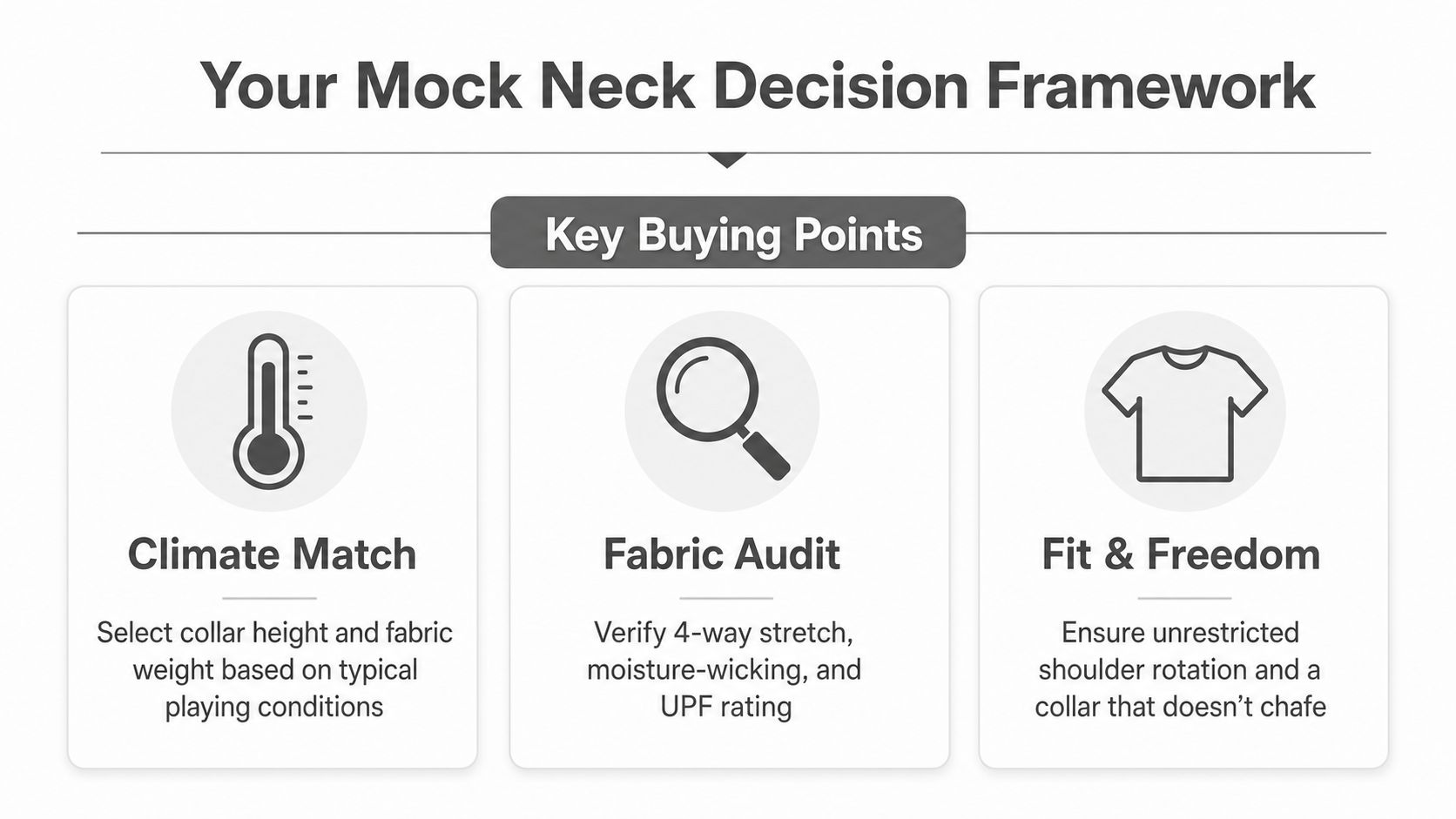
- Climate Match: Choose collar height and fabric weight based on the conditions you face.
- Fabric Audit: Confirm stretch, moisture control, and sun protection before you trust the marketing copy.
- Fit and Freedom: Make sure your shoulders can rotate and the collar doesn't rub or trap heat.
- Style Test: Pick a color and cut you'd wear to the club, not just the range.
The hesitation I hear most is whether mock necks work for every body type. They do, as long as the fit is right. The bigger mistake is assuming every mock neck has the same collar feel, because the height, knit, and stretch all change the experience.
If you normally wear polos, the transition is easy. Start with one neutral mock neck, wear it on a normal round, and pay attention to whether it feels more comfortable at address and more polished after the round. That's the test that matters.
2ndShotMVP builds premium golf hats, beanies, and lifestyle apparel with the kind of clean, confident energy that matches this look. If you want pieces that work on the course and still look right afterward, visit 2ndShotMVP and shop with that same standard in mind.

