

You're standing in the pro shop with a polo over one arm, comparing two shirts that both say Large. One looks sharp on the hanger. The other feels comfortable through the chest. After a few practice swings, the difference becomes obvious. One shoulder seam drifts down your arm, the sleeve grabs your bicep, and the hem pulls free every time you rotate.
That's why a polo size chart should be treated as a fit tool, not a translation from letters to body size. Chest measurement matters, but shoulder width, sleeve length, body length, fabric behavior, and intended use decide whether the shirt works on the course.
Why the Right Polo Size Matters More Than You Think
A polo can feel fine in the pro shop and fail as soon as you address the ball. A shoulder seam that sits beyond the natural shoulder point lets fabric gather across your upper back during the takeaway. Sleeves that finish too close to the elbow bunch when you reach for a club or line up a putt. A short body pulls free from your waistband during the downswing.
These issues affect movement and appearance. Restricted shoulders make a full turn feel awkward. Excess waist fabric can catch on a golf bag or balloon under a vest. The shirt also needs to move from course to clubhouse without looking stretched, twisted, or permanently untucked.
Practical rule: A letter label tells you where to start. The shoulder seam, sleeve length, and body length show whether the polo fits well.
Most size guides begin with chest-to-size mapping, and that is a sensible starting point. ISO 8559-2:2017 provides a standardized framework for primary and secondary garment dimensions alongside the anthropometric definitions in ISO 8559-1:2017. Standard ISO frameworks connect garment dimensions to body measurements, giving brands a measured basis for their charts instead of relying only on subjective labels.
The fit failure that costs twice
A golfer can choose the size used in a familiar brand, wear the shirt once, and find that it feels fine standing still but fails during a swing. The replacement then costs time, shipping, and another fitting decision. Online shoppers face the same problem repeatedly, since nearly 70% of online clothing returns are associated with size and fit, according to Bexley's polo sizing guide. One survey cited there found that 64% of shoppers returned apparel because of sizing issues.
Chest measurement narrows the choice, while shoulder width and body length determine whether the shirt remains comfortable through a round. Measure first, then judge the cut. Your usual Medium may not feel or move the same way across every golf brand.
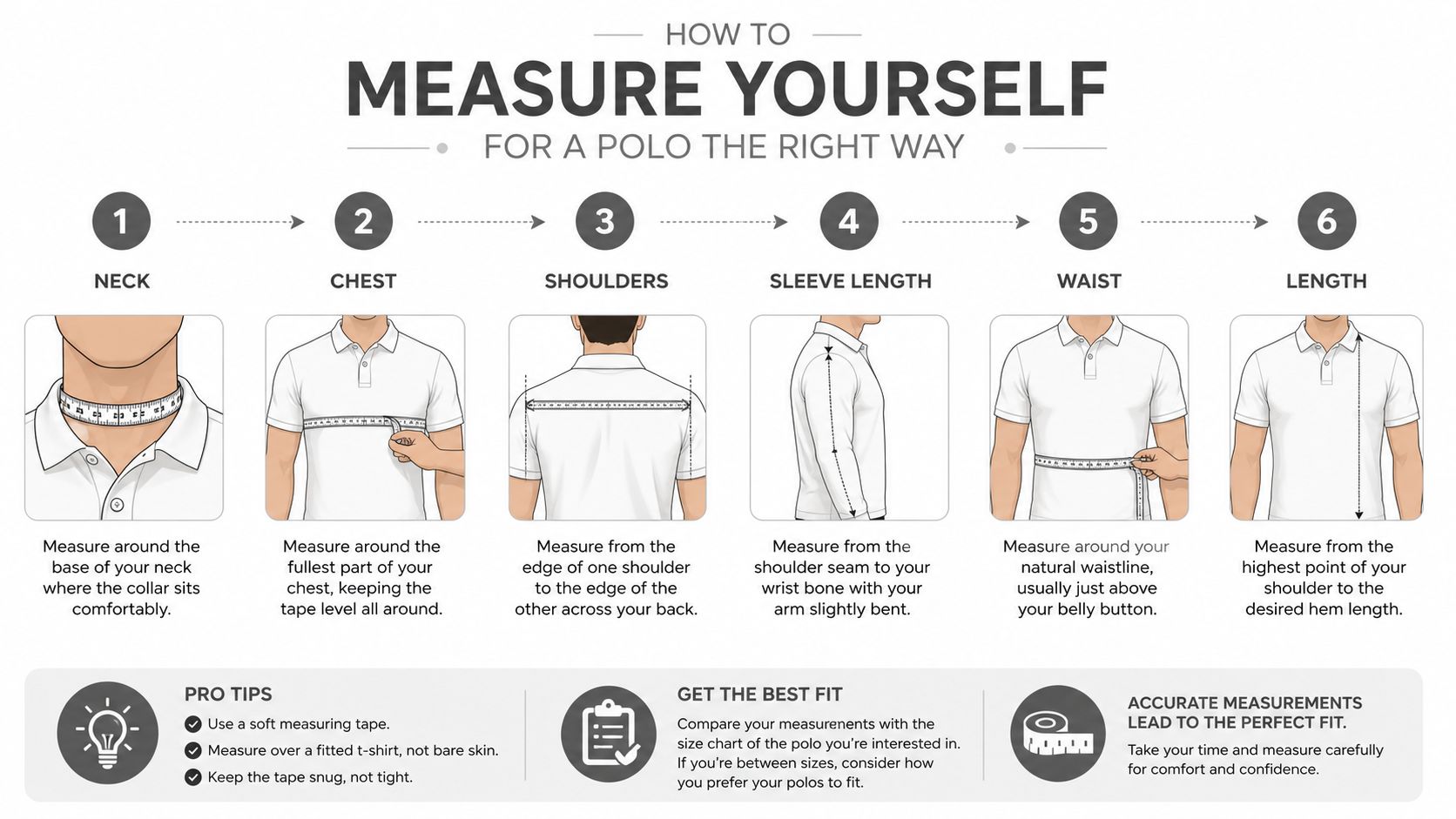
How to Measure Yourself for a Polo the Right Way
Use a soft tailor's tape, a fitted T-shirt, and a friend if possible. A loose shirt can hide your shoulder position, while a stretchy polo may distort the result. Stand naturally with your arms at your sides and breathe normally. Measuring while pulling in your stomach or lifting your shoulders gives you numbers you won't reproduce during a round.
Take the measurements that control fit
- Chest: Wrap the tape under your armpits and around the fullest part of your chest. Keep it level across your back and snug without compressing the rib cage. This is usually the starting measurement for a polo, but it shouldn't be the only one.
- Waist: Measure around your natural waist, near the point where the shirt will sit. Keep the tape relaxed. Waist measurement helps identify whether a slim cut will cling or whether a regular or relaxed block will drape more cleanly.
- Shoulders: Measure across your back from one shoulder point to the other. Use the bony point where the sleeve seam should meet the shoulder, not the outer edge of the upper arm.
- Sleeve: Start at the shoulder point, follow the arm past the elbow, and finish at the wrist bone. For shopping, compare the upper-arm portion and the sleeve hem position rather than relying only on the total number.
- Body length: Measure down the back from the highest shoulder point to your preferred hem. For a tuckable golf polo, compare the result with a shirt that stays tucked during movement. For untucked wear, use a favorite casual polo as the reference.
Write each measurement down, then repeat the process. If the second set differs, take a third and use the consistent result. You can use the same careful approach for other golf apparel, including the measurement method in this golf glove size chart.
The Core Polo Size Chart in Inches and Centimeters
A polo can carry the right chest label and still feel wrong on the course. Tight shoulders restrict the backswing, short sleeves expose the arm during setup, and excess body length bunches under a belt. The chart below therefore pairs chest and waist ranges with shoulder, sleeve, and body-length references. The measurement method follows the same general approach used by international sizing standards.
Treat these figures as a starting framework for men's polos, not a guarantee of fit. Brand charts may show body measurements, finished-garment measurements, or a half-chest taken flat. Confirm the measurement type before comparing values.
Men's Polo Body Size Chart
| Size | Chest (in) | Chest (cm) | Waist (in) | Waist (cm) | Shoulder (in) | Shoulder (cm) | Sleeve (in) | Sleeve (cm) | Length Tucked (in) | Length Untucked (in) |
|---|---|---|---|---|---|---|---|---|---|---|
| S | 35-38 | 89-97 | 29-32 | 74-81 | 17 | 43 | 8.5 | 22 | 27 | 28.5 |
| M | 38-41 | 97-104 | 32-35 | 81-89 | 18 | 46 | 9 | 23 | 28 | 29.5 |
| L | 41-45 | 104-114 | 35-39 | 89-99 | 19 | 48 | 9.5 | 24 | 29 | 30.5 |
| XL | 45-48 | 114-122 | 39-43 | 99-109 | 20 | 51 | 10 | 25 | 30 | 31.5 |
| 2XL | 48-51 | 122-130 | 43-47 | 109-119 | 21 | 53 | 10.5 | 27 | 31 | 32.5 |
| 3XL | 52-56 | 132-142 | 47-52 | 119-132 | 22 | 56 | 11 | 28 | 32 | 33.5 |
Practical polo guides commonly show overlapping ranges. One neutral retailer reference places men's sizing at roughly 38 to 39 inches for S, approximately 46 to 48 inches for XL, and 52 to 56 inches for 3XL. Fursac's polo shirt guide presents chest, back length, and sleeve length together, which is a more useful comparison than a letter label alone.
How to use the overlap
A 40-inch chest falls near the boundary between Medium and Large. Use shoulder width and intended movement to make the decision. Select the smaller size only if the shoulders sit correctly and the chest does not pull across the back. Select the larger size when the smaller polo restricts rotation or leaves no room for a base layer.
A half-chest measurement is not interchangeable with body circumference. Double the flat measurement before comparing it with a body chart, and allow for the shirt's wearing ease. The international polo size chart PDF shows how a brand can present metric and imperial measurements across an extended size range, so check the method before ordering.
US, UK, and EU Polo Size Conversions Explained
Letter labels dominate US polo shopping, while UK and EU retailers often add numeric chest or continental size references. The conversion can narrow your search, but it can't replace the brand's own measurement table. A US Large, UK Large, and EU numeric size may point toward a similar body, yet the cut can differ substantially.
| US Letter | Approx. US Chest | UK Chest | EU Numeric |
|---|---|---|---|
| S | 36 | 36 | 46 |
| M | 38 | 38 | 48 |
| L | 40 | 40 | 50 |
| XL | 42 | 42 | 52 |
| 2XL | 44 | 44 | 54 |
| 3XL | 46 | 46 | 56 |
These are approximate conversion points, not universal promises. European numeric labels represent a different sizing convention, not a different type of person. A shopper who wears a US Large might encounter a numeric European label, but the shoulder slope, sleeve shape, and body length still depend on the individual brand.
The conversion traps golfers miss
First, check whether the chart gives body chest or garment circumference. A garment measurement includes wearing ease, so matching it directly to your body can produce an unnecessarily large shirt. Second, watch for regional fit blocks. A polo designed for one market may feel narrower through the shoulders even when the chest number appears familiar.
If you're between sizes, decide from the intended use. A slim polo rewards a closer match only when your shoulder measurement also fits. A relaxed golf polo generally benefits from the larger option, especially if you'll wear a base layer. Treat international conversion as a filter, then let the brand's detailed specifications make the final call.
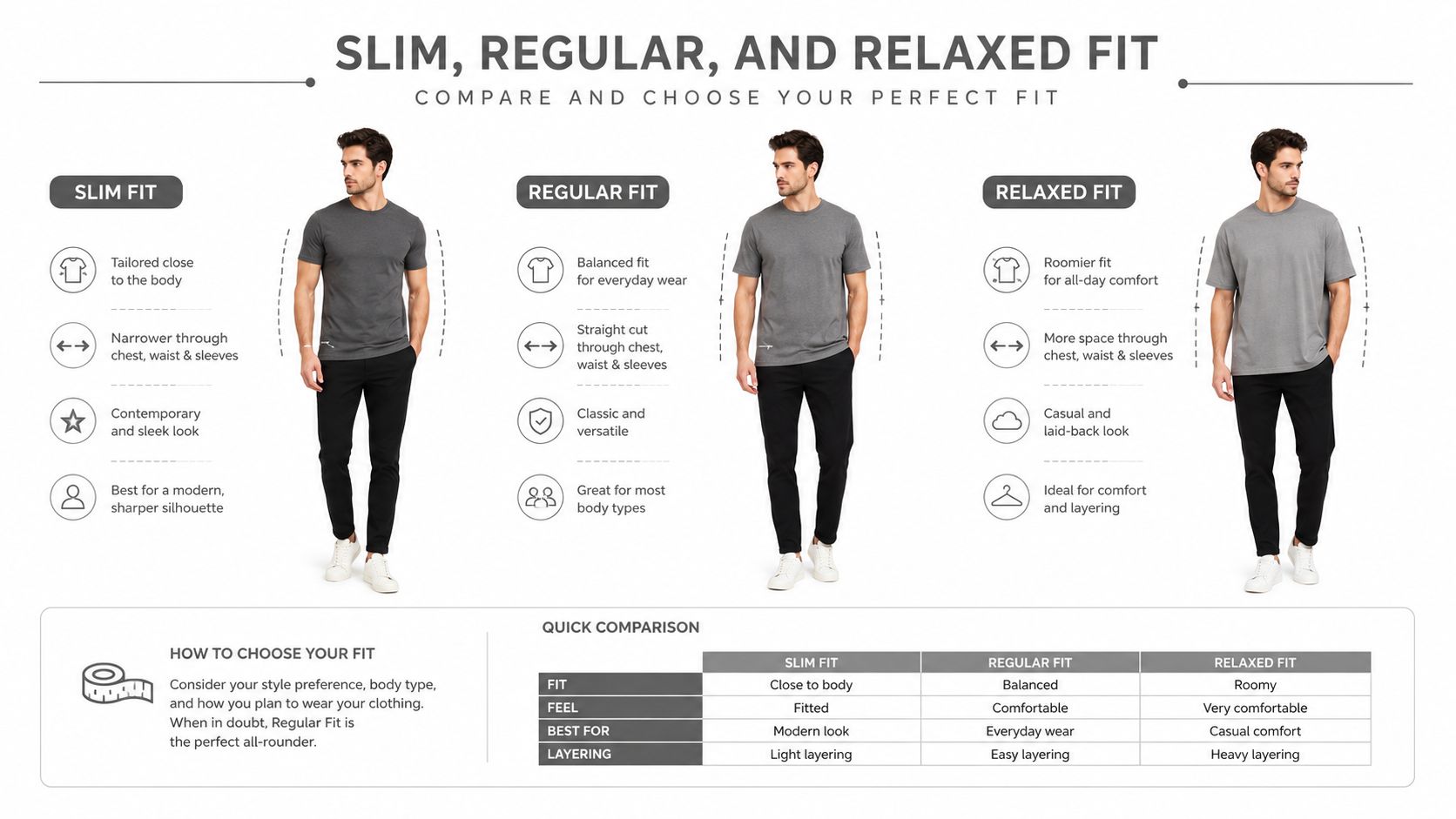
Slim, Regular, and Relaxed Fit Compared
Fit block determines how a polo feels on the course. Two shirts can share the same chest label while differing at the waist, shoulders, sleeve length, and hem. Those details affect rotation, layering, and whether the shirt stays tucked during a swing.
Slim fit
Slim polos follow the torso closely and reduce fabric through the midsection. They suit a lean or athletic golfer and sit neatly under a lightweight quarter-zip. The trade-off appears during rotation. If your chest or shoulders sit near the upper end of the chart, the shirt can bind across the back, shorten at the body, or pull upward when you raise your arms.
Regular fit
Regular is the most reliable starting point for golf. It leaves room through the chest and waist without the extra volume of a relaxed block. Check body length as carefully as chest width. A longer regular polo may work better tucked, while a shorter one can sit cleanly untucked for casual wear.
Relaxed fit
Relaxed polos add space through the shoulders, chest, and hem. That room helps broader builds, taller frames, and golfers who want more airflow or layering capacity. Choose based on shoulder position and hem length, not chest room alone. Excess fabric can look untidy when the shirt is worn untucked and may bunch beneath a vest.
Compare these fit descriptions against the men's golf shirts from 2ndShotMVP to see how each brand defines slim, regular, and relaxed.
Run through the same address-position and backswing tests from Section 7 on whichever fit you choose. That test, not the label, determines the right cut.
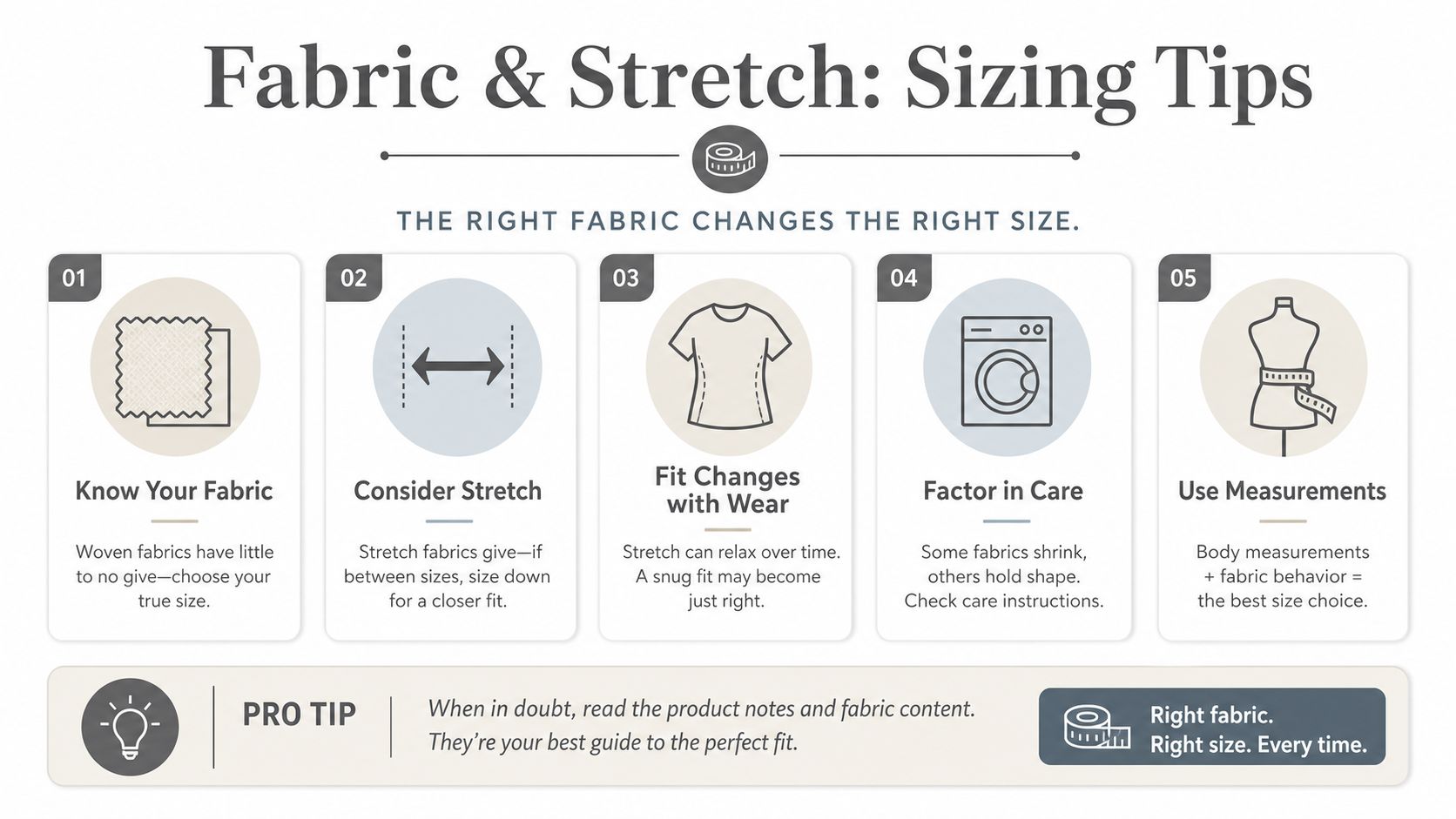
How Fabric and Stretch Change Your Size Decision
Fabric changes how much room a polo needs. A stable cotton knit may feel restrictive at the same chest measurement that feels comfortable in a performance jersey with recovery and stretch. A chart can show the same number, but the round exposes the difference.
Cotton, performance knits, and blends
Traditional cotton polos feel substantial and breathable, but they generally provide less stretch than performance fabrics. They can also change after washing, particularly when exposed to aggressive heat. Cool washing and air-drying help preserve the original dimensions.
Polyester performance knits often feel lighter and may include mechanical or added stretch. A four-way-stretch polo can accommodate a closer chest choice, but stretch isn't automatically better. If the fabric has poor recovery, it may lose its shape during a long day.
Cotton-polyester blends sit between those extremes. They can combine cotton's hand feel with easier care and improved durability, although the knit structure still matters. Read the fiber composition and look for language describing recovery, not just the word “stretch.”
Fabric check: Stretch can make a smaller size wearable. It can't fix a shoulder seam that sits in the wrong place.
Construction also affects appearance. If you want to understand why classic textured polos wear differently from smooth performance jerseys, this explanation of pique fabric for polos is useful. For golf, prioritize shoulder freedom and torso comfort before chasing the closest possible silhouette.
Golf-Specific Sizing Tips for the Course
A polo that fits at the checkout counter still has to survive a swing, a base layer, a shoulder bag, and hours outdoors. The first test is shoulder clearance. The seam should meet the natural edge of your shoulder, not fall down toward the upper arm. When it drifts outward, the fabric can bind across your back during the turn.
Sleeves should finish around the upper arm rather than crowding the elbow. The cuff needs enough room to move when you reach for a club, but it shouldn't slide down and bunch against the forearm.
Check the shirt in golf positions
- Address position: Bend forward as though you're setting up to the ball. The back shouldn't pull tight, and the collar shouldn't press into your neck.
- Top of the backswing: Raise both arms and rotate your torso. Watch the shoulder seams and sleeve cuffs rather than judging the shirt from the mirror alone.
- Tucked test: Tuck the polo into your usual golf trousers, rotate fully, and reach overhead. A suitable hem stays secure without creating a large fold around the waist.
- Layering test: Wear the base layer you use. Add chest room when necessary, but don't automatically add length, since that can create unwanted blousing.
Collar behavior matters in direct sun and wind. A structured collar usually holds its shape better than a soft collar that rolls after repeated washing. Shoulder seam construction also deserves attention, especially if you carry a stand bag. Flat or taped seams can reduce rubbing where the strap rests.
For teams ordering decorated apparel, T-Shirt Envy's no-minimum polos guide offers useful context on choosing polo styles for individual or small-group orders. Women golfers can apply the same movement-first logic using this guide to finding the perfect women's golf polo.
Returns, Exchanges, and Fit Policy Tips
A return policy should influence the purchase before you submit payment. Check the permitted window, return-shipping responsibility, final-sale exclusions, tag and packaging requirements, and whether worn garments are refused. Pay particular attention to non-refundable sale items, restocking fees, and tag-removal clauses. A shirt can fit poorly on the course while still failing the retailer's return conditions.
Save a screenshot or copy of the policy with your order confirmation. Retailer wording can distinguish between a refund, store credit, and an exchange, and some policies require contacting customer service before sending anything back. If the policy is unclear, use a direct message:
Hello, I ordered [size and style] and need a different size. The shirt is unworn, with tags and packaging intact. Could you confirm whether an exchange is available, whether I should return it first, and whether any fee or return-shipping charge applies?
Keep the order number, product name, and requested replacement size in the message. Ask for written instructions before shipping the parcel.
Inspect before committing
- Keep tags attached: Do not remove them until the retailer's conditions are satisfied.
- Check the policy wording: Look for final-sale, clearance, restocking, and packaging clauses.
- Save evidence: Keep the order confirmation, policy screenshot, photos, and shipping receipt.
- Record the outcome: Note whether the brand offered a refund, credit, or exchange, along with the reason for rejection if applicable.
If the retailer permits adjacent-size orders, treat them as a controlled comparison and follow its return instructions for each item. For team purchases, confirm whether decorated or customized polos have separate exclusions before ordering, since those terms may differ from standard stock.
Quick Reference Checklist Before You Buy
Run this sequence before every polo purchase. It takes less effort than correcting a bad order.
- Measure the body: Record chest, waist, shoulders, sleeve, and preferred body length. Compare those numbers with a favorite polo laid flat.
- Choose the fit block: Decide whether you want slim, regular, or relaxed before selecting the letter size.
- Identify the measurement type: Confirm whether the chart lists body circumference, garment circumference, or half-chest.
- Read the fabric details: Note cotton, polyester, blend construction, stretch language, and care instructions.
- Plan for layering: If a base layer is part of your routine, evaluate the chest and shoulders with it underneath. Don't add length automatically.
- Review the fit policy: Check return conditions and decide whether ordering adjacent sizes is permitted.
The decision rule
If chest and shoulders both fit one size, start there. If chest fits but the shoulders don't, reject the size rather than hoping stretch will solve it. If you sit between sizes, use the cut and activity to decide, smaller for a secure slim silhouette, larger for movement or layering.
Common Polo Sizing Myths Worth Dropping
Myth one, the same letter means the same fit everywhere. It doesn't. Brands use different fit blocks, grading rules, and measurement methods. A Medium from one label may have a different shoulder width or body length from another, so cross-brand shopping requires a measurement check.
Myth two, polo sizing works like jeans vanity sizing. Polo charts tend to rely more directly on chest and garment dimensions than many casual trouser labels, but that doesn't make every chart interchangeable. Regional cuts and brand-specific proportions still matter.
Myth three, every golfer should wear the same sleeve length. Sleeve position depends on arm shape, bicep size, and the shirt's intended silhouette. The useful test is whether the sleeve allows a full turn without riding into the elbow or bunching down the arm.
Myth four, a perfect chart removes judgment. A chart can organize measurements, but it can't account fully for shoulder slope, torso length, posture, or whether you prefer a tucked performance fit. Those factors explain why two golfers with the same chest measurement may choose different sizes.
A size chart should reduce uncertainty, not pretend to eliminate personal preference.
Polo Size Chart FAQ for Golfers
Should I size up or down when I'm between sizes?
Start with the shoulder measurement, then check the chest. In a slim cut, choose the smaller size only when both areas sit comfortably within that size's range and you can complete a full rotation without pulling. In a regular or relaxed cut, the larger option is usually safer when the smaller shirt strains across the back or leaves no room for your normal base layer.
What sleeve length works for a golf polo?
Aim for a sleeve that sits on the upper arm and remains clear of the elbow during movement. The exact position depends on the sleeve pattern and your arm, so test it with a simulated swing rather than measuring from the cuff alone. If the sleeve climbs sharply during the backswing or bunches near the forearm, the problem may be the cut, not just the size.
Should I size up for a base layer?
Only if the extra layer changes how the chest and shoulders feel. A thin performance undershirt may work within your normal size, while a thicker thermal layer can require more room. Increase space through the chest when needed, but inspect the body length separately so the polo doesn't become excessively loose below the waistband.
How much can cotton shrink after washing?
The amount depends on the fiber, knit, finishing, and care process. Untreated cotton can lose up to 5% in length and 3% in width, while polyester and performance blends typically hold their shape more reliably, as outlined in the AJ Apparel men's polo size chart. Pre-shrunk cotton generally sits between those outcomes, but the care label remains the best guide.
Wash a new cotton polo according to its instructions before making a final judgment. If length is already marginal, avoid buying a shirt that only fits before its first wash.
2ndShotMVP offers golf hats, beanies, and lifestyle apparel, including polo options with size selections that extend from S through 5XL. Use your measurements to choose confidently, then visit 2ndShotMVP to find course-ready pieces that fit your game and your off-course wardrobe.

