

You've got your hair looking sharp, your clubs are ready, and your favorite cap seems like the obvious finishing touch. Then the cap goes on. Your crown flattens, your ponytail bunches against the back opening, and by the time you reach the first tee, the hat is sliding every time you turn through the ball. That's not a hairstyle failure. It's usually a hat architecture problem.
Learning how to wear hats with long hair starts with matching the crown, panels, closure, and interior fit to your hair's density and texture. The right combination keeps your silhouette intentional, your hair comfortable, and your cap stable from the driving range to the 19th hole.
Why Most Hat and Long Hair Advice Falls Short
A golfer can leave the clubhouse mirror looking polished and still spend the first few holes adjusting a cap. The hair may be tied low, just as every generic guide recommends, but a shallow crown presses directly into the gathered length. The result is a lump at the back, loose strands escaping near the temples, or a hat band that keeps creeping upward during the swing.
The problem is rarely the ponytail by itself. Hair volume has to occupy physical space, and every hat creates that space differently. A tall, structured crown gives gathered hair somewhere to sit. A soft, shallow crown molds closely to the head, which can look excellent with hair worn forward but can make a bun feel like an unwanted golf-ball-sized passenger.
Practical rule: Choose the hat before choosing the hairstyle, then build the hairstyle around the hat's available space.
That approach also explains why standard advice can feel incomplete. “Wear a low ponytail” doesn't tell you whether the ponytail should sit below the hat band, pass through an opening, or lie over the shoulder. It doesn't account for thick curls, a dense braid, or a cap with no usable rear opening. The same style can work beautifully in one hat and fail completely in another.
Hats and long hair have always shared the wardrobe
This isn't a modern styling mismatch. Historical records show that men in fifteenth-century Europe wore longer hair, sometimes to the shoulders, while hats remained central to everyday dress. By the late 1500s, long hair had continued alongside changing caps and hats for nearly two centuries, while medieval coifs and berets were already designed for heads with varying hair lengths. Historical headwear records make the larger point clear. Long hair and structured headwear have coexisted for centuries.
For today's golfer, that history is useful because it reframes the issue. You aren't trying to force two incompatible pieces together. You're solving a design problem involving crown height, compression, hair placement, and stability. The different types of golf hats give you a useful starting vocabulary, but the deciding question is always how the hat interacts with your hair.
Choosing the Right Hat for Your Hair Volume
Start with the crown. The crown is the portion of the hat that sits over your head, and its height determines whether your hair can gather comfortably or gets pressed flat. A structured crown has reinforced panels that hold their shape, creating predictable room above the scalp. That makes it a strong match for thick hair, curls, or an updo that needs a little breathing space.
An unstructured cap collapses closer to the head. Its relaxed shape often looks cleaner with hair worn down and forward, particularly when your hair is fine or has a naturally smooth fall. It can also work with a low ponytail, but only if the gathered section sits below the hat line rather than pushing against it.
Read the hat's construction before buying
Use these features as a practical shopping filter:
- Six-panel structured caps: Their firm front panels maintain a defined silhouette and usually offer better room for a low bun or ponytail. They pair especially well with adjustable closures.
- Five-panel and relaxed caps: Their lower-profile shape follows the head more closely. They suit hair worn down, swept forward, or gathered very loosely.
- Snapbacks and strapbacks: Adjustable closures let you change the circumference when your hair is braided, twisted, or fuller after styling.
- Fitted caps: A fixed size can feel clean and secure, but it gives you less flexibility when the hairstyle changes.
- Wide brims: A broader brim can balance hair flowing past the shoulders and frame the face, while a narrow brim creates a sharper, more compact outline.
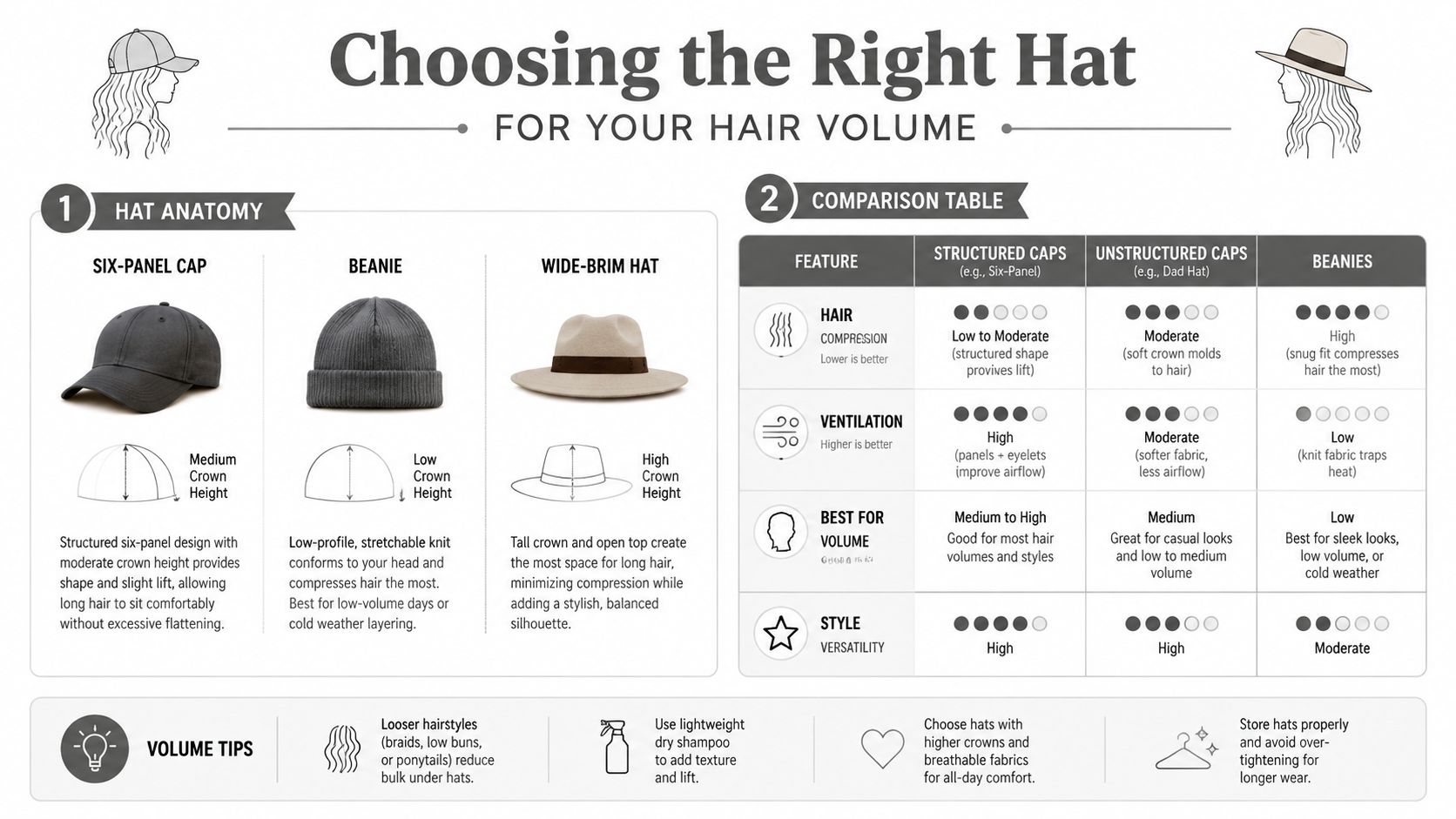
If your hair is thick and you prefer an updo, look for a structured crown with an adjustable back. Leave enough room to gather the hair without forcing the hat upward. If your hair is fine and you usually wear it down, an unstructured low-profile cap can give you a tidier silhouette without creating unnecessary bulk.
Curly hair needs a slightly different test. Try the cap over your intended volume rather than over freshly compressed hair. If the crown touches the curls immediately, the hat will likely flatten the shape during wear. For shoppers comparing crown proportions or looking for additional context about creating volume at the top of the head, a stylist's crown extension guide can help explain how added crown fullness changes the overall balance.
The best fit should feel secure without requiring the closure to do all the work. If loosening the strap makes the hat fall off, the crown may be too shallow or the base too narrow for your hair.
Four Hairstyles That Actually Work Under Hats
The hairstyle has one job under a hat. It must control the hair without creating a pressure point. These four options cover the most useful combinations for course play and everyday wear.
The low ponytail through the opening
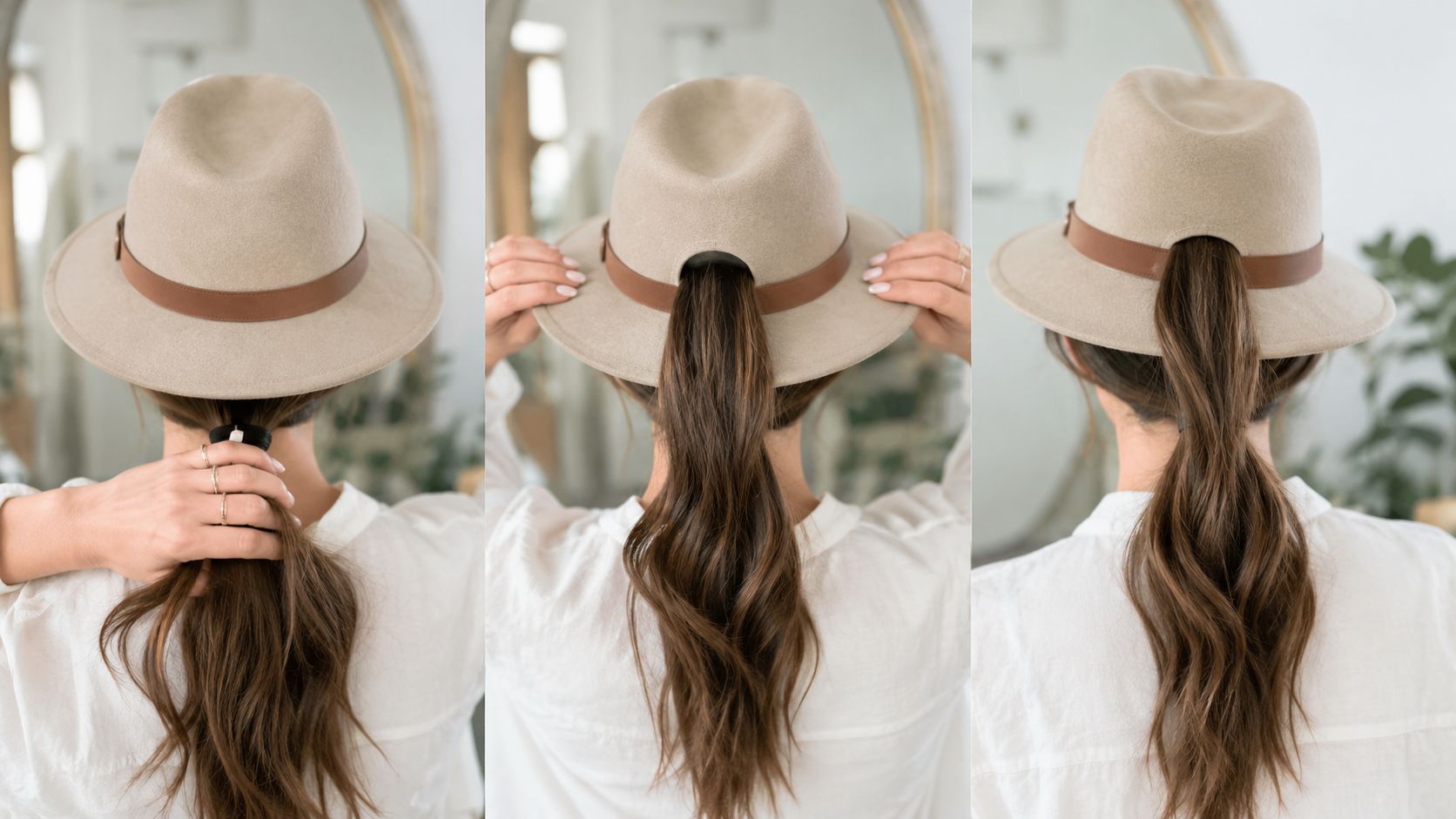
Gather the hair at the nape, but don't place the elastic directly against the hat band. Set it slightly below the band so the ponytail can pass through the rear opening without creating a raised bump inside the crown. Thread the tail through gently after putting on the cap, then loosen the hair at the crown with your fingertips.
This works best with a structured cap, snapback, or strapback. A low, smooth ponytail stays out of the swing path and gives the hat a stable anchor. Avoid placing the elastic too high. It pushes the cap upward, makes the back look crowded, and can cause the hat to shift when you rotate your shoulders.
The braided low bun
Braid the hair loosely from the nape, secure the end, and coil the braid into a bun that sits below the hat's lower edge. The braid reduces flyaways and distributes the hair's bulk instead of leaving one thick bundle pressing against the crown.
This is a reliable choice for windy rounds and hats without a rear opening. Keep the bun low enough that the hat rests on the head rather than on the hairstyle. A slick finish can make the entire setup slide, so use a light texture spray or a small amount of flexible cream for grip instead of a glossy, heavy product.
The half-up, half-down style
Take a modest section from the temples and crown, secure it behind the head, and let the remaining length fall beneath the brim. The upper section keeps hair away from the eyes while preserving visible volume around the sides and shoulders.
This pairs well with a medium-height structured cap or a relaxed lifestyle hat. It isn't ideal for a very shallow fitted cap because the gathered section can press into the top. Keep the half-up section soft rather than tightly pulled. Excess tension creates a severe line at the hat edge and leaves the hair looking compressed when the hat comes off.
The forward-drape technique
Brush or finger-comb all the hair forward over your shoulders before placing the hat. Set the cap onto the head without pulling the length underneath, then arrange the hair around the sides so it falls naturally beneath the brim.
This method is particularly effective with unstructured caps and low-profile hats. It avoids a crowded back entirely, which is useful when there's no opening or when your hair is too full for a compact gathered style. The common mistake is wearing the hair damp or overly coated in smooth product. Both can increase clumping and make the hat move. Detangle first, let the hair dry fully, and use only enough product to control static and flyaways.
Adjusting Your Approach for Different Hair Textures
Long hair behaves differently depending on strand thickness, density, curl pattern, and moisture level. A fine-haired golfer may need more internal height even when the total amount of hair seems modest. Someone with thick curls may need a larger crown but less tightening, because compression changes the shape and creates pressure quickly.
Fine hair needs lift without bulk
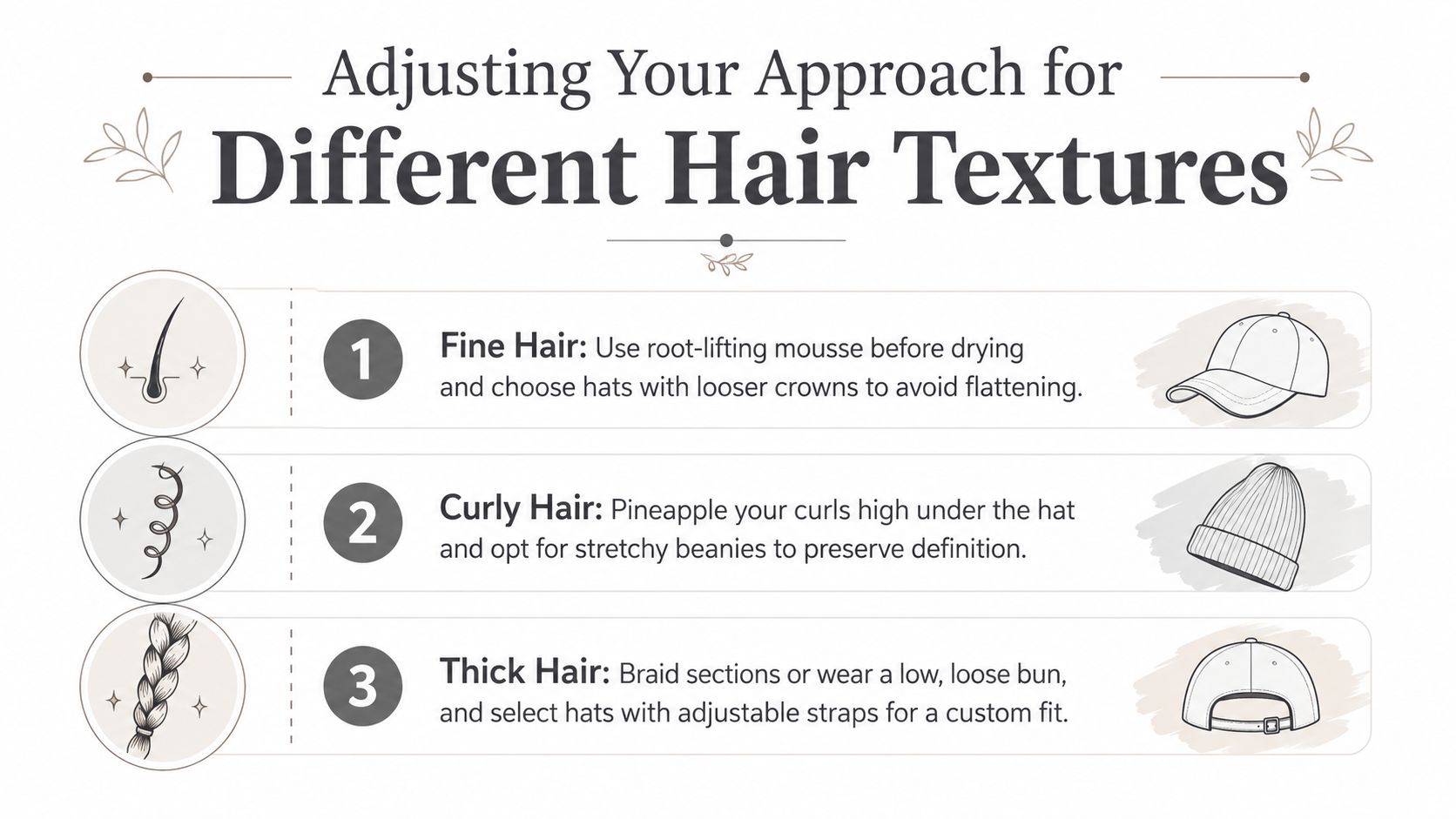
Fine hair can flatten against the scalp under a soft crown. Prep the roots with a light volumizing mousse or root-lifting spray, then dry the hair fully before putting on the hat. Keep the closure slightly relaxed and choose a crown that doesn't press directly into the highest point of the head.
A loose half-up style or forward drape usually preserves more visual movement than a tight ponytail. If you use a ponytail, keep the elastic low and avoid brushing the top completely flat. A little controlled texture gives the hair something to hold onto.
Thick hair needs a place to go
Thick hair rarely needs more product. It needs strategic distribution. Divide the length before gathering it, or braid the lower section so the mass sits close to the nape rather than forming one large knot under the crown.
Structured hats with adjustable closures are usually easier to manage because they maintain their shape as the hair moves. If the hat rises when you tuck in the hair, don't keep tightening the back. That treats the symptom while increasing pressure. Choose more crown space instead.
Curly and wavy hair needs room and moisture control
Curly hair can lose definition when a hat compresses the crown, while humidity can encourage frizz around the temples and nape. Apply a light leave-in conditioner or curl cream, allow the hair to dry completely, and arrange the curls rather than dragging a brush through them before hat placement.
Breathable woven fabrics and smooth interior bands can help reduce snagging and heat buildup. A relaxed cap lets curls sit forward, while a taller crown accommodates a loose pineapple or low gathered style. Avoid forcing the curls into a tight bun. It may fit initially, but the compressed shape often springs back and pushes against the hat later.
Material matters, but comfort and friction matter more than a rigid fabric rule. Smooth performance fabrics can feel practical in hot conditions, while softer natural blends may suit casual wear. Whatever the material, inspect the interior band. A rough seam can bother the scalp and catch longer strands regardless of texture.
The Truth About Hats and Hair Loss
The fear that hats automatically cause baldness has more staying power than the evidence behind it. Clinical reporting on twin studies doesn't support that conclusion. One study followed 92 identical male twins, and the men who wore hats every day had less temple hair loss than their non-hat-wearing twins. Another study of 98 identical female twins associated not wearing hats with increased hair loss. Cleveland Clinic's explanation of hats and hair loss puts the practical concern in the right place, fit and friction rather than the mere act of wearing a hat.
That doesn't make every cap harmless in every situation. A hat that stays painfully tight for long periods can create traction, while a rough inner band can rub the same area repeatedly. Sweat and product buildup may also irritate the scalp, especially when the hat isn't cleaned regularly.
Check the fit before blaming the hat
Watch for these signs:
- Headaches or pressure: The circumference may be too small, or the closure may be over-tightened.
- Persistent red marks: The hat band is pressing harder than it should.
- Breakage along the hat line: Friction or tension may be affecting the hair where the edge sits.
- A hat that rides upward: The crown may lack the depth needed for your hairstyle.
Occasional hat use is unlikely to contribute to hair loss, but a consistently tight fit deserves attention. Measure your head and compare it with the manufacturer's guidance using this guide to finding your hat size. If you want another plain-language discussion of the topic, this resource on hats do not cause hair loss offers additional context.
The sensible routine is simple. Choose a hat that sits securely without squeezing, keep the interior clean, and give your scalp a break when discomfort starts. You don't need to sacrifice long hair or a good cap. You need to stop treating pain as proof of a proper fit.
Game Day Routine for Long Haired Golfers
A dependable round starts before the first tee. Detangle the hair, apply a texture-appropriate product, and let it dry completely before gathering it. Wet or damp hair is more vulnerable to pulling and tangling under headwear, while fully dry hair is easier to position and less likely to collapse into a cold, compressed mass.
Choose the hat based on the day and the hairstyle, not just the outfit. An adjustable, moisture-wicking golf cap suits active play, while a softer lifestyle hat may work better for the clubhouse or post-round plans. 2ndShotMVP offers golf hats, beanies, and lifestyle apparel, including open-back styles that can make longer hair easier to accommodate.
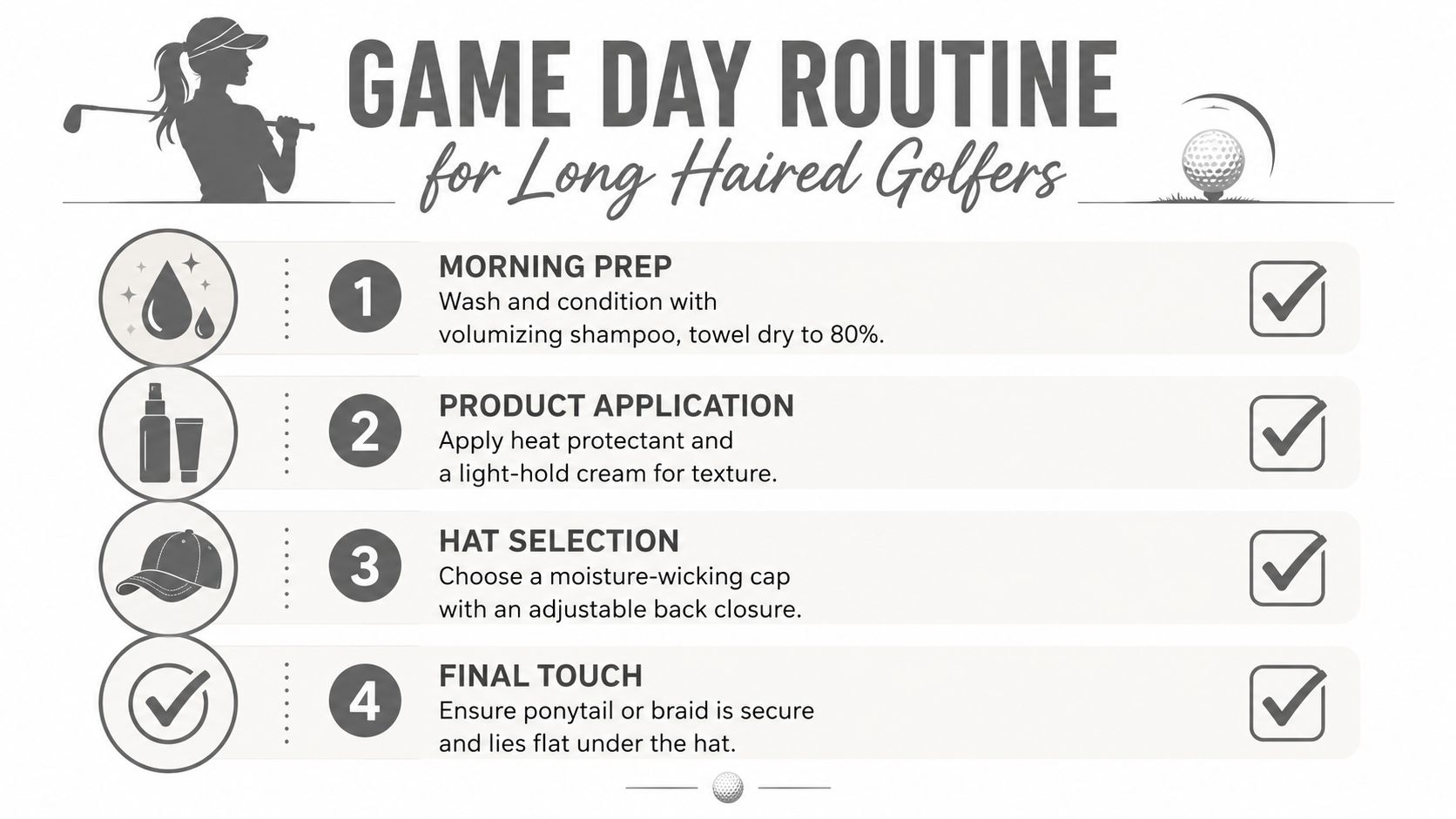
Before teeing off, check three points: the hat band should feel comfortable, the hairstyle should sit below or around the crown rather than forcing it upward, and the closure should hold without digging into the head. A moisture-wicking headband can help manage sweat, while a smooth-lined band may reduce friction. Keep a small clip or spare elastic in the golf bag for the inevitable windy-hole adjustment.
During the round, reposition the hair before tightening the hat. Re-tightening a strap over displaced hair usually creates a lopsided fit. For a broader look at practical headwear for play, browse these performance golf hats.
At the clubhouse, remove the hat carefully rather than yanking it backward through the hairstyle. Shake out the roots, smooth the sides, and let the length fall naturally. Golf style works best when it looks considered, not over-engineered.
Find a cap with the crown space, closure, and back opening your hair needs, then test it with your real on-course hairstyle. Explore the adjustable golf hats and lifestyle headwear at 2ndShotMVP to build a rotation that works on the course, at the 19th hole, and everywhere after.

