

You've done the same dance in the shop. A cap looks fine on the rack, then it lands on your head like a coffee lid on a soup bowl. The band bites, the brim sits wrong, and by the time you're halfway through the back nine or standing at the 19th hole, you've got that red ring across your forehead and a headache you didn't ask for.
That's not a style problem. It's a fit problem. Hats that fit big heads need more than a bigger label. They need the right circumference, the right crown depth, and the right brim proportion, because a hat that's technically “your size” can still ride high, perch awkwardly, or clamp down like it's mad at you. Mainstream fitted sizing has long topped out near the upper standard range, with 23.5 inches (60 cm) commonly treated as the start of big-head territory and US size 7½ where off-the-shelf options start to narrow, while one-size hats often stop around 23 inches (hat size chart reference).
The fix is practical, not mystical. Measure properly, judge the crown, and stop trusting marketing words like “oversize” until the numbers back them up.
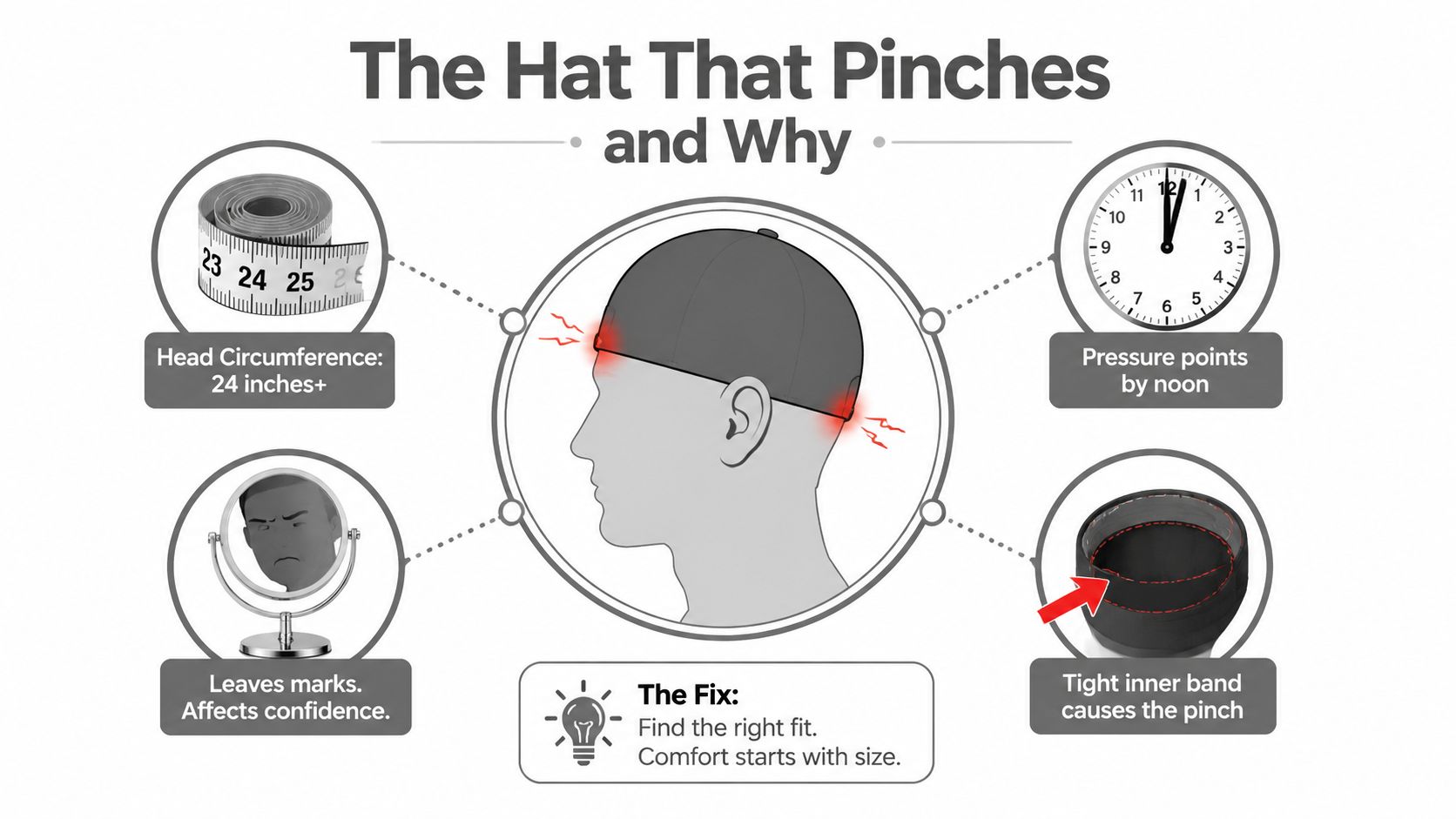
The Hat That Pinches and Why
You know the feel. The hat goes on, but it never settles. It perches high, the sweatband leaves its stamp by lunch, and the front edge keeps riding up because the crown is too shallow or the opening is the wrong shape. That is the everyday failure mode for a lot of people shopping for hats that fit big heads, especially when the wall is packed with “one size fits most” labels that do not come close to most larger heads.
The problem is usually the sizing system, not your head. Standard runs tend to stop where the middle of the market stops, and bigger heads get left with hats that were never cut for them. One sizing reference notes that one-size-fits-all hats generally stop around 23 inches, while big-head territory often starts around 23.5 inches (60 cm) and climbs from there. You can check the hat size chart reference if you want the raw numbers in front of you.
Practical rule: if a hat leaves a mark fast, feels high on the crown, or tilts backward to clear your forehead, it is the wrong shape even if the number looks close.
That is why circumference is only the first gate. A hat can match your tape measurement and still wear badly if the crown is too shallow, if the brim is out of proportion, or if the internal shape fights the way your head sits. Get those parts wrong and you will hate wearing it, whether it is a course cap or a cleaner lid for the clubhouse bar. The right move is plain. Start with your measurement, then judge how the hat is built, and if you want a quick walkthrough on the tape work, use this how to measure your head guide.
How to Measure Your Head the Right Way
Use a soft tape measure, not a metal one, and place it where the hat will sit. Run it above your ears and across your brow line, snug but not tight enough to leave a mark. If you wear your hair fuller under caps, measure it that way. Do not measure the version of your head you have after a fresh haircut and call it a fit.
The number you need is your true circumference, in inches and centimeters. That is the number that decides whether you are in standard territory or already shopping in the bigger ranges. For a plain-English walkthrough on the measuring process, keep this measuring guide close while you shop.
If you land between sizes, choose the roomier option. A slightly generous hat is easier to wear for long rounds, hot afternoons, and time at the 19th hole. A tight one does the same thing every time, it presses, rides up, and makes you want to take it off before the round is over.
| Head Circumference to US Hat Size | |||
|---|---|---|---|
| Circumference (in) | Circumference (cm) | US Fitted Size | Size Band |
| 23.5 | 60 | 7½ | Upper standard range |
| 24.0 | 61 | 7⅝ | Large |
| 24.5 | 62 | 7¾ | Big head territory |
| 25.5 | 65 | 8 | Specialist |
| 26.0 | 66 | 8⅛ | Specialist/custom |
Keep your measurement in your phone and use it every time you shop. That saves you from guessing at the rack and getting talked into the wrong size by a clean logo or a good color. If you want a simple reference for later, save the note and use it before you buy.
A clean measurement beats a confident guess every time.
Beyond the Tape Measure
Circumference gets you in the door. It does not tell you whether the hat sits right. Two hats can carry the same size tag and still fit like different species because one has a shallow crown and the other gives your head room to sit naturally.
Crown depth is the key differentiator
A hat with enough vertical room settles down instead of perching on top like a saucer. A technical product spec for an oversized bucket hat lists a 4-inch deep crown and a 2.25-inch brim, with a fit range of roughly 7 5/8 to 9 (product specification). That depth matters because it lets the hat sit level and cuts the perched look that makes larger-head hats look wrong even when the circumference is close.
The same rule applies to caps. A shallow crown creates pressure points, forehead marks, and a hat that rides up when you move. A deep enough crown sits lower, steadier, and in better proportion. That is why a big-head buyer should care just as much about the vertical shape as the number on the tag.
Brim proportion changes the whole hat
A brim that is too narrow makes the hat look small on a larger head. A brim that is too broad can swallow your face or drop into your eyes. Product specs give you something real to compare, and they are better than vague copy about “extra room.” One oversized baseball cap lists a 3.15-inch brim and a 7.08-inch depth, with a 23.5 to 25.5 in. fit range (POD hat business blueprint). That is the level of detail you want to see before you buy.
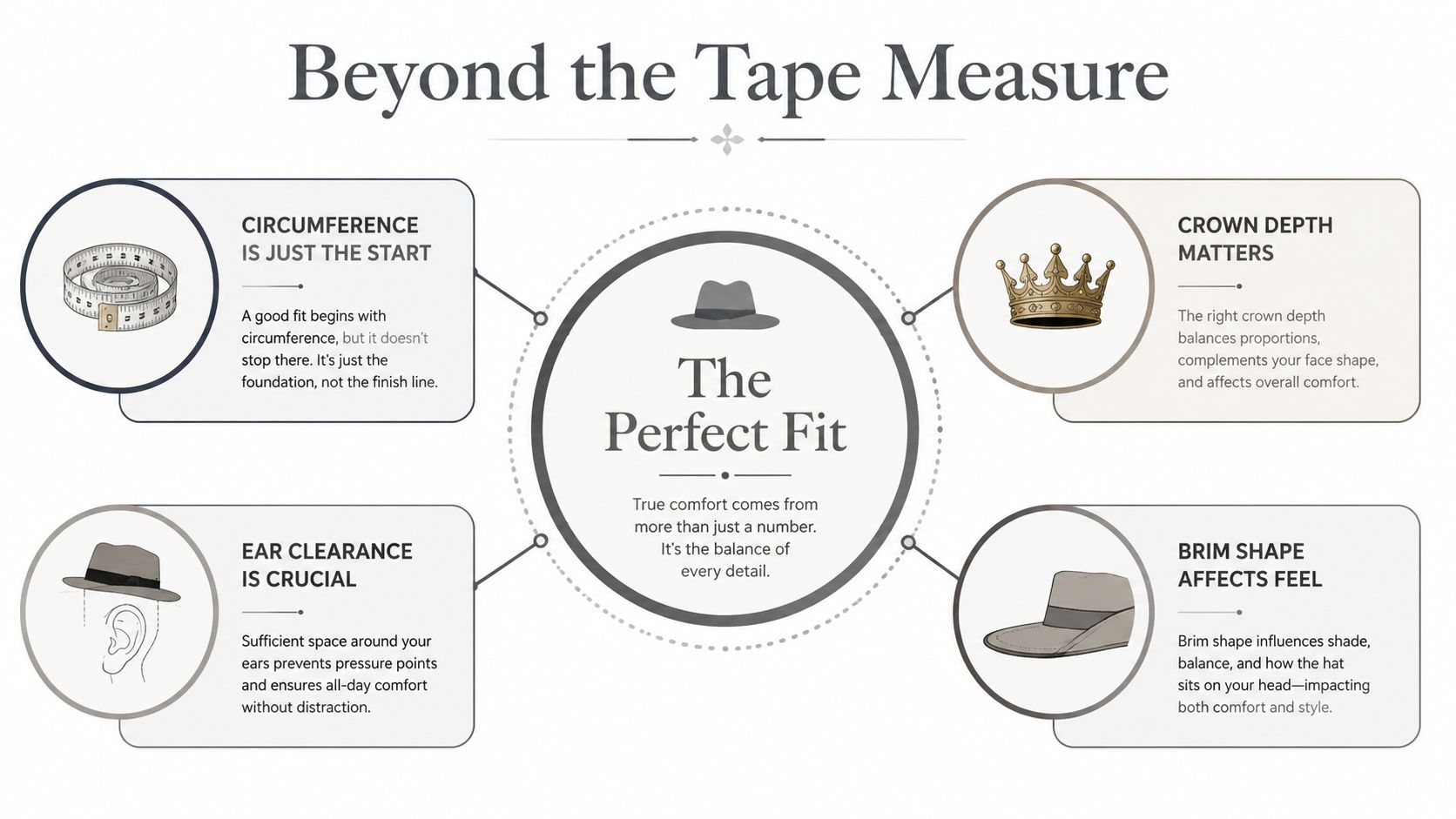
Here is the self-test I use in practice. If the hat sits above your ears, if the brim shadows your eyes before it should, or if the sweatband leaves a mark after a short wear, the shape is wrong. Do not blame your head. Blame the pattern.
A golfer who shops this way stops guessing and starts fitting. Use this guide to structured vs unstructured hats to see how crown shape changes the way a hat sits, then compare that shape against your own head, not the logo on the front.
If the crown and brim do not scale together, the hat will always look off.
Construction Styles That Fit Big Heads
A larger head does not fail the hat. The build does. Crown depth, brim proportion, and how much give the construction has decide whether the hat sits clean or perches high and tight.
The four builds I'd point a big-head buyer toward
Adjustable snapbacks and strap-backs are the safest place to start. They give you real range, which matters if you are between sizes or your head is wider in the temple area than the tape measure suggests. For course days, range sessions, and casual wear, a closure you can set by hand beats a fixed fit that is close but wrong.
Stretch-knit and spandex-blend builds are the comfort-first choice. A big-head bucket hat spec with 98% cotton / 2% spandex shows the right idea, a little stretch can change the whole feel of the hat (product specification). Stretch lets the crown open up without fighting the skull, which helps when a standard crown would sit too tight. The trade-off is structure. These hats feel easy, but they can lose shape faster than a firmer build.
Deep-crown structured fitteds work best when you want a cleaner line. A deeper crown gives the hat room to sit down on the head instead of floating above it, which is exactly what bigger heads need. Golfers who want a polished look in the clubhouse usually do better here than in softer caps. The downside is heat. A structured crown holds form, and that can run warm in sun and humidity.
Oversized bucket hats are the blunt instrument of fit. They are forgiving, they cover well, and they spare you the pressure points that show up in tighter cap styles. For travel days, practice rounds, and casual wear, they do the job without much drama. The style line is different, though. A bucket hat looks right in relaxed settings, and it can feel out of place if you want a crisp, traditional golf profile.
If you want to compare firm crowns against relaxed ones, this structured versus unstructured guide gives you the clearest framework. For anyone building a branded hat line or testing fit-first designs, the POD hat business blueprint is the right reference point.
[iframe embed omitted by publisher]
Shopping Like a Golfer, Not a Tourist
A golfer shops with a purpose. A tourist buys whatever looks fine for ten minutes. That difference matters when you're trying to find hats that fit big heads because the product page needs to tell you more than the photo does.
Start with the label language, but don't trust it blindly. XL and XXL are useful only if the seller also gives you actual circumference and, ideally, crown depth. One size fits most is usually where the trouble starts. With a lot of standard hats topping out near the middle of the size range, the label often means “maybe fits, maybe pinches.” A market review notes that roughly 36% of men in the U.S. wear a hat size of 7½ or larger, which means this isn't some fringe corner of the market (market review).
What to look for before you click buy
- Circumference in writing. If the listing doesn't show the measurement, skip it.
- Crown depth. Deeper is safer for larger heads, especially if you've had hats perch before.
- Brim width. Match the brim to the use case, course wear, sun protection, or casual social wear.
- Internal stretch or adjustability. Elastic and strap closures buy you breathing room.
- Sweatband and ventilation. On-course comfort depends on heat control as much as fit.
For golfers, I'd prioritize deeper crowns and moisture management. For 19th-hole wear, style flexibility matters more, but the hat still has to sit level and avoid that squeezed look. If you're shopping with a golf-first mindset, Dartee Golf hat tips is a handy outside perspective on what to weigh before buying.
And yes, 2ndShotMVP fits naturally in the conversation. The brand sells hats and apparel through its website, so it sits in the same category of solution as the other headwear retailers you're comparing. Use the same filters, the same measurements, and the same fit standards on every listing.
Stretching, Breaking In, and Knowing When to Return
A hat that's a little snug can often be saved. A hat that gives you a headache is not worth negotiating with.
What you can safely do at home
Use a hat stretcher if you have one. If you don't, a gentle wear-and-shape routine works better than aggressive force. A small amount of steam or light heat can help with some materials, and a hat can sometimes relax over time if you wear it in short sessions instead of all day on the first try. Keep the pressure even. Don't yank the band.
Materials matter here. Cotton twill and some wool builds usually give a bit more than stiff performance fabrics. Polyester-heavy hats tend to be less cooperative, which is why a “stretchy” marketing claim isn't the same thing as actual fit. For practical home methods and a closer look at what breaks in well, this stretch-to-fit guide is the right kind of reference.
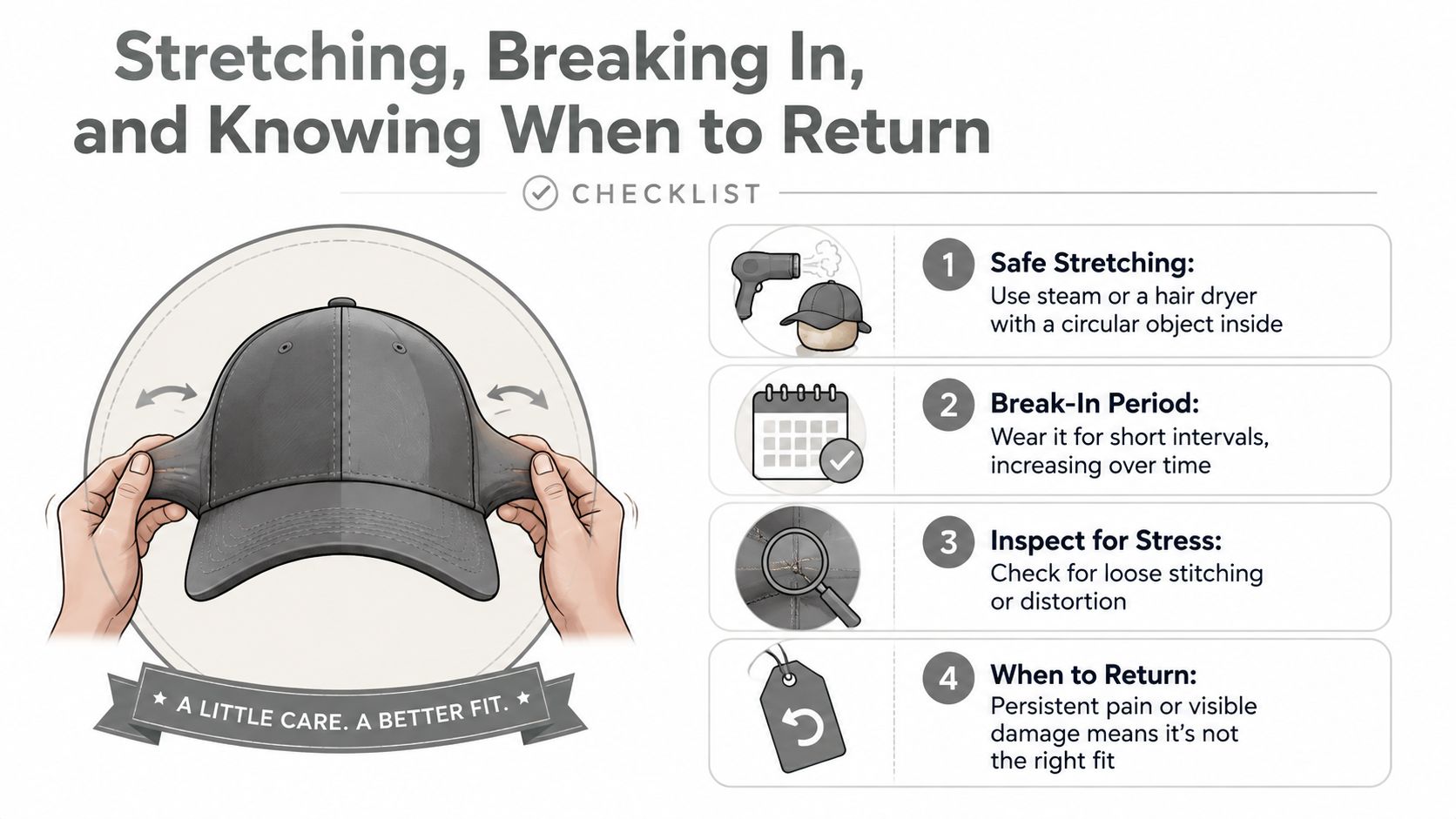
Return rule: if the hat still leaves pain, visible distortion, or hard pressure after a reasonable break-in, send it back.
When to stop trying
If the temples hurt after an hour, if you're getting a headache, if the brim droops from forced stretching, or if the crown never settles level, that hat is wrong. Don't keep it out of stubbornness. A daily hat should disappear on your head. If you're aware of it all day, it's losing the fit battle.
Stretch within reason. Return within the window. That's the whole game.
Your Big Head Hat Checklist
Measure once and keep the number. Then shop by circumference plus crown depth, not circumference alone. If a hat doesn't show both, assume the fit is a gamble.
Choose the construction by use case. Snapback or strap-back for flexibility, stretch-knit for comfort, structured fitted for a sharper course-to-clubhouse look, and oversized bucket when you want the most forgiving shape. Ignore “one size fits most” unless the actual measurements back it up.
Before you buy, check three things fast. Does the crown sit low enough to avoid that perched look. Does the brim match your face and your setting. Does the band leave a mark after a short wear. If the answer is no, move on.
The right hat isn't about luck. It's a repeatable process, and once you've got your numbers, you can use them every time the old one wears out.
If you want golf hats, beanies, and lifestyle headwear that's built for real-world wear on and off the course, start with 2ndShotMVP. You'll shop faster when you already know your size, your crown depth, and the shape that works for your head.

