

You're standing on the first tee in a polo covered with cheerful palm trees, wondering whether the club captain will admire your confidence or question your judgment. The print looked perfect at the resort shop. Your solid shorts fit well, your shoes are clean, and the only real problem is context. Fun golf apparel can look sharp, playful, and completely at home on the course, but the wrong venue can turn a confident outfit into a dress-code negotiation.
That tension matters because golf clothing has moved far beyond rigid course uniforms. Fun golf apparel is now part of a global apparel segment, with one market estimate placing the category at USD 4.42 billion in 2024 and projecting USD 6.61 billion by 2030, while another forecasts USD 9.47 billion in 2025 and USD 14.83 billion by 2034 (Fortune Business Insights). The opportunity is real, but so is the confusion. The trick isn't wearing the loudest shirt in the room. It's knowing when personality helps, when restraint wins, and how to make one outfit work from tee to street.
Why Fun Golf Apparel Is Having a Moment Right Now
A golfer used to need one outfit for the course and another for everything afterward. Today, that split feels dated. A technical polo can handle a warm round, look polished at lunch, and work with jeans later. A patterned cap can add personality without upsetting a traditional outfit. A lightweight quarter-zip can move from an early tee time to a patio table without looking like it belongs in a gym bag.
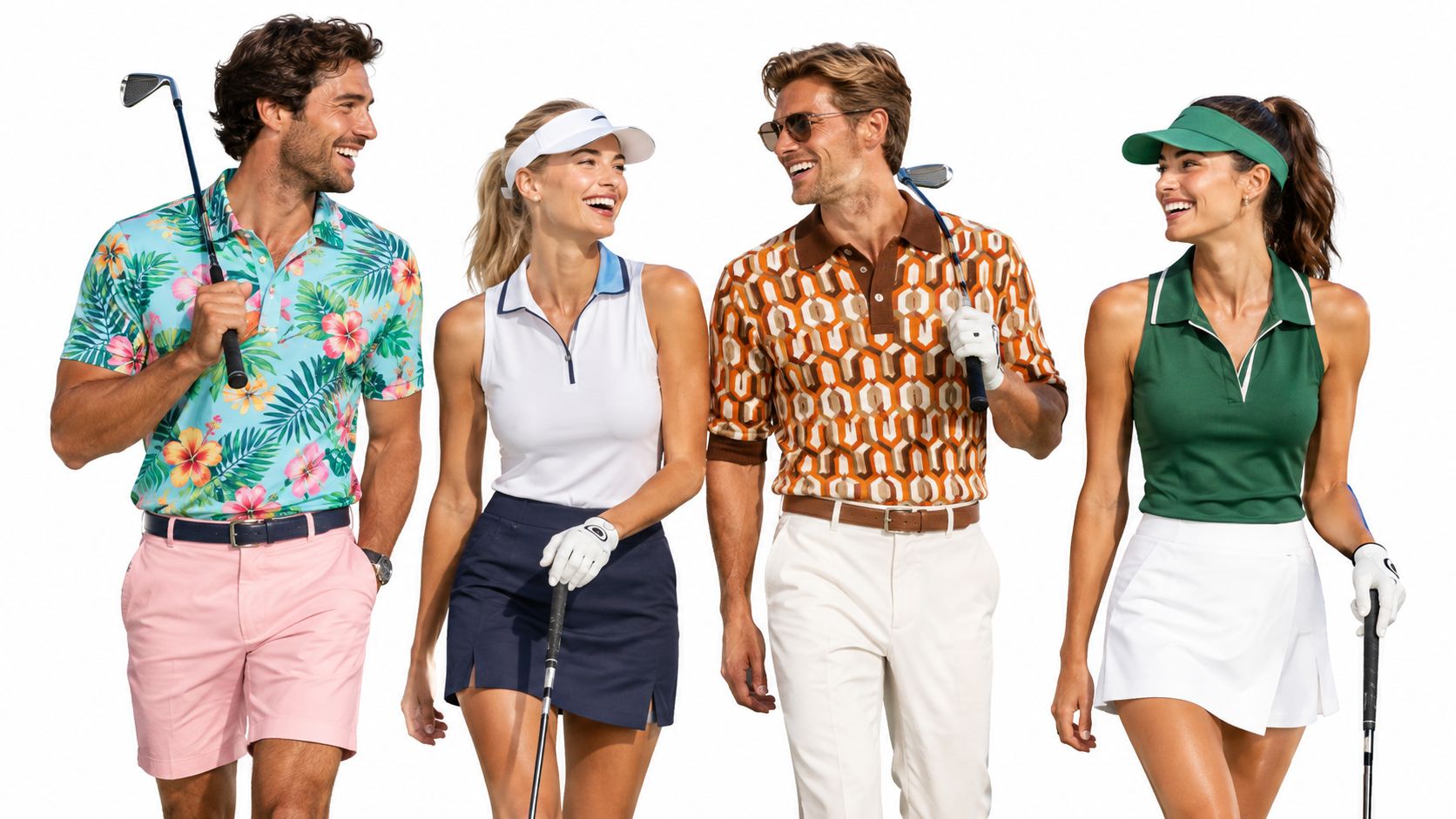
You can see the shift in the market itself. One industry estimate puts North American golf apparel revenue at USD 2.2 billion in 2023, while another estimates the U.S. market at USD 1.67 billion in 2024, with a projection of USD 2.95 billion by 2033 (Grand View Research). Those figures come from different market definitions, so don't treat them as a single combined total. They do show that course-ready clothing has become a durable consumer category, supported by performance fabrics, lifestyle use, and broad participation in major golf markets.
Style is pulling in two directions at once. Recent industry coverage points to playful details, retro references, and bold color attracting younger golfers, while other reporting favors cleaner, more classic looks. Neither side is wrong. A resort course gives a tropical print room to breathe. A private club may prefer a tonal pattern and a quiet hat. A corporate outing rewards polish because your playing partners are also professional contacts.
The smart approach is simple: treat fun as a styling decision, not a personality test. Start with fit and fabric, read the venue, choose one hero piece, and make the rest of the outfit behave. That system lets you enjoy color without looking as though a novelty shop dressed you for a scramble.
How to Pick Fun Golf Apparel That Actually Fits and Performs
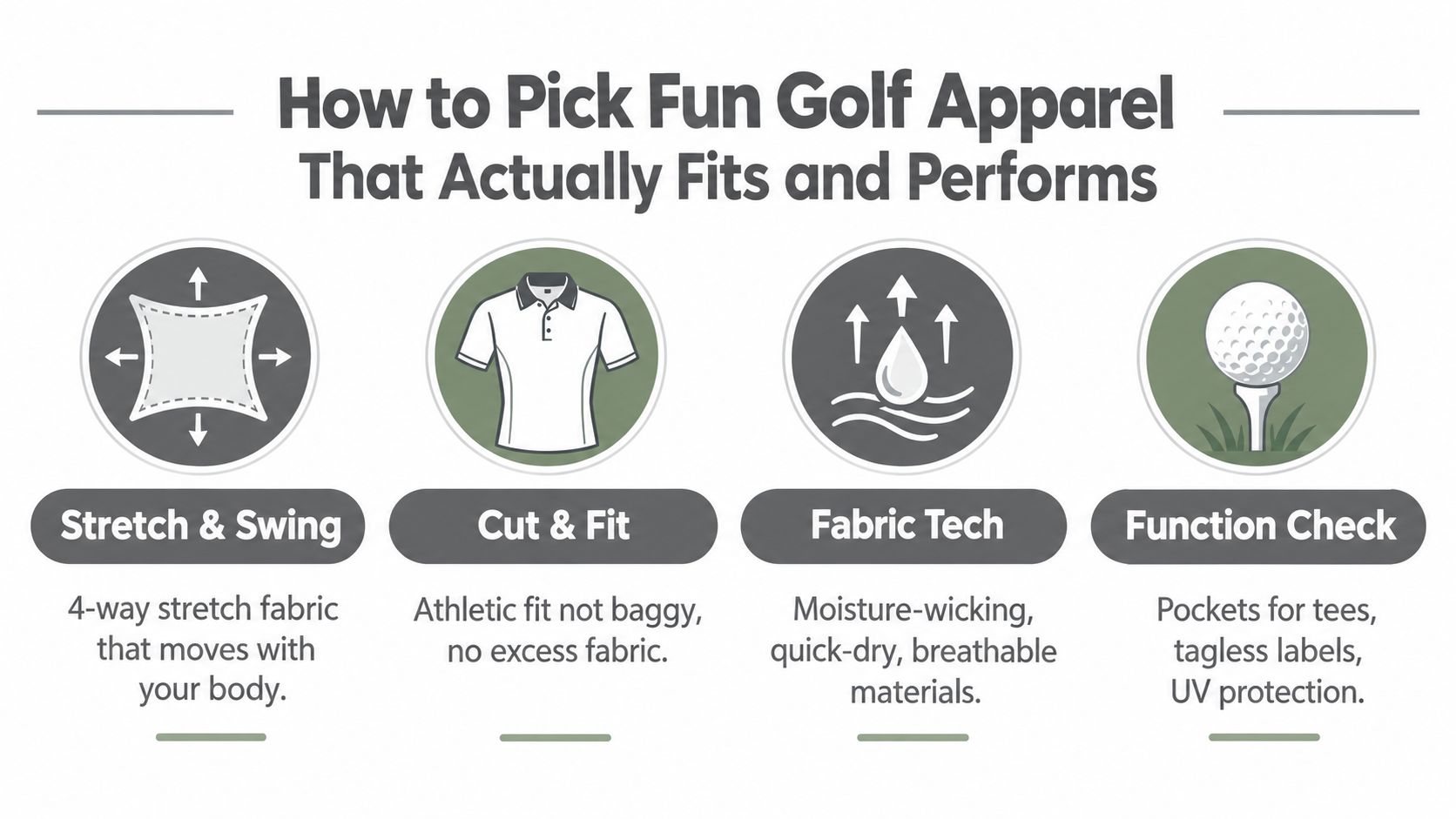
A print can't rescue a shirt that restricts your backswing. Judge fun golf apparel in this order: fit, movement, fabric, then visual impact. The hanger is a liar. Your swing is the honest reviewer.
Start with the swing
Put the polo on and make a slow practice swing. Reach both arms forward, rotate your torso, and lift your arms as though you're taking the club to the top. The shoulders should move freely without the sleeve pulling across your biceps or the back seam climbing toward your neck. If the fabric stretches but stays twisted after the motion, the cut is wrong for golf.
Check the hem next. Raise your arms, bend from the waist, and sit as you would in a cart. The shirt should stay long enough to remain tucked if you wear it tucked, but not so long that excess fabric bunches under your belt. For shorts, skorts, and trousers, take a few walking strides and squat lightly. You want a waistband that stays put, pockets that don't gape, and a hem that doesn't require constant adjustment.
Read the fabric label
Look for four-way stretch, moisture-wicking construction, quick-dry language, and breathable technical fibers. Polyester and polyester blends are common choices for performance golf clothing because they can manage sweat and recover their shape more effectively than ordinary casual fabrics. A cotton-heavy blend may feel pleasant in the fitting room but become clingy and slow to dry during a warm round.
Collar structure matters more than shoppers expect. A soft collar can look relaxed, but it shouldn't collapse immediately when you move. Inspect the seams, check whether the label is irritating, and look for a finish that won't rub when you turn your head or carry a bag. Functional details count too, especially secure pockets for tees, a glove, or a phone.
The 60-second test: swing, reach, bend, sit, inspect the collar, then check the pockets. If you need to tug the garment during any movement, leave it on the rack.
A hat deserves the same scrutiny. The crown shouldn't press against your forehead, the brim shouldn't block your view when you look down at a putt, and an adjustable closure should feel secure without creating a pressure point. If you enjoy comparing playful outdoor styles beyond golf, this guide helps you compare hike themed clothing with the same focus on comfort, movement, and wearability.
Where Bold Prints Work and Where to Dial It Back
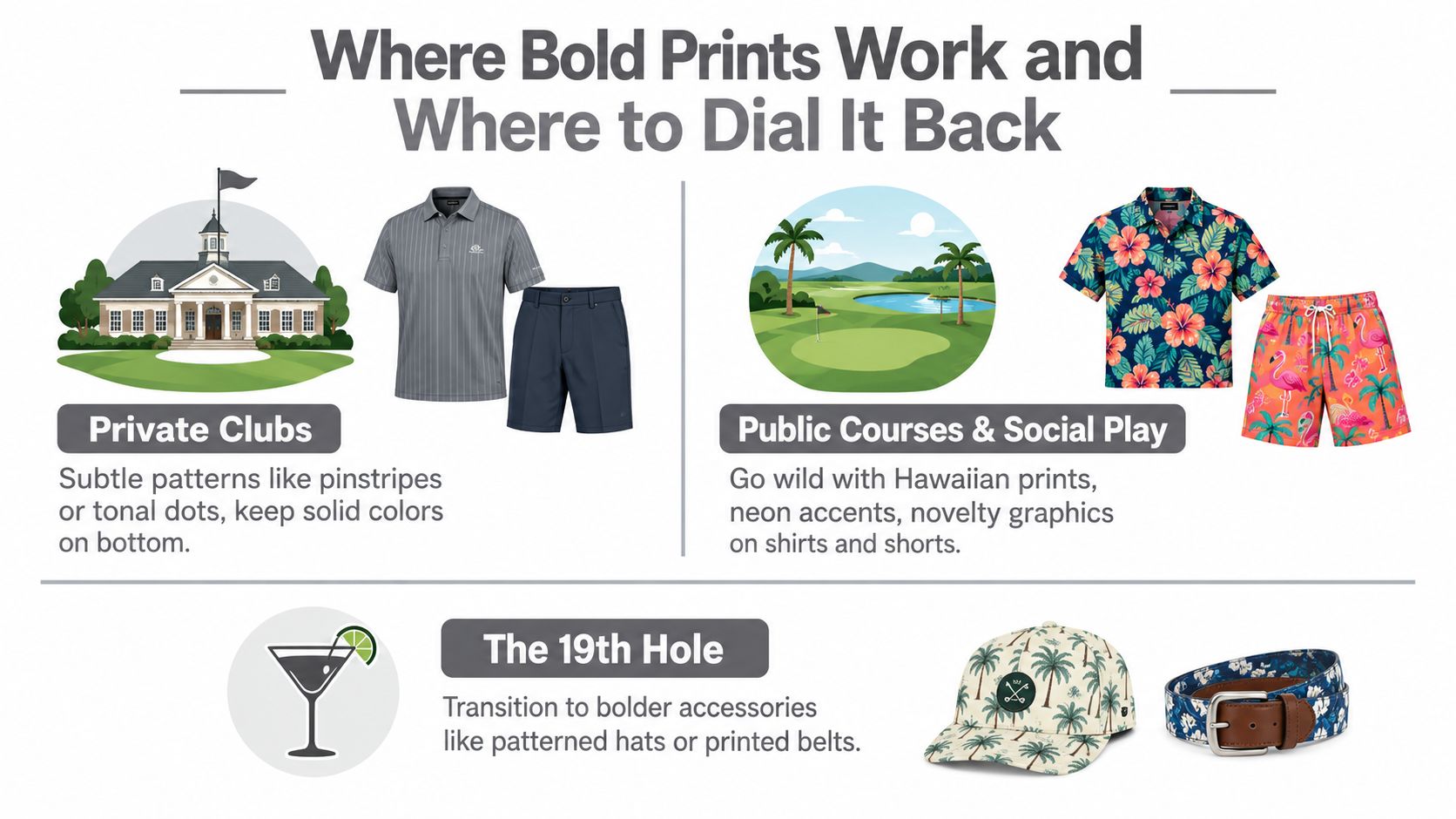
The same shirt can be excellent at a public resort course and completely wrong at a private club. Venue determines volume. Don't decide whether a print is tasteful in isolation. Decide whether it speaks the language of the place you're playing.
Use the venue as your volume dial
| Setting | What works | What to avoid |
|---|---|---|
| Private club | Tonal dots, fine stripes, restrained retro details, solid bottoms | Novelty graphics, loud all-over prints, slogan-heavy pieces |
| Public course | Brighter polos, graphic details, expressive color combinations | Anything that restricts movement or ignores posted rules |
| Resort course | Tropical prints, relaxed silhouettes, playful hats, colorful accessories | Sloppy fit or beachwear that isn't course appropriate |
| Corporate outing | One statement piece, polished solids, clean shoes, structured layers | Head-to-toe novelty styling or anything that dominates introductions |
| 19th hole | Printed hat, expressive belt, colorful overshirt, easy layer | Keeping sweaty or rumpled course pieces unchanged |
Private clubs aren't anti-style. They tend to reward editing. A polo with a small geometric pattern, solid shorts, and a classic belt reads intentional. A loud shirt paired with equally loud shorts, bright shoes, and a novelty hat reads like a costume, even if every individual item is well made.
Public and resort golf give you more room. That's where a Hawaiian-inspired polo, retro color blocking, or a graphic cap can feel natural. Still, choose one visual anchor. If the shirt is the conversation starter, let the shorts and shoes provide the grammar.
Corporate outings deserve special care because the social setting carries more weight than the scorecard. Wear personality through color, texture, or a hat rather than an aggressive graphic. If you want to understand how the production method affects the look and durability of a printed piece, this overview of printing on shirts explained is useful before buying custom or graphic apparel.
Before you tee off, check the club's online dress code, event email, or pro shop guidance. Calling the shop and asking, “Are patterned polos acceptable for Saturday's event?” sounds prepared, not awkward. For more ideas on using expressive polos without losing balance, browse loud golf polos, then apply the venue test before you buy.
Outfit Formulas for the Course and the 19th Hole
Good styling shouldn't require a closet full of one-round wonders. Build around a hero piece, add quiet supporting players, and make sure each item can survive the transition from golf cart to lunch table.
The sunny weekend round
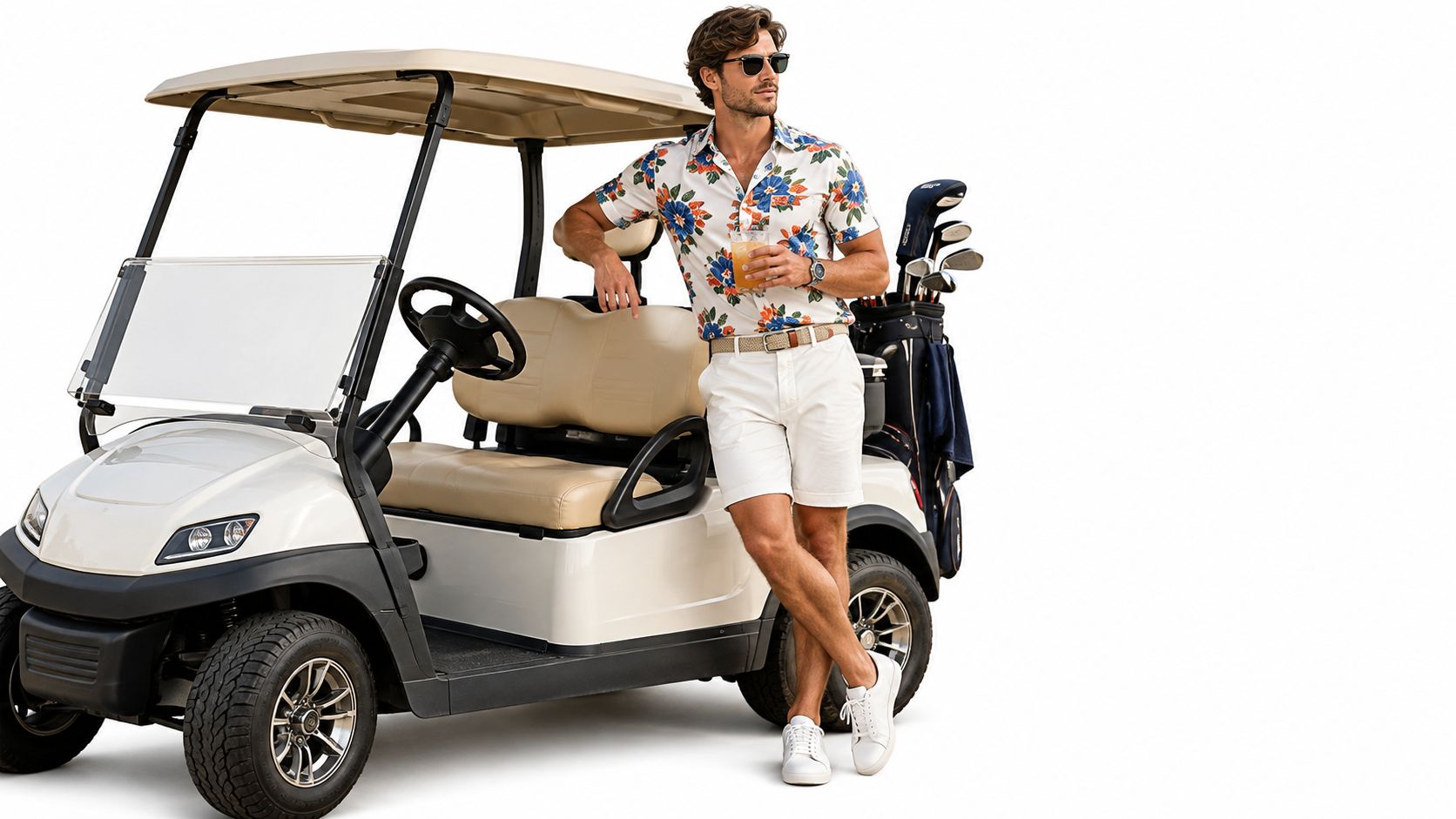
Choose a floral or tropical polo, solid stone, navy, or white shorts, and clean white or neutral golf shoes. Keep the belt close to the shorts or shoe color, then add a cap that borrows one small color from the shirt rather than introducing a new one.
The proportion matters. A fitted top with relaxed shorts can look current, while a loose top and loose bottoms can lose the waist and make the print feel heavier. Tuck the polo if the venue is polished, and leave it untucked only when the hem is designed for that finish.
The casual league night
Let the hat do the talking. Pair a solid technical polo with a patterned cap, shorts, and a lightweight belt. This formula works because the face-level accessory creates personality without covering the whole outfit in visual noise.
A hat from 2ndShotMVP can serve as that single statement element, particularly when the rest of the clothing stays restrained. Look for a crown that sits cleanly and a brim that suits your face and playing conditions, not merely the logo.
The resort round
Use a retro-print polo or a bold color-blocked top with solid bottoms in a warm neutral. Add a lightweight overshirt or quarter-zip for the cooler start, but choose a layer that still looks good once tied around your waist or placed in the cart.
Resort styling gives you permission to have fun, not permission to ignore polish. Keep the shoes clean, the collar in shape, and the fit athletic rather than oversized. A beach-inspired print looks expensive when the silhouette is sharp.
The direct-to-patio outfit
Start with a printed polo, solid performance trousers or shorts, and a simple outer layer in navy, cream, charcoal, or olive. Remove the golf glove, empty the tee pocket, and swap the cap only if the venue calls for something more restrained. The outfit should look like leisurewear, not clothing abandoned after a round.
Style rule: One pattern leads. Everything else supports it.
For more options built around personality-led polos, see fun polo shirts. The strongest combinations share the same discipline: one memorable element, two grounding neutrals, and enough technical comfort to keep you from thinking about your clothes halfway through the back nine.
Here's a visual example of how a playful course outfit can stay balanced while still feeling ready for the clubhouse.
Keep It Fresh With Smart Care and Sun Smarts
A fun print only earns a permanent place in your rotation if it still looks lively after repeated washing. Turn polos inside out, use cold water, choose a gentle cycle, and skip fabric softener on technical garments. Softener can coat performance fibers and interfere with moisture management. Air drying is kinder to stretch, color, and printed surfaces than high heat.
Hats need their own routine. Brush away loose dirt, spot-clean marks with mild detergent, and reshape the crown and brim while the hat dries. Don't crush a structured cap under heavier clothing or leave it baking in a hot car. For a practical cleaning routine, use this guide on how to clean golf hats.
Sun protection needs coverage, not just color
Color isn't a reliable substitute for tested protection. A 2025 analysis of 671 golf-apparel items found that UPF labeling appeared on only 7.1% to 16.7% of garments, while coverage of exposed areas remained limited; the average top-panel coverage score was 3.69 out of 7 for men's and women's tops and 3.48 out of 7 for children's tops (the garment coverage analysis). Look for explicit UPF labeling and inspect whether the garment covers the neck, shoulders, forearms, and hands, not just the chest and back.
Technical fabric construction matters too. Independent testing of 100% polyester sportswear found that more than 75% of analyzed fabrics achieved excellent UV protection, defined as UPF 40 to 50+, with cover factor strongly associated with biological protection outcomes (the textile UV protection study). The study also found no effect of fabric color on biological protection, so don't assume a dark shirt automatically protects better.
Sweat and humidity can alter how fabric behaves, which makes fit, knit density, layering, and sweat-state testing more useful buying criteria than color alone. Apply sunscreen to exposed skin, especially the hands, ears, face, and lower neck, and treat a UPF garment as part of a broader sun routine.
Shop Smarter and Wear It With Confidence
Buy the garment you can explain in one sentence: “This polo has the print I like, the stretch I need, and a venue where it belongs.” If you can't name the fabric, check the measurements, see the garment from multiple angles, or understand the return policy, don't let a clever graphic rush the decision.
Before purchasing, check:
- Fit: Can you swing, bend, sit, and reach without tugging?
- Fabric: Does the label mention stretch, moisture management, breathability, or quick drying?
- Context: Would you wear it to the course you play?
- Versatility: Can the hero piece work with at least two quiet basics?
- Care: Do the washing instructions suit your routine?
- Returns: Can you send it back if the cut or color looks different in person?
A small rotation beats a wardrobe of novelty pieces worn once. Start with one expressive polo or hat, pair it with dependable solids, and test the outfit on the course and afterward. For broader advice on balancing quality, fit, and spending, this guide to shop smarter with fit budget offers a useful buying mindset.
Fun golf apparel works when it looks chosen, not accidental. Wear the print, keep the fit clean, and remember that confidence comes from knowing the outfit belongs exactly where you're wearing it.
2ndShotMVP offers premium golf hats, beanies, and lifestyle apparel for men and women, with fun designs inspired by the game and made for course-to-street wear. Visit 2ndShotMVP to find a signature piece for your next first tee, clubhouse stop, or last call.

