

You're standing in the pro shop with a glove in one hand and a wall of fairway wood headcovers in front of you, and they all start to blur together. Most of them look fine from ten feet away. That's exactly how golfers end up buying the wrong one, then living with a floppy fit, a stretched opening, or a cover that looks good for two rounds and then starts acting cheap.
A fairway wood headcover is not just decoration. It protects a clubhead that gets tossed into trunks, leaned against cart rails, and exposed to rain, dirt, and the kind of bag chatter that chips finish fast. The old evolution of the wood club family matters here, because protective accessories became more relevant as club heads moved from handmade wooden heads to modern metal designs, with steel shafts entering the game in the 1910s and becoming approved by the USGA in 1924 before replacing hickory by the 1930s (wood club history)). A cover is the cheap insurance policy that keeps all that modern gear looking sharp.
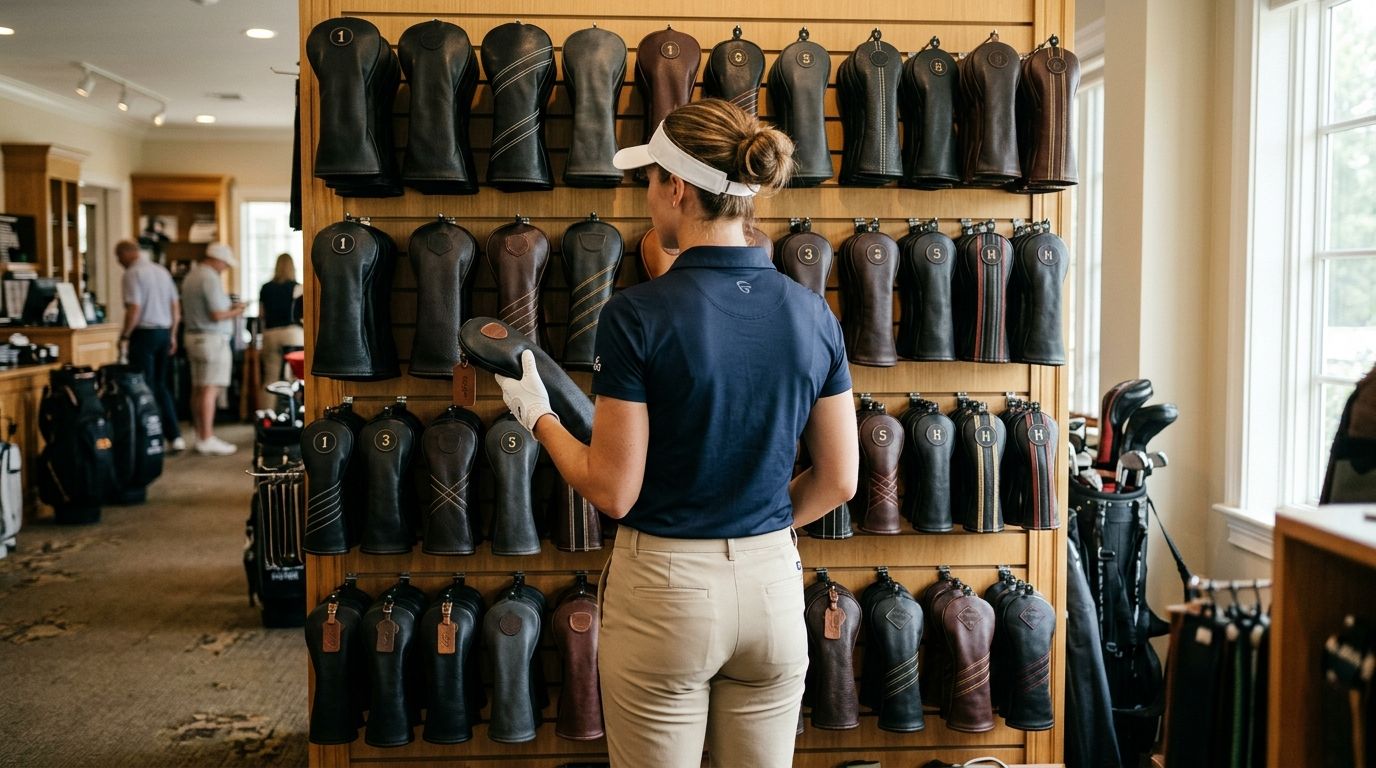
If you want a simple rule before you spend a dime, use the same one I use after testing covers in actual bags. Buy for fit first, then material, then style. Everything else is marketing noise.
For a quick primer on what a cover is supposed to do, this guide to golf head covers is a useful reference point.
Why Your Fairway Wood Headcover Choice Matters
The golfer in the shop usually grabs the cover that matches the driver and calls it done. That is sloppy buying. A good fairway wood headcover does more than look coordinated. It keeps the clubhead from taking the small hits that turn into ugly wear, it helps block rain and dew from creeping into the head area, and it cuts down on the constant bag friction that scuffs premium finishes.
Protection is the whole point
Contemporary golf guidance is clear, headcovers protect driver, fairway wood, and putter heads from dents and scratches while clubs are carried around the course, and they also help shield clubs from rain and extend equipment life (golf-media guidance on headcovers). That sounds basic because it is. Basic gear is often the gear golfers ignore until the finish is already beat up. If you keep a fairway wood in the bag regularly, the cover is doing real work every round.
The equipment side matters even more with fairway woods because those heads are not throwaway clubs. Fairway wood design has gone through a long run of change, from earlier wood constructions to modern metal heads, and that shift made protection more relevant as heads became more refined and more expensive to keep looking good (fairway wood history). Once the club is built to look sharp and perform well, leaving it exposed to trunk bumps and cart chatter makes no sense.
Practical rule: If you care enough to keep your driver head clean, your fairway wood deserves the same treatment.
The social signal is real
A tidy bag tells people you pay attention. That does not mean loud novelty art is always better. It means your cover should look intentional, not like you found it in the bottom of a bin at a cart barn.
I have seen golfers with a polished set of woods and a random, saggy fairway cover that ruins the whole look. I have also seen a simple, well-fitted cover make a bag feel expensive even when the rest of the setup was pretty ordinary. That is why this accessory matters. It protects the club, and it finishes the bag.
The same standard applies to the rest of your setup. If the cover clashes with your bag, your apparel, or the rest of your gear, the whole setup starts to look careless. A smart fairway wood headcover does one job well, then supports the rest of the look without fighting for attention. For a good baseline on what a cover should do and how it sits in the bag, this golf head cover guide is worth reading.
Getting the Fit Right for Every Fairway Wood
Fit is where most buyers mess this up. They see 3-wood on the tag, assume it'll fit anything that says fairway wood, and move on. It won't. Fairway, driver, and hybrid heads have different shapes and sizes, and those differences matter more than the logo on the cover (fit and sizing guidance).
Start with the head shape, not the label
A 3-wood cover is not automatically interchangeable with a 5-wood cover. The head profile changes, and some older or oversized fairway heads sit deeper or wider than current models. If you're buying for a non-standard club, measure the head instead of trusting the number stamped on the sole. That's the part most articles skip, and it's the part that saves you from returns.
Use a tape measure and check the longest part of the clubhead, then look at how high the crown sits above the sole. If the cover opening barely grabs the top of the head, it's too small. If it hangs halfway down the hosel and flops in the bag, it's too loose. You want a snug hold that doesn't feel forced.
A good fit should stay put in the bag and come off cleanly at the first pull.
Check the opening, lining, and shaft entry
The opening should grip without crushing. The inside should feel soft enough that repeated on-and-off use doesn't abrade the finish. A fairway wood headcover should also give enough shaft coverage that the transition point isn't left exposed to cart chatter and bag rub.
For older clubs, the edge cases are obvious once you test them. Vintage heads can run bulky. Some game-improvement heads are shaped like mini drivers. Some custom fairway woods sit differently because of adapter setup or unusual crown geometry. If the cover only fits when you stretch it hard, skip it.
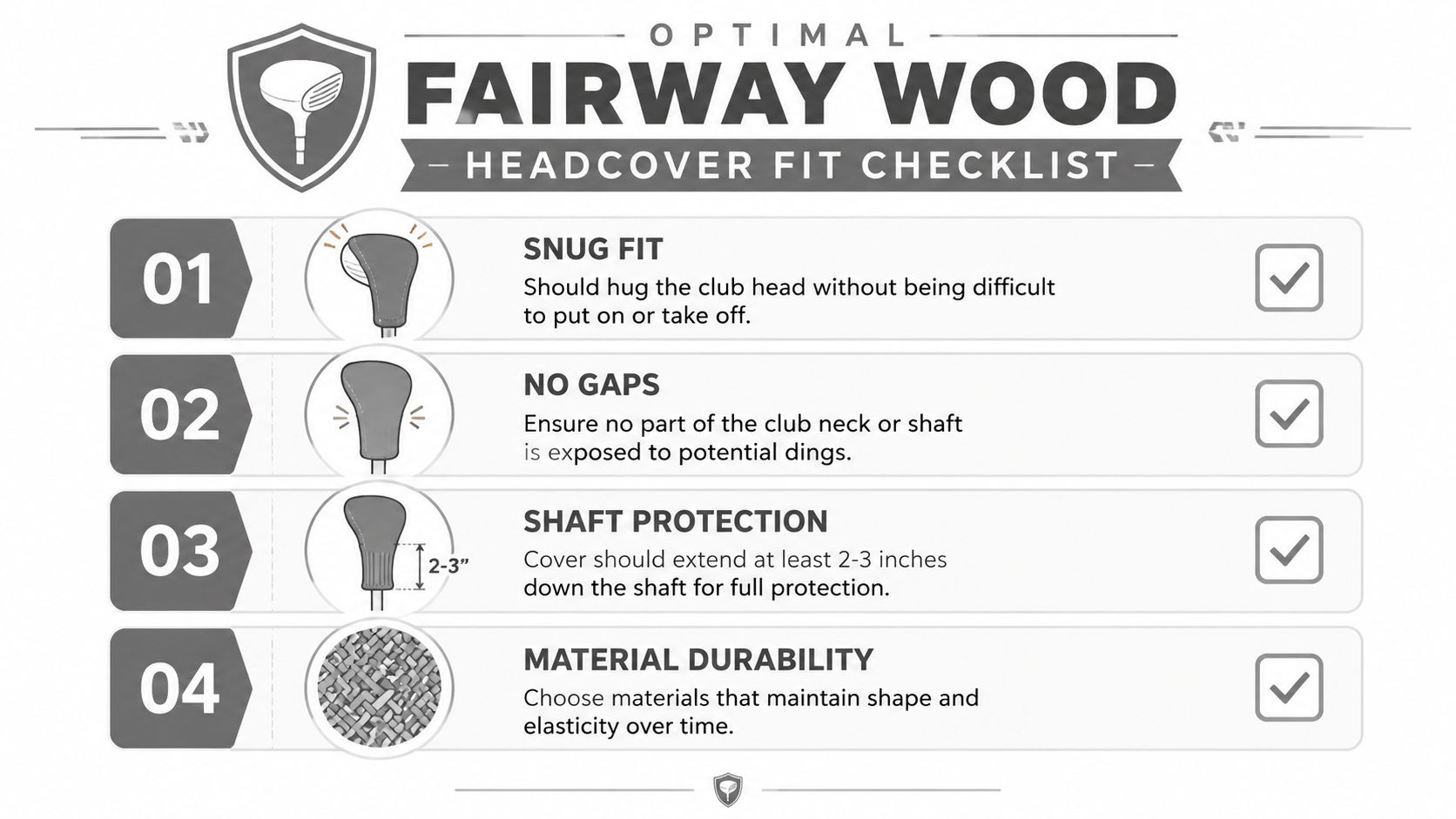
Here's the checklist I use before I buy:
- Snug but not tight: It should hold without fighting you every round.
- No exposed neck area: The club shouldn't poke out where it can get dinged.
- Soft interior lining: Rough linings shorten the life of a finish.
- Enough depth for the head shape: Oversized or vintage heads need more room, not more force.
Materials That Hold Up Round After Round
Material choice is where golfers pretend everything is equal. It isn't. Some covers look sharp and fail fast in weather. Others look plain and keep doing their job long after the stylish ones have cracked, faded, or started smelling like a wet range bucket.
Neoprene and leather are the serious options
If you play in wet weather, water-resistant neoprene or leather is the smart call, and one product guidance source says exactly that for golfers who run into rain often (water-resistant neoprene or leather guidance). Neoprene is the pragmatic choice. It handles moisture better, stays quiet in the bag, and is easy to live with. Leather is the premium choice. It looks better over time if you care for it, and it usually ages with more character than synthetic options.
I'd take neoprene for a player who's out in all weather and wants low-maintenance protection. I'd take leather for a golfer who wants the bag to look refined and doesn't mind basic care. If you want both looks and toughness, leather wins if you're willing to condition it. If not, buy neoprene and stop overthinking it.
Knit and canvas are about style, not weather
Knit and canvas covers have personality. They can look great, especially if you like a softer, more classic bag. But they absorb moisture more easily, and once they're damp they don't behave like proper protection. They're fine in dry climates or for golfers who mostly store clubs indoors and play fair-weather rounds.
| Material | Water Resistance | Durability | Best For |
|---|---|---|---|
| Neoprene | Strong | Very good | Wet climates, everyday use |
| Leather | Good with care | Excellent | Premium look, long-term ownership |
| Knit | Low | Moderate | Dry climates, classic style |
| Canvas | Low | Moderate | Casual players, decorative sets |
Buy for your actual climate
If you're a year-round player, buy neoprene or leather and don't downgrade for looks. If you're in a dry region, knit can be perfectly fine. If you're the type who wants a bag that photographs well at the turn, canvas and knit are about personality first and protection second.
For a closer look at the premium side of the category, this leather driver head cover discussion lines up with the same logic. Buy the material that matches how you play, not how the product photo is lit.
Customization, Branding, and the Style Question
A fairway wood headcover is one of the few golf items that can say something about your taste without trying too hard. That's why customization sells. Initials, team colors, novelty graphics, and custom embroidery all give a bag personality. The trap is paying more for a design that looks clever online and tired after a month in the bag.
Know what you're paying for
Machine embroidery is clean and repeatable. Hand-stitched or small-batch work usually costs more because the labor is real, and the finish often feels more personal. Licensed logos tend to carry a premium because the branding is official, while unlicensed designs can look similar but miss the polish that makes the piece feel complete. Mass-produced stock covers make sense when you want a dependable fit and don't care about being noticed.
That's why a simple stock cover can be the best buy. If you're replacing a worn piece or building a bag on a budget, there's nothing wrong with basic. Spend more only when the design feels like something you'll keep for years, not something you're hoping to outgrow.
If the design only works because it's trendy, it's probably overpriced.
For golfers who like expressive gear, style coordination matters just as much as the cover itself. A clean set of covers reads better when the rest of the bag, and the rest of the wardrobe, are on the same page. If you want a useful rabbit hole on playful designs, fun golf headcovers are worth browsing for ideas, even if you don't copy the look outright.
Match the bag, not just the single cover
A coordinated driver, fairway, and hybrid setup usually looks better than three random personality pieces fighting each other. The point isn't to match everything perfectly. The point is to make the set feel deliberate. That also makes gifting easier, because a gift looks sharper when it fits the rest of the bag instead of standing alone like a costume.
For broader style ideas outside golf, Urban Totes' recycled material bag collection is a good reminder that material, finish, and visual consistency matter in accessories generally. Same rule here. Buy the design you'll still like when the novelty fades.
Care, Maintenance, and the Training Hack
A lot of golfers treat a headcover like a permanent object. They shove it on, ignore it for months, then act surprised when it smells stale or loses shape. That's on the owner, not the cover.
Keep it clean before it gets gross
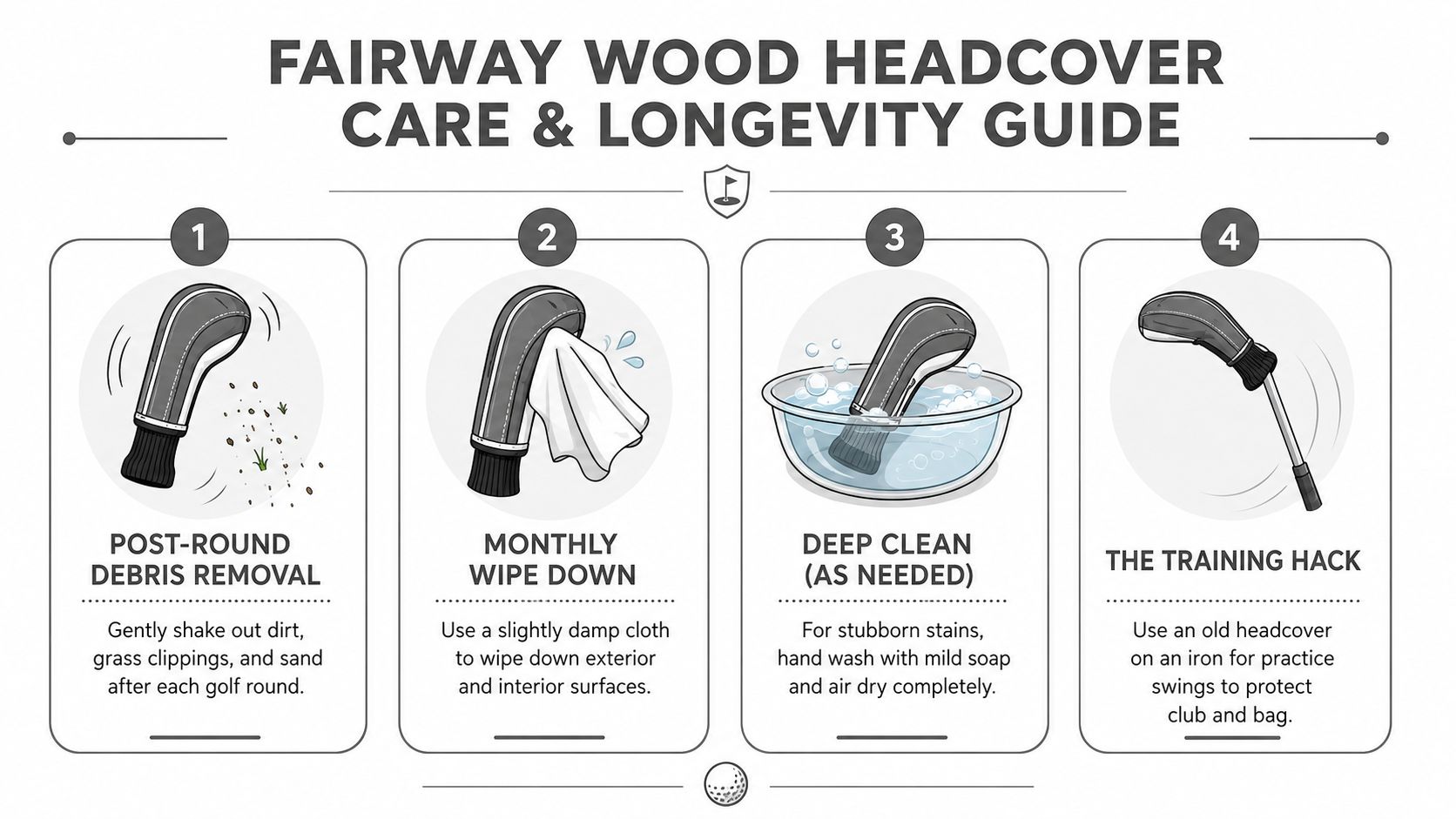
After each round, shake out sand, grass, and loose debris. That takes seconds and prevents grit from grinding into the lining. Once a month, wipe the exterior and interior with a slightly damp cloth. If you use leather, condition it on a reasonable schedule so it doesn't dry out and crack. If the cover gets soaked, air-dry it fully before putting it back on the club.
The replacement signs are obvious. Frayed seams, a stretched opening that won't hold shape, or a permanent odor all mean the cover has outlived its useful life. Don't keep using a dead cover because you like the logo.
Short rule: If it's dirty, damp, or warped, fix it now. Don't let it become a habit.
The practice trick has limits
There's also a clever use case that most product pages never mention. An instructional piece shows a fairway wood headcover being used as a shot-shaping practice barrier, with balls placed inside the cover to help reduce topping and thinning during training (fairway wood headcover practice hack). That's a smart drill, but use an older cover for it. Don't beat up your nicest one.
The reason is simple. Practice work creates extra wear on the lining and opening. So if you want a training aid, keep one beat-up cover in the garage or practice bag and let your good one stay on protection duty. That split keeps the accessory useful without turning it into trash.
Matching Your Headcover to the Rest of Your Look
A headcover doesn't live by itself. It sits next to your driver cover, your hybrid cover, your hat, your belt, and the rest of the bag. If the pieces feel disconnected, the whole setup looks accidental. If they talk to each other, the bag looks like it was built by someone who cares.
Build the look around one anchor piece
Start with one item that sets the tone. For some golfers that's a hat with a strong graphic. For others it's a clean color palette, a leather finish, or a vintage-looking knit. Once that anchor is set, choose the fairway wood headcover to support it instead of competing with it. That's how you get a pulled-together bag without looking like you tried too hard.
The mistake I see most often is stacking too many loud pieces at once. A novelty cover, a loud shirt, a bright hat, and a random belt all fight each other. Pick one thing to lead, then let the other accessories stay in the same conversation.
Use a simple buyer checklist
Before you order, ask yourself these four things:
- Does the cover match my actual climate? Don't buy style-first gear if you play in rain.
- Does the fit work on my exact fairway wood? Measure older or oversized heads.
- Does the look match my bag? One cover should support the set, not hijack it.
- Will I still like it after the novelty wears off? That answer matters more than the thumbnail.
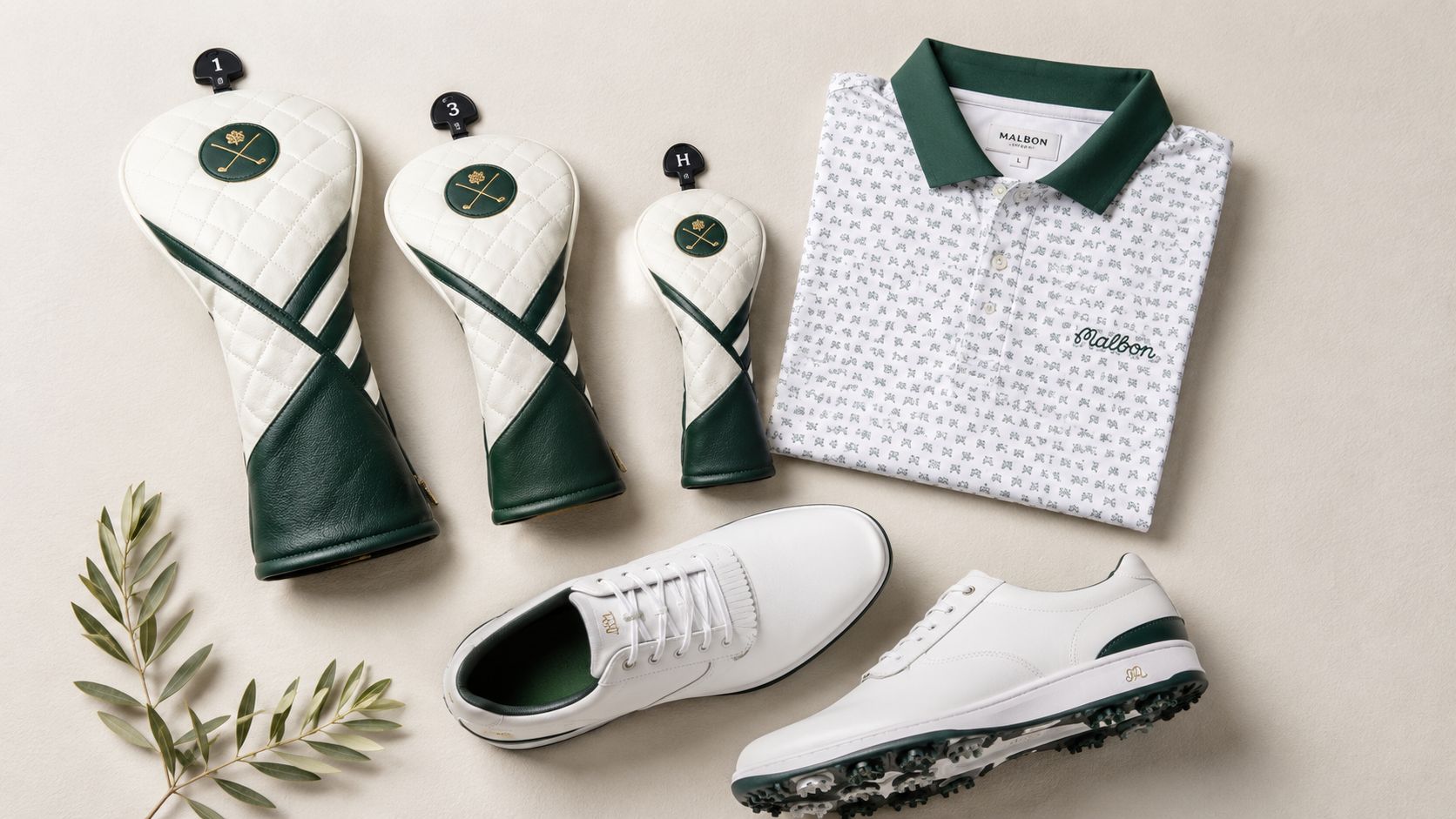
A good fairway wood headcover should do three jobs at once, protect the club, fit the head properly, and look like it belongs in your bag. If you want golf accessories and apparel that feel intentional, visit 2ndShotMVP and build a setup that works on the course and still looks sharp after the round.

