

You've just finished the front nine, the sun is bright, and the clubhouse patio is filling up. Your black and gold polo looked sharp at the first tee, but now you're wondering whether the gold detail feels polished or a little too loud for lunch. That hesitation is exactly why this colorway deserves a closer look.
Black and gold polos can move from sporty to elegant with surprisingly small changes. The secret isn't piling on more gold or choosing the most dramatic design. It's getting the fit, fabric, contrast, and surrounding pieces right.

This guide starts with why the pairing works, then moves into shoulder lines, sleeve length, fabric behavior, outfit formulas, dress codes, and care. You'll also learn how to handle the practical question many style guides skip: whether a black polo is comfortable when you're standing over a tee shot in direct sun.
The goal is simple. By the time you reach the final hole, you'll know whether your polo belongs with fitted trousers, golf shorts, a lightweight overshirt, or nothing more than clean shoes and confidence.
What Makes Black and Gold Polos So Striking
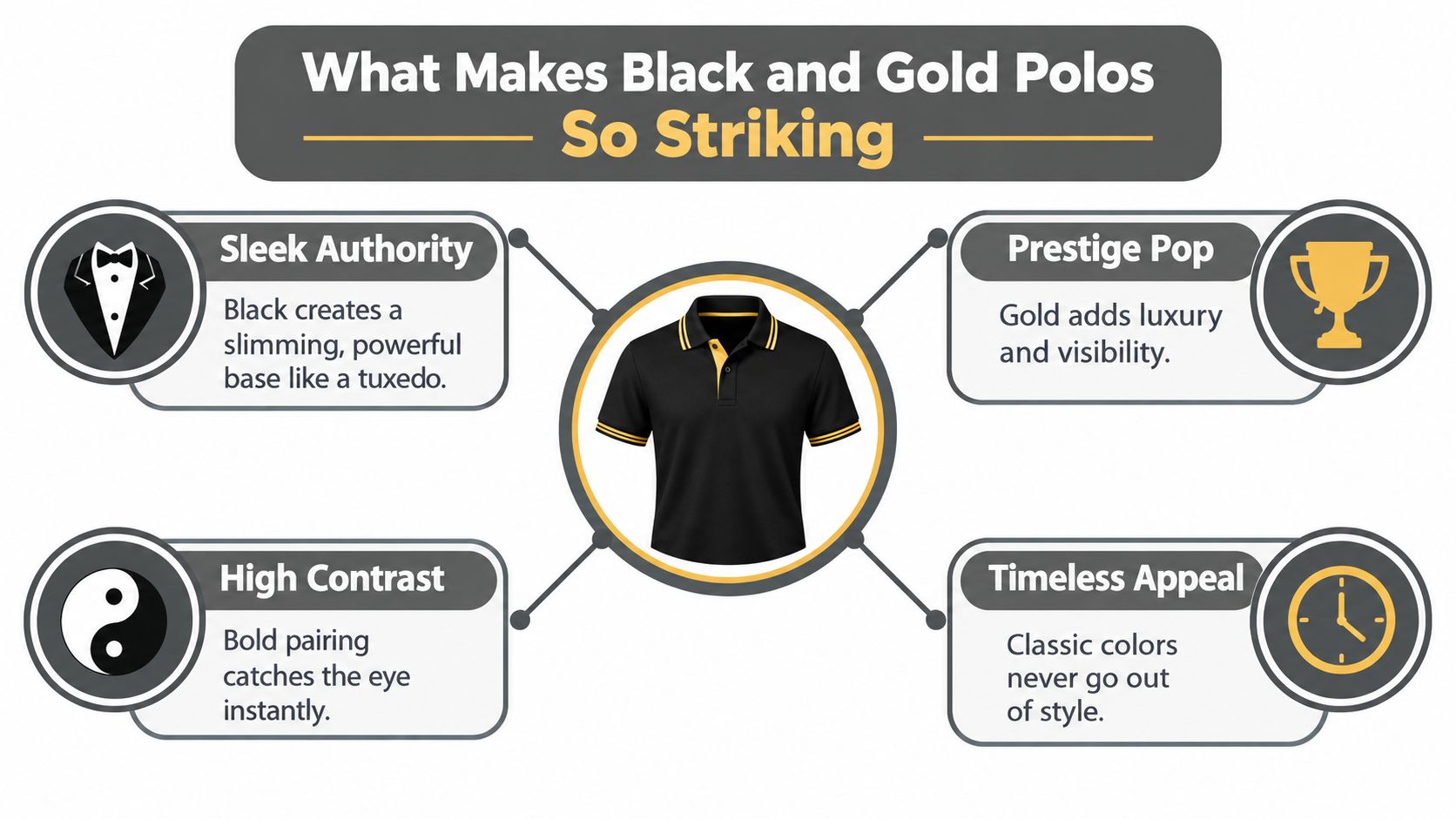
Black and gold works because the two colors play different roles. Black is the quiet foundation, creating a sleek visual field that feels controlled and athletic. Gold acts like a trophy detail, catching the eye at the collar, placket, chest logo, sleeve edge, or piping.
That combination gives the polo two personalities at once. It carries the relaxed DNA of sportswear, while the contrast suggests ceremony, status, and occasion. Think of it as a tuxedo meeting a clubhouse trophy cabinet, only with a collar built for movement.
The polo itself has a long sporting and fashion history. One apparel history account traces polo-shirt origins as far back as the 6th century BC in Persia and Central Asia, describes later influence on Indian athletes, and records John E. Brooks observing a polo match in England in 1896 before helping introduce the button-down polo concept in the United States. Ralph Lauren launched his Polo line in 1967, helping expand the shirt into multiple colors, including black. These milestones are documented in the history and styling guide to black polo shirts.
Contrast decides whether it looks refined
A black polo with a narrow gold edge reads differently from one covered in large metallic graphics. The first lets the color relationship breathe. The second makes the colorway the entire conversation.
Use this quick visual test:
- Subtle contrast: Gold on the collar, buttons, embroidered logo, or sleeve trim feels versatile.
- Moderate contrast: A gold chest panel or stripe feels energetic and works well in golf or team-inspired settings.
- Heavy contrast: Large gold blocks, multiple logos, and shiny finishes create a statement piece that needs quiet styling elsewhere.
Contrast rule: Let one color lead and let the other provide the punctuation.
Gold also benefits from restraint because it already has visual energy. Pairing the polo with a fresh, thoughtfully edited color lineup, such as the fresh color lineup, can help you compare how much contrast you enjoy before building an entire outfit around it.
The current appeal isn't about making black and gold louder. Coverage of projected 2026 polo trends points toward relaxed or oversized shapes, refined silhouettes, muted neutrals, tonal dressing, and soft shades, with bold color used more selectively. That context makes a clean black-and-gold polo feel current when the shape is modern and the trim is intentional, as discussed in this 2026 polo trend overview.
Finding Your Perfect Fit and Fabric
A striking colorway can't rescue a poor fit. Gold trim draws attention to the shirt, so it also highlights shoulders that droop, a chest that pulls, or a hem that balloons around the waist.
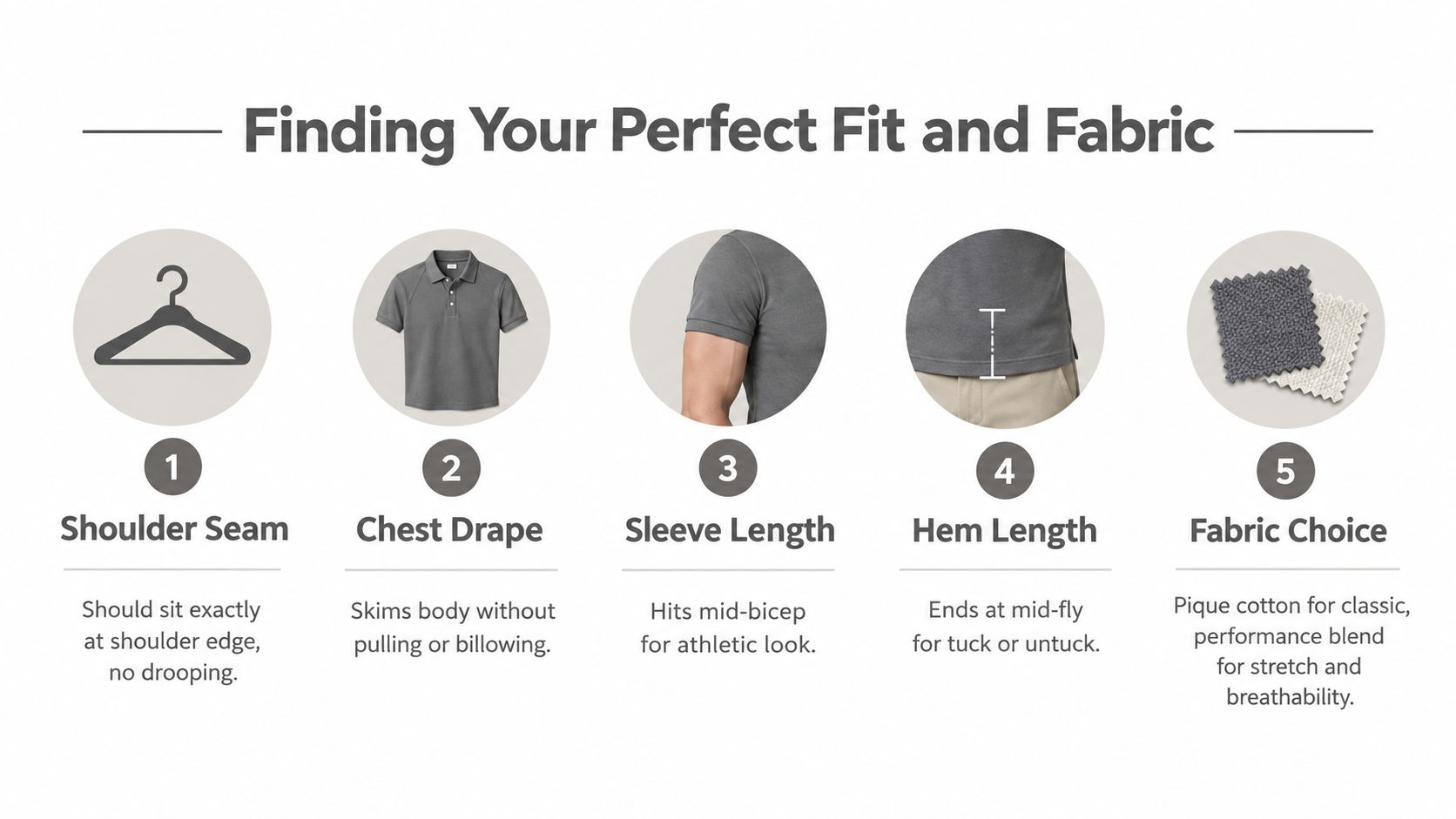
Start with the shoulder seam. It should land close to the natural edge of your shoulder, not slide down the upper arm. If the seam hangs low, the whole polo looks sleepy. If it sits inward, the shirt may feel restrictive before you even reach the back nine.
Use movement as your fitting room
A good polo should skim your torso without clinging or creating a tent-like gap. Raise both arms, rotate your shoulders, and make a slow golf-swing motion. If the buttons strain, the chest is too narrow. If the fabric lifts dramatically, the body may be too short or the cut too tight through the waist.
Sleeves usually look balanced when they finish around the mid-bicep area, though the right point depends on your proportions and the shirt's intended silhouette. A fitted cut gives an athletic build clean definition. A relaxed cut can look modern on a broader frame, provided the shoulders remain deliberate rather than collapsed.
The hem should give you options. A shorter, shaped hem can work untucked with shorts or casual trousers. A longer, even hem is more useful if you plan to tuck it into pleated trousers or golf pants. If you're between sizes, compare the shoulder and chest first. A tailor can adjust a hem more easily than a shoulder seam.
For a reliable reference, compare your measurements with this polo size chart before ordering. Sizing labels vary, so your favorite letter size isn't always your best fit in another cut.
Let the fabric match the round
Piqué cotton has a textured hand and traditional golf-shirt character. It often feels structured and breathable, making it a natural choice for a classic clubhouse look. Jersey fabric feels smoother and drapes closer to the body, which can suit a clean outfit under a jacket or overshirt.
Performance blends bring stretch, moisture management, and easier movement. Check the fabric by pinching it lightly, pulling your arms across your chest, and noticing whether it springs back without feeling stiff. A fabric that moves with your rotation will usually feel better during a swing than one that only looks sharp on a hanger.
Black does have a heat-management challenge. Research on clothing colors found that, under 200 W/m2 of solar radiation, dark clothing reduced total heat loss by 4.52% compared with light clothing and increased mean thermal sensation by 0.65. At 400 W/m2, total heat loss was 14.17% lower and thermal sensation was 0.25 higher for dark clothing, according to the clothing-color thermal study.
That doesn't make black unsuitable for golf. It means fabric matters. Moisture-wicking construction, ventilation, stretch, and a lighter internal feel can make a dark polo much more comfortable than a dense, heat-trapping shirt.
Look for engineered dark textiles when you expect long exposure to the sun. AATCC describes infrared-reflective technologies and special dyestuff or auxiliary systems that can create a dark appearance while reducing infrared absorption, as explained in its overview of temperature-responsive fabrics.
Outfit Pairings That Make Black and Gold Shine
The easiest way to style black and gold polos is to treat the gold as an accent, not an invitation to match every accessory. Start with a quiet bottom, choose one supporting texture, and let the shirt provide the visual spark.
For golf, try the polo with stone, taupe, cream, or muted olive shorts. These shades soften the black without competing with the gold. Add clean white, black, or neutral golf shoes, then keep the belt close to the color of the shoes.
A second route uses dark tonal dressing. Pair a black-and-gold polo with charcoal trousers or black golf pants, then introduce contrast through a white sole, a pale cap, or a light overshirt. This creates a long, composed line and lets the gold details appear deliberate rather than decorative.
For a post-round dinner, replace technical shorts with well-fitted dark trousers. Tuck the shirt if the hem and waistband cooperate, add a simple leather belt, and choose loafers or minimal leather sneakers. Skip a gold watch, gold bracelet, gold belt buckle, and gold shoes all at once. One or two references are enough.
A relaxed weekend version can use clean denim in a medium or dark wash. Keep the denim free of heavy distressing, since excessive fading can make the gold trim look disconnected from the rest of the outfit. A lightweight black, cream, or tobacco overshirt adds shape without introducing another strong color.
| Style Goal | Bottoms | Layer and Shoes | Best For |
|---|---|---|---|
| Clean course look | Stone or muted olive shorts | White golf shoes, neutral belt | Tee time and casual club settings |
| Tonal athletic look | Charcoal or black golf trousers | Minimal trainers or dark golf shoes | Practice sessions and travel |
| Executive clubhouse look | Tailored navy or charcoal trousers | Unstructured blazer, loafers | Business-casual golf events |
| Easy weekend look | Dark or medium-wash denim | Cream overshirt, clean sneakers | Errands and relaxed dinners |
The most useful pairing depends on the shirt's gold placement. A gold collar edge can handle a patterned short more easily than a large gold chest design. If the polo already includes stripes, logos, or color blocking, keep the bottom solid.
Shorts also change the proportion of the outfit. A neat, properly fitted pair creates a sharper line than oversized cargo shorts. For practical guidance on balancing polo proportions with shorts, use this guide to wearing polos with shorts.
Avoid bright red, electric blue, or neon green unless you're intentionally building a team-inspired look. Those colors can fight the gold and turn a premium contrast into visual traffic. Black and gold already has plenty of personality. Give it room.
Where to Wear Your Black and Gold Polo With Confidence
A black-and-gold polo works best when its details match the formality of the setting. On the course, performance features deserve priority. At dinner, fabric drape and restraint take over. The same shirt can handle both jobs if you know what to change around it.
On the course
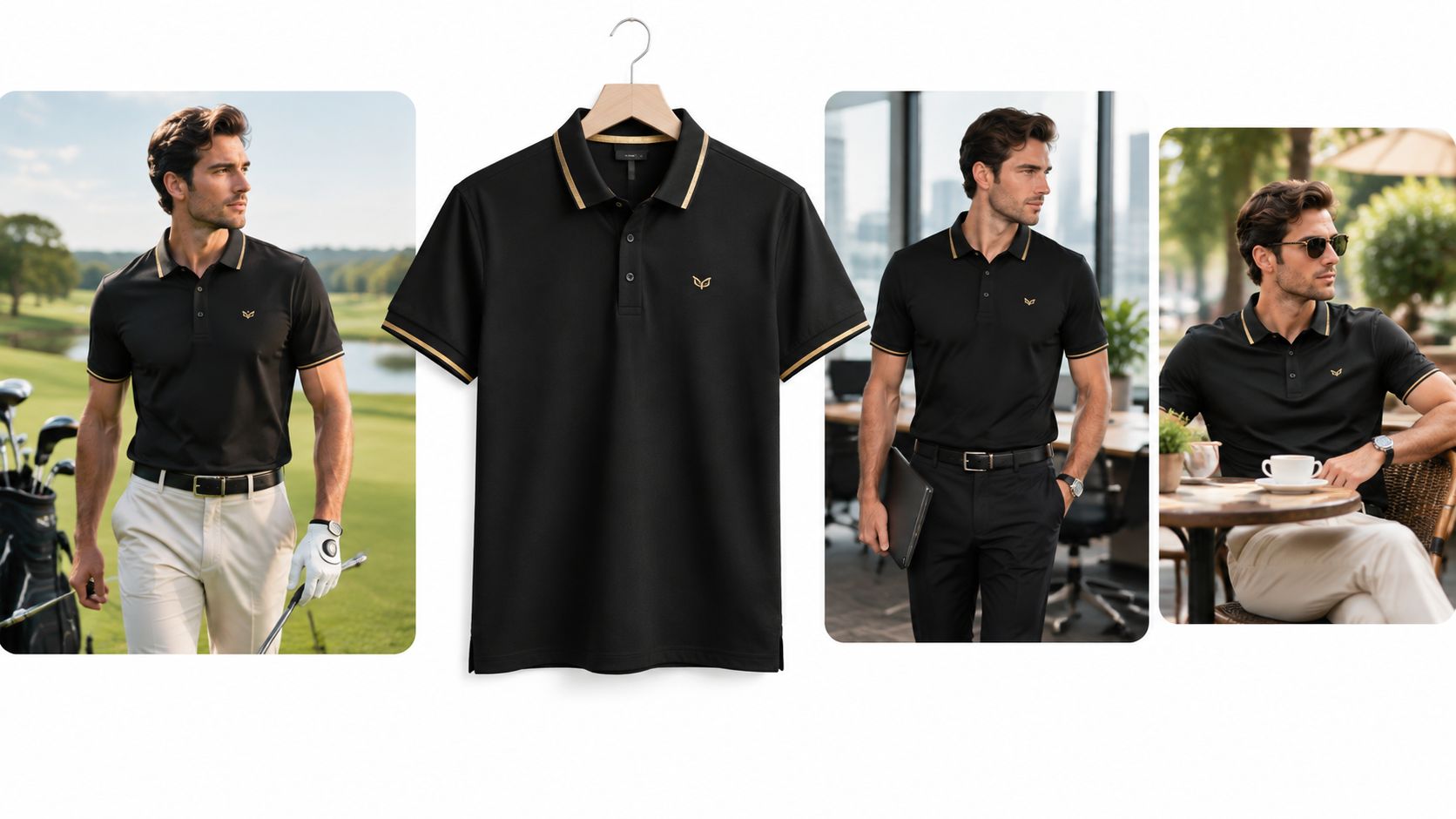
Choose a polo with moisture-wicking fabric, useful stretch, and a fit that doesn't restrict your shoulder turn. Breathability matters around the torso and under the arms, while UPF can be valuable for sun-exposed play. These features matter more than whether the gold is embroidered, printed, or woven.
A restrained design is usually safer at clubs with traditional dress expectations. A small gold logo or trim can look composed, while large graphics may feel more like fanwear. Check the club's rules before you arrive, especially if the shirt includes unusual panels or a very relaxed cut.
At the clubhouse
The quickest transition is a bottom swap. Trade performance shorts for fitted trousers, clean the shoes, and add a lightweight jacket if the room calls for one. Leave the polo untucked only when the hem is designed for it and the setting feels truly casual.
Gold accents can look executive when the rest of the outfit stays quiet. A dark belt, polished shoes, and a neat collar will do more for the look than adding extra metallic accessories.
At an executive or off-duty event
For a client golf day, select a polo with a stable collar and low-key branding. Pair it with neutral trousers and an unstructured blazer. For a casual evening, denim or tapered chinos can work, but keep the footwear clean and the shirt free of post-round wrinkles.
A practical dress-code reference is this guide to dressing for golf, especially when you're unsure whether a course-to-clubhouse outfit needs a more traditional silhouette.
The polo market remains broad rather than niche. One industry estimate places the category at USD 5.40 billion in 2024, USD 5.8 billion in 2025, and USD 6.27 billion in 2026, with a projection of about USD 7.55 billion by 2035 at a 2.7% CAGR, according to this polo shirt market estimate. Another estimate places the 2025 market at USD 25 billion and projects USD 36.3 billion by 2032 at a 5.6% CAGR, identifying North America as the largest region and men as the largest segment. The estimates differ substantially, but both point to a large, established category.
That matters because black and gold isn't a costume choice by default. It's a color direction inside a familiar garment, and the right fabric and silhouette determine whether it feels athletic, formal, or casual.
Care and Styling Tricks That Keep the Look Premium
Black shows lint, sunscreen, deodorant residue, and fading quickly. Gold details add another concern because harsh washing, rough drying, or aggressive ironing can dull the finish or weaken attached trims.
Turn the polo inside out before washing, use a cool cycle, and choose a mild detergent designed for dark clothing. Avoid overloading the machine, since friction can make black fabric look tired and can rub against printed or metallic details.
Protect the collar and accents
Skip high heat whenever possible. A hot dryer can encourage shrinkage, distort a collar, and stress stretch fibers. Air-dry the shirt on a broad hanger or lay it flat, then reshape the collar while the fabric is still slightly damp.
If the collar curls, don't attack it with a hot iron. Use a low setting, place a thin cloth between the iron and the shirt, and press briefly. For a collar that needs extra structure under a jacket, discreet collar stays can help, provided the shirt has compatible slots.
Sunscreen and deodorant marks often collect around the neckline and underarms. Treat those areas promptly according to the care label rather than scrubbing hard after the stain has set. Harsh rubbing can create a faded patch that stands out against deep black.
Care habit: Clean the shirt after demanding outdoor wear, but don't punish it with heat.
Store the polo with enough room for air circulation. Folded storage prevents shoulder bumps, while a wide hanger is safer than a narrow wire hanger if you prefer hanging. Keep dark garments away from direct sunlight, which can fade exposed areas over time.
If you choose a performance black textile, look for care instructions that preserve its moisture-management or infrared-reflective finish. Those treatments only help if washing and drying habits don't gradually strip or damage the fabric.
Your Next Black and Gold Polo Move
The winning formula is easier than the colorway first suggests. Fit first, fabric second, contrast third. Once the shoulder seam sits correctly and the fabric moves comfortably through a swing, styling becomes a simple matter of choosing quiet companions.
Audit the polo in your closet with three questions:
- Does the shoulder seam sit at the shoulder edge?
- Can you rotate, reach, and swing without pulling across the chest?
- Does the gold act as an accent, or does it demand an entire costume around it?
Then try one fresh combination. Stone shorts can make the shirt course-ready. Charcoal trousers can make it sleek. A cream overshirt can soften it for an evening away from the club.
Don't wait for a special event to test the look. Wear it during a practice round, walk into the clubhouse, and notice what needs adjusting. Maybe the hem wants a tuck. Maybe the shoes need simplifying. Maybe the shirt is exactly right once you stop treating black and gold as a difficult color and start treating it as a well-designed contrast.
At 2ndShotMVP, golf hats, beanies, and lifestyle apparel are made for wearing on and off the course, so a polished polo can become part of a wider 19th-hole wardrobe rather than a one-round novelty. Visit 2ndShotMVP to explore pieces that can help finish your next golf-to-clubhouse outfit.

