

Saturday morning, four players stand on the same green, and two of those golf balls look almost identical from ten feet away. One has a tiny scuff on the side, the other has a faint line, and suddenly everyone is crouched, turning balls over, trying to remember who played what. A golf ball stamper solves that mess before it starts, because a clear personal mark makes your ball easy to spot without slowing the group down.
The reason this works is simple. The USGA Rules of Golf allow players to place identifying marks on a ball, including logos or other personal marks, as long as the marking doesn't change performance characteristics, which is the rule-based foundation for legal personalization in golf. That's why a stamped ball is useful for casual rounds, league play, tournament warmups, parent-child rounds, and any setting where several white balls end up in the same place at the same time. For a quick primer on related gear, see the guide to golf ball markers.
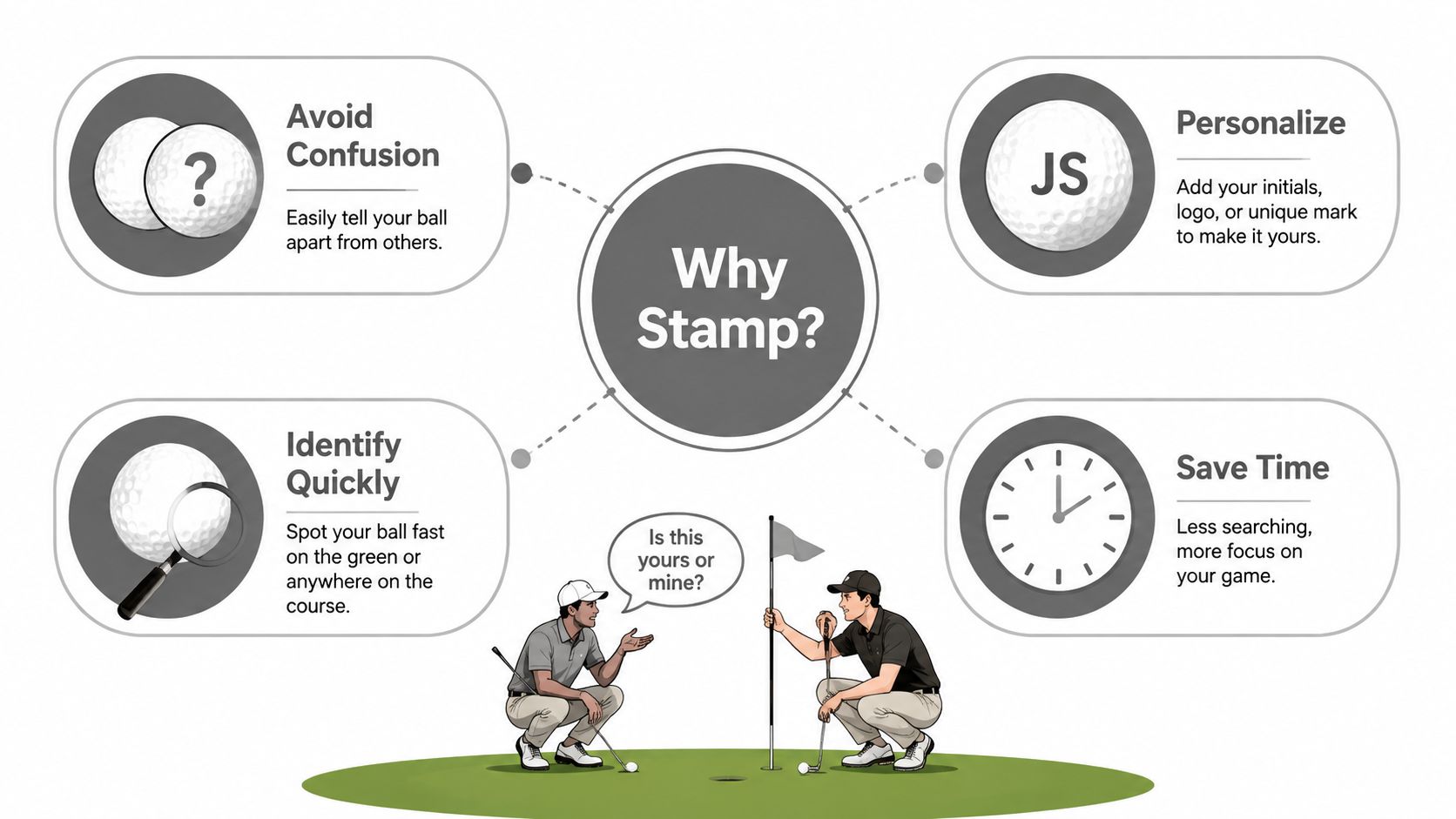
A stamped ball also keeps the usual clubhouse confusion to a minimum. It's easier to recognize your sleeve in a bag, easier to answer “which one was yours?” on the green, and easier to settle the little arguments that happen when two players favor the same brand and same number. The question, though, isn't whether the stamp looks good on day one. It's whether the mark still looks like yours after a wet lie, a cart-path bounce, and a few rounds in the bag.
Why Golfers Stamp Their Balls in the First Place
The simplest version of the story happens every weekend. Two players in the same foursome pull out plain white balls, both reach the green, and both swear the ball near the fringe is theirs. A minute here, another minute there, and by the time the hole is finished the group has spent more time sorting balls than reading putts.
A legal mark that solves a practical problem
That's the job of a stamp. The governing rules are broad enough to allow identifying marks, so golfers can use initials, symbols, logos, or other personal marks without crossing into equipment modification that affects performance. In plain English, the ball stays legal, but it becomes unmistakably yours.
Practical rule: if the mark helps you identify the ball faster, and it doesn't change how the ball performs, it's doing the right job.
The appeal goes beyond avoiding mix-ups. Recreational golfers like a stamp because it helps in a busy bag, where multiple sleeves look the same after a long round. League players like it because it cuts down on the “was this mine?” conversation. Parents like it because starter balls disappear into the same bucket fast, and a name or symbol makes the next one easy to return to the right kid.
More than a marker coin
A marker coin only helps once the ball is on the green and has to be lifted. A stamp works earlier, on every full shot and chip, because the mark rides with the ball itself. That matters when you've got a practice bag, a cart full of similar sleeves, or a corporate outing where every player gets the same stock ball and nobody wants to guess later.
One industry-facing guide says interest in personalized golf gear is strong, citing a National Golf Foundation survey that found over 60% of golfers are interested in personalized accessories, which helps explain why custom stamps and monograms have become such a common niche in golf gear. In other words, this isn't just decoration. It's a small fix for a very ordinary golf problem, and it's popular because it saves time without asking players to change habits.
The Four Main Stamping Technologies Explained
A buyer usually notices style first, but the technology under the hood decides how the stamp behaves in real use. Think of the category like buying office tools for the course. Some are hand-driven, some are self-contained, some use heat or foil, and some leave a raised mark rather than ink.
Manual die and self-inking units
A manual die works like a classic rubber stamp. You press it by hand, and the result depends on how steady your alignment and pressure are. It's simple, familiar, and usually the least fussy in terms of moving parts, but it can be messier if you over-ink or stamp too hard.
A self-inking unit feels more like a pocket date stamp from an office supply drawer. The ink source is built in, so it's faster from one ball to the next and tends to give more repeatable impressions when used correctly. For many golfers, that predictability matters more than novelty because a clean mark is easier to trust at a glance.
Heat-transfer, foil, and embossing
A heat-transfer or foil setup behaves more like a tiny finishing tool that bonds pigment to the cover. The payoff is a crisp, polished look, and that's why some buyers are drawn to it when visual sharpness matters. If you want a deeper technical overview of that broader print method, the definitive pad printing guide is a useful companion read because it explains why ink transfer can look so clean on curved surfaces.
Embossing is the most tactile option. It's closer to a notary seal than a regular stamp, because the mark is raised or pressed into the surface instead of sitting as a simple ink layer. That can feel premium, but it also changes the way the mark is perceived. You're not just seeing the mark, you're feeling it.
Useful shortcut: if a product looks fast and convenient, it's probably self-inking. If it looks like a craft or press tool, you're probably looking at a manual or embossed design.
One 2025 review of flexible-face designs claims that a compliant stamping face produced an imprint tested to be 80% clearer than rigid competitors, and it recommends a controlled rocking motion with light-to-medium pressure for better contact across the dimple pattern. That technical detail matters because it tells you why some stamps look neat on paper but fail on an actual golf ball.
Five Features Worth Evaluating Before You Buy
The easiest mistake is judging a stamp by the logo alone. A better filter is to ask how it behaves after a ball has been in wet grass, tossed into a cart pocket, and cleaned a few times. That's where durability and legibility start to separate the tools from the pretty ones.
Start with the face, then check the lifespan
A flexible stamping face matters because golf balls aren't flat. The dimples create tiny valleys, and a slightly compliant face can push ink deeper into those depressions, which usually improves edge definition and readability. A rigid face may still look sharp in photos, but the stamp has to survive the course, not the product page.
Durability is the headline criterion for the best golf ball stamper. One industry guide says a premium stainless-steel golf ball stamp can last 300–500 impressions on standard tour balls under normal use, and careful cleaning plus climate-controlled storage can extend that to 600+ impressions. That makes longevity a real buying metric, not just a bonus feature. Buyers should care about how long the mark stays usable, because that's the whole point of stamping in the first place.
Compare the five buyer checks
- Durability: Look for materials and build quality that support repeated impressions, not just one perfect demo.
- Stamping face design: A slightly flexible face usually gives better contact across the dimples than a rigid die.
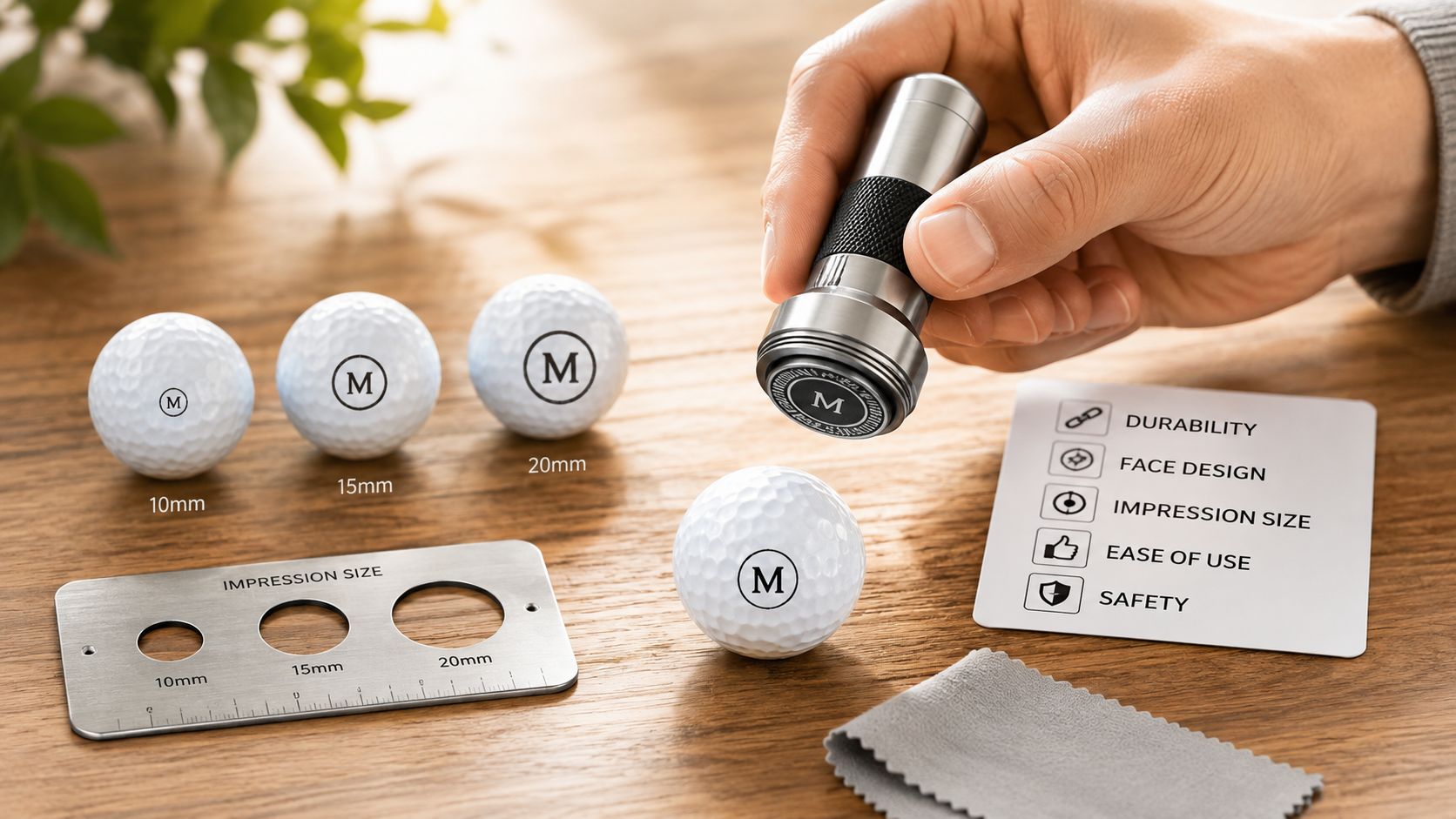
- Impression size: Keep the mark small enough to stay legible without covering too much of the ball.
- Ease of use: The fewer steps between aligning and lifting, the more likely you are to use it every round.
- Safety and ball-surface impact: The tool should mark cleanly without roughening or stressing the cover.
A controlled face and a modest impression size often work best together. Big marks can look dramatic online, but on the course they can get crowded by alignment lines, logos, and play wear. Small marks are less flashy, but they usually stay readable longer.
A good stamper should feel boring in the hand. If it needs a complicated setup every time, it won't get used when you're rushing to the first tee.
The trade-off is straightforward. If you prioritize durability, you may accept a heavier or slightly less pocket-friendly tool. If you prioritize speed, you may give up a little depth or detail in the impression. That's not a flaw in the category, it's just how small tools work.
How to Use a Stamper and Keep It Working
A clean stamp begins with a clean ball. Wipe off moisture, grass, or grit first, because tiny bits of dirt can interrupt the transfer and leave the edges looking fuzzy. Then hold the ball steady, line up the stamp, and apply light-to-medium pressure so the face makes full contact without crushing the pattern.
A simple stamping routine
The most reliable sequence is short and repeatable.
- Clean the ball so ink isn't fighting dirt.
- Hold steady so the mark doesn't slide halfway across a dimple.
- Align the stamper over the area you want to see later.
- Press with light-to-medium pressure instead of forcing it.
- Rock slightly and lift straight up to finish the transfer cleanly.
Common mistakes are easy to spot. Too much pressure smears the edges, while too little pressure leaves a half-mark that looks fine in the room and useless on the course. A sideways lift can also smear the imprint, especially if the face is loaded with fresh ink.
Maintenance that protects the tool
The care routine matters just as much. Wipe the die face after use, keep the tool dry, and store it in a pouch or case so dust and moisture don't break down the contact surface. If the unit uses ink pads, replace them before the impression gets faint rather than waiting until the mark disappears entirely.
A related buying guide says careful cleaning and climate-controlled storage can help a premium stainless-steel stamp reach the longer end of its lifespan, which is another way of saying your routine affects how long the tool stays useful. Avoid harsh solvents that can degrade the face, especially on softer materials.
Keep the routine the same every time. Golf gear lasts longer when the owner treats it like a tool instead of a novelty.
A stamp that's used correctly tends to look more consistent too. That matters because legibility isn't only about the product's build, it's also about whether you use the same pressure and the same angle from one ball to the next.
Personalization Ideas That Actually Work on the Course
The best marks are usually the ones another golfer can spot in half a second. A league player might use intertwined initials because they're compact and easy to read when the ball is sitting in rough or beside a cup. A weekend foursome might choose a tiny logo or symbol that doubles as a quick alignment cue on the putting surface.
The shape of the mark matters as much as the artwork. A design that's too large can fight the dimple pattern, while a smaller one sits cleaner on the cover and stays out of the way when the ball is rotating during play. That's why the most practical personalization often looks modest from a distance.
For a deeper look at gear styling, the Tour Ink lineup explained is a useful example of how golfers think about color, visibility, and ball identity across a round. The lesson transfers well here. A mark should help you recognize the ball fast, not turn it into a billboard.
A parent stamping a kid's name on starter balls solves a different problem. It keeps practice balls from vanishing into a pile of lookalikes after a lesson or range session. A company hosting a golf day may use the same crest across dozens of sleeves so the set feels coordinated without becoming hard to identify.
If you're considering custom art, one caution is worth keeping in mind. Keep the design simple enough that it doesn't get mistaken for a retail logo if the ball later gets resold or handed off. For a broader look at personalization options, the golf ball stamp personalized guide offers a helpful reference point for names, initials, and monograms.
Where to Buy and How Vendors Compare
Different sellers solve different problems. A mass-market retailer is fine when you want something quick and simple. A specialty golf shop is better when you want someone who understands how the tool behaves on course. A custom print shop makes more sense when you need a unique crest or branded run. A direct-from-maker shop can be the right fit when you care about the details and want tighter control over the final result.
A discount marketplace can be the wrong place for a highly specific logo job, because listings may blur together materials, print methods, and accessory bundles. A local engraver or maker is often the better route when the design has to be precise and the buyer wants to know what the imprint will look like in use. Vague return policies and unclear materials are the first red flags.
Golf Ball Stamper Vendor Types at a Glance
| Vendor Type | Typical Price Band | Customization Depth | Lead Time | Support Expectation |
|---|---|---|---|---|
| Mass-Market Online Retailers | Usually lower | Limited to moderate | Fast to moderate | Basic |
| Specialty Golf Shops | Moderate | Moderate | Moderate | Better product guidance |
| Custom Print-on-Demand Shops | Moderate to higher | High | Moderate to longer | Design-focused |
| Direct-from-Maker Shops | Moderate to higher | High | Varies | More hands-on |
The main difference isn't just price. It's how much back-and-forth you want before the stamp arrives and how much help you need if the mark doesn't come out the way you expected. A buyer who wants a simple monogram can shop quickly, while a buyer with a club crest, event logo, or gift order should probably choose a vendor that can talk through proofing and material choices.
For comparison shopping beyond stamps, the make your own balls tool shows how customization decisions often affect the final look long before anything reaches the course. The same logic applies here, because the vendor's process often matters as much as the final artwork.
One practical option in the market is 2ndShotMVP, which focuses on golf hats, beanies, and lifestyle apparel rather than a dedicated stamp product. That's still useful context for shoppers who are pairing a stamp gift with golf-themed gear and want the rest of the order to stay cohesive.
A Short Pre-Purchase Checklist
Before you click buy, check the stamp the same way you'd check any bag tool. First, ask whether the mark will still be readable after a few rounds, not just on the first clean print. Then look at the face design, because a slightly flexible face usually handles dimples better than a rigid one.
Use this quick filter:
- Durability first: Choose a build that can keep its shape through repeated use.
- Legibility second: Make sure the impression is clear enough to spot fast on the course.
- Size third: Keep the design compact so it doesn't crowd the ball.
- Ease fourth: Pick a tool you'll use before every round.
- Vendor fit last: Buy from the seller whose proofing, support, and turnaround match the design you need.
That order matters because a stamp is a bag tool, not a novelty. It should earn its spot the same way a glove or rangefinder does, by saving time and reducing mistakes every time you tee it up.
If you want the mark to last, keep the habits simple. Clean the ball, store the tool dry, and don't wait until the impression fades completely before maintaining the ink or face. A little care goes a long way when the whole point is staying legible after the game gets messy.
If you want golf gear that feels thoughtful and easy to wear away from the course, browse 2ndShotMVP for premium golf hats, beanies, and lifestyle apparel. It's a smart place to round out a golf gift bundle, especially when you're pairing personalized course accessories with something you can wear on the 19th hole.

