

So, what exactly is the "best" cold-weather golf gear? It's not one magic jacket. It’s a smart combination of insulating base layers, flexible mid-layers, a weatherproof outer shell, and must-have accessories like a thermal beanie and winter gloves.
Getting this layering system right means you can focus on your swing, not the shivering.
Why Bother With Special Cold-Weather Golf Gear?
We all know that feeling. The crisp, early morning air on the course is amazing... until it's not. That invigorating chill can turn a great round into a miserable slog if you're not dressed for the part.
Forget the old myth that golf is a fair-weather sport. That’s just an excuse. Thanks to some incredible advances in apparel, you can play comfortably through the fall and even deep into the winter.
But this isn't about just grabbing the bulkiest coat you own. Proper cold-weather gear is a complete system designed to work with you. The whole point is to trap heat, manage sweat, and block the wind, all without making you feel like the Michelin Man trying to swing a club.
When you're comfortable, you're focused. When you're not fighting stiff, heavy clothes, your swing stays fluid and powerful from the first tee to the eighteenth green. This is where strategic layering becomes your secret weapon—a personal climate control system you wear.
The right gear doesn't just make cold-weather golf bearable; it makes it a competitive advantage. While everyone else is hibernating and waiting for spring, you're out there sharpening your game.
To truly conquer the cold, you need a head-to-toe game plan. We’re going to break down everything you need to build the perfect winter golf wardrobe, starting with the core principles of layering and then digging into every essential piece.
| Body Area | Essential Item | Key Function |
|---|---|---|
| Head | Performance Beanie | Stops heat from escaping and keeps your ears from freezing. |
| Torso | Layering System | Wicks sweat, insulates your core, and blocks the wind. |
| Hands | Winter Gloves/Mitts | Keeps your fingers from going numb so you can feel the club. |
| Feet | Waterproof Shoes | Ensures your feet stay dry, warm, and solidly planted. |
Master Cold Weather Golf Layering
Think of dressing for a chilly day on the course like building a fortress. You don't just throw up one giant, thick wall and hope for the best. Instead, you build a smart, multi-layered defense system where each part has a specific job. The goal is to trap heat, block the elements, and keep you comfortable.
This isn't about looking like the Michelin Man and barely being able to swing. It's about a strategic approach—three distinct layers that work together to create your own personal climate control. When you get it right, you'll feel warm, stay dry, and, most importantly, swing freely.
The Foundation: Your Base Layer
The base layer is what's right up against your skin, and its one critical job is moisture management. If this layer fails, the whole system collapses. As you walk the course, climb a few hills, and make a full-blooded swing, your body is going to sweat, even when it’s freezing. A regular cotton t-shirt will soak up that moisture and hold it against you, making you damp, clammy, and ultimately, much colder.
This is where modern performance fabrics are a total game-changer. A good base layer acts like a wick, pulling sweat away from your skin and pushing it outward so it can evaporate. You stay dry, which means you stay warm. It's no surprise that the North America golf apparel market, valued at a whopping USD 2.76 billion in 2024, is seeing huge growth here. Base layers are projected to expand at a 4.0% CAGR because golfers are realizing just how essential they are for winter play.
- Top Materials: Stick with merino wool or high-tech synthetics like polyester. Merino is a natural wonder—it’s fantastic at regulating temperature and doesn't get stinky, while synthetics are workhorses that wick moisture like nothing else.
Pro Tip: The number one rule of layering? Never, ever wear cotton as your base layer. Cotton loves water. Once it gets wet, it stays wet, sucking the heat right out of your body. It's the fastest way to ruin a winter round.
This graphic gives you a great visual breakdown of how to build out your complete cold-weather system from head to toe.
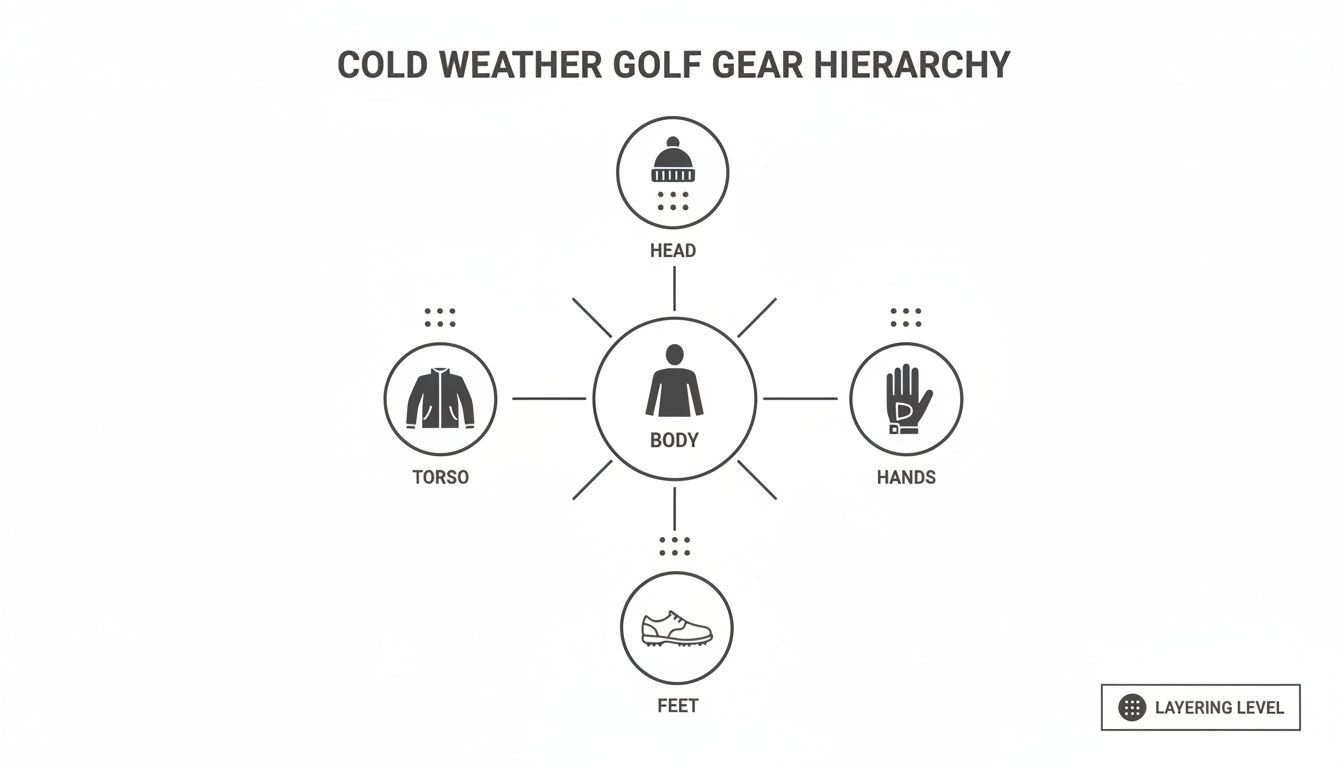
As you can see, a smart winter strategy means having specialized gear for your head, torso, hands, and feet all working in concert.
Layering is the secret sauce to staying comfortable on the course, no matter what the weather throws at you. Here's a quick cheat sheet for your three-layer system.
Your Three-Layer System for On-Course Warmth
| Layer | Primary Function | Best Materials | Must-Have Features |
|---|---|---|---|
| Base Layer | Moisture Wicking: Pulls sweat away from your skin to keep you dry. | Merino Wool, Polyester, Polypropylene Blends | Snug "second skin" fit, seamless construction, quick-drying. |
| Mid-Layer | Insulation: Traps your body heat to create a pocket of warm air. | Fleece, Down Fill, Synthetic Vests/Pullovers | High warmth-to-weight ratio, breathable, zip-necks for ventilation. |
| Outer Shell | Protection: Blocks wind and rain from getting in. | Gore-Tex, Nylon, Treated Polyester | Windproof, waterproof/resistant, breathable, quiet fabric for no-distraction swings. |
Think of these three pieces as your core defense, which you can adjust and adapt based on the day's conditions.
The Engine Room: Your Mid-Layer
Next up is your mid-layer, the engine room of your setup. If the base layer keeps the foundation dry, the mid-layer is the insulation that actually keeps you warm. Its whole purpose is to trap the heat your body is naturally producing, creating a cozy pocket of warm air that shields you from the cold.
The trick is finding a piece that delivers serious warmth without turning you into a marshmallow. You're looking for something with a great warmth-to-weight ratio, so you're not fighting against a bulky sweater on your backswing.
- Fleece: The old standby for a reason. It's soft, it breathes well, and it dries in a flash. A fantastic choice for most cool, crisp days.
- Down or Synthetic Fill Vests: These are a golfer's secret weapon. They keep your core toasty warm—which is where you need it most—while leaving your arms totally free to swing.
The mid-layer is your thermostat. It’s the piece you’ll most often zip up, take off, or swap out as the sun comes and goes during your round.
The Protector: Your Outer Shell
Finally, you’ve got the outer shell. This is your armor, your shield against the elements. Its mission is to stop wind and rain from ever reaching you. A great outer layer will be both windproof and waterproof (or at the very least, highly water-resistant), but it also needs to be breathable. You need all that moisture your base layer wicked away to have an escape route.
For golf, there’s one non-negotiable feature: quiet fabric. Cheaper rain jackets can sound like you’re wrestling a bag of chips every time you swing. Good golf jackets are made from soft, technical fabrics that move silently with you. If you want to dive deeper into what makes a great protective piece, check out our guide on golf windbreakers for men.
These principles aren't just for golf, either. They're tried and true for almost any cold-weather activity. For a broader look at the science behind it, there's some great info on understanding layering for outdoor activities.
Layering for Specific Temperature Ranges
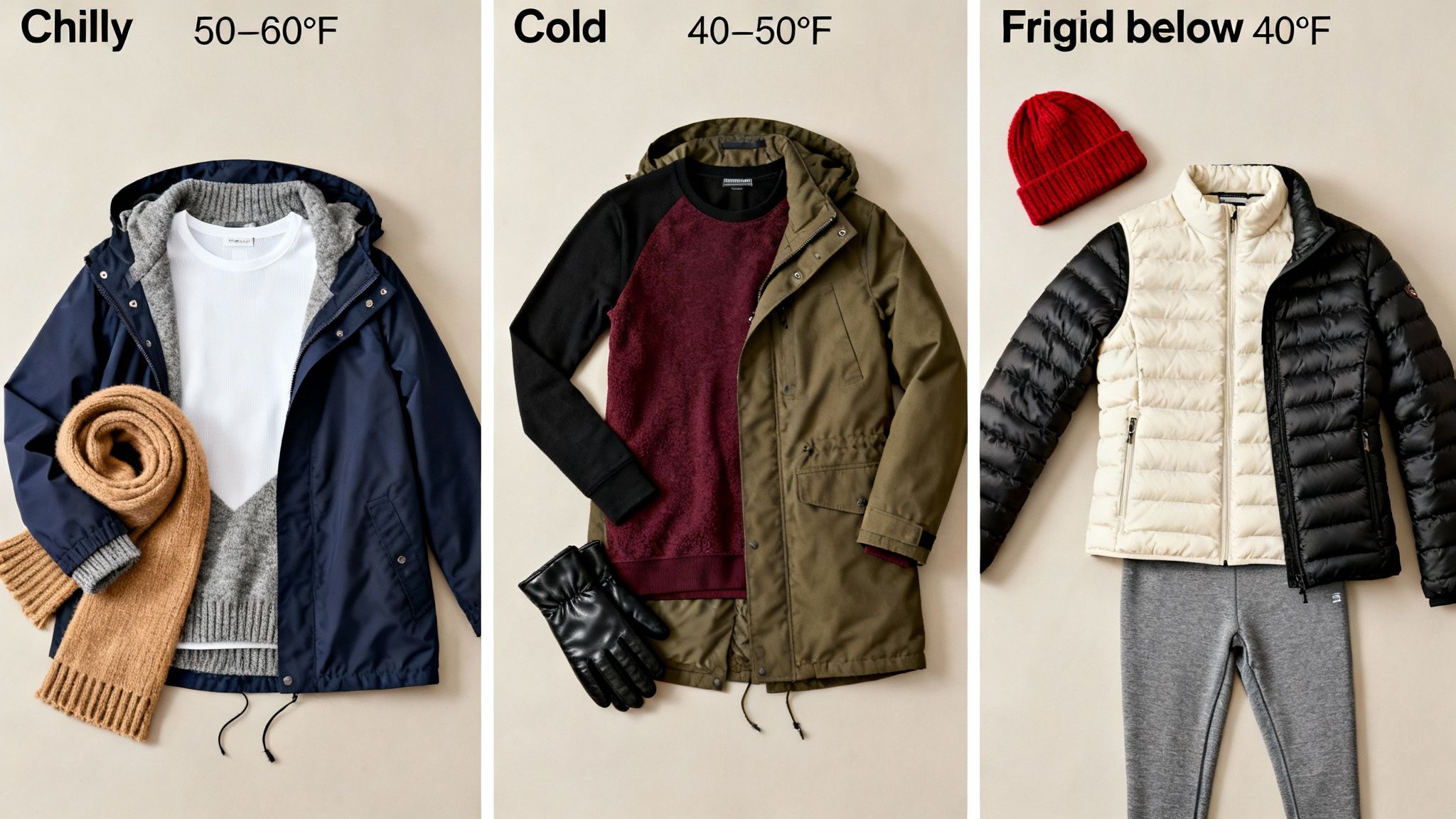
Alright, so you understand the theory of the three-layer system. Fantastic. But what do you actually grab when the forecast says 45°F with a stiff breeze? That’s where the rubber meets the fairway.
Let's move from theory to action. This isn't about crossing your fingers and hoping for the best; it's about having a proven game plan for whatever that first tee throws at you.
We'll break this down into three common scenarios you’ll definitely face. Think of these as your go-to playbooks for staying toasty and swinging freely, no matter what the thermometer reads.
Chilly Days: 50 to 60 Degrees Fahrenheit
This is what I like to call "prime fall golf." The air is crisp, the sun is (hopefully) out, but it's not quite bone-chilling yet. The biggest mistake you can make here is actually overdressing. One brisk walk up the first fairway and you’ll be sweating.
Your mission is simple: cut the chill without getting bogged down.
- Base Layer: A sharp-looking moisture-wicking polo—long-sleeve or short-sleeve—is usually perfect.
- Mid-Layer: This is where the quarter-zip pullover or a performance vest absolutely earns its keep. They give you that crucial core warmth without messing with your arm swing.
- Accessories: A stylish beanie is your best friend. It keeps your ears from getting nipped by the wind and it’s the easiest thing to pull off and stuff in your bag if the sun decides to show up. A great-looking hat from 2ndShotMVP can keep you warm while adding some serious style to your fit.
This combo gives you the perfect mix of warmth and breathability, letting you adapt as the morning frost melts into a gorgeous afternoon.
Remember, the best cold weather golf gear is adaptable. A vest or quarter-zip is easy to shed and stash in your bag if conditions change, ensuring you’re always at the perfect temperature.
Cold Rounds: 40 to 50 Degrees Fahrenheit
Okay, now it’s getting real. When the temperature dips into the 40s, insulation becomes the name of the game. You've got to trap that body heat, especially if the wind decides to get nasty. This is where your three-layer system truly goes to work.
Build your outfit from a solid foundation.
- Base Layer: Time to upgrade to a dedicated long-sleeve thermal. Look for one that fits snugly—merino wool or a high-performance synthetic is what you want.
- Mid-Layer: A fleece pullover or an insulated vest is no longer optional. This is your primary heat-trapper.
- Outer Shell: A windproof and water-resistant jacket is a must. It’s your shield against the wind-chill factor, which can easily make 45°F feel like 35°F.
And don't you dare forget your hands and head. A fleece-lined beanie and a good pair of thermal golf gloves just became essential parts of your uniform.
Frigid Weather: Below 40 Degrees Fahrenheit
Welcome to the big leagues of winter golf. Playing in truly frigid conditions demands your full arsenal. Honestly, this is as much about survival as it is about your score. The challenge is to pile on the insulation without turning into the Michelin Man.
Every single piece has to pull its weight.
- Base Layer: Your first line of defense is a heavyweight thermal base layer. No compromises here.
- Mid-Layer: I like to double-down here. Think about layering an insulated vest over a fleece pullover for maximum core warmth. It works wonders.
- Outer Shell: You need a fully waterproof and windproof jacket. If you can find one with its own thermal lining, even better. This is your armor.
- Extremities: This is non-negotiable. Get yourself some insulated cart mitts (with room for hand warmers!), a thick thermal beanie, a neck gaiter to seal out drafts, and warm wool socks inside waterproof shoes.
When it's this cold, keeping your head and hands covered isn't just about comfort—it's absolutely critical for retaining body heat so you can actually focus on your next shot.
Choose the Best Cold Weather Golf Headwear
Alright, let's get one thing straight. You don't actually lose most of your body heat through your head—that's an old wives' tale. But leaving your head exposed to a biting wind is a guaranteed way to feel miserable, fast. Your head is the command center for your entire round. If it’s cold, your focus is shot.
That’s why the right headwear isn't just a fashion statement; it's a non-negotiable piece of performance gear. It's the difference between a clear-headed approach shot and a shivering, distracted mess of a swing. The hat you choose needs to do more than just look good. It has to insulate, breathe, and most importantly, stay put.
Finding the Perfect Fit and Fabric
The best headwear for a chilly day on the links is all about balancing warmth with function. Sure, that giant ski pom-pom beanie is toasty, but it'll probably muffle every sound and get tangled in your backswing. You need something built for the game.
Look for modern materials that pack a technical punch without all the bulk:
- Merino Wool: This stuff is nature's miracle fiber. It’s incredibly warm for its weight, breathes like a dream so you don't overheat, and even fights off odor.
- Performance Fleece: A good fleece-lined beanie or cap gives you fantastic insulation while actively pulling moisture away from your skin. You'll stay dry even if you're hoofing it up a steep fairway.
- Technical Blends: Many of the best golf hats use smart synthetic blends. They give you stretch, wind resistance, and a snug fit that won’t slide around when you uncork a big drive.
The real job of your headwear is to trap a thin layer of warm air right next to your skin. It’s not about sheer thickness; it’s about smart, efficient insulation that still lets you hear your buddies and feel your swing.
Style Meets On-Course Function
The global golf apparel market is massive—it hit an incredible USD 9.07 billion in 2024. And that’s not just from selling polos in sunny climates. In colder golf hubs like Northern China, where a staggering 22.5 million people were involved with the sport in 2023, a high-quality beanie is what makes playing through the fall and winter possible. You can get more details on these global golf apparel trends.
This is where thoughtful design really makes a difference. A great beanie gives you full ear coverage without constantly slipping down over your eyes. Brands like 2ndShotMVP have this dialed in, creating hats that deliver tour-level performance with a style you'd actually want to wear to the 19th hole. They're proof you don't have to sacrifice looking good to stay warm. To see what separates the good from the great, check out this guide on the best winter golf hats.
In the end, the right hat should feel like a seamless part of your gear. It should keep you so comfortable you forget you're even wearing it, letting you lock in and focus on what really matters: the next shot.
Choose Essential Cold Weather Golf Accessories
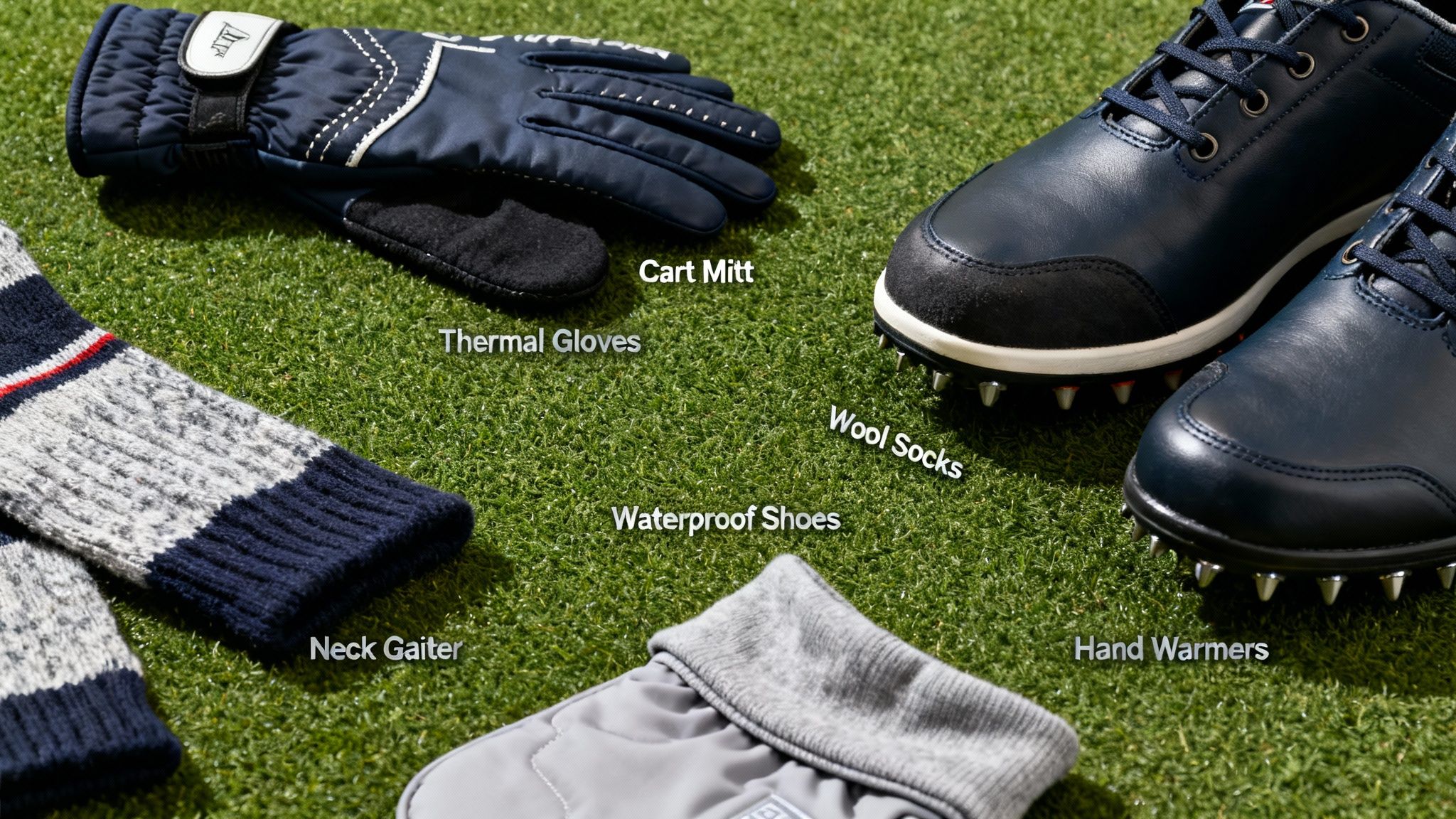
Alright, you've got your layers dialed in and a warm beanie on your head. Feeling pretty good, right? Well, hold on. A great round can completely fall apart if you forget about the little things.
We're talking about your hands, feet, and neck—the front lines in your personal war against the cold. Leaving them exposed is a classic rookie mistake, and it's the difference between a crisp, enjoyable day on the links and four hours of pure misery. These accessories are your secret weapons.
Defend Your Hands and Feet
Think about it: your hands are your only connection to the club, and your feet are your foundation. If either one goes numb, your game is toast. This is where a two-part strategy for your hands works wonders.
- Cart Mitts: These are your personal hand garages between shots. They’re basically oversized, super-insulated oven mitts you can slide on and off right over your playing glove. Most even have a little pocket inside for a hand warmer, creating a portable furnace for your fingers.
- Thermal Gloves: When it’s time to hit, you need a pair of thin, thermal golf gloves. They're designed with grippy palms for control and just enough insulation to keep the feeling in your fingers without sacrificing the feel of the club.
And don't even think about neglecting your feet. Your standard, breathable summer golf shoes are an invitation for disaster when the ground is cold and damp. Waterproof shoes are non-negotiable.
Pair those with a good set of merino wool socks. They're a bit of an investment, but worth every penny because they insulate even when they get a little damp and they pull moisture away from your skin. While layering up top is key, there are specific strategies for keeping your toes warm in winter that can really save your round.
The Unsung Heroes of Warmth
Now for the supporting cast—the gear that provides a massive comfort boost for a tiny amount of effort. A neck gaiter (or a buff) is a total game-changer. It seals that gap between your jacket collar and your chin where icy wind loves to sneak in. It's amazing how much warmer you feel just by covering your neck.
And of course, disposable hand warmers. They're cheap, they work, and they're a lifesaver. Crack a few open before you tee off, stick one in each pocket and one in each cart mitt, and you’ll have a reliable source of heat for the entire round.
As golf's global equipment market gets ready to hit an estimated USD 11.2 billion by 2025, it’s obvious that specialized gear isn't just a niche anymore. In places like Canada, which sees a 5.0% CAGR in golf apparel, smart accessories are what allow die-hards to play more of the year.
Looking for more ideas on what to throw in your bag? Take a look at our complete guide to the best golf accessories that will serve you well in any season.
Don't Let These Rookie Mistakes Wreck Your Winter Round
Look, owning the best cold-weather golf gear is only half the battle. Knowing how to use it is what separates a comfortable, focused round from a miserable, shivery slog. Even the most expensive GORE-TEX jacket or space-age base layer is useless if you fall for a few classic blunders that kill your warmth and hijack your swing.
The number one culprit? The biggest, baddest villain of winter golf? Wearing cotton. We've all been there—you grab your favorite soft cotton t-shirt and throw it on under a sweater. Big mistake. Cotton is basically a sponge. The moment you break a sweat walking up the first fairway, it soaks up that moisture and clings to your skin, actively sucking the heat right out of your body. You're left damp, cold, and just plain unhappy.
Getting Your Fit and Footwear All Wrong
Another classic goof is messing up the fit. So many golfers buy their jackets and outer layers way too big, thinking they need extra room to swing. In reality, a baggy jacket is just an open invitation for cold air to sneak in and all your precious body heat to escape. You want your layers to be snug—not tight like a superhero costume, but close enough to trap that warm air without getting in the way of a full, powerful turn.
And don't even get me started on the footwear fumbles. Trotting out onto a frosty course in your breezy, mesh summer golf shoes is asking for trouble. They offer zero defense against damp, frigid turf. Your feet will be soaked in minutes, you'll lose a ton of heat, and good luck staying stable on slick, dewy ground.
The whole point isn't just to pile on clothes until you look like the Michelin Man. It's about building a smart, high-performance system. Every single piece, from your wool socks to that beanie on your head, has to work together to keep you warm, dry, and swinging freely. One bad apple spoils the bunch.
To dodge these all-too-common traps, you need to think function-first. Here are a few quick fixes to make sure your gear is actually doing its job:
- Ban the Cotton: Seriously, just do it. Purge it from your golf wardrobe. Swap it for a moisture-wicking synthetic or merino wool base layer. This is, without a doubt, the most important change you can make.
- Nail the Fit: Look for gear that’s more athletic-cut and follows the lines of your body. Four-way stretch fabric is your best friend here—it moves with you, so you never feel like your clothes are fighting your swing.
- Get the Right Shoes for the Season: pony up for a good pair of waterproof golf shoes. When you pair them with some quality wool socks, they become your fortress against cold, wet feet. Plus, they’ll give you the grip you desperately need when the ground gets greasy.
By sidestepping these simple but critical mistakes, you let every piece of your cold-weather kit perform at its peak. That means you can stop worrying about the thermometer and start focusing on what really matters: striping it down the middle.
Got Questions? We've Got Answers
Even the best-dressed winter golfer runs into a few head-scratchers when the frost sets in. We get it. Let's tackle some of the most common cold-weather conundrums so you can stride to the first tee feeling like a seasoned pro, not a human popsicle.
How Can I Keep My Hands Warm and Still Feel the Club?
Ah, the age-old winter golf dilemma. You can't feel the club with frozen fingers, but you can't swing in boxing gloves. The secret is a one-two punch: the two-glove system.
Between shots, your hands live inside a pair of toasty, insulated cart mitts. Think of them as personal sleeping bags for your hands. For an extra blast of warmth, toss a disposable hand warmer in each one.
When it’s time to hit, slip the mitts off. On your lead hand, you’ll be wearing a single, thin thermal golf glove made for winter play. This tag-team approach gives you maximum heat right up until the moment of truth, then the grip and feel you need to execute the shot.
The name of the game is keeping your hands warm right up until you take your stance. This way, you get the feel of the club without your fingers going numb two seconds after they hit the cold air.
Won't All These Layers Mess Up My Swing?
Not if you layer smart! The days of swinging in a puffy jacket that makes you look (and feel) like the Michelin Man are over. Modern golf apparel is built for movement. It’s all about choosing the right fabrics and the right fit.
Steer clear of bulky cotton or stiff, non-golf jackets. Seriously, just don't do it. Instead, look for gear with these features:
- Four-Way Stretch: Make sure your base and mid-layers are made from fabrics that move with you, not against you.
- Quiet Shells: A quality golf jacket is designed to be whisper-quiet, so you don't hear a distracting "swish-swish" sound in your backswing.
- Athletic Cut: Your layers should fit snugly—but never feel tight. A good fit is what traps your body heat efficiently without constricting your shoulders and torso.
Get the right pieces, and you'll honestly forget you're wearing more than a polo.
Are Waterproof Golf Shoes Really That Important?
In a word: Absolutely. This is the one piece of gear you cannot compromise on in the cold. That early morning frost, the random patches of melted snow, or just damp turf will seep through your summer mesh shoes in about five minutes. The result? Cold, wet, miserable feet.
And let's be real, cold feet are more than just uncomfortable—they kill your stability and wreck your focus. Waterproof golf shoes, especially when you pair them with a good pair of warm wool socks, create a fortress for your feet. They keep the moisture out, lock the warmth in, and give you the solid footing you need on slick, sketchy ground. Think of them as your 4x4s for the golf course.
How Should I Take Care of All This Gear?
Good question! This stuff is an investment, and you want it to last. The first rule is to always, always check the care label on the garment. But for most technical apparel, here are a few golden rules.
Wash your performance fabrics in cold water. And please, for the love of golf, never use fabric softener. It clogs up the high-tech fibers and kills their ability to wick moisture. For jackets with a DWR (Durable Water Repellent) coating, use a special tech wash and tumble dry on low to "wake up" the water-repellent finish.
When the season's over, make sure every single piece is totally clean and dry before you store it away. A cool, ventilated closet is perfect. This prevents any funky mildew from setting in and ensures your gear is ready to rock for your next chilly round.
At 2ndShotMVP, we believe you should never have to sacrifice style for performance. Top off your winter look with premium headwear built for every season on and off the course. Shop our full collection of golf hats and beanies today

