

Let's be honest. We've all been there. You grab that old jacket from the back of your closet, thinking it'll do the job on a breezy day. But on the course, that "good enough" jacket quickly becomes a liability that can absolutely wreck your scorecard.
A proper golf windbreaker for men isn't just another layer; it's a piece of high-performance gear, engineered to help you battle the elements without sacrificing your swing.
Why Your Old Jacket Is Costing You Strokes

Picture it: you're on the 17th green, staring down a tricky putt to save par. You take your stance, but just as you draw the putter back, a gust of wind catches the baggy sleeve of your jacket. It flaps, it rustles, and poof—your focus is gone. The putt veers wide.
Sound painfully familiar? That’s the classic story of how the wrong gear can work against you. It's a silent saboteur, adding strokes to your game in ways you might not even realize.
The Hidden Handicaps of Non-Golf Apparel
Your everyday jacket is fine for a walk in the park, but it’s a disaster on the links. Most are made from stiff, noisy fabrics that create a distracting soundtrack every time you move. That crinkling sound during your backswing is a real concentration killer.
Even worse is the fit. Bulky construction can physically get in the way of your turn, shortening your swing and robbing you of both power and accuracy. It’s like giving yourself a handicap before you even tee off.
A modern golf windbreaker, however, is a different beast entirely. It's a piece of sport-specific engineering built to solve these exact problems.
- Move Freely: It's all about advanced stretch fabrics that move with you, not against you, for a smooth, natural swing.
- Play Silently: The materials are designed to be whisper-quiet, so the only thing you hear is the satisfying click of the ball.
- Stay Warm, Not Puffy: You get incredible wind resistance without feeling like the Michelin Man, keeping your core warm and stable.
Think of it this way: you wouldn't play a round with a set of hickory-shafted clubs from the 1920s, right? So why wear a jacket that's just as out of place in the modern game? Upgrading your outerwear is just as important as upgrading your driver.
This guide will walk you through why choosing the right golf windbreakers for men is such a game-changer. It’s about more than just comfort; it's about arming yourself to play your best golf, no matter what the forecast says.
For an even deeper look at playing in less-than-ideal conditions, check out our guide to preparing for golf in the cold.
What Really Makes a Great Golf Windbreaker?
Let's be honest, you could just grab any old rain jacket out of your closet. But once you take your first swing, you'll feel it—the pull across the shoulders, the restrictive back, the swampy heat building up inside. It's like trying to play in a straightjacket. A real golf windbreaker is a completely different beast, engineered for one specific job: keeping you comfortable on the course without messing up your game.
Think of it as a three-legged stool. First, it has to block the wind to keep you from getting chilled. Second, it needs to be breathable, so you're not a sweaty mess by the third hole. And third, it has to shed a light drizzle, because you know how quickly a sunny day can turn. Knock out any one of those legs, and the whole thing topples over.
The DNA of a Proper Golf Jacket
The gear we wear on the course is a serious business. The global golf equipment market, which includes this kind of high-tech apparel, was valued at a whopping USD 8.81 billion back in 2025 and is expected to soar past USD 13.68 billion by 2035. That growth isn't just about new clubs; it's about players demanding better, more functional clothing. If you're curious about the numbers, Research Nester's market report breaks it all down.
So, what’s the secret sauce that makes these jackets work so well? It comes down to a few key ingredients:
- Wind Resistance (Not Windproof): This is a huge distinction. A truly "windproof" jacket is like a plastic bag—it stops wind, but it also traps every bit of moisture. A golf jacket is "wind-resistant," which is more like a high-tech screen. It breaks the wind's momentum but still lets your body's heat and moisture escape.
- Breathability: This is the jacket’s exhaust pipe. As you walk the fairway and swing the club, you generate heat. Breathability is what lets all that steamy air out, keeping you dry and comfortable from the inside. Without it, you’d feel clammy and cold in no time.
- Water Resistance: We're not talking about a monsoon-proof shell here. This is about handling that annoying, unexpected shower that pops up and then disappears. It's just enough protection to keep you dry without the bulk of a full rain suit.
Translating the Tech Jargon
Flipping over a price tag can feel like reading a science textbook. Let's cut through the noise and explain the two terms that matter most.
A great golf windbreaker is like a personal weather caddie. It knows when to step in and protect you, and when to stay completely out of the way of your swing.
First up is the Durable Water Repellent (DWR) coating. Picture a freshly waxed car. When rain hits, the water beads up and rolls right off instead of soaking in. That’s exactly what a DWR finish does for your jacket. It's a chemical treatment on the outside fabric that acts as the first line of defense against a light shower, preventing the material from getting waterlogged and heavy.
Then you've got 4-way stretch fabric. Ever tried to swing in a stiff, unforgiving jacket? It's a disaster. A jacket with 4-way stretch is woven with materials like elastane or spandex that move with you. It stretches up, down, left, and right, mirroring your body's movement through the entire swing. There's no pulling, no bunching, no restriction—just total freedom. For any golfer, that’s not just a feature; it’s a requirement.
Getting Smart About Fabric Technology
Picking the right fabric for a golf windbreaker is a lot like choosing the right club for a tricky lie. Get it wrong, and you're fighting your gear all day. We're not just talking about any old synthetic material here; the science woven into the threads is what separates a genuine piece of performance apparel from a noisy, sweaty plastic bag.
The foundation of most great windbreakers starts with polyester or nylon. These are the workhorses, the trusty drivers in your bag. They're lightweight, surprisingly tough, and fantastic at stopping the wind dead in its tracks. This is your first line of defense, the essential shield that keeps a stiff breeze from chilling you to the bone.
But a jacket made from 100% polyester would feel like a straightjacket during your backswing. That’s where the magic ingredient comes in.
It's All About the Stretch
A modern golf windbreaker without some stretch is a deal-breaker. Period. A little bit of elastane (you might know it as Spandex) is what makes all the difference. Think of it like the flexible shaft on your driver—it's built to move with you, storing and releasing energy for a smooth, powerful motion.
When manufacturers weave even a small amount of elastane—usually around 5-10%—into a polyester or nylon base, they create a fabric with four-way stretch. This is what gives you that glorious, unrestricted feeling through your entire swing. Without it, the jacket would pull, bunch up, and actively fight your natural mechanics. It’s the one thing that truly turns a simple jacket into a piece of golf equipment.
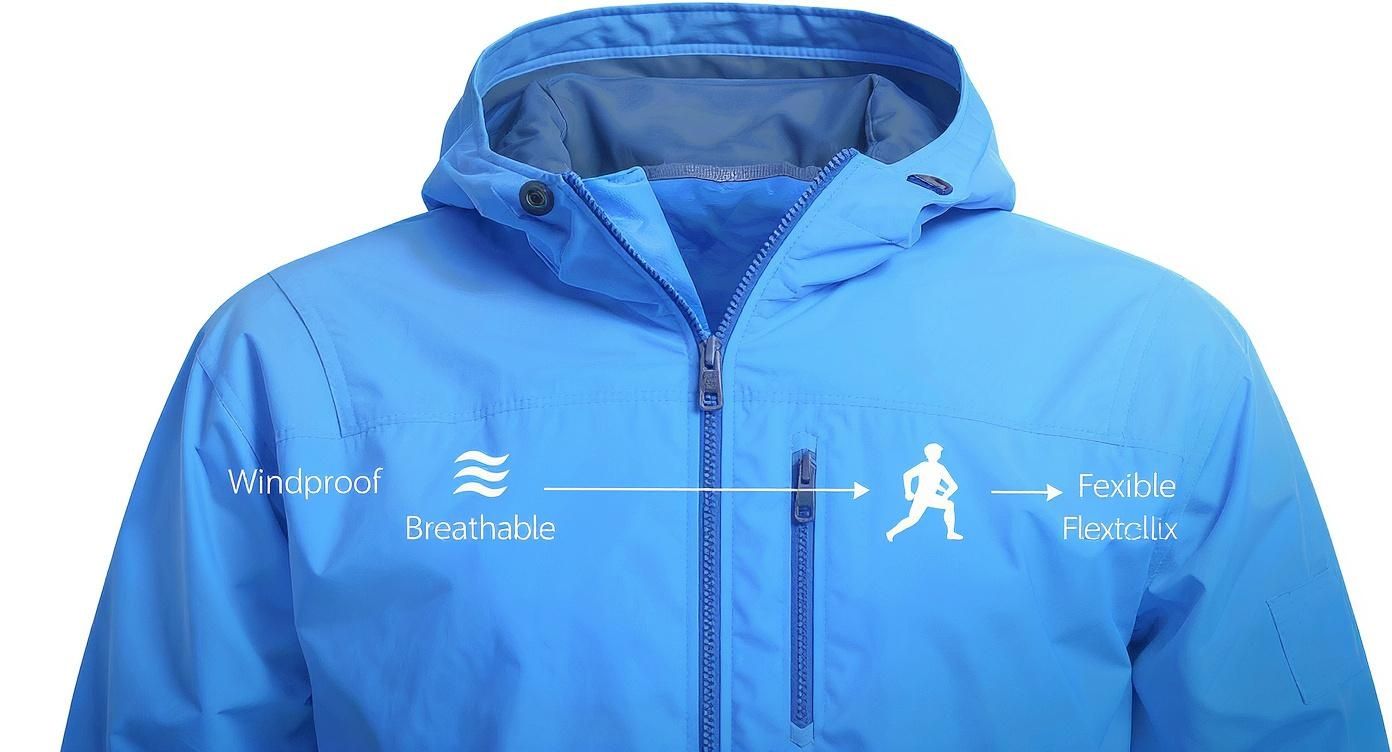
As you can see, the holy trinity for a great windbreaker is simple: it has to be windproof, breathable, and flexible. Get all three right, and you'll barely notice you're wearing it.
Cracking the Code on Brand Names
Every major golf brand loves to slap a fancy, trademarked name on their fabric technology. Don't get lost in the marketing hype. While the names can sound a bit over the top, the science behind them is usually sound.
Think of proprietary tech as a brand's secret sauce. Nike's Storm-FIT, Under Armour's Storm, and Galvin Green's INTERFACE-1 all use unique recipes of fabric weaves, special coatings, and bonded layers to hit that perfect sweet spot of wind resistance, breathability, and stretch.
So, what are they really doing? Let's peek behind the curtain:
- Nike Storm-FIT: This is all about creating a fortress against the elements. They use a tightly woven microfiber polyester and seam-seal the garment to block wind and rain, but the fabric is engineered to let sweat vapor escape.
- Under Armour Storm: This isn't just one thing, but a whole system. The core idea is a special DWR (Durable Water Repellent) finish that makes water bead up and roll right off, all without clogging the fabric's pores and killing its breathability.
- Galvin Green INTERFACE-1: This is the high-end, luxury sports car of windbreaker fabrics. It’s a hybrid material designed from the ground up to be incredibly soft, quiet, and stretchy, while offering total wind protection.
No matter the name, they're all chasing the same ghost: a jacket that protects you from the weather but feels like you're wearing nothing at all. To help you understand the building blocks they're all working with, here's a simple breakdown of the base materials.
Golf Windbreaker Fabric Comparison
This table gives you a quick-and-dirty look at how the most common fabrics stack up against each other.
| Fabric Type | Wind Resistance | Stretch & Flexibility | Breathability | Best For |
|---|---|---|---|---|
| Polyester | High | Low (unless blended) | Moderate | All-around performance and durability. |
| Nylon | Excellent | Low (unless blended) | Moderate | Very lightweight and strong; great for packable jackets. |
| Elastane/Spandex | Low | Excellent | High | Crucial for blends; provides swing freedom. |
| Proprietary Blends | Excellent | High | High | Golfers seeking maximum performance and are willing to invest. |
As you can see, it's the blend that really matters. The best jackets artfully combine the wind-blocking power of polyester or nylon with the athletic freedom of elastane to give you the best of all worlds on the course.
Finding the Perfect Fit For Your Swing

Out on the course, a bad fit isn't just a fashion faux pas—it's a handicap. A jacket that pulls tight across your back or bunches up at your elbows can throw off your entire swing path. That's why finding a golf windbreaker that feels less like a jacket and more like a second skin is absolutely non-negotiable if you want to play your best.
It all starts with understanding the two basic schools of thought when it comes to golf jacket design: the 'Tour Fit' and the 'Standard Fit'.
Tour Fit vs. Standard Fit
Think of a Tour Fit as the sleek, high-performance race car of golf apparel. It’s cut close to the body for an athletic, tapered look. The whole point is to eliminate any loose, flapping fabric that could catch the wind or just plain distract you mid-swing. This is the modern cut you see on the pros, built for players who want zero interference and maximum performance.
A Standard Fit, on the other hand, is your classic luxury sedan. It’s a bit more generous through the chest and shoulders, prioritizing all-day comfort and making it easy to layer up when the temperature drops. This is the go-to for the weekend golfer who needs a versatile jacket that’s just as comfortable in the clubhouse as it is battling the elements on the 18th hole.
Here's the bottom line: The best jacket is the one you forget you're wearing. If you can take a full, powerful swing without a single thought about a pinch, pull, or restriction, you've found a winner.
The Fitting Room Swing Test
When you’re trying on a windbreaker, don’t just stand there admiring yourself in the mirror. You’ve got to put it through its paces. Get into your golf stance—no club needed—and take a full, committed practice swing right there in the fitting room. Yes, you might look a little silly, but it's the only way to know for sure.
As you swing, pay close attention to these key spots:
- Shoulders & Upper Back: Does it feel tight or restrictive at the top of your backswing?
- Sleeves: Do they ride halfway up your forearms or get bunched up in your elbows?
- Waist: Does the whole jacket lift up, exposing your back on the follow-through?
This one simple motion will tell you everything you need to know about how the jacket will perform under pressure. Proper golf attire is all about function, and our guide on how to dress for golf has even more pointers for building a functional on-course wardrobe.
It’s no surprise that demand for this kind of specialized gear is booming. The global market for golf jackets, including performance windbreakers, hit around USD 1.5 billion in 2024. It’s expected to jump to a massive USD 2.5 billion by 2033, with North American golfers leading the pack.
It’s All in the Details
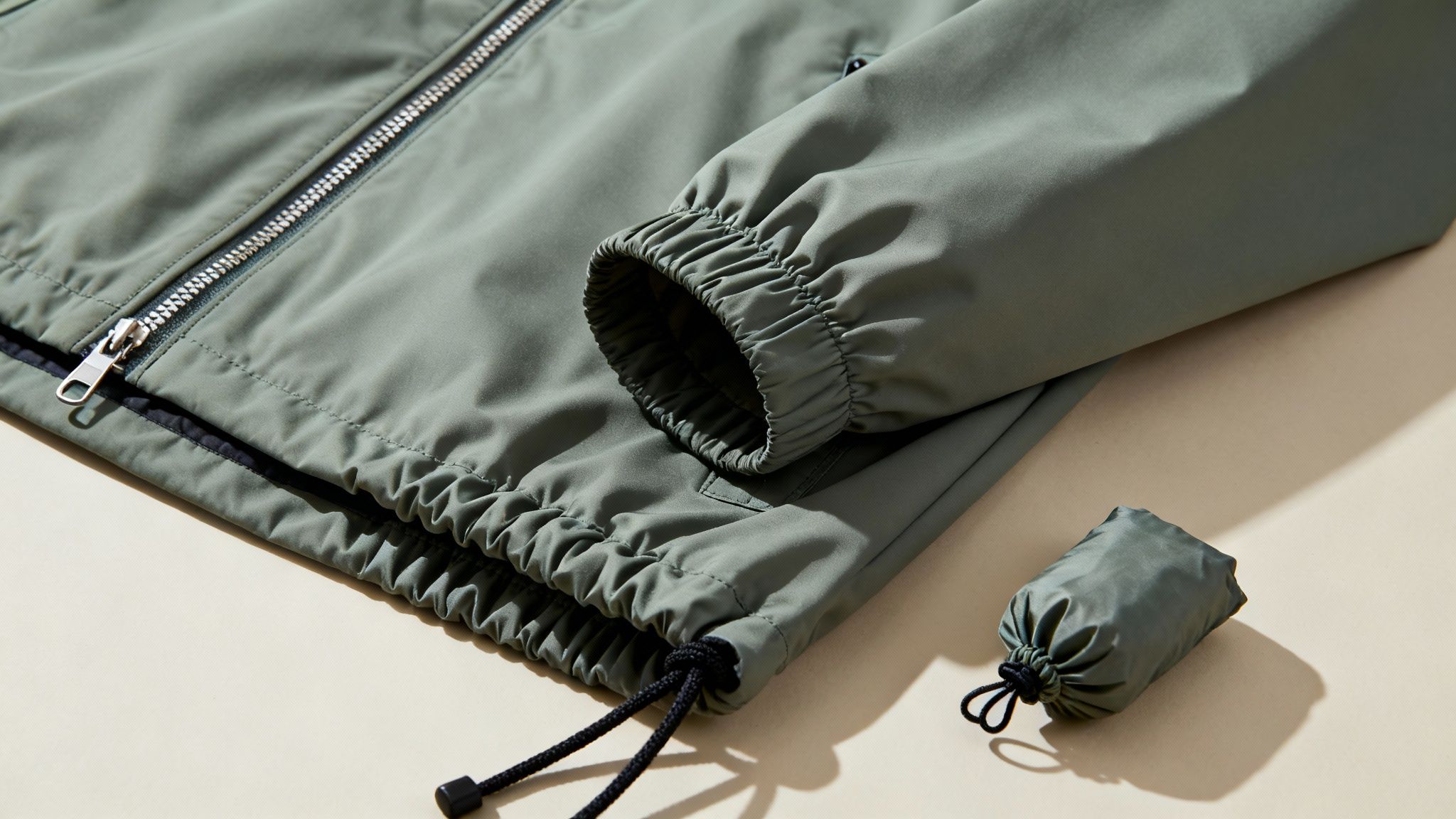
Finally, the difference between a good jacket and a great one often comes down to the small, thoughtful design features. Look for things like articulated sleeves, which are pre-bent at the elbow to match the natural shape of your arm. Adjustable cuffs and a cinch cord at the hem are also huge—they let you create a custom, sealed-in fit that locks out the wind and keeps everything out of the way of your grip and stance.
These little touches are what ensure your gear is working with you, never against you.
Game-Changing Features You Should Look For
Sure, high-tech fabrics and a sharp, athletic fit are important. But what really separates a decent golf windbreaker for men from an indispensable one? It’s all in the details. These are the clever, thoughtful features that prove the designers actually spend time on the course, not just in a studio.
One of the most brilliant features is packability. We’ve all been there: the weather looks iffy, but you don't want a bulky jacket hogging precious space in your bag. The best windbreakers fold down into their own pocket or a tiny pouch, ready to be deployed the moment the wind picks up. It’s a total game-changer.
Here's another one that most people don't think about until it drives them crazy: noise. A crinkly, rustling jacket can be a huge distraction when you're standing over a tricky putt. Look for jackets made from soft, quiet materials. The only sound you want to hear is the satisfying thud of your club and the ball rattling in the cup.
Smart Designs for On-Course Comfort
This is where the real engineering genius shines through. A few seemingly small additions can make a world of difference to your comfort and focus over 18 holes.
Take the two-way zipper, for instance. It’s a simple concept, but it's fantastic. By unzipping the jacket from the bottom, you prevent it from bunching up around your waist when you’re setting up your shot or reading a putt. No more awkward fabric getting in your way.
Proper ventilation is another must-have. Even the most breathable fabric needs a little help, especially when you’re walking a hilly course on a humid day. Well-designed jackets will have discreet vents, often hidden under the arms or across the back, that let heat escape without letting a gust of wind sneak in. You can stay comfortable without the constant on-again, off-again jacket dance.
Think of these features as your personal caddie. They're built to anticipate your needs—staying quiet during your backswing, giving you room to move, and getting out of the way when you don't need them—so you can stay locked in on the next shot.
The golf apparel world is a big deal, with the market hitting a whopping USD 9.07 billion in 2024. That kind of competition pushes brands like Nike, Adidas, and FootJoy to constantly one-up each other with these player-focused features. If you're a gear nerd, you can dive deeper with these insights from Fortune Business Insights.
At the end of the day, these details transform a windbreaker from just another layer into a crucial piece of your equipment. A great jacket is just one part of the puzzle, though. If you're looking to round out your kit, check out our guide to the best golf accessories to go with your new favorite jacket.
Still Got Questions About Golf Windbreakers?
Alright, let's clear the air. You've got the basics down, but a few questions are probably still rattling around in your head. That's a good thing! When it comes to gear that can make or break your round, the details are everything.
Let's dive into the common head-scratchers and get you some straight-up, practical answers.
Golf Windbreaker vs. Rain Jacket: What's the Real Deal?
This is a big one. It's easy to think they're interchangeable, but they're built for entirely different jobs. Think of it as choosing between a track spike and a hiking boot.
A golf windbreaker is your go-to for performance. It's designed with one thing in mind: the golf swing. That means lightweight, stretchy materials that move with you, not against you. Its main mission is to cut through the wind and breathe, so you don't feel like you're playing inside a plastic bag. Most will have a water-resistant coating that can handle a light mist, but they aren't built to withstand a full-on deluge.
A true rain jacket, on the other hand, makes a single, solemn promise: to keep you 100% dry, period. To do that, it has to use heavier, less flexible, and far less breathable fabrics. The result is often a crinkly, bulky shell that can seriously mess with your swing. It’s fantastic for getting you from the 14th green to the clubhouse during a downpour, but it's not what you want to be wearing when you're trying to pure a 7-iron.
Think of it this way: The windbreaker is your agile bodyguard, protecting you from annoying gusts without getting in your way. The rain jacket is the emergency bunker you dive into when the sirens go off. You wouldn't play 18 holes from inside a bunker, would you?
How Should I Layer This Thing?
Layering isn't just for mountaineers; it's the secret sauce to staying comfortable on the course when the weather can't make up its mind. Getting it right means you’ll never be too hot or too cold.
Here’s the simple, three-part system for a perfect on-course setup:
- Base Layer: This is your foundation. Start with a moisture-wicking golf polo. Its only job is to pull sweat off your skin so you stay dry from the inside out.
- Mid-Layer (If it's chilly): On colder days, throw on a thin performance quarter-zip. This is your insulation layer, trapping just enough body heat to keep you warm without cooking you.
- Outer Shell: Your windbreaker is the final piece of the puzzle. It’s your shield against the elements, keeping wind and a light drizzle out while still letting that internal moisture escape.
The golden rule here? Avoid cotton like it’s a water hazard. Cotton is a sponge. Once it gets damp with sweat or rain, it stays wet, clings to your skin, and makes you feel colder and clammier than a frog in a bog. Modern windbreakers are cut slim for a reason—they're designed to fit neatly over one or two tech layers without turning you into the Michelin Man.
How Do I Take Care of My Windbreaker?
You dropped good money on a quality piece of gear, so let's make sure it lasts. Taking care of a windbreaker is surprisingly easy and crucial for keeping its techy features, especially that water-resistant coating, in top shape.
First things first: always read the care label. The manufacturer knows best.
That said, the process is usually pretty standard. Toss it in the wash on a gentle cycle with cold water. Use a small amount of liquid detergent, but stay away from fabric softeners or powdered detergents—they can leave behind a residue that clogs up the fabric's pores and kills its performance. Oh, and zip up all the zippers before you wash it to keep them from snagging.
When it's time to dry, a low-heat tumble dry is your friend. A little warmth can actually help wake up the jacket's DWR (Durable Water Repellent) coating. If you start to notice that water isn’t beading up and rolling off like it used to, don't panic. You can easily bring it back to life with a spray-on DWR treatment you can find online or at any outdoor store.
Ready to find apparel that blends tour-level performance with a style that’s all your own? At 2ndShotMVP, we create premium golf hats, beanies, and lifestyle apparel built for confidence on and off the course. Come see what we're all about.

