

Most golf-hat advice starts with the wrong question. It asks which cap looks most traditional, not which one keeps your head comfortable, your vision clear, and your swing free on a hot afternoon. A 5 panel golf hat deserves more than a style nod. Its low crown, uninterrupted front, and flexible construction make it a serious alternative to the familiar structured 6-panel cap, but only if you choose the fabric, fit, and brim intelligently.
The five-panel silhouette began as functional headwear associated with couriers, cyclists, military personnel, and laborers, before youth culture and streetwear pushed it into mainstream fashion. Supreme's 1994 Camp Cap is often cited as a milestone in that transition, as documented by the history of the five-panel cap. Golf has finally caught up with the idea that practical clothing can also have personality.
Ditching the Traditional Golf Cap
The structured 6-panel cap still has its place. It looks crisp, carries a team logo well, and satisfies conservative clubhouses that treat headwear like part of a uniform. But the assumption that a taller, stiffer cap is automatically better for golf is outdated. A cap should support your round, not make you feel like you're wearing branded office furniture.
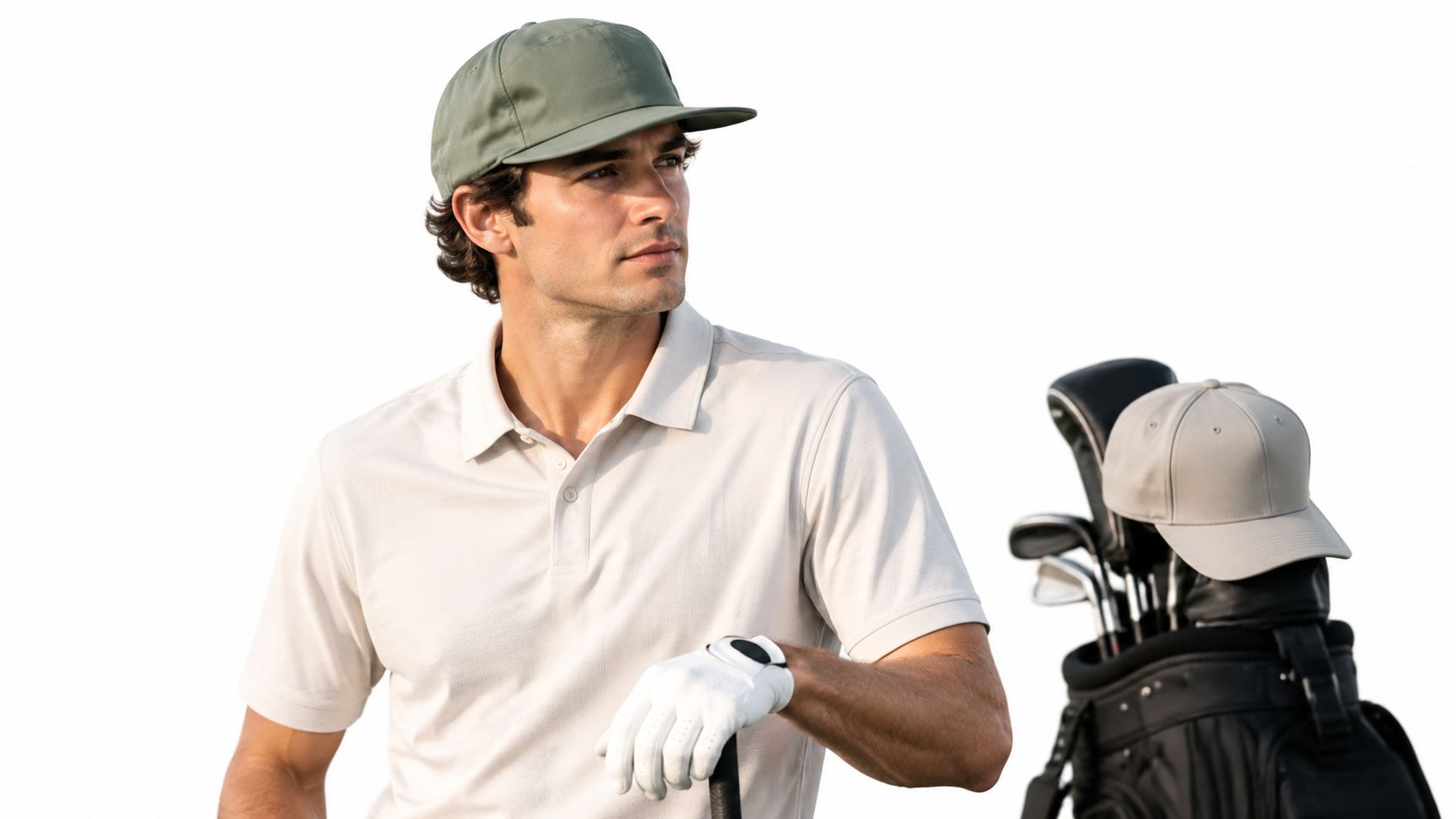
The 5 panel golf hat brings a lower, cleaner profile to the course. Its unstructured versions sit closer to the head, its brim can move with your preferred shape, and its lighter construction usually feels less intrusive during a swing. That doesn't mean every five-panel cap is cooler or more comfortable than every six-panel cap. A poorly chosen cotton cap can still become damp and heavy. The point is that the five-panel platform gives manufacturers more room to prioritize packability, airflow, and movement.
Why the old default is losing ground
Modern golf clothing already borrows from running, skateboarding, and streetwear. Players want polos that work at a restaurant, shorts that don't look overly formal, and shoes that can move from the course to the clubhouse without a costume change. The five-panel hat fits that wardrobe naturally.
It also avoids the over-logoed look that makes some traditional golf caps feel tied to one sponsor, one club, or one decade. A simple embroidered mark, a woven patch, or a subtle rope detail gives the hat character without turning your forehead into a billboard.
Course rule: Choose the cap that stays quiet during your swing and still looks intentional when you take off your golf shoes.
For most modern golfers, the best starting point is a low-profile, adjustable five-panel cap with a moisture-managing sweatband and a flexible brim. Players in very hot climates should prioritize mesh or perforated construction. Players who spend more time at the 19th hole than under a blazing sun can choose cotton twill for its richer texture and cleaner embroidery.
The Anatomy of a 5 Panel Golf Hat
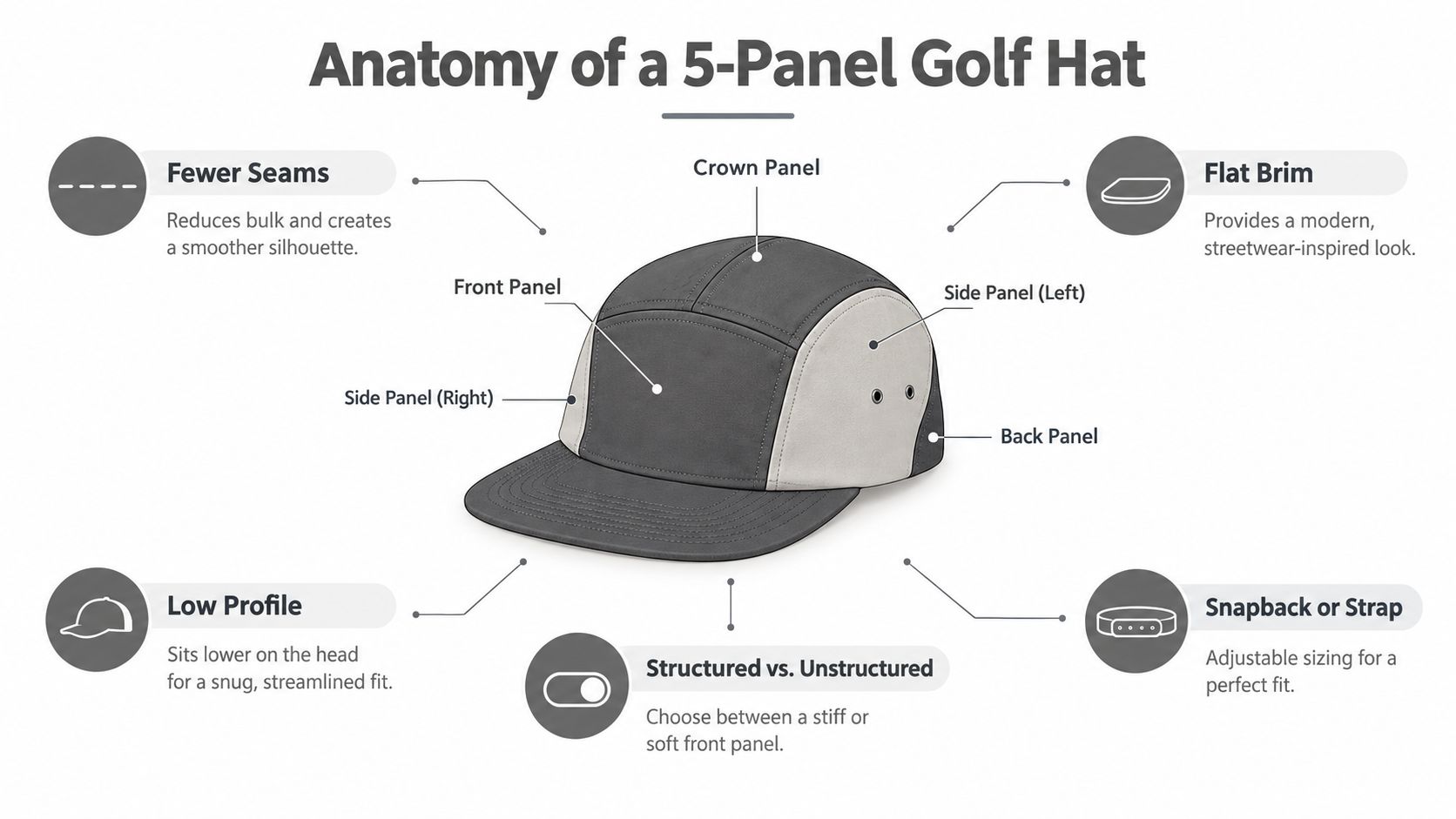
A standard six-panel cap divides the crown into six sections that meet at the top. A five-panel cap uses five fabric sections instead, with the defining feature appearing at the front: one broad, front panel. That uninterrupted area gives the hat a cleaner visual line and creates a more reliable surface for embroidery, patches, and screen printing, as explained in this manufacturer guide to five-panel camp-cap construction.
That front panel matters on a golf course because decoration often sits directly in your field of view. A centered logo on a multi-seam cap can look visually interrupted or distort where panels meet. The five-panel layout keeps the branding zone flatter and more coherent. It's a small construction decision that makes the entire hat look more considered.
Crown, brim, and closure
The low crown is the other major distinction. A low-profile five-panel cap generally sits closer to the head than a structured, high-crown design. That can create an appearance and reduce the sense that the hat is catching movement when you turn, bend, or walk into a breeze.
The brim deserves equal attention. A flat or lightly curved brim supports the five-panel's modern look, while a more pronounced curve can shade the eyes in a familiar athletic style. Flexible brims are especially useful if you pack the cap into a travel bag or prefer to adjust the curve over time.
Closures range from snapbacks to fabric straps and other adjustable systems. Pick the mechanism that lets you achieve a secure fit without pressure at the temples. A loose cap can shift as you look down at the ball. An overly tight cap creates a distraction that no logo can fix.
Structured and unstructured builds
The silhouette isn't automatically unstructured. Some five-panel caps use a firm front insert to preserve shape, while others rely on soft fabric that follows the head. If you're deciding between those options, this guide to structured versus unstructured hats gives the basic distinction.
A structured front looks sharper and supports crisp decoration. An unstructured crown feels more relaxed, folds more easily, and usually suits the modern camp-cap aesthetic. For golf, neither construction wins universally. Choose structure for a polished logo-forward appearance, and choose softness when comfort, packability, and a less formal look matter more.
5 Panel vs 6 Panel Hats on the Course
The five-panel cap wins the style argument easily. The performance argument is more conditional, and that's where golfers should pay attention. Panel count alone doesn't determine comfort. Fabric, sweatband, ventilation, brim shape, crown height, and fit decide what happens after the first few holes.
A five-panel camp cap usually offers a softer, more packable build. That can feel excellent when you're walking, traveling, or switching between the course and casual clothes. A structured six-panel cap generally keeps its shape more consistently and can provide a more traditional fit, but the rigid construction may feel warmer or more noticeable when the weather turns difficult.
| Feature | 5-Panel Camp Cap | 6-Panel Structured Cap |
|---|---|---|
| Crown profile | Usually low and streamlined | Often taller and more defined |
| Front decoration | Broad seamless panel | Multiple seams can divide the design |
| Packability | Soft versions fold more easily | Structure resists crushing |
| Breathability | Depends heavily on mesh and fabric choice | Depends heavily on fabric and vent design |
| Brim behavior | Often flexible or flatter | Commonly pre-curved and more rigid |
| On-course feel | Light, relaxed, less formal | Stable, traditional, more pronounced |
| Best use | Modern golf, travel, lifestyle wear | Classic club style and firm shape |
Sweat and heat
Don't assume a five-panel cap breathes better just because it has fewer seams. A dense cotton crown with no ventilation can feel hotter than a six-panel performance cap with mesh inserts. The construction makes breathability possible, but the material package delivers it.
Performance headwear increasingly emphasizes moisture management, lighter builds, perforated panels, and mesh inserts. Coverage in PGA Magazine's headwear retail discussion also highlights the unresolved buyer question: golfers still need clearer comparisons of cooling, sweat handling, fit, and full-round comfort across different crown designs.
Vision and swing clearance
A low crown can feel less bulky when you address the ball, especially if you dislike a tall cap pressing into your brow or brushing against glasses. A flexible brim also lets you set the shade angle without forcing one rigid position.
But peripheral vision depends more on brim width, curve, and how the cap fits than on the number of panels. Try the hat while looking down, turning your head, and taking a slow practice swing. If the brim blocks your view of the ball or the crown shifts during rotation, the cap has failed its job regardless of its silhouette.
Choosing the Right Materials and Features
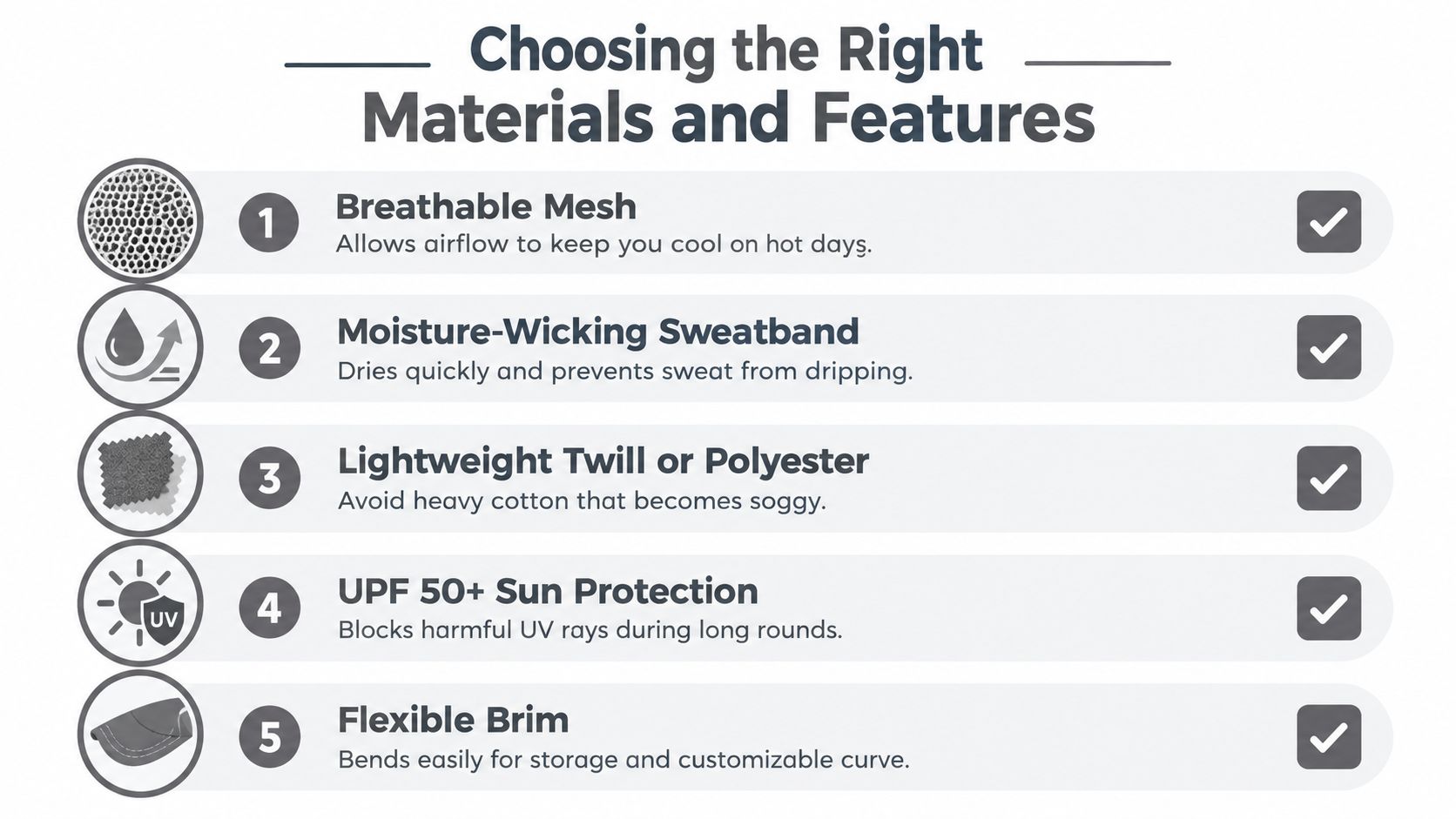
Start with your climate and your sweat pattern, not the color. A cotton twill five-panel cap can look excellent with a clean polo and shorts because it holds embroidery well and has a stable, substantial handfeel. It's a poor choice for a humid round if the fabric becomes saturated and uncomfortable.
Nylon ripstop, recycled polyester, and performance mesh offer different solutions. Nylon ripstop is lightweight and packable. Performance polyester is useful when fast drying and lower weight matter. Mesh improves airflow, but large open sections can change the hat's visual character and may provide less coverage than a tightly woven front.
Use this buying filter
- For dry, mild conditions: Choose cotton twill or a light woven blend if appearance and embroidery matter most.
- For humid weather: Look for moisture-wicking polyester, a breathable sweatband, and mesh or perforated sections.
- For travel: Favor nylon ripstop or lightweight polyester, especially if the cap will live inside a golf bag.
- For strong sun: Prioritize certified UV performance over color. Independent golf-hat guidance explains that a UPF 50+ rating blocks about 98% of UV radiation, provided the rating is certified, as detailed in this guide to sun-protective golf hats.
- For mixed use: Select a moderate brim curve and a restrained front design that won't look out of place away from the course.
Dark fabric isn't a substitute for certification. Fabric can transmit UV when it's stretched or damp, so a dark color alone doesn't tell you how much protection the material provides. The broad front of a five-panel cap can support a tightly woven, UV-rated fabric without making the hat feel bulky.
Moisture management also affects real-world comfort. A sweat-soaked crown feels heavier, traps heat, and can make the hat unpleasant before the round is over. Choose a sweatband that moves moisture away from the skin and dries efficiently, then match the crown to the conditions you play in.
For a practical look at performance-focused construction, compare the features discussed in this guide to performance golf hats.
Styling Your Hat from Tee to 19th Hole
A good five-panel cap should look like part of the outfit, not an afterthought pulled from the bottom of your bag. Start with the hat's strongest visual element. If it has a bold patch or a high-contrast front panel, keep the polo and shorts quiet. If the cap is a solid navy, olive, cream, or black, you can add interest through a striped polo, textured overshirt, or brighter golf shoe.
The first-tee version
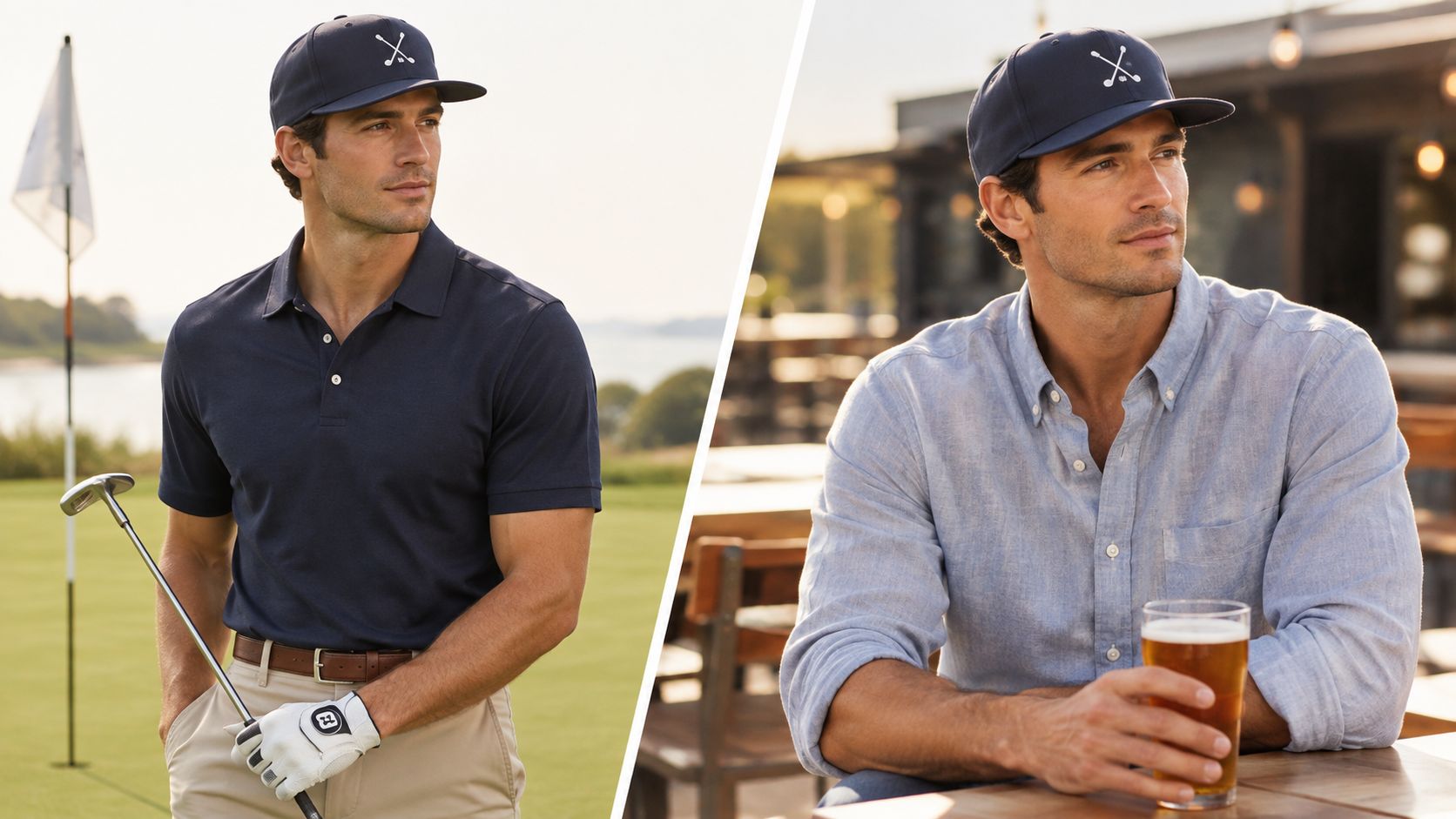
For the course, pair a low-profile hat with a performance polo and clean, tapered trousers or shorts. Olive works naturally with white, cream, navy, and muted tan. Navy gives you more flexibility and looks sharper with crisp white. Cream is stylish, but it demands better maintenance because sweat marks and dirt show quickly.
Patch decoration feels more relaxed and outdoorsy. Embroidery looks cleaner and more established, especially on cotton twill or a stable front panel. A small centered logo usually reads better than a crowded design because the five-panel front already has a strong architectural shape.
Style rule: Let the hat provide one clear point of interest. Golf outfits look confident when the pieces coordinate, not when every item competes.
The 19th-hole switch
After the round, remove the performance polo layer and keep the hat. Add a heavyweight tee, relaxed overshirt, or lightweight jacket, then trade golf shorts for straight-leg chinos or denim. The five-panel silhouette works because it carries a streetwear reference without requiring an oversized outfit.
A rope detail can push the look toward retro golf. A tonal embroidered logo feels more contemporary. If you're meeting clients at a polished club, choose a restrained color and subtle decoration. If you're heading to an outdoor restaurant or brewery, a brighter panel combination or graphic patch can carry more personality.
The hat should also fit your face and hair, not just your clothes. A shallow crown can look sharp on a smaller head but feel undersized if the closure is pulled too tightly. Adjust the back before you judge the shape, and wear it for a few minutes while moving rather than evaluating it only in a mirror.
Care and Maintenance for Longevity
Golf hats absorb more abuse than they appear to. Sweat, sunscreen, dust, direct sunlight, and cramped storage can flatten an unstructured crown and leave a permanent odor in the sweatband. A five-panel cap rewards simple, consistent care.
Clean the hat without wrecking it
- Read the care label first. Different fabrics and brim materials tolerate different cleaning methods. Follow the manufacturer's instructions before applying soap or soaking the cap.
- Brush away dry debris. Use a soft brush or clean cloth to remove grit from the brim, seams, and sweatband. Rubbing dirt into damp fabric makes stains harder to remove.
- Spot-clean quickly. Mix a small amount of mild detergent with cool water, then test it on a hidden area. Dab the mark with a soft cloth instead of scrubbing aggressively.
- Hand-wash when the material allows it. Avoid harsh chemicals and hot water, which can affect color, adhesives, and the brim's shape. A gentle hand wash gives you more control than a washing machine.
- Rinse carefully. Remove detergent without twisting the crown. Twisting can create creases and distort the five-panel front.
- Air-dry in shape. Pat the cap with a towel, reshape the crown, and leave it somewhere with good airflow. Don't put it in a dryer or expose it to intense direct heat.
The detailed process in this golf-hat cleaning guide is useful when you're dealing with sweat buildup or stubborn marks. Keep the cleaning gentle, especially around embroidery and patches.
Store it like equipment
Don't leave the cap crushed beneath rangefinders, gloves, and spare balls. Place it crown-up in a compartment with enough room to preserve the front panel, or hang it from the adjustable strap if the closure allows. For an unstructured version, lightly fill the crown with clean tissue or a soft cloth during storage.
Let a damp hat dry fully before putting it away. Store it somewhere cool and dry, away from a hot car trunk or prolonged sun exposure. Rotate between caps when possible so each sweatband has time to dry before the next round.
A five-panel golf hat can last through many seasons, but it won't survive careless storage disguised as convenience. Treat it like part of your playing kit, and it will keep its shape, finish, and comfort far longer.
2ndShotMVP offers golf hats, beanies, and lifestyle apparel with playful designs for men and women, including golf-ready styles that work on and off the course. Visit 2ndShotMVP to find a cap that matches your game, your wardrobe, and your 19th-hole plans.
