

The first tee is crisp, your coffee is doing its best, and your new sweatshirt looks charming in the mirror. Then you raise the driver. The hem catches at your waist, the sleeves creep toward your elbows, and the fabric clings where yesterday's cotton polo never did. Your outfit has become a swing thought, and nobody needs another one of those.
A well-chosen women's golf sweatshirt should disappear into your round in the best possible way. It adds warmth without turning your backswing into a tug-of-war, layers neatly over a polo, breathes when the sun appears, and still looks polished beside the clubhouse fireplace or on a post-round patio.
The right sweatshirt isn't just warm. It controls the space between your skin, your swing, and the weather.

This guide starts with the basics, then gets delightfully particular. You'll learn how sweatshirt fabrics manage moisture, which silhouettes layer over polos cleanly, how to test mobility in a fitting room, and when a sweatshirt makes more sense than a quarter-zip or sweater. You'll also get practical outfit formulas for chilly mornings, breezy fairways, sunny rounds, and the 19th hole.
The payoff is simple. Choose the right fabric, fit, and level of polish, and one versatile layer can work across changing weather, club expectations, and life beyond the course. Choose poorly, and you may spend more money replacing a piece that looked good for five minutes but fought you for the next several hours.
Why the Women's Golf Sweatshirt Became a Course Classic
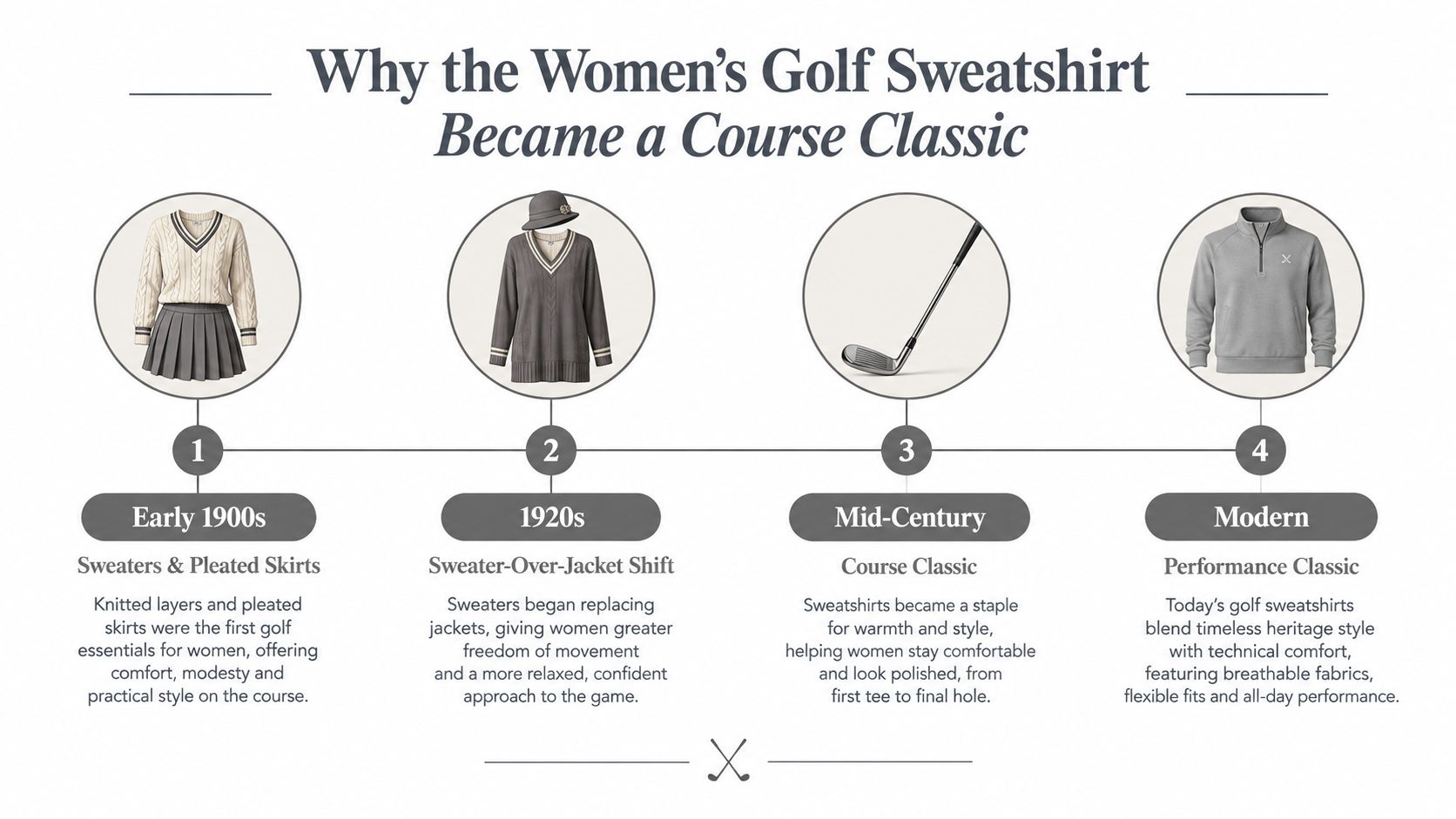
Women's golf style has always been a story of making clothing move more freely. Earlier in the twentieth century, women golfers commonly wore sweaters and pleated skirts, practical knitted layers that offered warmth while allowing more movement. By the 1920s, sweaters had largely replaced jackets on the golf course, while shorter hemlines and lighter clothing changed the silhouette of play. The history of innovations in golf apparel shows how clubs and manufacturers helped push golf clothing toward mobility.
That history makes today's sweatshirt feel less like an intruder and more like a familiar relative. Think of golf apparel as a layered family tree. The modern sweatshirt inherits the sweater's softness, the jacket's role as a protective outer layer, and the polo's tidy collar language.
The 1930s added another important branch. The polo shirt became popular because it borrowed the easy movement of a knit sweater while adding the collar expected in golf dress. That combination still shapes women's golf outfits today. A sweatshirt works particularly well because it can soften a structured polo without erasing the polished detail underneath.
Heritage with a modern job description
The current women's golf apparel market gives versatile layers a substantial commercial foundation. One industry market report values the women's golf apparel market at USD 1,497.56 million in 2025 and projects it to reach USD 1,851.83 million by 2034. The same source estimates that women's golf apparel represented about 29% of the overall golf apparel market in 2025, with demand supported by more than 36 million active female golfers worldwide in 2024 and purchases of more than 11 million golf-specific clothing items that year.
Those figures don't mean every golfer needs a technical pullover. They do show why brands are investing in better women's cuts, more useful layers, and clothing that travels beyond the fairway. Outerwear and performance layers are growing categories because golfers want pieces that handle weather without looking like emergency equipment.
A modern women's golf sweatshirt is therefore doing two jobs. It carries forward a century of knitted golf style, and it answers a current need for comfort that looks intentional. The best versions don't shout “warm-up gear.” They look ready for a tee time, a coffee stop, and whatever happens after the scorecard goes quiet.
Fabrics and Breathability That Keep You Comfortable for 18 Holes
A sweatshirt is your personal climate-control system. The fabric needs to move heat and moisture through the garment instead of trapping both against your skin like a damp blanket.
Polyester-rich blends are useful because they absorb less moisture than cotton and dry faster. During a warm or humid round, the fabric can move sweat away from the body, spread it across a larger surface, and help evaporation happen sooner. Cotton can feel wonderfully soft at the first tee, but it may hold moisture and become heavy or clingy as play continues. The golf fabric guide from Druids explains this moisture-management process in practical terms.
Read the label like a golfer
You don't need a textile degree. Look for a blend that gives you a sensible balance of moisture control, stretch, and hand feel.
- Polyester-rich construction: A useful choice for warmer or humid conditions because it dries efficiently and helps reduce the wet, weighted feeling of saturated cotton.
- Elastane in the blend: This adds stretch and helps the garment recover after repeated arm elevation and torso rotation.
- Nylon or lyocell: These fibers often appear in technical knits that balance softness, durability, airflow, and movement.
- Mesh-like or open knit structure: More surface area and air pathways can help release heat instead of sealing it inside.
- Brushed interior: A soft inner face can hold warmth on cool mornings, but it shouldn't be so thick that your polo and sweatshirt become a fabric sandwich.
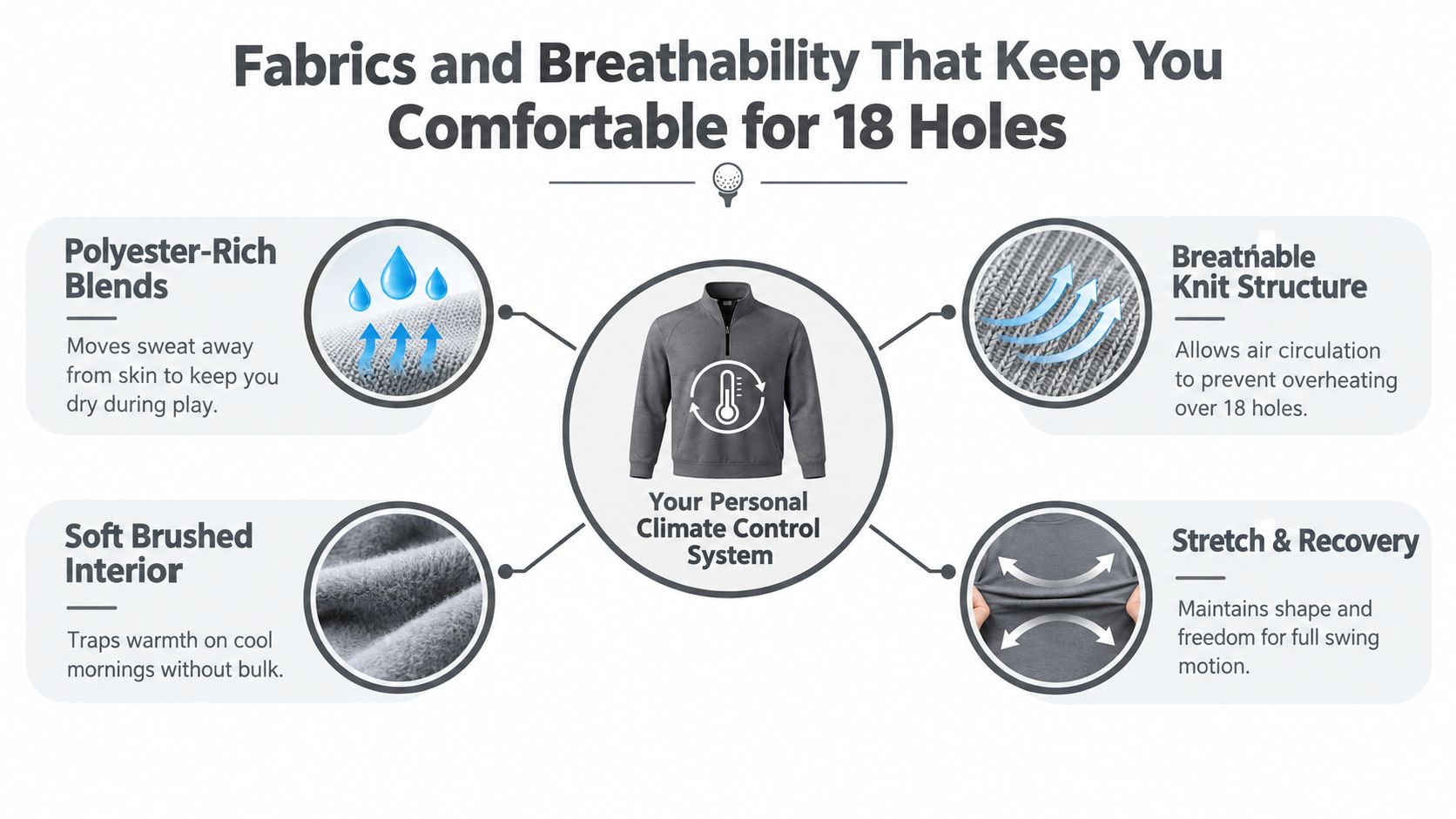
A technical example in this category uses a shell made from 78% polyester, 16% lyocell, and 6% elastane, as shown in PUMA's Cloudspun Golf Sweatshirt for women. That composition illustrates the broader design logic: moisture-conscious fibers handle perspiration, while elastane helps the sweatshirt move and return to shape.
Match weight to the forecast
For a humid summer round, choose a lighter polyester-rich knit with visible stretch and a breathable structure. You'll want the sweatshirt to act like a fine mesh curtain, not a sealed door.
For a chilly shoulder-season morning, a slightly denser knit or softly brushed interior can add comfort. If the weather may warm quickly, prioritize a layer that can be folded into your bag without becoming bulky.
Try this in the fitting room. Reach both arms overhead, rotate your torso as if you're making a backswing, and gently pull the hem forward. The fabric should move with you, the shoulder seams shouldn't bite, and the cuffs should return rather than sag. For a plain-language refresher on the technology, this guide to what moisture-wicking fabric means is a useful companion.
Finding Your Perfect Fit and Silhouette
The perfect sweatshirt isn't the smallest one that looks neat or the largest one that feels cozy. It's the cut that gives your polo room, your shoulders freedom, and your torso enough space to rotate without creating a fabric traffic jam.
Start with the polo underneath. Put on the actual type of base layer you'll wear on the course, then try the sweatshirt over it. A sweatshirt that fits beautifully over a camisole may suddenly pull across the upper back when a collar and sleeves join the party.
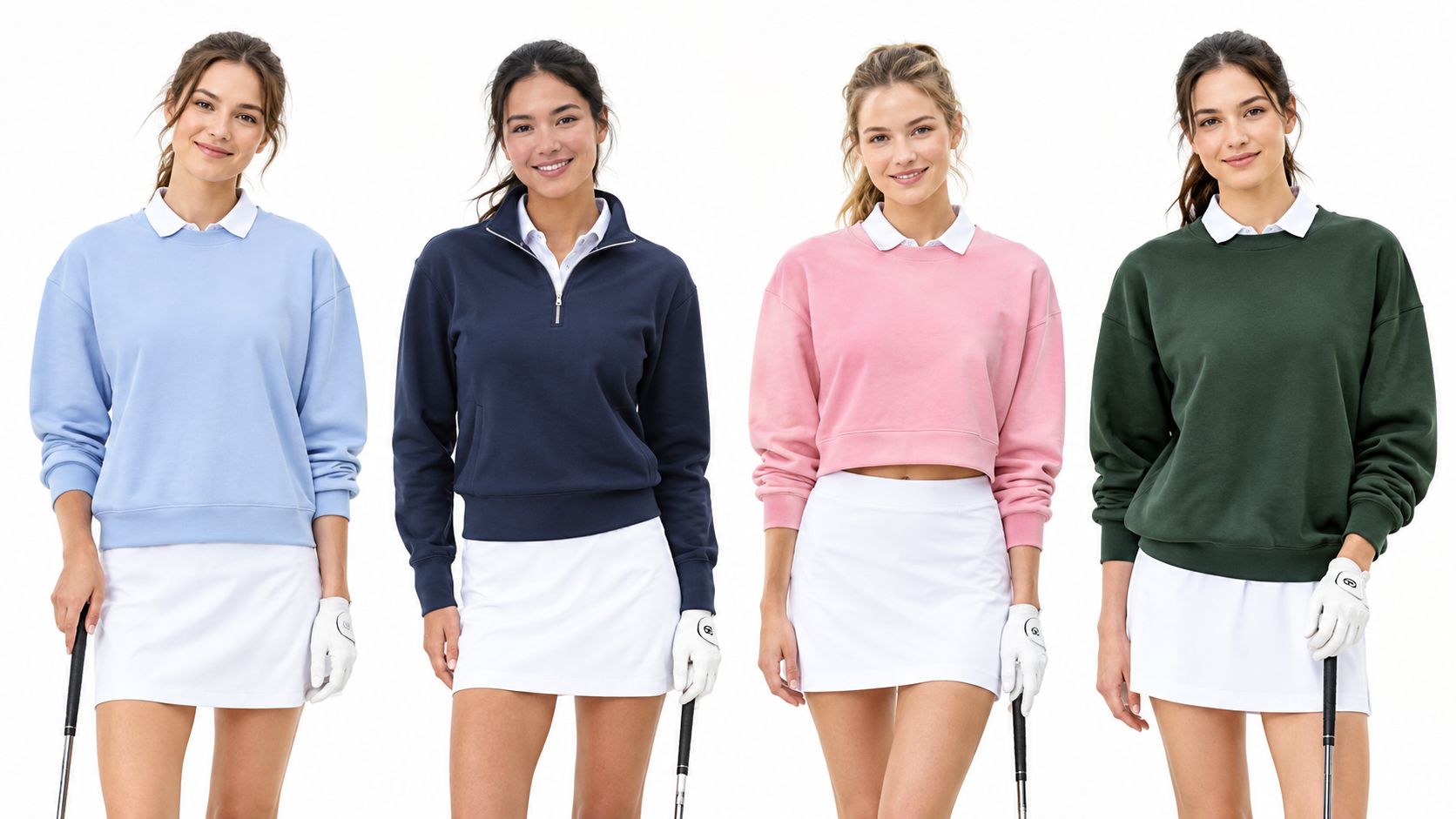
Four silhouettes, four personalities
Fitted styles sit closer through the torso and usually look the most polished under a vest or lightweight jacket. Choose one when you want a clean profile and already know the fabric has enough stretch.
Relaxed fits offer the easiest polo layering. They're particularly useful if your base layer has a substantial collar or if you prefer a little air around the waist. The trick is choosing a relaxed cut with controlled sleeve length, rather than a shape that overwhelms your hands and grip.
Cropped silhouettes can look modern with high-waisted trousers or a skort. They work best when the hem stays below the polo's visual midpoint and doesn't rise dramatically during your setup. A cropped sweatshirt should be tested in motion, not judged while standing still.
Oversized fits deliver maximum casual appeal and can be excellent off the course. On the course, look for a dropped shoulder or raglan sleeve that doesn't restrict rotation, plus a hem that won't bunch under a rain shell or vest.
Current coverage of women's golf apparel points toward looser fits, cropped lengths, textured knits, and versatile layering pieces that move between golf and everyday settings, as discussed in PGA Magazine's apparel review. The important word is versatile. A trend only earns space in your wardrobe when it also survives a swing.
The fitting-room swing test
Use this quick sequence before buying:
- Raise both arms. Check whether the hem rides sharply upward or the sleeves pull across your shoulders.
- Make a slow backswing. Feel for tension at the underarm, upper back, and collar.
- Bend toward the ball. The front hem shouldn't roll into a bulky fold at your waist.
- Reach into a pocket. If the pocket pulls the sweatshirt off-center, it may be decorative rather than functional.
- Layer a vest or jacket. Your preferred outer layer should slide over the sweatshirt without crushing the sleeves.
For course-to-street wear, a relaxed or lightly oversized cut often feels natural with straight-leg trousers and sneakers. For a stricter club environment, a fitted crewneck over a neat polo creates a safer, cleaner impression.
Watch how the garment behaves during movement, especially around the shoulder line and hem. A good sweatshirt should follow your body like a quiet caddie, present but never giving unsolicited advice.
Layering Smarts and Dress Code Confidence
Layering works best when every piece has a clear assignment. The polo manages the base and usually supplies the collar. The sweatshirt adds comfort and warmth. A weatherproof outer layer handles wind or rain. When those jobs get mixed up, you end up with a collar clash, bulky waist, or sleeves that migrate during the swing.
Use the three-layer order
Start with the polo. Choose a collar that lies flat and a length that won't bunch under the sweatshirt. If the sweatshirt has a close crew neckline, a smaller collar usually looks calmer than a broad, stiff one.
Add the sweatshirt. Pull the polo collar through evenly, then smooth the fabric at the side seams. Check the cuffs before you leave the changing room. If the base sleeve is already tight, a narrow sweatshirt cuff can make your forearms feel trapped.
Finish with the outer layer only if needed. A vest preserves shoulder freedom and keeps the torso warm. A jacket should have enough room across the back for the sweatshirt underneath, otherwise the first tee becomes a wrestling match.
Layering rule: If you can't make a full practice swing in the parking lot, the outfit won't improve on the fairway.
Keep the dress code simple
Club rules vary, so check the course's current guidance before packing. Some clubs expect a collared shirt, while others allow a crewneck sweatshirt as long as a polo remains visible underneath. Tournament or member-event rules may be more particular about tucked shirts, hems, colors, or athletic silhouettes.
A sweatshirt with a visible polo collar is usually the safest bridge between comfort and traditional golf presentation. If the club permits non-collared tops, a clean crewneck can work on its own, especially when paired with well-fitted trousers or a tidy skort. Avoid assuming that “golf-themed” means “club-approved.” The proper golf attire guide offers useful general context, but the course you're visiting gets the final say.
For transitional weather, dress for removal. The sweatshirt should come off easily at the turn and fit inside your golf bag without swallowing the space reserved for your rain gear. A layer that regulates your outfit without demanding a full change is a small luxury that pays off repeatedly.
Sweatshirt vs Quarter Zip vs Sweater and When to Choose Each
A sweatshirt isn't automatically the most technical layer, the warmest layer, or the most formal layer. It wins when its particular mix of softness, easy movement, and casual polish matches the conditions.
| Layer Type | Best For | Warmth and Breathability | Style and Dress Code |
|---|---|---|---|
| Women's golf sweatshirt | Soft layering, mild chill, course-to-street outfits | Comfortable warmth, with performance versions offering stretch and moisture management | Relaxed to polished, depending on the neckline, fit, and visible polo |
| Quarter-zip | Variable temperatures, quick venting, changing wind | Easy adjustment through the zipper, often useful when you heat up during play | Sportier and structured, with a clear collar line |
| Sweater | Refined styling, clubhouse settings, classic looks | Soft warmth, but breathability depends heavily on the knit and fiber blend | Most naturally polished, especially over a crisp polo |
| Insulated mid-layer | Colder, windy conditions requiring more protection | Higher warmth and weather protection, but can feel bulkier | Practical outerwear, with dress-code fit depending on the club |
Choose by weather first
If the morning is cool but the forecast promises sunshine, choose a women's golf sweatshirt with stretch and moderate weight. It gives you warmth at the first tee without forcing you to manage a zipper every time the breeze changes.
If temperatures are swinging throughout the round, a quarter-zip offers the most immediate control. Open the neck on the walk, close it before a gust, and show the polo collar when you need a sharper presentation.
If the occasion leans refined, choose a sweater. A smooth knit over a collared polo can travel from the course to a club lunch with less visual effort. Just test the sleeve and shoulder construction carefully. A beautiful fashion sweater that restricts rotation belongs in the clubhouse, not in your golf bag.
If wind and cold are the main problem, an insulated mid-layer makes more sense than a soft sweatshirt. You'll trade some packability and casual ease for protection.
Current styling direction combines cleaner, more refined looks with technical features such as moisture management, thermal regulation, and lightweight warmth, as reflected in FootJoy's women's base and mid-layer collection. The winning choice isn't the garment with the longest feature list. It's the one that matches the forecast, your swing, and the dress code without asking you to compromise all three.
Outfit Pairing Ideas From First Tee to 19th Hole
The most useful sweatshirt earns repeat invitations. It should play nicely with your existing bottoms, shoes, and accessories instead of demanding a new wardrobe every time it leaves the hanger.
For an early-morning frost delay, start with a cream or soft-gray sweatshirt over a fitted polo, then add well-fitting trousers or a neutral skort with tights if the conditions call for more coverage. Finish with a beanie tucked into your bag and low-profile golf shoes. The palette feels calm, while the layers give you options once the sun arrives.
A sunny mid-round outfit can be lighter and more playful. Wear a pale sweatshirt over a sleeveless polo, with a high-waisted skort and a cap that echoes one small color detail. Push the sleeves slightly only if they stay put. Constantly adjusting them is not an accessory.
For a breezy coastal course, choose a closer-fitting sweatshirt beneath a lightweight vest. Pair it with ankle-length performance trousers, a cap with a secure fit, and shoes that can handle a firm walk. The vest blocks the visual chill without adding fabric across the shoulders.
The 19th-hole version starts with the same sweatshirt but changes the bottom half. Swap golf shorts for straight-leg denim or relaxed trousers, keep the cap if it's part of your look, and add clean sneakers. A unisex pullover from 2ndShotMVP, with soft fleece fabric and a relaxed fit available in sizes S–3XL, can serve as a golf-themed lifestyle layer for this kind of course-to-street outfit.
For more combinations involving color, proportion, and accessories, browse these golf outfit ideas for women.
Style move: Let one element feel relaxed, such as the sweatshirt, and keep the rest crisp. That balance makes comfort look deliberate.
Build your rotation around pieces you'll wear. A cream sweatshirt may pair with navy, olive, black, and white. A textured knit may dress up a plain skort. A technical pullover may become your travel layer between rounds. The best outfit is the one that lets you think about the pin, not the hem.
2ndShotMVP offers golf hats, beanies, and lifestyle apparel for men and women, including golf-inspired pullovers suited to relaxed course-to-street styling. Explore the collection at 2ndShotMVP and choose a layer or accessory that feels like your game.
