

Let's get one thing straight: choosing the right winter golf clothes for women is about so much more than just staying warm. It’s about building a smart, stylish system of stretchable, weather-resistant fabrics that lets you swing freely, feel fantastic, and play your best game—even when there’s a nip in the air.
Modern golf apparel is a brilliant mix of high-tech performance and sophisticated style. You can absolutely conquer a frosty fairway in the morning and still look sharp for lunch at the 19th hole.
Why Winter Golf Is a Woman’s Game

Gone are the days when a dip in the mercury meant packing your clubs away until spring. Winter golf has been completely transformed, and honestly, women are leading the charge. What used to be a miserably cold, tough-it-out experience is now a stylish, year-round passion, all thanks to incredible innovations in apparel designed just for us.
Forget borrowing your partner's bulky, oversized jacket that swallows you whole. Today’s gear is thoughtfully engineered to prove you don't have to sacrifice warmth for a great swing. This isn't just a trend; it's a powerful movement in the sport.
The Rise of the Female Golfer
The sheer number of women hitting the links has shaken up the apparel industry for the better. Female golfers now make up nearly 28% of all on-course players in the U.S., and brands are finally paying attention.
The result? An explosion in the women's golf apparel market, which is set to grow in a big way worldwide. North America is leading this evolution, holding over half of the global market share. You can dig into the numbers and trends with these industry insights on persistencemarketresearch.com.
This boom has created a new standard for winter golf clothes for women, where performance and presentation are equals. We demand gear that not only battles the elements but also looks good enough to wear from the course to a work call or a happy hour with friends.
Today’s winter golf wardrobe is built on a simple premise: You should be able to execute a powerful, fluid swing on a cold morning and walk confidently into the clubhouse for lunch without needing a full outfit change.
What This Guide Will Cover
Think of this as your complete playbook for owning your game in cold weather. We're going way beyond the basics to dive into the strategies and tech that will keep you comfortable, confident, and playing lights-out all winter long.
Here’s a sneak peek at what’s inside:
- The Art of Layering: We’ll break down the classic three-layer system—base, mid, and outer—into a simple, foolproof strategy for adaptable warmth.
- Fabric Technology Explained: Get the scoop on the science behind materials that deliver insulation, breathability, and that crucial four-way stretch. No Ph.D. required.
- Essential Gear from Head to Toe: We’ll cover the non-negotiable accessories, from thermal beanies to specialized winter footwear, that truly make a difference.
- Style Meets Function: Learn how to build a versatile wardrobe that performs under pressure and looks fantastic, no matter where your day takes you.
Get ready to embrace that crisp air. This is going to be your best golf season yet.
Building Your Winter Golf Armor with Layering
Forget just piling on clothes. Dressing for winter golf is about building a smart, high-performance system. Think of it as your own personal climate control, made up of three distinct parts. When each piece does its job, you stay warm, dry, and, most importantly, you can still swing freely.
Mastering this art of layering is the real secret to conquering a cold day on the course.
The goal isn't just to be warm—it's to be adaptably warm. You know how it goes: a frosty morning tee time can easily turn into a surprisingly sunny back nine. Your outfit needs to keep up without forcing you back to the car. This three-layer strategy lets you peel off or add a piece on the fly, keeping you perfectly comfortable from the first drive to the final putt.
Layer One: The Base Layer
This is your foundation, the layer sitting right next to your skin. Its main mission isn't heavy-duty warmth; it's all about managing moisture. You’re walking, you’re swinging, you’re generating heat and sweat, even when it’s freezing out. A bad base layer (looking at you, cotton) traps that moisture, leaving you feeling damp, cold, and just plain miserable.
A proper base layer, on the other hand, acts like a wick. It pulls sweat away from your skin and shoves it to the outer surface of the fabric to evaporate. This process, called moisture-wicking, is the absolute key to staying dry, which is the key to staying warm.
For a fantastic technical option that keeps warmth locked in, something like a comfortable Uniqlo Heattech Fleece T-Shirt Turtleneck is a great choice.
- Best Materials: Look for synthetics like polyester or technical blends. Merino wool is another star player—it’s a natural fiber that’s amazing at both wicking moisture and resisting odor.
- Fit is Key: You want your base layer to be snug, but not constricting. A close fit is what allows it to make maximum contact with your skin and do its moisture-moving job effectively.
Layer Two: The Mid Layer
Meet your personal thermostat. The mid layer’s job is pure insulation—it traps your own body heat in thousands of tiny air pockets within the fabric. This is where the bulk of your warmth comes from, creating a cozy barrier against the biting cold.
The best part about the mid layer is its versatility. On a day that's just a little brisk, it might be the only extra layer you throw on over your polo. When the temperature really drops, it becomes the insulating engine humming away between your base and outer layers.
Your mid layer is the heart of your warmth strategy. It's the piece you're most likely to shed if the sun pops out, giving you instant temperature control without leaving you exposed to the elements.
This layer also has to be breathable. It needs to let all that moisture your base layer wicked away continue its journey outward. If it can't, you'll get a clammy buildup of condensation. Materials like fleece, thermal vests, and lightweight wool sweaters are perfect for this job.
And if you want to dig even deeper into playing your best when it's chilly, check out our guide on how to master golfing in the cold.
Layer Three: The Outer Layer
This is your shield. Your outer layer is your front-line defense against the two biggest enemies of a winter round: wind and water. Even on a perfectly dry day, a cold wind can slice right through the wrong fabrics, stealing your body heat in a hurry.
A quality outer layer needs to be both windproof and water-resistant (or fully waterproof). This creates a protective bubble that keeps the elements out while trapping the wonderful warmth your mid layer worked so hard to generate.
But protection from the outside is only half the battle. Your jacket or pants must also be breathable. An outer layer that doesn't breathe is like playing golf in a plastic bag—it traps all the moisture from the inside, completely canceling out the great work of your wicking base layer. Look for jackets with technical fabrics designed to block rain and wind while letting internal water vapor escape.
The smart money is on high-performance topwear. These crucial winter layers already make up over 48% of global golf apparel revenue because savvy golfers demand clothes that work for 18 holes and look good for drinks at the 19th hole.
Here’s a simple way to visualize how these three layers come together to create the perfect on-course outfit.
Your Three-Layer System for Winter Golf
| Layer | Primary Function | Best Materials | Must-Have Feature |
|---|---|---|---|
| Base Layer | Moisture Management: Wicks sweat away from the skin. | Polyester, Merino Wool, Technical Blends | Moisture-Wicking |
| Mid Layer | Insulation: Traps body heat to create warmth. | Fleece, Thermal Vests, Down, Wool | Breathability |
| Outer Layer | Protection: Blocks wind and rain/snow. | Gore-Tex, Windproof Synthetics | Wind/Water Resistance |
By combining these three distinct layers, you're not just wearing clothes; you're building a dynamic system that's far more effective than a single bulky coat. You get warmth, mobility, and the power to adapt to whatever winter golf weather throws your way.
Understanding Fabrics That Fight The Frost
Ever felt like you need a chemistry degree just to read the tag on a golf jacket? All that talk of thermal insulation, breathability, and waterproofing can sound like a foreign language. But behind the jargon is some seriously smart technology designed to keep you warm, dry, and swinging freely.
Let's break down the key fabric features you'll see in high-quality winter golf clothes for women. Once you know what these terms actually mean, you can shop with confidence, picking gear that truly performs when the temperature nosedives.
Your Personal Thermostat: Thermal Insulation
Think of thermal insulation in your clothes as a high-tech thermos for your body. Its one job is to trap your natural body heat and keep it close, creating a cozy little pocket of warm air that shields you from the cold. It doesn't magically create heat; it just stops yours from making a great escape.
This is where materials like fleece and advanced synthetic fills such as PrimaLoft are total game-changers. They’re engineered with millions of tiny air pockets that lock in warmth without the weight or bulk of your grandpa’s old wool sweater. The result? A slim, athletic fit that keeps you incredibly toasty while allowing for a full, powerful swing.
The best thermal insulation delivers the highest warmth-to-weight ratio. This means you get maximum coziness with minimum bulk, ensuring your layers never mess with your game.
Letting Off Steam: The Magic of Breathability
Breathability is easily one of the most misunderstood—and most critical—features for any activewear. Picture a pot of boiling water with the lid clamped on tight. Steam builds up, and soon, condensation is dripping everywhere. The exact same thing happens inside a non-breathable jacket when you’re walking the course. Gross.
Breathable fabrics prevent this clammy disaster by acting like a smart, one-way gate. They're designed with microscopic pores that are too tiny for big water droplets (like rain) to get in, but just large enough for tiny water vapor molecules (your sweat) to get out. This keeps you dry from the inside out, which is the secret to staying truly warm.
This is how all your layers should work together as a team to manage both warmth and moisture.
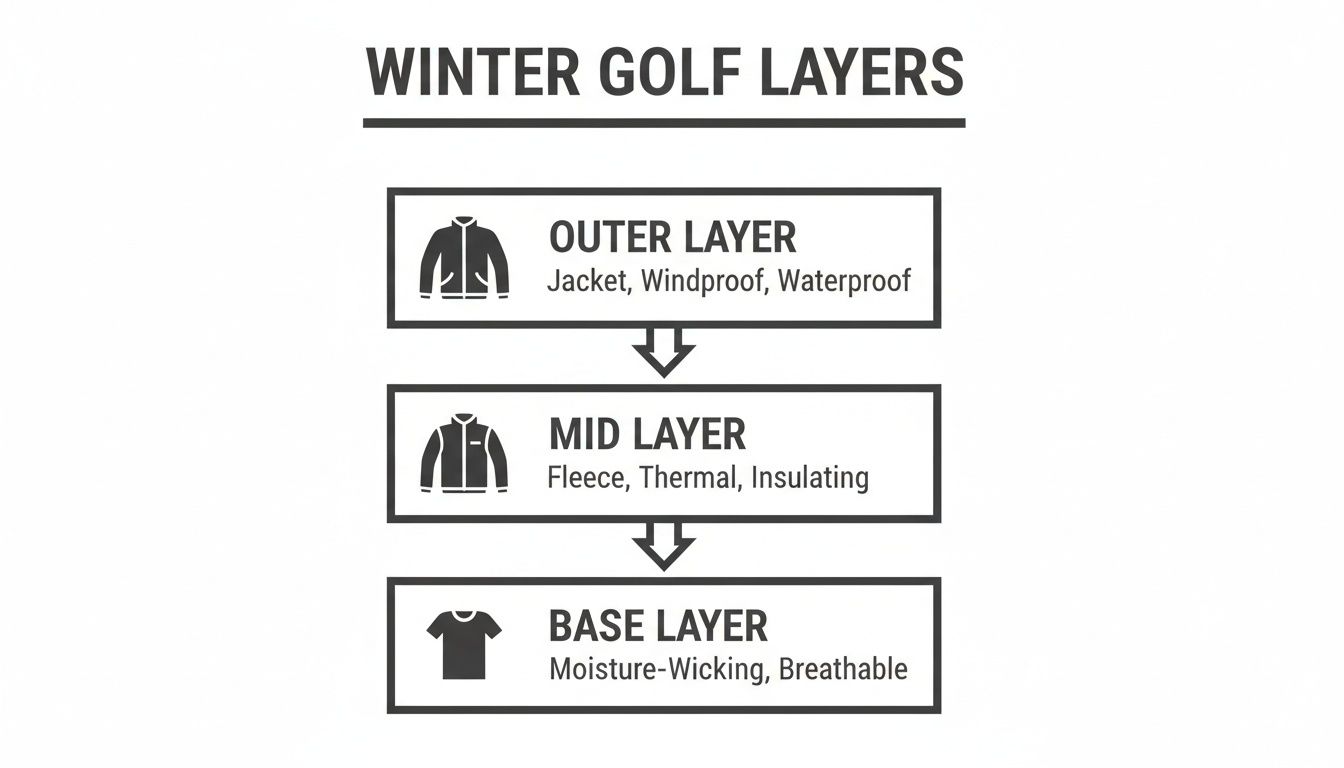
As you can see, that moisture needs a clear escape route through every single layer—from your base to your outer shell—to keep you dry and comfortable.
Your Shield Against The Elements: Waterproof and Windproof Tech
When it comes to your outer layer, you need a true bodyguard. Windproof fabrics use a super tightly woven construction or a laminated membrane to flat-out block chilly gusts from slicing through your clothes and stealing your warmth. This feature alone can make a blustery 35°F day feel more like 50°F.
Waterproofing works on a similar principle, often using famous technologies like Gore-Tex. These materials form an impenetrable barrier against rain and snow, so you stay completely dry even if the weather turns nasty.
- Water-Resistant: This can handle a light mist or a quick drizzle but will eventually soak through in a steady downpour. It’s perfect for those "chance of a shower" days.
- Waterproof: This is your full-on force field against water. It’s designed for playing through a real rainstorm without getting soaked.
The Unrestricted Swing: The Power of Four-Way Stretch
Finally, none of this tech matters one bit if you feel like you’re swinging in a straitjacket. This is where four-way stretch fabric becomes an absolute non-negotiable. It’s engineered to stretch and recover both horizontally and vertically, moving with your body through every part of your swing.
This amazing material, often a blend of polyester and elastane (aka spandex), ensures your clothing never pulls, bunches, or restricts your rotation. It's the secret sauce that lets modern winter golf clothes be both flattering and ridiculously functional. For a deeper dive into crafting the perfect on-course look, our complete guide to golfing clothing for women has even more style and performance tips.
Winter-Proofing Your Game from the Ground Up
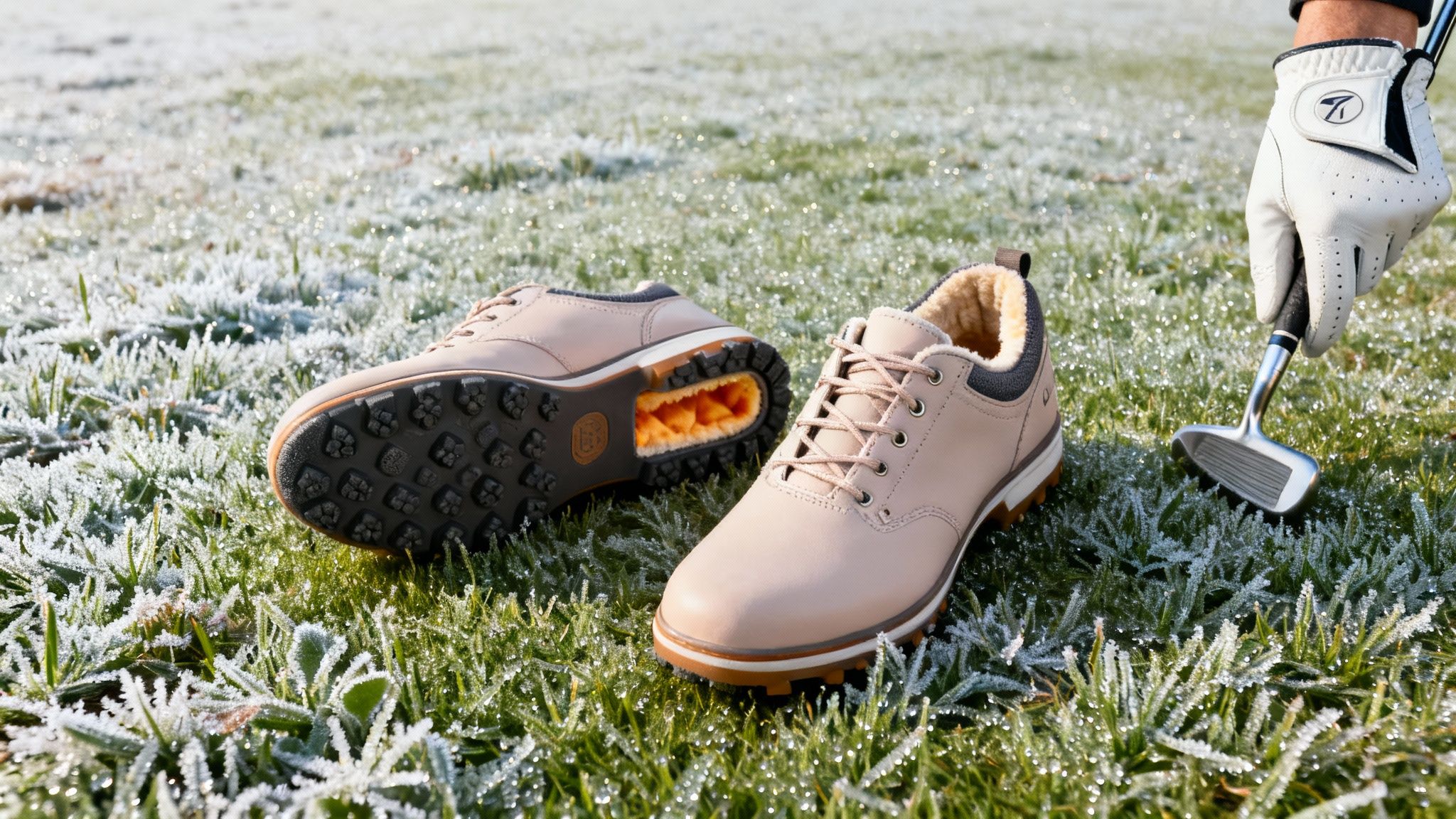
Let's get one thing straight: a powerful, consistent swing doesn't start in your shoulders. It all begins with your connection to the ground. When the fairway is frosty and the air has that tell-tale bite, your footwear and handwear become just as critical as all those high-tech layers you’ve so carefully chosen.
Think of it this way: your feet are the launchpad for your entire swing, and your hands are the only part of your body that actually touches the club. If either is cold, stiff, or slipping, your game is going to fall apart. Let’s make sure that doesn't happen.
Choosing Your Winter Golf Shoes
Sorry, but those breezy spikeless shoes you rocked all summer just aren't going to cut it when the ground is hard and damp. Winter golf demands a completely different approach to footwear, one that zeroes in on three essentials: waterproofing, insulation, and serious traction. This is a non-negotiable part of your winter golf wardrobe.
A shoe with a guaranteed waterproof membrane is your absolute first line of defense. It's what will keep your feet bone-dry from dew-covered mornings to those sneaky mid-round drizzles. Inside, you want a soft, thermal lining that provides warmth without making you feel like you've stuffed your feet into a pair of ski boots. It’s the difference between happy, comfortable toes and distracting, icy ones.
Finally, flip those shoes over and look at the sole. Winter conditions—from frozen turf to slick, leafy patches—demand a much more aggressive grip than you need in July. Look for deeper, wider-spaced lugs or spikes that can really dig in and give you that rock-solid foundation for every single shot.
Your winter golf shoes are your anchors. They have to be waterproof, warm, and grippy enough to prevent even the slightest slip, which can completely sabotage your swing and cost you strokes.
The Brilliant Two-Glove System for Your Hands
Ah, the eternal winter golf dilemma: how to keep your hands warm without losing the feel of the club. A big, puffy ski glove gives you warmth, but you might as well be trying to grip your club with a boxing glove. The solution? It’s a trick that pros and seasoned amateurs swear by: the two-glove system.
This strategy is as simple as it is genius. It all comes down to using two very different types of gloves.
- Cart Mitts: Think of these as personal little sleeping bags for your hands. They're large, heavily insulated mittens that you wear over both hands (or over your playing glove) while walking between shots or riding in the cart. Their only job is pure, uncompromising warmth.
- Winter Play Gloves: These are your performance gear. They're thinner, high-grip gloves designed specifically for swinging the club. They often have thermal properties but are engineered to give you maximum feel and stop the club from twisting in your hand on impact.
The routine couldn't be easier. Keep your cozy cart mitts on until it’s your turn to hit. Slip one or both off, play your shot with the full control of your winter glove, and pop the mitts right back on afterward. This keeps your hands toasty and ready for action without ever compromising your performance when it counts.
For an extra blast of heat on those truly frigid days, toss a disposable hand warmer inside each mitt. You can thank me later.
Accessorizing for Maximum Warmth and Style
When it comes to winter golf clothes for women, accessories aren't just the cherry on top—they're your secret weapons against the cold. The right beanie, gaiter, or pair of socks is often the deciding factor between a crisp, fantastic round and a miserable, shivering ordeal. Don't underestimate them; these small details pack a serious punch for both performance and style.
Think of your core layers like the foundation and walls of a house. They're absolutely essential, but without a solid roof and sealed windows, that biting wind is still finding its way in. Accessories are those final, crucial pieces that seal every gap, lock in warmth, and pull your entire look together.
Start at The Top: Your Beanie
You lose a ton of heat through your head, which makes a quality thermal beanie your first and best line of defense. But hold on—not just any old hat will do. A bulky cotton beanie is your worst enemy out here, as it will just absorb sweat and leave you feeling colder than when you started.
What you really need is a beanie made from smart, performance-driven materials that master the art of being both warm and breathable.
- Merino Wool: This stuff is nature's magic. It's incredibly warm, wicks moisture away like a pro, and feels surprisingly light. You get all the insulation you need without ever feeling overheated mid-swing.
- Performance Fleece: A fleece-lined beanie is another fantastic choice for trapping heat. It feels wonderfully soft against your skin and provides that reliable, cozy warmth from the first tee to the 19th hole.
Want to go deeper on finding the perfect headwear? Check out our complete guide to the best winter golf hats to keep you playing your A-game.
The Game-Changing Neck Gaiter
If there’s one piece of winter gear that’s criminally underrated, it’s the neck gaiter. It’s a simple tube of fabric, but it's a total game-changer. It slides right over your head to shield your neck and face from that nasty wind, perfectly filling the chilly gap between your jacket collar and your beanie.
The real beauty of a gaiter is its no-fuss versatility. A traditional scarf can flap around and get tangled in your swing, but a snug gaiter stays exactly where you put it. You can pull it up over your nose for extra protection while you wait, then slide it down in a second when it’s your turn to hit. It’s all the warmth with none of the hassle.
Beyond the Beanie: Other Key Accessories
Okay, your head and neck are covered. Now it's time for the finishing touches that take your comfort from pretty good to absolutely perfect.
Learning how to accessorize an outfit is key to creating a cohesive winter golf look where every single piece has a job to do.
Here are the other non-negotiables for your golf bag:
- Thermal Socks: Just like your base layer, your socks have to be moisture-wicking. Ditch the cotton and go for wool or synthetic blends designed to keep your feet toasty and dry inside your golf shoes. Pro tip: Always pack an extra pair! Swapping into fresh, dry socks at the turn feels like pure luxury.
- Hand Warmers: These little disposable packets are cheap, cheerful, and absolute lifesavers. Pop one in each pocket or your cart mitts for a steady source of heat that lasts for hours.
- Winter Sunglasses: Don't be fooled by the clouds. The low winter sun creates a wicked glare, especially bouncing off frost or wet fairways. A good pair of polarized sunglasses protects your eyes and makes it way easier to track that perfect drive against a bright sky.
By strategically adding these key accessories, you’re not just adding warmth; you're building a complete, functional system that allows you to focus entirely on your game, not the temperature.
Your Winter Golf Wardrobe Questions Answered
Okay, so you've got the theory down. You understand layering and you know your tech fabrics. But when it comes to actually building a winter golf wardrobe, things can get a little fuzzy. Now we’re getting into the real-world, standing-in-your-closet questions that pop up right before a chilly tee time.
Let’s tackle some of the most common head-scratchers women face when dressing for cold-weather golf. These are the nitty-gritty details that will make all the difference, helping you step onto that first tee feeling confident, cozy, and ready for whatever the weather report got wrong.
How Many Layers Are Too Many For Winter Golf?
This is the golden question, isn't it? The answer, thankfully, is simpler than you might think: three is usually the magic number. A high-performance trio—a moisture-wicking base, an insulating mid-layer, and a protective outer shell—is the sweet spot for the vast majority of winter rounds.
The real goal here isn't just piling on warmth; it's what I call agile warmth. If you feel like the Michelin Man and your swing is restricted, you're wearing too many layers, or more likely, the wrong kind of layers. One slim thermal vest is worlds better than a bulky cotton hoodie that just traps sweat and gets you colder in the long run.
The ultimate test? Your swing. Before you even leave the house, take a few practice swings. If you feel any pulling across your back or shoulders, it's time to rethink that mid-layer. Mobility is everything on the course.
Start with those three quality pieces. Just be ready to shed your jacket or even your vest as you warm up or if the sun decides to show up. Adaptability is the name of the game.
Can I Wear Leggings To Play Golf In The Winter?
Absolutely! In fact, leggings are one of the best things to happen to winter golf fashion. They're comfortable, functional, and stylish—as long as you follow a couple of ground rules. First, and this is non-negotiable, check your club's dress code. Many courses get a lot more relaxed in the off-season, but a quick call to the pro shop can save you from an awkward conversation.
The real key, though, is choosing the right kind of leggings. This isn't the time for your thin, see-through yoga pants. You need athletic-grade bottoms built for performance.
- Fabric is King: Look for thermal or fleece-lined leggings made specifically for cold-weather sports. They provide incredible warmth without adding any bulk.
- Layer Up With Style: The pro move is to wear your thermal leggings under a thermal golf skort or a pair of waterproof trousers. This combo looks polished, gives you total freedom of movement, and doubles down on insulation.
This approach gives you a fantastic, modern look while keeping you warm and flexible through every single shot. It’s the perfect blend of athletic function and golf course chic.
How Do I Keep My Hands Warm Without Losing My Grip?
Numb fingers and a slippery club are a recipe for disaster. The solution isn't one perfect glove; it's a clever two-glove strategy that seasoned golfers swear by. It’s all about having maximum warmth between shots and maximum feel during them.
Think of it as having two different tools for two different jobs. Your first tool is a pair of big, puffy, heavily insulated winter mittens, often called "cart mitts." Their only job is to be your personal hand saunas while you're walking or riding.
Your second tool is your actual playing glove. This could be a thinner winter golf glove on your non-dominant hand or just your regular go-to glove. When it's your turn to hit, you simply slip the giant mitten off, giving you the crucial feel and grip you need to pure your shot.
It’s a simple little routine:
- Wear your cozy cart mitts between every shot.
- When it’s your turn, pop one or both mitts off.
- Hit your shot with your performance glove on.
- Slide the mitts right back on to lock in the heat.
For an extra boost on those brutally cold days, tuck a disposable hand warmer inside each mitten. Your hands will thank you.
How Should I Care For My Winter Golf Clothes?
You’ve invested in some amazing high-tech gear, so let's make sure it lasts. Just chucking everything in a hot wash with regular detergent is the fastest way to ruin all those fancy performance features.
Always, always start by reading the care label—it's your bible. But here are a few general rules of thumb for your key winter pieces.
- Waterproof Outerwear: Use a specialized technical fabric wash, not your normal laundry soap. Standard detergents leave behind residues that clog the microscopic pores in the waterproof membrane, killing its breathability.
- Thermal & Wicking Layers: Wash these in cool or lukewarm water. And the most important part: skip the fabric softener. Fabric softener is the mortal enemy of wicking fabrics; it coats the fibers in a waxy film and completely destroys their ability to pull moisture away.
- Wool Pieces: For merino wool beanies or mid-layers, use a gentle, cool cycle. Or better yet, hand wash them to keep them looking brand new.
- Drying: While a low-heat tumble dry is often fine, air drying is always the safest bet for making your technical apparel last as long as possible.
Taking a few extra minutes to care for your gear means it will be there to protect you from the elements for many winters to come.
With these questions cleared up, you're ready to build a winter wardrobe that's not just warm, but seriously smart. And for that perfect finishing touch, check out the collection at 2ndShotMVP. Our premium beanies and hats are designed for golfers who demand on-course performance and off-course style you can wear with confidence anywhere. Shop the collection today.

