

You've packed the bag, checked the tee time, and promised yourself you'll leave the house early. Then you open the closet and find ten golf polos, including three red-white-and-blue options, yet none seems right. One looks like a parade shirt, another feels like a damp towel by the turn, and the decent one has a collar that folds over the moment you address the ball.
A good USA golf polo has to do two jobs. It needs to perform through eighteen holes, then look deliberate at the clubhouse, patio, or dinner table. Fabric, fit, and sun protection make that decision much easier than a loud graphic or a familiar brand name.
Standing in Front of the Closet Before a Round
The problem usually starts with the design. A full flag across the chest feels perfect for a patriotic scramble, but it can look theatrical at a private club. A subtle navy shirt with a small embroidered detail may pass the clubhouse test, but only if it still moves comfortably through a full swing and doesn't turn clammy on the back nine.
Ask three questions before you grab a hanger:
- Will it stay comfortable? The shirt should manage moisture, allow rotation, and avoid clinging as the round progresses.
- Will it look intentional later? Neutral trousers and a refined collar can take a polo from fairway to patio without looking like a costume change.
- Does the patriotism fit the venue? The right design depends on whether you're watching a major, playing a themed event, or meeting clients after golf.
The useful test: Buy the polo you'd still wear after golf, not the one that only makes sense in a group photo.
That dual-purpose view also puts the history in perspective. American polo took root in 1876, when James Gordon Bennett Jr. introduced the sport from England and helped establish the Westchester Polo Club, widely described as the first polo club in America. Early growth was rapid, with seven U.S. clubs by 1890, twelve within a year, and twenty-three by the turn of the century, according to the Polo Museum's history of polo. A USA-themed golf polo doesn't need to imitate a team uniform to carry that sporting spirit.
Use three filters in order: fabric first, fit second, sun protection third. Graphics matter, but they're the final decision, not the foundation.
The Three Fabric Specs That Actually Matter
Ignore most fabric copy until you find three details: moisture transport, fabric weight, and stretch. Those specifications tell you far more about how a polo will behave during a hot round than words such as “luxurious,” “breathable,” or “performance inspired.”
Moisture transport beats simple absorbency
Cotton absorbs sweat and holds onto it. Polyester-rich performance fabrics can move moisture away from the skin toward the outer surface, where it can evaporate more efficiently. That distinction matters after several holes, when a damp shirt starts rubbing under the arms and sticking across the back.
For a plain-language explanation of the mechanism, this guide to what moisture-wicking fabric does is useful. Look for explicit wording such as moisture-wicking, sweat transport, or quick drying, rather than a vague promise that the shirt feels light.
Weight controls how much shirt you feel
Fabric weight is usually listed in GSM, meaning grams per square meter. Independent guidance on performance golf polos notes that fabrics under about 180 GSM are commonly favored for hot rounds because lower mass generally improves airflow. For summer golf, I'd target roughly 140 to 180 GSM when the manufacturer provides the figure. Save heavier knits for cool mornings, breezy conditions, or layered play.
Stretch should help, not distort the shirt
A golf swing needs shoulder rotation, torso turn, and a clean finish. Four-way stretch helps the fabric follow that movement without pulling across the chest or forcing the hem upward. A modest elastane or spandex blend is usually enough. Too little stretch feels restrictive, while too much can make the fabric lose structure and turn the polo into gym wear.
Piqué can be a smart middle ground because its textured knit gives a classic polo appearance while still supporting modern performance construction. If the term is unfamiliar, this explanation of what pique fabric means gives useful background without reducing the choice to a marketing label.
| Spec | What it means | Target range for golf |
|---|---|---|
| Moisture transport | Moves sweat away from the skin so the surface can dry | Explicit moisture-wicking or quick-dry construction |
| Fabric weight | Indicates how much material you'll carry through the round | About 140 to 180 GSM for hot play |
| Stretch | Allows shoulder and torso rotation through the swing | A modest elastane or spandex blend with four-way movement |
The quick shopping rule is simple: if the listing doesn't state how the fabric moves moisture, weighs, or stretches, keep looking. A cotton polo can feel pleasant in the changing room and still lose badly to a technical blend once the afternoon heat arrives.
Sun Protection Is a Real Specification
UPF is a fabric rating. SPF is a skin-product rating. UPF describes how much ultraviolet radiation passes through clothing, while SPF describes protection provided by sunscreen on exposed skin. They work together, but a collar tag saying “UV protection” isn't a substitute for a tested UPF figure.
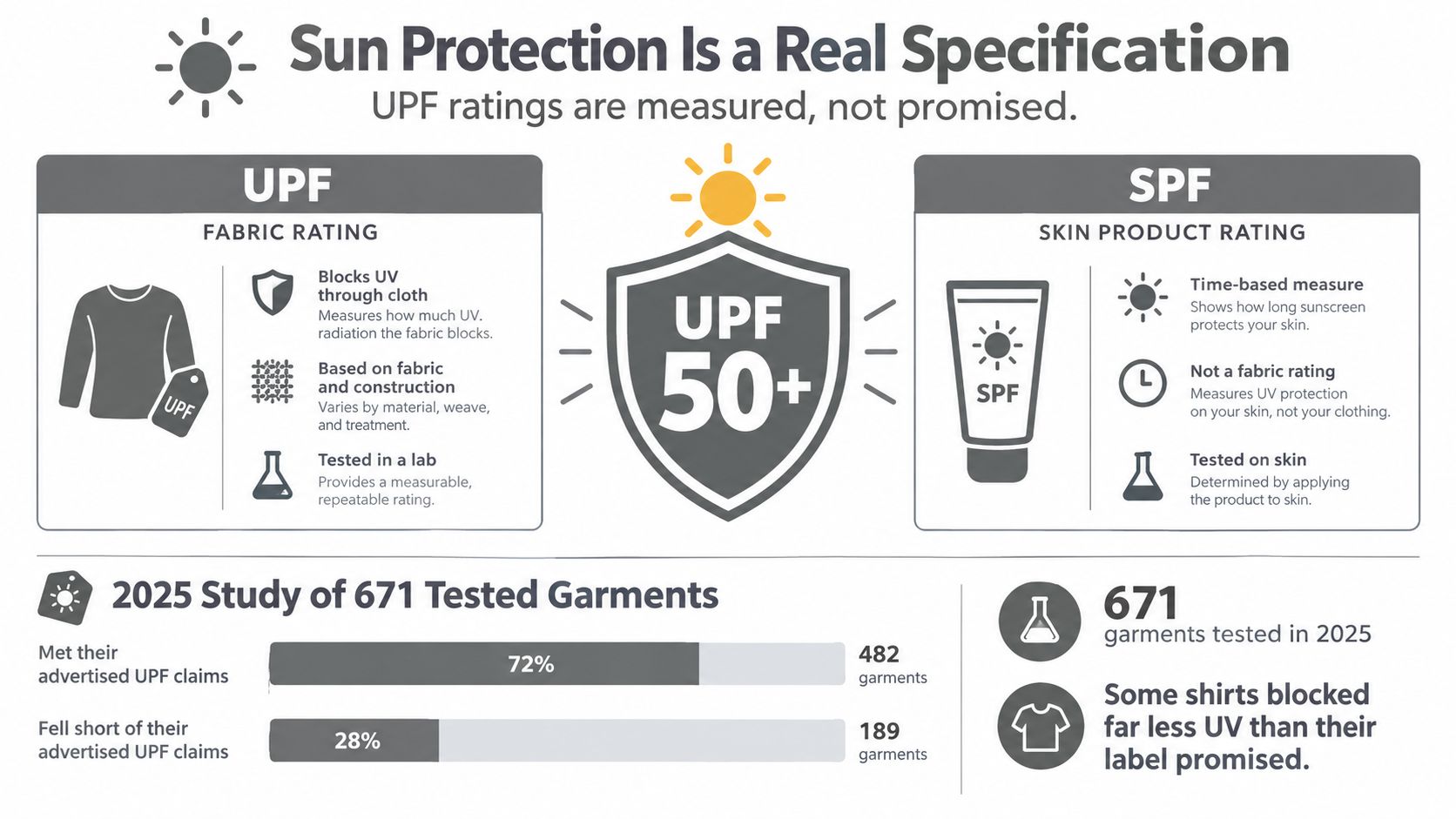
A 2025 study of 671 golf apparel items found that overall protection for vulnerable body sites was low, which means many garments left meaningful coverage gaps. The study of golf apparel and ultraviolet protection makes the practical point clear: fabric choice alone isn't enough. Cut, coverage, and how the garment behaves during movement all matter.
Check the parts that move
A polo can carry a UPF label and still expose more skin than you expect when you swing. Look for:
- A structured collar: It should stand up when you need extra neck coverage rather than collapsing immediately.
- Useful sleeve length: Sleeves reaching around mid-bicep provide more coverage than very short caps.
- A stable hemline: The shirt should stay tucked, or sit long enough to cover the waist when you bend toward the ball.
- Opaque fabric under stretch: Hold the material up to light and inspect the shoulder and side panels, where tension can change coverage.
Treat UPF as one layer of defense, not permission to skip sunscreen, a hat, or shade. Golfers with fair skin and anyone planning a long outdoor day should favor a polo with a tested UPF rating over one that only says “sun safe.”
A dark navy or heathered technical polo may also look more refined than a pale novelty print, but color isn't proof of protection. The label and garment construction matter more than the patriotic palette.
For the rest of your sun setup, pair the shirt with a properly covering cap or visor. This guide to the best golf hat sun protection helps complete the outfit without asking the polo to do every job.
The visual below shows the difference between a rated textile and a product applied to skin. Use it as a reminder to evaluate the shirt, not just the marketing language.
Loud Flag or Quiet USA, Picking the Right Look
A loud USA polo announces itself before you say hello. It may feature a full flag, a large chest emblem, or aggressive red-white-and-blue blocking. That can be exactly right for Ryder Cup viewing, a Memorial Day scramble, an amateur tournament with a theme, or a casual club patio where personality matters more than restraint.
The quiet version works harder across the rest of your calendar. Think muted navy heather, chambray, a restrained micro-stripe, or embroidery in one accent color. It reads as golf clothing first and patriotic clothing second, which is why it works better for a business dinner, a private club with a stricter dress code, or any setting where a chest-spanning flag would feel like fancy dress.
Details that change the impression
The collar is the first giveaway. A self-collar keeps the shirt clean and understated, while contrast tipping makes the design more athletic and visible. A two-button stance feels classic; a deeper button opening can look more casual and exposes more of the neck.
Sleeve cut matters too. A close, structured sleeve looks sharper with chinos, while a roomier sleeve supports a relaxed patio outfit. Don't confuse a loud print with quality. Large graphics often hide thin, inexpensive polyester, while a tonal design forces the fabric, knit texture, and construction to carry the shirt.
| Feature | Loud Flag Graphic | Quiet Tonal USA |
|---|---|---|
| Best setting | Themed events, patriotic scrambles, casual patios | Private clubs, dinners, mixed social venues |
| Visual effect | Immediate, festive, highly visible | Refined, versatile, easier to repeat |
| Collar choice | Contrast tipping can support the athletic look | Self-collar usually keeps it polished |
| Bottom pairing | Solid navy, white, or charcoal | Stone, charcoal, navy, or tailored khaki |
| Main risk | Can read as a costume | Can disappear if the detail is too small |
My rule is to match the volume of the shirt to the number of people who already know why you're wearing it. At a themed event, go bold. Everywhere else, choose a design with one clear USA cue, not five competing ones.
Outfit Ideas for the Course and the Clubhouse
The easiest way to style a USA golf polo is to make it the only loud element. Keep the trousers, shoes, and accessories calm, then let the shirt provide the identity. That approach also makes the same polo useful beyond the course, which is the whole point of buying a dual-purpose piece.
Men on the course
Start with a tonal USA polo, mid-rise technical shorts in stone or charcoal, low-cut white golf socks, and clean spikeless leather shoes. The neutral shorts let a navy heather, restrained stripe, or small embroidered emblem carry the outfit without turning the look into a uniform.
For very warm play, choose lighter shorts with enough room through the seat and thigh. Wrist sweatbands can be practical during humid rounds, but keep their color quiet unless the event calls for a more expressive outfit.
Men at the clubhouse
Swap the shorts for tailored chinos, add a knit belt, and finish with a clean white sneaker or loafer. Tuck the polo if the hem and collar support it. Leave it untucked only when the cut is intentionally designed for that length, not because the shirt has lost its shape.
A quarter-zip works for a cool evening, while a fine merino sweater adds warmth without burying the collar. The polo should still show enough at the neck to remain the visual anchor.
Women on the course
A quiet USA polo works with a navy skort or cropped pant, a white visor, and a mid-profile golf shoe. Keep the bottom solid and let the shirt determine whether the outfit feels traditional, sporty, or contemporary.
For the 19th hole, tuck the polo into wide-leg cropped trousers. Delicate gold studs and a structured crossbody make the transition feel considered without competing with the shirt. If the polo has a bold graphic, remove other visible logos and let it stand alone.
Golf apparel also works best when it fits the actual social rhythm of the day, from the range to drinks afterward. Resources focused on dressing for golf can help when you're balancing comfort, course rules, and clubhouse expectations. For golfers thinking about the wider community and business side of the sport, predictable membership growth with GolfRep offers a useful adjacent perspective on golf participation and connection.
The final check is visual balance. USA polo first, neutral bottom second, simple footwear third. Add color through one accessory at most.
Care and Washing Without Killing the Fabric
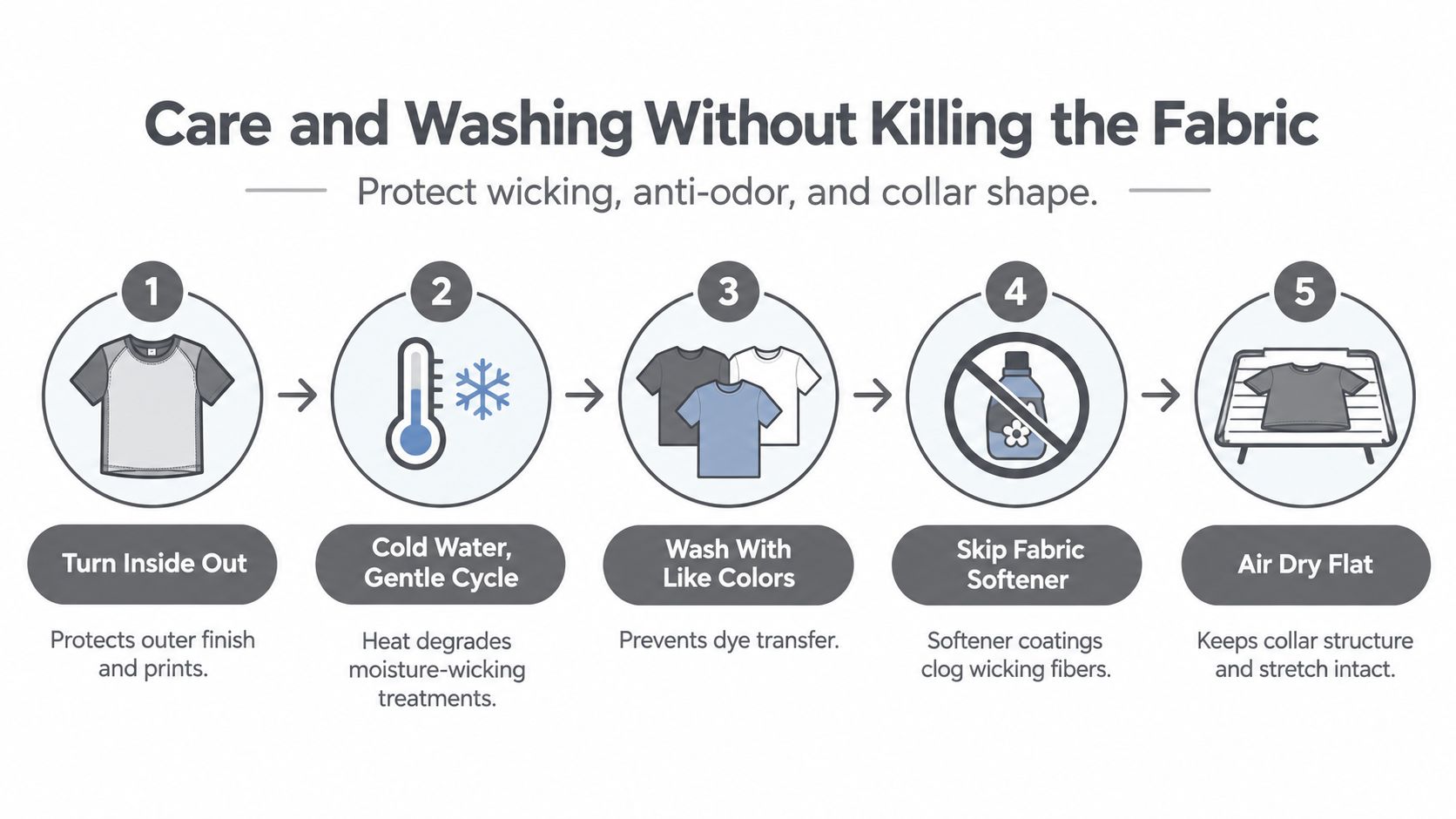
Performance polos don't fail only on the course. Many lose their shape, wicking feel, or collar structure in the laundry room. Polyester, elastane, prints, and technical finishes need a gentler routine than a batch of cotton towels.
The wash routine
Turn the polo inside out before it enters the machine. Wash it in cold water on a gentle cycle with similar colors, using a mild detergent without optical brighteners. Skip fabric softener. Its coating can clog the channels that help move moisture through performance fibers.
Treat stains promptly with a small amount of mild soap. Chlorine bleach can weaken fibers and damage the clean whites in a patriotic design, so don't reach for it just because the shirt contains white panels.
Drying and storage
Hang the polo to dry when possible, or use a low tumble setting. High heat can damage elastane and encourage self-fabric collars to curl. If you do use the dryer, remove the shirt promptly instead of allowing heat-set wrinkles to form.
Fold performance polos for storage. Hangers can pull at shoulder seams over time, especially when the shirt is still slightly damp. Rotate through three polos so each one has time to recover its shape between wears, and check the care label before changing the routine for a specific fabric.
Your USA Golf Polo Buying Checklist
Before you add a shirt to the cart, run five checks. They take less than a minute and eliminate most of the regrettable purchases.
- Fabric weight is listed. Look for a knit construction and a useful GSM figure, not vague language about lightweight comfort.
- Moisture management is explicit. “Moisture-wicking” or “quick drying” tells you more than “breathable cotton.”
- UPF has a real rating. Prefer a stated rating such as UPF 30+ or UPF 50+, along with clear information about garment coverage.
- The design matches your venues. Choose a flag-forward graphic for themed events, or a tonal USA detail for club patios and dinners.
- The size chart matches a shirt you own. Measure a polo that fits well across the chest, shoulders, sleeve, and hem, then compare those measurements instead of guessing from a letter size.
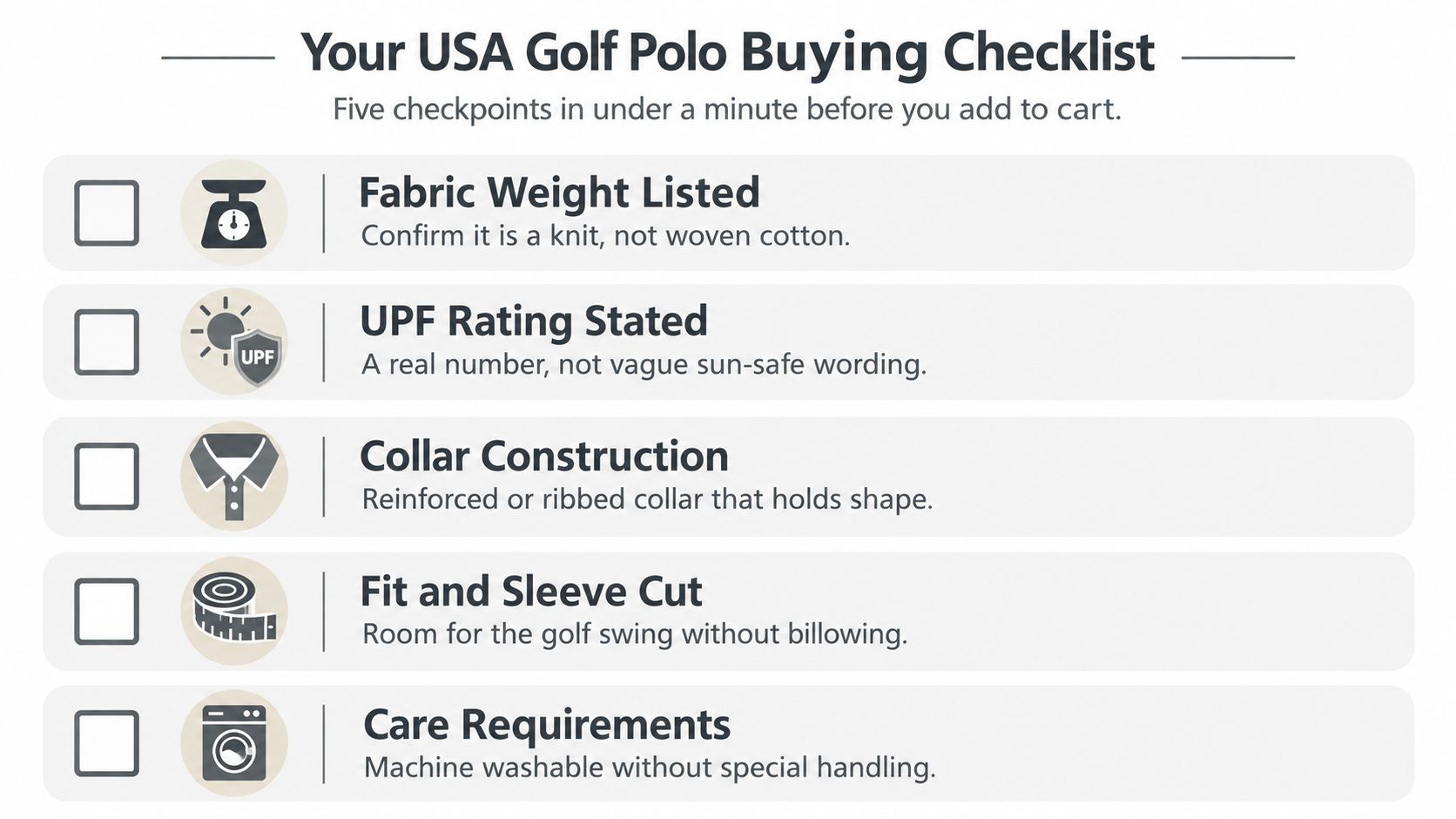
Collar construction deserves a final look. A reinforced or ribbed collar should hold its line after movement and washing. Also check the care requirements. If the shirt needs delicate handling you won't realistically provide, it isn't a practical golf shirt, regardless of how good the product photos look.
2ndShotMVP's tonal USA designs fit the dual-purpose brief by offering golf pique polos intended to work across competitive rounds and more polished club settings. Their approach favors modest patriotic palettes over oversized graphics, which makes the shirt easier to pair with neutral golf and lifestyle clothing.
Choose the polo in your cart that passes all five checks, then compare its measurements with a shirt you already trust before ordering. 2ndShotMVP offers USA-themed MVP polos alongside premium golf hats, beanies, and lifestyle apparel for men and women, so you can build the course-to-club outfit around a coherent design rather than a novelty graphic.

