

You're standing by the first tee with a coffee in one hand and a golf glove in the other. The morning is cold enough for another layer, but not cold enough for a jacket, and the wool sweater in your car feels like something your grandfather wore to a committee meeting. You pull on a quarter zip, zip it halfway, and suddenly the outfit works for the range, the clubhouse, and the Friday lunch meeting afterward.
That's the appeal of quarter zip golf apparel. It's technical enough for a full swing, polished enough for business casual, and adaptable enough to handle a round that starts chilly and finishes warm. I've worn them through frosty starts, breezy shoulder seasons, and post-round commutes, and the lesson is simple: the right quarter zip earns permanent closet space. The wrong one is just expensive sweatshirt fabric with a golf logo.
Why the Quarter Zip Became Golf's Go-To Layer
At 7:15 a.m., the range has a thin October frost on it. A dozen golf bags sit against the wall, and nearly every side pocket has the same pullover hanging out of it. Not a sweater. Not a noisy shell. A quarter zip.
That quiet takeover makes sense once you wear one through a full round. The fabric adds warmth without the stiffness of a wool sweater, the collar protects your neck, and the front zip gives you a quick vent when the sun comes up. You can pull it off between nines, stuff it over a polo, or leave it open while you wait for the group ahead. A wind shell can handle a gust, but it often feels too slick indoors. A v-neck sweater looks tidy, but it doesn't manage sweat or movement as well.
The practical advantage on the course
Golf creates a strange clothing problem. You need warmth while standing still, airflow while walking, and unrestricted movement during the swing. The quarter zip solves that problem with a flexible middle layer. A partial zip lets you adjust temperature without removing the garment, and a clean pullover silhouette doesn't flap around when you turn through the ball.
The garment also works with the clothes golfers already own. A tucked polo gives it a collar to frame, fitted trousers keep the shape sharp, and clean spikeless shoes complete an outfit that looks intentional instead of improvised. That matters because modern club dress codes have moved toward relaxed performance clothing, while golf itself has absorbed more athletic-fit tailoring.
The shift from course-only apparel to everyday wear happened quickly. A 2023 fashion feature on the golf quarter zip's office rise notes that performance quarter zips were still mostly associated with golf courses “just a decade or so ago,” yet had become common in offices, country clubs, and on Wall Street by 2023. The same history connects golf clothing's wider crossover to the business-casual shift of the 1980s and 1990s, when washable, comfortable golf-inspired pieces became acceptable office wear.
Clubhouse rule: If a layer looks right with a tucked polo and doesn't fight your backswing, it has a life beyond golf.
Why it works beyond the clubhouse
The quarter zip now sits between technical sportswear and everyday office casual. It signals that you care about fit and function, but it doesn't look like you came straight from a training session. That middle ground gives it more range than a traditional golf sweater and more polish than a basic fleece.
It also photographs well during club events, team matches, and social rounds. If your club is documenting the season, tools that help teams collect photos from every match make those recurring outfit details impossible to miss. The quarter zip appears again and again because it works in the moments around the golf, not just during the swing.
For more context on the broader shift, this guide to golf fashion trends captures why athletic layers now move comfortably between the course and daily life. The quarter zip didn't replace every sweater or shell. It became the dependable default when you want warmth, movement, and a presentable silhouette in one piece.
What Exactly Is a Quarter Zip Golf Top
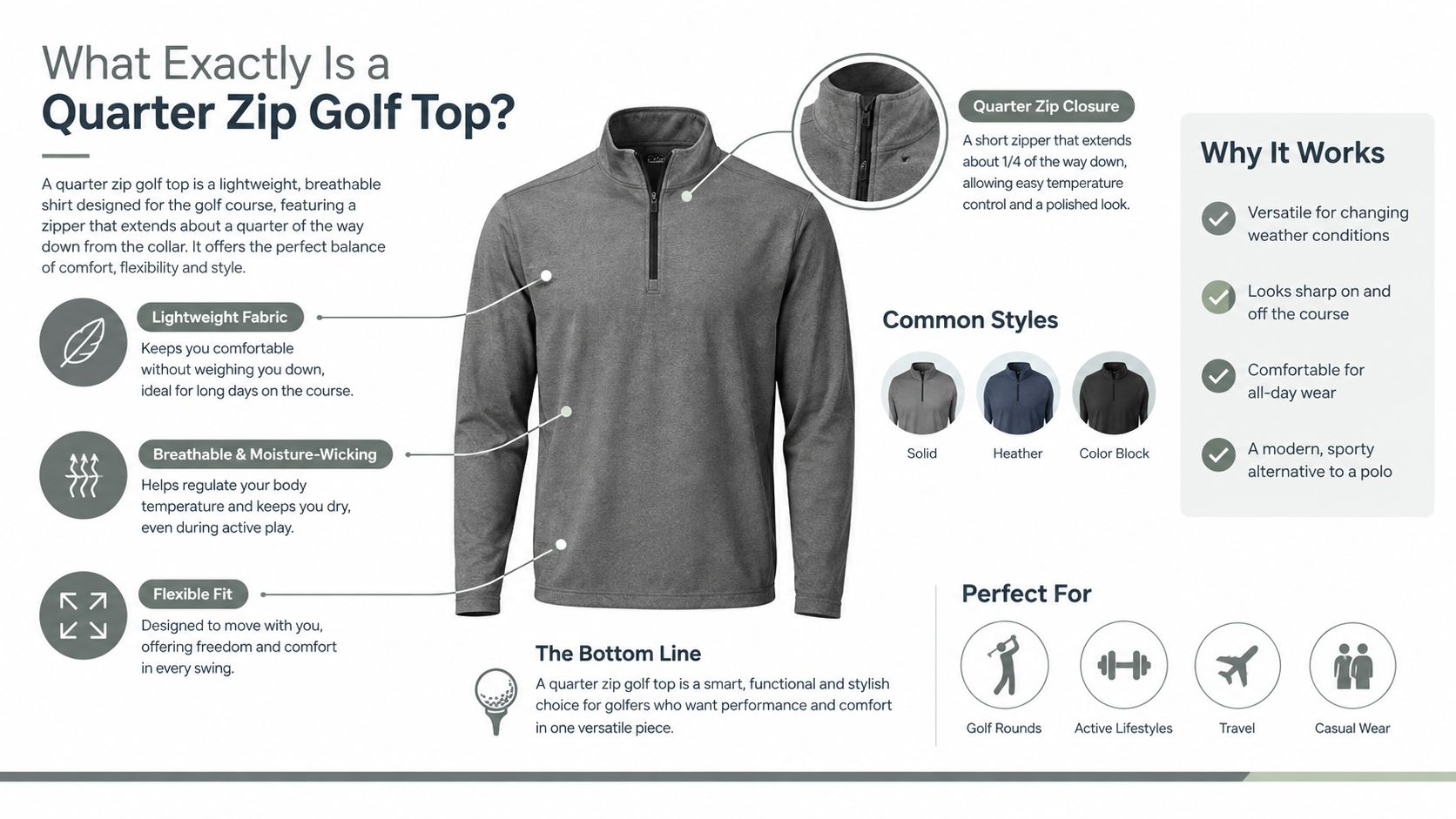
A proper quarter zip golf top is a performance mid-layer, not merely a pullover with a short zipper. Its design comes down to three areas: the collar, the zipper track, and the body.
The collar usually stands upright when zipped and folds flat when open. A ribbed or self-fabric collar traps warmth around the neck without becoming bulky. The centered zipper should run cleanly down the chest and finish around the upper torso, with a chin guard that prevents the zip from rubbing when you close it fully.
The body is where golf-specific construction separates itself from generic athleisure. Set-in sleeves can create a traditional shape, while raglan sleeves often give more room through the shoulder. Side panels, gussets, and carefully placed seams help the fabric follow your torso instead of pulling across it during rotation.
The details that make it golf-ready
Look for cuffs that stay near the wrist without bunching under a glove or jacket. The hem should sit below the belt line and stay in place when you hinge forward into address. A slight drop-tail shape can help, but it shouldn't hang so low that the pullover looks sloppy off the course.
Seam placement matters too. Flat or covered shoulder seams reduce friction and avoid creating a hard ridge beneath a shell. The fabric should stretch through the shoulders, upper back, and arms, then recover rather than sag after repeated wear.
The biggest distinction is the fabric's job. A performance golf quarter zip uses a moisture-managing synthetic blend, commonly polyester with spandex, so sweat moves away from the skin and the garment dries promptly. Polyester-based constructions also hold their shape, while spandex adds the flexibility needed for a full turn.
Cotton can feel pleasant in the pro shop, but it retains moisture and can leave you colder after perspiration or a sudden change in weather. Guidance from Golf.com's fall golf layering advice makes the same practical distinction between cotton and synthetic blends.
A quarter zip should feel like a temperature control, not a blanket. If it makes you overheat during the first few holes, the fabric is doing too much.
Fabric, Weight, and GSM Compared
The label “midweight” tells you almost nothing. GSM, or grams per square metre, gives you a more useful sense of how much fabric you're buying, although weave, brushing, and stretch still affect the final feel.
For spring and fall golf, technical layering guidance places quarter zips in the 150 to 250 GSM range. Some lightweight models use 145 GSM fabric to balance warmth, breathability, and movement, as described in technical quarter zip layering guidance. Higher GSM generally adds warmth and structure. Lower GSM usually improves breathability and reduces bulk, but it won't block a raw breeze on its own.
Three fabric families worth knowing
Brushed polyester fleece, roughly 240 to 300 GSM, is the warmest option. It suits cold starts, slow-paced rounds, and golfers who spend more time standing than walking. The brushed interior feels comfortable over a polo, but the extra mass can make the backswing feel less crisp and can become awkward under a jacket.
Double-knit polyester or poly-spandex, roughly 180 to 240 GSM, is the best all-round choice. It gives you enough insulation for a cool morning while remaining flexible during an active round. This is the range I'd choose for one quarter zip that needs to cover regular golf, travel, and office wear.
Lightweight performance knits with a brushed inner face, roughly 140 to 190 GSM, belong in a layering system. They work well in spring, fall, and warmer climates where a thick fleece becomes uncomfortable after the opening holes. Wear one over a polo, then add a windproof outer layer if the weather turns.
| Fabric Type | GSM Range | Best Season | Layering Role |
|---|---|---|---|
| Brushed polyester fleece | 240 to 300 GSM | Cold starts and colder rounds | Warm standalone mid-layer |
| Double-knit polyester or poly-spandex | 180 to 240 GSM | Spring, fall, and variable days | Versatile layer over a polo |
| Lightweight performance knit with brushed inner face | 140 to 190 GSM | Shoulder seasons and warm climates | Light mid-layer under a shell |
The right choice depends on how hard you play and how quickly conditions change. A fast walker who carries a bag may prefer a lighter knit, while a cart golfer on an exposed course may appreciate the insulation of a denser fabric. Don't confuse softness with performance. A plush interior can feel luxurious, but it may trap heat when you start moving.
The same rule applies to branding. A company can give ordinary polyester a proprietary name, but the garment still needs sensible weight, stretch, breathability, and construction. Read the material details before you pay for the story. A useful explanation of how fabrics move perspiration appears in this guide to moisture-wicking fabric.
Dialing in Fit for a Full Golf Swing
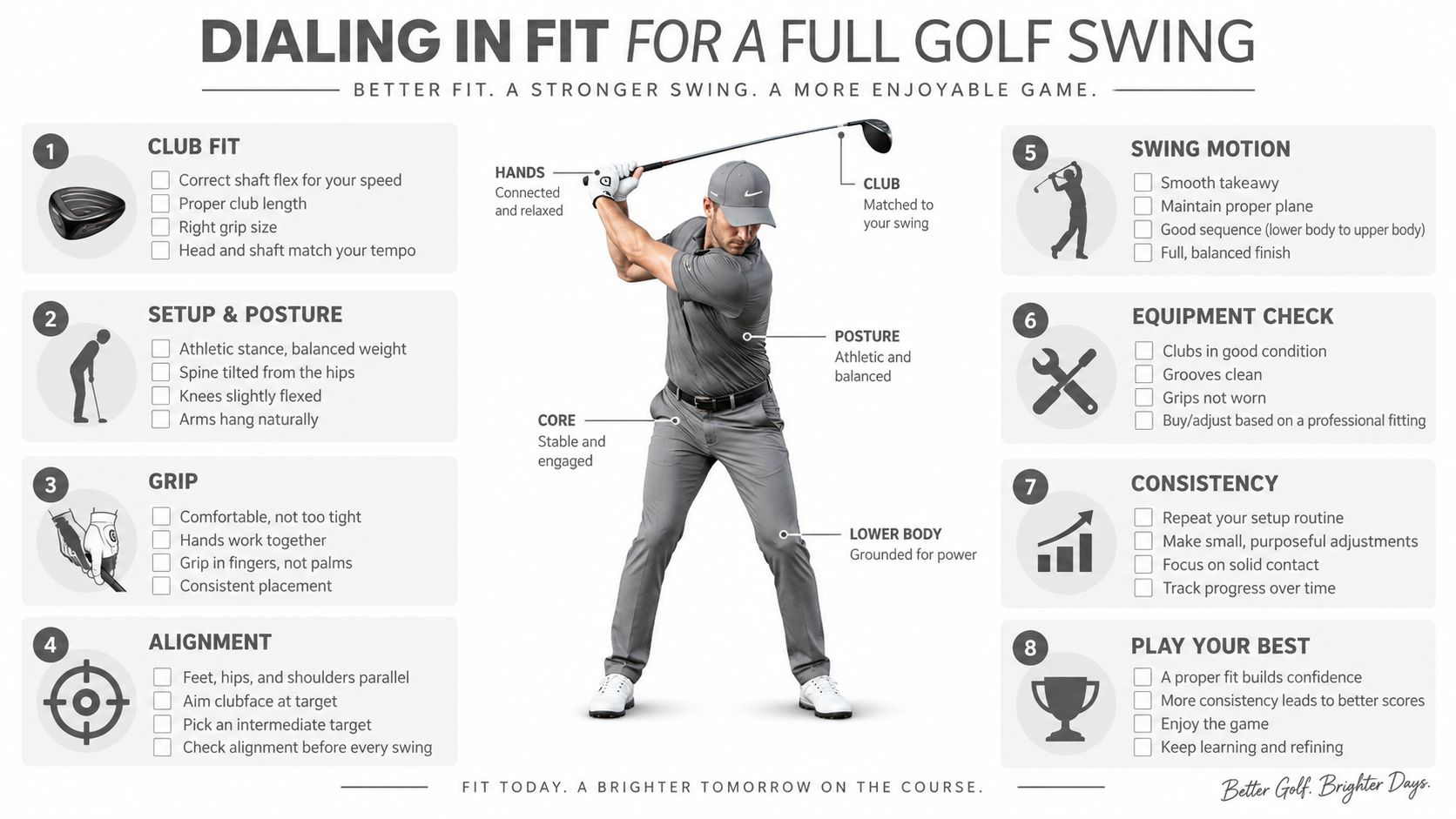
Most quarter zip purchases fail at the fitting room, not on the golf course. The garment may look sharp while you stand upright, then pull across your back, rise at the hem, or choke your arms the moment you make a real swing.
Start with the shoulders. The seam should land near the top of the deltoid rather than drooping down the upper arm. A dropped seam can look relaxed, but excess fabric tends to bunch at the top of the backswing and interfere with a clean shoulder turn.
Three checks to make before you buy
- Make a backswing. Raise your arms, rotate your torso, and notice the fabric across your upper back. You want stretch and room, not a tight horizontal pull. The sleeves should accommodate the biceps without looking ballooned.
- Hinge into address. Bend from the hips as if you're setting up to the ball. The hem should stay below the belt line and resist riding upward. A length that works only when you stand straight will become distracting by the second hole.
- Zip it to the chin. The zipper should stay centered instead of angling toward the chest. The collar should protect your neck without pressing into it, and the chin guard shouldn't scrape your skin.
The cuffs deserve a separate look. They should finish close to the wrist bone and remain there while you reach for a club. If they ride toward the forearm, the sleeves are too short or the cuff lacks recovery. If they bunch heavily, the garment may have too much sleeve volume for your build.
Fit changes with the use case
A slim athletic cut looks clean over a polo, but it can become restrictive if the brand narrows the upper arms. A relaxed cut gives you more room for layering, though it may bunch beneath an outer shell. If you play in a warm climate, prioritize armhole clearance and a lighter body over extra fleece.
If your swing repeatedly exposes tension in the shoulders or back, clothing isn't the only variable worth checking. A professional golf swing evaluation can help identify movement restrictions, while the garment test tells you whether the layer allows that movement. Keep the hood out of the equation entirely. A hood or bulky rear collar creates needless interference when you're trying to settle into address.
Fit test: If you can't make a slow-motion swing in the fitting room without tugging at the hem or collar, don't expect the garment to improve on the course.
Quarter Zip or Wind Jacket in 2026
The wind jacket is back in serious golf wardrobes, and it deserves a fair hearing. It beats a quarter zip when the forecast is breezy, wet, or unpredictable. The quarter zip still wins when you need warmth, quiet comfort, and a clean transition into the clubhouse or office.
A wind jacket is lighter, easier to pack, and better at shedding a shower. On an exposed coastal course or a mountain layout, it can cut through gusts without adding much weight. Its tighter, lighter construction also tends to flap less than older shell designs.
The quarter zip offers more warmth per ounce and layers more naturally over a polo. It feels less like emergency equipment and more like an actual outfit. That difference matters if you're going from the final green to lunch, a client meeting, or a travel day.
| Factor | Quarter Zip | Wind Jacket |
|---|---|---|
| Warmth | Better as a soft mid-layer | Limited unless layered |
| Wind protection | Moderate | Stronger in exposed conditions |
| Rain shedding | Usually limited | Better for emergency showers |
| Packability | Good, but bulkier | Excellent |
| Office transition | Cleaner and more polished | More obviously technical |
| Swing mobility | Excellent in stretch fabrics | Excellent in modern stretch shells |
| Best use | Cool starts and all-purpose wear | Wind, rain, and lightweight protection |
For temperatures below 55°F, the quarter zip is the stronger choice for a cool start or a round that begins cold and warms up, based on the practical recommendation in Golf Digest's wind jacket coverage. Choose the wind jacket for summer mountain golf, breezy links, or emergency rain.
The smart golfer owns both and chooses by conditions. Wear the quarter zip as the comfortable middle layer. Keep the wind jacket in the bag when the forecast threatens gusts or showers. If you want a dedicated shell for that job, this guide to a golf windbreaker for men is a useful comparison point.
Styling a Quarter Zip On and Off the Course
The quarter zip works because it doesn't demand attention. It frames the outfit, sharpens the polo underneath, and gives trousers or denim a clean top half. Treat it like the blazer of a golf wardrobe, not like a billboard for the brand.
For a tournament-ready course outfit, wear a navy quarter zip over a white performance polo, then add fitted golf trousers and clean spikeless shoes. The contrast looks crisp in person and photographs well without feeling formal. Charcoal works the same way with pale blue, white, or muted green underneath.
The best course combinations
A heather grey quarter zip is the easiest starting point. Pair it with black trousers for a sharper look, or with navy trousers for a softer contrast. Deep olive adds personality without becoming loud, especially with a cream polo and brown belt.
On colder mornings, swap the polo for a long-sleeve mock neck. That combination keeps the neckline clean and avoids the bulk that can appear when two collars compete beneath the zipper. If the quarter zip has a structured collar, leave the zipper open slightly so the layer looks relaxed rather than over-engineered.
Avoid pairing a loud print with another loud element. Aggressive color blocks, oversized logos, and bright technical panels often look fine beside a golf cart but stranded at a restaurant. A neutral layer gives you more combinations and makes the garment earn its place.
Making it work after the round
Off the course, replace golf trousers with dark denim or chinos. Leave the performance polo in place if the office is casual, or use a clean crew-neck tee for a less clubby look. Minimal leather sneakers keep the outfit modern, while simple boots make a charcoal or black quarter zip feel more substantial.
The fit should remain athletic but not painted onto your torso. A hem that sits neatly over chinos will look more natural than one designed only to stay tucked during a swing. Keep the accessories restrained. A well-shaped cap or beanie from a golf lifestyle collection such as 2ndShotMVP can carry the golf reference without turning the outfit into a uniform.
The strongest colors for crossover wear are heather grey, deep olive, navy, and true black. Buy one of those before you chase seasonal shades. A quarter zip that works with two pairs of trousers and several polos will outperform a more exciting piece that only matches one outfit.
Shopping Checklist Before You Buy
Ignore the marketing name and inspect the garment. A quarter zip earns a premium through fabric behavior, construction, and fit, not through a complicated label for polyester.
Pay for these features
- Useful fabric weight: Choose a weight that matches your climate and walking pace. A lighter knit suits warm shoulder seasons, while a denser construction provides more insulation for cold starts.
- Four-way stretch: Stretch in both directions across the torso and shoulders gives you more freedom through the backswing and follow-through than a fabric that only stretches across the chest.
- Flat shoulder seams: These reduce rubbing and help the pullover sit more comfortably beneath a shell or vest.
- A reliable zipper: Look for a smooth reverse-coil or molded zipper with a garage and chin guard. It should open without snagging and stay centered when closed.
- A stable collar: The collar should stand up against a breeze, lie flat when open, and reach the chin without scraping.
- Functional cuffs: Extended cuffs or thumb loops can help if you layer over a polo, but they aren't essential for every golfer. Choose them only if you like the feel.
The finish should survive repeated washing without turning clammy or losing its shape. Moisture management matters more than a soft hand feel in the pro shop. A brushed interior is comfortable, but it shouldn't make you overheat after the first few holes.

Skip the expensive distractions
Loud logos don't improve a swing. Exotic bonding, decorative panels, and proprietary fabric names often add cost without adding useful comfort. Heavyweight fleece is another poor choice for shoulder-season golf unless you know you play slowly in genuinely cold conditions.
Before checkout, make three checks. Try the garment with a slow swing motion, inspect the hem while hinged at address, and confirm the color works with at least two pairs of trousers already in your closet. If it fails any of those tests, it isn't a versatile quarter zip. It's a mistake with a zipper.
2ndShotMVP offers golf hats, beanies, and lifestyle apparel for men and women, with designs inspired by the game and intended for wear on and off the course. Visit 2ndShotMVP to find a headwear piece that complements your new quarter zip from the first tee to the 19th hole.

