

At 5:30 in the morning, the golf bag is packed, the coffee is doing its job, and the chair is covered with clothes for three different versions of the same day. You've got an 8 a.m. member-guest tee time, a client lunch in the clubhouse, and a strategy call waiting at the office in the afternoon. The old approach says you need separate outfits. The smarter approach asks whether one well-built look can handle all three.
That means a moisture-wicking polo that sits cleanly beneath a blazer, a lightweight layer for a windy back nine, trousers that pass as business casual, and a cap that looks intentional rather than borrowed from a weekend tournament. The biggest golf fashion trend this season isn't a logo, a neon color, or a dramatic silhouette. It's versatility, the ability of one outfit to move from work to tee time to dinner without looking overdressed or understyled.
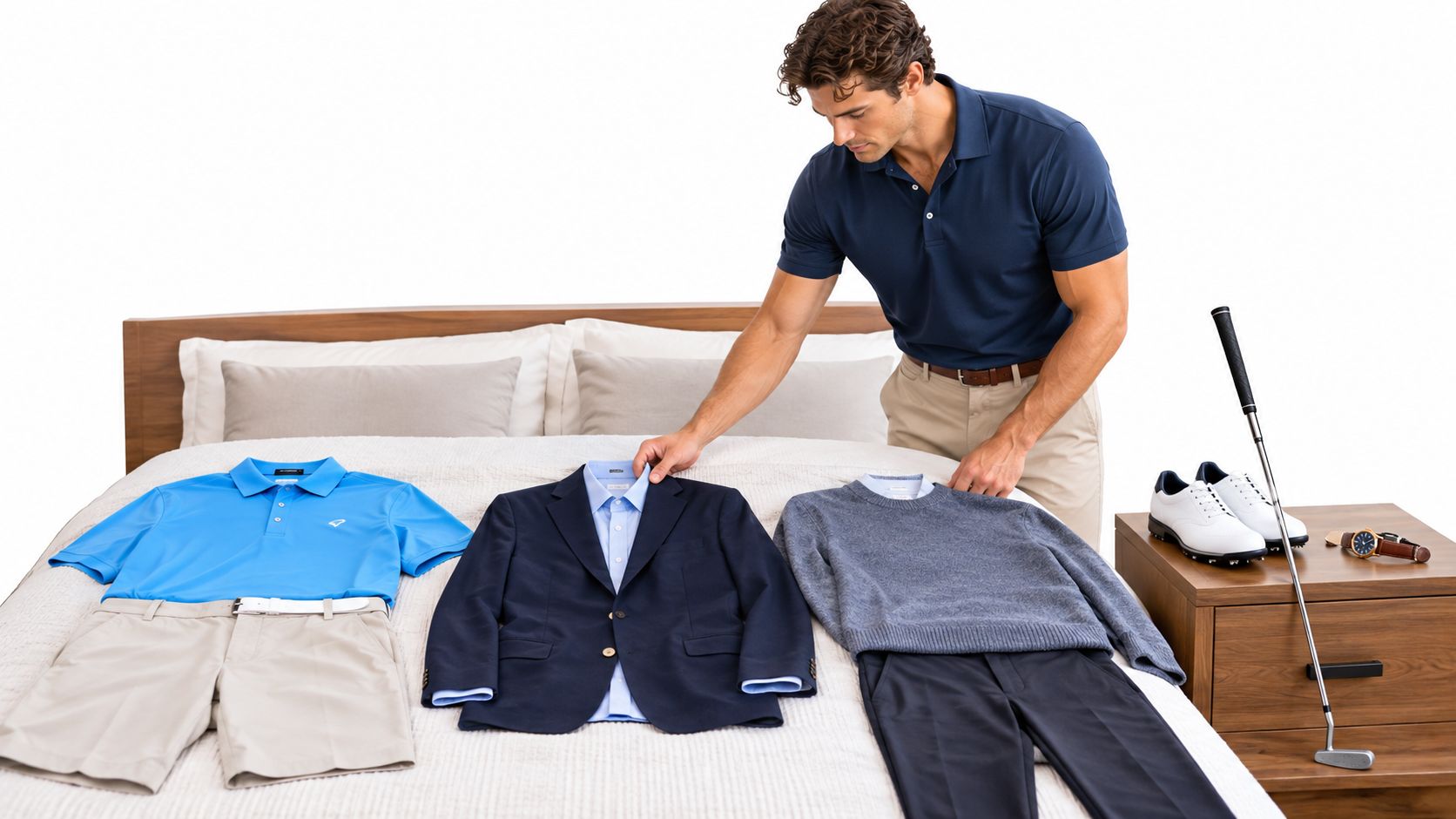
The Morning a Golfer Actually Gets Dressed
The first decision is the polo. A crisp navy or stone performance polo looks composed under an unstructured blazer, but it still gives you the stretch and sweat control needed for a full round. Avoid anything too glossy, too tight, or plastered with branding. The right shirt should look like menswear first and golf apparel second.
A lightweight quarter-zip or technical overshirt earns its place because the temperature rarely stays consistent across a golf day. It handles the cool start, the exposed back nine, and the walk from the parking lot to the clubhouse without forcing you into a bulky sweatshirt. Choose a layer with a clean front, restrained hardware, and enough room to sit over the polo without bunching beneath a jacket.
Practical rule: If a layer looks convincing over a polo and under a coat, it belongs in a work-to-course wardrobe.
Trousers create the bridge. Straight or relaxed-tapered golf trousers in navy, charcoal, taupe, or olive look more polished than traditional athletic bottoms, while still allowing a proper stance and rotation. They also make the afternoon transition easy. Remove the golf shoes, add a leather belt, and the outfit becomes office-ready without a full change.
The cap matters more than most golfers admit. Match it to the trousers rather than the polo, especially when you want a longer, cleaner visual line. A navy cap with navy trousers, or a stone cap with taupe trousers, makes the outfit feel planned even when the rest of the day is moving quickly.
If you're particular about how a polo feels, holds its shape, and carries a small mark, these polo shirt fabric and embroidery tips are useful before you buy or customize anything. Fabric weight, stretch, and embroidery scale can decide whether a polo reads refined or promotional.
The outfit works because every piece travels. That's the direction shaping golf fashion now: clothes need to perform on the course, respect the clubhouse, and survive the rest of the day.
Why Golf Fashion Became a Real Conversation
A golfer can now leave a client meeting, play nine holes, and join dinner without changing the entire outfit. That expectation explains why golf clothing has moved beyond a strict course uniform. The goal is a reliable formula for work, tee time, and the 19th hole, with headwear and lifestyle layers doing more of the styling work.
Golf clothing began with formal rules. In 1744, players were required to wear “a coat, waistcoat, and breeches of any color,” as documented in this history of golf-course dress codes. Later standards favored collared shirts and slacks, followed by the polo-and-khaki combination that still shapes traditional golf style.
The rules loosened as golfers' expectations changed. Televised professionals made athletic cuts and technical fabrics familiar. Social media showed golf outfits away from the course, while labels such as Malbon and Greyson presented golf as contemporary menswear rather than a closed-club uniform. A clean overshirt, refined trouser, or unstructured cap can now carry the outfit from the first meeting to a clubhouse lunch.
A UK survey found that 75% of golfers prefer modern golf clothing over older styles, while 74% like to look good while playing. It also reported that 52% spend more time choosing their outfit than selecting clubs. Those figures support a clear point: golfers now treat clothing as part of the experience, not an afterthought.
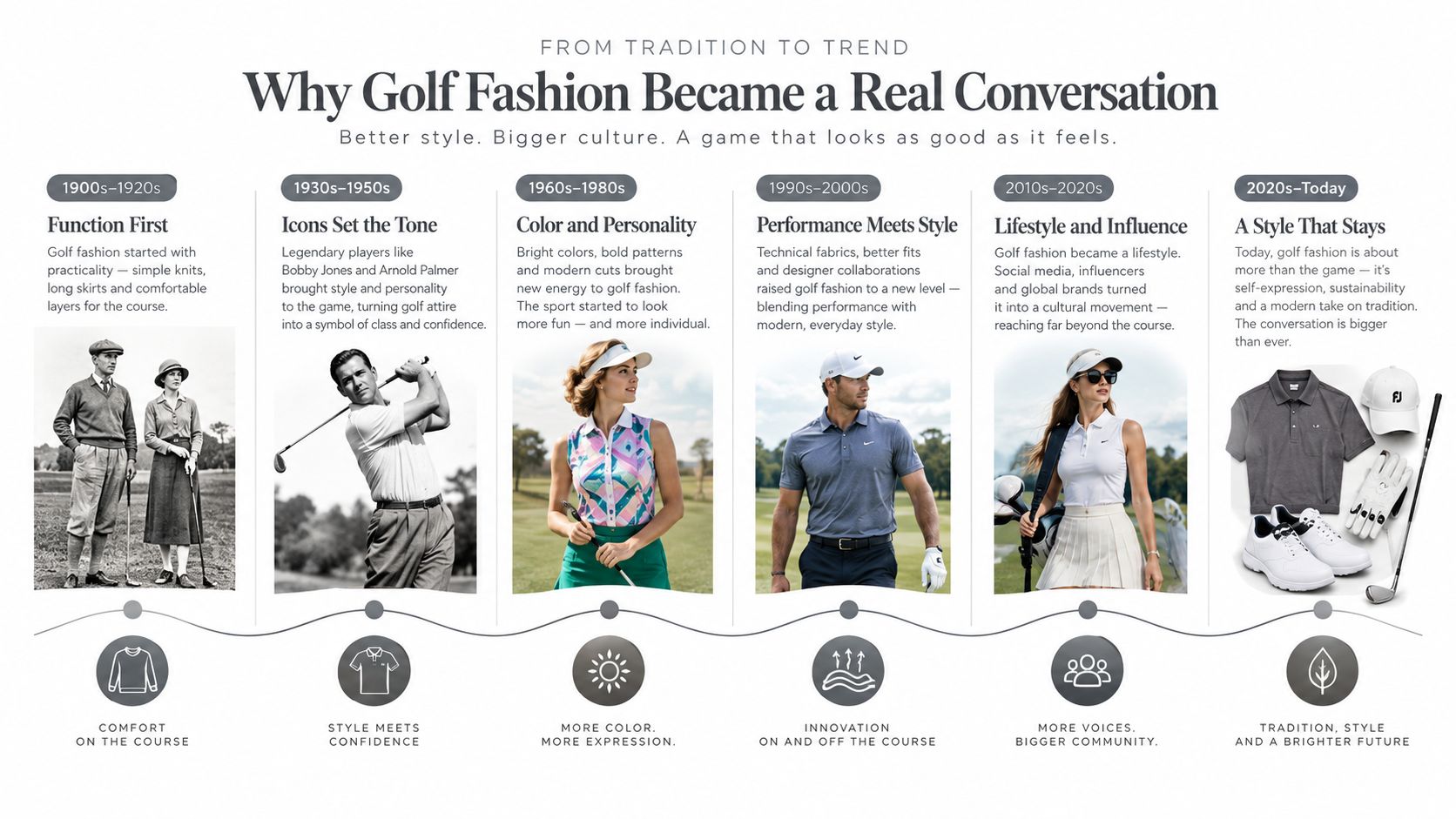
Clubs, ball flight, and handicaps still matter. So does an outfit that fits the setting, photographs well, and stays comfortable as the weather changes. Clothing affects confidence and movement, especially when the round ends with a clubhouse conversation or an informal dinner.
Golf style has become part of golf culture, not a costume you put on at the first tee.
Club standards still vary, so check local expectations before arriving. Use this browse golf apparel guidance to separate course-ready pieces from clothing reserved for the clubhouse. For more style direction, compare these cool golf apparel brands. The strongest outfits keep their shape, respect the setting, and remain useful after the round.
The Performance Fabric Baseline for 2026
A modern golf polo should solve several problems at once. It needs to move with your torso, manage sweat, allow air to circulate, and protect exposed skin from the sun. Those features have shifted from premium extras to baseline expectations in current golf wear reporting, as outlined in this overview of modern golf wear for 2026.
Moisture-wicking polyester-spandex blends are now the sensible starting point for polos and base layers. Polyester helps move sweat away from the skin, while spandex adds recovery and stretch. The result is a shirt that's less likely to cling during a humid round and more likely to hold its shape when you sit down for lunch.
Four-way stretch matters because the golf swing isn't a straight-line movement. A fabric that stretches across and along the body gives your shoulders, back, and hips room to rotate without pulling the shirt out of the waistband. Look for stretch that feels springy rather than thin. Excessively light fabric can lose structure and look tired by the 19th hole.
Breathability comes from more than a loose fit. Engineered knits, perforated panels, and ventilation zones can release heat while preserving a sharper silhouette. Knit collars also deserve attention. A collar that lies flat after repeated wear will look more polished beneath a blazer or quarter-zip.
What the features mean when you're shopping
Sun protection should be part of the specification, not an afterthought. Premium golf apparel commonly uses UPF 30 to UPF 50+, and UPF 50+ blocks more than 98% of UV radiation, according to technical apparel coverage from Print & Promo Marketing. Favor certified claims and lightweight, quick-drying construction, especially for shirts and headwear worn during long outdoor stretches.
| Feature | What It Does | Why It Matters in 2026 |
|---|---|---|
| Moisture-wicking blend | Moves sweat away from the skin | Keeps polos cleaner, drier, and more presentable |
| Four-way stretch | Allows movement in multiple directions | Supports a full swing without restrictive pulling |
| Breathable knit or mesh | Releases heat and improves airflow | Makes technical clothing more comfortable in warm weather |
| Built-in UPF protection | Helps reduce UV exposure | Treats sun safety as part of normal golf apparel |
| Engineered weave | Balances structure, stretch, and ventilation | Preserves a polished shape without sacrificing movement |
Recycled polyester and bio-based performance fibers are also influencing how brands source technical garments. You don't need to turn every purchase into a materials audit, but durability still matters. A shirt that performs across golf, travel, and work earns its place faster than a cheaper piece that only looks good on the hanger.
For a plain-English explanation of one of the most important fabric terms, read this guide to moisture-wicking fabric. In 2026, if a golf polo can't wick, stretch, breathe, and offer credible sun protection, it's just a collared shirt.
Colors, Patterns, and Silhouettes Defining the Season
The strongest golf fashion trends this season are quieter than the loudest social feeds suggest. You'll see color, pattern, and shape working together to make golf clothing more adaptable, not more noticeable.
Start with muted earth and coastal tones. Sage, sand, slate, stone, soft navy, and faded olive signal confidence without demanding attention. These shades flatter a wide range of complexions because they don't create the harsh contrast that bright white or saturated primary colors can produce. If your skin has warm undertones, sand, olive, and muted rust are easy wins. Cooler undertones pair naturally with slate, blue-gray, and soft navy.
Micro-patterns are the answer for golfers who want visual interest without looking like they're headed to a themed event. Small geometric marks, tonal stripes, subtle windowpanes, and restrained texture read clearly from the cart path but disappear into the background at lunch. Keep the pattern scale proportional to your frame. A smaller frame usually benefits from smaller repeats, while a broader frame can carry a larger but still controlled motif.
Three directions worth buying
| Direction | What It Signals | Best For | Works At |
|---|---|---|---|
| Muted earth and coastal tones | Understated confidence | Traditional dressers and tonal outfit builders | Private clubs, resort layouts, office settings |
| Micro-patterns and tonal stripes | Personality with restraint | Golfers bored by solids but wary of loud prints | Member-guests, lunches, casual dinners |
| Relaxed-tapered silhouettes | Modern ease and mobility | Players who want comfort without sloppiness | Course, commute, travel, and 19th-hole wear |
Silhouette is where many golfers get the update wrong. Relaxed-tapered doesn't mean oversized. It means the shirt has breathing room through the torso, the trousers fall cleanly from the hip, and the ankle narrows without clinging. Slightly longer polos stay tucked during a swing and look more deliberate when worn untucked after the round.
Straight-leg trousers are especially useful because they avoid the dated extremes of both skinny golf pants and shapeless chinos. Pair them with a clean sneaker for travel, a golf shoe for the course, and a leather loafer for dinner. The same trouser can handle all three if the hem and fabric have enough structure.
Style test: Stand in front of a mirror with your hands in your pockets. If the outfit looks balanced there, it'll usually work from the first tee to the dining room.
Headwear and Beanies as the Style Anchor
Build the outfit from the head down. Most golfers choose a shirt first, then add a hat as an afterthought. That's why the final look often feels disconnected. A cap or beanie can establish the color, texture, and level of formality before you choose the rest.
For a tournament day or member-guest, start with a structured performance cap. Pair it with a crisp polo, shorts or straight-leg trousers that fit well, and a clean golf shoe. A firm crown adds shape to a technical outfit, while a modest embroidered mark keeps the look appropriate for the clubhouse.
Match the cap to the trousers more often than the shirt. A charcoal cap with charcoal trousers creates a longer line, even if the polo is sage or cream. A navy cap with navy trousers gives a brighter top room to work without making the outfit look busy.
Choose the hat before the outer layer
A beanie changes the balance of a cold-weather outfit. Use merino or a fine knit with a quarter-zip, technical overshirt, or wool-blend jacket. Matching the beanie texture to the midlayer creates cohesion. A ribbed beanie with a smooth shell jacket gives useful contrast, while a chunky knit beanie usually needs a softer, more substantial outer layer.
You'll find more practical guidance in this guide to what to wear with a beanie. The principle is simple: the hat should look connected to the outfit, not pasted onto it.
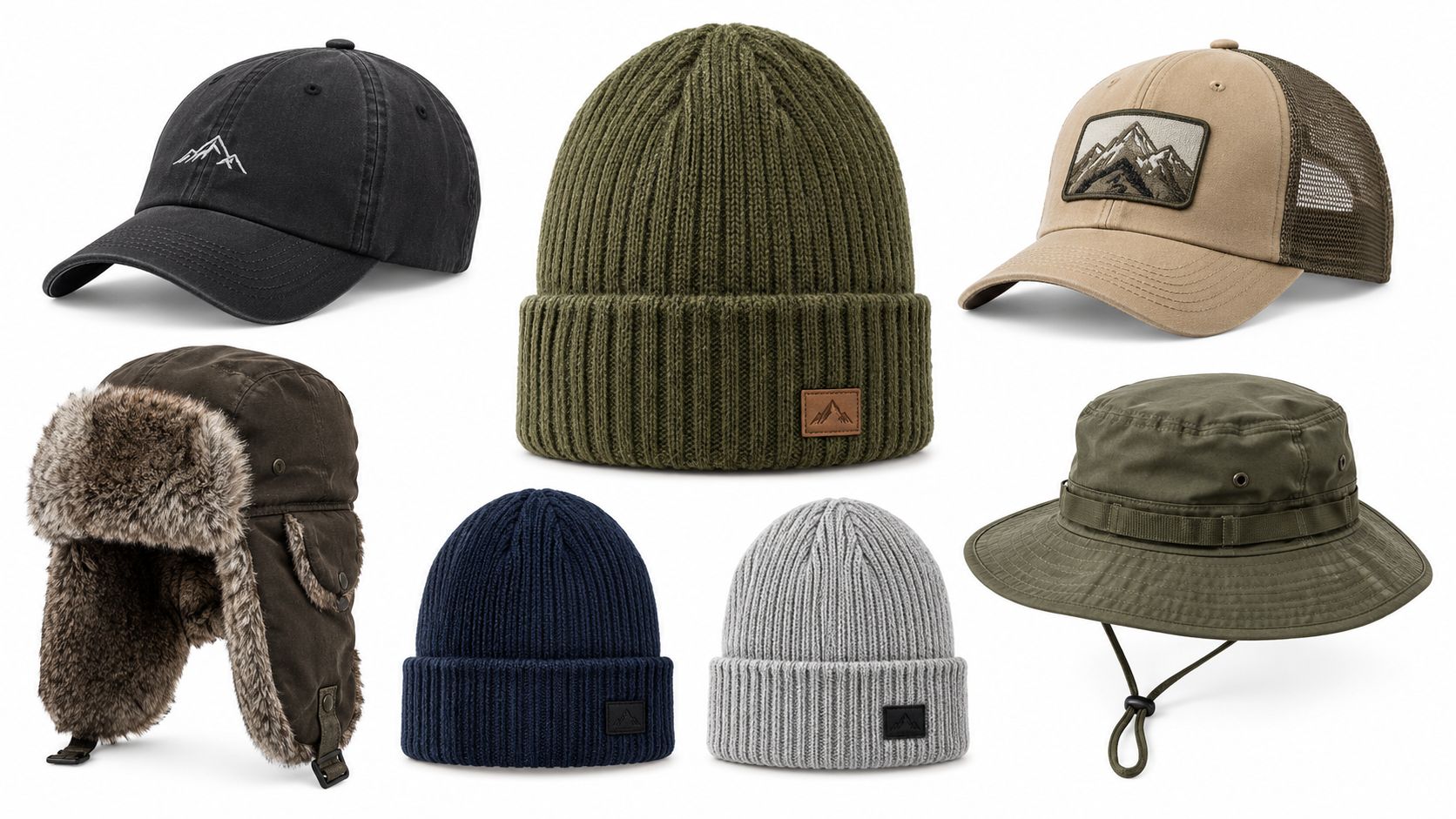
Visors make sense for sun-heavy rounds when you want maximum airflow and minimal pressure around the head. They look best with polos and clean sunglasses, not with several competing accessories. Wide-brim lifestyle hats can work for resort golf and lunch, but choose a firm shape and restrained color so the outfit feels intentional rather than costume-like.
Logo discipline separates polished headwear from promotional gear. Small embroidery looks refined. Oversized graphics can work for a casual round, but they're harder to carry into a client lunch or office setting.
A single well-chosen hat can refresh several outfits because it sits at the highest visible point of the look. Change the cap, keep the trousers and polo, and the outfit can feel completely different without buying another wardrobe.
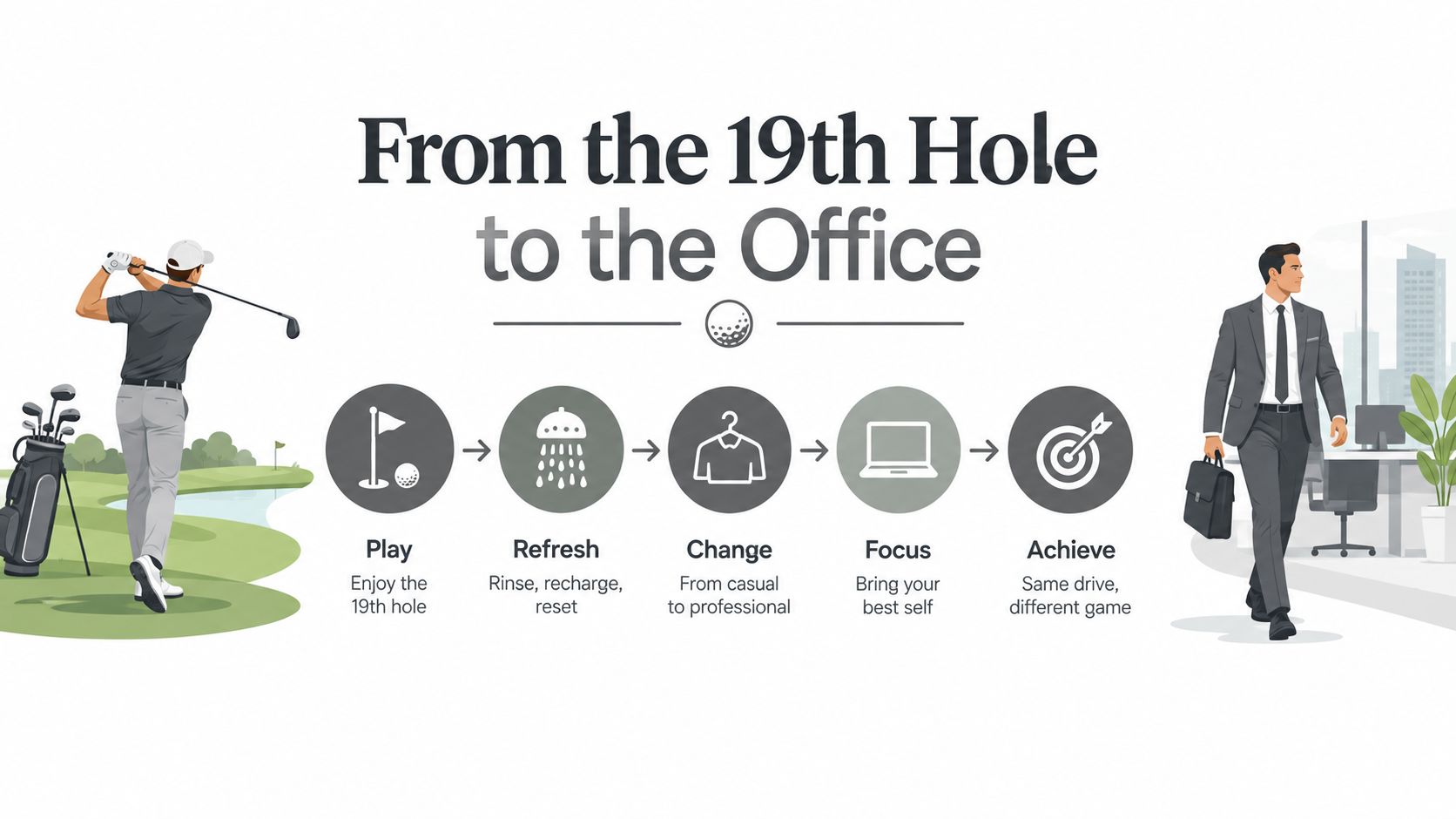
From the 19th Hole to the Office
The best hybrid golf clothing doesn't disguise itself as office wear. It uses the same visual language. Clean lines, controlled color, subtle branding, and useful layering make performance pieces acceptable in places where a technical shirt covered in contrast panels would look misplaced.
For a client meeting before golf, wear a performance polo under an unstructured blazer with straight-leg trousers. Choose a matte fabric and a collar that holds its shape. Navy trousers, a pale stone polo, and an olive or charcoal blazer create enough contrast for the office while staying relaxed enough for the course.
After the round, a jogger and knit quarter-zip can take you through a clubhouse lunch. The jogger should have a clean waistband, minimal pocket bulk, and a tapered shape that doesn't look like gym clothing. Keep the quarter-zip in a neutral color, then let the cap or watch add the personality.
Three formulas that earn repeat wear
- Client meeting to first tee: Performance polo, unstructured blazer, straight-leg technical trousers, leather belt, and understated cap. Remove the blazer before playing and fold it into the car or locker.
- Course to clubhouse lunch: Joggers, fine-gauge quarter-zip, low-profile golf shoes, and a structured cap. Swap to clean sneakers if the setting permits.
- Weekend travel to casual dinner: Merino hoodie beneath a topcoat, dark trousers, and minimal sneakers. The hoodie brings golf culture into the outfit without announcing that you've just left the range.
Shoes decide whether the transition succeeds. A low-profile golf shoe with a restrained sole can carry more easily into lunch than an aggressive, heavily lugged design. For office and travel, choose a clean sneaker or loafer that repeats the colors already in the outfit.
Keep the belt and watch consistent across settings. A simple leather belt, steel watch, and neutral footwear create continuity, so you don't need a second wardrobe for every stop of the day.
The commercial context supports this shift. One industry estimate placed worldwide golf equipment and apparel sales above US$20 billion in 2021, including US$9 billion in golf apparel and US$11.1 billion in equipment, with the US and Korea driving major growth since 2019, as reported by AGIF Asia. A separate forecast estimates the global golf apparel market at USD 4.42 billion in 2024, projecting USD 6.61 billion by 2030 and a 6.9% CAGR from 2025 to 2030, according to Global Growth Insights.
People are buying golf apparel as clothing, not just equipment accessories. Spend accordingly. A layer that works for golf, work, travel, and dinner delivers more value than a louder polo worn only on the fairway.
Refreshing Your Golf Wardrobe This Season
Before buying anything, test the wardrobe you already own. Pull out every golf-adjacent piece, including polos, trousers, shorts, quarter-zips, overshirts, shoes, caps, and beanies. Sort the regulars from the untouched garments. The ignored pile exposes the problem: fabric, fit, color, branding, or a narrow setting.
Audit the gaps before buying
Write five quick notes:
- Polos: Do you own a structured neutral that works under a blazer?
- Layers: Do you have a lightweight piece for wind and temperature changes?
- Bottoms: Can your trousers move from the course to lunch or the office?
- Footwear: Will your shoes still look right after the round?
- Headwear: Do your caps and beanies finish the outfit or compete with it?
Buy only where the wardrobe fails. You probably do not need another polo. You may need one layer that completes an outfit, one trouser that travels, or one hat that gives existing clothes a clear point of view.
Make the first three additions solve the day's key transitions. A structured performance polo in a versatile neutral handles tee time, travel, and casual office days. A mid-weight quarter-zip or technical overshirt adds polish over course trousers and works with denim after hours. A clean lifestyle cap or knit beanie anchors the look without dominating it.
Restyle before you restock. Build five outfits from your current clothes and those additions, then wear them in real settings: a Friday office, practice session, member-guest, clubhouse lunch, and casual dinner. Note whether each outfit needs a belt change, different shoes, or a quieter hat. That test separates useful golf clothing from pieces that only look appealing online.
The buying rule: Every new piece should solve at least two wardrobe problems before it earns a place in the rotation.
2ndShotMVP offers golf hats, beanies, and lifestyle apparel built around golf-inspired styling for on-course and off-course wear. Browse 2ndShotMVP for a headwear piece that can anchor a work-to-course-to-dinner outfit. Choose one versatile option, build three outfits around it, and test the combinations at your next round and 19th-hole stop.

