

A snapback isn't automatically premium because it has a clean logo, a slightly smug product photo, or a price that makes your wallet ask for a lie-down. Plenty of expensive caps are ordinary hats wearing better marketing. Plenty of inexpensive ones are perfectly serviceable until the crown collapses, the brim warps, and the sweat line starts telling the truth about your summer.
The useful question isn't whether a snapback looks fashionable. It does. The useful question is whether the construction earns the premium price. A better crown, smarter fabric, dependable fit, and finish that survives actual wear can justify paying more. A decorative rope, trendy wash, or oversized logo may just be a stylish toll booth. This guide separates the two, with practical advice for golf, office-adjacent outfits, women's wear, and everything that happens after the final putt.
Why Not All Snapbacks Are Created Equal
The popular advice says a snapback is a commodity. Pick a color, choose a logo, adjust the plastic tab, and get on with your day. That advice ignores the part where one cap still looks intentional after repeated wear while another resembles something rescued from beneath a car seat.
The difference starts with construction. Premium snapback hats are usually built around a structured crown, a firm front profile, a stable brim, and an adjustable closure designed to keep the fit consistent. A cheap cap may mimic the silhouette when it comes out of the package, but flimsy front panels and weak fabric can lose that shape quickly. You don't need a microscope to notice. Put both hats on, look sideways, and the bargain option often appears tired before you've left the house.
My buying rule: If the hat only looks premium while it's sitting untouched on a shelf, it isn't premium enough.
The history explains why the silhouette has staying power. Modern snapbacks trace a commercial lineage to the Brooklyn Excelsiors' 1858 cap concept, later becoming a standardized adjustable style in the 1950s and 1960s as plastic snap closures replaced earlier fitted or leather-strap approaches. The style returned to mainstream visibility in the 1990s, when hip-hop helped turn the snapback from sports equipment into a cultural fashion item, as Vans' history of snapback hats describes.
That arc left the hat with three jobs. It needs to work as athletic headwear, communicate identity through branding, and hold enough visual character to function as part of an outfit. Premium versions succeed when they handle all three without becoming costume-like.
The category is large enough to support serious design rather than treating caps as disposable extras. One independent market report estimates that more than 3.1 billion baseball caps were in circulation worldwide in 2025, with over 870 million units sold annually, according to baseball-cap market coverage. That scale creates room for both forgettable mass-market pieces and carefully finished hats. Your job is to tell them apart before the receipt becomes a keepsake.
The Anatomy of a Premium Snapback
A premium snapback behaves more like a well-constructed jacket than a disposable T-shirt. Both are technically garments, but one keeps its structure, sits correctly, and looks composed after repeated use. The other begins negotiating with gravity almost immediately.
Crown and front panels
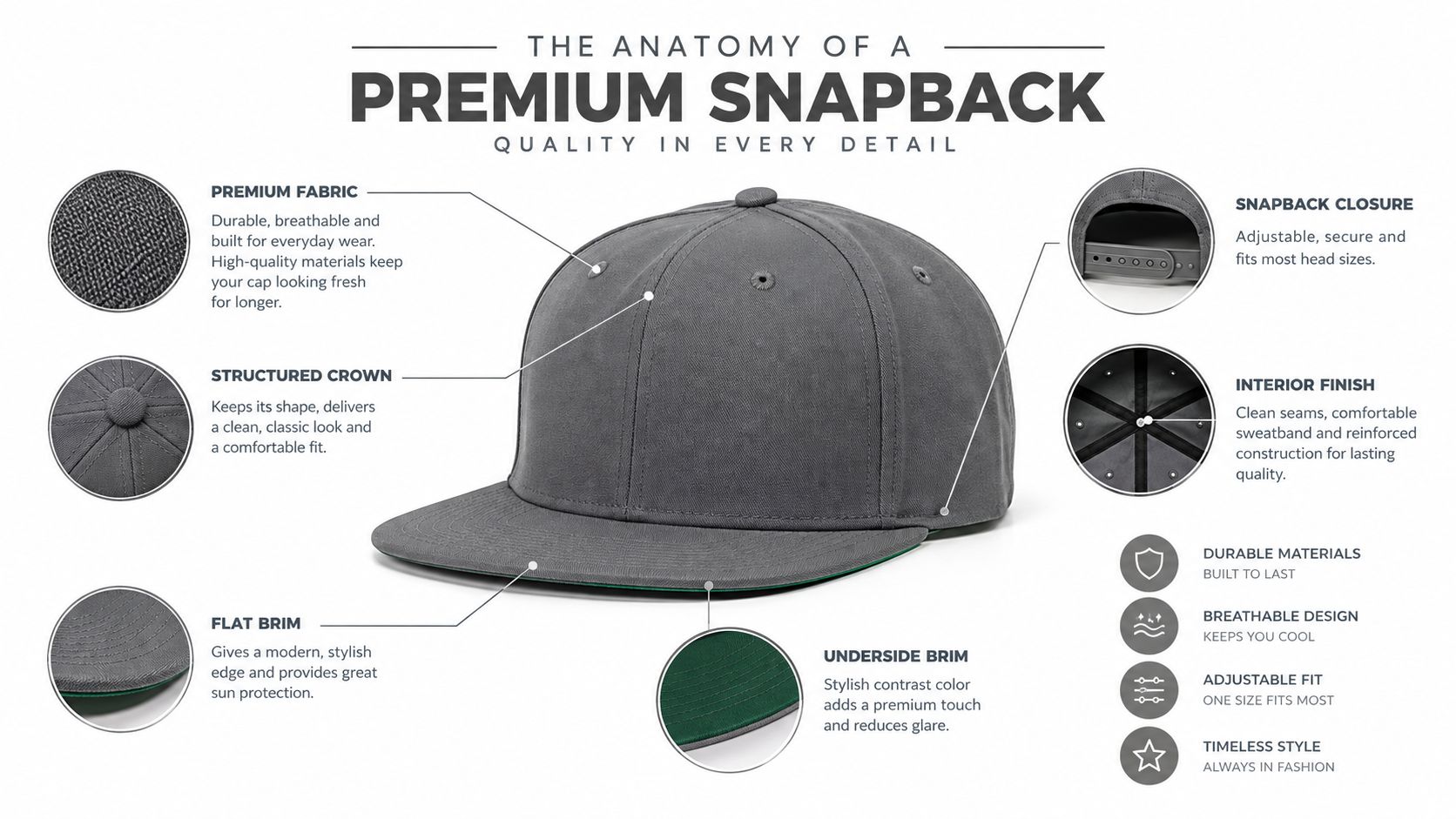
The crown creates the hat's identity. A structured crown uses reinforced front panels to maintain a high-profile shape instead of folding inward whenever you take it off. Buckram, a stiffening material commonly placed behind those front panels, helps preserve the silhouette and gives embroidery or printed branding a cleaner surface.
That structure matters on the golf course, where wind, movement, and frequent removal put more stress on a cap than a short walk to a coffee shop. It also matters in photographs. A stable crown keeps the front logo facing forward instead of developing the lopsided personality of a tired lampshade.
Brim and closure
The classic premium snapback uses a flat brim, although some modern designs use a flexible or lightly curved bill. Flat brims create a sharper, more streetwear-oriented profile. A slight curve looks more traditional and often feels less assertive with business-casual clothing. Neither is better by default. The right choice depends on whether you want the cap to announce itself or simply complete the outfit.
The rear closure should adjust without fighting you. Premium snapbacks typically use a plastic snap closure with about 5 to 8 adjustment positions, allowing the same crown geometry to accommodate a broader range of head sizes. This hat construction guide identifies the structured crown, flat brim, plastic closure, and buckram reinforcement as typical features of premium snapbacks.
Your inspection checklist
Before buying, run your fingers over the cap rather than trusting product photography.
- Press the front panels: They should feel supported, not floppy or papery.
- Inspect the seam: Stitching should look even, especially where the brim joins the crown.
- Test the brim: It should feel stable and return to its intended shape after gentle handling.
- Open the closure: The snaps should engage cleanly without feeling brittle.
- Check the sweatband: A comfortable interior edge matters more than a dramatic exterior detail.
- Look beneath the branding: The underside and interior often reveal whether the maker finished the hat properly or stopped once the logo looked acceptable.
For a clearer comparison between crown constructions, see this guide to structured and unstructured hats. The point isn't to chase the stiffest hat available. It's to buy a cap whose structure matches how you plan to wear it.
Materials That Actually Matter
Fabric changes the experience more than most logos do. It affects how the hat feels against your forehead, how it handles heat, how well it keeps its shape, and whether it ages with character or just looks worn out.
Cotton twill and wool blends generally feel more substantial and refined. Cotton twill suits lifestyle wear and post-round outfits because it has a familiar hand-feel and doesn't scream technical sportswear. Wool blends bring a richer texture and stronger shape retention, making them a good choice for cooler weather or a more polished look.
Polyester and performance-poly fabrics earn their place when the hat has work to do. They tend to suit hot-weather golf, outdoor use, and anyone who dislikes a heavy, damp cap. Mesh-backed designs use polyester netting in the rear panels to increase airflow, which helps reduce heat buildup during extended wear. These material distinctions are outlined in this snapback fabric guide.
Premium Snapback Materials Compared
| Material | Comfort and Feel | Durability and Shape | Best For |
|---|---|---|---|
| Cotton twill | Soft, familiar, and more lifestyle-oriented | Holds a clean shape when well constructed, but can show wear and stains | Everyday outfits, post-round drinks, casual office-adjacent wear |
| Wool blend | Richer texture with an upscale hand-feel | Strong shape retention and a more substantial finish | Cooler conditions, elevated casual outfits, understated branding |
| Polyester | Light and practical with a smoother technical feel | Durable and resistant to losing its basic form through active use | Outdoor wear, travel, athletic styling |
| Performance polyester | Light, quick-drying, and suited to moisture control | Built for repeated active wear and changing conditions | Summer golf and long days outside |
| Mesh-backed polyester | Airier through the rear panels | Durable when the mesh and seams are well finished | Hot rounds, outdoor events, warm climates |
The label won't tell you everything. A cotton cap with a weak crown can still disappoint, while a polyester cap with a thoughtful sweatband and strong stitching can become the one you reach for constantly. Material is the starting point, not the entire verdict.
Texture also affects style longevity. A plain cotton twill cap can move from a polo to denim without demanding attention. Laser-cut mesh looks sharper in a performance setting, but it may feel too technical with a wool overshirt. Recycled fleece and organic cotton can be meaningful material choices, but check whether the actual construction supports the price. Sustainability language shouldn't distract you from a crooked brim.
My blunt recommendation is simple. Choose cotton twill for versatile lifestyle wear, wool blends for texture and cooler-season polish, and performance polyester or mesh for heat and activity. If a product description makes grand promises but won't tell you the fabric composition, keep your money in your pocket.
Is a Premium Snapback Actually Worth the Price
Sometimes. Not because expensive automatically means better, but because specific construction details can make a cap more comfortable, more durable, and easier to wear across different outfits.
Recent market coverage reports that premium headwear priced above $50 is growing faster than value segments, with a reported 7.3% CAGR compared with 4.6%, as documented in headwear market coverage from Dataintelo. That direction suggests buyers are spending more on headwear, but it doesn't prove every premium hat deserves the price. A growing premium segment can still contain plenty of decorative nonsense.
Details that can earn the premium
Structured front panels are worth paying for if you want a crisp silhouette that stays presentable through regular wear. Buckram reinforcement is functional, not merely decorative.
A quality sweatband matters for anyone wearing a cap outdoors. It changes comfort directly, especially when the hat stays on through a full activity rather than a quick outfit photo.
Performance fabric or breathable mesh earns its cost in hot conditions. If moisture control and airflow solve a real problem for you, the upgrade is practical.
A well-finished brim contributes to the hat's visual life. It should sit evenly, feel secure, and suit the shape you want rather than forcing you to repair it every time it comes out of storage.
A restrained logo and versatile color can improve style longevity. Clean logos, earth tones, minimalist monochrome, and vintage washes are among the features identified in coverage of projected 2026 headwear trends. The same coverage also lists recycled fleece, organic cotton, laser-cut mesh backs, and rope-detail five-panels as features attracting buyer attention.
Details that are mostly aesthetic
A rope detail can look excellent. It can also be the only thing separating an ordinary cap from an expensive ordinary cap. Vintage washing may give a hat instant personality, but it doesn't automatically improve comfort or lifespan. Organic cotton and recycled fleece may align with your values, yet the premium is harder to justify if the crown, stitching, and sweatband feel mediocre.
Laser-cut mesh is useful when it improves airflow. If it merely creates a pattern on a panel that doesn't breathe meaningfully, you're paying for visual theatre. The same goes for elaborate branding. A large embroidered mark may be the reason you love the hat, but it isn't evidence of better engineering.
The honest verdict: Pay more for the parts you feel and use. Treat the parts you only photograph as optional.
A premium snapback makes sense for daily wear, regular outdoor use, or a wardrobe where one hat needs to move from the first tee to the 19th hole. It doesn't make sense to chase every trend on a cap you'll wear twice. Buy the fabric, shape, and comfort first. Let the decorative details audition afterward.
How to Get the Right Fit for Your Head and Your Look
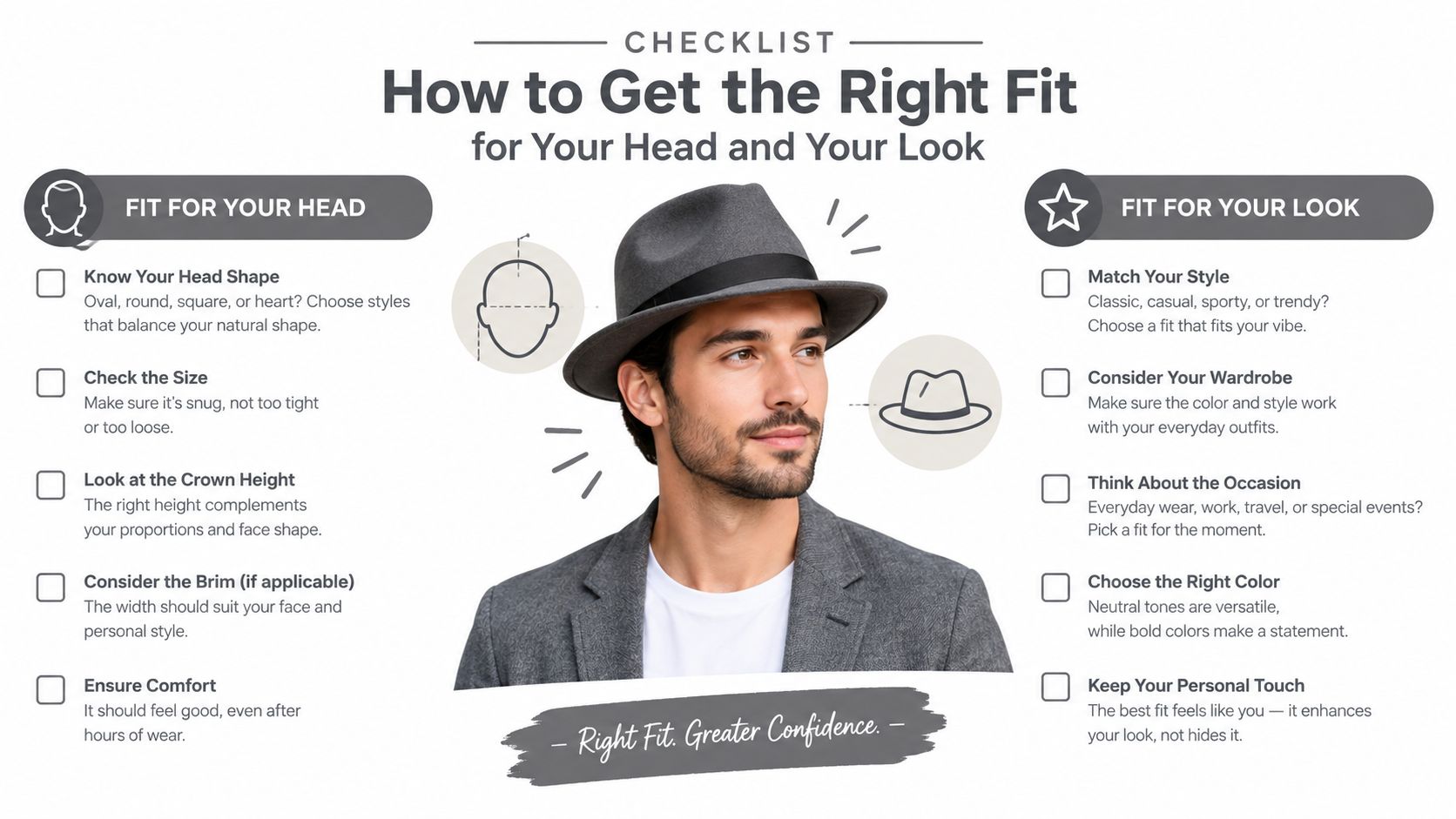
A hat can be beautifully made and still look wrong on you. The usual culprit isn't your face. It's the relationship between head shape, crown depth, brim structure, and closure tension.
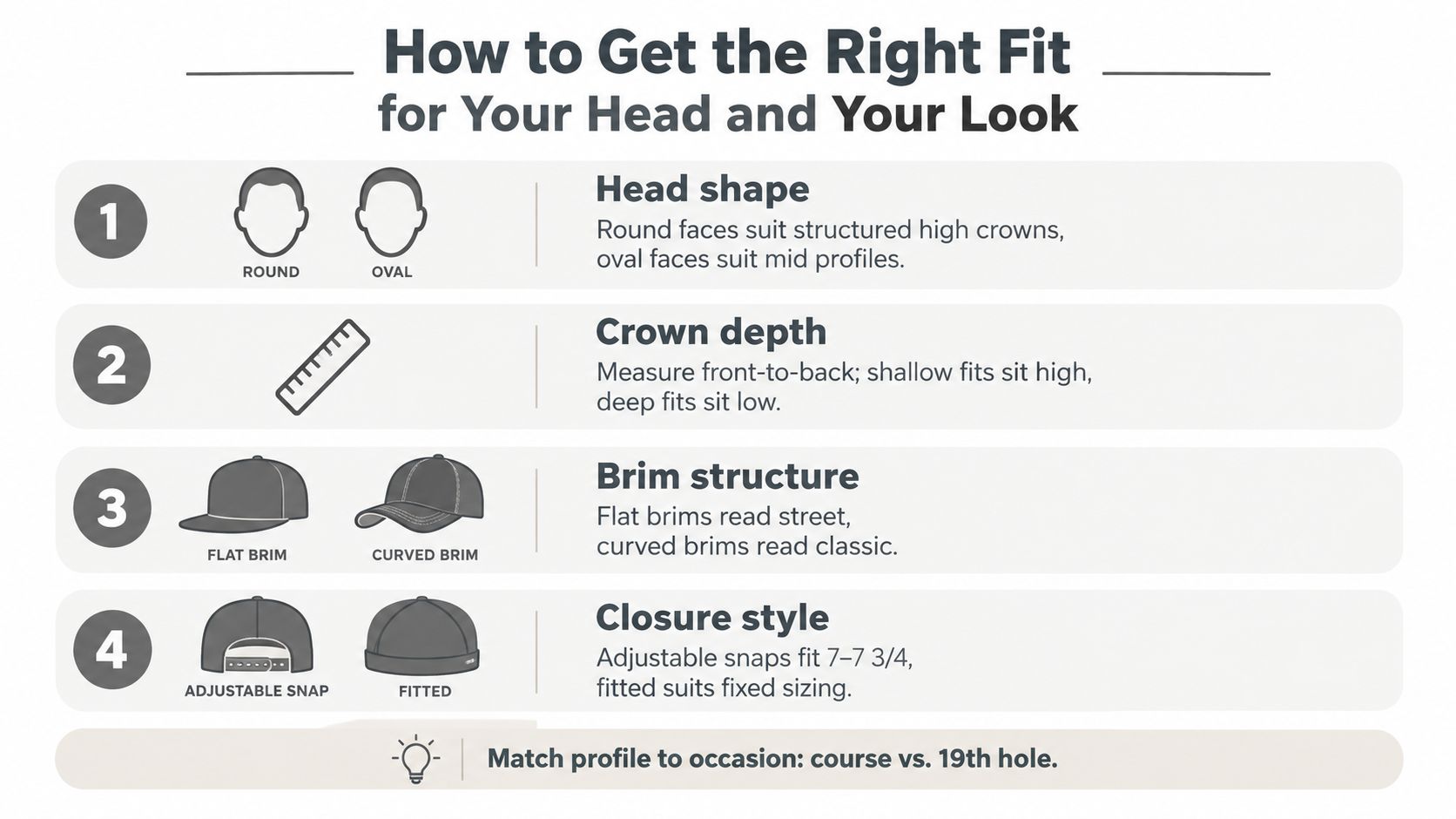
Start with the crown. A high-profile structured crown creates height and a more deliberate silhouette. It can complement a rounder face by adding visual length, while a mid-profile crown tends to feel less dramatic and more adaptable. A shallow crown sits closer to the head and can look cleaner on someone who dislikes the tall, boxy snapback shape.
Read the proportions
Head shape gives you a useful starting point, not a rigid rulebook. If the crown feels as though it's perched above your head, it's too tall or too stiff for your preferred look. If the front panels collapse against your forehead, the hat lacks the structure or depth you need.
Crown depth also changes comfort. A shallow fit sits higher, while a deeper crown sits lower and may feel more secure during movement. Product descriptions often use terms such as low-profile, mid-profile, or high-profile, but photographs can mislead. If possible, compare the stated measurements or use the guidance in this head-measuring guide before ordering.
Fit rule: Choose the crown depth first, the brim shape second, and use the closure to fine-tune the fit, not to rescue the wrong size.
The brim changes the message. A flat brim reads more streetwear-oriented and graphic. A curved brim reads classic, athletic, and easier to pair with golf clothing or a refined casual outfit. A flexible bill gives you more options, but only if it holds the curve you create.
Fit guidance for real wardrobes
For golfers, prioritize a stable crown, a comfortable sweatband, and fabric suited to the weather. The closure should sit securely without pressing into the back of your head. A cap that needs constant adjustment is not an accessory. It's a small, irritating coworker.
For office-adjacent wear, choose a mid-profile shape, restrained branding, and a brim that isn't aggressively flat unless the rest of your outfit supports it. Earth tones and monochrome designs make the cap feel intentional with a quarter-zip, overshirt, chinos, or clean knitwear.
For women, the choice isn't limited to oversized streetwear silhouettes. A lower profile, softer fabric, curved brim, or muted color can create a more balanced look, while a structured high crown works when the hat is meant to be the focal point. The best option is the one that respects your proportions rather than forcing you into a men's-style template.
Independent headwear research notes that Millennials prefer snapbacks and dad caps, while younger buyers lean toward bucket hats and beanies. It also identifies a move toward clean logos, earth tones, minimalist monochrome, and vintage washes in 2026, as discussed in headwear trend research. Trends can point you toward a style, but your forehead still gets the final vote.
Styling Premium Snapbacks On and Off the Course
The premium snapback works because it has never belonged to only one world. Its lineage runs from baseball headwear to adjustable retail cap, then through the cultural force of 1990s hip-hop, before becoming part of the wider lifestyle wardrobe. That history gives the silhouette enough athletic credibility for the course and enough cultural charge for everything after it.
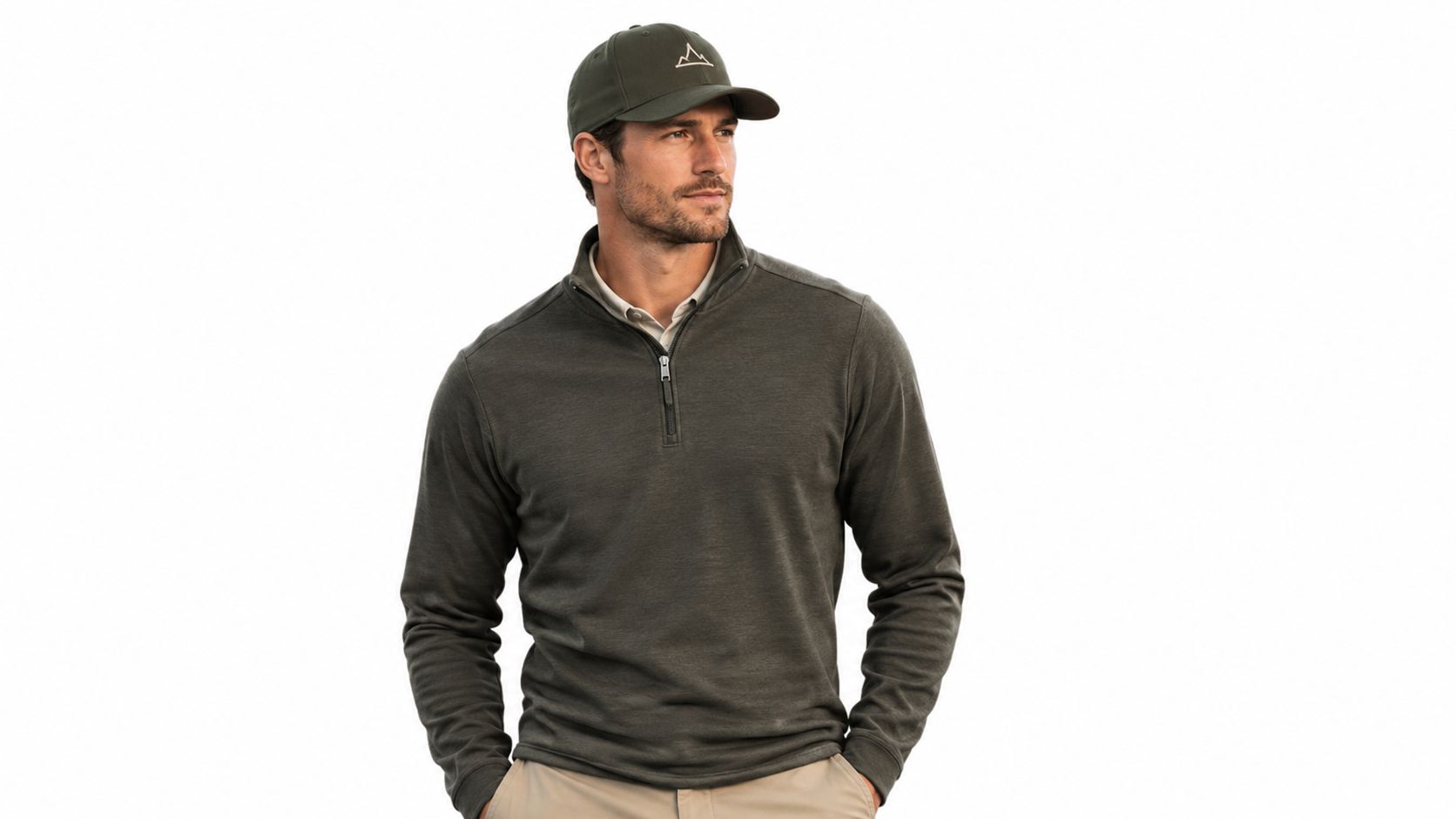
For golf, start with function and keep the color disciplined. A performance-poly cap with a clean logo works naturally with a moisture-managing polo, tapered trousers, and a lightweight quarter-zip. An earth-tone hat, such as olive, stone, or muted brown, adds personality without competing with every other item in the outfit.
A minimalist monochrome cap is the safest bridge between course and clubhouse. Pair it with a tonal polo and contrasting trousers, or let a darker cap ground a lighter outfit. The hat should look like part of the clothing, not like you won it from a vending machine at the turn.
Let one detail lead
If the hat has a vintage wash, keep the rest of the outfit crisp. Dark denim, a plain tee, and a clean overshirt let the finish provide texture without making the outfit look accidentally nostalgic. If the cap has a rope detail or a prominent embroidered mark, reduce the volume elsewhere. One statement is style. Three statements are a committee meeting.
For executives and professionals, avoid treating the snapback as a disguise for formalwear. It won't make a suit more relaxed in a refined way. Instead, use it with an unstructured blazer, knit polo, chinos, or a neat overshirt. A low-key logo and firm crown can add personality while keeping the overall outfit composed.
Women can use the same balancing principle. A structured cap looks strong with a relaxed button-down, wide-leg trousers, or a simple knit dress. A softer, lower-profile style works with denim, activewear, or layered weekend clothing. Don't over-coordinate the hat with every accessory. A little contrast keeps the outfit from looking assembled by a color wheel.
The cap's brim also sets the tone. Flat means sharper and more graphic. Curved means more classic and sporty. On the course, a modest curve often feels natural. At the 19th hole, a flat brim can work beautifully with a stronger logo or a more streetwear-influenced layer.
This video offers another visual reference for how snapback proportions and styling details can change the overall impression:
The best premium snapback is not the loudest item you own. It's the one that can handle a performance polo in the afternoon, a casual dinner afterward, and a weekend outfit without looking like it changed jobs halfway through the day.
Caring for Your Snapback and Final Buying Checklist
Premium construction gives you a better starting point, not immunity from bad habits. Sweat, sunscreen, rain, and the classic mistake of crushing a hat into a crowded bag can ruin a good cap faster than any trend cycle.
Keep the shape intact
Spot-clean the crown with a lightly damp cloth and mild cleaner. Don't soak a structured cap unless the care instructions specifically allow it. Water can affect the reinforcement behind the front panels and leave the crown looking less precise.
Treat the brim as a structural component, not a handle. Hold the cap by the crown or rear panels, and store it on a form, shelf, or hook where it won't be compressed. If you regularly wear a cap during warm golf rounds, deal with sweat and sunscreen marks promptly rather than allowing them to settle into the fabric.
For more detailed maintenance, follow this guide to cleaning golf hats. Gentle cleaning beats aggressive scrubbing, especially around embroidery and seam joins.
Your final buying checklist
- Crown: Choose structured front panels if you want a crisp profile that keeps its shape.
- Material: Select cotton twill or wool blends for lifestyle texture, and performance polyester or mesh for heat and activity.
- Brim: Pick flat for a sharper streetwear effect, curved for a classic athletic look.
- Closure: Make sure the adjustment range gives you a secure fit without pressure.
- Interior: Inspect the sweatband and stitching, because comfort lives where product photography can't reach.
- Price: Pay for construction, fabric, and wearability. Don't pay extra for a decorative detail you don't care about.
- Versatility: Ask whether the hat works with your golf clothes, weekend layers, and post-round plans.
- Care: Confirm that you're willing to clean and store it properly before calling it an investment.
The market may be crowded, but your decision doesn't have to be. A well-chosen premium snapback hat earns its place by staying comfortable, holding its shape, and giving you more than one good outfit.
If you want headwear that works from the first tee to post-round drinks, browse the golf hats, beanies, and lifestyle apparel at 2ndShotMVP. Choose a structured or adjustable style that fits your routine, then wear it often enough to make the purchase earn its place.

