

The wind usually tells you whether a golf hat deserves its price. A playing partner's snapback lifts at the tee box, the brim twists sideways, and suddenly everyone's watching the hat instead of the shot. Your fitted cap stays planted, the visor points where it should, and you get on with the round.
That difference isn't logo magic. It comes from crown depth, fixed sizing, sweatband comfort, brim structure, and material choice. Premium fitted hats should be judged like golf shoes or a well-made polo. If the construction works, you'll reach for the hat repeatedly. If it doesn't, a famous logo only makes the disappointment more expensive.
Why the Fitted Format Earns Its Premium
The modern fitted baseball cap traces back to 1954, when Harold Koch of New Era developed the 59FIFTY style. That design became the official fitted cap worn by every MLB player and remains a core template for fitted headwear today, as documented by Front Office Sports' history of the baseball cap.
That history matters on the course because a fitted cap is built around a different idea from an adjustable cap. There's no snap, buckle, or hook-and-loop strip changing the circumference at the back. The hat is made for a specific head measurement, so the crown sits consistently over your brow, temples, and ears.
A properly sized fitted hat doesn't need to fight your swing. It won't ride upward when you turn your head, and its brim is less likely to drift after you've spent several hours walking between shots. The closed back also creates a cleaner silhouette in the clubhouse, on the range, and in photographs.
Fixed sizing changes the feel
Adjustable hats solve a useful problem. One hat can fit many people. The trade-off is that the closure and excess fabric often become part of the wearing experience. A strap can create a pressure point, while loose material at the back can look untidy under a pullover or rain shell.
Fitted construction removes those distractions. The crown has a continuous shape, and the absence of a rear closure gives the hat a more precise appearance. That's why fitted hats are commonly sold in fractional sizes such as 7 5/8, rather than as a single “one size fits most” product. The fitted hat sizing guide from Dirt Cheap Headwear shows how those sizes correspond to head circumference measurements.
My course rule: if the hat shifts during your pre-shot routine, it isn't fitted correctly, no matter how good the logo looks.
Premium fitted hats earn their place when the fixed format delivers genuine stability and comfort. They're not automatically better because the back is closed. A poorly shaped crown can still pinch, overheat, or sit awkwardly. The luxury is in the consistency, not the absence of an adjustable strap.
Construction Details That Define Quality
A premium fitted hat should make sense from the inside out. Start with the crown. It needs enough structure to hold its intended profile without feeling like a plastic shell. On a wet or humid round, weak materials lose their shape quickly, while a well-built crown remains balanced over the head.
Look at the front panels next. Six-panel baseball-cap construction is common, but panel count alone doesn't prove quality. Check whether the seams meet cleanly at the front, whether the crown looks symmetrical from both sides, and whether the embroidery sits flat instead of pulling the fabric into ripples.
The interior tells you more than the logo. Run a finger along the seam taping and inspect the sweatband. Premium construction should feel deliberate, with no rough edge digging into the forehead and no loose thread waiting to catch on your sunglasses. Industry guidance on custom fitted hat construction and materials highlights the importance of crown structure, visor design, internal sweatbands, and fabric selection for comfort and stability.

Inspect the parts that touch you
The sweatband is where a hat either becomes a favorite or gets abandoned. Cotton can feel soft and familiar, while performance knits and synthetic blends can move moisture away from the skin more effectively during a long walk. Don't assume a technical fabric automatically feels better. Run your fingers along it and look for a smooth, comfortable finish.
The brim deserves equal attention. It should hold its curve without feeling flimsy, and the stitching around its edge should look even. A visor that curls unpredictably or loses its shape quickly will make the whole hat look tired.
Think of the construction like a golf shoe. The outer material creates the look, the internal structure creates support, and the lining determines whether you want to wear it for hours. Skip one layer and the weakness eventually shows. For a useful comparison of structured and softer hat designs, see this guide to structured versus unstructured hats. If you're evaluating quality standards more broadly, travel membership quality control offers a helpful reminder that consistency matters as much as appearance.
How to Nail Your Exact Size
Most fitted-hat mistakes happen before checkout. Measure your head instead of guessing from an old cap, especially if you're changing brands or moving from wool to a performance fabric.
Use a soft tape measure around your head, keeping it roughly one finger-width above your eyebrows and level with the top of your ears. Keep the tape comfortably snug, not tight. Record the measurement, then compare it with the brand's own chart.
Fitted sizes use fractional labels such as 7, 7 1/8, 7 1/4, 7 3/8, 7 1/2, and 7 5/8. A sizing guide lists size 7 at 22 inches, or 56 cm, and size 8 at 25 1/8 inches, or 64 cm, with intermediate sizes arranged between them. Check the fitted sizing measurements from Dirt Cheap Headwear before selecting your size.
Fitted hat sizing chart
| Fitted Size | Head Circumference (in) | Head Circumference (cm) | Fit Note |
|---|---|---|---|
| 7 | 22 | 56 | Use as the reference point for a smaller fitted size |
| 7 1/8 | Brand chart required | Brand chart required | Confirm the brand's intermediate measurement |
| 7 1/4 | Brand chart required | Brand chart required | Check before ordering a structured crown |
| 7 3/8 | Brand chart required | Brand chart required | A common middle-size option |
| 7 1/2 | Brand chart required | Brand chart required | Compare with your measured circumference |
| 7 5/8 | Brand chart required | Brand chart required | Don't assume it matches another maker |
| 8 | 25 1/8 | 64 | Use as the reference point for a larger fitted size |
Your head shape matters too. A longer, oval head can feel squeezed at the sides even when the circumference is technically correct. In that case, choose a shape with a more accommodating crown or consider the brand's slightly roomier option. A rounder head often sits more naturally in a standard structured crown.
Practical rule: a fitted hat should touch your head evenly without creating a hot spot above the ears or leaving enough room to rock during a swing.
Material changes the final fit. Wool, cotton, and performance fabrics can break in differently, so don't expect a new cap to feel identical to an older one in the same labeled size. For golf-specific options, compare construction and sizing language in this guide to men's fitted golf hats.
Choosing the Right Material for the Course
The best premium fitted hat depends on the round you play, not the one you imagine playing. A cool morning at a links-style course demands something different from a humid afternoon where your hat absorbs sweat before the turn.
Structured wool is the choice for shape and a refined look. It holds a defined profile and suits cooler mornings, breezy coastal conditions, and clubhouse wear. It isn't my first pick for intense heat. Wool can feel warm when the sun is high, and it usually needs more care than a basic performance cap.
Washed chino cotton delivers the soft, broken-in character many golfers want with casual trousers or a quarter-zip. It works especially well for range sessions, travel, and post-round settings. Cotton feels natural against the head, but it can hold moisture longer than a technical blend after a sweaty walk.
Polyester performance blends are the serious hot-weather option. Lightweight synthetic fabric, a breathable construction, and a capable sweatband can make a noticeable difference during warm rounds. If you play often in heat, that's where I'd spend money before paying extra for a limited logo.
Technical knits are the flexible travel choice. They can pack more easily than a rigid crown and often provide a comfortable balance between stretch, breathability, and everyday wear. They're useful when one hat has to cover the airport, the driving range, and dinner.
| Material | Best For | Breathability | Sweat Management | Break-In Time |
|---|---|---|---|---|
| Structured wool | Cool mornings, breezy rounds, clubhouse wear | Moderate | Moderate | Usually longer |
| Washed chino cotton | Casual golf and lifestyle wear | Moderate | Limited to moderate | Short to moderate |
| Polyester performance blend | Hot-weather rounds and frequent play | High when well-ventilated | Strong | Short |
| Technical knit | Travel and mixed daily use | Moderate to high | Moderate to strong | Short |
Look for ventilation, a comfortable sweatband, and fabric that won't feel heavy after hours outside. Performance golf hats are worth comparing when heat and moisture matter more than heritage styling.
The material also affects sun protection and color longevity. Dark dyes can show fading sooner in direct sunlight, while lighter colors can reveal sweat and dirt more quickly. Choose the fabric you'll maintain, not merely the one that looks impressive on a product page.
Separating Real Quality from Hype Pricing
Price tells you what a seller wants you to believe. It doesn't tell you what the hat can do.
A lower-priced fitted hat may still have a clean crown, balanced panels, a comfortable sweatband, and a brim that keeps its shape. A more expensive release may justify its price through better fabric, stronger internal finishing, careful embroidery, and a more consistent fit. It may also charge extra because the colorway is limited or the logo carries licensing value.
The market context is substantial. One estimate values the global baseball cap market at US$19.2 billion in 2024 and projects US$26.7 billion by 2030, with an implied 5.6% CAGR, as reported by EdgeChat's cap market overview. That growth creates room for excellent products, but it also gives brands plenty of space to sell scarcity as if it were construction.
What deserves the premium
Inspect these details before you admire the badge:
- Interior finishing: Seam taping should feel secure, and the inside shouldn't have rough edges or loose threads.
- Brim memory: Bend the visor gently. It should return to its intended curve instead of feeling permanently limp.
- Sweatband quality: Look for a soft, stable band that doesn't scratch or bunch against your forehead.
- Embroidery execution: Letters and shapes should look clean, with no obvious loose backing threads or puckered fabric.
- Panel symmetry: Set the hat on a flat surface and check whether the crown leans or twists.
The gap between an ordinary on-field cap and a flagship lifestyle release from the same maker can come from fabric hand feel, internal structure, sweatband finish, brim construction, and embroidery detail. If those elements look identical, a higher price probably reflects the logo, licensing, or scarcity more than a meaningful upgrade.
Premium headwear priced above $50 is reported to be growing faster than value segments, at a 7.3% CAGR versus 4.6%, with collaborations, designer partnerships, and heritage positioning among the stated drivers in Market Intel's luxury hat market report. Those figures explain the commercial trend, not whether a particular hat is worth buying.
My rule is simple. Pay more for better contact with your head, better control of moisture, stronger shape retention, and cleaner workmanship. Don't pay more for a rare color if the hat feels ordinary inside.
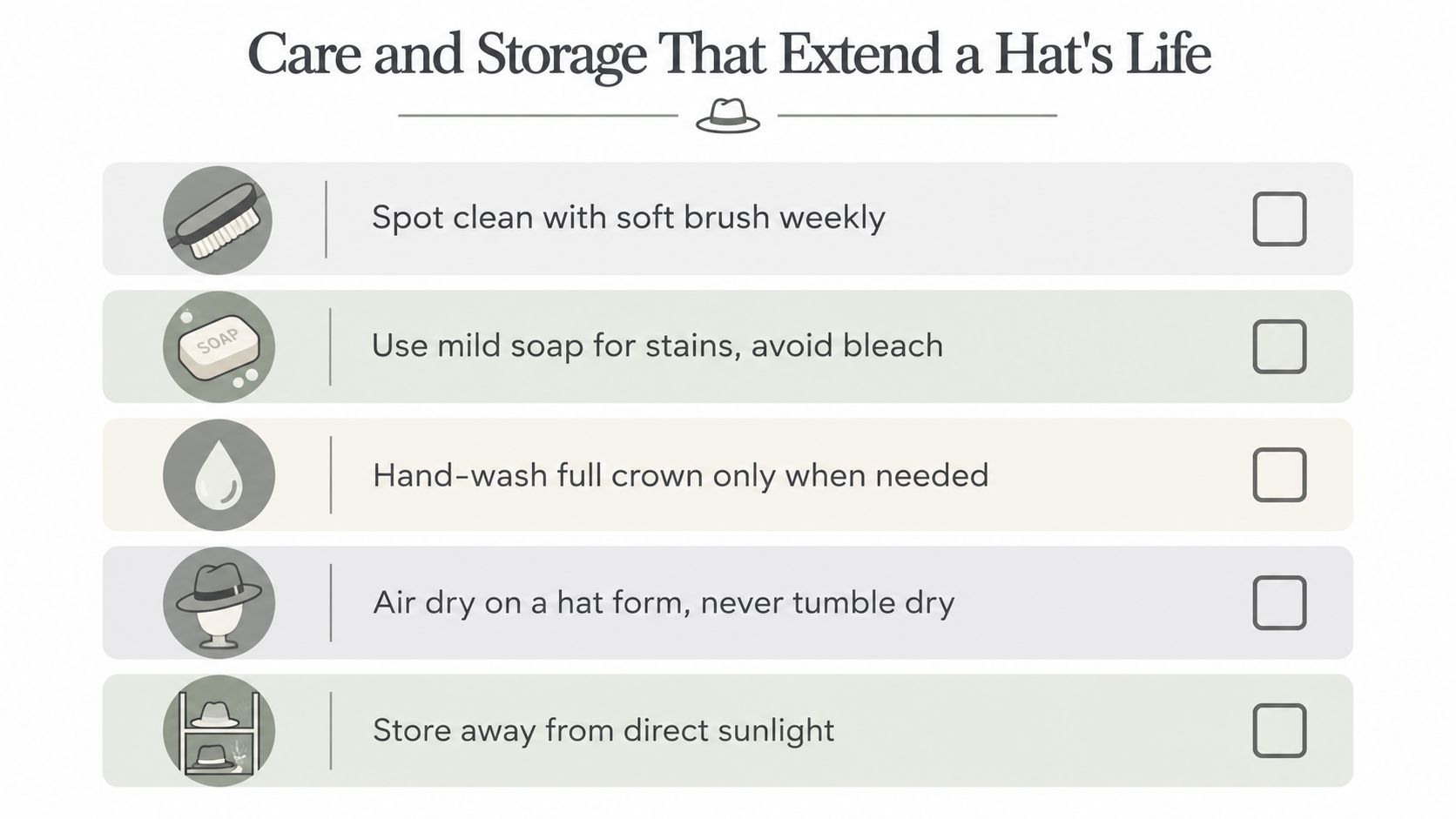
Care and Storage That Extend a Hat's Life
A premium fitted hat can lose its shape faster from careless storage than from regular golf. Sweat, body oils, heat, and pressure all attack the parts you paid for.
Start with spot cleaning. Use a soft brush to remove dry dust and grass particles, then dab stains with mild soap and a small amount of water. Don't scrub aggressively across embroidery, and don't use bleach on colored fabric.
Wash only when the crown needs it
Full hand-washing should be the exception, not your weekly routine. If the crown smells or has visible buildup, support the hat while cleaning it with cool water and mild soap. Keep the brim from flexing unnecessarily, especially if it contains a structured insert.
Machine washing is a bad shortcut. The agitation can warp the visor, crush the front panels, and leave the crown with a shape you can't easily recover. A dishwasher is even worse. Heat and pressure are not cleaning strategies for a fitted golf hat.
After cleaning, reshape the crown over a clean bowl, a hat form, or another rounded object with a similar profile. Let it air-dry fully away from direct sunlight. A dryer can shrink or distort materials, while strong sunlight can fade the fabric and embroidery.
Storage rule: a cool closet beats the car visor every time. Heat softens structure, and pressure flattens the crown.
Keep hats on a rack or shelf with enough room that other items aren't pressing down on them. Don't stack heavy clothing on top of a structured cap. Rotate hats across the season so one favorite doesn't absorb every round's sweat, oil, and sun exposure.
A Quick Buyer's Checklist Before You Spend
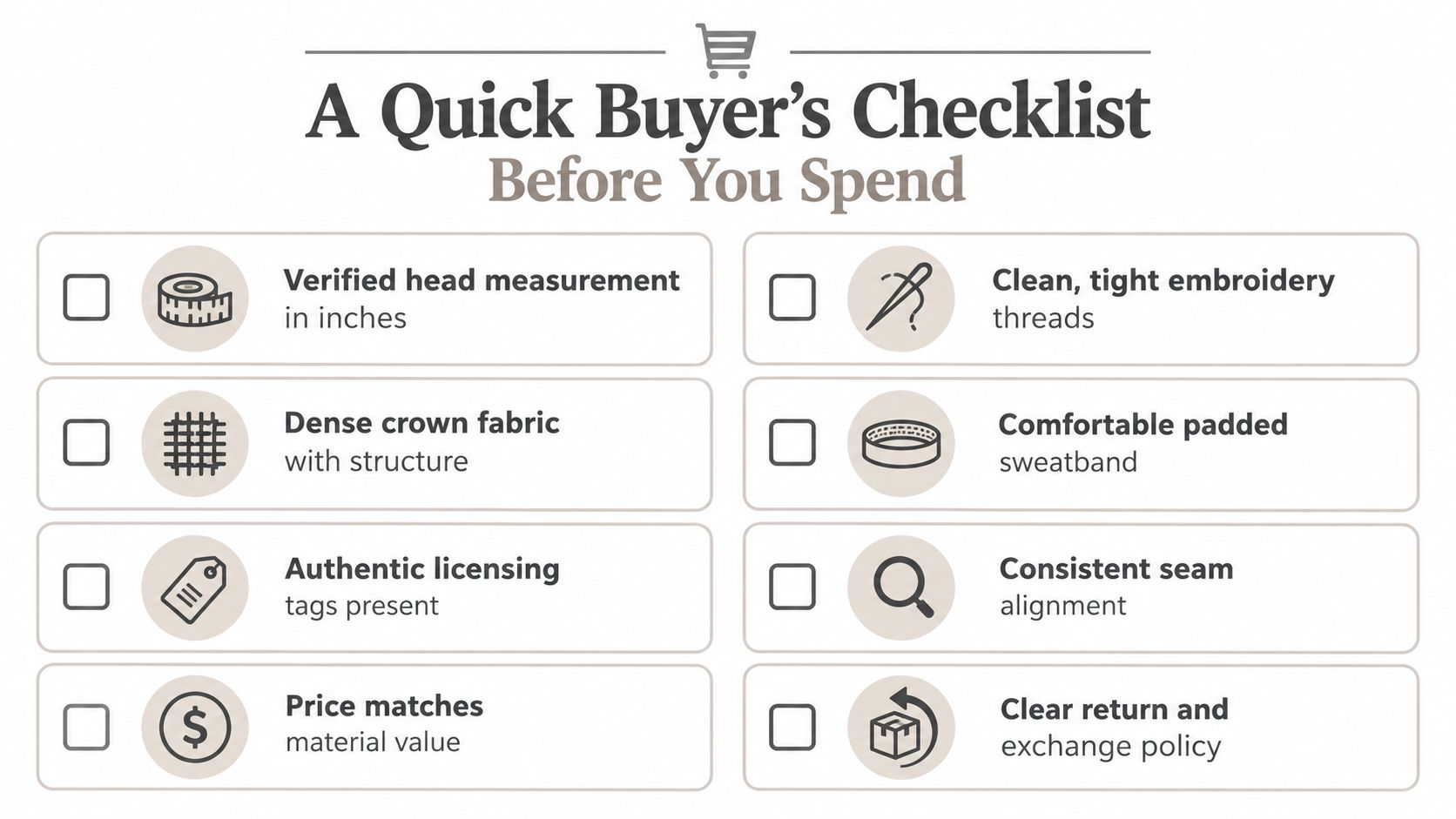
Use this checklist before you click buy. A good fitted hat should pass the practical test before the logo gets a vote.
- Measure first. Record your head circumference and match it with the maker's fractional size chart. Don't transfer a size from one brand automatically.
- Check the crown depth. The crown should sit comfortably over your brow and ears without pressing hard at the sides. Oval and round head shapes don't always behave the same way.
- Match the material to your golf. Choose structured wool for cooler conditions, cotton for relaxed lifestyle wear, performance polyester for heat, and technical knit when travel flexibility matters.
- Inspect the sweatband. It should feel smooth against your forehead and stay in place when you walk, bend, and swing.
- Study the seams and eyelets. Look for even panel alignment, secure stitching, and ventilation that appears functional rather than decorative.
- Test the brim. The visor should hold its intended curve and align with the crown. A crooked brim makes even good embroidery look cheap.
- Judge the logo separately. Clean embroidery is valuable. A famous team mark or limited colorway isn't proof of better materials.
- Read the return policy. Fitted sizing is personal, and a clear exchange process matters if the crown shape doesn't suit your head.
The wider headwear market gives shoppers plenty of choice. Broader hats-and-caps estimates put the global category at US$10.5 billion in 2021, with a projection of US$17.6 billion by 2033, according to the market figures summarized in the cap market overview from EdgeChat. More choice is useful, but it also makes disciplined buying important.
My three straightforward recommendations
For the daily player, choose a structured wool fitted hat if most rounds happen in cool or changeable weather. It gives you a defined profile and works naturally from the first tee to the clubhouse.
For hot climates, choose a performance polyester blend with a breathable crown and a sweatband that doesn't stay saturated. That purchase improves the part of the round you feel.
For lifestyle wear, choose washed cotton with a comfortable crown and restrained embroidery. It'll pair with casual golf clothing and won't look like you're still waiting for your tee time.
Keep the receipt, measure before ordering, and inspect the inside as carefully as the front. A premium fitted hat should earn repeat wear through comfort and construction, not through hype alone.
If you want golf headwear with fitted-style options, beanies, and lifestyle apparel built around fun designs for men and women, browse 2ndShotMVP and compare the hat style with how you play. Choose the piece that fits your head, your climate, and your time on and off the course.

