

Most golfers choose a low profile golf hat because it looks cleaner than a tall, structured cap. That's the least interesting reason to buy one. The crown height changes how the hat handles wind, sweat, heat, hair, and long hours in the sun, so treating it as a fashion-only decision is how golfers end up with a cap that looks sharp in the pro shop and feels miserable by the back nine.
A low profile hat can be the right choice for a secure athletic fit and understated style. It can also offer less shade and less internal airflow than a taller or wider-brim design. The winning purchase balances fit, ventilation, fabric, retention, and sun coverage, not just the shape in the mirror.
Why Low Profile Golf Hats Are More Than a Style Choice
A low profile golf hat has a shallower crown that sits closer to the head. That construction creates the neat, compact silhouette golfers often want, but it also changes the hat's behavior during a round. The closer fit can feel more stable when the wind picks up or when you're walking through a swing, while the reduced internal space leaves less room for heat to disperse.
That trade-off matters more than the logo. A cap that shifts during a swing, presses against your temples, or holds sweat against your forehead becomes distracting quickly. A well-designed low profile golf hat should feel planted without squeezing, dry reasonably fast, and keep its shape after repeated exposure to sun and moisture.

The shape has a history
Golf headwear has never been static. Independent golf-history sources describe caps as part of golf attire since the sport's early development, with flat and ivy caps becoming especially common in club settings during the 19th century. By the late 19th and early 20th centuries, the golf cap had become a recognizable marker of traditional golf style, before later designs moved toward more casual and athletic silhouettes. The history of golf caps traces the major shift that followed in the 1950s and 1960s, when baseball caps entered golf fashion as a practical alternative focused on sun protection and a sportier appearance.
That history explains the modern appeal. A low profile golf hat bridges the old clubhouse look and contemporary performance wear. It works with a traditional polo, but it also fits naturally with a technical quarter-zip or casual weekend clothing.
The practical decision
Choose low profile when you want the crown to stay close, the silhouette to remain restrained, and the hat to transition easily beyond the course. Don't choose it automatically for hot weather. A shallow crown can feel cooler when the materials and vents are right, but it can feel warmer than a taller cap when airflow is poorly designed.
My buying rule: Never judge a low profile golf hat by crown height alone. Judge the crown, sweatband, fabric, vent placement, and retention system as one package.
The golf-cap category itself has durable commercial scale rather than behaving like a brief style fad. Market estimates vary by category definition, but one report places the global golf cap market at USD 88 million in 2024, while another values the broader cap segment at USD 399.1 million in 2024. A separate estimate places global golf-cap revenue at USD 1.2 billion in 2024. The market forecast shows why manufacturers continue refining compact crowns, performance fabrics, and more specialized fits.
Low Profile vs High Profile Golf Hats Compared
The simplest distinction is crown depth. A low profile golf hat hugs the head with a shallower shape, while a high profile cap creates more vertical structure and a roomier impression. That difference affects comfort, visual balance, stability, and heat management.
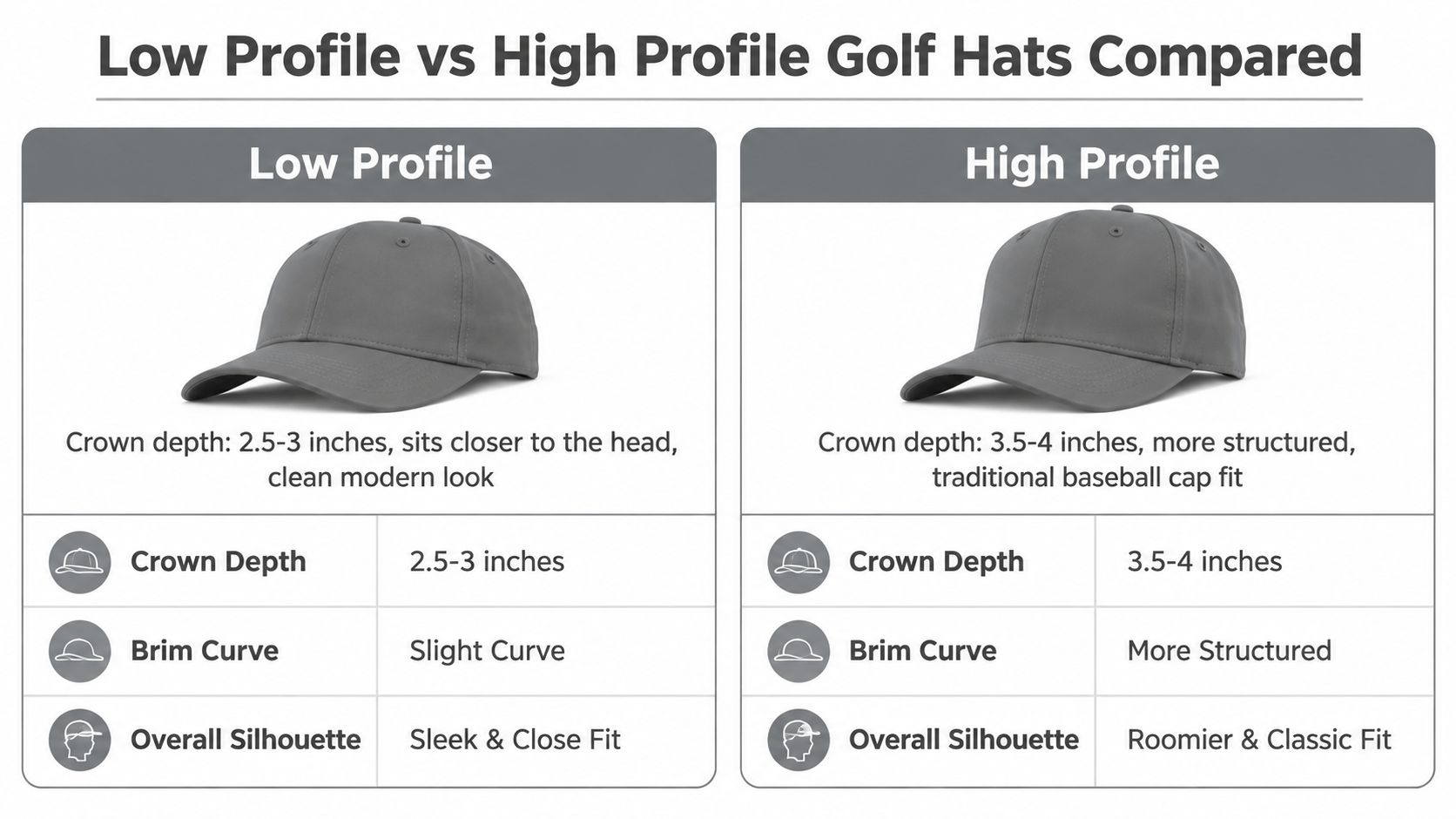
| Feature | Low Profile | High Profile |
|---|---|---|
| Crown | Shallow and close-fitting | Taller and more structured |
| Internal space | Limited air volume | More room above the head |
| Wind behavior | Usually feels secure and less bulky | Can catch more wind, especially with a rigid front |
| Visual effect | Understated, modern, compact | Traditional, athletic, more prominent |
| Hair compatibility | Works well with low hair volume or flatter styling | Accommodates more volume and height |
| Heat management | Depends heavily on vents and fabric | Benefits from greater internal space, though construction still matters |
| Best use | Stable fit, minimalist styling, casual versatility | Roomier feel, stronger structure, fuller hair, traditional cap shape |
The low profile option wins when you want the hat to disappear during play. Its closer crown can reduce movement and feels less cumbersome when you're walking, riding, or moving through a breezy round. It also tends to look more restrained with fitted polos and lightweight outerwear.
The high profile option gives your head more vertical room. That can help golfers with thicker hair or anyone who dislikes fabric pressing down on the top of the head. The downside is bulk. A tall, structured front may feel excessive with a narrow face, and a stiff crown can become more noticeable when the wind pushes against it.
Where the trade-offs appear
Low profile doesn't automatically mean cooler. The lower crown leaves less internal air volume for heat dissipation, so the hat needs breathable panels, micro-perforations, or mesh zones to prevent heat buildup. High profile caps have more space, but a solid, heavy construction can still feel hot if the fabric holds moisture.
Brim shape matters too. A curved brim generally creates a softer, more traditional golf appearance and can sit comfortably above the eyes. A flatter brim makes a stronger streetwear statement, but it may look less natural with conservative course clothing.
Match the profile to your round
Pick low profile if your priorities are secure movement, a neat silhouette, and easy off-course wear. Pick high profile if you need more crown room, prefer a bolder athletic shape, or find shallow caps press against your hair and scalp.
Don't let marketing reduce this to “modern versus traditional.” The useful question is how much structure and space your head needs under real playing conditions.
Materials and Construction That Matter
A low profile golf hat succeeds or fails at the sweatband. Shoppers notice the crown first, but the band controls contact with the forehead and temples. If it saturates quickly, rolls over, or feels abrasive, the hat becomes irritating well before the round ends.
Lightweight polyester and nylon are sensible starting points because they dry faster and move moisture away from the skin more effectively than absorbent everyday fabrics. Cotton can feel pleasant at first, especially in a casual cap, but it tends to hold moisture instead of clearing it quickly. This guide to golf hat materials also explains that tightly woven structures can improve UV blocking and help preserve that protection when the fabric becomes saturated.
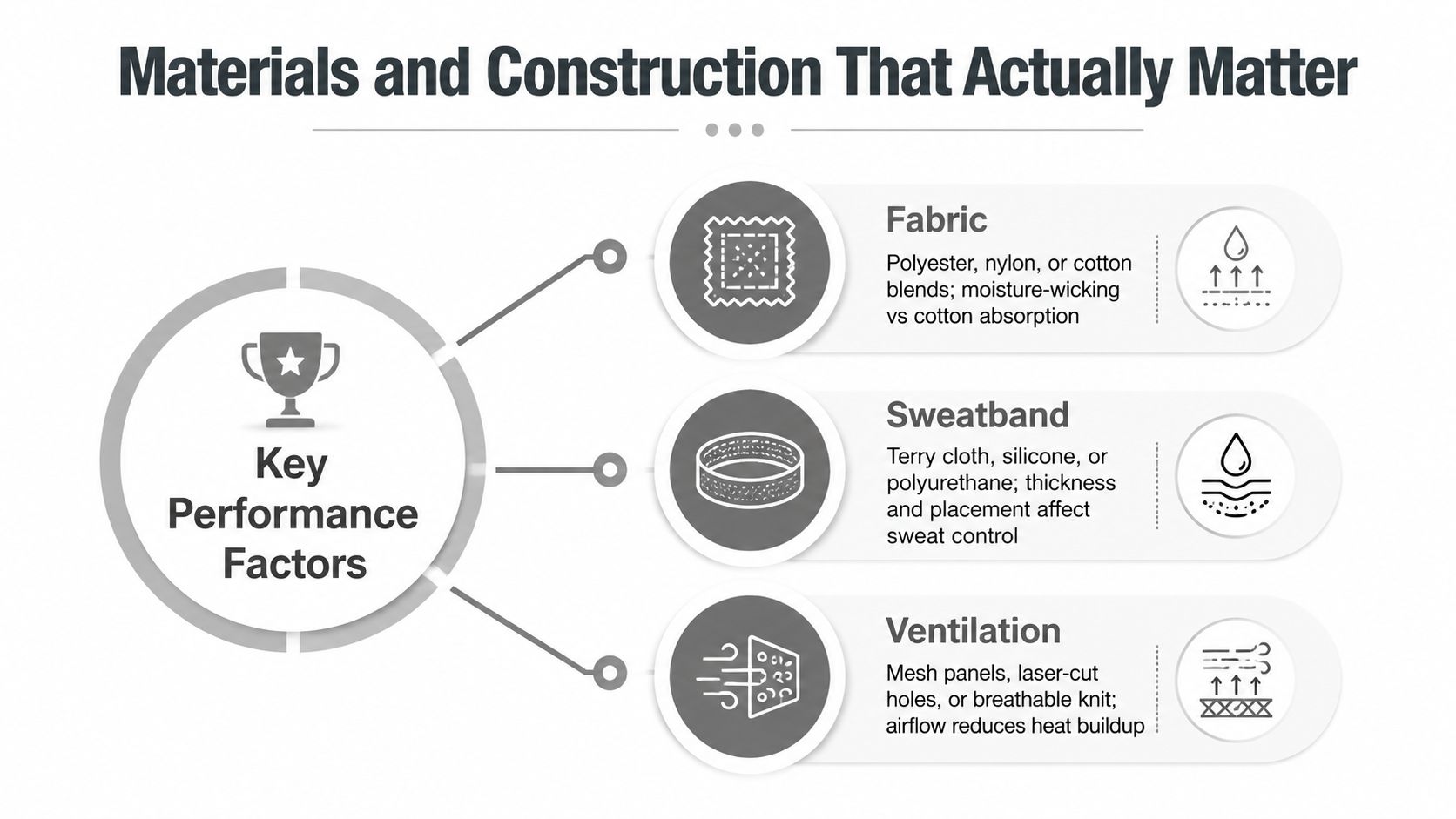
Fabric is only half the system
Choose fabric that feels light without feeling flimsy. A capable performance textile should recover its shape, resist clamminess, and avoid becoming transparent or misshapen when wet. Fabric construction also affects sun protection. UPF 50+ materials are commonly used in golf headwear and are widely cited as blocking about 98% of UV radiation, so the weave and finish matter more than a decorative label. SuperStroke's performance headwear information offers relevant context on this construction approach.
The sweatband should rest smoothly across the forehead without creating a narrow pressure line. Terry-style materials can absorb perspiration, while synthetic bands may move moisture outward and dry faster. Silicone or other grippy elements can improve retention, but excessive grip can pull hair or feel unpleasant around the temples.
Ventilation decides warm-weather comfort
A shallow crown has less room for natural airflow, which makes vent placement important. Vented side panels, laser-cut openings, breathable knits, and mesh sections can reduce heat buildup, provided they preserve the hat's structure and do not expose areas that need coverage.
Construction test: Hold the cap by the brim and check whether the crown keeps its shape without feeling rigid. Then check whether the ventilation sits where your head heats up, not merely where it looks attractive in product photography.
Water resistance needs a realistic reading. A finish that sheds light moisture can help during a passing shower, but it does not replace breathable sweat management. If the hat blocks water while trapping heat, you trade one discomfort for another.
For a wider look at premium construction, compare the design details in premium golf hats. Then watch how different crown and brim constructions behave in practice:
The best low profile golf hat uses fabric, sweatband, and ventilation as one coordinated system. Breathable fabric cannot rescue a poor sweatband, and a vented crown cannot compensate for a fit that compresses your head.
Finding the Right Fit for Your Head Shape
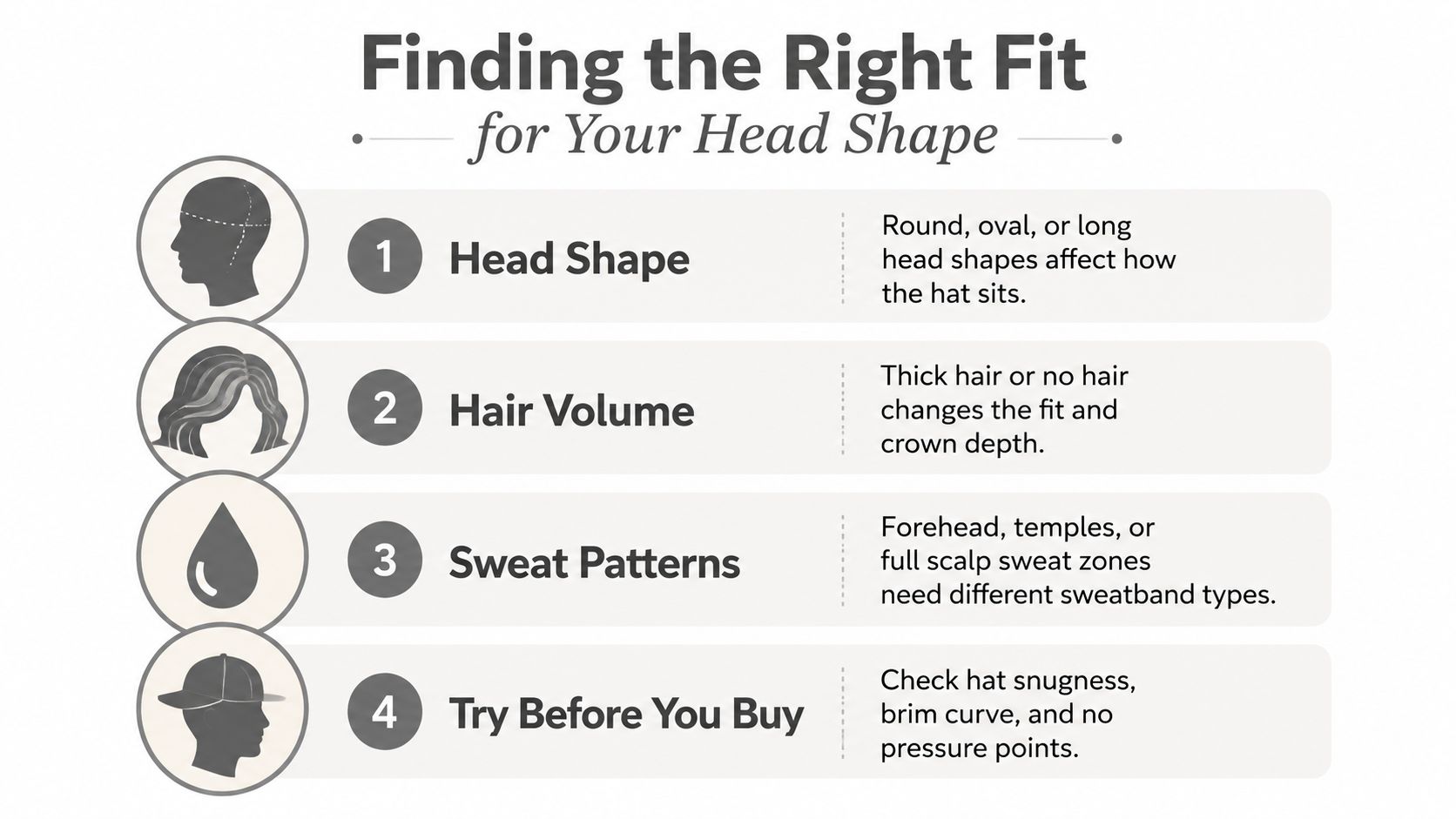
A low profile golf hat should sit securely without leaving a pressure mark after you remove it. That sounds obvious, but many golfers test fit for a few seconds in front of a mirror and ignore what happens after hours of walking, sweating, and repeated head movement.
Start with the head, not the label
Head circumference matters, but it doesn't tell you whether the crown will suit your shape. A round head may push against the sides of a narrow cap, while a longer oval shape may need more front-to-back depth. A shallow crown that works beautifully for one golfer can sit awkwardly above another golfer's ears or create pressure at the temples.
Hair changes the equation. Thick or curly hair takes up crown space and can make a low profile design feel too tight even when the measurement seems correct. Very short hair or a shaved head can produce the opposite problem, with the same cap feeling loose or exposing pressure from the internal structure more clearly.
Use this fitting routine
- Set the closure before judging the crown. Adjust a snapback, strap, buckle, or elastic system until the hat stays in place without pulling the front down.
- Check contact points. The sweatband should touch evenly. A single tight spot at the forehead or temples usually signals a crown-shape mismatch, not a problem you should tolerate.
- Move your head naturally. Look down, turn side to side, and rehearse a slow swing. The hat shouldn't rock, rise, or pinch.
- Test your brim position. A brim that sits too low can interfere with your sightline, while one that floats high may indicate the crown isn't matching your head.
For a practical measurement reference before ordering online, use this guide to measuring your head. Treat the resulting measurement as a starting point, not a guarantee.
Sweat changes the fit
A dry hat and a wet hat can feel like different products. Sweat can reduce friction, soften a band, and make a loose cap slide. Conversely, a tight band can feel increasingly restrictive as the fabric absorbs moisture. If your forehead sweats heavily, prioritize a quick-drying band and a closure that allows fine adjustment.
Fit verdict: The right low profile golf hat should disappear during your swing. If you keep noticing the crown, brim, or band, the shape is wrong for you.
Small-fit and minimalist performance lines can suit golfers with smaller heads or those who prefer a close athletic feel. They're not automatically better for everyone. Hair volume, head shape, and sweat patterns decide whether “small fit” feels precise or cramped.
The Sun Protection Gap Most Guides Ignore
A low profile golf hat is useful for glare and forehead coverage, but it isn't a full sun-protection solution. The shallow crown and compact brim leave more of the ears, neck, and side of the face exposed than a wider-brim design. That coverage gap deserves more attention than it gets.
Independent research on golf apparel found that only 19% of hats sold for golfers were wide-brim designs. This analysis of golf hat sun protection also highlights the tension between golfer interest in broader coverage and a market that still favors familiar cap silhouettes.
Shade geometry matters
A cap shades the areas directly beneath its brim. It doesn't protect the sides of your face equally as the sun moves across the sky, and it offers limited protection to the ears and neck. A low profile design may stay comfortable and stable, but its geometry cannot create the coverage of a broad brim.
That doesn't make it a bad purchase. It makes it a specialized one. Choose it for secure fit, sweat management, and glare reduction, then address exposed skin separately.
Use sunscreen on the ears, temples, face, and neck before a round, and reapply according to the product instructions. On especially bright rounds, a neck gaiter can add coverage without forcing you to abandon a cap you already find stable. Hair and scalp exposure matter too, so this resource on hair sun protection can help you think beyond the face and brim.
Know when to switch hats
A low profile cap makes sense for moderate conditions when comfort and stability are your priorities. For long exposure in intense sun, choose a wider-brim option or combine the cap with deliberate skin and neck coverage. The right answer can change from one course, season, or tee time to another.
You'll find more practical coverage options in this guide to the best golf hats for sun protection. The key is to stop asking whether a low profile golf hat is “good enough” in the abstract. Ask which areas it covers, which areas it leaves open, and what you'll do about the difference.
Styling Your Low Profile Hat On and Off the Course
The clean shape of a low profile golf hat makes it easier to wear beyond the course than a tall, heavily branded cap. That versatility depends on restraint. A simple crown, controlled logo placement, and a brim that isn't excessively flat will work with more clothing than a loud graphic or oversized patch.
For a competitive round, pair a neutral hat with a polo in a related tone. Navy, beige, white, charcoal, and muted green are easy to coordinate with golf trousers or shorts without making the hat compete with the rest of the outfit. If your shirt has a prominent pattern, keep the hat quiet.
Three reliable outfit situations
The early tee time: Choose a dark or neutral low profile cap with a technical polo and a lightweight quarter-zip. The compact shape looks tidy under outerwear and won't overwhelm a layered outfit.
The relaxed weekend round: A washed cotton blend or understated performance cap can work with a casual polo, shorts, and clean trainers. A small logo or tasteful embroidery adds personality without turning the outfit into a costume.
The 19th hole: Keep the same hat on if the brim and branding are subtle. Pair it with an overshirt, knit layer, or casual button-down rather than formal clothing. A cap that looks appropriate at the clubhouse should avoid excessive mesh, novelty slogans, or a visibly distorted crown.
Course dress codes still matter. Some clubs favor traditional colors and restrained branding, while casual public courses give you more room for humor and bold graphics. If you're building a golf wardrobe around travel, consider the practical style requirements in this luxury Scotland golf trip guide, where classic surroundings reward versatile, low-key clothing.
The best styling decision is usually the least forced one. Your hat should support the outfit, not announce that you started with the hat and dressed around it.
Smart Buying Criteria for Your Next Golf Hat
Buy for fit first. A low profile golf hat will not become comfortable if its crown conflicts with your head shape, hair volume, or preferred tension. Measure your head, check the brand's sizing information, and test for pressure at the temples and forehead. A short crown should sit securely without pinching or collapsing into your hair.
Use this inspection order:
- Crown compatibility: Make sure the shallow shape leaves enough room for your head and hair.
- Sweat control: Choose a soft, secure sweatband that manages moisture without turning heavy or abrasive.
- Ventilation: Look for side vents, micro-perforations, mesh zones, or breathable knit in warm conditions.
- Fabric performance: Polyester and nylon suit rounds where quick drying and moisture movement matter.
- UV information: Treat UPF 50+ as a fabric specification, not proof that your face, ears, and neck are fully covered.
- Closure quality: Pick a strap, buckle, snapback, or elastic system that lets you adjust retention precisely.
- Style range: Neutral colors and restrained branding will work on the course and after the round.
- Durability: Check whether the brim, seams, sweatband, and crown regain their shape after washing and repeated wear.
Sun coverage deserves its own check. A low crown can leave more of the upper ears and side of the face exposed, even when the fabric carries a strong UPF rating. Use sunscreen and consider additional coverage if the brim does not shade those areas during your normal posture.
The market supports continued interest in golf headwear, though reports define the category differently. One forecast projects the global golf cap market reaching USD 103 million by 2032, while another places the broader cap segment at USD 598.7 million by 2030. Those projections indicate ongoing product development, not a reason to buy every new release. The available market estimates provide context. The actual hat still needs inspection.
My recommendation is direct. Choose the lowest crown that fits without pressure, match ventilation to your climate, and judge sun coverage separately. If it fails any of those tests, the logo will not rescue it.
2ndShotMVP offers golf hats, beanies, and lifestyle apparel for men and women, including low-profile golf hat designs for understated on-course styling. Visit 2ndShotMVP to browse headwear suited to the round and the 19th hole.

